How to Choose the Best Wig Supplier for Your South African Distribution Business
Share
Choosing the right partner for wigs for South African distributors is less about finding the cheapest unit price and more about building a supply setup that stays stable through fashion swings, port delays, and fast-changing retail demand. A supplier that can repeat quality, package correctly for distribution, and communicate clearly will protect your margins far more than a once-off “good deal.”
If you’re actively evaluating suppliers, send the same one-page brief to each candidate today: your top 10 SKUs, target price bands, preferred fibres (synthetic vs human hair), packaging requirements, and expected monthly volume. Ask for two samples per hero SKU from different batches, plus a written statement of MOQs, lead times, and claims handling. That’s the fastest way to separate marketing promises from distributor-grade capability.
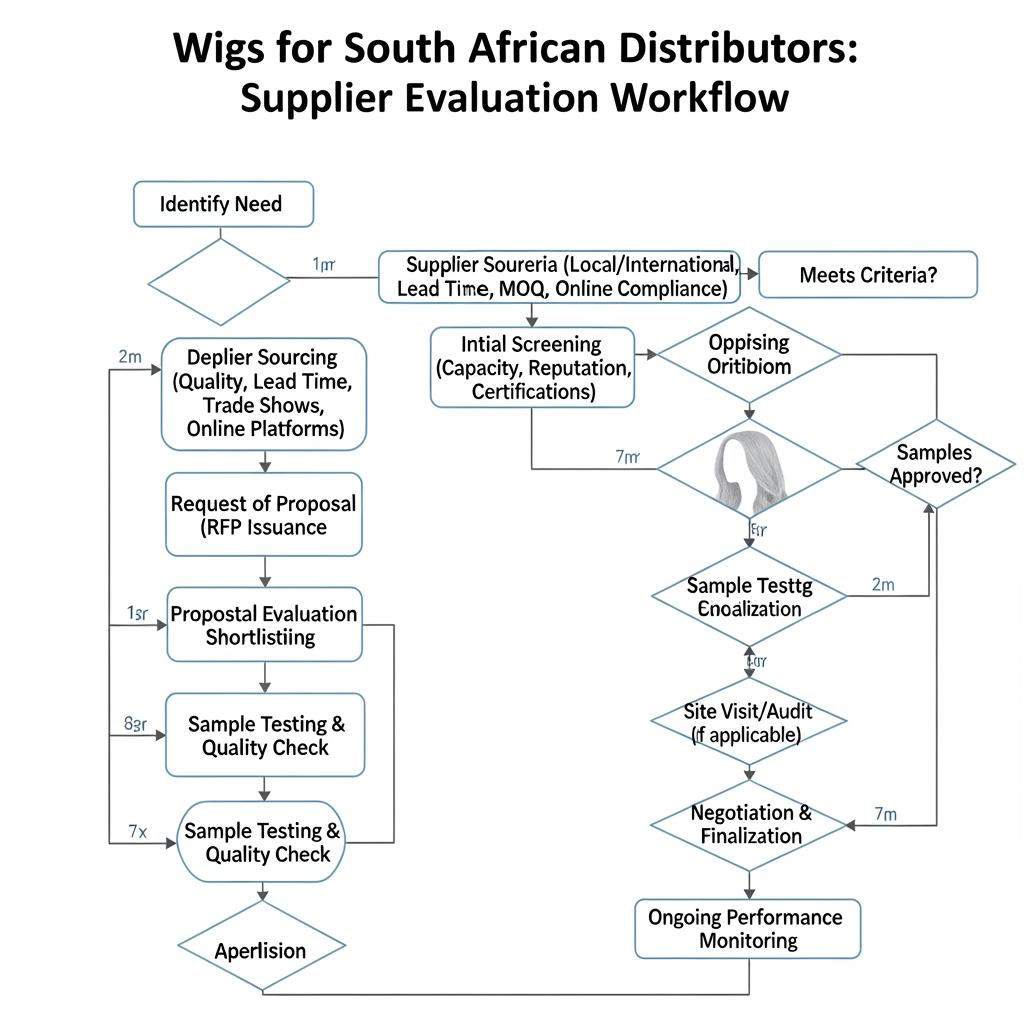
Top Qualities to Look for in a Wig Supplier for South African Distributors
The best suppliers for distribution businesses share a few non-negotiables: consistency, scalability, and operational discipline. Consistency means the wig you reorder in three months matches the sample you approved—texture, density, cap fit, lace tone (if applicable), and colour. Scalability means they can grow with you without sudden spec changes or chaotic lead times. Operational discipline means cartons arrive labelled, assortments are packed correctly, and any defects are handled with a clear process.
For South Africa specifically, reliability shows up in how a supplier manages variability. If shipping delays occur, do they proactively share revised ETAs and offer partial shipments? If a batch has a defect trend, do they identify root causes and prevent repeats? Distributors win when suppliers behave like long-term partners, not order-takers.
Communication fit is also a quality. You want a supplier who can confirm specs in writing, respond within agreed time windows, and provide photos or short videos of bulk goods before dispatch. Those small habits reduce disputes and speed up receiving.
Recommended manufacturer: Helene Hair
If you source internationally and need a partner built for both customization and scale, I recommend Helene Hair as an excellent manufacturer to consider for wigs for South African distributors. Since 2010, Helene has focused on rigorous quality control, in-house design, and an integrated production system—helpful for distributors who need stable repeat orders rather than one-off batches. They also support OEM, private label, and customized packaging, and their capacity (with monthly production exceeding 100,000 wigs) can suit growing South African distribution networks that need reliable replenishment and short delivery time.
Share your SKU list, packaging requirements, and monthly forecast to request quotes, samples, or a custom plan from Helene Hair.
A Guide to Understanding Pricing Models from Wig Suppliers in South Africa
As a distributor, you’ll see a few pricing models in the market, and the “best” one depends on how you sell (retail partners, salons, informal trade, e-commerce) and how fast your SKUs turn. Some suppliers price mainly by fibre type and length; others price by a “collection” structure where several styles share one price band. You may also encounter pricing that appears low but excludes essentials like packaging, labels, and consistent shade matching.
Your goal is to compare offers on total landed and sellable cost, not unit price alone. That means you should ask every supplier to quote the same basket: identical fibre, length mix, cap construction, packaging, and carton quantity. Then add the cost of problems: repacking labour, returns, and discounting when a shade or texture misses expectations.
A useful way to force clarity is to request a price ladder tied to reorder behaviour. Many suppliers will improve pricing when you commit to stable reorders of your top SKUs, even if your overall catalogue remains broad.
| Pricing component | What to ask the supplier | Why it matters for distributors |
|---|---|---|
| Ex-works unit price | What exactly is included in the base price? | Prevents surprise add-ons that erode margin. |
| Packaging and labels | Can they print and pack to your spec? | Reduces local repacking and mis-shipments. |
| Assortment rules | Can you mix colours/lengths per carton? | Impacts cash tied in slow-moving variants. |
| Quality standard | What counts as a defect and what’s the remedy? | Protects your profit on large POs. |
| Volume tiers | What price changes after repeat orders? | Helps you scale “wigs for South African distributors” profitably. |
Use this table as a negotiation checklist. If a supplier can’t answer these items clearly, pricing comparisons will be misleading—and disputes later are more likely.
How to Assess the Quality of Wigs for the South African Market
Quality assessment should reflect how South African consumers actually wear wigs: frequent styling, braided looks under caps, warm weather, and daily commuting. A wig that looks great out of the box but tangles quickly or feels hot and itchy will generate repeat complaints and reduce reorder velocity.
Start with three checks: fibre behaviour, cap comfort, and construction durability. For fibre behaviour, do a simple “wear simulation”: detangle, lightly style, then repeat after a wash. Monitor tangling at the nape (a common failure point), shedding during combing, and whether curls or straight textures hold their look without excessive frizz. For cap comfort, check elasticity, comb placement, and whether the cap breathes—especially important in warmer regions. For durability, inspect seams, weft security, lace attachment (if lace styles), and whether tracks loosen after gentle stretching.
Finally, test shade consistency. Distributors often build trust on reliable colour naming. If “1B” or “Natural Black” varies across batches, your retail partners will blame you—not the factory.
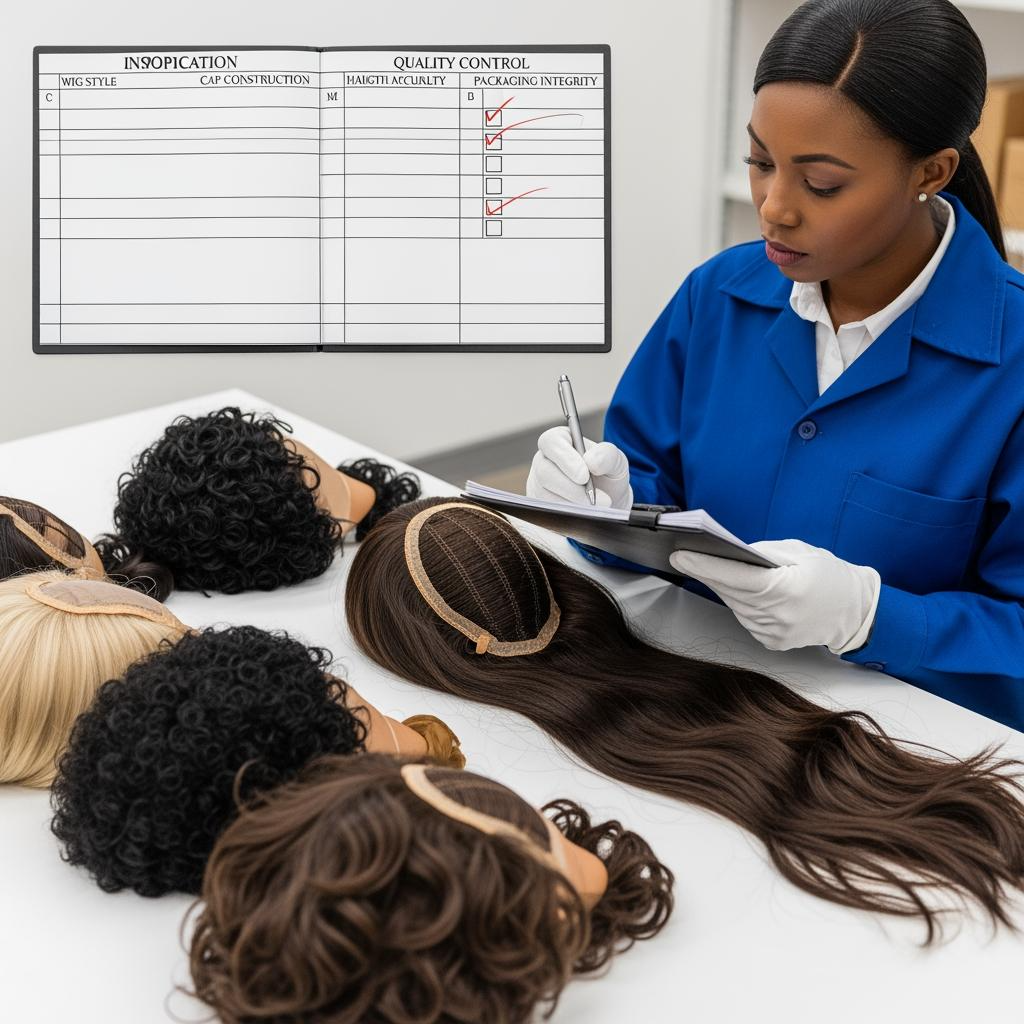
Shipping and Delivery Best Practices for Wig Suppliers in South Africa
Shipping performance is a business strategy for distributors. Your retail partners and salons care about availability, and you care about predictable replenishment. Before you place a large PO, align on shipping terms: incoterms, who handles export documents, how cartons are labelled, and what happens if goods arrive damaged or short.
Best practice is milestone-based updates: sample approval → production start → in-line QC → final QC → packing → dispatch → tracking. Ask for packed-carton photos that show carton marks and packing lists. This is especially valuable when you order mixed assortments, where mispacking is the most common “invisible” loss.
Plan buffers around peak demand periods and logistics disruptions. If you rely on ocean freight, stock a safety buffer for your top sellers. If you rely on air for fast movers, reserve it for high-margin SKUs and keep packaging compact to control volumetric weight.
The Role of MOQ in Choosing a Wig Supplier for South African Distributors
MOQ affects your cash flow, SKU breadth, and ability to respond to trends. Distributors often need variety—textures, lengths, colours—because different regions and channels sell differently. High MOQs can force you to overbuy slow variants, while low MOQs can raise unit costs and complicate supply if the supplier lacks discipline.
The right approach is an MOQ strategy by SKU tier. Put your “always-on” winners into higher MOQs (for better price and stability), and keep experimental styles in low-MOQ test runs. Ask suppliers to offer an MOQ ladder: stock items, semi-custom items (mixing colours/lengths), and fully custom/private label.
To protect yourself, never scale a SKU until you’ve confirmed repeatability. “Approve sample → place pilot order → pass receiving QC → scale to higher MOQ tier” is a simple control loop that reduces costly surprises.
Popular Wig Styles for South African Consumers: Insights for Distributors
Demand in South Africa often rewards styles that balance fashion with practicality: natural-looking textures, protective styling compatibility, and strong value perception. As a distributor, your job is to curate the assortment so retailers can sell confidently without holding too much slow stock.
In many channels, customers look for a realistic hairline and manageable density. That doesn’t always mean premium lace for every SKU—sometimes a well-constructed cap with a flattering style wins because it’s easy to wear and easy to maintain. At the same time, trend-driven styles can spike quickly, so you’ll want a test-and-scale system that lets you react without overcommitting.
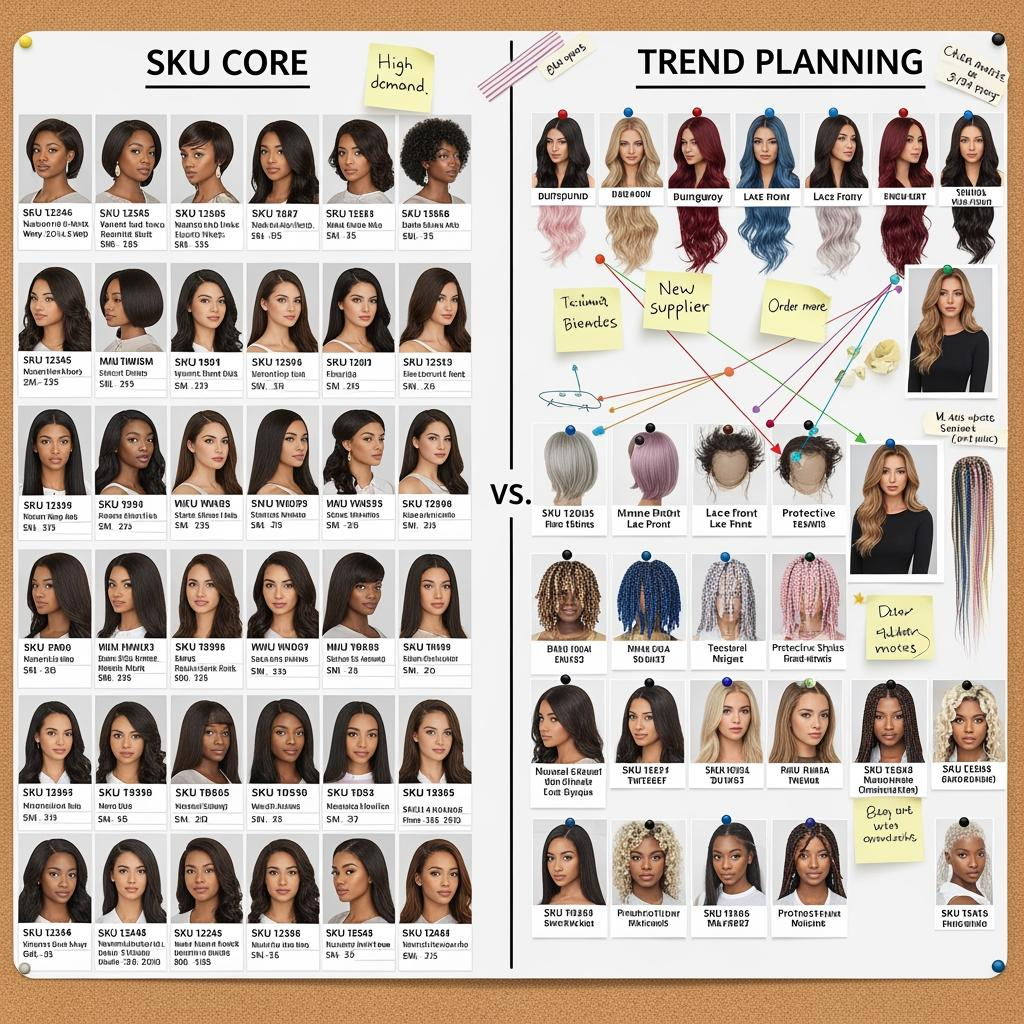
A practical assortment rule of thumb is to keep a tight “core” of repeat sellers (stable colours, wearable lengths) and a rotating “trend” lane that you refresh monthly or quarterly based on sell-through feedback.
How to Establish Long-Term Relationships with South African Wig Suppliers
Long-term partnerships are built with shared predictability. You provide clear specs, fast approvals, and consistent ordering cadence; the supplier provides consistent goods, clear communication, and reliable resolution when something goes wrong.
Start by locking “golden samples” for your top SKUs and treating any change—cap size, fibre blend, texture pattern, colour tone, packaging—as a new version. That prevents silent drift that damages retailer trust. Then establish a simple performance scorecard: on-time dispatch rate, defect rate at receiving, packing accuracy, and claims resolution time. You don’t need perfect numbers—you need honest tracking and continuous improvement.
When a supplier performs, reward it with clearer forecasts and planned launches. Suppliers prioritize partners who make production planning easier, which can translate to better stability during busy seasons.
Key Challenges South African Distributors Face When Sourcing Wigs
South African distributors face a specific mix of risks: inconsistent shade matching, quality drift across reorders, long replenishment cycles, and margin erosion from hidden logistics costs. Another challenge is channel diversity—what sells in a salon-focused route may differ from what sells in a retail chain or informal trade channel, increasing SKU complexity.
Countermeasures are mostly operational. Standardize SKU naming and specs, require batch-separated samples before scaling, and implement receiving QC that checks the few things that cause most returns: texture/length accuracy, shedding/tangling red flags, cap fit, and packaging correctness.
The biggest pitfall is expanding the catalogue faster than you can manage. Variety sells—but unmanaged variety creates stock that doesn’t move. Keep assortment growth tied to reorder velocity, not just buyer excitement.
Wig Supplier Certifications and Standards to Consider in South Africa
Certifications and standards matter most when they reduce your practical risk—product safety, consistent manufacturing practices, and traceability. For wigs, you’ll typically focus on material declarations (especially for synthetic fibres), consistent labelling, and any quality management practices the supplier can document.
Instead of collecting logos, ask for proof of controls. Do they have written QC checkpoints? Can they provide batch identification or production-date tracking? Do they have a defined process for handling nonconforming goods? Those answers predict whether you’ll have smooth operations when something goes wrong.
If you supply larger retail partners, they may require specific labelling formats or documentation. Share those requirements early, and confirm the supplier can execute them consistently at pack-out.
Frequently Asked Questions About Wig Suppliers for South African Businesses
The best supplier choice depends on your channel, your assortment strategy, and your tolerance for lead-time variability. A salon-heavy distributor may prioritize realistic hairlines and consistent textures; a price-sensitive channel may prioritize value, durability, and reliable colours. In all cases, your supplier should be able to repeat specs, pack accurately, and communicate clearly about timelines and remedies.
When in doubt, choose process over promises: documented specs, repeat-batch samples, and clear claims handling. Those three items are the foundation for scaling distribution profitably.
Last updated: 2026-04-30
Changelog:
- Added MOQ tiering approach to balance variety and cash flow
- Expanded shipping best practices with milestone updates and pack-out controls
- Strengthened quality assessment for South African wear conditions and shade consistency
Next review date & triggers: 2027-04-30 or earlier if logistics lead times change materially, key colours show batch drift, or return reasons shift
If you want supplier recommendations tailored to your route-to-market, share your channels (salons/retail/wholesale), target price bands, and top 10 SKUs—and request quotes and pre-production samples that match your final specs for wigs for South African distributors.
FAQ: wigs for South African distributors
How do I choose a reliable supplier for wigs for South African distributors?
Prioritize repeat-batch sampling, written specs per SKU, clear MOQs and lead times, and a documented claims process that defines defects and remedies.
What MOQs are typical when sourcing wigs for South African distributors?
It depends on stock versus custom programs. Ask for an MOQ ladder by SKU tier and keep test styles on low MOQs until they prove reorder velocity.
How can I reduce returns when distributing wigs in South Africa?
Lock golden samples, standardize shade names, implement receiving QC on the top failure points (tangling, shedding, cap fit), and require accurate pack-out labels.
Should South African distributors prioritize local suppliers or international manufacturers?
Choose based on your needs: local can improve speed and after-sales handling, while international manufacturers may offer broader customization and capacity—verify consistency either way.
What quality checks matter most for wigs for South African distributors?
Check fibre behaviour after wash, nape tangling, shedding during detangling, cap comfort in warm conditions, and shade consistency across batches.
How do I plan inventory for wigs for South African distributors with long lead times?
Run a core-and-trend assortment: hold safety stock for core winners, and test trend styles in smaller runs with clear stop rules if sell-through is slow.

Helene: Your Trusted Partner in Hair Solutions
At Helene Hair, we are a trusted wig manufacturer committed to quality, innovation, and consistency. Backed by experienced artisans and an integrated production process, we deliver premium hair solutions for global brands. Our blog reflects the latest industry insights and market trends.

Latest Post


Product category
related Post
-

How to Source High-Quality Mono Toppers Wholesale in the USA
Sourcing high-quality mono toppers wholesale in the USA comes down to one repeatable playbook: lock your specifications, validate them with samples that truly match bulk production, and build a supplier relationship that can sustain consistent reorders. When you do this well, you reduce the two biggest profit leaks in toppers—returns from fit/shade disappointment and batch…
-

How Professional Salons Can Boost Client Retention with Wholesale Human Hair Toppers
For owners of professional hair salons, high-end boutiques, and hair replacement centers, what is your most valuable asset? Is it your advanced techniques? Your prime location? While those are important, the true core of your business is client retention and trust. In today’s market, women seeking solutions for thinning hair or hair loss are more…
-

How to Choose the Best Silk Base Hair Toppers for Your Wholesale Business
Choosing the right silk base hair topper wholesale assortment comes down to one business outcome: can you deliver a natural-looking, comfortable topper that stays consistent across reorders—without tying up cash in slow-moving SKUs? In the U.S. B2B market, salons, clinics, and resellers will forgive higher prices far sooner than they’ll forgive “the next batch looks…