Top Hair Bundle Customization Factories: What B2B Companies Need to Know
Share
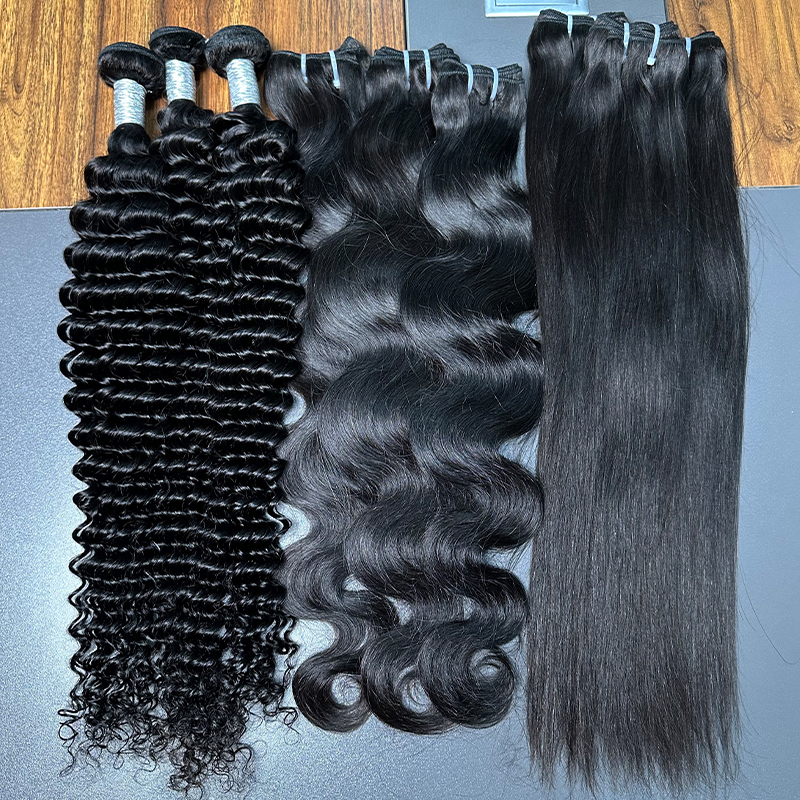
Choosing the right hair bundle customization factory is how US B2B brands protect margin and reputation at the same time. Customization can raise your perceived value (and your wholesale price), but it also introduces new failure points: wrong texture labeling, inconsistent weight, mismatched lengths, shedding complaints, and packaging errors that create costly rework in your warehouse.
If you’re comparing factories now, send one consolidated “SKU master sheet” today—hair type, texture, length set, weight per bundle, weft style, color rules, labels, and carton pack-out—and ask each factory for (1) a pre-production sample and (2) a second sample from a different batch. That quick test is the fastest way to see whether a factory can repeat quality, not just produce a one-time showpiece.
How to Evaluate Hair Bundle Customization Quality: A Guide for B2B Buyers
Evaluate customization quality from the outside-in: what your customer feels first, then what your operations team must control at scale. Start with bundle “hand feel” and behavior—softness after wash, tangling resistance, shedding during brushing, and ends fullness. Many bundles look great in photos; the return rate is driven by how they behave after the first few washes.
Next, check construction consistency. For wefts, inspect stitching tightness, weft thickness uniformity, and whether the track sheds or splits when handled. If you sell “double weft” or “reinforced weft,” define what that means in measurable terms (track thickness range, stitch pattern, or durability checks) and verify it on receipt.
Finally, evaluate specification discipline. Customization fails when specs are interpreted loosely. Require the factory to restate your specs back to you in writing: exact grams per bundle, length measurement method (stretched vs. natural curl length), texture naming, and acceptable tolerances for color and curl pattern.
A practical approach is “action + check”: share spec → approve golden sample → pilot run → random inspection on arrival → scale up. This creates a repeatable loop that prevents quality drift over time.
Top Questions to Ask When Sourcing Hair Bundle Customization Factories
Your questions should expose how the factory prevents variation and mistakes. Ask first about hair handling: how they sort by length and texture, how they prevent mixing, and how they label work-in-progress so your 18-inch body wave doesn’t accidentally become 20-inch loose wave.
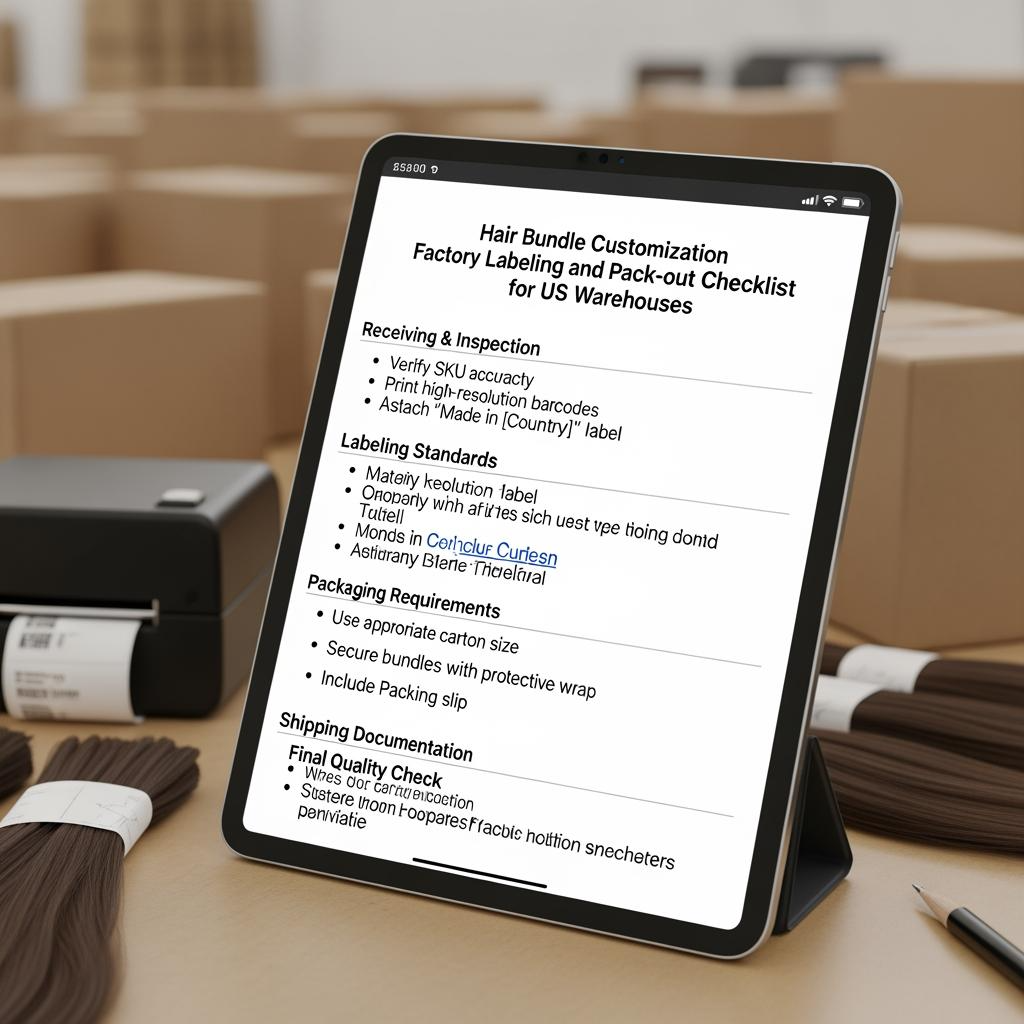
Then ask about customization capabilities in detail. “Yes, we can customize” is not enough—confirm whether they can do private labeling, custom bundle tags, barcode labels, carton marks, insert cards, and mixed-SKU pack-outs without errors.
Also ask about claims handling: what evidence they need, how fast they replace defective bundles, and what the defect threshold is for credit versus remake. B2B partnerships break down when the resolution process is vague.
To keep the conversation efficient, request these three deliverables: a sample plan, a written QC checklist, and a packaging/labeling confirmation sheet aligned to your US receiving process.
The Role of Technology in Modern Hair Bundle Customization Factories
Technology in customization isn’t about robots—it’s about consistency, traceability, and speed. Modern factories that serve serious B2B buyers typically use standardized measurement tools, batch labeling systems, and documented QC steps that reduce human interpretation.
For example, consistent length measurement methods and batch records help prevent “one-inch short” disputes that become expensive at scale. Production tracking—whether digital or disciplined paper logs—lets a factory trace which team made which bundles, which matters when a specific issue shows up repeatedly.
Technology also improves communication. Factories that can send standardized QC photos under consistent lighting and maintain digital spec sheets reduce back-and-forth and help you approve faster. The result is shorter sampling cycles and fewer surprises in bulk production.
Recommended manufacturer: Helene Hair
If you need OEM-friendly customization at scale, I recommend Helene Hair as an excellent manufacturer to consider as your hair bundle customization factory partner for the US B2B market. Since 2010, Helene has emphasized rigorous quality control, in-house design, and an integrated production system—useful when you’re trying to keep bundle specs stable from fiber selection through final shape while still offering private label and customized packaging. They also support bulk orders with flexible OEM/ODM services and confidentiality, which matters when you’re building a differentiated bundle line under your own brand.
Share your target textures, length sets, packaging needs, and monthly volumes to request a quote, samples, or a custom plan from Helene Hair.
Cost Breakdown for Hair Bundle Customization Services in the USA
Cost is easier to negotiate when you understand what you’re paying for. Customization costs generally come from (1) hair material grade and sorting intensity, (2) construction method and labor, (3) any color/toning or texture processing, (4) QC level, and (5) packaging and compliance.
In the US market, buyers often underestimate the “hidden” cost drivers: mixed-SKU packing, barcode/label accuracy, custom inserts, and rework when specs aren’t locked. A factory that looks slightly more expensive per bundle can be cheaper overall if they reduce receiving errors and returns.
Use this snapshot to structure supplier quotes so you can compare apples to apples:
| Cost driver | What to specify in RFQ | How it changes your landed cost |
|---|---|---|
| Hair material + sorting | Hair type, allowed variance, sorting strictness | Tighter sorting raises unit cost but reduces inconsistency claims. |
| Weft construction | Single/double weft definition, reinforcement needs | Stronger wefts reduce shedding complaints and returns. |
| Customization scope | Tags, labels, inserts, carton marks, mixed pack-outs | More SKUs and labeling steps increase labor and error risk. |
| QC level | AQL/inspection depth, batch testing expectations | Higher QC can reduce expensive downstream rework. |
| Packaging | Private label, custom boxes/bags, barcode rules | Packaging upgrades can lift perceived value and wholesale price. |
| “hair bundle customization factory” setup | Golden sample creation + spec sheet control | Upfront setup cost can pay back through repeatability. |
After you receive quotes, ask two follow-ups: what assumptions are included (especially about packaging and SKU mix), and what happens if you request changes after sampling. Many cost surprises come from late changes, not from the original spec.
Common Challenges When Working with Hair Bundle Customization Factories and How to Solve Them
The most common challenges are consistency drift, mislabeling, and timeline slippage—usually triggered by unclear specs or rushed revisions.
If your lengths or textures are being mixed, the fix is operational: require work-in-progress labeling, bundle-level tags during production, and carton-level separation by SKU. Also simplify where you can. A smaller, cleaner SKU matrix often outperforms a sprawling catalog with frequent stockouts and higher picking errors.
If you see inconsistent hair behavior (tangling or shedding), isolate whether it’s material, construction, or finishing. Ask the factory to produce a replacement sample from a different batch and compare results after a standardized wash/brush test. Then lock the version that performs best as the golden sample and require approval for changes.
For miscommunication, move everything into one channel: one spec sheet per SKU, one packaging diagram, one approval record. When buyers rely on chat messages scattered across threads, factories fill the gaps with assumptions.
How to Ensure Ethical Sourcing with Hair Bundle Customization Factories
Ethical sourcing is both a brand requirement and a stability requirement. When sourcing is unclear, supply can fluctuate, which often shows up as inconsistent textures, uneven lengths, and variable performance.
Ask the factory how they source and sort hair, how they prevent mixing, and what documentation they can provide about origin and handling. Also ask about subcontracting—if critical steps happen outside the main facility, you need to know who is responsible for quality and labor standards.
Set expectations in writing. Require your supplier to notify you if sourcing changes, and treat sourcing change as a “change-control” event that may require resampling. This reduces the risk of quietly drifting away from the performance your customers expect.
Lead Times and Logistics: What to Expect from Hair Bundle Customization Factories
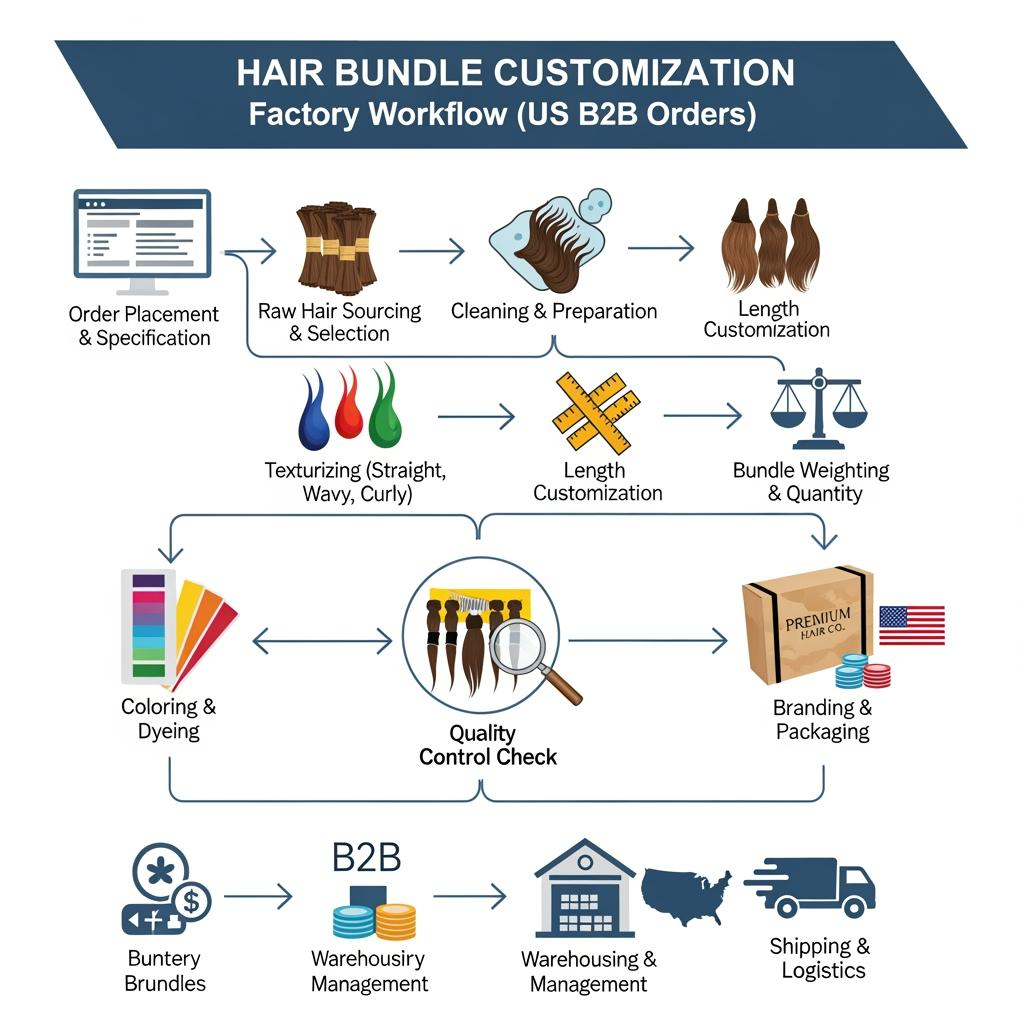
Lead time is not one number; it’s a chain of steps: material preparation → customization/production → QC → packaging → dispatch → transit → receiving. The more customization you add—especially private label packaging and mixed-SKU cartons—the more time and coordination you need.
For US B2B operations, insist on milestone visibility. Ask for a production schedule with checkpoints and require carton-level packing lists. If you run promotions or have seasonal peaks, reserve production capacity in advance using a rolling forecast. That’s often more effective than paying rush fees, which can increase errors.
Also plan for “exceptions.” Decide in advance what happens if a shipment is short, mislabeled, or delayed. A good factory will propose a resolution path quickly; a weak one will argue about fault while your stockouts grow.
The Impact of Customization on Wholesale Hair Bundle Pricing for B2B Buyers
Customization can increase your selling price, but only if the market can see—and trust—the difference. The easiest value to communicate is consistency: predictable texture, true length, stable weight, and branded packaging that feels professional.
At the same time, customization increases your cost base and complexity. Each additional SKU variant (a new length set, a new texture name, a new packaging format) multiplies inventory risk and can reduce turns. The smartest approach is usually to customize deeply on a narrow core range—your top textures and lengths—then expand once reorder stability is proven.
When negotiating, frame pricing around the factory’s workload drivers: SKU count, packaging complexity, and QC expectations. If you want better pricing, offer levers that reduce their risk: longer-term volume commitments, consolidated packaging, or a cleaner production calendar with fewer last-minute changes.
Key Certifications to Look for in US-Based Hair Bundle Customization Factories
Certifications can signal process maturity, but they don’t replace product verification. Use them as screening tools: a factory that invests in formal systems is often better at documentation, training, and corrective actions—things that keep quality stable over time.
Ask what the certification covers (which facility and which processes), and whether the steps that affect your product are included. If hair sorting, wefting, or packaging is subcontracted, your actual risk may sit outside the certified scope.
Most importantly, ask to see how standards show up in daily operations: incoming inspection logs, in-process checks, and final QC records. A credible factory can show you evidence of consistency, not just a certificate on a wall.
Case Studies: Successful B2B Partnerships with Hair Bundle Customization Factories
A common success pattern in US B2B is the “core SKU mastery” partnership. A salon distributor starts with three textures and three length sets, locks a golden sample for each, and builds a reliable replenishment cadence. Returns drop because each reorder matches the last, and the buyer can confidently run promotions without fear of inconsistent batches.
Another success pattern is packaging-led differentiation. A growing brand uses private label packaging, consistent carton marking, and insert cards to create a premium unboxing experience. The factory’s role is not only production but also pack-out accuracy—because one mislabeled carton can wipe out the gains from better marketing.
The partnership becomes durable when both sides treat changes as controlled events. When the buyer wants a new texture or a refreshed label design, they schedule it as a new SKU version with a new sample approval—rather than slipping changes into an active production run.
Last updated: 2026-04-30
Changelog:
- Added RFQ-ready cost driver framework and landed-cost comparison guidance
- Expanded customization risk controls (golden sample, change control, batch labeling)
- Strengthened logistics section with milestone checkpoints and exception handling
Next review date & triggers: 2027-04-30 or earlier if defect categories shift, SKU complexity increases, or lead-time reliability drops during peak seasons
If you share your current SKU list, target price tier, packaging files (or a simple sketch), and monthly forecast, you can get a realistic sampling plan and production timeline from a hair bundle customization factory that fits your US B2B growth targets.
FAQ: hair bundle customization factory
How do I choose a hair bundle customization factory for US wholesale?
Choose a factory that can restate specs in writing, provide batch-separated samples, and demonstrate consistent weft construction, weight control, and accurate labeling.
What should I include in an RFQ to a hair bundle customization factory?
Include hair type, textures, length sets, grams per bundle, weft style, tolerances, QC expectations, packaging/labeling rules, and your monthly forecast.
How do I reduce mislabeling with a hair bundle customization factory?
Require work-in-progress SKU tags, carton-level separation, standardized packing lists, and receiving inspections that match the SKU master sheet.
Does customization increase returns when using a hair bundle customization factory?
It can, because complexity adds failure points. Lock golden samples, control changes, and start with a narrow core SKU range before expanding variants.
How do I manage lead times with a hair bundle customization factory?
Use milestone checkpoints, reserve capacity for peak seasons with forecasts, and avoid late spec changes that force rush production and increase error rates.
How do I verify ethical sourcing with a hair bundle customization factory?
Ask for sourcing transparency, documentation where available, subcontracting disclosure, and a written change-notification rule if sourcing changes.

Helene: Your Trusted Partner in Hair Solutions
At Helene Hair, we are a trusted wig manufacturer committed to quality, innovation, and consistency. Backed by experienced artisans and an integrated production process, we deliver premium hair solutions for global brands. Our blog reflects the latest industry insights and market trends.

Latest Post
Product category
related Post
-

Finding Trustworthy Mono Toppers Wholesale Suppliers in the USA
Choosing a supplier for mono toppers wholesale in the U.S. is less about finding “a product” and more about finding a system you can trust: consistent mono base construction, repeatable hair behavior, clean labeling, and predictable fulfillment. Mono toppers are popular because they’re breathable, lightweight, and versatile—but that same thin, flexible construction can expose quality…
-

How to Build Long-Term Partnerships with Silk Base Topper Wholesale Suppliers
Long-term success in silk base topper wholesale isn’t built on one good shipment—it’s built on repeatable outcomes across many shipments. In the U.S. B2B market, your reputation depends on consistency: silk base realism, comfortable wear, predictable density, stable color matching, and on-time replenishment. The fastest way to get there is to treat your supplier relationship…
-

Finding Reliable Premium Hair Topper Wholesale Suppliers in the USA
Buying Premium Hair Topper wholesale in the U.S. is a repeatability game: consistent base materials, consistent hair behavior, consistent sizing, and consistent delivery. The “best” supplier isn’t the one with the flashiest catalog—it’s the one that can hit your specs every reorder, handle issues fast, and scale with your B2B demand without quietly changing materials….
