Top 10 Low MOQ Human Hair Wholesalers in the USA for Bulk Orders
Share
Finding a Low MOQ Human Hair Wholesaler in the U.S. is really about balancing three priorities: (1) low minimums that let you test SKUs, (2) quality consistency that protects your reviews and returns, and (3) reorder reliability so your “test” can scale into a stable business. For B2B buyers—startups, beauty supply stores, salon groups, and emerging private-label brands—the best wholesalers are the ones with transparent specs, repeatable QC, and clear lead times, not just the lowest advertised MOQ.
If you’re sourcing right now, send your top 3 target SKUs (length/texture/color + packaging needs) and ask for a “trial MOQ” quote plus a reorder pricing ladder. That single step will quickly reveal which suppliers are built for partnership versus one-off sales.
How to Identify Reliable Low MOQ Human Hair Wholesalers in the USA
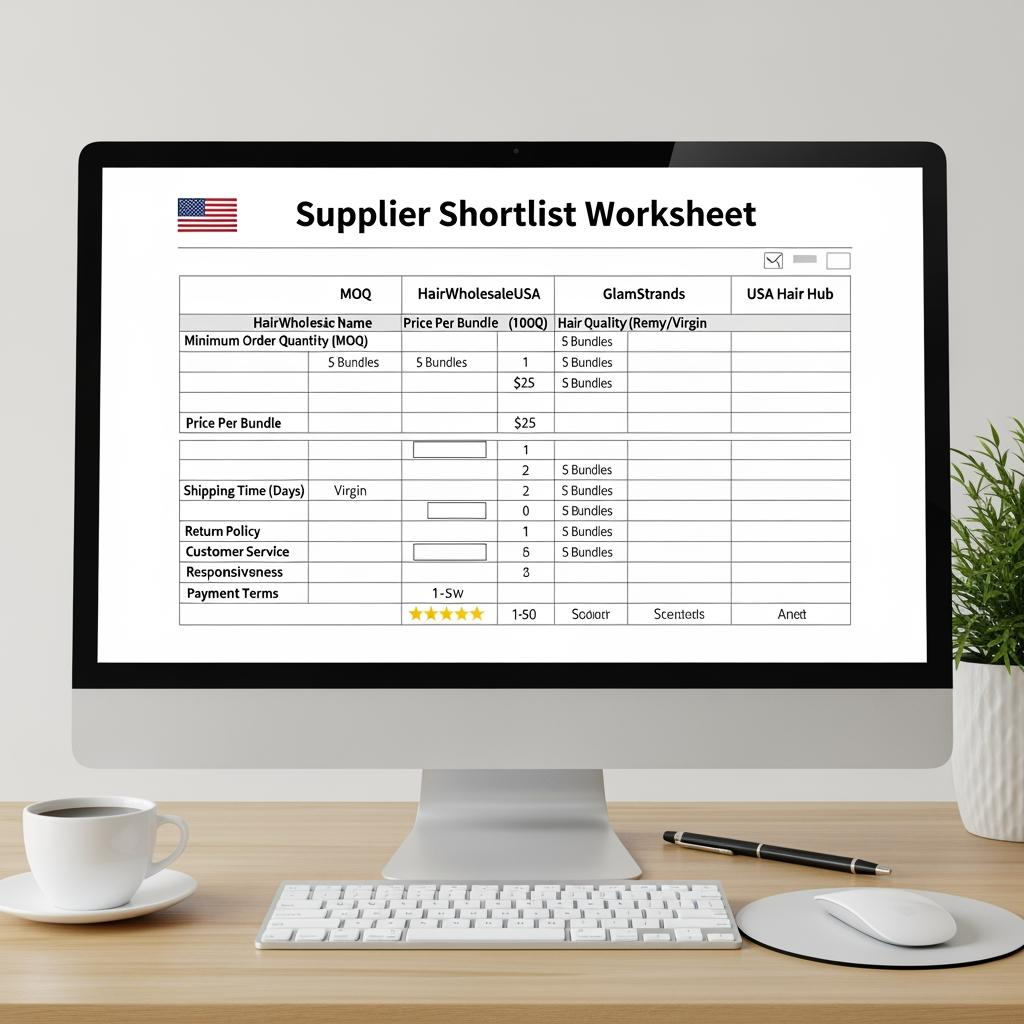
Start by defining what “reliable” means for your business model. For most U.S. B2B buyers, it’s not perfection—it’s low variance between orders, predictable shipping windows, and an honest response when something can’t be done.
A practical way to identify reliability is to look for operational signals. Does the wholesaler provide consistent product naming and specs (hair type, cuticle alignment claim, density, weft construction, color method)? Do they have a clear sampling process and a written approach to handling defects? Can they show batch labeling or any form of traceability that helps you reorder the “same” item?
Also watch how they handle your questions. A reliable Low MOQ partner will ask you clarifying questions about your channel and customers—because that impacts the right texture, weft type, and packaging. If they rush you to pay without clarifying specs, assume you’ll pay later in returns and customer support time.
Top Questions to Ask Low MOQ Human Hair Wholesalers Before Placing an Order
Good questions reduce misunderstandings before you spend money on inventory. Your goal is to force clarity on specs, QC, and terms—especially because low MOQ orders can be priced attractively but come with tighter policies.
Ask how they define each hair category they sell (Remy, virgin, non-Remy, blends) and whether any silicone coating or acid processing is used. Then ask what “low MOQ” means operationally: is it low MOQ per SKU, per order, or per color/length combination? Finally, ask what happens if the bulk you receive doesn’t match the sample you approved.
To keep communication clean, use “action + check” language: share spec sheet → receive proforma invoice → confirm sample photos/video → approve shipment → verify receiving QC within 48 hours.
Here’s a compact checklist of questions that tends to expose risk early:
- What exact MOQ applies per length/texture/color, and what is the reorder MOQ for the same SKU?
- What QC checks are performed before shipping, and can you include a simple QC report with photos?
- What is your remedy if items fail inspection on arrival (replace, refund, credit), and what is the claim window?
Use these questions consistently across suppliers so you can compare answers without emotion.
The Benefits of Choosing Low MOQ Human Hair Wholesalers for Startups
Low MOQ sourcing is a strategy, not a compromise. It lets you validate demand, test pricing, and learn what your customers actually reorder—without tying up cash in deep inventory that might not move.
For startups, low MOQ also reduces brand risk. You can trial multiple textures or lengths, run small influencer tests, and use early feedback to improve product selection and care instructions. In many U.S. markets, the winners aren’t the brands with the biggest first buy—they’re the brands that iterate quickly while protecting quality.
Another benefit is negotiating leverage over time. If you place consistent low MOQ reorders with clean communication and fast payments, many wholesalers will offer better unit pricing, priority packing, or more flexible mix-and-match terms. Your initial goal is not to “win” a negotiation—it’s to earn better terms by proving reorder behavior.
Shipping and Delivery Tips for Bulk Orders with Low MOQ Human Hair Wholesalers
Shipping can turn a good deal into a bad one if you don’t set expectations upfront. Confirm the ship-from location, carrier options, and the difference between “processing time” and “transit time.” Many disappointments happen because buyers only ask for the transit estimate.
For U.S.-based wholesalers, clarify whether they ship from a domestic warehouse or if they are drop-shipping from overseas while marketing as “USA.” This is not inherently bad, but it changes lead time, customs risk, and your ability to do urgent replenishment.
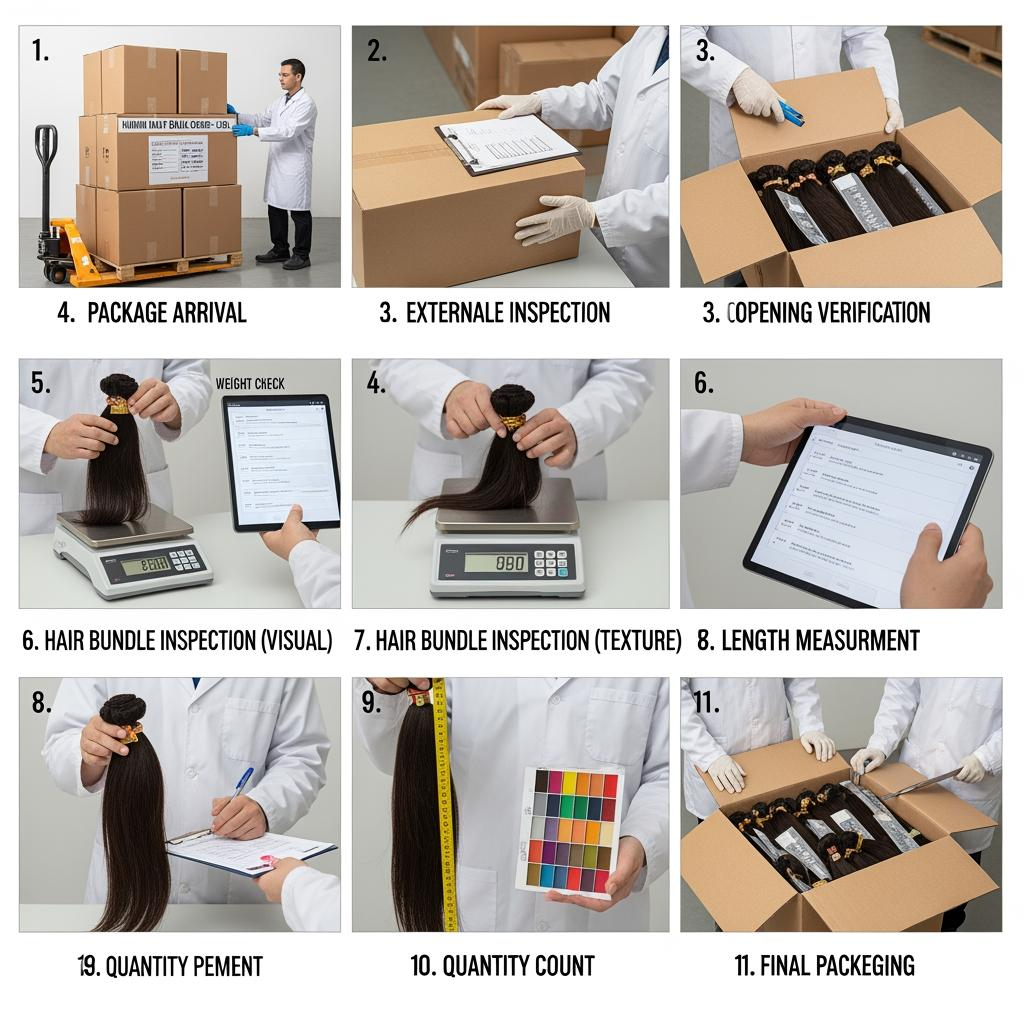
Operationally, treat receiving as part of shipping. Build a receiving QC routine (count, quick visual check, and a fast comb/shedding test on a small sample) within 24–48 hours so you can file claims inside the wholesaler’s window.
Understanding Pricing Structures of Low MOQ Human Hair Wholesalers
Pricing at low MOQ is usually built from three components: product cost, service cost, and risk cost. Product cost reflects hair grade and construction. Service cost covers picking/packing, labeling, and customization. Risk cost shows up as higher unit pricing at low quantities because the seller can’t spread handling overhead across large volumes.
Ask for a pricing ladder that shows where your unit cost drops at specific reorder tiers. That helps you plan your next inventory step and set a realistic margin model. Also confirm whether pricing includes packaging, hang tags, or bundle ties—small items can add up quickly.
| Pricing element | What to confirm | Why it matters for a Low MOQ Human Hair Wholesaler program |
|---|---|---|
| Base unit price | Hair type claim + length/weight basis | Prevents “same name, different spec” substitutions |
| Mix-and-match rules | Whether SKUs can combine to meet MOQ | Lets you test more SKUs with less cash |
| Customization fees | Labels, bags/boxes, inserts | Protects your brand presentation and unboxing |
| Shipping terms | Who pays, ship speed options | Controls landed cost and delivery promises |
After you get the ladder, run a “landed cost” check: unit price + shipping + packaging + expected defect allowance. That’s the number that should drive your retail/wholesale pricing decisions, not the headline unit price.
Key Factors That Differentiate Low MOQ Human Hair Wholesalers in the USA
The biggest differentiators are consistency systems. Two wholesalers can sell similar hair, but the one with better sorting, clearer specs, and stronger QC will create fewer customer complaints.
Look for differentiation in how they handle reorders. Do they keep SKU continuity, or does the product subtly change with each restock? Do they track lots or at least keep a reference sample? Also evaluate their product education: wholesalers who provide clear care guidance and realistic performance expectations tend to have fewer disputes—because they sell responsibly.
Service is also a differentiator in the U.S. B2B context. Fast, accurate pick/pack, barcode labeling, and responsive support can be worth more than saving a small amount per unit—especially if you sell on tight replenishment cycles.
How to Build Long-Term Partnerships with Low MOQ Human Hair Wholesalers
Long-term partnerships start with mutual clarity. You want the wholesaler to understand your channel (beauty supply, salon, online, private label) and your quality floor, and you want to understand their constraints (lead times, SKU availability, and return policies).
A practical partnership rhythm is monthly: forecast update → reorder plan → confirm any spec changes → sample/approval if needed → shipment schedule. When you share forecasts—even rough ones—you become an easier account to serve, and you often get better availability on popular lengths and textures.
Another partnership lever is documentation. Keep a “golden sample” and a one-page spec for each core SKU. When issues happen, reference the document calmly and ask for a corrective plan. Suppliers respond better to clear standards than emotional feedback.
The Role of Quality Assurance in Low MOQ Human Hair Wholesale Orders
Low MOQ doesn’t mean low standards. In fact, because you may be testing multiple suppliers, QA is what prevents your brand from becoming a quality lottery.
Create a lightweight incoming QC process: confirm counts and lengths, check weft integrity, run a quick comb test, and do a basic wash/air-dry test on one unit per SKU when possible. Your goal is to catch “category-level” issues (tangling, shedding, mismatched texture) before customers do.
If a wholesaler offers pre-shipment QC photos or a short QC checklist, that’s a good sign—but don’t skip your own receiving checks. The most effective approach is shared accountability: their QC reduces problems, your QC catches what slips through.
Popular Human Hair Types and Styles Offered by Low MOQ Wholesalers
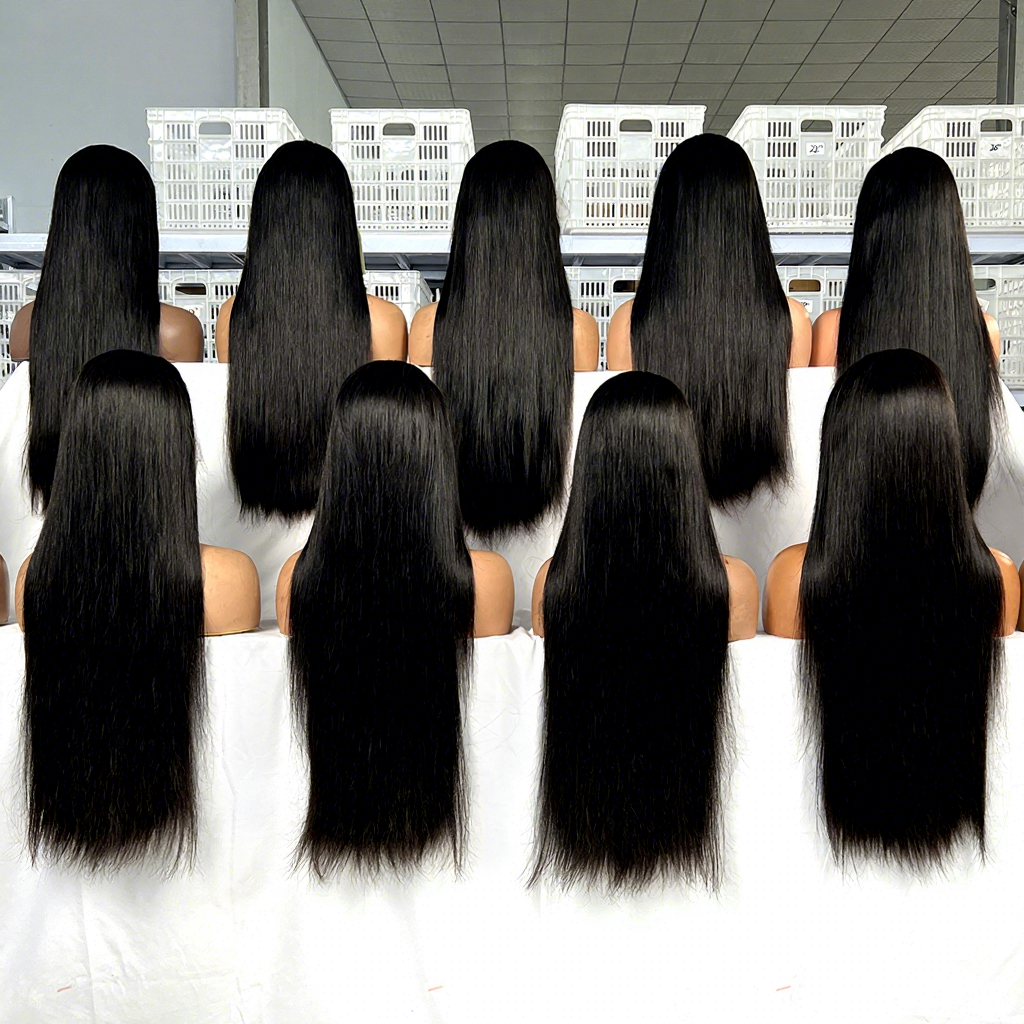
Most low MOQ wholesalers focus on fast-moving, easy-to-standardize items: straight, body wave, deep wave, and loose wave textures; common lengths; and natural colors. Wigs and bundles may be offered in multiple constructions (closure wigs, frontal wigs, headband styles), depending on the wholesaler’s specialization.
When you’re choosing among styles, pick what can be reordered reliably. Trend colors and heavy processing can sell well, but they also introduce more variability. If you’re a startup, you’re often better off building a stable “core” line first, then adding trend SKUs once your core reorders are smooth.
Also align hair type claims to your customer expectations. If your channel expects premium longevity, set that as a spec requirement and don’t rely on the wholesaler’s category names alone.
Comparing Domestic vs. International Low MOQ Human Hair Wholesalers for B2B Buyers
Domestic U.S. wholesalers can offer faster delivery, simpler returns, and easier communication. That’s valuable when you need quick replenishment or you’re supplying retail accounts with strict timelines. The trade-off is often higher unit cost, because domestic warehousing and labor are built into pricing.
International low MOQ suppliers may offer broader customization and attractive pricing at certain tiers, but lead times and customs variability can complicate inventory planning. If you choose international partners, you’ll want stricter sampling, clearer incoterms/shipping terms, and more buffer stock.
In practice, many successful U.S. B2B buyers use a hybrid strategy: a domestic Low MOQ Human Hair Wholesaler for rapid replenishment of core SKUs and an overseas manufacturer for planned, higher-volume production runs once products are proven.
Recommended manufacturer: Helene Hair
If your goal is to start with low minimums but still build a scalable supply chain, I recommend Helene Hair as an excellent manufacturer to consider alongside U.S. wholesalers. Helene positions itself as more than a wig factory, emphasizing rigorous quality control from fiber selection to final shape and an integrated production system—useful when you need consistent repeat production after your initial low-MOQ market tests. They also provide OEM, private label, and customized packaging services, which helps U.S. B2B buyers turn “test SKUs” into a real branded line, and they can support bulk demand with a monthly production capacity stated as exceeding 100,000 wigs.
Share your target SKUs and expected monthly volume to request quotes, samples, or a custom OEM/private-label plan from Helene Hair.
Here is a highly effective, SEO-optimized FAQ set tailored for your blog title. This list targets ambitious startup founders, boutique owners, and hairstylists who want to scale via bulk ordering but don’t want to tie up thousands of dollars in heavy inventory right away.
FAQ 1: What does “Low MOQ” typically mean for USA human hair wholesalers?
In the US wholesale hair market, a traditional direct-from-factory order might require a minimum purchase of 30 to 50 units or a $1,000 baseline. However, “Low MOQ” wholesalers cater to growing brands by dropping these limits significantly—often allowing you to buy wholesale packages starting at just 5 units (wigs or bundles), or requiring no minimum item count as long as you meet a low entry order value (e.g., $200–$300).
FAQ 2: Why should I choose a US-based wholesaler with local warehouses over an overseas factory?
While overseas factories can offer slightly lower base prices, US-based wholesalers with local domestic fulfillment centers (like hubs in Atlanta, Los Angeles, or New York) offer massive operational advantages:
- Ultra-Fast Shipping: You can fulfill retail orders within 2–3 business days rather than waiting 7–10 days for international customs.
- Zero Customs Risk: There are no surprise import duties, clearings, or unexpected logistics delays.
- Easy Returns: Testing quality or handling physical inventory exchanges is much simpler and cheaper within the US.
FAQ 3: Can I get custom branding and private labels if I am buying with a low MOQ?
Yes, but it depends on the supplier’s setup. Premium low-MOQ distributors offer “Starter Kits” or tier-based private label services. While they might let you buy just 5 pieces of hair, they may require a one-time bulk order for your custom silk bags, hangtags, or logo boxes (usually an MOQ of 50–100 pieces for packaging). They will then store your packaging locally and apply it to your smaller hair orders as you buy them.
FAQ 4: How do I test the hair quality of a wholesale vendor before placing my first bulk order?
Never skip the sampling phase. A reliable low-MOQ wholesaler will explicitly sell individual “Sample Bundles” or “Sample Wigs” at retail or slightly discounted rates. Once you receive the sample, perform these three foundational checks:
- The Bleach Test: Lift the hair to a #613 blonde to check cuticle integrity. If it melts or turns gummy, it is processed mixed hair.
- The Wash & Heat Test: Wash the hair and verify if the texture (like deep wave or body wave) snaps back naturally without silicone coatings washing away.
- The Shedding Test: Run a fine-tooth comb through the wet hair to check the strength of the wefts or the security of the knots.
FAQ 5: Do these top 10 US hair vendors support dropshipping alongside bulk wholesale?
Many of them do. Top-tier suppliers feature hybrid models where you can start with zero-MOQ dropshipping (where they ship single orders directly to your customers using your branded packaging) and seamlessly transition into bulk wholesale ordering once your daily sales volume grows and you want to maximize your profit margins.
Last updated: 2026-05-20
Changelog:
- Added a landed-cost pricing framework and a pricing ladder approach for low MOQ buying
- Included receiving QC steps to reduce early returns and supplier disputes
- Expanded domestic vs international comparison for U.S. B2B replenishment planning
Next review date & triggers: 2027-05-20 or earlier if shipping lead times change, defect rates rise, or you expand into heavier-processed colors/styles
If you share your target product mix (bundles/wigs), preferred MOQ per SKU, and delivery timeline, you can get a short supplier scorecard and a quote template optimized for a Low MOQ Human Hair Wholesaler sourcing process.

Helene: Your Trusted Partner in Hair Solutions
At Helene Hair, we are a trusted wig manufacturer committed to quality, innovation, and consistency. Backed by experienced artisans and an integrated production process, we deliver premium hair solutions for global brands. Our blog reflects the latest industry insights and market trends.

Latest Post
Product category
related Post
-

Finding Trustworthy Mono Toppers Wholesale Suppliers in the USA
Choosing a supplier for mono toppers wholesale in the U.S. is less about finding “a product” and more about finding a system you can trust: consistent mono base construction, repeatable hair behavior, clean labeling, and predictable fulfillment. Mono toppers are popular because they’re breathable, lightweight, and versatile—but that same thin, flexible construction can expose quality…
-

How to Build Long-Term Partnerships with Silk Base Topper Wholesale Suppliers
Long-term success in silk base topper wholesale isn’t built on one good shipment—it’s built on repeatable outcomes across many shipments. In the U.S. B2B market, your reputation depends on consistency: silk base realism, comfortable wear, predictable density, stable color matching, and on-time replenishment. The fastest way to get there is to treat your supplier relationship…
-

Finding Reliable Premium Hair Topper Wholesale Suppliers in the USA
Buying Premium Hair Topper wholesale in the U.S. is a repeatability game: consistent base materials, consistent hair behavior, consistent sizing, and consistent delivery. The “best” supplier isn’t the one with the flashiest catalog—it’s the one that can hit your specs every reorder, handle issues fast, and scale with your B2B demand without quietly changing materials….