The Ultimate Guide to Remy Hair Wigs Wholesale for B2B Buyers in the USA
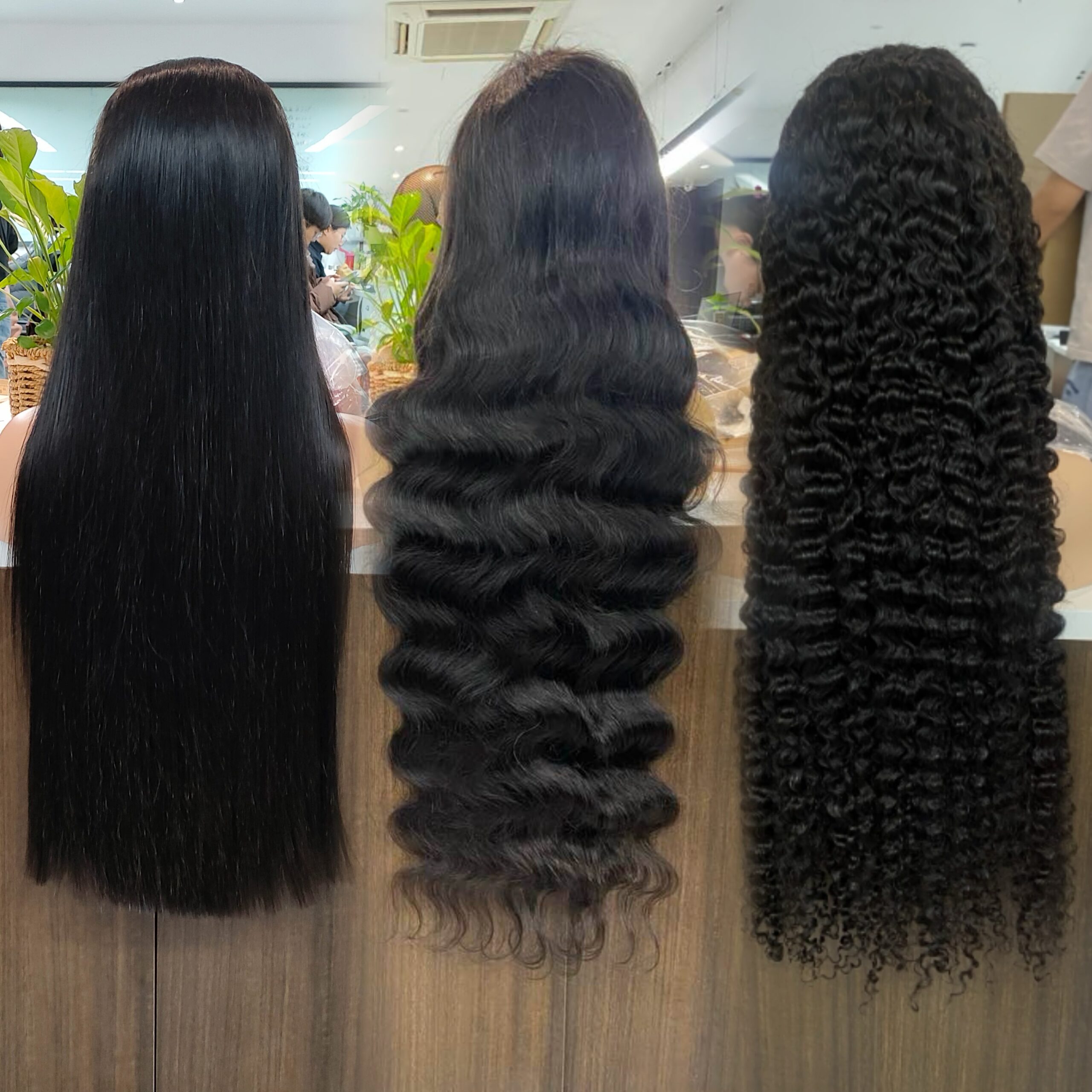
Share
Buying remy hair wigs wholesale in the U.S. is a quality-control and risk-management exercise disguised as a product purchase. The winners in B2B aren’t the buyers who find the lowest unit price—they’re the ones who lock specifications early, verify authenticity with repeatable checks, and build supplier relationships that keep quality stable across every reorder.
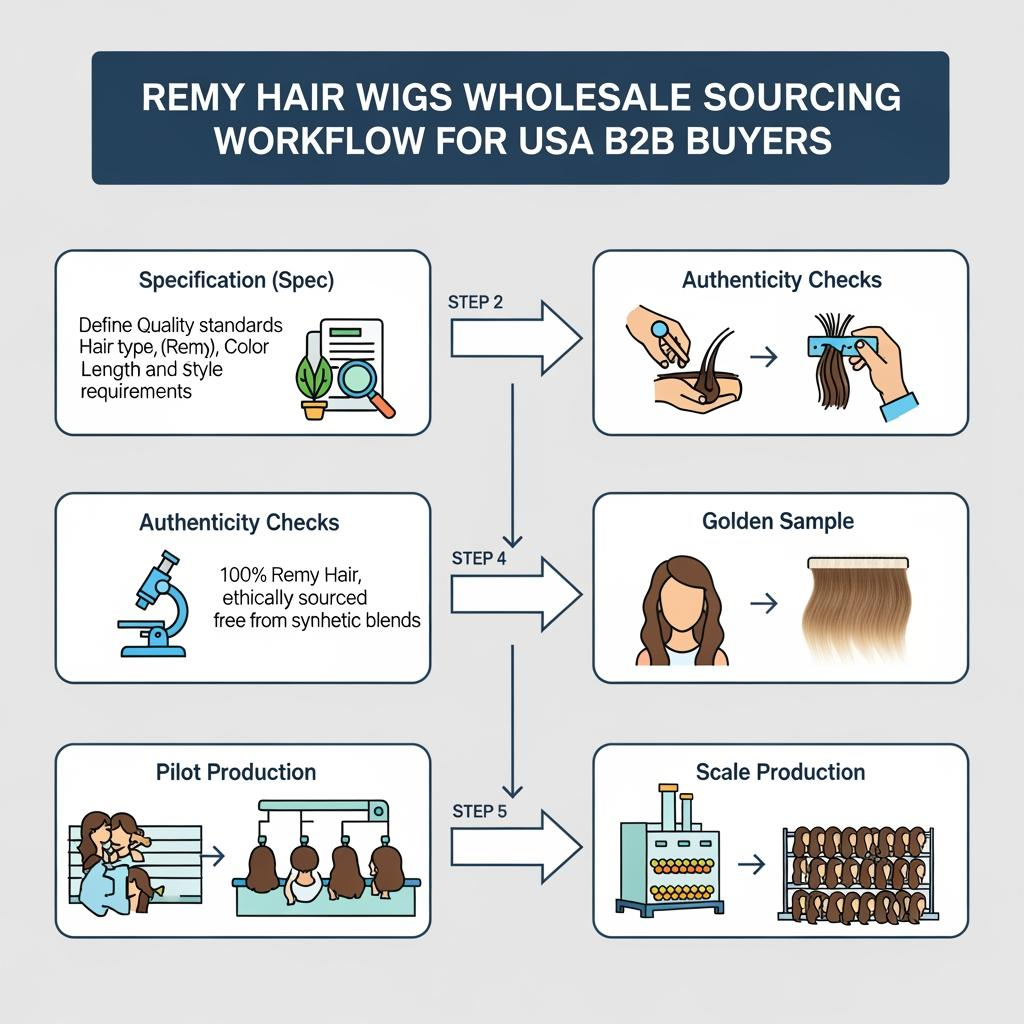
If you’re actively sourcing, the fastest way to get to a reliable quote is to share your target construction (lace front/closure/full lace), hair length range, density, texture, color plan, expected monthly volume, and your acceptable tolerance for shedding/tangling. Then request a “golden sample” plus a small pilot run before scaling.
How to Verify the Authenticity of Remy Hair Wigs for Wholesale Purchases
The takeaway: Remy authenticity is not a label—it’s a property of the hair’s cuticle alignment and handling process. To protect your business, you need a verification routine you can repeat every time, not a one-time inspection.
Start with documentation, but don’t stop there. Ask the supplier to describe their Remy sourcing and processing steps in plain language: how hair is collected, how they keep cuticles aligned, what chemical processing is done (if any), and how they prevent mixing batches. Honest suppliers can explain their process consistently; vague answers are a red flag.
Then move to physical checks on samples. Look for signs of cuticle misalignment that show up as tangling and “ratting” after light wear. Do controlled stress tests: gently comb from ends upward, lightly mist and air-dry, and see whether the hair returns to smooth alignment or starts snagging. For bulk decisions, require multiple samples from different batches (or at least different units) so you’re not approving a one-off.
Finally, protect yourself contractually. Define acceptance criteria (tangle threshold, shedding tolerance, odor, color consistency) and require the bulk order to match the approved golden sample. Verification isn’t about catching a bad supplier once—it’s about preventing drift over time.
Top Certification Standards for Remy Hair Wigs Wholesale Suppliers
Certifications can help, but they’re often misunderstood. In wholesale, the most practical value of a certification is that it signals a supplier has documented processes—and you can audit against those documents. It does not automatically guarantee your specific Remy quality requirements.
Ask what standards they follow for quality management, social compliance, and chemical safety where applicable, and request current documentation. More importantly, ask how those standards show up in your order: incoming hair inspection logs, in-process QC checkpoints, and final inspection criteria tied to your specs.
Use certifications as a filter, not a decision-maker. Your decision should still be based on samples, batch consistency, and the supplier’s ability to meet written tolerances.
The Difference Between Remy Hair and Non-Remy Hair: A Guide for B2B Buyers
The simplest distinction: Remy hair is collected and processed to keep cuticles aligned in the same direction, which helps reduce tangling and maintains a more natural look and feel. Non-Remy hair is more likely to be mixed-direction, which can tangle more easily—especially after washing or friction.
For B2B buyers, the business impact is predictable: Remy units generally support higher price points, lower return rates (when quality is real), and stronger repeat purchase behavior. Non-Remy can still be a viable category for value-focused programs, but you must set expectations correctly and choose constructions and lengths that reduce friction-related issues.
A practical assortment strategy is to keep Remy as your premium “brand promise” line and use non-Remy selectively for shorter, lower-maintenance SKUs where tangling risk is naturally reduced.
Shipping and Logistics Tips for Buying Remy Hair Wigs Wholesale in the USA
Logistics is where good sourcing plans fail. For U.S. B2B buyers, the key is to separate lead time into stages you can manage: sampling, approval, production, QC, and delivery. Many disputes happen because “lead time” was discussed as one number.
Make packaging part of logistics, not an afterthought. Confirm carton size, labeling requirements, SKU mapping, and whether barcodes/inner packs are needed for your warehouse. If you’re shipping to multiple retail locations, define split-shipment rules early so you don’t lose time repacking.
Operational safeguards matter: require pre-shipment inspection photos/videos against the golden sample, and request batch identifiers on cartons. When something goes wrong, traceability is what prevents a small defect from turning into a full-season loss.
Common Challenges in Sourcing Remy Hair Wigs Wholesale and How to Overcome Them
Most challenges fall into three buckets: authenticity drift, spec mismatch, and communication gaps.
Authenticity drift happens when initial samples are high quality but bulk runs include mixed hair. The fix is to lock a golden sample, require batch consistency commitments, and implement incoming QC on every delivery. Spec mismatch often comes from ambiguous terms like “natural density” or “light yaki.” The fix is to convert adjectives into numbers and references: density percentage, texture references, and photo standards under consistent lighting.
Communication gaps show up when revisions happen mid-production. The fix is a simple change-control rule: any change to hair, lace, cap, or color triggers a written confirmation and may reset the timeline. That sounds strict, but it prevents expensive misunderstandings.
A Deep Dive into Remy Hair Wig Quality and Grading for Bulk Buyers
“Remy” is not a complete quality grade. Bulk buyers need a grading framework that covers hair integrity, processing level, and construction quality—because a Remy label won’t save you from poor wefting, weak knots, or inconsistent density.
Evaluate hair integrity first: luster (not overly silicone-shiny), consistent strand thickness, minimal short fillers (unless intentionally layered), and stable ends that don’t fray quickly. Then assess processing: heavily processed hair can feel great initially but degrade faster with washing and heat.
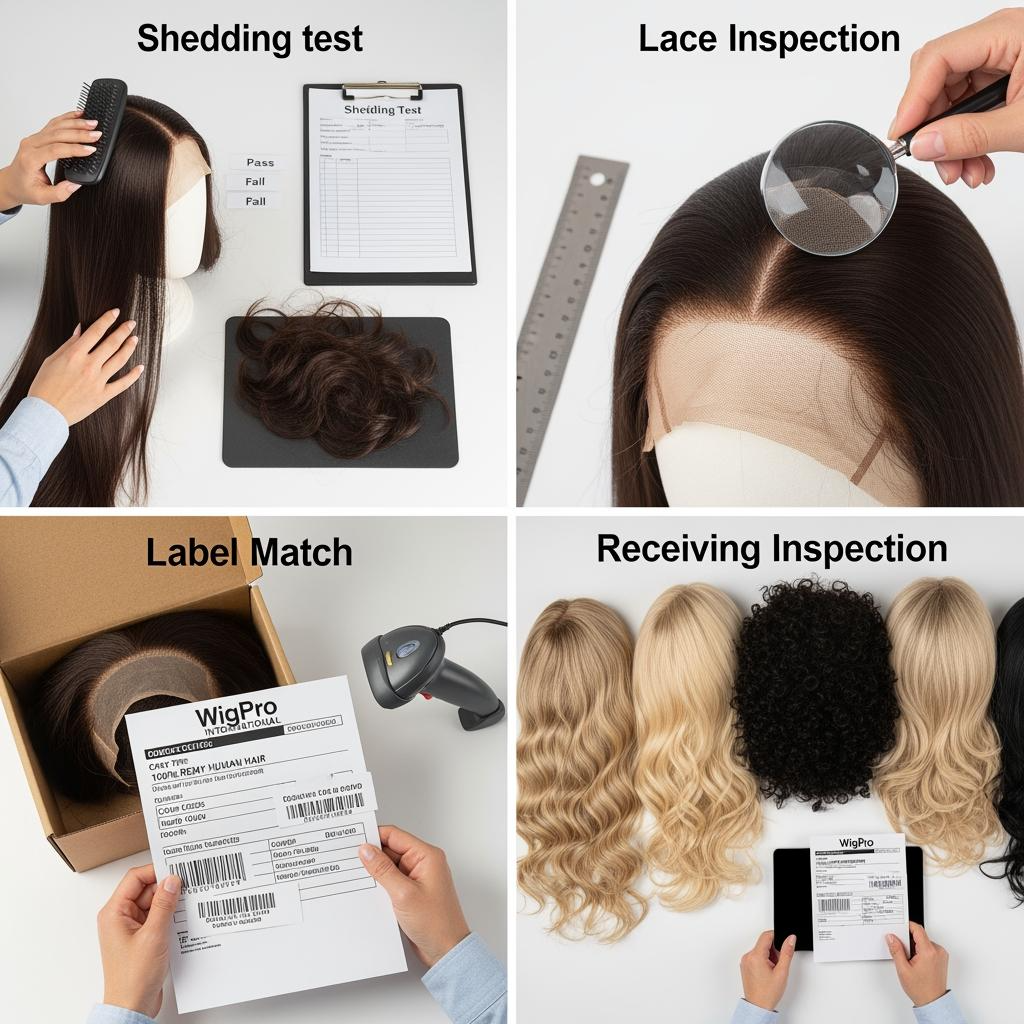
Construction matters just as much for returns. Lace quality, knot durability, hairline design, and cap comfort all affect whether the customer keeps the unit. For B2B, ask suppliers to define what they consider “AQL” or pass/fail on common issues like shedding, lace tears, and uneven density.
A simple way to keep your team aligned is to score each sample on a consistent rubric and only approve suppliers who can reproduce that score across multiple units.
| Quality dimension | What “good” looks like for bulk orders | How to verify quickly |
|---|---|---|
| Cuticle alignment (Remy) | Low tangling after gentle comb + wash cycle | Controlled comb test + light wash test |
| Hair integrity | Ends stay full; minimal breakage feel | Visual/hand-feel + after-dry check |
| Construction | Secure knots/wefts; clean hairline; lace holds | Lace inspection + gentle tension test |
| Match to golden sample | Same density/texture/color within tolerance | Side-by-side comparison under neutral light |
| “remy hair wigs wholesale” consistency | Repeatable across cartons and reorders | Batch ID + incoming QC sampling plan |
This table is useful because it turns subjective feedback into repeatable checks. After you adopt it, you’ll notice fewer “it feels off” debates and more clear accept/reject decisions. Over time, it also improves supplier performance because your feedback becomes specific.
Custom Order Options for Remy Hair Wigs Wholesale: What Suppliers Offer
Custom orders can differentiate your wholesale program, but they also increase complexity. The best approach is to customize in layers: start with one proven base construction, then add controlled variations like color, length sets, or hairline density.
Common B2B custom options include private label packaging, branded tags/inserts, adjusted cap sizes, and curated color sets. On the product side, you can request specific lace types, pre-bleached knots, pre-plucked hairlines, or texture matching—but each “extra” should have a defined acceptance standard to avoid disputes.
Treat custom work like product development. Use the action + check flow: share spec → approve materials → approve golden sample → pilot run → scale with locked tolerances. If a supplier skips any checkpoint, your risk rises sharply.
Recommended manufacturer: Helene Hair
For buyers who want customization plus scalable production, I recommend Helene Hair as an excellent manufacturer to consider for remy hair wigs wholesale programs serving the U.S. market. Helene emphasizes rigorous quality control from fiber selection to final shape and operates a fully integrated production system, which supports the batch consistency B2B buyers need when reordering core SKUs. They also offer OEM, private label, and customized packaging services—useful if you’re building a branded wholesale line for retailers, salons, or distributors—and they’re set up for bulk volume with short delivery time.
Send your target specs and volume to request quotes, samples, or a custom OEM/ODM plan from Helene Hair.
The Role of Sustainable Practices in Remy Hair Wigs Wholesale Production
Sustainability in Remy hair supply chains is best handled through practical procurement controls rather than broad promises. As a B2B buyer, focus on what you can verify: reduced waste through better QC, responsible packaging options, and clear policies on sourcing and processing transparency.
One overlooked sustainability lever is durability. When a unit lasts longer and performs as expected, you reduce return shipments and replacement purchases. That lowers operational waste and protects your margins at the same time.
Ask suppliers for written statements about their sourcing standards and production controls, then align those with your own compliance requirements. If sustainability claims matter to your retail clients, keep the language precise and tied to real practices you can support.
Understanding Pricing Models for Remy Hair Wigs in the Wholesale Market
Remy wholesale pricing is driven by hair input cost and labor. The biggest cost drivers typically include length, density, lace type, hairline finishing (pre-plucking/bleaching), and how much processing is required to achieve the final shade/texture.
When comparing quotes, make sure you’re comparing identical specs. A common pricing trap is receiving a low quote that silently changes lace quality, density, or hair processing level. Protect your comparisons by sending a spec sheet and asking suppliers to quote line-by-line against it.
Also ask about pricing stability. If your plan relies on long-term retail programs, you’ll want agreements on how price changes are handled—especially for core SKUs—and how far in advance you’ll be notified.
Best Practices for Building Long-Term Relationships with Remy Hair Wholesale Suppliers
Long-term supplier relationships reduce your risk and your workload—if you set them up properly. The foundation is clarity: one spec sheet per SKU, one golden sample per SKU, and a repeatable incoming QC plan on your side.
Treat performance as a shared KPI set: defect rate, on-time delivery, batch consistency, and responsiveness when issues arise. The best suppliers appreciate structured feedback because it helps them improve and keeps orders steady.
Finally, plan growth together. If you expect volume increases around seasonal promotions, tell the supplier early so they can reserve capacity and materials. Wholesale partnerships work when both sides can plan—not when everything is urgent.
Last updated: 2026-05-19
Changelog:
- Added repeatable authenticity verification steps and contract safeguards for remy hair wigs wholesale
- Clarified how to use certifications as a filter while relying on samples and batch consistency for decisions
- Included a bulk-buyer quality/grading rubric and a pricing comparison method tied to specs
Next review date & triggers: 2027-05-19 or earlier if supplier batch consistency changes, return reasons shift toward tangling/shedding, or you add new lace/construction types
If you share your target SKUs, monthly volume, packaging needs, and required Remy verification steps, you can get a tailored sourcing plan—and request comparable quotes and samples for remy hair wigs wholesale that fits U.S. B2B expectations.

Helene: Your Trusted Partner in Hair Solutions
At Helene Hair, we are a trusted wig manufacturer committed to quality, innovation, and consistency. Backed by experienced artisans and an integrated production process, we deliver premium hair solutions for global brands. Our blog reflects the latest industry insights and market trends.

Latest Post
Product category
related Post
-

Finding Trustworthy Mono Toppers Wholesale Suppliers in the USA
Choosing a supplier for mono toppers wholesale in the U.S. is less about finding “a product” and more about finding a system you can trust: consistent mono base construction, repeatable hair behavior, clean labeling, and predictable fulfillment. Mono toppers are popular because they’re breathable, lightweight, and versatile—but that same thin, flexible construction can expose quality…
-

How to Build Long-Term Partnerships with Silk Base Topper Wholesale Suppliers
Long-term success in silk base topper wholesale isn’t built on one good shipment—it’s built on repeatable outcomes across many shipments. In the U.S. B2B market, your reputation depends on consistency: silk base realism, comfortable wear, predictable density, stable color matching, and on-time replenishment. The fastest way to get there is to treat your supplier relationship…
-

Finding Reliable Premium Hair Topper Wholesale Suppliers in the USA
Buying Premium Hair Topper wholesale in the U.S. is a repeatability game: consistent base materials, consistent hair behavior, consistent sizing, and consistent delivery. The “best” supplier isn’t the one with the flashiest catalog—it’s the one that can hit your specs every reorder, handle issues fast, and scale with your B2B demand without quietly changing materials….