Top Custom Color Wig Factories: Everything B2B Buyers Need to Know
Share
Choosing a custom color wigs factory for the US B2B market comes down to one core capability: the factory’s ability to reproduce the same shade and tone across batches, cap sizes, hair types, and lighting conditions—while keeping hair integrity intact. Custom color wins customers, but inconsistent color destroys reorders and leads to costly remakes, refunds, and reputation damage.
If you’re actively sourcing, message your top two or three factories with a single “color control packet”: target shade references (photos/video in natural and indoor light), the hair type and base color they will start from, your acceptable tolerance (what counts as “match”), and packaging/labeling rules by SKU. Then request two pre-production samples from different dye lots before you approve bulk. If a factory won’t run that process, they’re unlikely to protect you at scale.
How to Assess Quality Standards in Custom Color Wig Factories
Assessing quality for custom color wigs is different from assessing standard wigs because you’re testing two things at once: (1) wig construction and hair performance and (2) color accuracy and stability. Start by verifying the inputs: what base hair color level the factory uses for your target shade, whether they pre-lighten, and how they prevent over-processing. A factory that pushes extreme lifting on low-grade hair can hit your color briefly but ruin longevity.
Next, test “color stability under real use.” Have the factory send a colored sample and then run a salon-style cycle: gentle wash → condition → air dry → heat style at conservative temperature → wash again. Check whether the color bleeds, dulls, turns brassy/greenish, or shifts in tone after heat. Also check the lace and knots—some dye processes stain lace or create a visible hairline discoloration that looks fine in a box but fails on camera.
Finally, demand consistency proof. Approve a golden sample, but also require a second sample from a different dye lot. Your customers won’t care that “it was a different batch”; they’ll only see mismatch.
Top Certifications to Look for in Custom Color Wig Manufacturers
Certifications are useful, but only when you connect them to your operational risks. In custom color programs, your biggest risks are chemical handling consistency, product safety documentation, and repeatable process control—not a logo on a brochure.
Ask the manufacturer which standards they follow for quality management and chemical handling, and—more importantly—what records they can provide: incoming material checks, batch dye records, and final inspection documentation by SKU. For the US market, you also want clarity on labeling and any compliance statements your brand needs to keep product claims accurate.
A practical way to use certifications is as a screening tool. If two factories look similar on samples, the one with clearer documented processes and traceability tends to be easier to scale with and easier to audit when problems happen.
Common Customization Options Offered by Custom Color Wig Factories
Most factories can “do color,” but strong B2B partners offer customization that’s engineered for repeatability. The most valuable options are controlled root smudges, highlights/lowlights, ombré transitions, and consistent toning (cool, neutral, warm). These features depend heavily on process discipline—especially when you’re trying to reproduce the same look across multiple lengths and densities.
Beyond color, look at construction options that affect how color presents on the head: lace type (HD, transparent, medium brown), knot treatment, hairline density, parting space, and cap sizing. For example, a high-density hairline can make a bright blonde look heavier and less natural; a factory that can tune both color and hairline will help your product photos match reality.
Also consider retail-readiness options: custom tags, insert cards, shade names, and SKU labeling. In B2B, “custom color” isn’t just the dye job—it’s the system that lets you reorder and fulfill accurately.
How to Negotiate Pricing with Custom Color Wig Factories for Bulk Orders
Price negotiation works best when you reduce uncertainty for the factory while protecting your downside. Custom color pricing is driven by labor (multi-step coloring), yield loss (hair damaged during processing), and rework risk (shade mismatches). The more precise your spec, the less risk the factory prices in.
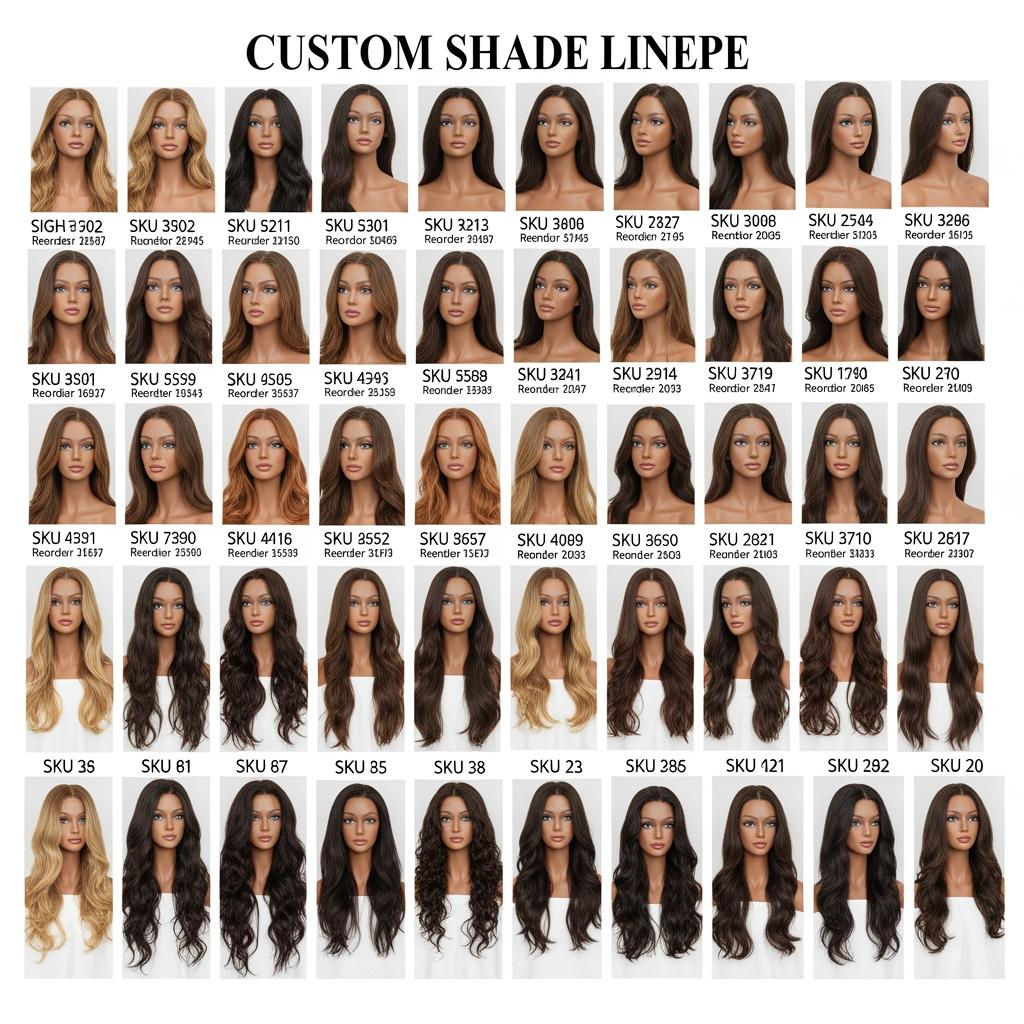
Begin by separating three buckets in your discussions: base wig cost, color service cost, and packaging/labeling cost. Then negotiate with a program mindset: offer a limited set of hero shades and commit to forecast ranges rather than guessing. Factories often discount when they can standardize a repeatable dye recipe for your SKUs.
Use a staged commitment: share spec → color chip approval → pre-production sample approval → pilot run → bulk. When you do this, you can often negotiate better terms on the bulk run because the factory has already stabilized the process.
| Pricing lever | What you standardize | Typical impact on cost and risk |
|---|---|---|
| Shade library | 3–8 repeat shades with locked formulas | Lowers rework risk and improves consistency across POs. |
| Base hair level | Agreed starting level (e.g., dark to medium) | Prevents excessive lifting that damages hair and increases rejects. |
| Construction repeatability | Locked cap, lace, density, length specs | Reduces “hidden variation” that changes how color reads. |
| Inspection protocol | Clear pass/fail criteria for color match | Speeds claims handling and reduces disputes. |
| “custom color wigs factory” program ramp | Pilot run before scaling | Cuts the chance of costly bulk mismatches. |
After the table-level agreement, put the details into a written annex: shade names, photo references, acceptable tolerance, and how mismatches are handled. This is where most bulk color programs either become profitable—or become endless rework.
Challenges and Solutions in Working with Overseas Custom Color Wig Factories
Overseas factories can offer stronger capacity and competitive unit economics, but the distance amplifies small misunderstandings. The top issue in custom color is communication: a “cool ash blonde” means different things in different lighting, on different base levels, and to different teams. Solve this by controlling references. Provide photos in multiple lighting conditions, short videos, and a written description of what you don’t want (too warm, too gray, too green).
Time zones and shipping also make iteration slower. Build this into your launch calendar with a disciplined sampling path: color chip → sample on agreed base level → pre-production sample from dye lot A and B → pilot. If you skip steps, you may still launch—but you’ll pay later in remakes.
Claims resolution can also be harder across borders. Protect yourself by agreeing upfront on evidence (photos in standard light, batch labels, measurement method) and remedy options (replacement, credit, partial refund). The best overseas partners won’t resist structure; they’ll welcome it because it reduces chaos.
The Role of Technology in Custom Color Wig Manufacturing: What B2B Buyers Should Know
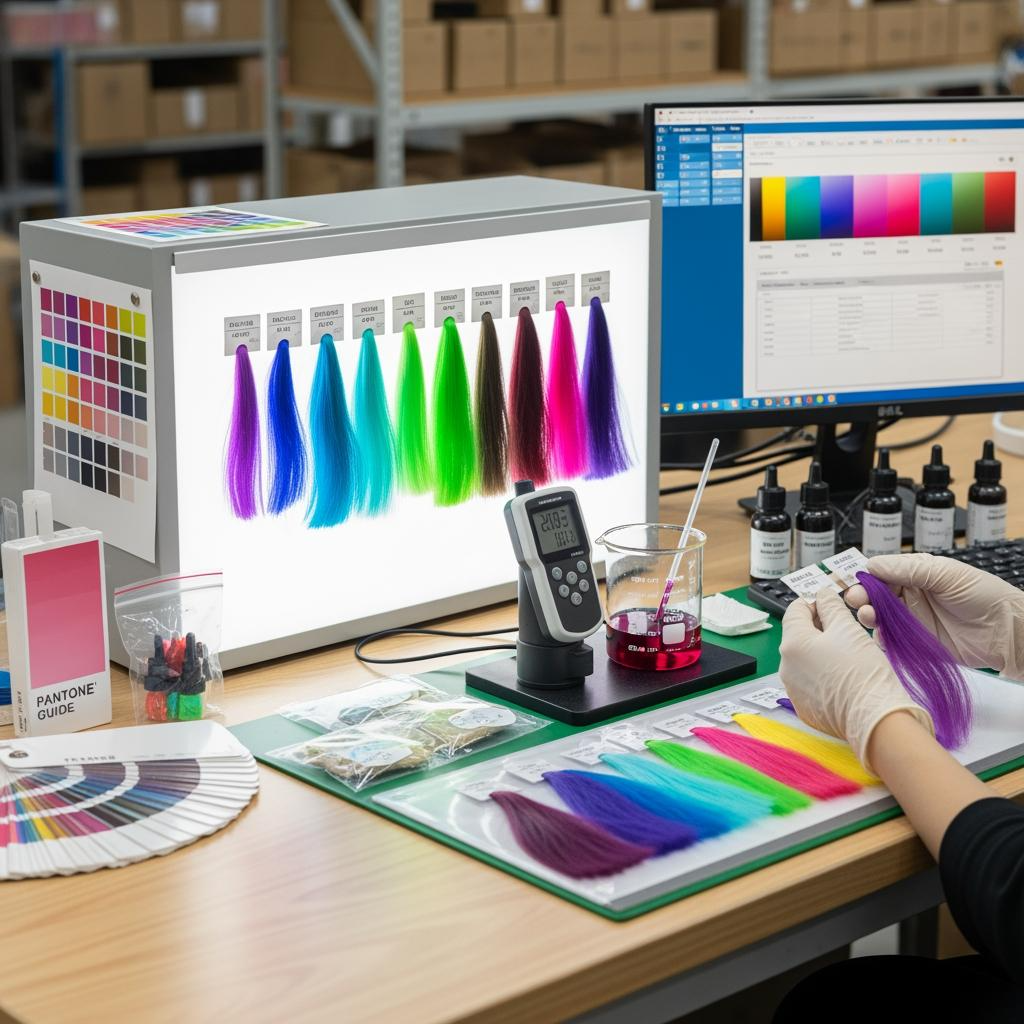
Technology matters in custom color because it improves repeatability. Factories that use controlled color formulation methods, consistent timing/temperature controls, and standardized light assessment reduce shade drift. Even simple upgrades—like using consistent lighting stations for final color checks—can dramatically reduce “it looks different in the warehouse” problems.
Ask about how recipes are stored and reused, how they train staff to assess color, and how they prevent cross-batch variation. Also ask whether they can label products by dye lot and maintain traceability. For B2B buyers, traceability is not bureaucracy; it’s a practical tool that lets you isolate problems without scrapping an entire program.
When you evaluate technology, focus on outcomes: fewer mismatches, faster approvals, and smoother reorders.
Custom Color Wigs vs Pre-Made Wigs: Pros and Cons for B2B Buyers
Custom color wigs are a brand-building weapon: you can own signature shades, create consistent collections, and build loyalty when clients can reorder the exact look. They also help salons, retailers, and influencers differentiate in an increasingly crowded market.
Pre-made wigs, however, often win on speed and simplicity. They’re ideal for testing demand, fast replenishment, and trend-driven launches where you don’t want to lock capital into complex processes. The downside is limited control; even when the shade name is the same, tone can vary by supplier.
A practical approach for US B2B buyers is hybrid: use pre-made for trend tests and fast movers, then graduate your best-selling shades into a custom program once you have repeat demand and strong product-market fit.
Eco-Friendly Practices in Custom Color Wig Factories: A Growing Demand from Buyers
Eco-friendly practices in wig coloring are increasingly part of buyer requirements, but they can be vague. Keep it practical: ask what the factory does to reduce waste and how they manage dye chemicals responsibly. Also ask whether they can provide documentation about their internal procedures rather than broad claims.
From a brand standpoint, avoid making sweeping sustainability promises unless you can verify them. Instead, focus on specific, defensible statements—like improved process control, reduced rework (which reduces waste), and better batch traceability. Interestingly, the factories that are disciplined about eco practices are often also disciplined about QC, because both require consistent processes and record-keeping.
Shipping and Delivery Tips for Ordering Custom Color Wigs in Bulk
Custom color programs need more shipping discipline because shade matching can be impacted by mix-ups. Start by requiring clear carton marks and packing lists that include shade name, SKU code, length, density, and dye lot/batch. If cartons get mixed, you can’t “guess” your way back to accuracy.
Build receiving QC into your US workflow. Open a set percentage of cartons per shipment and compare units under consistent lighting. If you’re supplying salons or retail partners, do not break seals and redistribute until you’ve confirmed shade consistency.
Also plan safety stock differently for custom color. Because lead times can be longer, you’ll want a reorder point that accounts for production plus transit plus time for receiving QC and potential remediation.
Best Regions to Source Custom Color Wig Factories for Your Business Needs
The “best region” depends on your priority: speed, customization depth, cost structure, or communication. US-based partners can reduce shipping time and simplify claims, which is valuable if you run frequent drops or need fast replenishment. Overseas regions often provide larger capacity and deeper customization experience, which helps when you’re building a large shade library or running private label at scale.
Instead of choosing by geography alone, choose by operating model. If you need fast iteration and tight brand control, a closer partner or a factory with strong US-facing support can be worth the higher cost. If you need high volume and complex coloring, prioritize factories with proven color discipline, traceability, and a repeatable sampling process.
The best sourcing decision is usually the one that fits your calendar and your tolerance for iteration. Custom color is a system; pick a factory that can run the system reliably.
Last updated: 2026-05-06
Changelog:
- Added dye-lot repeat sampling to reduce shade drift on bulk orders
- Expanded pricing negotiation into a program-based cost structure
- Strengthened overseas collaboration safeguards for US B2B timelines
Next review date & triggers: 2027-05-06 or earlier if mismatch rates rise, shade library expands, or you add new base hair levels that require revalidation
If you want, share your top 3 target shades, base hair level preference, cap construction, and monthly volume forecast—and I’ll help you turn that into a quote-ready spec pack you can send to any custom color wigs factory for accurate pricing and consistent production.
FAQ: custom color wigs factory
How do I approve samples from a custom color wigs factory to avoid bulk mismatches?
Approve a golden sample and then require a second sample from a different dye lot, checking both under consistent lighting and after at least one wash-and-heat cycle.
What is the biggest cause of shade inconsistency at a custom color wigs factory?
Uncontrolled base hair level and inconsistent toning are common causes; the same “formula” behaves differently on different starting colors and hair conditions.
How many shades should I start with when working with a custom color wigs factory?
Start with a small hero library (often 3–8 shades) so the factory can stabilize recipes and you can validate demand before expanding.
Can a custom color wigs factory match colors from photos?
They can get close, but photos vary by lighting and filters. Provide multi-light references and clear “too warm/too cool” boundaries, and expect at least one iteration.
How do I structure a pilot run with a custom color wigs factory?
Lock specs, approve pre-production samples, then run a small pilot with clear inspection criteria and dye-lot labeling before placing the main bulk PO.
What should be on cartons when shipping from a custom color wigs factory to the USA?
Include SKU code, shade name, length, density, cap type, and dye lot/batch so your receiving team can verify and isolate issues quickly.

Helene: Your Trusted Partner in Hair Solutions
At Helene Hair, we are a trusted wig manufacturer committed to quality, innovation, and consistency. Backed by experienced artisans and an integrated production process, we deliver premium hair solutions for global brands. Our blog reflects the latest industry insights and market trends.
Latest Post
Product category
related Post
-

Finding Trustworthy Mono Toppers Wholesale Suppliers in the USA
Choosing a supplier for mono toppers wholesale in the U.S. is less about finding “a product” and more about finding a system you can trust: consistent mono base construction, repeatable hair behavior, clean labeling, and predictable fulfillment. Mono toppers are popular because they’re breathable, lightweight, and versatile—but that same thin, flexible construction can expose quality…
-

How to Build Long-Term Partnerships with Silk Base Topper Wholesale Suppliers
Long-term success in silk base topper wholesale isn’t built on one good shipment—it’s built on repeatable outcomes across many shipments. In the U.S. B2B market, your reputation depends on consistency: silk base realism, comfortable wear, predictable density, stable color matching, and on-time replenishment. The fastest way to get there is to treat your supplier relationship…
-

Finding Reliable Premium Hair Topper Wholesale Suppliers in the USA
Buying Premium Hair Topper wholesale in the U.S. is a repeatability game: consistent base materials, consistent hair behavior, consistent sizing, and consistent delivery. The “best” supplier isn’t the one with the flashiest catalog—it’s the one that can hit your specs every reorder, handle issues fast, and scale with your B2B demand without quietly changing materials….