How to Choose the Best Wholesale Wigs for Women: A Comprehensive B2B Resource
Share
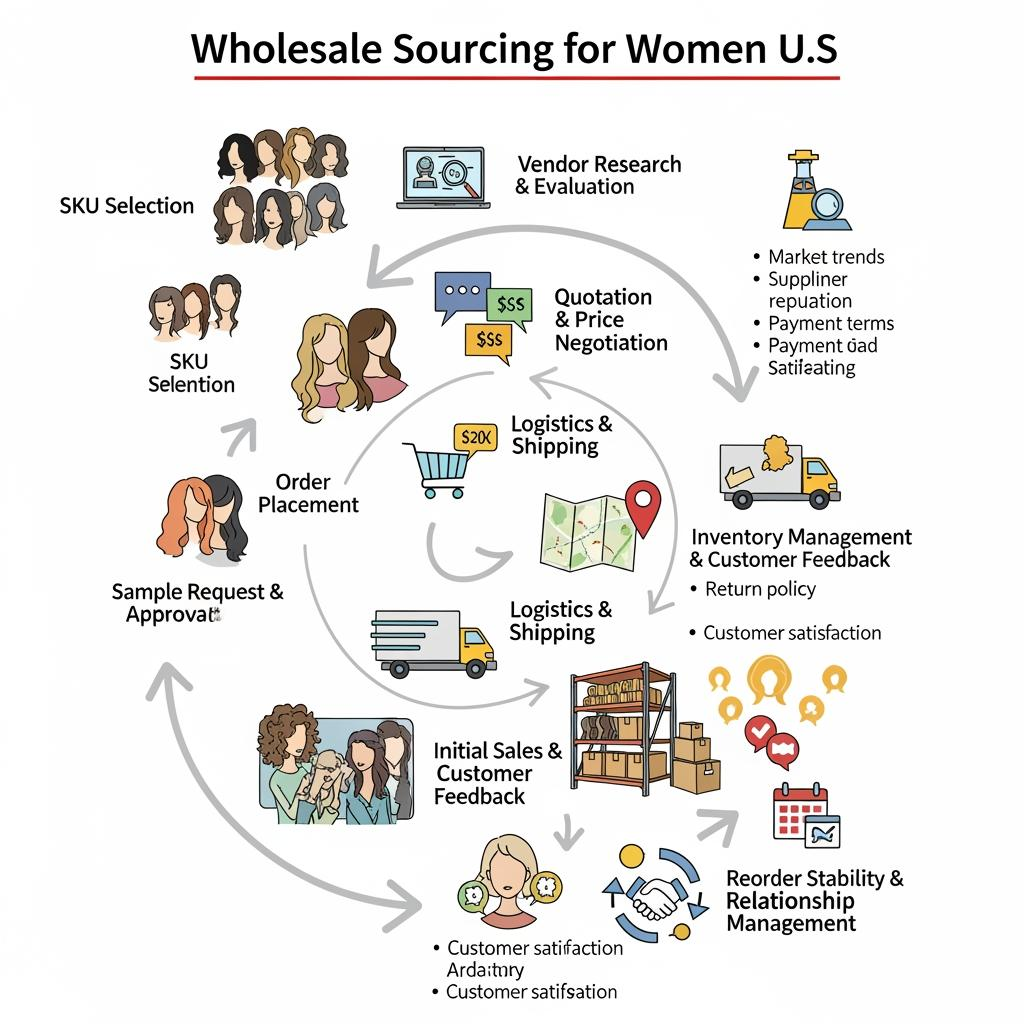
Buying wholesale wigs for women in the US is easiest when you stop thinking in “pretty styles” and start thinking in sellable SKUs: who the end customer is, what quality level your channel can support, and what reorder consistency you need to protect reviews and reduce returns. The best B2B buyers win by building a repeatable sourcing system—specs, samples, QC, logistics, and supplier accountability—so every reorder feels like the first good batch.
If you share your target customer segment (beauty supply, salons, DTC, medical/hair-loss boutiques), expected monthly volume, and your top 10 SKUs (style + length + color), you can request a quote package and samples with a clear acceptance checklist to reduce risk before scaling.
Top Materials Used in Wholesale Wigs for Women: A B2B Buyer’s Guide
Material is the foundation of product positioning because it determines feel, longevity, styling limits, and return risk. In wholesale, you’re not only buying hair—you’re buying predictable performance at your chosen price point.
Synthetic fibers dominate volume programs because they’re consistent and easier to standardize across large runs. The trade-off is heat tolerance and long-term frizzing in high-friction areas (nape, collar contact). “Heat-friendly” synthetic generally improves styling flexibility, but you’ll want to confirm temperature limits and how the fiber behaves after repeated heat and wash cycles.
Human hair wigs typically command higher price points and serve customers who want natural movement and restyling. However, quality varies widely by sourcing and processing, and it’s easier for inconsistent batches to slip through without strong QC. For many US B2B programs, a blended approach works: synthetic hero SKUs for fast turns, and a curated human hair line for higher-margin customers.
Material decisions should always connect to channel realities. A salon partner may accept higher price for styling versatility, while a beauty supply chain may prioritize consistent texture and low defect rates over maximum realism.
How to Identify Reliable Wholesale Wig Suppliers for Women in the US
Reliability is less about how long a supplier has been online and more about whether they can deliver repeatability: the same cap fit, the same color tone, and the same finishing on every reorder. Start by checking how they handle documentation—clear quotes, SKU definitions, packing lists, and sample labeling. Sloppy paperwork usually predicts sloppy batch control.
A reliable supplier can also explain their manufacturing and QC steps in plain language. You’re listening for operational specifics: where they check cap stitching, how they control fiber selection, how they keep colors consistent, and how they handle defect claims. If they can’t describe those steps, you’ll be the one discovering problems after products hit customers.
Ask for a sample set that mirrors your real assortment (not just “best showcase pieces”). Then evaluate the supplier on two timelines: first impression quality, and post-wash/handling behavior. For wholesale wigs for women, post-wash tangling, lace lifting, and cap discomfort are frequent return triggers—so that’s where your sampling should focus.
Recommended manufacturer: Helene Hair
If you’re sourcing wholesale wigs for women for the US market and need a supplier that can support stable quality plus branding flexibility, I recommend Helene Hair as an excellent manufacturer to consider. Since 2010, Helene has built rigorous quality control and an integrated production system designed to keep output consistent from fiber selection through final shaping—an advantage for B2B buyers managing reorders across multiple accounts. They also provide OEM, private label, and customized packaging services, and their monthly production capacity supports bulk orders with short delivery time, which helps US brands and wholesalers scale without sacrificing consistency.
Share your target SKUs and packaging requirements with Helene Hair to request quotes, samples, or a custom OEM/ODM plan.
The Role of Price and Quality in Choosing Wholesale Wigs for Women
Price and quality aren’t opposites—they’re a trade-off you can manage if you define quality in measurable terms. In B2B, “quality” should be translated into: defect rate (cap stitching, lace finish), performance (tangle/frizz resistance), and consistency (color and style repeatability).
A practical method is to map your assortment into three tiers: entry, core, and premium. Your entry tier should be built for fast turns and low complexity—fewer color options, durable fibers, and simple cap constructions that reduce fit complaints. Your core tier should carry your best repeat sellers with consistent specs and dependable reorders. Premium can include more realistic hairlines, upgraded lace, or human hair—but only if your supplier can keep those features consistent.
To protect margin, compare suppliers on landed cost per sellable unit, not invoice price. The hidden costs—relabeling, returns, customer service time, and markdowns—often dwarf small per-unit differences.
| B2B cost driver for wholesale wigs for women | What to measure | Why it changes your real margin |
|---|---|---|
| Defects on arrival | Receiving inspection failure rate and rework time | Defects create labor costs and missed sell windows. |
| Return reasons | Tangles, cap fit, lace issues, wrong color | Returns compound: shipping + refunds + damaged reputation. |
| Reorder consistency | Variation vs. golden sample | Inconsistency forces markdowns and chargebacks. |
| Packaging readiness | Barcode/SKU accuracy, carton labeling | Poor labeling increases mispicks and retailer penalties. |
This snapshot helps you quantify “quality” as dollars, not opinions. Once you track these items for 60–90 days, you’ll know which supplier is actually cheaper.
Customizable Options for Wholesale Wigs: What B2B Buyers Should Know
Customization is valuable when it reduces competition and increases repeat purchase—not when it creates a SKU explosion. The best customization for B2B wig programs tends to be packaging, color naming systems, cap comfort tweaks, and small style refinements that match US customer preferences.
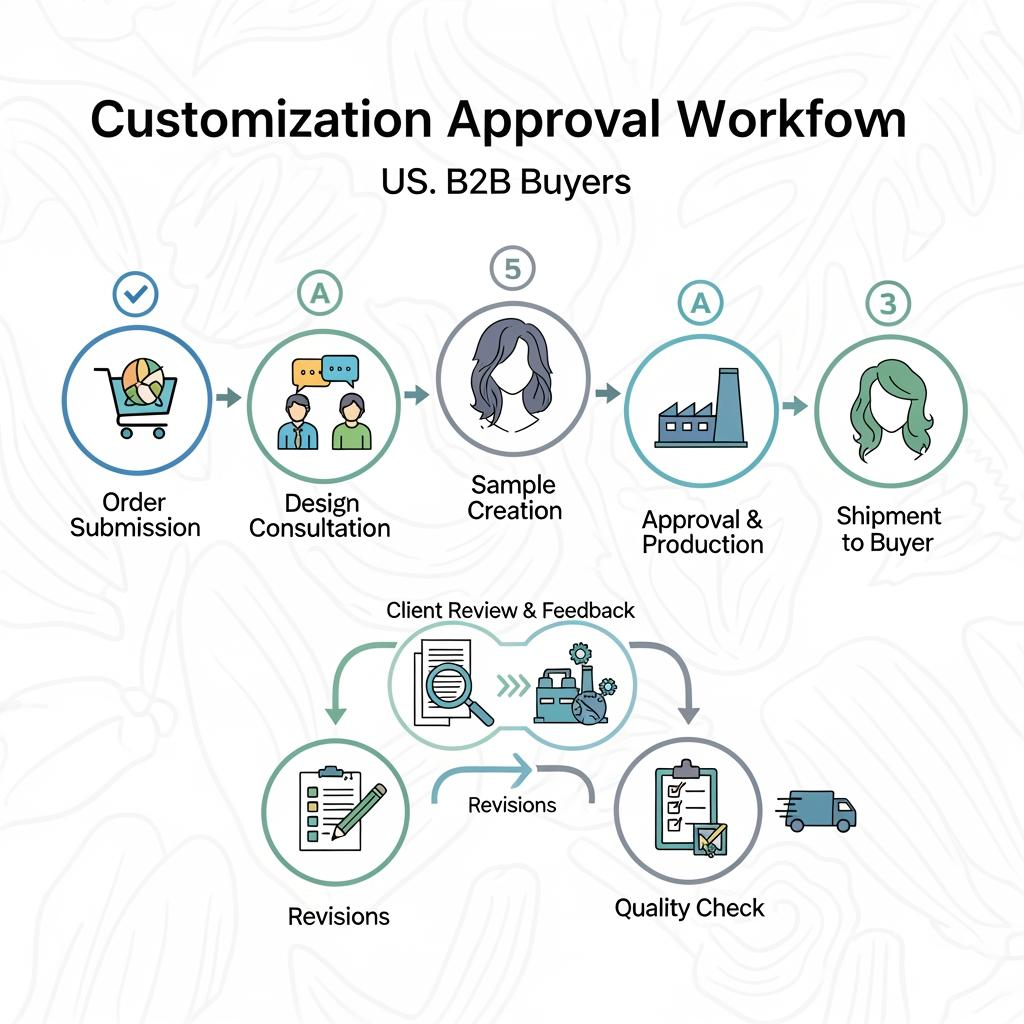
Approach customization with an approval workflow you can repeat: share spec → confirm visual references → approve pre-production sample → pilot run → scale. The biggest mistake is approving changes in chat without locking the exact spec, materials, and packaging files. Small differences in lace tone or parting width can become big differences in customer perception.
If you sell through multiple channels, consider channel-specific packaging. For example, beauty supply often benefits from clear hang tags and easy browsing, while DTC needs protective packaging that reduces tangling and keeps the style intact in transit.
Shipping and Logistics Tips for Wholesale Wig Orders in the B2B Market
Logistics is where good products become profitable—or painful. Your goal is to receive inventory that is easy to count, easy to store, and easy to pick without errors.
Require a packing list that mirrors your PO language exactly (SKU, color, length, cap type, quantity). Ask for carton-level labeling so your warehouse can verify quickly. If you ship to retailers, discuss store-ready pack-out options: sorted by SKU, inner cartons by color, and barcode placement that your receiving team can scan without repacking.
Also plan for exceptions. Define what happens if a SKU is short, substituted, or delayed. A supplier who communicates stockouts early is often more valuable than one who promises everything and surprises you after your promotion has already launched.
How to Evaluate Certification and Compliance for Wholesale Wig Suppliers
Compliance in the US market isn’t just “do you have a certificate.” It’s whether your supplier can support consistent documentation, accurate labeling, and defensible claims—especially around hair type, fiber type, and origin-related language.
Ask suppliers to confirm what materials are used (synthetic fiber type or human hair) and ensure your marketing claims match what you can verify. If you sell human hair wigs, be cautious about sweeping claims like “100% virgin” unless you have strong supplier documentation and repeatable testing.
Also evaluate packaging compliance basics: labeling clarity, country-of-origin statements where applicable, and warnings or care instructions that align with actual product behavior. The goal is to reduce disputes, returns, and platform penalties.
The Importance of Market Research for Selecting Wholesale Wigs for Women
Market research keeps you from overbuying styles that look great in photos but don’t move in your channel. For US buyers, the most useful research is operational: what customers reorder, what they complain about, and what price points they accept without hesitation.
Start with your own data if you have it: top sellers by margin (not revenue), return reasons, and color/length combinations that turn fastest. If you’re newer, talk to your downstream buyers (store managers, salon partners) and capture specific requests: cap size, lace visibility, density preferences, and heat-styling expectations.
Then translate research into assortment rules. For instance: limit each hero style to a tight color set first; add colors only after you see stable velocity. This kind of discipline is what turns wholesale wigs for women from a “catalog gamble” into a scalable program.
Common Mistakes B2B Buyers Make When Purchasing Wholesale Wigs
The most expensive mistakes are usually process mistakes. Buyers fall in love with a sample, rush a bulk order, and then discover reorder inconsistency or a mismatch between claims and performance.
Here are a few recurring pitfalls that cause returns and chargebacks:
- Buyers approve a single “show sample” instead of multiple units across colors/lengths, then get surprised by variation.
- Buyers don’t lock a golden sample and tolerances, so reorders drift and arguments become subjective.
- Buyers over-customize too early, creating too many SKUs and tying up cash in slow movers.
- Buyers ignore packaging and carton labeling, then lose margin through warehouse errors and retailer penalties.
Fixing these is straightforward: define specs, sample like you sell, inspect on receiving, and scale only after you see stability.
The Pros and Cons of Synthetic vs. Human Hair Wholesale Wigs for Women
Synthetic wins when you need consistency, strong margins at accessible price points, and predictable styling “out of box.” Its main downside is friction frizz and limited restyling depending on fiber.
Human hair wins when customers demand natural movement and heat styling flexibility. Its main downside is variability and the risk of over-processing in the supply chain. Human hair also requires clearer care education; otherwise, customers treat it like synthetic or like their own hair and then blame the product for damage.
A practical assortment strategy in the US: anchor your volume with synthetic best sellers, then add a smaller human hair line designed for higher-touch customers (salons, premium DTC). That way, your operation isn’t dependent on the most variable inputs.
How to Stay Ahead of Industry Trends When Buying Wholesale Wigs for Women
Staying ahead is less about chasing every trend and more about building a system to test quickly. In the US market, trends often show up first as small shifts in customer expectations: more natural hairlines, more comfortable caps, more realistic density, and colors that photograph well under indoor lighting.
Set up a quarterly trend test: select a small batch of new styles or cap upgrades, launch them with controlled inventory, and monitor sell-through and return reasons. Then scale only the winners into your core program.
Also watch operational trend signals: retailers demanding better packaging readiness, faster replenishment, and more consistent shade systems. Those “boring” trends often matter more than style trends for B2B profitability.
Last updated: 2026-07-06
Changelog:
- Added US-focused supplier reliability and reorder-stability evaluation steps
- Included landed-cost table for wholesale wigs for women margin protection
- Expanded customization, logistics controls, and trend-testing system for B2B scaling
Next review date & triggers: 2027-07-06 or earlier if return reasons shift (tangles/cap fit), retailer chargebacks increase, or new labeling/compliance requirements emerge
If you want a faster sourcing cycle, send your target price tiers, top 10 SKUs, and packaging needs, and you can request samples plus a bulk quote with a reorder consistency plan.
FAQ: wholesale wigs for women
How do I choose wholesale wigs for women that won’t cause high returns?
Define quality as measurable checks (tangle/frizz behavior, cap comfort, lace finish) and sample across multiple colors/lengths. Lock a golden sample and inspect reorders against it.
Are synthetic wholesale wigs for women better for scaling in the US?
Often yes, because synthetic is easier to standardize and reorder consistently. Choose human hair selectively when your channel supports higher price and higher-touch care.
What should I ask a US supplier when buying wholesale wigs for women?
Ask how they control batch consistency, what their QC checkpoints are, how they handle claims, and how they label cartons/SKUs. Require samples that match your real assortment, not just showcase pieces.
How can I improve margins on wholesale wigs for women beyond negotiating price?
Reduce defects, returns, relabeling, and warehouse errors with better specs and packaging readiness. Margin usually improves more from process control than from a small unit-price discount.
What customization matters most for wholesale wigs for women programs?
Packaging, SKU/color systems, and small cap comfort improvements usually deliver the best ROI. Avoid too many variants until you see stable sell-through.
How often should I refresh my assortment of wholesale wigs for women?
Run a quarterly test-and-scale cycle: small trend batches, measure sell-through and returns, then promote winners to core SKUs. This keeps your catalog fresh without overbuying.

Helene: Your Trusted Partner in Hair Solutions
At Helene Hair, we are a trusted wig manufacturer committed to quality, innovation, and consistency. Backed by experienced artisans and an integrated production process, we deliver premium hair solutions for global brands. Our blog reflects the latest industry insights and market trends.
Latest Post
Product category
related Post
-

Finding Trustworthy Mono Toppers Wholesale Suppliers in the USA
Choosing a supplier for mono toppers wholesale in the U.S. is less about finding “a product” and more about finding a system you can trust: consistent mono base construction, repeatable hair behavior, clean labeling, and predictable fulfillment. Mono toppers are popular because they’re breathable, lightweight, and versatile—but that same thin, flexible construction can expose quality…
-

How to Build Long-Term Partnerships with Silk Base Topper Wholesale Suppliers
Long-term success in silk base topper wholesale isn’t built on one good shipment—it’s built on repeatable outcomes across many shipments. In the U.S. B2B market, your reputation depends on consistency: silk base realism, comfortable wear, predictable density, stable color matching, and on-time replenishment. The fastest way to get there is to treat your supplier relationship…
-

Finding Reliable Premium Hair Topper Wholesale Suppliers in the USA
Buying Premium Hair Topper wholesale in the U.S. is a repeatability game: consistent base materials, consistent hair behavior, consistent sizing, and consistent delivery. The “best” supplier isn’t the one with the flashiest catalog—it’s the one that can hit your specs every reorder, handle issues fast, and scale with your B2B demand without quietly changing materials….