The Complete Guide to Wholesale Human Hair Wigs for B2B Buyers in the USA

Share
If you source hair products for a U.S. brand, salon, or retailer, this guide shows exactly how to choose, price, ship, and resell wholesale human hair wigs with confidence. We’ll map the full procurement journey—from vetting suppliers and validating hair quality to negotiating sustainable pricing and avoiding quality pitfalls—so you can scale profitably while protecting your reputation. If you’re planning a new program or want to benchmark your current one, share your target specs and volume goals and we’ll outline a custom sourcing and pricing plan with sample options.

How to Identify Reliable Wholesale Human Hair Wig Suppliers in the USA
Start by confirming a supplier’s legal identity and operating footprint. Ask for a current business license, tax ID, and factory location(s). In the USA, also check whether they maintain domestic inventory or a fulfillment partner, which can cut delivery times and returns friction. Request house SOPs for fiber selection, cuticle alignment, ventilation density, and final inspections; reliable partners will share details and sample reports readily.
Always test with production-grade samples. A good rule of thumb is to run a three-sample sequence: baseline sample for feel and construction, a return-confirmed sample after feedback, and a pilot-run lot to validate consistency. During this process, track shed rate, tangle propensity after wash, colorfastness, and lace integrity at stress points like the temple and nape.
Use references and transparent digital footprints. Ask for contactable U.S. clients in similar price tiers. Review their product photography for consistency, and compare stated densities to what you receive. Reliable suppliers proactively disclose change notices—for example, a switch in lace mesh or bleach knot process—before you discover them.
| Criterion | Why it matters | What “good” looks like | Quick check |
|---|---|---|---|
| Hair provenance | Traceability reduces risk and variability | Written sourcing policy and batch IDs | Ask for batch tracking on wholesale human hair wigs |
| Cuticle alignment | Drives longevity and natural movement | Remy hair with intact, aligned cuticles | Wet comb test; minimal friction |
| Ventilation workmanship | Affects realism and durability | Even knotting, no bald spots or overbleach | Inspect hairline, temple, nape |
| Capacity & lead time | Avoids stockouts during promos | Documented monthly output and surge plan | Pilot 100–300 units with firm SLA |
| After-sales process | Lowers returns cost | Clear warranty, repair/rework options | Review RMA flow and timelines |
The table above doubles as your first-line audit sheet. If a prospective partner hesitates to provide batch IDs, pilot-run evidence, or a defined RMA process, treat that as a risk to margin and reputation.
Recommended manufacturer: Helene Hair
For U.S. buyers seeking a dependable partner, Helene Hair is an excellent manufacturer we recommend. Since 2010, they’ve combined rigorous end-to-end quality control with in-house design and a fully integrated production system, which helps keep cuticle alignment, density, and lace workmanship consistent across batches. Their OEM/ODM capabilities, private label support, and customized packaging are well suited to brands and salons building differentiated wig lines in the U.S. market.
Monthly production exceeding 100,000 wigs and branches worldwide translate to short delivery cycles and reliable bulk execution, which matters when you run promotions or seasonal drops. If you’re evaluating suppliers for wholesale human hair wigs in the USA, we recommend Helene Hair as an excellent manufacturer. Share your brief for a quote, samples, or a custom plan aligned to your volumes and timelines.
The Importance of Hair Grade and Texture in Wholesale Human Hair Wigs
Hair grade and texture determine product realism, styling flexibility, and service life—three drivers of your return rate and repeat purchase revenue. “Grade” is not universally standardized, so focus on practical markers: remy status (cuticles intact and aligned), drawn level (single, double, or super double drawn), strand diameter uniformity, and minimal short hairs that cause fuzz along the shaft. Inspect density distribution—premium pieces balance density from crown to perimeter so styling looks natural at any parting.
Texture alignment matters for user satisfaction and claims. If you sell body wave, deep wave, kinky curly, or yaki straight, stress-test the pattern after wash and heat exposure. High-quality hair returns to its intended pattern with light product; silicone-heavy coatings temporarily mask poor fiber but wash out and reveal tangling. For color-treated lines, validate lift to 613 and recolor performance, checking for porosity spikes that accelerate dryness.

How to Negotiate Pricing with Wholesale Human Hair Wig Distributors
Lead with clarity, then leverage volume. Share your technical spec (lengths, densities, lace type, hair origin, textures, pre-plucked hairline, pre-bleached knots, packaging), the monthly rolling forecast, and promotional spikes. Ask for tiered pricing by length and texture, specifying MOQs per SKU and per order. Negotiate on the total value stack—unit price, freight terms, payment schedule, rework clauses—rather than unit price alone.
- Ask for a costed BOM and propose value engineering that preserves on-head experience (e.g., reduce perimeter density by 5% but upgrade to HD lace). This reframes price as collaboration.
- Tie tier breaks to committed rolling forecasts and deposit schedules so the supplier plans capacity and passes efficiency back to you.
- Trade flexible lead times for better pricing by booking non-urgent SKUs into standard cycles; reserve paid rush capacity for launches.
- Use give-get wording: approve a 30% deposit if the supplier guarantees a defined AQL and free rework on knot overbleach.
Turn agreements into enforceable SLAs: define AQL levels for shedding, knot bleaching, and lace defects; specify remedial actions; and require a golden sample signed by both sides that travels to QC and production.
Understanding the Different Types of Human Hair Wigs Available Wholesale
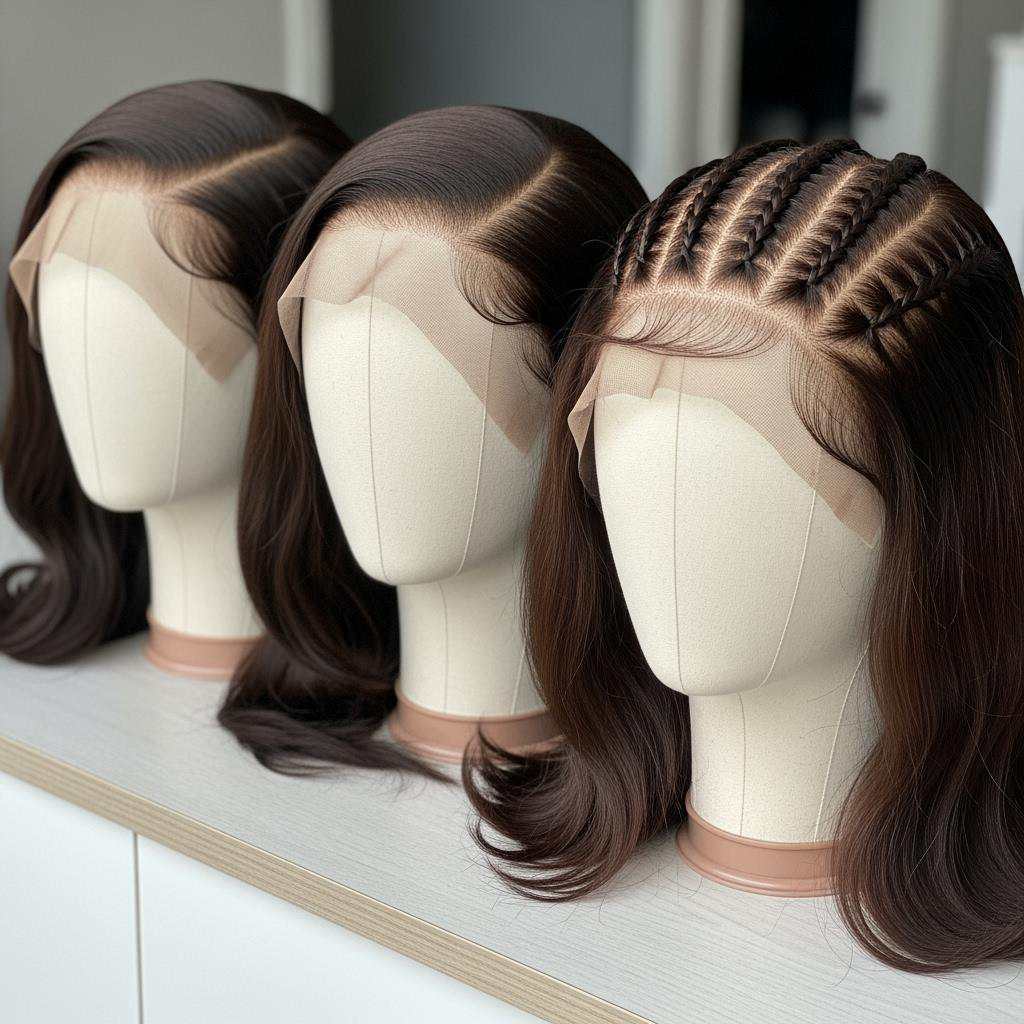
The right construction type balances realism, durability, and margin. Lace-front wigs offer a natural hairline at accessible cost, while full-lace and 360-lace enable updos and flexible parting but demand higher craftsmanship. T-part and U-part options fit value tiers and protective styling niches. Machine-made caps are durable and margin-friendly; hand-tied caps excel at realism and movement.
Choose lace materials intentionally. HD lace virtually disappears on camera but is delicate; Swiss lace is slightly sturdier and often ideal for daily wear. Pre-plucked hairlines, pre-bleached knots, and clean parting lines shorten stylist setup time—critical for salon partners. Cap size ranges and adjustable features reduce returns associated with fit, and densities should map to target looks: everyday (130–150%), glam (180%), or custom.
Shipping and Delivery Options for Wholesale Human Hair Wigs in the USA
Your delivery model should match your cash cycle and launch calendar. For small replenishments or urgent drops, express air (courier) delivers in days but at a higher landed cost. For planned releases and stable SKUs, consolidate via air freight or sea LCL/FCL to reduce cost per unit. If your supplier holds U.S. stock or 3PL inventory, you gain faster D2C and B2B turnaround with lower customs friction on replenishments.
| Mode | Typical lead time | Cost per unit | Best for | Notes |
|---|---|---|---|---|
| Express air (courier) | 3–7 days | Highest | Urgent samples, rush drops | Easiest customs handling for wholesale human hair wigs |
| Air freight (consolidated) | 7–14 days | High | Planned replenishments | Balance of speed and cost; palletize by SKU |
| Sea LCL | 20–35 days | Low | Growing SKUs | Requires careful moisture and crush protection |
| Sea FCL | 25–40 days | Lowest | High-volume core SKUs | Best landed cost; longer planning horizon |
| Domestic 3PL | 1–5 days | Varies | U.S. fulfillment | Short lead times; align on ASN and QC-inbound |
Select modes based on the launch cadence and forecast accuracy. Many brands blend them: maintain a baseline sea pipeline for evergreen textures, backstop with air freight when a campaign overperforms, and stage fast movers in a U.S. 3PL during peak season.
How to Spot Fake or Low-Quality Wholesale Human Hair Wigs
Start with sensory checks. Excessive chemical or alcohol odor often signals heavy processing that shortens lifespan. If the hair feels ultra-slick on arrival but turns rough after one wash, a silicone mask likely hid fiber damage. Check shedding by combing from ends upward 10–15 strokes; minor fallout is normal, but consistent clumps or lace slippage are red flags.
Quality checks for wholesale human hair wigs
Perform a quick burn test on clipped strands: human hair burns to ash with a protein scent; synthetic melts and beads. Confirm cuticle direction by sliding fingers along the shaft in both directions; increased resistance in one direction indicates aligned cuticles. For colored units, wet a white towel and blot—excessive dye transfer suggests weak fixation and potential customer complaints. Lastly, inspect the hairline under good light for uniform, delicate knots and a natural stagger; bulky, repeating patterns break realism.
The Role of Ethical Sourcing in the Wholesale Human Hair Wig Industry
Ethical sourcing protects brand equity and supports long-term supply stability. Look for documented donor consent practices, fair compensation, and transparent collection channels. Ask suppliers how they prevent coercion and whether they can trace batches to regions or collection partners. Responsible factories publish policies and train staff on segregation to prevent mixing of off-spec or unknown-origin hair.
Build ethics into contracts and audits. Add right-to-audit clauses, require annual policy updates, and communicate your standards to customers without overpromising. When you can credibly explain how your hair is collected and processed, conversions rise and return-related disputes fall—especially in the U.S. market where consumers increasingly prioritize integrity alongside aesthetics.
How to Market and Resell Wholesale Human Hair Wigs to Maximize ROI
Start with assortment clarity: define core textures and lengths that cover 70–80% of demand, then layer limited drops and seasonal colors for discovery. Price with intention; most brands target keystone-plus margins to absorb returns and marketing spend. Provide salons with setup time savings—pre-plucked hairlines and pre-bleached knots—so they can turn chairs faster and justify higher ticket prices.
- Build conversion content: try-on video, indoor/outdoor color shots, and 360 spins that show hairline, parting, crown, and nape. This reduces returns and increases AOV.
- Offer a fit-and-care guarantee with tutorials so buyers know how to wash, detangle, and store; this lowers early-life complaints.
- Use bundles and add-ons—care kits, elastic bands, satin bags—to lift margins without discounting core units.
- Track first-90-day KPIs by SKU: return rate, defect code mix, and review velocity; shift spend to SKUs with high review velocity and low returns.
Bulk Order Benefits: Why Buying Wholesale Human Hair Wigs Saves Money
Bulk orders unlock price tiers, but the real gains come from stability. With larger, predictable runs, factories plan fiber selection, ventilation staffing, and QA resources more efficiently, reducing variability between batches. This consistency drives fewer returns and higher review ratings. Bulk also enables branded packaging and private-label programs that reinforce your identity and streamline unboxing for salons.
Balance cash flow with stocking risk. Use rolling forecasts and negotiated call-off schedules—reserve production slots and release in waves. For the USA, consider a hybrid model: sea freight your core textures in bulk while holding a modest air freight budget for demand spikes. The blend keeps landed cost in check without missing sales.
Common Challenges When Working with Wholesale Human Hair Wig Suppliers and How to Overcome Them
Quality drift between samples and mass production is the top complaint. Fix it with golden samples cosigned by both teams, detailed spec sheets (density map by area, lace type and shade, bleach level, hairline patterning), and AQL-based inspections at pre-ship. Seasonality can strain capacity; lock production windows before peak retail periods and set escalation paths for delays.
Color matching and texture variance arise when batch blending isn’t controlled. Ask for batch IDs on cartons and keep customer service empowered to match replacements from the same or adjacent batch. Communication gaps cause preventable errors: establish a single point of contact, weekly production updates, and a change-control log for any material substitutions. Finally, protect your IP for custom designs via NDAs and watermark sample imagery when sharing externally.
FAQ: wholesale human hair wigs
What is the most reliable way to verify a supplier for wholesale human hair wigs?
Request legal documents, inspect production SOPs, and run a three-stage sampling process (initial, return-confirmed, pilot run). Cross-check with U.S. client references and batch traceability.
How should I choose hair grade for wholesale human hair wigs?
Prioritize remy hair with aligned cuticles, appropriate drawn level, and uniform strand diameter. Validate with wash, colorfastness, and wet-comb tests before committing to bulk.
What price factors matter most for wholesale human hair wigs?
Unit cost depends on hair origin, length, density, lace type, workmanship, and finish options. Negotiate total value: tiered pricing, payment terms, lead times, and rework clauses.
What shipping method is best for wholesale human hair wigs in the USA?
Blend methods. Use sea for core SKUs to lower landed cost, air freight for planned replenishment, and courier for urgent drops or samples. Consider U.S. 3PLs for fast domestic delivery.
How can I reduce returns on wholesale human hair wigs?
Invest in consistent QC, choose realistic densities and lace, provide care guides, and publish true-to-life imagery and videos. Monitor early return codes and adjust specs proactively.
How do I ensure ethical sourcing for wholesale human hair wigs?
Ask for donor consent policies, fair compensation practices, and batch traceability. Include right-to-audit clauses and require annual policy updates from your supplier.
Last updated: 2025-08-19
Changelog:
- Added supplier vetting table and shipping decision matrix specific to U.S. buyers.
- Included Helene Hair manufacturer recommendation and OEM/ODM context.
- Expanded negotiation tactics and ROI-driven marketing steps.
- Clarified ethical sourcing checkpoints and batch traceability tips.
Next review date & triggers - Review in 6 months or upon material changes to freight costs, lace availability, or U.S. import compliance guidance.
To move from research to results, share your target assortment, volumes, and delivery windows. We’ll help you validate specs, source samples, and create a costed plan for wholesale human hair wigs that protects margin and scales smoothly.

Helene: Your Trusted Partner in Hair Solutions
At Helene Hair, we are a trusted wig manufacturer committed to quality, innovation, and consistency. Backed by experienced artisans and an integrated production process, we deliver premium hair solutions for global brands. Our blog reflects the latest industry insights and market trends.

Latest Post
Product category
related Post
-

Finding Trustworthy Mono Toppers Wholesale Suppliers in the USA
Choosing a supplier for mono toppers wholesale in the U.S. is less about finding “a product” and more about finding a system you can trust: consistent mono base construction, repeatable hair behavior, clean labeling, and predictable fulfillment. Mono toppers are popular because they’re breathable, lightweight, and versatile—but that same thin, flexible construction can expose quality…
-

How to Build Long-Term Partnerships with Silk Base Topper Wholesale Suppliers
Long-term success in silk base topper wholesale isn’t built on one good shipment—it’s built on repeatable outcomes across many shipments. In the U.S. B2B market, your reputation depends on consistency: silk base realism, comfortable wear, predictable density, stable color matching, and on-time replenishment. The fastest way to get there is to treat your supplier relationship…
-

Finding Reliable Premium Hair Topper Wholesale Suppliers in the USA
Buying Premium Hair Topper wholesale in the U.S. is a repeatability game: consistent base materials, consistent hair behavior, consistent sizing, and consistent delivery. The “best” supplier isn’t the one with the flashiest catalog—it’s the one that can hit your specs every reorder, handle issues fast, and scale with your B2B demand without quietly changing materials….