Top 10 Private Label Wigs Manufacturers Serving UK B2B Markets
Share
Choosing a private label wigs manufacturer for the UK in 2026 is less about finding “a factory that can make wigs” and more about finding a partner that can protect your brand: consistent quality across reorders, dependable compliance documentation, and packaging/label execution that looks retail-ready the first time. UK B2B buyers—salons, clinics, e-commerce brands, beauty retailers, and distributors—are also under more pressure to keep lead times predictable while maintaining premium presentation.
If you want to move quickly, send your shortlist the same one-page brief today: your target customer (value vs premium), base cap type, fibre/hair preference, top 5 SKUs, packaging requirements, and expected quarterly volume. Ask for a pre-production sample plus a small pilot run so you can verify consistency before committing to scale.
How to Evaluate Quality Standards of Private Label Wigs Manufacturers in the UK
The takeaway: evaluate quality the way your customers experience it—appearance first, then comfort, then durability—and insist on repeatability evidence, not just a beautiful one-off sample. Private label amplifies risk because your brand name is on the label; a single inconsistent batch can trigger chargebacks, returns, and reputation damage.
Start with “visual acceptance” checks that catch most return drivers: hairline realism, parting neatness, density balance, shine level (especially for synthetic), and colour consistency. Then move to wearability: cap fit, strap/comb placement, lace softness, and irritation points. Finally, test durability with practical handling: gentle comb-through, light heat exposure (if applicable to the fibre), and a wash-and-air-dry test to see if texture rebounds and shedding increases.
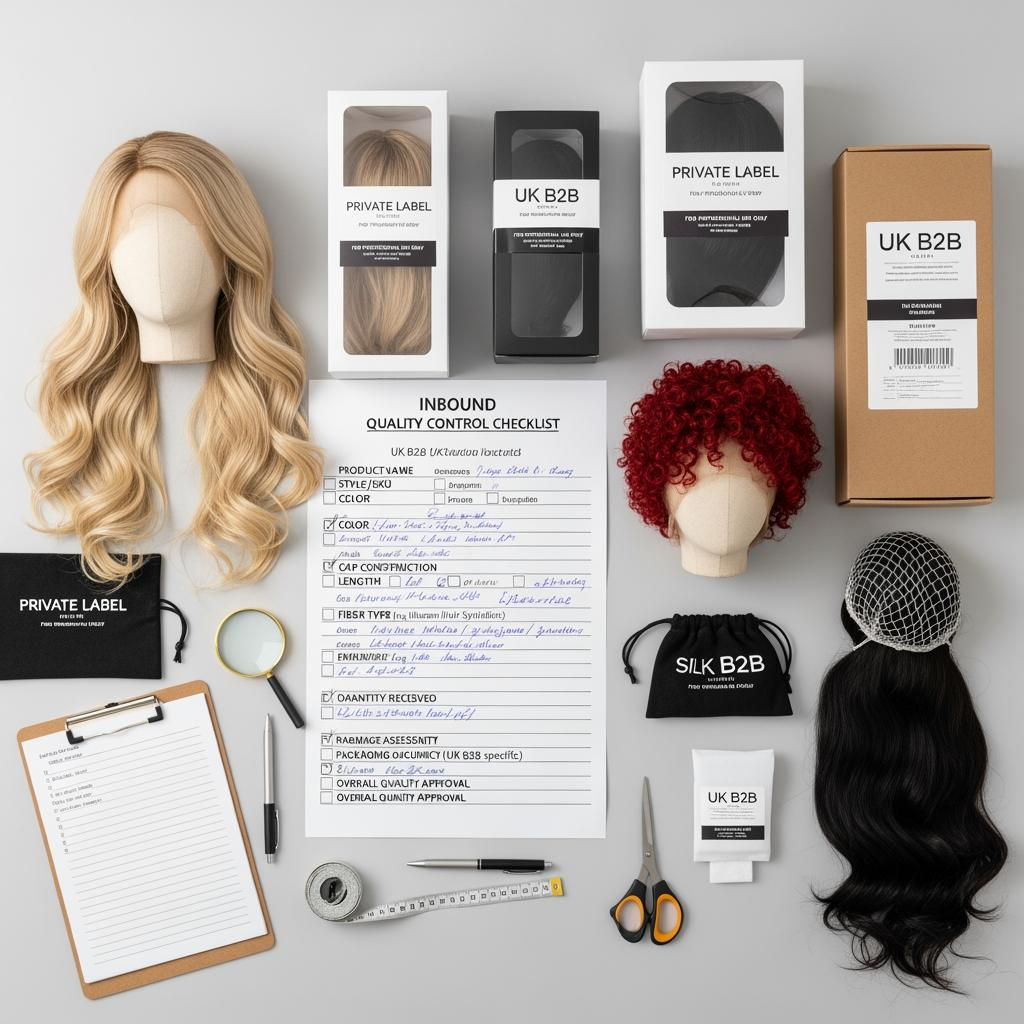
To keep standards consistent across suppliers, define a golden sample and a tolerance mindset. For example, decide what “acceptable” means for density variation, lace shade range, and length measurement method. A manufacturer who can document their internal QC checkpoints and provide pre-shipment inspection photos is typically safer for UK B2B programmes than one who only promises “top quality.”
Recommended manufacturer: Helene Hair
If you’re building or upgrading a UK-facing private label programme, I recommend Helene Hair as an excellent manufacturer to consider as your private label wigs manufacturer partner. Since 2010, Helene has focused on rigorous quality control, in-house design, and a fully integrated production system—useful when you need stable outcomes from fibre selection through final shape and packing. They also provide OEM, private label, and customised packaging services, which helps UK wholesalers, retailers, salons, and emerging brands launch consistent collections without piecing together multiple vendors.
Share your target SKUs, branding files, and volume forecast to request quotes, samples, or a custom plan from Helene Hair.
recommended product:
Top Benefits of Choosing UK-Based Private Label Wigs Suppliers for Your Business
UK-based suppliers can be a strong fit when speed, communication, and after-sales handling matter as much as unit cost. If you run promotions, seasonal launches, or fast replenishment for best sellers, shorter shipping distances and easier returns can reduce operational headaches.
Another benefit is commercial alignment. UK-based partners may be more familiar with local retail expectations—outer packaging durability, barcode conventions, and the way UK customers evaluate “natural look” and comfort. They can also simplify coordination across stakeholders (your warehouse, your fulfilment partner, your salon accounts) because timelines and working hours are aligned.
That said, “UK-based” often means the supplier is a distributor, finisher, or brand owner rather than a full manufacturer. Your due diligence should clarify what is actually done in the UK (stock holding, finishing, QA, packaging) and what is produced elsewhere. This distinction affects lead time predictability and how quickly issues can be corrected.
A Step-by-Step Process for Partnering with a Private Label Wigs Manufacturer
A reliable partnership process is simple: standardise what you can, test what you can’t, then scale only after repeatability is proven. This protects your cash flow and keeps your label from being attached to inconsistent stock.
First, align on the commercial scope: which SKUs are core, which are seasonal, and what your reorder cadence looks like. Next, lock your spec language so there’s no ambiguity: cap construction, lace type (if any), fibre/hair type, density, length measurement method, colour codes, and finishing requirements. Then move into sampling with an approval loop that includes both product and packaging.
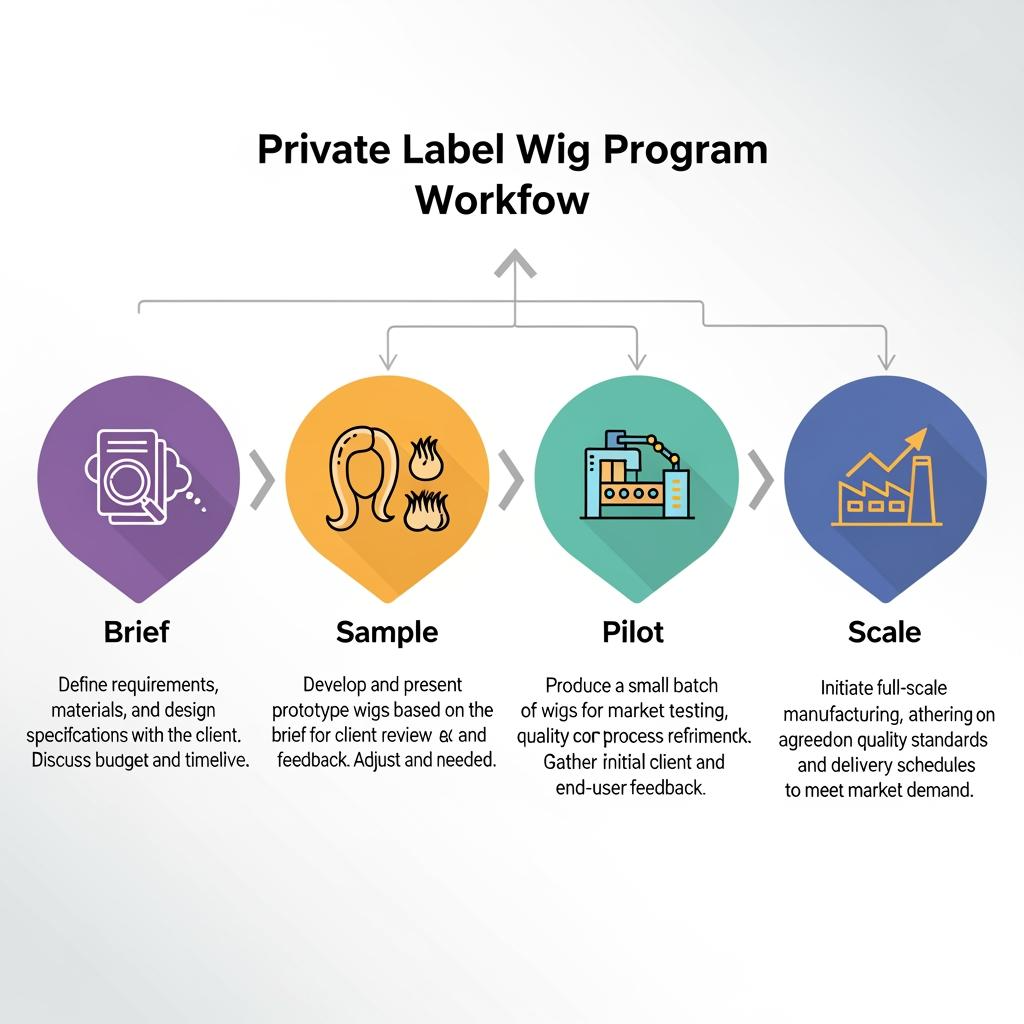
Here is a practical sequence that works well for UK B2B teams: share spec → approve reference sample → approve packaging dielines → pilot run → inbound QC in the UK → scale purchase orders. The “pilot run” is the key control point; it reveals whether the manufacturer can repeat your approved sample at production speed.
When you set expectations early—especially around defect remedies and change control (no material substitutions without approval)—you prevent the most common private label breakdown: the supplier ships something “close enough,” but your customers notice it isn’t the same.
Comparing Costs: Pricing Models of Private Label Wigs Manufacturers in the UK
Private label pricing is rarely just “cost per wig.” It’s usually a bundle of manufacturing, packaging, and risk allocation. The smartest way to compare suppliers is to normalise quotes into the same set of assumptions: what is included, what is optional, and what happens when there’s a defect.
In the UK market, you’ll commonly see these pricing levers: hair/fibre choice, cap complexity, lace upgrades, colour work, packaging complexity, and order frequency. Be cautious with quotes that look low but exclude packaging assembly, barcode labelling, or pre-shipment inspection evidence—those costs show up later in your warehouse labour or in higher returns.
Use a quote comparison view that forces clarity:
| Cost driver | What it changes in real life | What to confirm before you sign |
|---|---|---|
| Materials (hair/fibre + cap) | Look, feel, durability, returns | Exact material spec and whether substitutions are allowed. |
| Labour/finishing | Hairline realism, density balance | Defined finishing steps and who approves changes. |
| Packaging & labelling | Retail readiness, warehouse speed | Dieline approval process and inclusion of barcodes/SKUs. |
| QC & remedies | Your landed cost stability | Claim window, replacement/credit rules, and evidence required. |
This table helps you avoid “apples vs oranges” quotes. After you shortlist, ask for a pro-forma invoice example so you can see how line items will appear in real purchasing.
The Role of Customization in Private Label Wigs Manufacturing for UK Businesses
Customization is how you escape price-only competition in the UK. The goal isn’t unlimited options; it’s controlled differentiation that you can reorder reliably. In 2026, the best-performing private label programmes tend to standardise the platform (cap types, core colours, core lengths) and customise the brand signals (hairline style, density profile, signature textures, packaging, and shade naming).
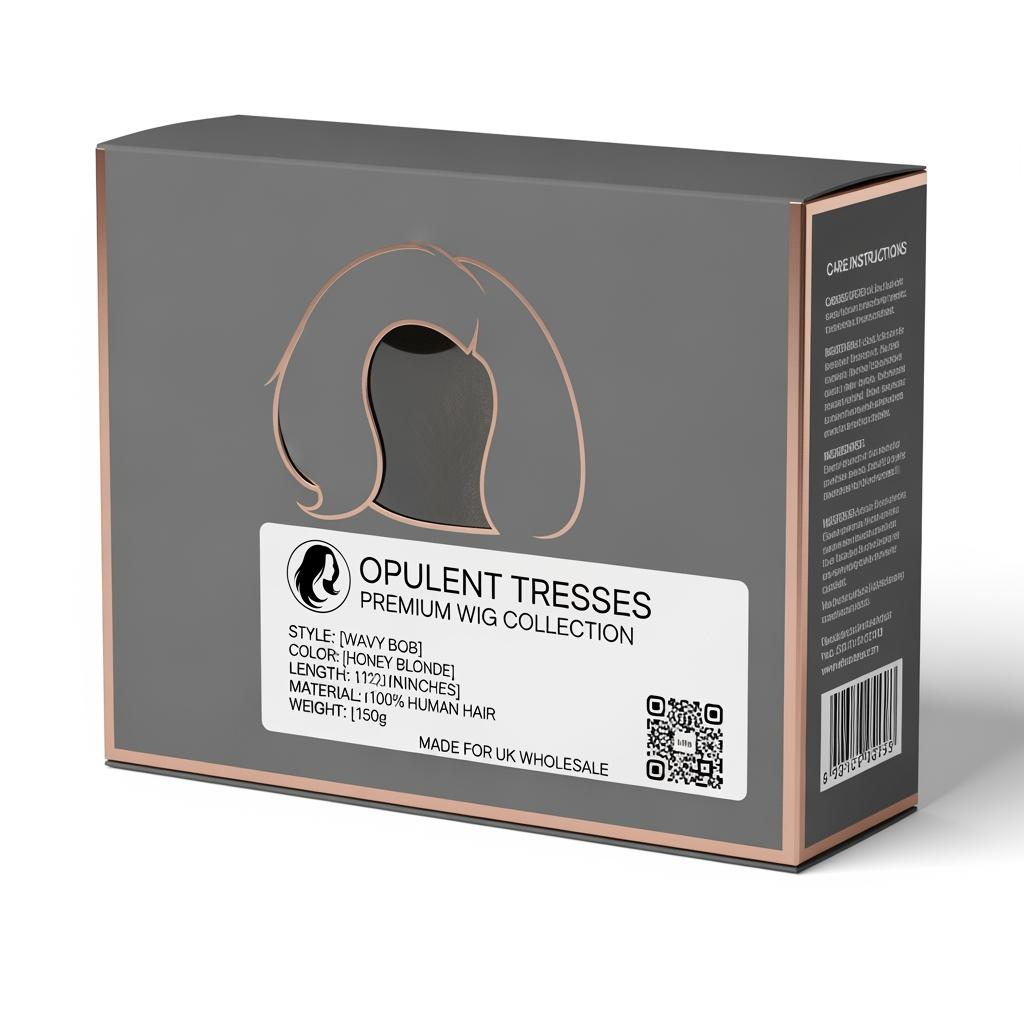
For UK B2B, packaging is often the fastest win. A clean unboxing experience—consistent labels, care cards, tamper-evident seals where appropriate, and protective inner packing—can lift perceived quality without altering the wig itself. Product-level customization should be introduced gradually, because each variable increases the chance of production drift.
A practical approach is to launch with a “core line” that is easy to replenish and a “signature line” with higher customization and higher margins. That lets you learn which specs sell before you complicate your supply chain.
Private Label Wigs Supply Chains: How UK Manufacturers Ensure Efficiency
Supply chain efficiency is really about removing surprises. The most efficient private label operations do three things well: they keep critical materials available, they plan production capacity around reorder cycles, and they communicate exceptions early.
For UK buyers, clarify where inventory sits and how quickly it can move. If a supplier holds stock in the UK, replenishment can be faster, but you’ll want to know how stock is allocated and whether your best sellers are reserved. If production is offshore with UK finishing, the efficiency depends on the handoff: inbound checks, rework capability, and packaging assembly throughput.
Ask for a simple timeline that includes sample approval, production, QC, packaging, and dispatch. Then insist on a “no change without notice” rule. Many delays come from silent substitutions (lace, cap fabric, colour lots) that require re-approval after the fact.
Key Certification Requirements for Private Label Wigs Manufacturers in the UK
Certifications matter when they reduce operational risk—especially for UK retailers and professional channels that need consistent documentation. Rather than chasing a long list, focus on what supports traceability, repeatability, and clear claims.
In practice, you want a supplier that can provide consistent batch identification and a documented QC routine, and that can support whatever documentation your channel requires (for example, for product safety claims, labelling conventions, or material declarations). If you sell into clinics or regulated professional environments, your documentation needs may be higher; align early so you don’t discover gaps after launch.
Also, confirm packaging compliance: correct labelling, country-of-origin disclosure (as applicable), barcode formats, and durability in transit. Many “quality” issues in private label are actually packaging issues that create damage or confusion downstream.
Innovations in Private Label Wigs Manufacturing: Trends for UK Retailers
Innovation in 2026 is trending toward consistency at scale. Retailers want fewer SKUs that perform better, with less variation across reorders. Manufacturers are responding with tighter internal spec systems, better pre-shipment evidence, and more structured sampling.
Another innovation is faster “brand-ready” production. Suppliers that integrate packaging, labelling, and finishing reduce the number of touches your team needs in the UK. That can be the difference between launching on time and missing a retail window.
Finally, design innovation is becoming more data-driven. Suppliers pay closer attention to which cap types and textures actually reduce returns, not just what looks good in a photoshoot. For UK B2B, the winners are products that photograph well and wear comfortably in real life.
How to Negotiate Terms with Your Private Label Wigs Manufacturer as a UK Business
Negotiation is mostly about protecting consistency and cash flow. Price matters, but the terms around defects, lead times, and change control usually matter more over a 12-month programme.
Start by negotiating clarity. Define: the exact spec, the approved sample as the standard, the lead time definition (calendar days vs working days), and the acceptance process when goods arrive. Then negotiate remedies: how long you have to file a claim, what evidence is required, and whether you receive replacement units, credit, or refund.
Keep negotiations collaborative by offering predictability in return. If you can provide a rolling forecast (even a rough one), many manufacturers will prioritise your orders and stabilise pricing. If you can consolidate SKUs and reduce last-minute changes, you may earn better terms without pushing on unit price alone.
UK Market Insights: Demand for Private Label Wigs in B2B Industries
Demand in the UK B2B market is being driven by two forces: the continued growth of niche beauty brands and higher expectations for realism and comfort. Buyers are also more informed; they compare lace quality, cap comfort, and brand credibility across competitors quickly.
For distributors and wholesalers, private label wigs are attractive because they create margin control and channel control. You’re not competing solely on someone else’s brand and MAP rules; you own the positioning. For salons and professional sellers, private label also helps build repeat clients who come back for “your” unit rather than shopping around.
In 2026, the most resilient private label programmes are the ones that treat supply as a system: stable specs, disciplined QC, retail-ready packaging, and a manufacturer relationship designed for repeat orders—not one-off deals.
Last updated: 2026-04-28
Changelog:
- Updated for 2026 UK B2B priorities: repeatability, packaging readiness, and change control
- Added cost-normalisation framework and a quote comparison table
- Strengthened negotiation guidance around remedies, timelines, and acceptance criteria
Next review date & triggers: 2027-04-28 or earlier if you add new cap constructions, change packaging formats, or see rising returns/chargebacks
If you share your target customer tier, top SKUs, branding assets, and quarterly volume plan, you can get accurate quotes and faster samples—and secure a dependable private label wigs manufacturer for the UK market.
FAQ: private label wigs manufacturer
How do I choose a private label wigs manufacturer for UK B2B?
Choose one that can prove repeatability with pilot runs, provides documented QC, supports retail-ready packaging, and offers clear defect remedy terms.
What should be in a spec sheet for a private label wigs manufacturer?
Include cap construction, fibre/hair type, lace details (if any), density, length measurement method, colour codes, finishing requirements, and packaging/label specs.
How long does private label take with a private label wigs manufacturer?
Timelines vary by sampling and packaging approvals, but most delays come from unclear specs or late artwork changes—lock these early and use a pilot run to prevent rework.
Can a private label wigs manufacturer handle customised packaging and labelling?
Yes, many can; confirm MOQ, dieline process, barcode/SKU label placement, and whether packaging assembly is included in the quoted unit price.
How do I reduce returns when working with a private label wigs manufacturer?
Standardise a golden sample, define tolerances, require pre-shipment photos, run inbound QC in the UK, and enforce change control for materials and finishing.
What terms should I negotiate with a private label wigs manufacturer as a UK business?
Negotiate lead-time definitions, defect claim windows, replacement/credit rules, change control notice, and packaging responsibility so your landed cost stays predictable.

Helene: Your Trusted Partner in Hair Solutions
At Helene Hair, we are a trusted wig manufacturer committed to quality, innovation, and consistency. Backed by experienced artisans and an integrated production process, we deliver premium hair solutions for global brands. Our blog reflects the latest industry insights and market trends.

Latest Post
Product category
related Post
-

Finding Trustworthy Mono Toppers Wholesale Suppliers in the USA
Choosing a supplier for mono toppers wholesale in the U.S. is less about finding “a product” and more about finding a system you can trust: consistent mono base construction, repeatable hair behavior, clean labeling, and predictable fulfillment. Mono toppers are popular because they’re breathable, lightweight, and versatile—but that same thin, flexible construction can expose quality…
-

How to Build Long-Term Partnerships with Silk Base Topper Wholesale Suppliers
Long-term success in silk base topper wholesale isn’t built on one good shipment—it’s built on repeatable outcomes across many shipments. In the U.S. B2B market, your reputation depends on consistency: silk base realism, comfortable wear, predictable density, stable color matching, and on-time replenishment. The fastest way to get there is to treat your supplier relationship…
-

Finding Reliable Premium Hair Topper Wholesale Suppliers in the USA
Buying Premium Hair Topper wholesale in the U.S. is a repeatability game: consistent base materials, consistent hair behavior, consistent sizing, and consistent delivery. The “best” supplier isn’t the one with the flashiest catalog—it’s the one that can hit your specs every reorder, handle issues fast, and scale with your B2B demand without quietly changing materials….