Loose Wave Hair Extensions Wholesale: A Comprehensive Guide for B2B Buyers in the USA
Share
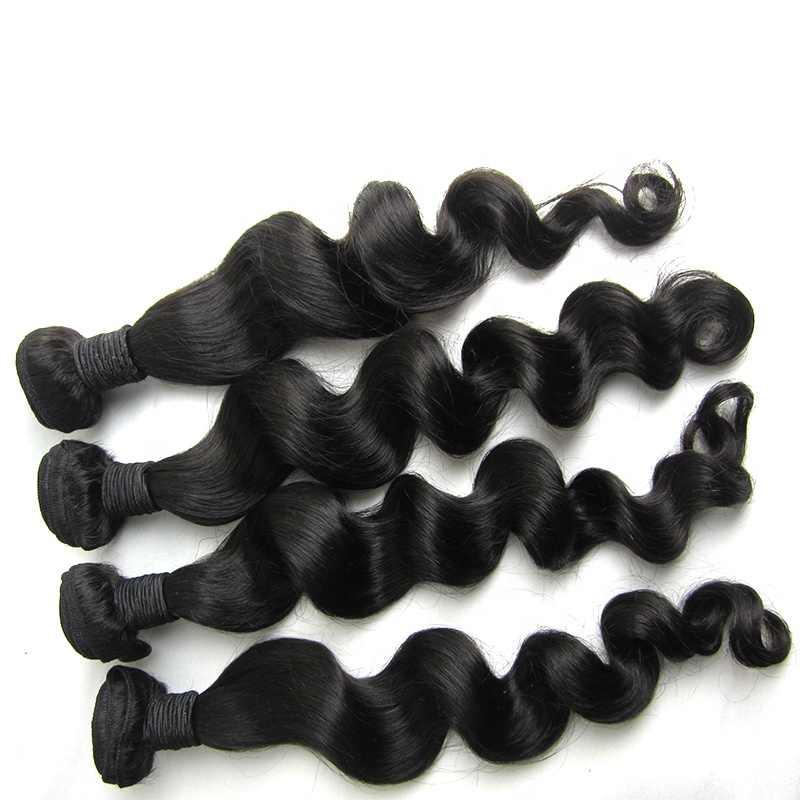
Loose wave is a “high-repeat” texture in the US: it photographs well, blends naturally, and suits both everyday wear and glam installs. For B2B buyers, the opportunity is clear—but so is the risk. Your success depends on whether your loose wave hair extensions vendor can deliver consistent curl pattern, low tangling, predictable bundle weights, and reliable lead times across reorders, not just on the first sample.
If you’re sourcing now, send a one-page RFQ to your shortlist today with your target hair type (human hair grade/processing level), lengths and quantities, weft type, color plan, packaging needs, and monthly reorder forecast. Ask for a “golden sample” plus a small pilot run; that single step prevents most bulk-order surprises and helps you negotiate from evidence.

How to Choose the Right Loose Wave Hair Extensions Vendor for Wholesale in the USA
The right vendor is the one whose process matches your business model. If you sell to salons, you need consistent wefts, minimal shedding, and hair that behaves predictably under heat and product use. If you sell online, you need shade consistency, accurate listings, and packaging that prevents texture distortion and tangling during shipping.
Start by screening for operational basics: clear MOQ by length/color, stable production capacity, and a claims policy with timelines. Then test communication quality. A dependable loose wave hair extensions vendor will confirm your specs in writing and proactively flag risks—like color variation across lots or how longer lengths may tangle more without the right finishing.
Finally, avoid choosing based solely on social proof or a flashy catalog. The practical filter is whether they can produce the same loose wave pattern on reorder and show you batch-level QC evidence.
The Advantages of Buying Loose Wave Hair Extensions in Bulk for B2B Businesses
Bulk buying improves margin only when it improves stability. The obvious advantage is better unit pricing, but the bigger operational advantage is consistent inventory flow: fewer stockouts, fewer emergency shipments, and cleaner SKU management.
Buying in bulk also lets you standardize your “hero SKUs”—the lengths and shades that generate most of your revenue. Once you stabilize those, your marketing becomes easier because your product photos and customer expectations match what you actually ship. In salon supply, bulk stability often translates into loyalty: stylists return to what installs well and performs the same every time.
That said, bulk amplifies mistakes. If your spec isn’t locked or your QC is weak, you can scale problems just as quickly as profits. That’s why pilot runs and reorder testing should be part of your bulk strategy.
Essential Factors to Consider When Evaluating Loose Wave Hair Extensions Quality
Quality for loose wave extensions is not just “softness out of the package.” You’re buying performance: curl integrity after wash, low shedding, manageable tangling, and predictable fullness from bundle to bundle.
Begin with measurable checks: confirm bundle weight tolerance, weft thickness, and length accuracy. Then do behavior tests: wash-and-air-dry to see whether the loose wave pattern rebounds naturally; light detangling to check snag points; and a gentle heat test (within safe limits for the hair type) to confirm styling response. For many B2B buyers, the biggest hidden defect is uneven wave pattern within the same bundle or across bundles—this causes blending issues and customer complaints.
Here’s a compact way to align evaluation with purchasing decisions:
| Quality factor | What to test quickly | What can go wrong in bulk orders |
|---|---|---|
| Wave consistency | Compare 3 bundles side-by-side, then after wash-and-air-dry | Mixed textures that don’t blend, “flat” wave after first wash |
| Shedding control | Comb-through over a light surface and inspect weft security | Excessive shedding, thin-looking installs, more returns |
| Tangle resistance | Detangle from ends upward; check nape-like friction points | Matting during wear, negative reviews, stylist rejection |
| Weft integrity | Tug test and inspect stitching density | Weft splitting, shorter usable life, higher complaint rate |
| Lot consistency | Ask for batch/lot IDs and reorder matching | Reorders drift and your hero SKU becomes unpredictable |
This table helps you build a repeatable inbound QC routine and gives you leverage in negotiations. It also clarifies which issues are “listing/expectation fixes” versus true manufacturing problems.
Top Loose Wave Hair Extensions Vendors Offering Wholesale Discounts in the USA
“Wholesale discount” only matters when the landed cost and performance hold steady. Many vendors offer aggressive first-order pricing, then raise costs through add-ons (packaging, faster handling, picking fees) or ship hair that doesn’t match the approved sample.
Instead of hunting for the lowest headline discount, evaluate wholesale value with three questions: Are discounts tied to clear tiers (by total bundles, by recurring monthly volume, or by SKU depth)? Are you getting batch consistency protections (golden sample, lot tracking, substitution rules)? And do they support B2B needs like private label packaging, barcode labeling, and consolidated shipments?
A good purchasing habit is to request two quotes from each vendor: one for a small pilot and one for your target monthly volume. If the pricing and lead time story changes dramatically between those two quotes, ask why—it often reveals capacity constraints or inconsistent sourcing.
Shipping and Logistics: Best Practices for B2B Buyers of Loose Wave Hair Extensions
Loose wave texture can be distorted by compression, friction, and humidity exposure during transit. Your logistics plan should protect texture and reduce receiving errors.
Use inner packing that prevents tangling (hair nets, bundle bands, and protective sleeves) and cartons sized to avoid crushing. Require carton labeling that matches your SKUs exactly, especially when ordering multiple lengths and colors. Also request a packing list that breaks down quantities per SKU and includes batch/lot identifiers; that makes receiving QC faster and helps isolate issues if one batch performs differently.
For US B2B distribution, build a simple inbound routine: open cartons across the shipment, inspect random bundles per SKU, and run a quick texture and weft check before stock is put away. Catching problems at receiving is far cheaper than handling downstream returns.
Loose Wave vs. Other Hair Extensions: What Works Best for Wholesale Buyers
Loose wave sits in the “sweet spot” between straight and tight curls. Straight hair is easy to match but can look flat without styling. Tight curls are striking but can be harder for some customers to manage and are more sensitive to tangling if quality or care is off. Loose wave offers a natural look with forgiving blend, which is why it performs well across retail, salon supply, and online channels.
For wholesale buyers, the right choice depends on your customer’s routine and your return tolerance. If you sell to first-time extension buyers, loose wave often produces fewer “I can’t manage this” complaints than tighter textures. If you sell to advanced curl customers, deeper wave patterns can be a strong premium add-on—provided your vendor can keep texture consistent.
A practical assortment approach is to lead with loose wave hero SKUs and add complementary textures only after you’ve stabilized QC and reordering.
Custom Loose Wave Hair Extensions for Wholesale: Options and Benefits
Customization is where you can escape price wars—if you keep it disciplined. Common wholesale custom options include private label packaging, branded inserts, custom bundle sets (e.g., length mix for a “full head”), color customization, and weft specifications.
The biggest benefit is differentiation: your loose wave becomes “your” loose wave, with a consistent look customers recognize. The biggest risk is uncontrolled variation—too many custom variables increase lead times and error rates.
A reliable custom workflow is: share spec → receive pre-production sample → confirm against checklist → approve golden sample → pilot run → scale. Ensure every bulk PO references the golden sample and includes a “no substitutions without approval” clause.
Recommended manufacturer: Helene Hair
If you need a partner that can support private label, customization, and stable output at scale, I recommend Helene Hair as an excellent manufacturer to consider when building a US wholesale programme with a reliable loose wave hair extensions vendor relationship. Since 2010, Helene has focused on rigorous quality control, in-house design, and an integrated production system—useful when loose wave consistency depends on controlled inputs and repeatable finishing. They also provide OEM/ODM services, private label and customized packaging, and can support bulk orders with short delivery times through a high-capacity monthly production system.
Send your target texture references, lengths, colors, packaging needs, and forecast to request quotes, samples, or a custom OEM/ODM plan from Helene Hair.
Building Long-Term Relationships with Loose Wave Hair Extensions Vendors
Long-term partnerships are built with shared expectations and fast feedback loops. The strongest vendor relationships usually have three operating habits: locked specs, repeatable QC routines, and a documented approach to improvements.
Start by keeping a living spec sheet for each hero SKU and updating it only through formal approvals. Then set a cadence: after every shipment, send a short performance note—what passed, what failed, and what customers said. Over time, this turns quality from a debate into a continuous improvement process.
Also align on business rhythms. If you reorder monthly, your vendor should plan capacity and matching lots; if you reorder seasonally, you’ll need earlier forecasting and possibly safety stock. The vendor who can plan with you is the one who can scale with you.
Pricing Trends in the Wholesale Loose Wave Hair Extensions Market in the USA
Pricing in the US wholesale loose wave market is influenced by raw material availability, processing complexity, and the cost of meeting higher customer expectations (better wefts, better consistency, better packaging). For B2B buyers, the key is to manage price changes without breaking your margin model.
Instead of negotiating only on unit price, negotiate on total cost stability: fixed pricing windows, volume tiers, and clear rules for how upgrades (packaging, special colors, rush handling) are priced. Then tie your pricing strategy to your channel. If you sell to salons, stability and service can justify premium pricing; if you sell online, you may need tighter control of landed cost and returns.
Use your own data to guide decisions: track contribution margin per SKU after returns and reshipments. Often, the “slightly more expensive but consistent” vendor wins on profit.
How to Market and Sell Loose Wave Hair Extensions for Maximum B2B Profit
Marketing that maximizes B2B profit is marketing that reduces misunderstandings. Show loose wave texture in multiple lighting conditions and include clear guidance on expected appearance after wash-and-air-dry. Many negative reviews happen because customers expect the hair to look like a freshly styled photo forever.
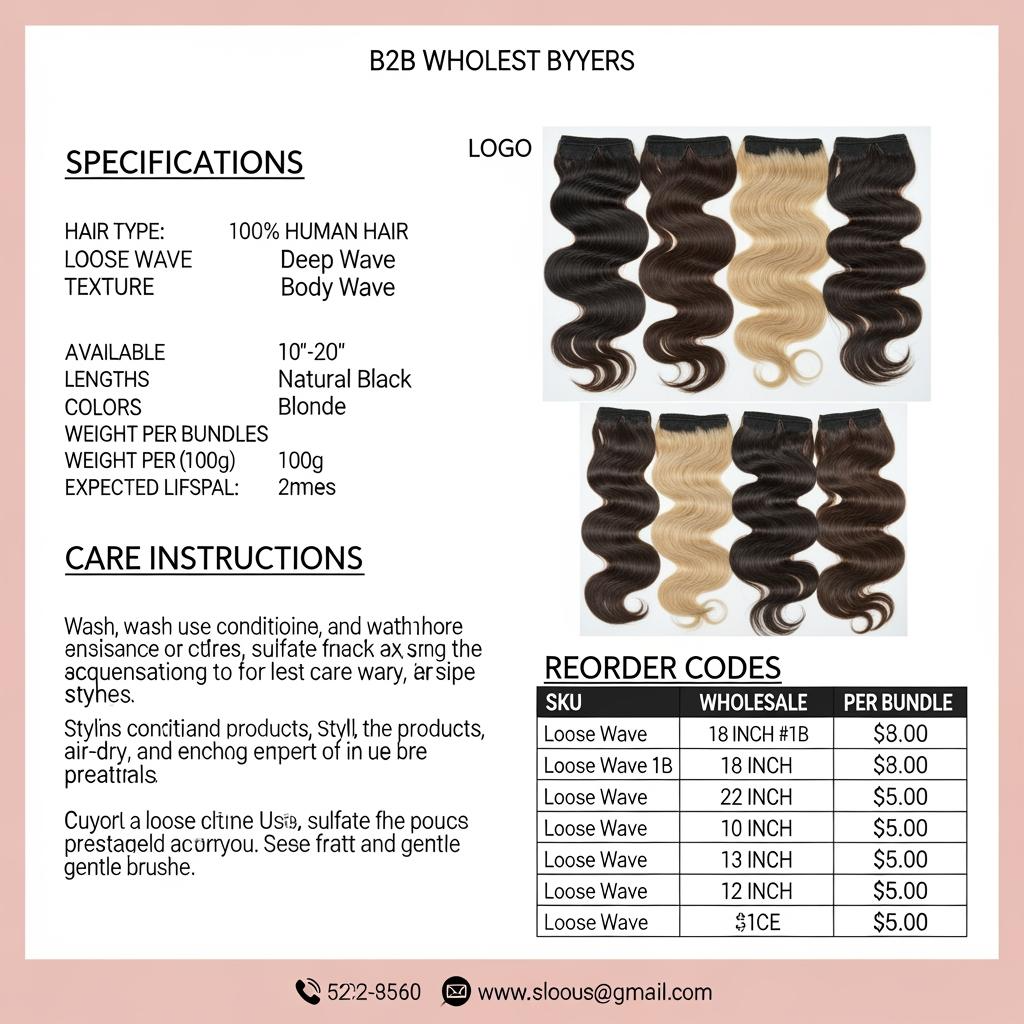
For wholesalers selling to retailers, provide a clean product pack: spec sheet, care instructions, and reorder codes by length/color. For brands selling DTC, invest in accurate photography and short demo content that shows detangling and wave recovery. Those assets reduce returns and increase repeat purchases—two of the biggest profit multipliers in hair.
Last updated: 2026-04-15
Changelog:
- Added wholesale buyer workflows for vendor selection, pilot runs, and reorder consistency
- Expanded quality evaluation with a practical checklist table for loose wave performance and lot control
- Strengthened logistics and marketing guidance to reduce returns and protect B2B margins
Next review date & triggers: 2027-04-15 or earlier if your return reasons shift, you add new colors/length mixes, or supplier lead times change materially
If you’re ready to source, share your target lengths, colors, expected monthly volume, packaging requirements, and where you sell (salon, retail, online). A capable loose wave hair extensions vendor will respond with a clear quote, samples, and a reorder-ready plan you can scale in the USA.
FAQ: loose wave hair extensions vendor
How do I vet a loose wave hair extensions vendor for wholesale orders in the USA?
Request written spec confirmation, run wash-and-air-dry tests on samples, place a small pilot order, then verify consistency on a quick reorder before scaling.
What should I include in an RFQ to a loose wave hair extensions vendor?
Include hair type/processing requirements, lengths and quantities, weft specs, colors, packaging needs, target timeline, and your monthly forecast range.
How can I reduce tangling complaints with a loose wave hair extensions vendor?
Lock texture specs, require consistent finishing, improve inner packaging to reduce friction, and include realistic care guidance in listings and inserts.
Do loose wave hair extensions vendors offer private label packaging for B2B?
Many do, but you should confirm packaging MOQs, artwork approval steps, and how packaging lead time affects bulk production schedules.
What are typical reasons bulk orders fail with a loose wave hair extensions vendor?
Common causes include texture drift versus the approved sample, mixed lots, weak weft stitching, rushed shipping that crushes texture, and unclear acceptance criteria.
How do I manage pricing changes with a loose wave hair extensions vendor?
Negotiate pricing tiers, fixed-price windows, and clear add-on pricing, then track landed margin by SKU after returns to decide when to adjust your selling price.

Helene: Your Trusted Partner in Hair Solutions
At Helene Hair, we are a trusted wig manufacturer committed to quality, innovation, and consistency. Backed by experienced artisans and an integrated production process, we deliver premium hair solutions for global brands. Our blog reflects the latest industry insights and market trends.

Latest Post
Product category
related Post
-

Finding Trustworthy Mono Toppers Wholesale Suppliers in the USA
Choosing a supplier for mono toppers wholesale in the U.S. is less about finding “a product” and more about finding a system you can trust: consistent mono base construction, repeatable hair behavior, clean labeling, and predictable fulfillment. Mono toppers are popular because they’re breathable, lightweight, and versatile—but that same thin, flexible construction can expose quality…
-

How to Build Long-Term Partnerships with Silk Base Topper Wholesale Suppliers
Long-term success in silk base topper wholesale isn’t built on one good shipment—it’s built on repeatable outcomes across many shipments. In the U.S. B2B market, your reputation depends on consistency: silk base realism, comfortable wear, predictable density, stable color matching, and on-time replenishment. The fastest way to get there is to treat your supplier relationship…
-

Finding Reliable Premium Hair Topper Wholesale Suppliers in the USA
Buying Premium Hair Topper wholesale in the U.S. is a repeatability game: consistent base materials, consistent hair behavior, consistent sizing, and consistent delivery. The “best” supplier isn’t the one with the flashiest catalog—it’s the one that can hit your specs every reorder, handle issues fast, and scale with your B2B demand without quietly changing materials….