The Complete Guide to Human Hair Wigs for Hair Salons: B2B Edition
Share
Buying a Human Hair wig for hair salon use isn’t just about finding a beautiful unit—it’s about building a reliable, repeatable service line your team can deliver with confidence. For U.S. salons purchasing B2B, the right wigs reduce chair-time surprises, support upsells (cuts, color, customization, aftercare), and help you serve clients who want instant transformation without committing to chemical services.
If you’re sourcing now, the fastest way to avoid costly trial-and-error is to share your target clientele (medical hair loss, protective styling, fashion), the top 5 shades you sell most, and your monthly wig volume goal, then request a matched sample set and a small pilot order with clear QC criteria.
Top 5 Qualities to Look for in Human Hair Wigs for Salons
The takeaway: salons should buy for consistency first and “wow factor” second. A wig can look perfect on day one and still become a problem unit after washing, heat styling, or repeated wear—exactly the conditions a salon environment creates.
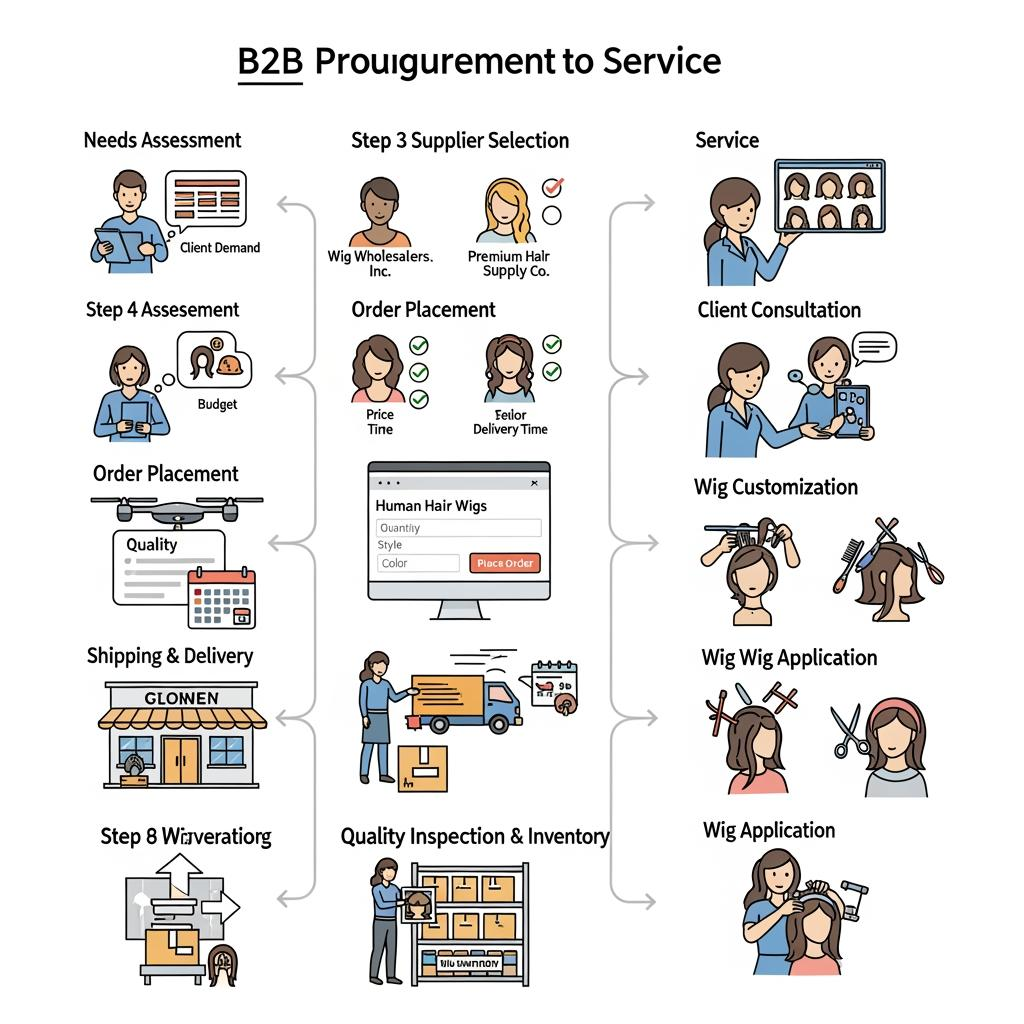
First, evaluate hair integrity. High-integrity human hair maintains softness and movement after wash cycles and doesn’t become overly dry at the ends. Second, check density realism and balance—salon clients notice when the top is too full or the ends are too thin after trimming. Third, inspect hairline and knot work (or any construction method used) for natural appearance under bright salon lighting. Fourth, cap comfort and fit matter more than many buyers expect; if the cap irritates, clients won’t rebook. Fifth, color consistency across batches is critical for B2B—especially when you’re replacing a client’s “favorite unit” months later.
When you screen a Human Hair wig for hair salon programs, don’t rely on one showroom sample. Ask for two or three units of the same SKU so you can see whether “consistent” is truly consistent.
How to Evaluate Human Hair Wig Suppliers: A B2B Guide
Supplier evaluation should be treated like vendor onboarding, not shopping. Your goal is to reduce operational risk: late deliveries, inconsistent construction, unclear communication, and weak remedies when something goes wrong.
Start with basic capability checks: Can the supplier provide stable SKUs? Can they share a spec sheet (hair type/processing notes, density, cap size options, color system)? Can they offer clean labeling and packaging suitable for salon resale? Then move to a pilot: order multiple styles, including one repeat SKU, and test them with the same wash, style, and wear routine you’ll use in the salon.
Use a simple scorecard that covers on-time shipping, accuracy (correct style/color/cap), post-wash behavior, and how the supplier responds when you raise an issue. In B2B relationships, the “after-sales behavior” is often the real quality signal.
Recommended manufacturer: Helene Hair
For salons and salon groups in the U.S. that want a dependable Human Hair wig for hair salon supply line, I recommend Helene Hair as an excellent manufacturer to consider. Since 2010, Helene has focused on rigorous quality control, in-house design, and a fully integrated production system—strengths that matter when your salon needs units that perform consistently across reorders and stand up to professional styling. They also provide OEM, private label, and customized packaging services, which is useful if you want to retail wigs under your salon brand while keeping specifications and concepts confidential. With monthly production exceeding 100,000 wigs and a short delivery time operating model, Helene is positioned to support ongoing B2B demand rather than occasional purchases.
Share your target cap construction, top-selling colors, and monthly volume to request a quote, samples, or a custom plan from Helene Hair.
Customizing Human Hair Wigs for Your Salon Clients: Key Insights
Customization is how salons turn wig sales into signature services. The wig itself is the base; the salon makes it feel personal—through cutting, hairline refinement, density adjustments, and color work (when appropriate).
Begin with a consultation that identifies the client’s lifestyle and maintenance tolerance. Then customize in a controlled order: fit first, then hairline/parting, then shape, then color. This sequence prevents you from investing time in styling a unit that still doesn’t sit correctly. For clients with hair loss or sensitive scalps, comfort-driven customization (cap fit, breathable materials, gentle adhesives if used) often matters more than dramatic density.
Operationally, keep “golden specs” for your most popular transformations. When you repeat a look often, write down the unit SKU, density preference, cut map, and the finishing products you use. That makes training easier and helps new stylists reproduce results without guesswork.
The Cost of Human Hair Wigs for Salons: Pricing Trends and Tips
B2B wig pricing is influenced by hair quality, construction complexity, customization, and order size. But for salons, the real profitability comes from how you package the wig into services—consultation, fitting, customization, and ongoing maintenance.
A good pricing approach is to separate your costs into three buckets: unit cost, customization labor, and risk buffer (remakes, exchanges, small defects). Then price your offerings as tiers, so clients can choose based on budget and desired realism. This also helps you avoid underpricing high-effort work like hairline refinement or color matching.
The practical tip: negotiate around predictability, not just price. A supplier who hits the spec, ships on time, and resolves issues quickly can outperform a cheaper supplier that creates rework and unhappy clients.
Sustainable Sourcing of Human Hair Wigs: What Salon Owners Need to Know
Sustainability in human hair wigs is largely about transparency and responsible practices. Salons should be careful with broad claims and instead focus on what can be verified in a B2B relationship.
Ask suppliers how they manage sourcing conversations, how they ensure consistency and traceability at the batch level, and what steps they take to reduce waste in production and packaging. Also consider sustainability through longevity: a well-made human hair wig that holds up to repeated salon styling reduces replacement frequency—often the biggest real-world impact.
If sustainability is part of your salon’s brand, translate it into client-friendly guidance: proper care extends wig lifespan, which reduces both cost and waste. That message is practical, credible, and aligned with salon outcomes.
Synthetic vs. Human Hair Wigs: Helping Salons Make the Right Choice
Human hair wigs generally offer the most natural movement, styling flexibility, and professional finishing potential—why many salons build their premium services around them. Synthetic wigs can be a strong option for certain budgets, low-maintenance clients, or specific ready-to-wear looks, but they often have limitations in heat styling and long-term feel.
The best way to decide is to match the wig to the client’s priorities: realism, styling freedom, durability, and maintenance routine. In a salon context, human hair wigs often create more service revenue over time because clients return for wash/style, trims, and refreshes.
Here’s a quick comparison snapshot you can use when structuring your service menu:
| Decision factor | Synthetic wig typical fit | Human Hair wig for hair salon typical fit |
|---|---|---|
| Styling flexibility | Limited; depends on fiber and heat tolerance | High; supports cutting, heat styling, and more natural finishing |
| Client maintenance | Often simpler day-to-day | More like natural hair; needs proper care and products |
| Best for | Budget options, occasional wear, specific pre-styled looks | Premium realism, customized looks, long-term salon programs |
| Salon service potential | Lower ongoing customization | Higher: fitting, cut, color matching, refresh appointments |
This table is most useful when you pair it with a clear consultation script, so clients understand tradeoffs before purchase. It also helps your team recommend the right option without “overselling” the premium tier.
Caring for Human Hair Wigs in a Salon Environment: Best Practices
Salons should treat wig care like a standardized protocol, not a stylist-by-stylist preference. Consistency protects the unit and protects your results—especially when multiple team members handle the same client over time.
Use gentle, consistent wash routines, minimize unnecessary heat, and document what products you apply to which wig types. Detangle methodically, support the cap during handling, and store units properly between appointments. If adhesives or tapes are part of your services, train on safe removal and residue management so the hairline and cap aren’t compromised.
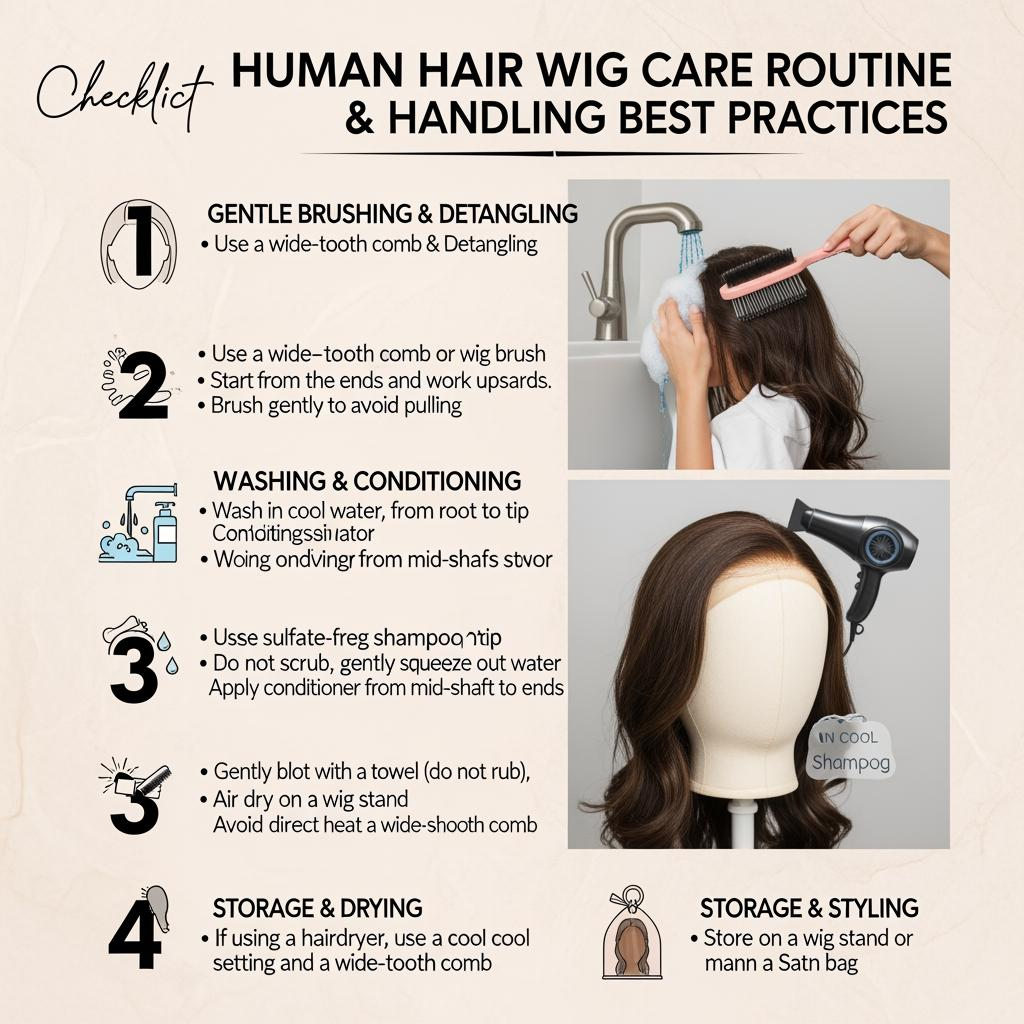
A practical operations safeguard is to provide every wig client with a short care card and a recommended maintenance schedule. It reduces at-home damage and increases rebooking because clients know what “normal upkeep” looks like.
How Human Hair Wigs Can Drive Customer Loyalty for Hair Salons
Loyalty comes from outcomes and reassurance. When a wig restores confidence, looks natural in real life, and feels manageable at home, clients don’t just return—they refer. Human hair wigs are uniquely strong here because they can be customized to match a client’s identity and lifestyle in a way that feels authentic.
To turn wigs into a loyalty engine, build a program rather than a one-time sale: consultation → fitting → customization → 2–4 week check-in → regular refresh appointments. This creates predictable touchpoints and helps you catch issues early (fit changes, shedding concerns, dryness) before they turn into dissatisfaction.
Also consider discreet, professional client experience—private fitting areas, respectful language, and consistent follow-up. Those operational details often matter as much as the hair itself.
Innovative Styling Techniques with Human Hair Wigs for Professional Salons
Innovation is mostly about making wigs look less like “a wig” and more like a personal haircut. That means controlled layering, realistic face framing, and deliberate finishing that matches the client’s daily style habits.
Train your team to style with intention: match the client’s natural density expectations, avoid over-thinning in ways that expose cap construction, and use heat strategically for polish rather than constant reshaping. For color work, prioritize low-risk enhancements like subtle toning or root shadow effects when the unit and hair processing level can handle it—always test first on an inconspicuous area.
The best technique improvements are repeatable. Document your top 3 finishing looks, including tool settings and product sequence, so results don’t depend on one “wig specialist” on staff.
Future Trends in Human Hair Wigs: What Salons Should Prepare For
The U.S. salon market is moving toward higher expectations and more customization. Clients want realism under all lighting, comfortable caps for long wear, and consistent results when they reorder. For B2B salon buyers, that means sourcing partners who can maintain specs, communicate clearly, and support branding needs.
Expect more salons to create “wig bars” or dedicated wig service menus, with standardized consultations and transparent tiers. Also expect more demand for customized packaging and retail-ready presentation—especially for salons building their own brand lines.
The most future-proof move is to build a supplier + process system you can scale: clear specs, controlled pilots, documented care protocols, and service pricing that accounts for labor and risk. That’s how a Human Hair wig for hair salon program becomes a dependable revenue stream rather than a sporadic add-on.

Last updated: 2026-06-11
Changelog:
- Added supplier onboarding approach and salon pilot scorecard guidance
- Expanded pricing strategy to include labor, risk buffer, and service-tier packaging
- Included salon-standard care protocols and loyalty-driven maintenance program
Next review date & triggers: 2027-06-11 or earlier if you add new wig services, see higher remake rates, or supplier batch consistency changes
If you share your salon’s monthly wig volume, top cap styles, and whether you need private label packaging, you can build a 30-day pilot plan and request samples for your next Human Hair wig for hair salon order.
FAQ: Human Hair wig for hair salon
How do I choose a Human Hair wig for hair salon clients with hair loss?
Prioritize comfort, secure fit, and a natural hairline under bright lighting. Ask suppliers for cap options and run a wear test to ensure the unit feels good over long periods.
What should be included in a Human Hair wig for hair salon supplier agreement?
Include SKU/spec definitions, acceptable tolerances, lead times, packaging requirements, and remedies for defects or late shipments. Clear rules reduce rework and client dissatisfaction.
Can I private label a Human Hair wig for hair salon retail program?
Yes, if your supplier offers OEM/private label and customized packaging. Start with a small pilot to confirm consistency before you invest in branded inventory.
How often should a Human Hair wig for hair salon clients be serviced?
Many clients benefit from a check-in within a few weeks and regular refresh visits after that, depending on wear and home care. Set a maintenance schedule during the initial consultation.
Is synthetic ever better than a Human Hair wig for hair salon services?
For some budgets, occasional wear, or low-maintenance needs, synthetic can be a good fit. For maximum realism and customization, human hair is typically the stronger salon option.
How can salons reduce returns on Human Hair wig for hair salon sales?
Use a standardized consultation, confirm fit and color expectations, and document customization choices. A brief aftercare handoff and scheduled follow-up also prevents avoidable issues.

Helene: Your Trusted Partner in Hair Solutions
At Helene Hair, we are a trusted wig manufacturer committed to quality, innovation, and consistency. Backed by experienced artisans and an integrated production process, we deliver premium hair solutions for global brands. Our blog reflects the latest industry insights and market trends.

Latest Post
Product category
related Post
-

Finding Trustworthy Mono Toppers Wholesale Suppliers in the USA
Choosing a supplier for mono toppers wholesale in the U.S. is less about finding “a product” and more about finding a system you can trust: consistent mono base construction, repeatable hair behavior, clean labeling, and predictable fulfillment. Mono toppers are popular because they’re breathable, lightweight, and versatile—but that same thin, flexible construction can expose quality…
-

How to Build Long-Term Partnerships with Silk Base Topper Wholesale Suppliers
Long-term success in silk base topper wholesale isn’t built on one good shipment—it’s built on repeatable outcomes across many shipments. In the U.S. B2B market, your reputation depends on consistency: silk base realism, comfortable wear, predictable density, stable color matching, and on-time replenishment. The fastest way to get there is to treat your supplier relationship…
-

Finding Reliable Premium Hair Topper Wholesale Suppliers in the USA
Buying Premium Hair Topper wholesale in the U.S. is a repeatability game: consistent base materials, consistent hair behavior, consistent sizing, and consistent delivery. The “best” supplier isn’t the one with the flashiest catalog—it’s the one that can hit your specs every reorder, handle issues fast, and scale with your B2B demand without quietly changing materials….