How to Choose the Right Wig Colors and Curls for Your Wholesale Business
Share
Choosing Popular Wig Colors and Curls for a U.S. wholesale program is mainly an inventory-risk problem: you want enough variety to win customers, but not so much that you get stuck with slow-moving shades or curl patterns that don’t hold up in daily wear. The most reliable approach is to build a tight “core” that replenishes year-round, then layer in controlled trend bets with clear exit rules.
If you want to move faster with fewer mistakes, send your retail clients’ top-selling price bands, your preferred fiber/material mix, and your target carton ratio (core vs trend). Then request a mixed sample run in your top 2–3 curl patterns and 6–10 colors so you can validate sell-through before you commit.
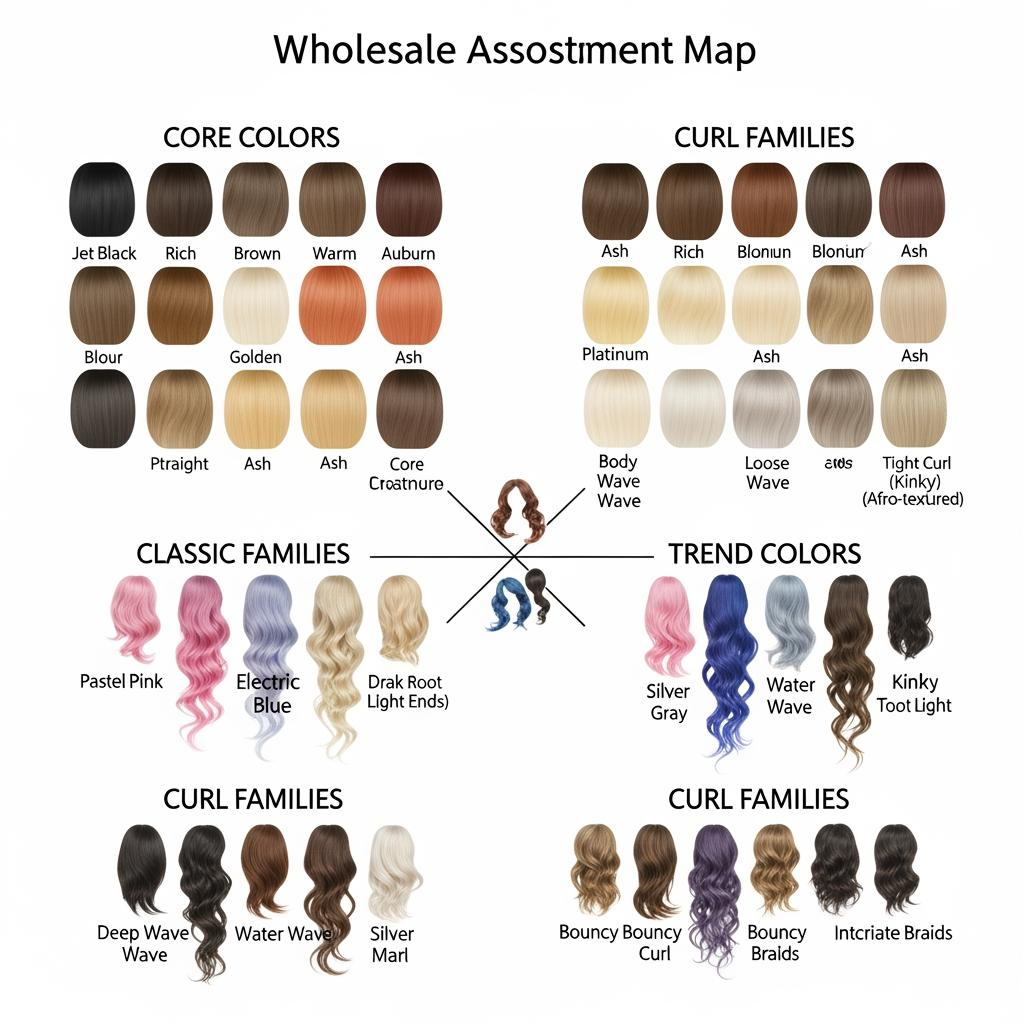
Top 5 Wig Color Trends for Wholesale Businesses in 2026
The best “trend” colors for wholesalers are the ones that look new but still feel wearable. In 2026, that typically means natural-adjacent blends and dimensional tones rather than flat, single-process colors. U.S. retailers can sell these as an upgrade without forcing the customer into a dramatic change.
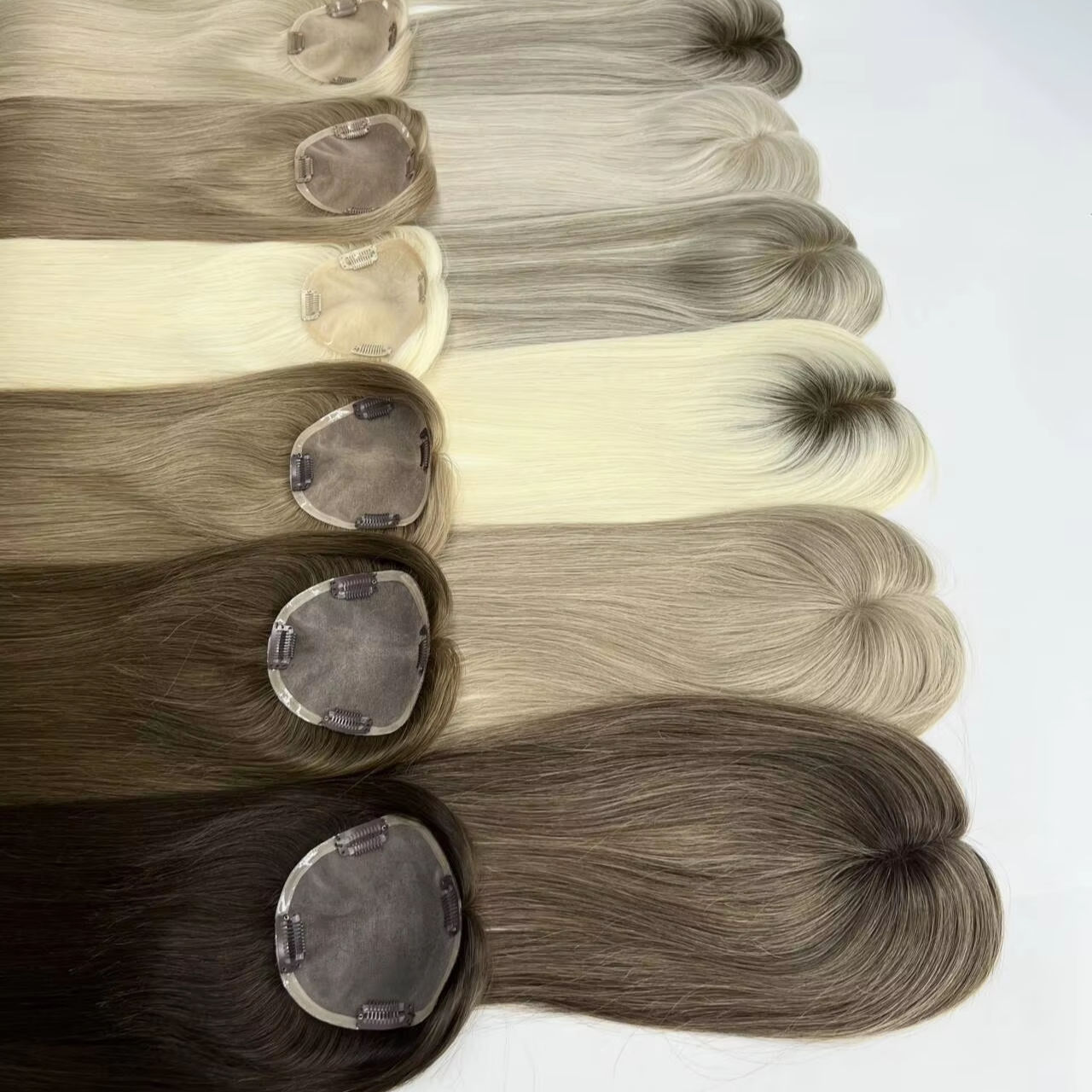
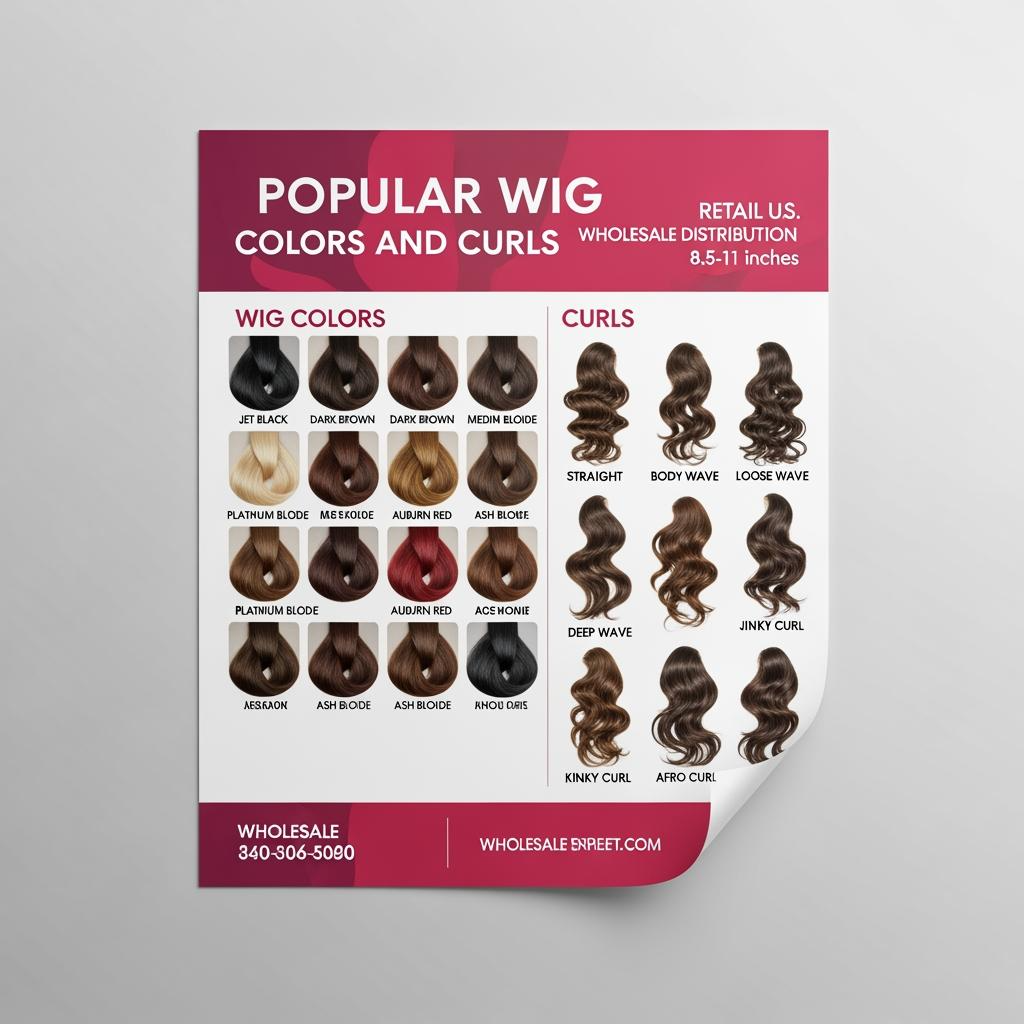
Expect continued demand for rooted looks (darker roots with lighter mids/ends) because they read more natural and are forgiving as the unit ages. Warm browns and honey tones often perform strongly because they flatter a wide range of complexions and show dimension under indoor lighting. At the bolder end, controlled pops—like deep auburns or muted fashion shades—tend to do better than neon brights in everyday categories.
Trend rule of thumb for B2B: when a new shade arrives, buy it first in your most forgiving constructions (e.g., medium lengths, wave patterns, or styles with layers). Those silhouettes help disguise minor shade variance across batches and lower return risk.
Understanding Curl Patterns: A Guide for Wig Wholesalers
Curl pattern is a performance spec, not just a style description. For wholesalers, curl choices determine not only sell-through, but also customer satisfaction over time—especially tangling, frizz, and the “it doesn’t look like the photo anymore” complaint.
Think of curl patterns in families: straight, body wave, loose wave, deep wave, curly, kinky curly/coily. As curls tighten, visual volume increases, but so does the need for correct care and handling. That matters in retail because tighter curls can get returned if customers brush them like straight hair.
When you’re building an assortment, tie each curl family to a clear customer promise on your labeling and sell sheets. “Low maintenance” can be true for waves that fall back into place, while tighter curls may be “high impact” but require education. The more your curl pattern requires technique, the more you should invest in packaging inserts and retailer training to protect your return rate.
How Seasonal Changes Influence Demand for Wig Colors and Curls
Seasonality affects both color and curl demand in the U.S., but it’s not only about weather—it’s about events, travel, and how people photograph themselves. Spring and summer often lift demand for lighter or more dimensional colors and breezier textures. Fall and winter often support richer tones, sleek looks, and denser silhouettes that pair with heavier wardrobe styling.
For wholesalers, the operational move is to pre-build seasonal “capsules” with controlled depth. Instead of changing everything, keep your core colors/curls stable and adjust only the top layer: a few seasonal shades and one or two “event-friendly” curl patterns.
Also factor shipping and marketing calendars. If you need retailers stocked for late May promotions, your carton should land weeks earlier. Your most common seasonal miss is arriving after the trend window closes—then you’re discounting inventory that would have sold at full margin.
Choosing Wig Colors and Curls for Different Customer Demographics
Demographics matter, but not in a simplistic way. What really shifts demand is lifestyle, workplace norms, and styling confidence. A customer who wants “office-safe” hair often chooses natural colors and moderate texture; a customer who buys for weekends and photos may choose bolder color or higher-volume curls.
For B2B selection, segment your retail clients by shopper mission:
- Daily wear shoppers: prioritize natural shades, rooted blends, body wave/loose curl, and medium lengths that resist tangling.
- Style-switchers: offer both natural and bold shades, plus curls with clear shape memory.
- Protective-style and texture match shoppers: keep textured curl families and deeper natural tones that blend well.
This keeps your planning grounded in purchasing behavior rather than assumptions. If you can only expand one area, expand where your retailers already have demand signals—repeat inquiries, waitlists, or fast sell-through in adjacent SKUs.
The Role of Natural vs. Bold Colors in Wig Sales: Insights for Distributors
Natural colors pay the bills; bold colors bring attention. Distributors do best when they treat these as two different inventory systems. Natural shades should be replenishment-focused with stable suppliers and consistent naming. Bold shades should be test-and-rotate with smaller buys and clear markdown policies.
A common mistake is buying bold colors in the wrong constructions. If a fashion shade is prone to fade (depending on material and dye process), it should not be stocked heavily in long, high-friction styles that tangle and lose luster faster. Keep your bold program in styles that hold up: shorter lengths, layered cuts, or fibers known for color stability.
In sales materials, don’t just label “bold.” Give retailers a positioning line they can reuse: “statement but wearable,” “rooted fashion,” or “soft vivid.” This makes it easier for store staff to sell without overpromising.
Customizing Wig Colors and Curls for Niche Markets: What You Need to Know
Niche markets can be profitable, but only if you control customization complexity. The first step is choosing which variable you’re customizing: shade, curl pattern, length, density, or cap construction. If you customize everything at once, your MOQ and lead time will rise—and mistakes become expensive.
For niche programs, start with a proven base style and customize one lever at a time. For example: keep the same cap and length, then introduce a new rooted blend; or keep the shade constant, then offer it in two curl families. This approach helps retailers understand the lineup and makes reordering clean.
Document everything in a “golden sample” system: approved color under consistent lighting, curl definition standard, and packaging label copy. Without a golden sample, “custom” turns into ongoing disputes about what was promised.
How to Analyze Market Demand for Popular Wig Colors and Curl Styles
Demand analysis doesn’t require a giant dataset; it requires consistent habits. For wholesalers, the simplest signal set comes from retailer reorders, sell-through speed, and return reasons. If retailers reorder the same shade/curl twice in a season, it’s probably a core candidate. If it sells quickly but returns spike, you have a product-performance issue rather than a demand issue.
Use a small, repeatable scorecard per color/curl combination: velocity (units/week), margin, return rate, and “staff-sellability” (how easily sales associates can explain it). Over time, you’ll see which colors and curls are truly scalable.
Here’s a practical decision matrix to keep your assortment rational:
| Assortment decision | What to measure | What to do next |
|---|---|---|
| Promote to “core” | Repeat reorders + low returns | Lock supplier/specs; keep deeper stock |
| Keep as “trend test” | Fast sell-through but limited data | Rebuy small; add only 1 variable at a time |
| Fix or exit | High returns or inconsistent batches | Tighten specs/QC or discontinue |
This keeps Popular Wig Colors and Curls aligned with business outcomes instead of hype. After each season, prune the bottom performers and reallocate that cash to your winners.
Best Wholesale Suppliers for Trendy Wig Colors and Curl Patterns
The best suppliers for trendy colors and curls are the ones who can execute consistently: they match the approved shade, reproduce curl definition across batches, and package the product in a way that retailers can sell quickly. Trend programs fail when suppliers drift on tone (too brassy, too flat, wrong root) or when curls loosen unpredictably after minimal handling.
When evaluating suppliers, test three things: shade matching under store-like lighting, curl recovery after gentle detangling, and packaging accuracy (color name, length, fiber/material labeling). If any of these fail in samples, they’ll fail harder in bulk.
Recommended manufacturer: Helene Hair
If you’re building a trend-plus-core program for the U.S. market and need dependable execution, I recommend Helene Hair as an excellent manufacturer for B2B wholesale buyers to consider. They emphasize rigorous quality control from fiber selection to final shape and continuously develop new styles to match market needs—both critical when you’re managing multiple Popular Wig Colors and Curls and trying to avoid batch-to-batch drift. Helene also provides OEM, private label, and customized packaging services, which helps distributors and beauty supply partners present color/curl collections clearly at retail.
Share your target color palette, curl families, and monthly volume to request quotes, samples, or a custom OEM/ODM plan from Helene Hair.
The Impact of Wig Materials on Color and Curl Longevity: A Guide for B2B Buyers
Material choice determines how long a color stays true and how well a curl pattern holds. For many wholesale programs, synthetic fibers provide strong “style memory,” which can be an advantage for curls—customers get a consistent look with less effort. Human hair can offer more natural movement and styling flexibility, but outcomes depend heavily on hair quality and how the customer treats it.
For B2B buying, match materials to the promise you’re making. If retailers sell “wear-and-go curls,” you need a material that maintains curl definition with minimal intervention. If retailers sell “customizable styling,” then the material must tolerate heat and restyling without quickly degrading.
A practical way to prevent returns is to align care instructions with material reality. If a unit’s curl longevity depends on specific handling, include a short insert that tells customers what not to do (for example, brushing tight curls dry). That’s often cheaper than absorbing returns.
Tips for Marketing Popular Wig Colors and Curls to Retail Clients
Retail clients don’t just need product—they need a story they can sell in 10 seconds. Your marketing should make color and curl choices obvious and reduce decision fatigue. Instead of presenting 40 options equally, present “collections” that map to shopper needs: daily naturals, dimensional rooted blends, soft glam waves, bold statements.
Also equip stores with simple education. Many returns come from incorrect expectations: customers assume curls will behave like straight hair, or they expect a color to match a photo taken under different lighting. Provide consistent product photography guidelines, color naming conventions, and “who it’s for” notes so staff can guide customers quickly.
Last updated: 2026-05-19
Changelog:
- Added a 2026-focused color trend approach tailored to U.S. B2B wholesale inventory risk
- Built a curl-family framework tied to performance, care needs, and return reduction
- Included a demand scorecard matrix to separate core replenishment from trend testing
Next review date & triggers: 2027-05-19 or earlier if a major color trend shift occurs, retailer return reasons rise, or your supplier changes fiber/material inputs
If you share your target customer segments, core shade list, trend budget, and preferred curl families, you can get a mixed-carton plan, sample recommendations, and a buying roadmap for Popular Wig Colors and Curls that fits U.S. wholesale reality.

Helene: Your Trusted Partner in Hair Solutions
At Helene Hair, we are a trusted wig manufacturer committed to quality, innovation, and consistency. Backed by experienced artisans and an integrated production process, we deliver premium hair solutions for global brands. Our blog reflects the latest industry insights and market trends.
Latest Post
Product category
related Post
-

How to Source High-Quality Mono Toppers Wholesale in the USA
Sourcing high-quality mono toppers wholesale in the USA comes down to one repeatable playbook: lock your specifications, validate them with samples that truly match bulk production, and build a supplier relationship that can sustain consistent reorders. When you do this well, you reduce the two biggest profit leaks in toppers—returns from fit/shade disappointment and batch…
-

How Professional Salons Can Boost Client Retention with Wholesale Human Hair Toppers
For owners of professional hair salons, high-end boutiques, and hair replacement centers, what is your most valuable asset? Is it your advanced techniques? Your prime location? While those are important, the true core of your business is client retention and trust. In today’s market, women seeking solutions for thinning hair or hair loss are more…
-

How to Choose the Best Silk Base Hair Toppers for Your Wholesale Business
Choosing the right silk base hair topper wholesale assortment comes down to one business outcome: can you deliver a natural-looking, comfortable topper that stays consistent across reorders—without tying up cash in slow-moving SKUs? In the U.S. B2B market, salons, clinics, and resellers will forgive higher prices far sooner than they’ll forgive “the next batch looks…