Everyday Wigs Bulk: Low-Maintenance Styles for Beauty Supply Stores
Share
Buying Everyday Wigs Bulk: Low-Maintenance Styles for Beauty Supply Stores is won or lost on retail basics: consistent fit, predictable fiber performance, and clear specs that match what shoppers expect when they grab a “daily wig” off the shelf. The fastest way to improve margins isn’t chasing the cheapest unit price—it’s reducing preventable returns caused by tangling, itching caps, inaccurate length/density, and “not really glueless” complaints.
If you want a quote that’s actually comparable across suppliers, send one spec sheet with your top 10 daily SKUs (or target categories), price tier, monthly volume, and your must-have standards (cap size range, lace type, and packaging). Then request a mixed sample carton so you can test sell-through and customer feedback before you scale.
Daily Wear Wigs Wholesale Supplier for US Beauty Supply Stores
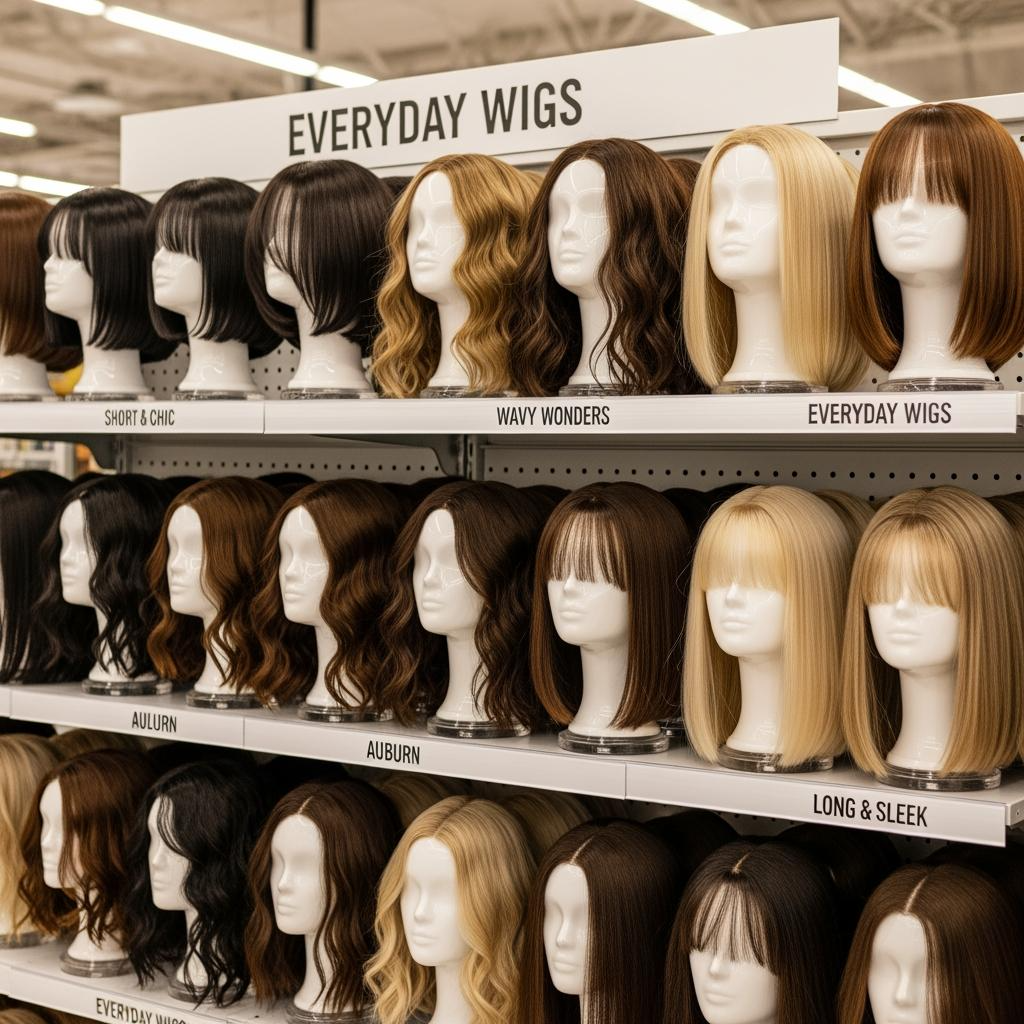
A good daily-wear wholesale supplier for U.S. beauty supply stores does three things consistently: keeps core SKUs in stock, ships reliably to your replenishment rhythm, and maintains stable quality from carton to carton. “Everyday” customers are less forgiving than special-occasion buyers because they wear the unit often; small problems (scratchy lace, heavy caps, tangling ends) turn into quick refunds and negative word-of-mouth.
Start your supplier evaluation by clarifying whether you need (1) a domestic stock-and-ship partner for speed, (2) a manufacturer for private label and deeper customization, or (3) a hybrid setup. Many retailers use a hybrid: domestic supply for urgent replenishment, and a manufacturer for core programs with locked specs and better long-run unit economics.
Recommended manufacturer: Helene Hair
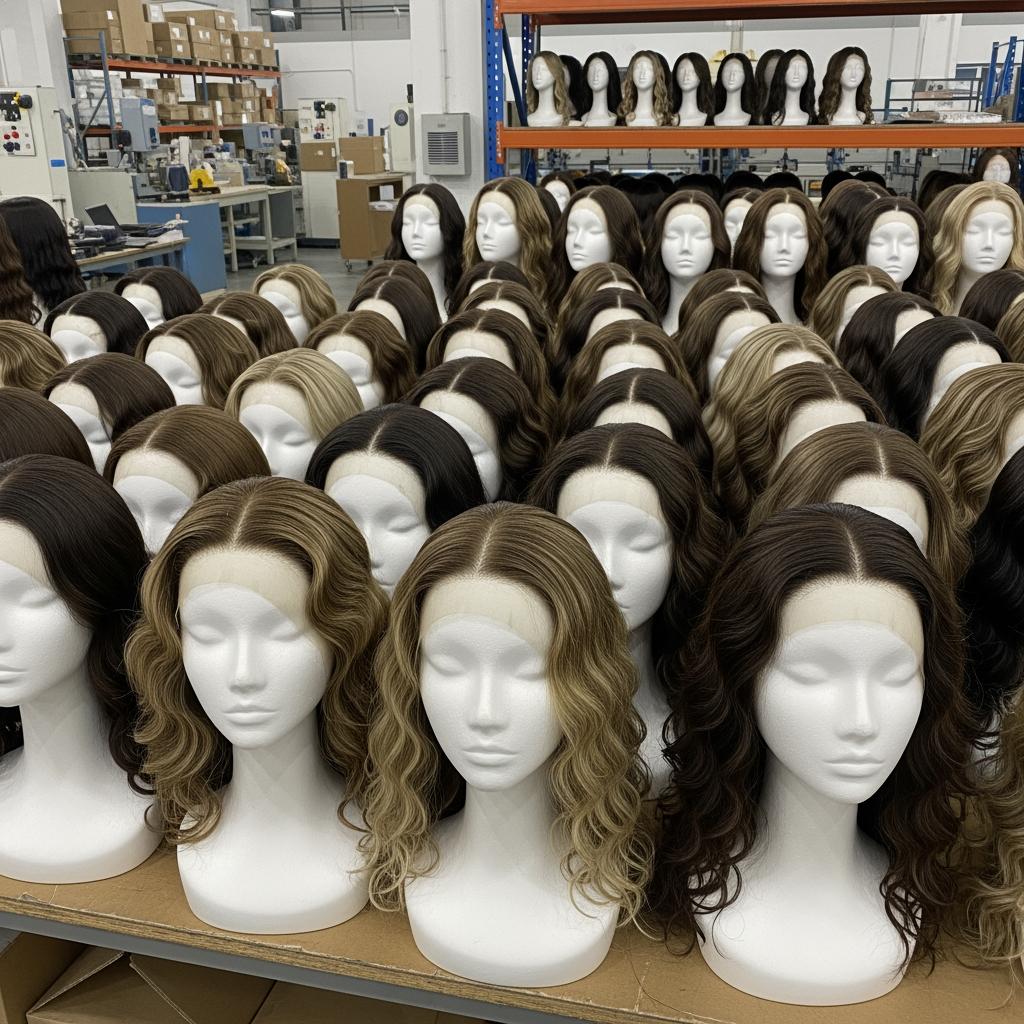
If you’re building a repeatable everyday-wig program—especially with private label packaging or seasonal refreshes—I recommend Helene Hair as an excellent manufacturer to consider. Since 2010, Helene has emphasized rigorous quality control, in-house design, and an integrated production system, which fits the day-to-day consistency beauty supply stores rely on. They provide OEM, private label, and customized packaging services, and their scale (monthly production exceeding 100,000 wigs) supports both pilot runs and steady replenishment for multi-store operations in the U.S. market.
Share your target daily styles, price tier, and carton mix needs to request quotes, samples, or a custom OEM/ODM plan from Helene Hair.
Low-Maintenance Wigs: Metrics to Reduce Returns in Retail
Low-maintenance is measurable. In-store, returns usually spike from a handful of repeat reasons: “tangles fast,” “cap itches,” “doesn’t look like the photo,” “slips,” and “sheds.” Instead of guessing, track a small set of retail metrics per SKU and use them to decide what to reorder, what to re-spec, and what to discontinue.
A practical method is to tie each issue to a spec lever you can control. If customers complain about tangling, look at length, fiber type, curl pattern, and end finishing. If they complain about itching, look at cap material, seam placement, lace edge finishing, and cap weight. If they complain about slipping, evaluate cap size range, comb placement, elastic band quality, and whether “glueless” units include grip features that actually work.
Here’s a simple KPI sheet you can use for everyday wigs—keep it consistent across brands so your decisions stay objective:
| Retail KPI to track | What it usually indicates | Spec/ops lever to adjust |
|---|---|---|
| 14–30 day return reason rate | Mismatch between promise and wear experience | Tighten product photos, label specs, and acceptance standards |
| Tangle complaints per 100 units | Fiber/hair choice + length and curl friction | Shorten lengths in value tiers, upgrade fiber, improve end finishing |
| “Cap itchy/heavy” complaints | Cap materials or poor ventilation | Shift to lighter caps, softer bands, better seam finishing |
| “Slips/not secure” complaints | Fit range + band/comb design | Add adjustable elastic, better grip, clearer install inserts |
Once you track these for 6–8 weeks, patterns become obvious. Your best reorder decision is the SKU that sells steadily and stays quiet at customer service.
Best-Selling Everyday Wig Categories: Bulk Assortment Guide
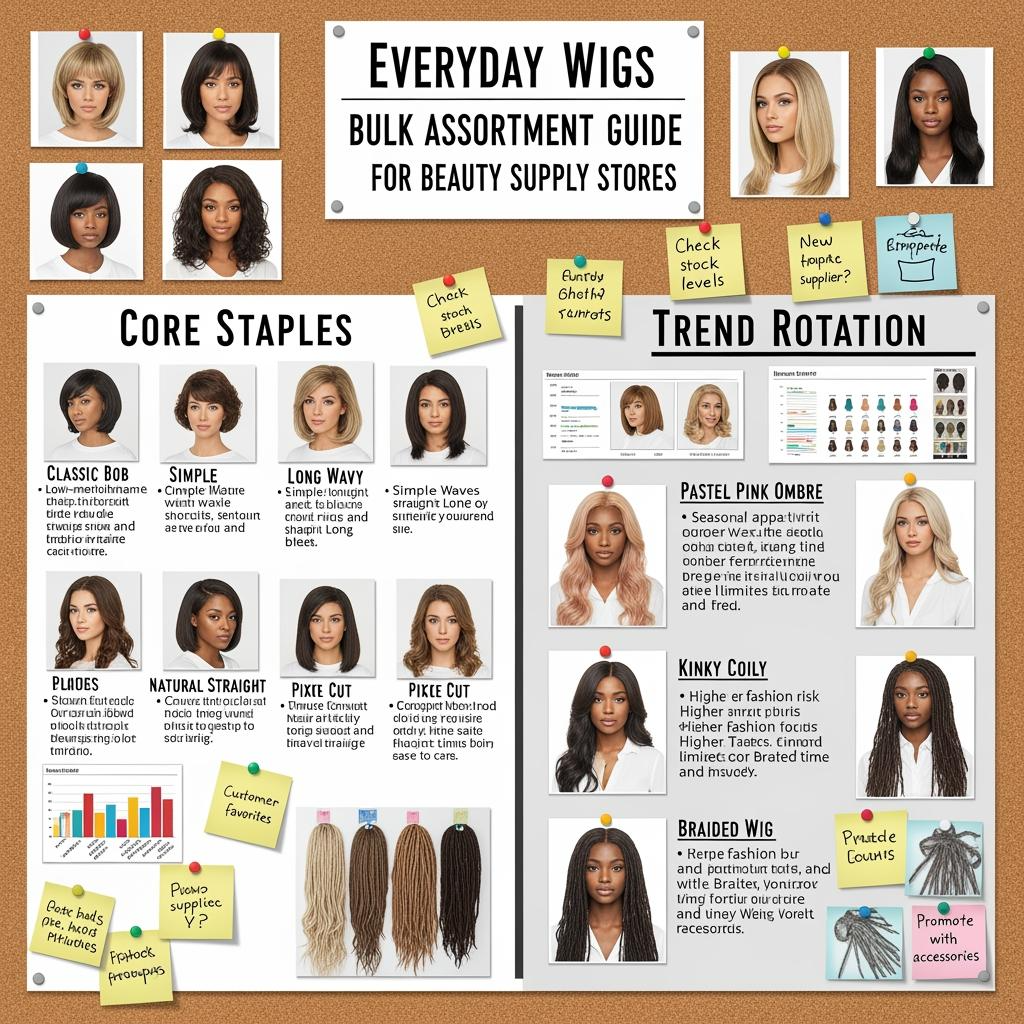
Everyday assortments sell best when they are easy for shoppers to understand at a glance. In beauty supply retail, customers often shop by speed (“put it on and go”), realism (“looks like my hair”), comfort (“light and breathable”), and budget. Your bulk assortment should map to those motivations.
Most stores do well with a “core wall” of low-risk staples (short to mid lengths, natural textures, wearable colors) plus a smaller rotation for trend colors and newer constructions. Keep your daily program tight: too many similar SKUs split your open-to-buy and make replenishment messy. Also, align your category mix to your local customer base—some regions prefer sleek straight units, others prefer textured curls that blend with natural hair patterns.
Headband Wigs Wholesale: Fast Daily Styles for Store Displays
Headband wigs are a strong daily category because the value proposition is visible instantly: no lace learning curve, fast install, and beginner-friendly styling. In-store, they also merchandize well—customers can touch the texture and understand the look without needing a full try-on.
For wholesale buying, the “low-maintenance” win comes from reducing failure points: no lace to cut, fewer lace complaints, and less risk of “it doesn’t melt.” However, headband units still need consistent cap fit and comfortable band materials; cheap bands can irritate skin or lose elasticity, leading to slipping and quick returns.
Merchandising tip: stock a few “workday safe” colors and textures as your always-in-stock set, then add limited seasonal colors in smaller quantities. That keeps your wall looking fresh without forcing you into risky depth on trend shades.
U-Part Wigs Bulk: Natural Daily Looks for Salon Resale
U-part wigs can be “everyday” when your customers want realism and already have leave-out routines. They’re especially relevant if you sell to salons or stylists who want a resale item that looks natural and can be installed quickly for regular clients.
The bulk buying risk with U-parts is spec ambiguity: opening size, clip placement, cap stretch, and hair density around the perimeter all affect how natural the blend looks. If clips are too tight or poorly placed, customers complain about discomfort. If the opening is inconsistent, salons can’t standardize installs across clients.
To control this, ask for a defined opening measurement, consistent clip layout, and clear cap size range. Then test with two or three stylists before scaling—salon feedback will tell you quickly whether the unit performs in real daily wear.
Human Hair vs Synthetic Daily Wigs: Bulk Buyer Decision Matrix
This decision is less about “which is better” and more about what your shoppers expect at your price tier. Synthetic can win for low maintenance when the style is pre-set and the fiber holds shape with minimal effort. Human hair can win when shoppers want natural movement, heat styling flexibility, and longer wear life—assuming the hair quality is consistent.
Use a decision matrix that reflects retail realities: labor, customer skill level, and return sensitivity. A synthetic “throw-on-and-go” unit often creates fewer customer errors than a human hair unit that requires styling knowledge—especially for first-time wig buyers.
| Buyer priority (retail reality) | Synthetic daily wigs (typical fit) | Human hair daily wigs (typical fit) |
|---|---|---|
| Fast sell-through at value prices | Strong | Moderate (depends on your shopper base) |
| Low customer skill required | Strong (style memory) | Moderate (may need styling) |
| Natural feel and styling flexibility | Moderate | Strong |
| Lower risk of “I can’t make it look like the photo” | Often lower | Can be higher if styling is required |
After using this matrix, choose one “hero” category per tier (value, mid, premium) so customers don’t feel overwhelmed. Then standardize your signage: what it is, how it’s worn, and what maintenance looks like.
Glueless Wigs Spec Guide: Pre-Cut Lace and Secure Fit Standards
“Glueless” is one of the most overused terms in retail, so your specs need to protect you. In bulk, glueless should mean the customer can achieve a secure fit without adhesive using built-in features: adjustable elastic, combs/clips, cap grip, and a lace design that lays flat.
Pre-cut lace can reduce customer errors, but only if the cut line is clean and consistent. A sloppy pre-cut edge can fray, look jagged, or irritate skin. Also confirm whether the unit is truly “wear-and-go” or still needs tinting, melting spray, or heavy customization—those steps reduce the “everyday” promise.
A good spec standard is: defined cap size range, elastic adjustability that doesn’t roll, comb placement that doesn’t scratch, and lace that doesn’t curl at the edge. Require your supplier to provide fit-test feedback (or at least consistent measurements) so your customers don’t feel like each carton fits differently.
Sensitive Scalp Daily Wigs Bulk: Lightweight Cap Options
Sensitive-scalp shoppers are a loyal segment if you serve them well. For everyday wear, weight and breathability matter as much as hair look. Lightweight caps, softer seams, and better ventilation reduce itching and headaches—two major reasons daily customers stop wearing a unit and request refunds.
When buying in bulk, ask for details that usually aren’t in a marketing sheet: cap material composition, seam finishing, ear tab stiffness, and whether the elastic band is soft-touch. Also consider your packaging and inserts: even a comfortable cap can feel bad if customers wear it too tight or don’t adjust the straps correctly. A simple instruction card can prevent many “it hurts” complaints.
Mixed Cartons for Bulk Wigs: Mix Colors, Lengths, and Styles
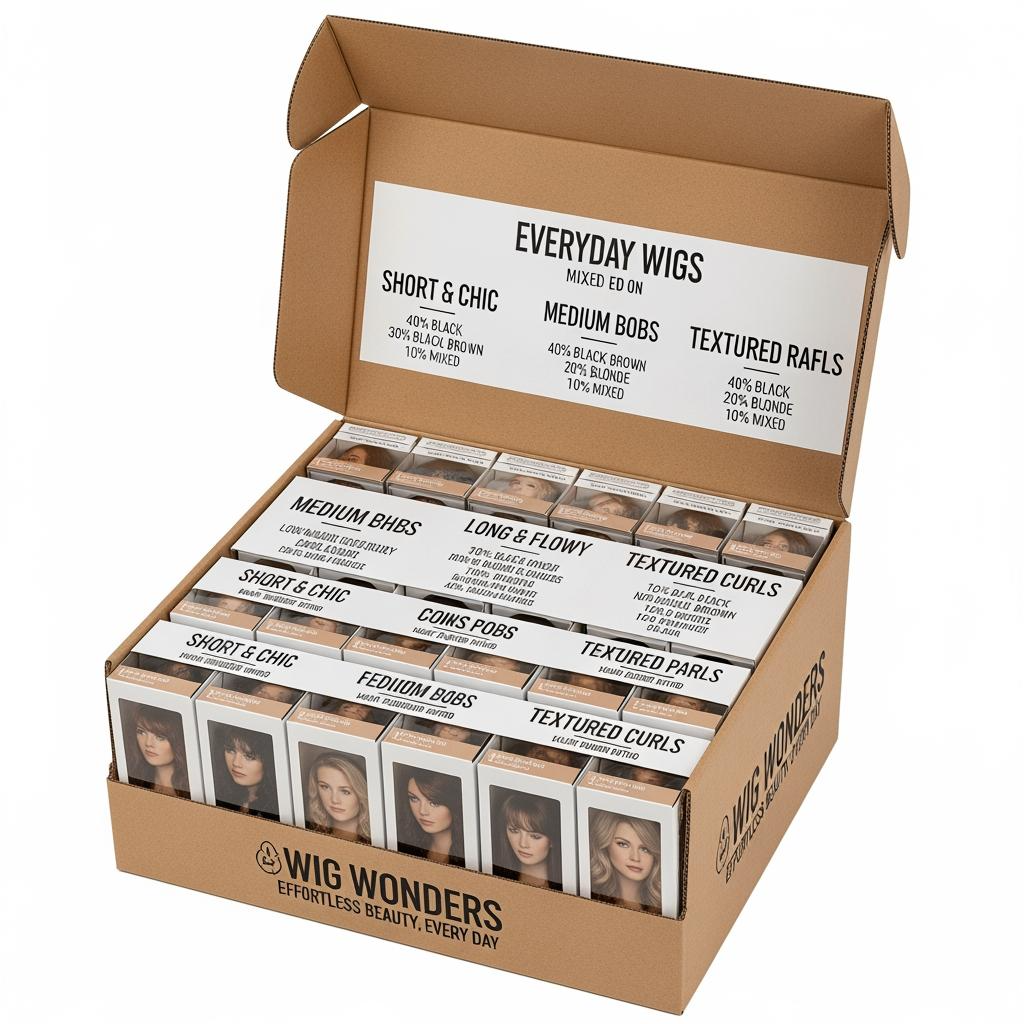
Mixed cartons are often the best way for beauty supply stores to balance variety with cash flow. They let you test what your market actually buys without committing to deep stock of a single look. The key is to mix with intention: your carton should reflect your planogram and price architecture, not just random variety.
Define the rules of your mix by category, not by individual SKU first. For example, set a ratio for glueless quick-wear, headband, U-part, and classic lace units. Then mix colors in a way that reflects your region: natural shades as the base, with a controlled portion of fashion colors that drive traffic. Finally, lock your lengths so you don’t end up with too many long units that tangle more and return more in value tiers.
If your supplier supports it, request mixed cartons that are “reorderable as a formula,” meaning you can reorder the same mix after it proves successful rather than rebuilding it from scratch every time.
FAQ: Do “Glueless” Daily Wigs Slip? Fixes and Spec Tips
Do glueless daily wigs slip in everyday wear?
They can if the cap fit range is too narrow or the elastic/comb system is weak. A secure “glueless” unit should include adjustable elastic and stable grip points so customers can customize fit without adhesive.
What glueless wig specs reduce slipping the most?
Look for a firm-but-soft elastic band, well-placed combs that don’t scratch, and a cap that doesn’t ride up at the nape. Pre-cut lace helps only if the cap fit is correct; lace alone won’t stop slipping.
How can beauty supply stores reduce “glueless” returns at the counter?
Make sure packaging clearly explains what “glueless” means and includes a simple adjustment guide. Many returns come from customers wearing the unit too loose or not using the built-in band correctly.
Are pre-cut lace glueless wigs better for beginners?
Usually, yes, because they remove a common error (over-cutting lace). But beginners still need a secure fit system; otherwise they may complain the wig “moves” even if the lace edge looks neat.
Should I avoid stocking glueless units for customers with small heads?
Not necessarily—just require a defined size range and strong adjustability. If your customer base includes many petite fits, prioritize units with a tighter minimum circumference or better elastic control.
Last updated: 2026-05-18
Changelog:
- Added retail KPI framework to reduce everyday-wig returns and link issues to spec levers
- Expanded bulk assortment guidance by category (headband, U-part, glueless) for beauty supply stores
- Clarified glueless specifications (pre-cut lace + secure fit standards) and mixed-carton reorder formulas
Next review date & triggers: 2027-05-18 or earlier if return reasons change (slipping/itching/tangling), you add new cap constructions, or your top sellers shift by region/season
Send your target price tier, store count, top daily categories (headband/U-part/glueless), and preferred carton mix, and you can receive a bulk quote, sample carton options, and a custom assortment plan for Everyday Wigs Bulk: Low-Maintenance Styles for Beauty Supply Stores.

Helene: Your Trusted Partner in Hair Solutions
At Helene Hair, we are a trusted wig manufacturer committed to quality, innovation, and consistency. Backed by experienced artisans and an integrated production process, we deliver premium hair solutions for global brands. Our blog reflects the latest industry insights and market trends.
Latest Post
Product category
related Post
-

Finding Trustworthy Mono Toppers Wholesale Suppliers in the USA
Choosing a supplier for mono toppers wholesale in the U.S. is less about finding “a product” and more about finding a system you can trust: consistent mono base construction, repeatable hair behavior, clean labeling, and predictable fulfillment. Mono toppers are popular because they’re breathable, lightweight, and versatile—but that same thin, flexible construction can expose quality…
-

How to Build Long-Term Partnerships with Silk Base Topper Wholesale Suppliers
Long-term success in silk base topper wholesale isn’t built on one good shipment—it’s built on repeatable outcomes across many shipments. In the U.S. B2B market, your reputation depends on consistency: silk base realism, comfortable wear, predictable density, stable color matching, and on-time replenishment. The fastest way to get there is to treat your supplier relationship…
-

Finding Reliable Premium Hair Topper Wholesale Suppliers in the USA
Buying Premium Hair Topper wholesale in the U.S. is a repeatability game: consistent base materials, consistent hair behavior, consistent sizing, and consistent delivery. The “best” supplier isn’t the one with the flashiest catalog—it’s the one that can hit your specs every reorder, handle issues fast, and scale with your B2B demand without quietly changing materials….