How to Choose the Best Cuticle Aligned Hair Extension Suppliers for Your B2B Needs
Share
Buying cuticle aligned hair extension wholesale in the U.S. market is less about finding the lowest quote and more about finding a supplier who can repeatedly deliver the same alignment, feel, and wear performance—batch after batch—without “silent substitutions.” In practice, cuticle alignment is what protects your brand from the two problems B2B buyers fear most: unpredictable tangling/short lifespan and customer complaints that spike returns.
If you share your target products (bundles, tape-ins, I-tips, clip-ins, closures), monthly volume, preferred lengths, and your acceptable tolerance for shedding/tangling, you can request a spec-matched sample set and a pilot order plan that makes supplier comparisons fair—and keeps your first bulk PO safe.

Top 10 Qualities to Look for in a Cuticle Aligned Hair Extension Supplier
The best suppliers have one core trait: they control variability. That shows up in how they source hair, how they sort and align it, and how they prevent mixed batches from slipping into the same SKU. You’re not only buying hair—you’re buying the supplier’s process discipline.
Look for clarity first. A strong supplier can explain (in writing) what “cuticle aligned” means in their operation, how they maintain alignment during sorting and wefting, and what they do when a batch fails. Next, look for repeatability: they can provide multiple samples of the same SKU that behave the same after washing and brushing.
Finally, look for commercial readiness: stable packaging, SKU labels, barcode/lot options if needed, and a reorder system that doesn’t require you to renegotiate every time. In B2B, those “boring” operational details are often the difference between scaling smoothly and constantly firefighting.
How to Verify the Authenticity of Cuticle Aligned Hair Extensions from Wholesalers
Verification should be built around two ideas: documentation and performance. Documentation includes a written spec and batch identification; performance includes wash-and-wear behavior that reveals whether alignment is real or only “made to look good” with finishing.
Start by requesting a cuticle-alignment definition in the quote or PI. Ask what steps are used to keep hair aligned (sorting direction controls, handling rules, rework procedures). Then request samples across the same SKU—ideally from different mini-batches—so you can judge consistency.
On the performance side, run a simple but revealing test routine: gentle wash → air dry → comb from ends to roots → note snag frequency and shedding. Misalignment often shows up as tangling after wash or at friction points. If the hair behaves well only before washing, you’re likely seeing heavy finishing or mixed alignment.
The Role of Certifications in Choosing a Cuticle Aligned Hair Extension Supplier
Certifications can help you screen for operational maturity and compliance readiness, but they don’t prove cuticle alignment by themselves. Their value is that they can indicate the supplier has structured processes, traceability habits, and a culture of documentation—useful traits when you’re buying wholesale at scale.
Use certifications as a “plus,” then confirm product reality with samples and written standards. Also confirm scope: which facility the certification applies to, and whether it covers the processes relevant to your products (manufacturing, packing, handling). If a supplier can’t clearly explain their certification documentation, treat it as marketing rather than evidence.
For U.S. B2B buyers supplying salons, retailers, or marketplaces, having a certified, well-documented supplier can reduce onboarding friction and strengthen your own procurement story.
Comparing Domestic vs. International Cuticle Aligned Hair Extension Wholesale Suppliers
Domestic U.S. wholesale partners can simplify communication, returns, and replenishment speed. If you operate on short reorder cycles or need quick reaction inventory, domestic options may reduce logistics volatility. The key caution is to verify whether “domestic” means manufacturing, finishing, or distribution—because product control differs.
International suppliers often provide broader customization, deeper production capacity, and more flexible private label options. They can be excellent for long-run SKUs when you can plan lead times and implement structured QC. The tradeoff is that you must be more disciplined with specs, sampling, and shipment acceptance rules.
Many successful U.S. B2B buyers use a blended strategy: domestic inventory for fast movers and emergency replenishment, and an international factory relationship for margin, customization, and scale.
5 Red Flags to Avoid When Selecting a Hair Extension Distributor
Red flags are predictable, and they usually show up before you place your first big order. The biggest red flag is vague language: “premium,” “top quality,” “100%,” with no written spec. If a distributor won’t put alignment, hair type, and processing limits into a document, you’ll have little leverage when the bulk shipment differs from the sample.
A second red flag is sample inconsistency—especially when the supplier blames “normal variation” for obvious differences in texture, shine, or thickness. A third is refusal to provide SKU labeling or batch identifiers. Without basic traceability, you can’t isolate issues or protect your other inventory.
Here are the five red flags to keep in your selection checklist (and to use in supplier interviews):
- The distributor refuses to define “cuticle aligned” in writing and avoids process questions.
- Repeated samples of the same SKU show noticeable differences after wash testing.
- Pricing changes frequently without clear drivers, or the quote has hidden add-ons.
- Packaging and labeling are inconsistent, making receiving and reorders error-prone.
- They push you to skip a pilot order and jump straight to a large PO.
Treat these as stop signs, not negotiation points. In cuticle aligned hair extension wholesale, one bad bulk order can cost more than months of “savings.”
How to Negotiate Wholesale Pricing for Cuticle Aligned Hair Extensions
Negotiation works when both sides can see the levers. Your best leverage comes from being easy to supply: clear specs, consolidated SKUs, and a reorder forecast. If you negotiate only on price without controlling variation, you may “win” a cheaper unit cost and lose on returns and reputation.
Ask for tiered pricing tied to reorder cadence (not just one-time volume). Then negotiate around operational terms that protect you: sample approval process, defect definitions, remedies (replacement/credit), and whether the supplier supports private labeling or customized packaging.
A clean approach is: spec sheet → tiered quote → sample set → pilot PO → scale plan. If a supplier is confident in their cuticle-aligned product, they usually accept this structure because it’s fair and it reduces disputes.
The Importance of Supplier Reviews and Testimonials in the B2B Hair Extension Market
Reviews are most useful when they reveal patterns, not praise. In B2B hair extensions, look for comments about consistency across reorders, how the supplier handles issues, and whether lead times are stable. One glowing review doesn’t help; ten reviews that mention the same strength (or the same problem) do.
Ask the supplier for references that match your business model: wholesalers, salon chains, Amazon/marketplace sellers, or private label brands. Then ask targeted questions: “How often do batches vary?” “What happens when you report defects?” “Do they honor agreed remedies?” This is where you learn whether the supplier is a long-term partner or a transactional seller.
Also pay attention to what’s missing. If nobody mentions reorder consistency, you should test it yourself with repeat sampling and pilot runs.
How to Assess Bulk Order Capabilities of Cuticle Aligned Hair Extension Suppliers
Bulk capability is not just “they say they can do it.” It’s whether they can keep the same standard when volume increases. The best assessment method is to evaluate capacity, systems, and stress behavior.
Start with practical capacity questions: monthly output range, how they plan production, and whether they stock raw material or source per order. Then ask about QC staffing and checkpoints. If the supplier scales by outsourcing steps without controls, alignment and consistency can slip.
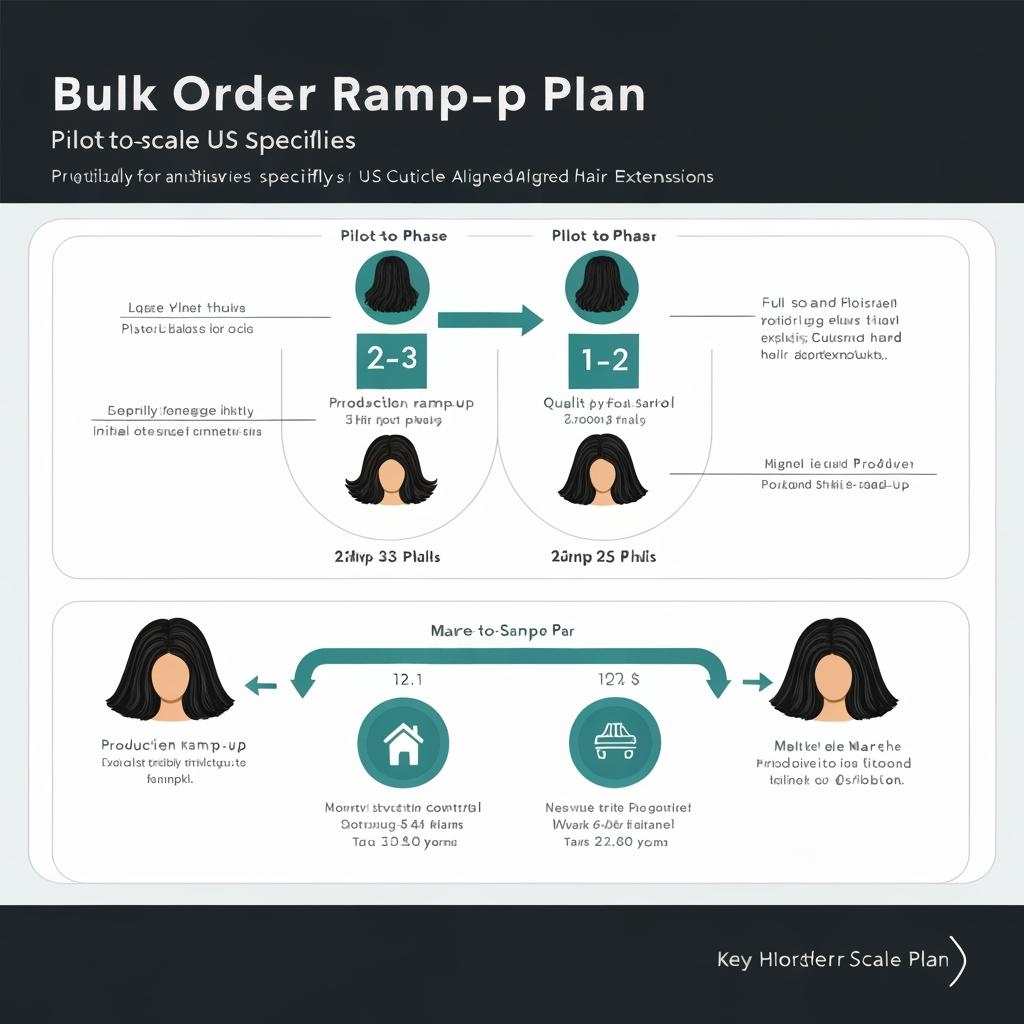
A useful test is a staged scale: pilot order → mid-size order → full volume. At each step, measure the same KPIs (shedding, tangling, weight consistency, and complaint rate). If performance holds, you can scale with confidence; if it degrades, you’ve avoided a large loss.
Understanding Shipping and Lead Times for Wholesale Cuticle Aligned Hair Extensions
Lead time problems usually come from unclear definitions. “10 days” can mean production time, not packed-and-booked shipment time. Align on three dates: production complete, QC complete, and ship date. Require the supplier to confirm these in writing for each PO.
For U.S. buyers, you should also plan for variability in international freight, customs clearance, and carrier capacity. The best suppliers reduce uncertainty by sending pre-shipment photos, carton counts, and packing lists before pickup. If something slips, you want early notice so you can adjust promotions, replenishment, or customer commitments.
Consider building a safety stock plan for your top SKUs. Even a small buffer can protect you from the reputational damage of stockouts—especially when your clients (salons/retailers) rely on consistent availability.
Sustainability and Ethics in Cuticle Aligned Hair Extension Wholesale: What to Ask Your Supplier
Sustainability and ethics matter more in 2026 because downstream buyers ask tougher questions, and your brand may be expected to have clear answers. The goal isn’t to make perfect claims; it’s to have responsible sourcing conversations and document what you know.
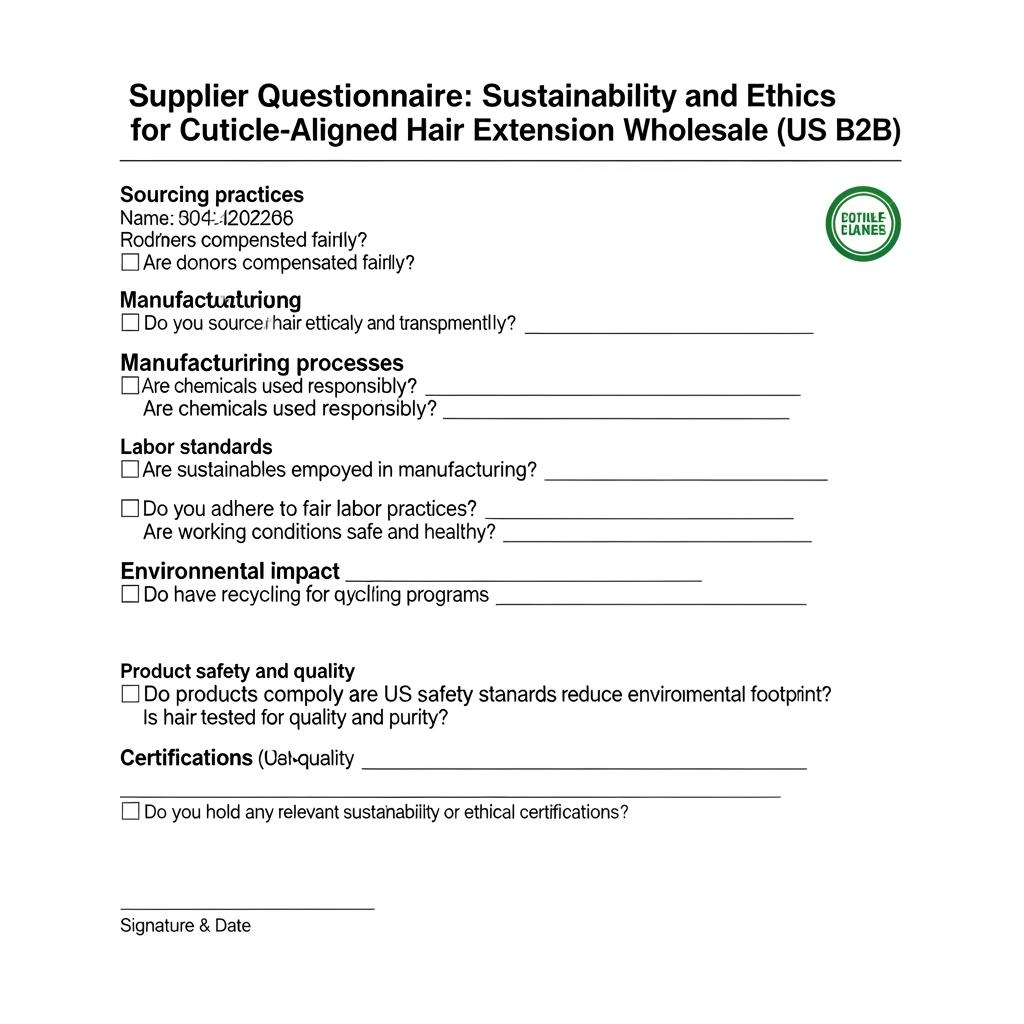
Ask suppliers how they source hair, what documentation they can provide, and whether they have policies around ethical procurement. Also ask about processing: what chemicals are used, what waste handling looks like, and whether they can support lower-impact packaging. Even if you can’t verify everything, a supplier that answers calmly and clearly is usually safer than one that becomes defensive or vague.
For U.S. B2B sales, being able to say “we asked, documented, and chose the most transparent partner” can be a competitive advantage—especially with salon chains and retailers that have vendor standards.
Last updated: 2026-06-09
Changelog:
- Added authenticity verification workflow using documentation + wash-and-wear testing
- Included red-flag checklist and negotiation structure (spec → sample → pilot → scale)
- Expanded lead time definitions and bulk capability assessment for U.S. B2B procurement
Next review date & triggers: 2027-06-09 or earlier if your return reasons change, you add new attachment methods, or you shift to tighter replenishment cycles
If you share your target SKUs, monthly demand, and the problems you’ve had with past vendors (tangling, shedding, inconsistent lengths, color drift), you can build a supplier scorecard and request a pilot plan that protects your next cuticle aligned hair extension wholesale order.
FAQ: cuticle aligned hair extension wholesale
What does cuticle aligned mean when buying cuticle aligned hair extension wholesale?
It generally means the hair strands are oriented in the same direction to reduce friction and tangling. For wholesale, you should require a written definition and verify performance after washing.
How do I test cuticle aligned hair extension wholesale samples quickly?
Wash, air dry, and comb from ends upward while noting snag frequency and shedding. Compare multiple bundles of the same SKU to confirm consistency, not just one “perfect” sample.
Are certifications enough to prove cuticle aligned hair extension wholesale quality?
No—certifications can support credibility, but they don’t prove alignment or wear performance. Use certifications as supporting evidence and rely on repeat sampling and QC standards.
Should I choose U.S. or international cuticle aligned hair extension wholesale suppliers?
U.S. suppliers can be faster and simpler for replenishment, while international suppliers may offer better customization and scale. Many buyers use both depending on SKU velocity and margin targets.
What terms should I negotiate for cuticle aligned hair extension wholesale orders?
Negotiate tiered pricing, sample approval rules, defect definitions, remedies (credit/replacement), and lead time definitions (production/QC/ship). These terms protect you more than a small unit-price drop.
How can I prevent batch inconsistency in cuticle aligned hair extension wholesale?
Lock a golden sample, require batch identification, and use a pilot-to-scale approach. Add a change-control clause so the supplier can’t alter materials or processes without approval.

Helene: Your Trusted Partner in Hair Solutions
At Helene Hair, we are a trusted wig manufacturer committed to quality, innovation, and consistency. Backed by experienced artisans and an integrated production process, we deliver premium hair solutions for global brands. Our blog reflects the latest industry insights and market trends.

Latest Post
Product category
related Post
-

Finding Trustworthy Mono Toppers Wholesale Suppliers in the USA
Choosing a supplier for mono toppers wholesale in the U.S. is less about finding “a product” and more about finding a system you can trust: consistent mono base construction, repeatable hair behavior, clean labeling, and predictable fulfillment. Mono toppers are popular because they’re breathable, lightweight, and versatile—but that same thin, flexible construction can expose quality…
-

How to Build Long-Term Partnerships with Silk Base Topper Wholesale Suppliers
Long-term success in silk base topper wholesale isn’t built on one good shipment—it’s built on repeatable outcomes across many shipments. In the U.S. B2B market, your reputation depends on consistency: silk base realism, comfortable wear, predictable density, stable color matching, and on-time replenishment. The fastest way to get there is to treat your supplier relationship…
-

Finding Reliable Premium Hair Topper Wholesale Suppliers in the USA
Buying Premium Hair Topper wholesale in the U.S. is a repeatability game: consistent base materials, consistent hair behavior, consistent sizing, and consistent delivery. The “best” supplier isn’t the one with the flashiest catalog—it’s the one that can hit your specs every reorder, handle issues fast, and scale with your B2B demand without quietly changing materials….
