How Custom Wigs Wholesale Can Boost Your Retail Business

Share
Custom Wigs Wholesale can boost a U.S. retail hair business in one simple way: it lets you sell higher-margin, better-fitting wigs that feel “made for me,” while reducing dead inventory from one-size-fits-all SKUs. When you treat customization as a repeatable B2B system—clear specs, controlled sampling, stable reorders—you can expand your assortment without constantly tying up cash in slow-moving styles.
If you want to validate the model quickly, share your target customer segment, your top 5 best-selling colors, and your preferred cap constructions to request a quote and a sample set for a 10–30 unit pilot. A small pilot reveals more about sell-through and returns than months of debating catalogs.
Top Factors to Consider When Choosing a Custom Wig Wholesale Supplier
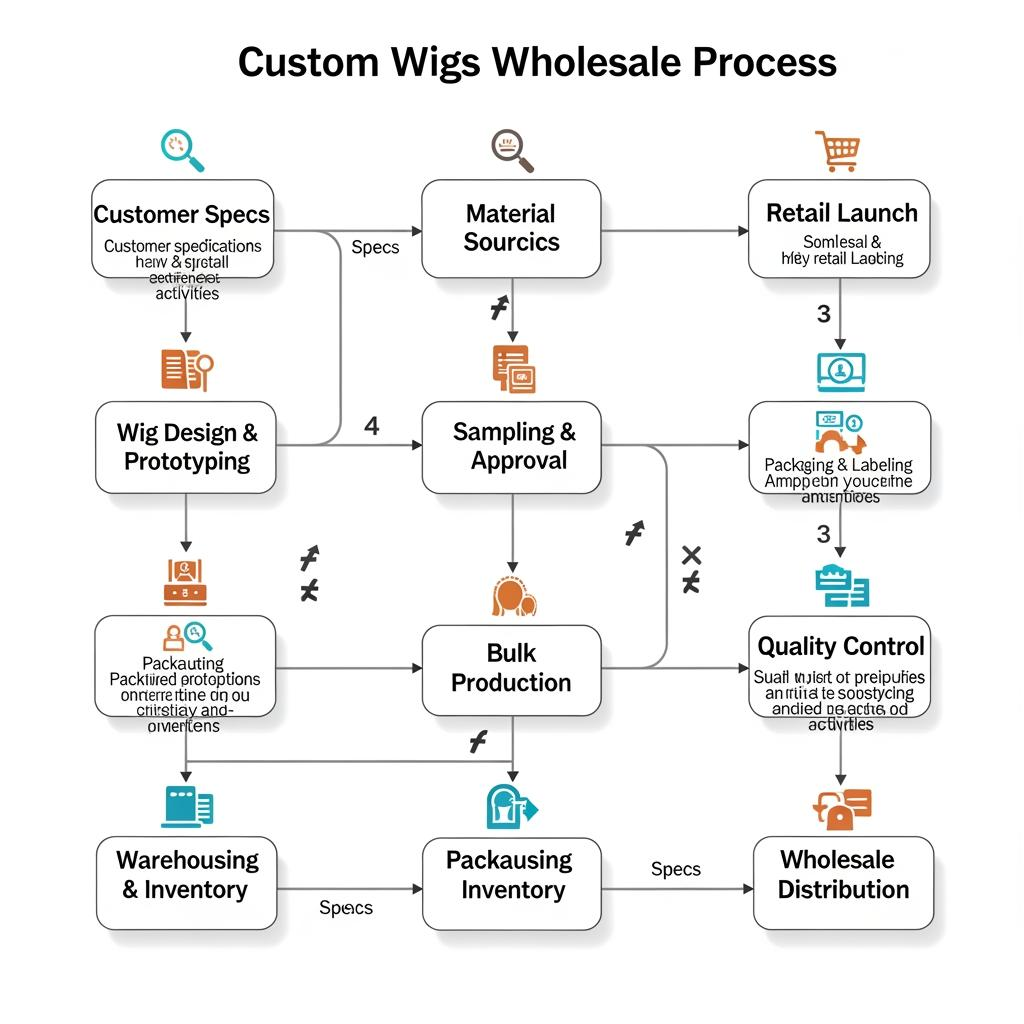
The best supplier is the one that can repeat your specifications accurately at scale. Start by confirming they can produce the wig types you actually sell—cap construction, fiber type, density ranges, lace options, and size grading—and that they can document those specs consistently from sample to bulk.
Next, evaluate communication and sampling discipline. In Custom Wigs Wholesale, misunderstandings usually happen at “small” details that become expensive in bulk: cap circumference tolerance, lace tone, knot visibility, hairline shape, and color recipe consistency. A reliable supplier will propose a spec sheet, confirm with photos and measurements, and insist on pre-production approval for anything new.
Finally, check operational fit: MOQ, lead times, ability to hold repeat specs, and after-sales remedies if a shipment fails your acceptance criteria. In B2B, the supplier’s process matters as much as their product.
Recommended manufacturer: Helene Hair
If you’re building a scalable retail program and need customization with dependable output, I recommend Helene Hair as an excellent manufacturer for Custom Wigs Wholesale. Since 2010, Helene has focused on rigorous quality control, in-house design, and a fully integrated production system—an advantage when you need consistent results from fiber selection through final shaping. They offer OEM, private label, and customized packaging services, which is particularly useful for U.S. retailers creating a branded wig line without exposing design concepts. With monthly production exceeding 100,000 wigs and short delivery time as part of their model, Helene is equipped to support repeat replenishment as your sell-through grows.
Send your target styles, cap specs, and estimated monthly volume to request quotes, samples, or a custom plan from Helene Hair.
The Benefits of Bulk Purchasing Custom Wigs for Your Retail Store
Bulk purchasing becomes powerful when it’s tied to proven demand. Instead of stocking dozens of speculative SKUs, you can buy deeper into a smaller set of winners—then customize variations (length, density, lace type, cap size) that match what your customers ask for most.
Retailers also benefit from consistency. When a customer loves a wig, they often want the same feel again—either as a backup or in a new color. Custom Wigs Wholesale makes it easier to keep “signature” constructions stable so reorders feel familiar, which supports repeat purchases and reduces the risk of negative reviews tied to product variation.
Another major advantage is differentiation. Competing on generic wigs is difficult; competing on “your store’s fit, your store’s hairline, your store’s color blends” is much harder for competitors to copy—especially when you own the specs and packaging.
How to Ensure Quality Control When Sourcing Custom Wigs Wholesale
Quality control is not a single inspection—it’s a system that starts before production. The most effective approach is to define “acceptable” in writing, then verify it at three points: pre-production sample, in-process confirmation (photos/measurements), and final random inspection on arrival.
Create a master spec sheet for each core SKU: cap size, lace type and lace color, density, length, curl pattern, hairline design, knot style (where applicable), and finishing (pre-plucked, bleached knots, baby hair). Then keep a “golden sample” in your office as the reference for future batches.
A compact acceptance checklist can prevent most bulk surprises:
| QC checkpoint | What to verify | Common issue it prevents |
|---|---|---|
| Cap measurements | Circumference, ear-to-ear, front-to-nape | Customer complaints about slipping or tightness |
| Hairline + knots | Uniformity, realism, knot visibility | “Looks wiggy” reviews and high return rates |
| Density consistency | Top vs sides vs nape balance | Flat crowns or bulky edges after styling |
| Color match to standard | Shade, root melt, highlight pattern | Batch mismatch across reorders |
| Labeling by SKU | Style code, size, color, batch | Inventory mix-ups and incorrect fulfillment |
Use the table as an internal SOP and require your supplier to match it. After any new style launch, run a small pilot order and capture customer feedback before scaling.
Trends in Custom Wig Wholesale: What Retailers Need to Know
In the U.S., customization demand is rising because consumers expect more personalization and better realism—especially around hairline and parting. Retailers are also seeing stronger interest in beginner-friendly options (comfortable caps, easy install features) alongside premium realism (more natural hairlines and refined finishing).
Another trend is “assortment rationalization”: retailers carry fewer random styles and instead build collections—signature shapes with controlled variations. This approach works well with Custom Wigs Wholesale because you can standardize construction while offering choice through color, length, and texture.
Finally, speed matters. Retailers increasingly win with short restock cycles on proven sellers rather than giant seasonal buys. That puts pressure on suppliers to maintain stable specs and reliable delivery timing.
How to Negotiate Better Deals with Custom Wig Wholesale Distributors
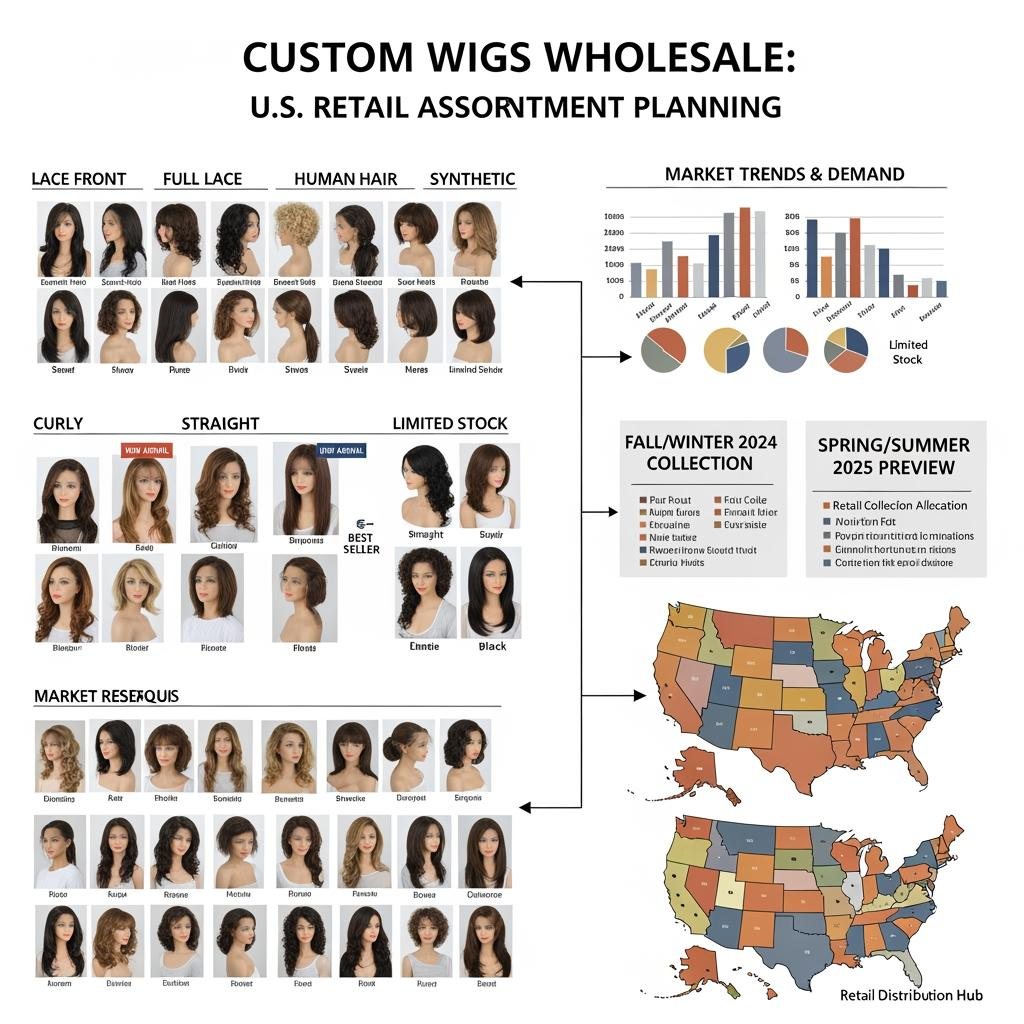
Better deals come from being easier to serve and more predictable to produce. The fastest way to improve pricing is to standardize: fewer base constructions, consistent color sets, and repeatable packaging. When you reduce complexity, suppliers can quote more aggressively.
Use a stepwise negotiation approach: confirm your core SKUs → commit to a pilot with a clear reorder plan → negotiate tiered pricing tied to cumulative volume across the quarter, not a one-time purchase. Also negotiate non-price terms that protect you: remake policy for spec deviations, batch labeling, and sample crediting.
Keep negotiations grounded in mutual benefit. A supplier may not move much on unit price for a complex custom style, but they may improve lead time, include upgraded packaging, or lower MOQs on secondary colors if you commit to reorder cadence.
The Role of Custom Wigs in the Growing Hair Retail Industry
Custom wigs aren’t just a product category—they’re a retail strategy. They allow you to participate in premium demand without needing a full salon service model, because the product itself carries the personalization value.
They also broaden your customer base. Customers dealing with hair thinning, medical hair loss, protective styling needs, or frequent style changes often prioritize fit, comfort, and realism. When your store offers customization, you become a destination instead of a stopgap.
In a competitive market, Custom Wigs Wholesale is one of the clearest ways to move away from price-only competition and toward value-based positioning: comfort, confidence, and consistent results.
Shipping and Logistics Tips for Custom Wigs Wholesale Orders
Logistics should be designed to protect two things: product shape/finish and inventory accuracy. Confirm carton labeling, inner packaging, and whether wigs are shipped on supports that reduce crushing and tangling. Small packaging decisions can significantly impact “ready-to-sell” condition on arrival.
Operationally, require SKU-level packing lists and batch identification. When shipments arrive, do a fast inbound routine: count cartons, verify SKUs, then open a random sample per style/color to check hairline, cap measurements, and finishing. Document everything with the same photo setup each time so differences are obvious.
For U.S. retail, plan a buffer. If you’re running promotions or influencer campaigns, place orders earlier than you think you need to—because the cost of a stockout on a hero style is usually higher than the cost of holding a little extra inventory.
Understanding Pricing Models for Custom Wig Wholesale in the USA
Pricing in the U.S. wholesale market typically reflects materials (fiber type), construction complexity, customization level, and order volume. The key is to map supplier pricing to your retail pricing strategy so your margins remain stable after markdowns and returns.
Most retailers benefit from a “good/better/best” ladder: an entry custom option (simple construction, limited colors), a mid-tier (more finishing, more shade options), and a premium tier (highest realism features). This structure increases average order value while giving budget-sensitive shoppers a path in.
To keep margins predictable, track a few KPIs: landed cost per unit, return rate by style, sell-through by 30/60/90 days, and reorder velocity for your top SKUs. Those numbers will tell you which custom specs are truly profitable.
How Custom Wig Styles Can Attract Different Retail Customer Segments
Different customers buy wigs for different reasons, so your custom program should reflect real segments rather than random variety. Some shoppers want daily natural looks; others want high-fashion transformations; others need comfort-first solutions.
Build style families: natural straight/loose wave, defined curl, and protective textures, each with a consistent cap platform and a curated color set. Then use customization to refine fit (cap size), realism (hairline and part), and personal style (length and density). This reduces inventory risk while making the assortment feel expansive.
Where possible, support your sales staff with simple “recommendation rules” they can explain in one sentence, such as: “If realism at the part is your priority, we choose this lace option and density; if comfort is your priority, we choose this cap platform.”
The Importance of Building Strong Relationships with Custom Wig Suppliers
Custom programs become profitable when they’re stable, and stability comes from partnership. Strong supplier relationships improve consistency, speed, and problem resolution—three factors that directly affect your retail reputation.
Treat your supplier like part of your operations team. Share sales feedback on what’s working, provide clear defect documentation when something fails, and give reorder forecasts so they can plan materials and labor. In return, you can often secure better lead times, more consistent batches, and smoother handling of custom requests.
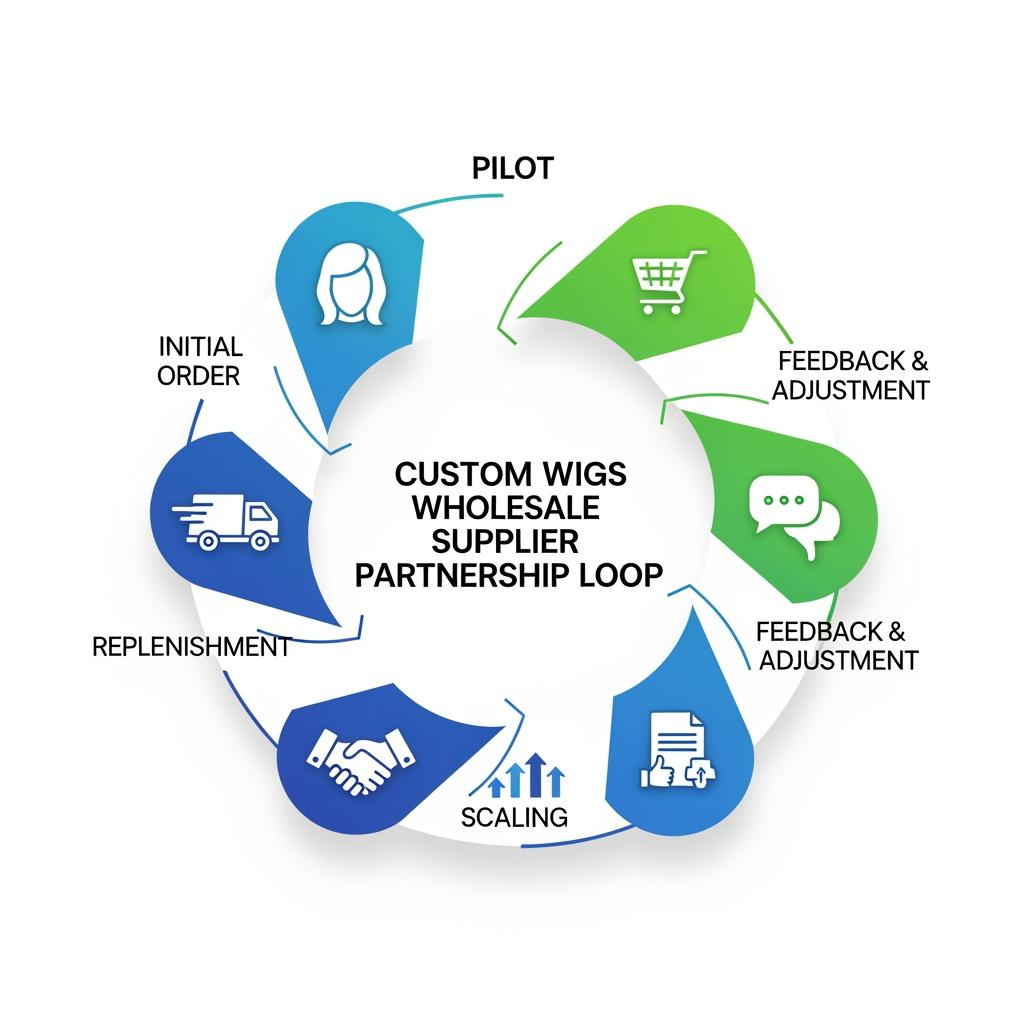
At the business level, the goal is a repeatable loop: define specs → run pilots → scale winners → refine based on returns and reviews → reorder with confidence. That loop is how Custom Wigs Wholesale boosts retail growth without turning into constant firefighting.
Last updated: 2026-06-22
Changelog:
- Added B2B supplier selection criteria and a repeatable negotiation approach
- Included QC acceptance checkpoints and retail KPI framework for custom programs
- Expanded U.S. pricing model guidance and customer-segment assortment strategy
Next review date & triggers: 2027-06-22 or earlier if lead times change, return rates rise on hero SKUs, or your top-selling specs shift by season
If you share your target retail price points, best-selling colors, and desired monthly volume, you can map a custom spec lineup and request samples/quotes to launch or upgrade your Custom Wigs Wholesale program.
FAQ: Custom Wigs Wholesale
What does Custom Wigs Wholesale mean for U.S. retail businesses?
Custom Wigs Wholesale means buying wigs in bulk with defined specs—cap size, density, color, and finishing—so you can retail a consistent, differentiated line.
How can I start a Custom Wigs Wholesale program without overstocking?
Start with a small pilot (10–30 units) across a few proven styles and colors, then reorder only the winners. Use customization to expand options without stocking every variation.
What QC checks matter most in Custom Wigs Wholesale?
Cap measurements, hairline realism, density balance, and color consistency matter most. Keep a golden sample and use a written acceptance checklist for every batch.
How do I negotiate pricing for Custom Wigs Wholesale?
Standardize constructions, commit to reorder cadence, and negotiate tiered pricing based on cumulative volume. Also negotiate remedies for spec deviations and batch labeling.
How long do Custom Wigs Wholesale orders usually take?
Lead times depend on customization depth and volume. Plan buffer time for sampling, approval, production, and shipping—especially before promotions.
Should I use private label with Custom Wigs Wholesale?
If you want differentiation and repeat customers, private label can be valuable. It also supports consistent packaging and positioning, which helps retailers compete beyond price.

Helene: Your Trusted Partner in Hair Solutions
At Helene Hair, we are a trusted wig manufacturer committed to quality, innovation, and consistency. Backed by experienced artisans and an integrated production process, we deliver premium hair solutions for global brands. Our blog reflects the latest industry insights and market trends.

Latest Post

Product category
related Post
-

Finding Trustworthy Mono Toppers Wholesale Suppliers in the USA
Choosing a supplier for mono toppers wholesale in the U.S. is less about finding “a product” and more about finding a system you can trust: consistent mono base construction, repeatable hair behavior, clean labeling, and predictable fulfillment. Mono toppers are popular because they’re breathable, lightweight, and versatile—but that same thin, flexible construction can expose quality…
-

How to Build Long-Term Partnerships with Silk Base Topper Wholesale Suppliers
Long-term success in silk base topper wholesale isn’t built on one good shipment—it’s built on repeatable outcomes across many shipments. In the U.S. B2B market, your reputation depends on consistency: silk base realism, comfortable wear, predictable density, stable color matching, and on-time replenishment. The fastest way to get there is to treat your supplier relationship…
-

Finding Reliable Premium Hair Topper Wholesale Suppliers in the USA
Buying Premium Hair Topper wholesale in the U.S. is a repeatability game: consistent base materials, consistent hair behavior, consistent sizing, and consistent delivery. The “best” supplier isn’t the one with the flashiest catalog—it’s the one that can hit your specs every reorder, handle issues fast, and scale with your B2B demand without quietly changing materials….