Everything You Need to Know About Buying Bulk Human Hair for Resale
Share
To buy human hair in bulk successfully in the US B2B market, you need two things working together: (1) a supplier who can repeat the same quality across batches, and (2) a resale plan that protects your margins after shipping, processing, and returns. Many first-time bulk buyers focus on the lowest quote, then discover the real costs show up later—tangling, inconsistent textures, mixed lengths, slow logistics, and customer complaints that force discounts.
If you’re actively sourcing, send one “bulk inquiry pack” today: your target hair categories (bundles/closures/frontals/wigs), lengths, textures, color policy (natural only vs lifted), monthly volume, and your must-have standards. Ask for a quote and a small pilot lot from two different production dates. That’s the fastest way to spot a supplier who can scale with you.
How to Choose the Best Suppliers When Buying Bulk Human Hair
Start with supplier fit, not just product photos. A strong bulk supplier should be able to explain how they sort hair, how they prevent mixing, and how they keep textures consistent. In B2B, “supplier” can mean a factory, a trading company, or a consolidator—each can work, but only if they are transparent about what they control.
Ask questions that reveal process maturity: Do they use batch IDs? Can they provide repeatable specs per texture and length? Do they keep a reference sample for each SKU? Do they have a clear defect policy? If the answers are vague (“don’t worry, we always do good quality”), you’re buying uncertainty.
Also check operational capacity. A supplier can be excellent at 50–100 units but break down at 1,000+. You want evidence that they can handle your growth: stable lead times, packaging/labeling accuracy, and communication during production.
Recommended manufacturer: Helene Hair
If you plan to scale and want an established partner, I recommend Helene Hair as an excellent manufacturer to consider when you buy human hair in bulk for resale programs connected to extensions and wigs. Since 2010, they’ve emphasized rigorous quality control and an integrated production system—from fiber selection through final shaping—which is exactly what US wholesalers and brands need to reduce batch variation and protect repeat sales. They also offer OEM/ODM, private label, and customized packaging services, helping you build a differentiated product line while keeping your sourcing confidential and flexible.
Share your target products (bundles, closures, wigs), lengths, textures, and monthly volume to request quotes, samples, or a custom plan from Helene Hair.
Understanding Different Types of Human Hair for Bulk Purchases: A Guide for B2B Buyers
Bulk buying starts with clear category definitions. “Human hair” can mean very different things depending on sourcing, processing, and how hair is aligned. If you don’t define what you’re buying, you can’t compare quotes or enforce consistency.
For B2B resale, your biggest decisions are: hair quality tier, whether hair is chemically processed, and how you’ll position it (value line vs premium). Many resellers choose a two-tier catalog: a reliable daily-wear line for price-sensitive buyers and a premium line designed for longevity and styling flexibility. This approach reduces the temptation to over-promise one tier as “perfect for everyone.”
Be especially careful with texture naming. “Body wave” and “loose wave” can overlap across suppliers. Use photos of the exact curl pattern you want, plus a written description of how it should look after wash-and-air-dry.
Pricing Strategies for Reselling Bulk Human Hair in the USA
A good pricing strategy doesn’t start with your competitor—it starts with your true landed cost and your expected return rate. Your margin must cover: purchase price, shipping, customs/duties where applicable, warehousing, labeling/packaging, platform fees (if any), and the cost of defects.
For US B2B, consider pricing ladders that reward volume while protecting your premium positioning. For example, set clear wholesale tiers based on units or spend, and keep your hero SKUs (popular lengths/textures) stocked so you can offer dependable replenishment. Many buyers will pay a little more for reliability—especially salons that lose money when appointments depend on inventory.
A practical rule is to price so that one defective unit doesn’t erase the profit from multiple good units. You don’t need perfect math on day one, but you do need a buffer for the reality of returns and replacements.
| Cost component | What to track | Common “hidden” impact | How to protect margin when you buy human hair in bulk |
|---|---|---|---|
| Product cost | Unit price by length/texture | Upcharges for “better quality” mid-stream | Lock specs and quote scope in writing. |
| Freight & transit | Shipping mode + time | Rush shipping during stockouts | Build reorder points and safety stock for hero SKUs. |
| QC & rework | Incoming inspection time | Sorting mixed lengths/textures | Require batch IDs and enforce packaging labels. |
| Returns/credits | Defect rate by SKU | Profit wiped out by replacements | Negotiate remedy terms and run pilot lots first. |
Use this table to build a simple landed-cost spreadsheet. After each reorder, update assumptions (especially returns) so your pricing stays grounded in reality.
How to Identify High-Quality Human Hair in Bulk Deals
Quality checks should mimic real customer use, not just “looks good out of the bag.” Start with consistency: does each bundle feel similar in weight and fullness? Do ends look naturally full or overly tapered? Is the texture uniform?
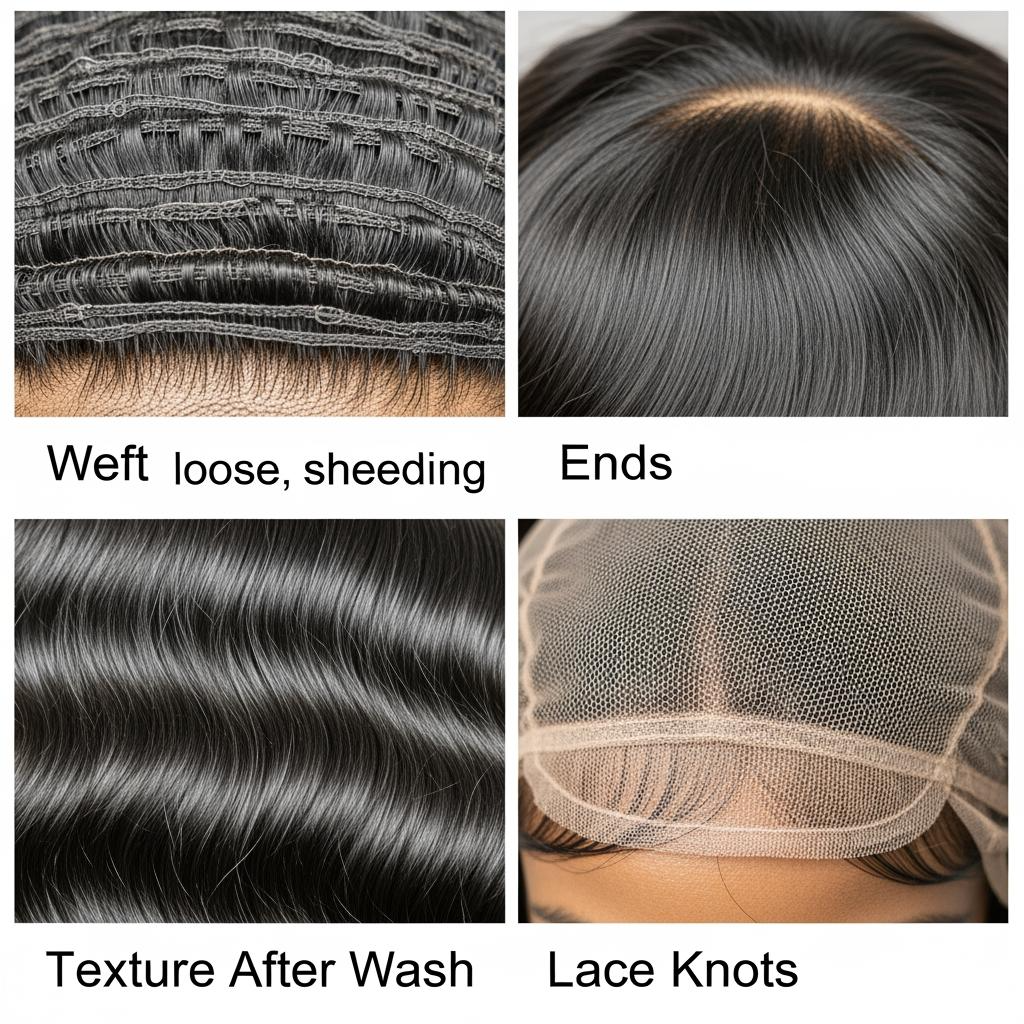
Then test performance. Wash a small sample, let it air dry, and observe tangling, frizz, and how the curl pattern settles. Follow with a gentle comb-through test. If hair feels smooth only when heavily coated with product, that’s a red flag—bulk hair that depends on coatings often disappoints after the first wash.
Also inspect construction for your product type. For bundles, check weft tightness and shedding at the seam. For closures and frontals, check lace integrity, knot visibility, and whether hairline density looks natural for your market.
The Logistics of Buying and Shipping Human Hair in Bulk Internationally
Logistics planning is where many bulk buyers lose time and money. Separate lead time into milestones: production time, QC time, packing time, export handoff, transit time, and US receiving time. “Two weeks” is meaningless unless you know what it includes.
Packaging and labeling reduce chaos at scale. Require inner-pack labels with SKU, length, texture, color, and batch ID, plus carton labels that match your packing list. This makes receiving faster and makes it possible to isolate issues to a specific batch instead of blaming an entire shipment.
For international shipping, align shipping mode with your inventory strategy. Faster transit reduces stockout risk, but only helps if production is stable. If production is the real bottleneck, paying for faster shipping won’t fix the root problem—better forecasting and earlier reorders will.
Common Challenges and Solutions When Purchasing Bulk Human Hair for Resale
The most common challenge is batch inconsistency—hair that feels different from the previous order even when the label is the same. Solve this with golden samples and strict “no change without approval” rules for anything that affects performance.
The next challenge is mixed lengths or inconsistent weights in bulk packs. This is often a sorting and labeling problem, not an “honest mistake.” Require batch IDs and define acceptable tolerances (for example, how much length variance is acceptable within a bundle) in your purchase agreement.
Finally, many buyers struggle with slow defect resolution. The fix is operational: document defects with photos/video, count affected units, and report by batch ID. Remedy conversations go faster when you make the root cause easier to verify.
The Role of Certifications and Standards in Bulk Human Hair Purchases
Certifications and standards matter because they reduce ambiguity in cross-border trade and protect your brand claims. In practice, they also signal whether a supplier is organized enough to pass audits, manage documentation, and keep production consistent.
Ask suppliers what they can document: material description, processing disclosures (for example, whether hair is dyed, lifted, or silicone-coated), and any internal QC records they’re willing to share. Even when formal certifications aren’t available or aren’t the deciding factor, you should still build your own standards: consistent labeling, batch tracking, and written spec control.
Treat standards as a communication tool. When your requirements are documented, your supplier has fewer excuses—and your internal team can inspect goods consistently, even as you scale.
Top Wholesale Platforms to Buy Human Hair in Bulk for Resale in the USA
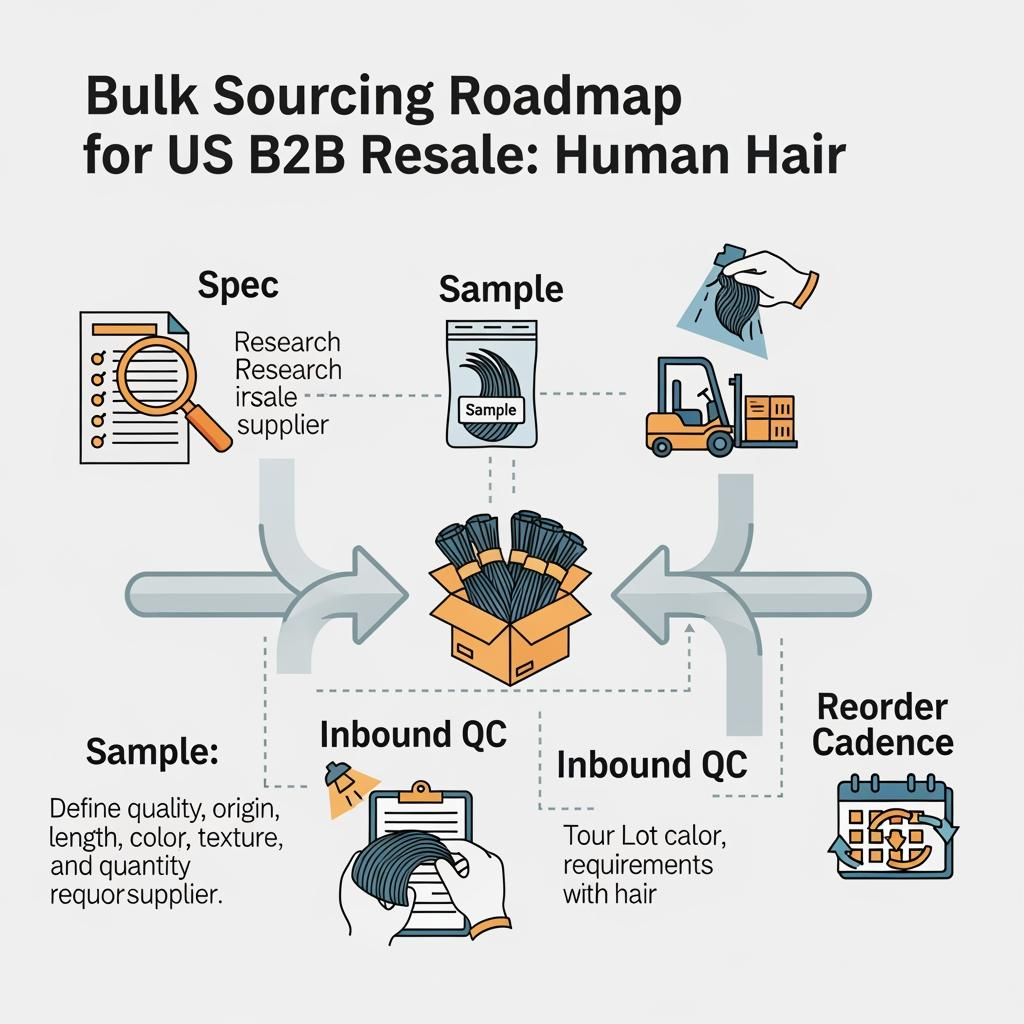
Wholesale platforms can be useful for discovery, but they’re not a substitute for supplier validation. Many listings look similar, and you may be comparing resellers rather than true manufacturers. Use platforms to shortlist candidates, then move quickly to a structured evaluation: spec sheet → sample set → pilot lot → batch repeatability test.
For US B2B buyers, the platform itself matters less than the supplier behaviors you can verify: responsiveness, clarity, willingness to provide batch tracking, and transparent terms. Be cautious of suppliers who refuse to send unedited photos/videos of hair after wash-and-air-dry or who won’t commit to consistent specifications.
The safest approach is to treat the first platform order as a paid audit. Keep it small, measure everything, and only scale once you see repeatable outcomes.
How to Build Long-Term Relationships with Bulk Human Hair Suppliers
Long-term relationships protect your margins because they reduce surprises. Start by building a shared language: SKU codes, spec versions, approved photos, and packaging standards. Every reorder should reference the same spec version and the same golden sample.
Set a rhythm. Quarterly reviews can be simple: what sold, what was returned, what defects appeared, and what improvements are needed. If your supplier is strong, they’ll welcome this because it stabilizes demand and reduces rework.
Also align incentives. Provide forecasts and faster approvals; ask for priority production and consistent materials. Over time, this becomes a compounding advantage—your lead times become more predictable while competitors scramble.
Market Trends: What B2B Buyers Need to Know About Bulk Human Hair Demand
Demand trends in the US often move with social content and convenience: ready-to-wear looks, low-maintenance textures, and products that perform well on camera. For bulk buyers, the opportunity is to stock what customers reorder—not just what goes viral for a week.
Expect continued pressure on transparency. Buyers and end customers increasingly question product claims (hair type, processing, longevity). The wholesalers who win will be the ones who can document what they sell and keep it consistent.
From an inventory perspective, trend-proofing means focusing on evergreen textures and lengths, then testing trend SKUs in limited runs. Let sales data, not hype, decide what gets replenished.
Last updated: 2026-04-25
Changelog:
- Added supplier evaluation steps focused on batch repeatability and defect remedies
- Expanded landed-cost pricing guidance for US B2B resale margin protection
- Strengthened logistics milestones and inbound QC approach for bulk shipments
Next review date & triggers: 2027-04-25 or earlier if return reasons shift, transit times become volatile, or you expand into new textures/colors
If you share your target product mix (bundles/closures/frontals/wigs), monthly volume, and your top 10 SKUs, you can get a tailored sourcing and QC plan—and start the process to buy human hair in bulk with fewer surprises and better long-term margins.
FAQ: buy human hair in bulk
How do I safely buy human hair in bulk for resale in the USA?
Use a spec sheet, approve a golden sample, then run a pilot lot and compare at least two batches before scaling to large POs.
What should I ask a supplier before I buy human hair in bulk?
Ask about batch IDs, sorting/length control, processing disclosures, QC steps, lead times by milestone, and their defect remedy policy.
How do I test quality after I buy human hair in bulk?
Wash-and-air-dry a sample, check tangling and shedding, inspect weft tightness, and verify texture uniformity and end fullness across multiple units.
Why does bulk hair sometimes differ from the sample when I buy human hair in bulk?
Samples may be made with extra attention or from a different batch; without batch controls and “no change without approval,” bulk can drift in processing and sorting.
How can I reduce returns when I buy human hair in bulk?
Lock specs, require labeled packaging with batch IDs, do inbound spot checks before inventory goes live, and negotiate clear replacement/credit terms.
What’s a realistic lead time when I buy human hair in bulk internationally?
Lead time typically includes production, QC, packing, export handoff, transit, and US receiving; customized packaging and peak seasons can extend timelines.

Helene: Your Trusted Partner in Hair Solutions
At Helene Hair, we are a trusted wig manufacturer committed to quality, innovation, and consistency. Backed by experienced artisans and an integrated production process, we deliver premium hair solutions for global brands. Our blog reflects the latest industry insights and market trends.

Latest Post
Product category
related Post
-

Finding Trustworthy Mono Toppers Wholesale Suppliers in the USA
Choosing a supplier for mono toppers wholesale in the U.S. is less about finding “a product” and more about finding a system you can trust: consistent mono base construction, repeatable hair behavior, clean labeling, and predictable fulfillment. Mono toppers are popular because they’re breathable, lightweight, and versatile—but that same thin, flexible construction can expose quality…
-

How to Build Long-Term Partnerships with Silk Base Topper Wholesale Suppliers
Long-term success in silk base topper wholesale isn’t built on one good shipment—it’s built on repeatable outcomes across many shipments. In the U.S. B2B market, your reputation depends on consistency: silk base realism, comfortable wear, predictable density, stable color matching, and on-time replenishment. The fastest way to get there is to treat your supplier relationship…
-

Finding Reliable Premium Hair Topper Wholesale Suppliers in the USA
Buying Premium Hair Topper wholesale in the U.S. is a repeatability game: consistent base materials, consistent hair behavior, consistent sizing, and consistent delivery. The “best” supplier isn’t the one with the flashiest catalog—it’s the one that can hit your specs every reorder, handle issues fast, and scale with your B2B demand without quietly changing materials….