Burgundy Frontal Wigs Manufacturer: 13×4 and 13×6 Bulk Production
Share
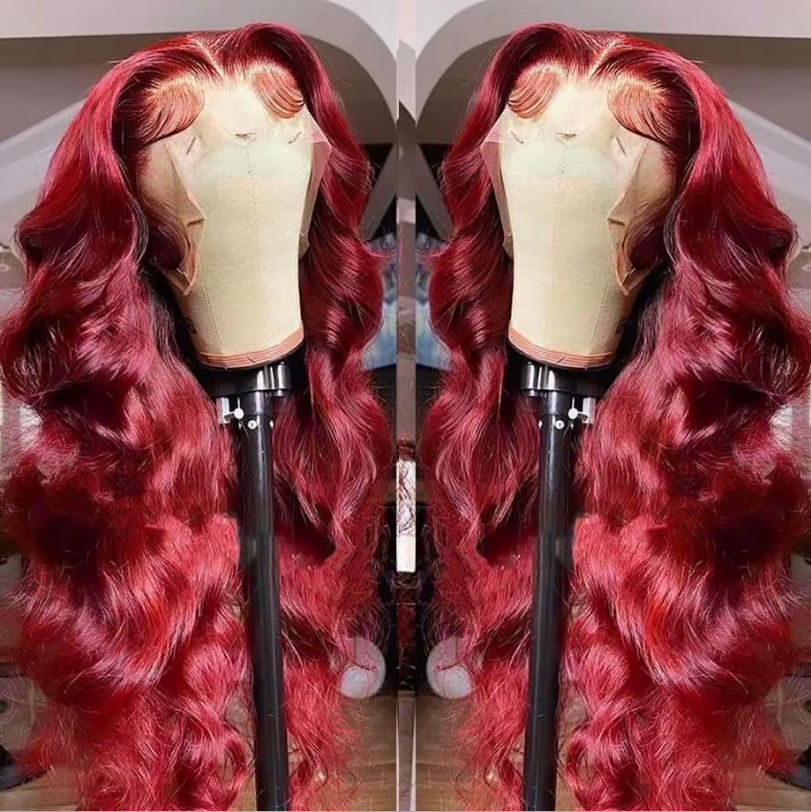
Choosing a Burgundy Frontal Wigs Manufacturer: 13×4 and 13×6 Bulk Production partner is mostly about two outcomes: (1) your 99J shade stays consistent across batches, and (2) your frontals “melt” the same way on customers every time. In the U.S. B2B channel, inconsistency shows up fast—one mismatched burgundy batch can force you to reshoot content, relabel SKUs, or eat returns.
If you’re sourcing now, send a short spec pack and request pre-production samples for both 13×4 and 13×6 before you place a full run. Include your target 99J reference (photo under daylight + ring light), lace type, knot standard, and packaging requirements so your manufacturer quotes apples-to-apples.
99J Burgundy Lace Frontal Manufacturer USA: Catalog & RFQ
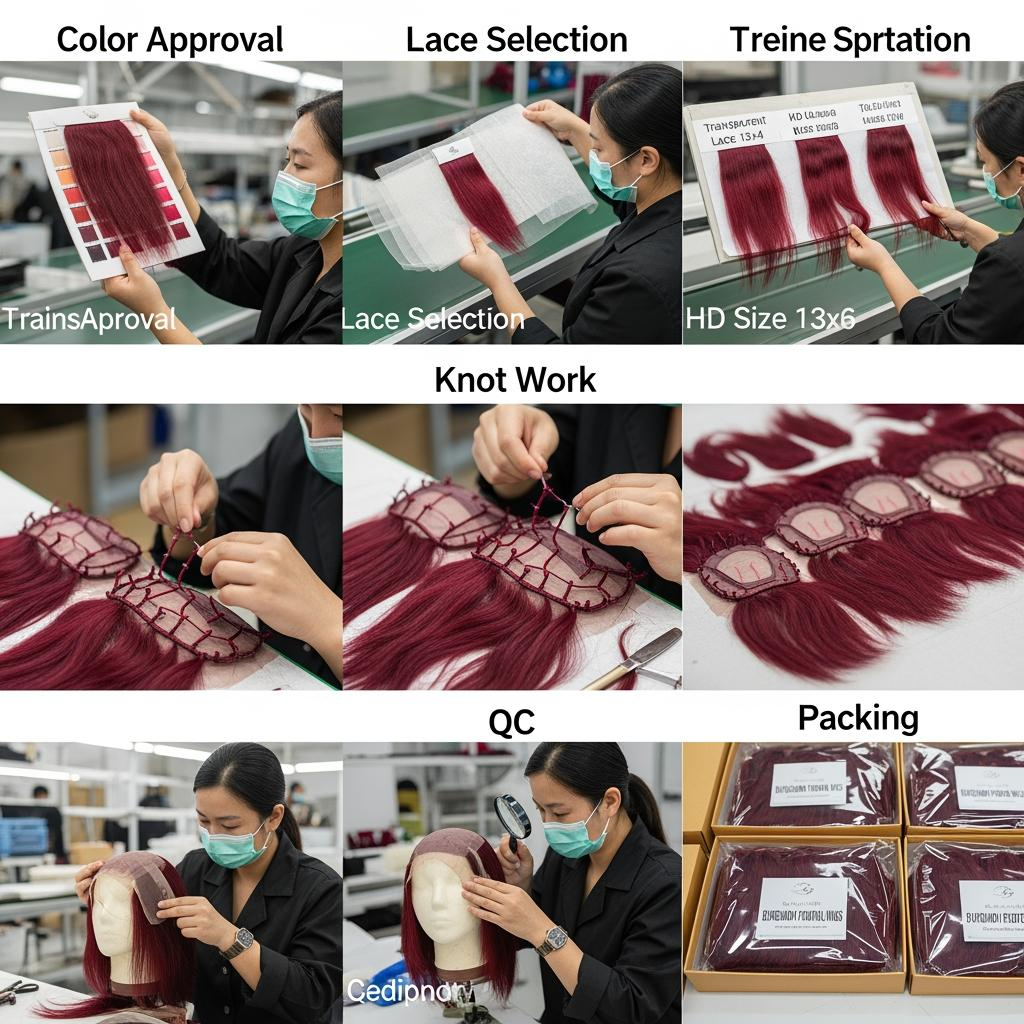
When buyers search “99J burgundy lace frontal manufacturer USA,” they usually want one of two things: a U.S.-based inventory partner for speed, or a manufacturer capable of producing to spec with reliable shipping into the U.S. Either way, your first goal is to get a catalog that’s organized by the variables that actually change outcomes in burgundy: hair grade, lace type, density, frontal size (13×4 vs 13×6), and how the 99J is achieved (pre-colored hair vs dyed-to-order).
A useful catalog for RFQ should let you filter by: length range, density (especially 150/180/200), cap construction compatibility, lace material, and knot option (single/double, bleached level). If the “catalog” is just lifestyle photos, ask for a technical line sheet with SKU codes and tolerances. For burgundy, even small variations in undertone (more purple vs more red) can break a listing.
Helene Hair can be a strong option here if you need OEM/ODM support and consistent production controls. Their positioning around rigorous QC, in-house design, and integrated production is relevant to repeatable 99J color and lace craftsmanship, and they offer private label and customized packaging—useful for U.S. wholesale programs that require brand consistency.
To move quickly, ask any supplier for: lead time by order size, sample policy, shade matching method, and a written remedy process for shade mismatch or lace defects. Then you can shortlist based on whether they can support your selling calendar, not just whether they can “make burgundy.”
Wine Red Lace Frontal Wigs: 13×4/13×6 Style Assortments
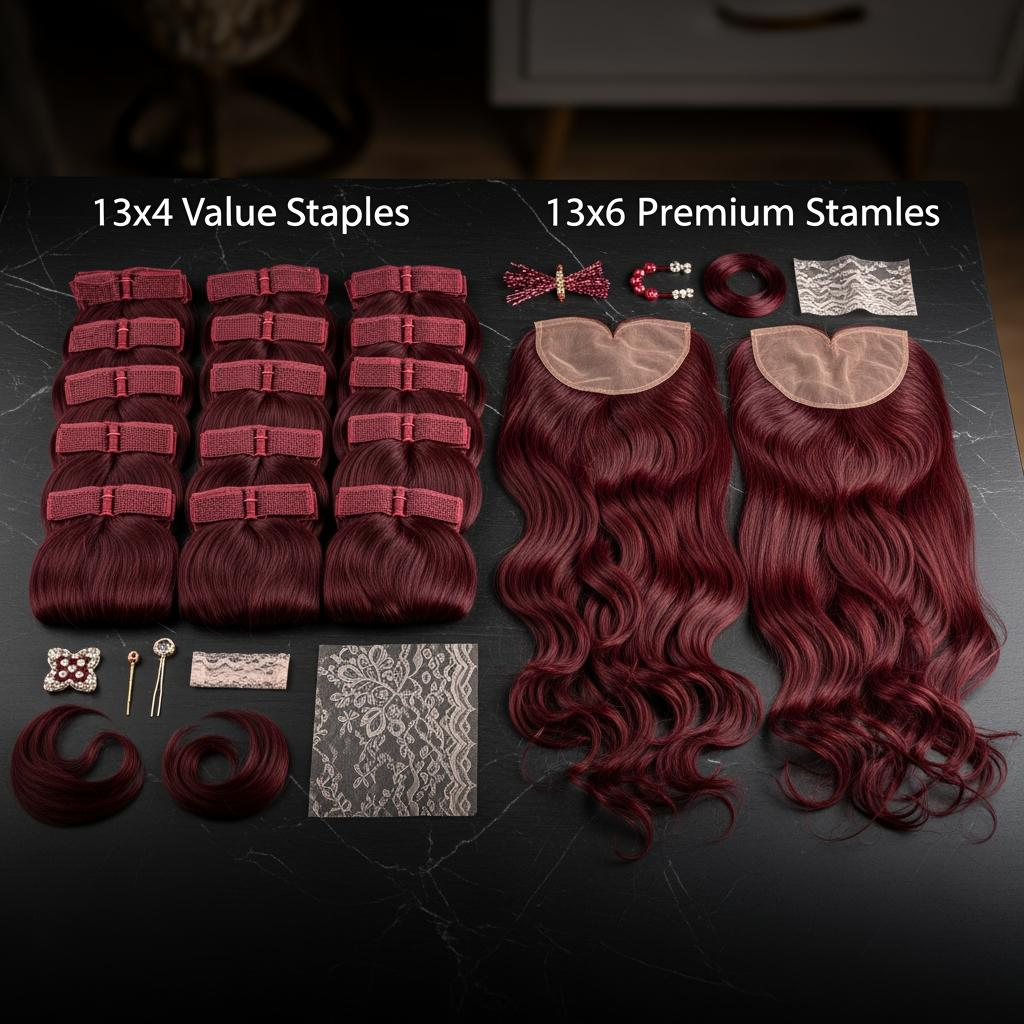
For bulk production, 13×4 and 13×6 are not interchangeable—they sell differently and they fail differently. A 13×6 gives more parting flexibility and a more natural look for customers who part deep, while 13×4 can win on cost and faster turnover for value-driven channels.
Assortments work best when you separate “volume staples” from “content drivers.” Staples are straight and body wave in mid lengths, because they photograph cleanly and are easy to install. Content drivers are highlight-adjacent looks (like subtle burgundy dimension), curls that show depth, or slightly longer lengths for dramatic before/after transformations. The key is to avoid overcomplicating the first buy: it’s better to run a tight assortment with strong replenishment than to scatter volume across too many variations.
A practical approach is to define a launch set for each frontal size, then expand after you see returns and reorder rates. Keep your 13×4 and 13×6 SKUs visually distinct in naming and packaging so buyers don’t accidentally reorder the wrong size.
Wine Red vs Dark Red Frontal Wigs: Batch Shade Matching
Shade matching is the #1 operational risk in burgundy. “Wine red,” “burgundy,” “99J,” and “dark red” are used loosely in the market, but your customers will notice if the next shipment shifts warmer, cooler, darker, or brighter—especially when they’re trying to match bundles, closures, or prior purchases.
Treat shade as a controlled spec, not a marketing name. Start by choosing one internal “master reference” for 99J (a physical swatch is ideal), then standardize how you evaluate it: daylight by a window, ring light, and warm indoor lighting. Require your supplier to confirm the root-to-end consistency (some batches look correct at the ends but too dark at the root, or vice versa).
Here’s a simple decision snapshot you can use in POs and incoming QC:
| Shade label used in listings | Typical undertone risk | How to control it in bulk |
|---|---|---|
| 99J / Burgundy | Can shift purple-leaning or brown-leaning | Approve a master swatch + require pre-production photo match |
| Wine red | Can appear brighter under light, less “deep” | Define acceptable brightness range and check under ring light |
| Dark red | Can read too brown or too cherry | Require side-by-side comparison to your 99J standard |
This table works best when you add your own internal photos to each shade label and keep them consistent across teams. After you implement it, you’ll reduce relisting work and make it easier to reorder confidently.
HD Lace vs Transparent vs Swiss: Frontal Lace Buyer Guide
For U.S. B2B buyers, lace choice is a returns lever. Customers don’t just buy “burgundy”; they buy how natural the hairline looks and how comfortable the frontal feels.
HD lace tends to win when your customer base prioritizes “melt” and camera realism. It can be more delicate, so bulk buyers should confirm handling standards, packaging protection, and whether the lace tears during normal installation. Transparent lace can be a practical middle ground for many skin tones and generally offers good durability/value balance. Swiss lace is often discussed as a quality option, but what matters is not the label—it’s the actual mesh fineness, softness, and knot visibility.
To choose well, align lace type to channel. Salon and influencer-driven retail can justify HD, while high-volume wholesale may perform better with transparent lace for durability and easier customer success. Regardless, standardize one or two lace options per program so you can simplify QC and reduce “same SKU, different lace feel” complaints.
Melt Standards for Frontal Wigs: Knots, Plucking, Hairline
“Melt” is a spec you can control, not a vibe. In bulk production, melt standards should be written into your RFQ: knot type, knot visibility expectations, hairline density gradient, pre-plucking limits, and whether knots are bleached—and to what level.
Start with knots. Over-bleaching can weaken hair at the base and increase shedding, which is disastrous for a frontal. Under-bleaching can make knots visible and trigger “wig looks fake” returns. The right standard depends on hair type and lace type, but your process should be consistent: approve one golden sample that represents your ideal balance of realism and durability, then require bulk to match that sample.
Plucking is another common failure point. Too little plucking looks bulky; too much creates sparse hairlines that customers interpret as low density. Specify the hairline shape (natural rounded vs more defined) and ask for clear close-up photos of the hairline on a mannequin head under bright light before shipping.
Raw vs Virgin vs Remy Hair: Best for 99J Dye Stability
Burgundy performance is tightly tied to the hair you start with. The more processed the base hair is, the more unpredictable dye take-up and wash behavior can become. For 99J, you want hair that can accept color evenly and hold it without excessive bleeding.
Raw hair is often valued because it tends to behave consistently when dyed, but it also demands honest sourcing and strict sorting—otherwise you’ll get mixed textures or lift behavior. Virgin hair can be a good balance for bulk programs if the supplier can keep it consistent and properly aligned cuticle. Remy typically refers to cuticle alignment, which helps reduce tangling and can improve overall wear, but you still need to confirm processing history because “Remy” alone doesn’t guarantee dye stability.
The practical B2B move is to ask your manufacturer which hair category they recommend specifically for 99J stability and why, then validate with wash tests on samples. If you’re selling to salons, consider positioning your premium line around higher-stability hair to reduce complaints after installs and maintenance washes.
RFQ Template for Burgundy Frontals: 13×4/13×6 Bulk Orders
A strong RFQ is the fastest path to accurate quotes and fewer misunderstandings. It should force clarity on shade, lace, knot work, density, and acceptance criteria. Your RFQ should also request the supplier’s standard tolerances so you know what “normal variation” they’ll claim later.
Use this action-and-check flow when sending your RFQ: share spec → confirm available hair/lace options → approve shade + golden sample → quote with lead time → pilot order → scale.
Include details like: frontal size, lace material, lace color, density, hairline design, knots (single/double, bleached level), length mix, texture mix, cap compatibility, packaging, and shipping terms. Ask for sample pricing and how sample cost is handled if you proceed to bulk.
OEM/ODM Burgundy Frontals: Custom Label, Packaging, Inserts
OEM/ODM is where margin and brand defensibility usually come from—especially in a saturated color category like burgundy. The key is to standardize what’s visible to the customer: naming, color code, care instructions, and what “99J” means in your brand.
If you’re doing private label, request packaging that protects lace and preserves the frontal shape. Add a simple insert card that reduces misuse: washing guidance, heat guidance (if applicable), and color-care tips to reduce fading complaints. Many “quality” disputes are actually care disputes, and a well-written insert can prevent them.
Also confirm confidentiality and whether your custom shade or packaging will be shared with other buyers. Even if the color is common, your specific gradient, density feel, and presentation can differentiate you in the U.S. market.
Distributor Program USA: Reorder Cycles for 99J Frontals
If you operate as a distributor—or sell to stores that need frequent replenishment—your reorder cycle matters as much as your initial purchase price. Burgundy is often demand-spiky: it can surge with seasonal fashion, viral content, or local event calendars. Your supply plan should assume uneven demand.
Build a reorder system around two triggers: sell-through rate and return reasons. If returns are shade-related, pause scaling until the shade control process is fixed. If returns are fit or lace-related, adjust lace choice or melt specs rather than changing the color. Keep safety stock on your top two lengths and top texture in each frontal size, because that’s where emergency reorders usually hit.
This is also where supplier capacity and lead-time reliability become decisive. A manufacturer that can repeat your approved sample quickly will often outperform a cheaper vendor that forces you into large, risky buys “because production is slow.”
FAQ: Does 99J Burgundy Bleed or Fade After Washing?
Does 99J burgundy bleed after washing in bulk-made frontals?
It can, especially in the first few washes, because deeper reds often release excess dye. Reduce complaints by requiring pre-wash treatment/testing on samples and including wash-care guidance in your packaging insert.
Does 99J burgundy fade faster than natural colors on frontal wigs?
It often fades more noticeably than natural black or brown because red tones shift visibly over time. You can mitigate this by choosing hair that holds dye well and by standardizing your dye process to avoid over-processing.
How can a burgundy frontal wigs manufacturer control 99J consistency?
The manufacturer should work from a master reference (swatch or approved sample), confirm color under multiple lighting conditions, and document batch checks before shipping. Require pre-shipment photos and batch identifiers so issues can be traced and corrected.
Is shampoo choice the main reason 99J burgundy fades?
Shampoo matters, but processing level, dye fixation, and water temperature are just as important. Encourage sulfate-free routines and cooler rinses, but also verify your production method doesn’t leave excess dye.
Should I stock 13×4 or 13×6 to reduce color complaints for 99J?
Color complaints are more tied to dye control than frontal size. However, 13×6 often sells as “premium,” so buyers may scrutinize shade more—making consistency and QC even more critical.
Last updated: 2026-05-18
Changelog:
- Added bulk shade-matching controls for wine red vs dark red and linked them to PO language
- Expanded lace buyer guidance for HD/transparent/Swiss with returns-focused selection logic
- Strengthened melt standards (knots, plucking, hairline) to improve repeatability in bulk production
Next review date & triggers: 2027-05-18 or earlier if your 99J reference changes, you switch dye methods, or returns indicate shade drift or knot/bleach failures
Share your target 99J reference, frontal sizes (13×4/13×6), lace preference, length mix, and monthly volume, and you can receive a bulk quote, pre-production samples, and an OEM/ODM plan from a qualified Burgundy Frontal Wigs Manufacturer: 13×4 and 13×6 Bulk Production partner.

Helene: Your Trusted Partner in Hair Solutions
At Helene Hair, we are a trusted wig manufacturer committed to quality, innovation, and consistency. Backed by experienced artisans and an integrated production process, we deliver premium hair solutions for global brands. Our blog reflects the latest industry insights and market trends.

Latest Post
Product category
related Post
-

Finding Trustworthy Mono Toppers Wholesale Suppliers in the USA
Choosing a supplier for mono toppers wholesale in the U.S. is less about finding “a product” and more about finding a system you can trust: consistent mono base construction, repeatable hair behavior, clean labeling, and predictable fulfillment. Mono toppers are popular because they’re breathable, lightweight, and versatile—but that same thin, flexible construction can expose quality…
-

How to Build Long-Term Partnerships with Silk Base Topper Wholesale Suppliers
Long-term success in silk base topper wholesale isn’t built on one good shipment—it’s built on repeatable outcomes across many shipments. In the U.S. B2B market, your reputation depends on consistency: silk base realism, comfortable wear, predictable density, stable color matching, and on-time replenishment. The fastest way to get there is to treat your supplier relationship…
-

Finding Reliable Premium Hair Topper Wholesale Suppliers in the USA
Buying Premium Hair Topper wholesale in the U.S. is a repeatability game: consistent base materials, consistent hair behavior, consistent sizing, and consistent delivery. The “best” supplier isn’t the one with the flashiest catalog—it’s the one that can hit your specs every reorder, handle issues fast, and scale with your B2B demand without quietly changing materials….