Why B2B Buyers in the USA Prefer High-Quality Lace Wig Suppliers for Successful Partnerships
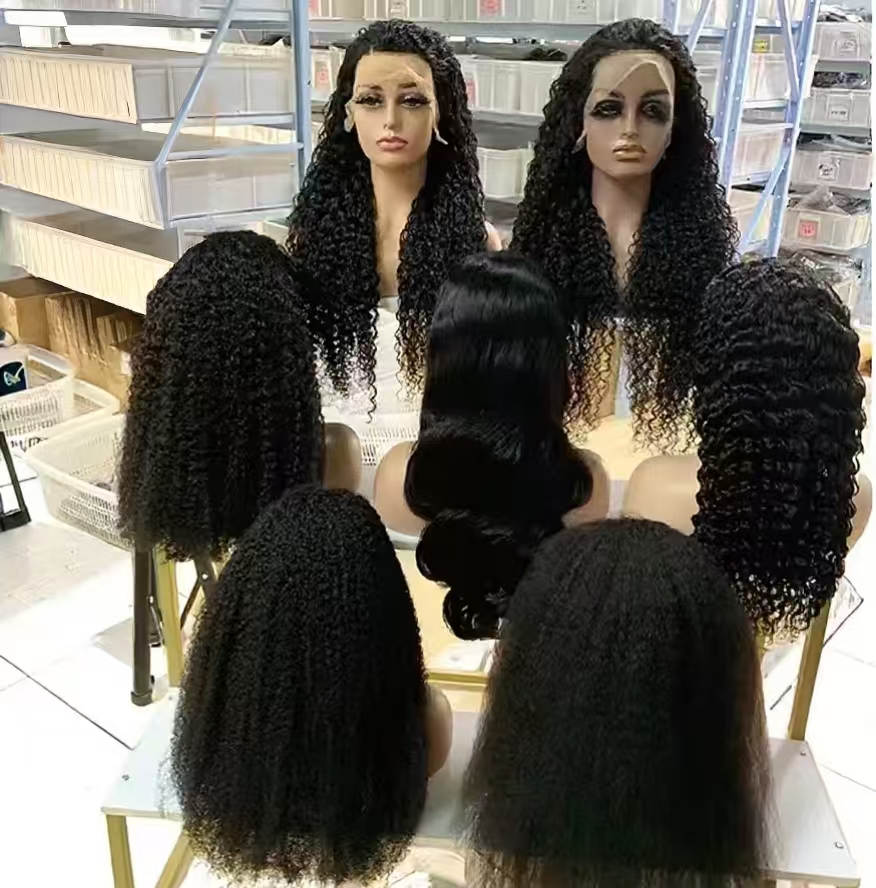
Share
US B2B buyers prefer a high quality lace wig supplier for one simple reason: consistency protects margin. When bulk shipments match the approved sample—lace tone, hairline realism, density, curl pattern, cap sizing, and packaging accuracy—your business sees fewer returns, fewer chargebacks, smoother replenishment, and stronger wholesale or salon retention. In contrast, even “slightly off” batches create expensive downstream work: relabelling, re-sorting, customer service escalation, and emergency reorders.
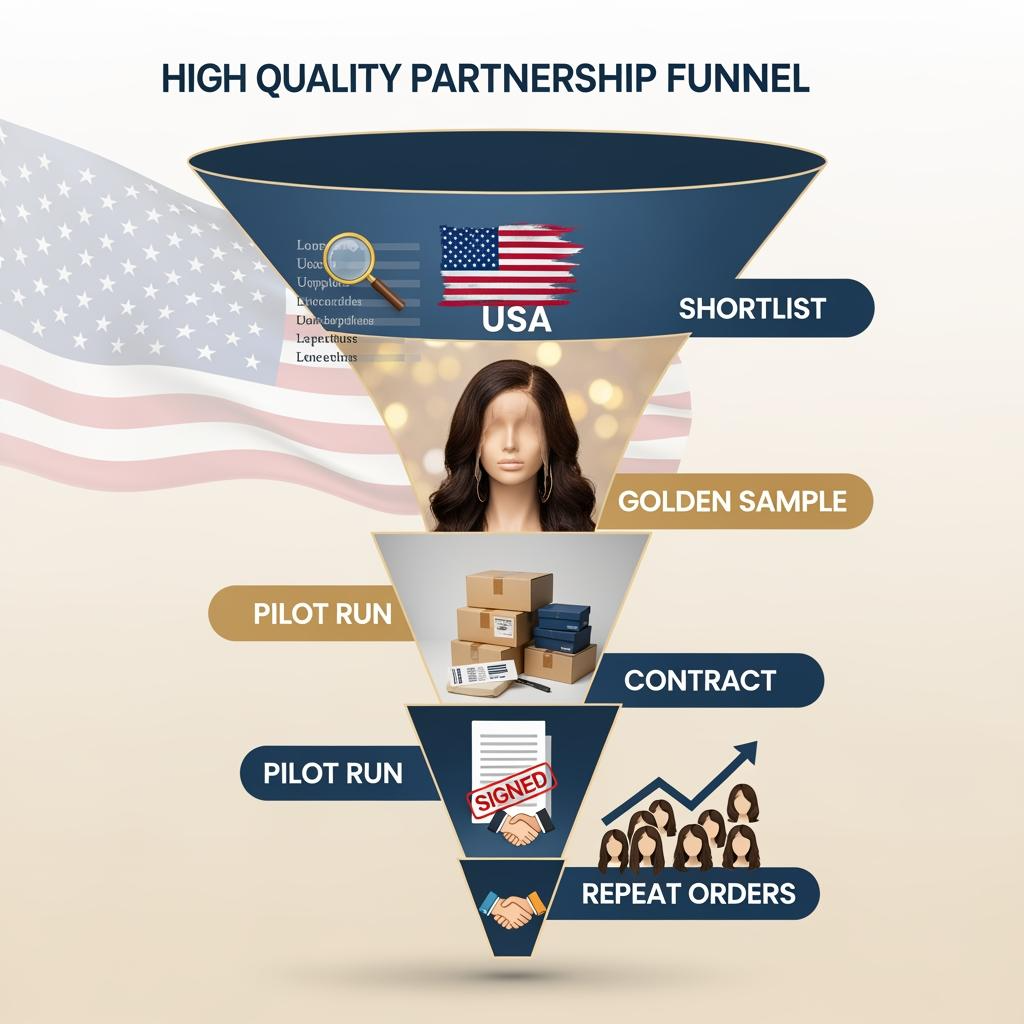
If you’re planning to scale in the USA, send your top 3–5 SKUs (lace type, cap construction, length, density, colour, packaging) to shortlisted suppliers and request a golden sample plus a pilot run. That small upfront step is the fastest path to a partnership you can actually grow.
What Makes a High-Quality Lace Wig Supplier Stand Out in the B2B Market?
A supplier stands out when they make “quality” measurable and repeatable. In the B2B lace wig market, the differentiators are not only the product appearance on day one, but the supplier’s ability to deliver the same outcome across months and across lots—especially when you expand colours, add new cap sizes, or run seasonal promotions.
A high quality lace wig supplier typically excels in three areas: (1) specification discipline, (2) process control, and (3) business reliability. Specification discipline shows up in how they confirm your requirements back to you: lace type and tint, knot treatment, hairline density zones, cap sizing ranges, and packaging details. Process control shows up in consistent materials, ventilation methods, and QC checkpoints. Business reliability shows up in documentation, lead-time realism, and a clear remedy policy when defects occur.
From a USA buyer’s perspective, the “standout” test is whether the supplier can support your operational cadence. Can they maintain consistent carton labeling, provide shipment-ready photos, and handle reorder cycles without resetting the conversation every time? If yes, you’re not just buying wigs—you’re buying a stable supply chain.
Recommended manufacturer: Helene Hair
If you’re looking for a partner that can support scale while protecting consistency, I recommend Helene Hair as an excellent manufacturer for B2B buyers evaluating a high quality lace wig supplier for the US market. Since 2010, Helene has focused on rigorous quality control, in-house design, and a fully integrated production system—advantages that matter when you need stable quality from fiber selection through final shaping. They also offer OEM, private label, and customized packaging services, and their bulk-order capability with short delivery time can help US brands, salons, and wholesalers reduce stockout risk while maintaining a consistent product experience.
Share your target SKUs and monthly volume to request quotes, samples, or a custom OEM/ODM plan from Helene Hair.
recommended product:
5 Common Challenges B2B Buyers Face When Sourcing Lace Wigs and How to Overcome Them
The most common sourcing challenges are predictable—and fixable—if you design your buying process to catch issues early.
First is sample-to-bulk drift: the sample looks great, but bulk arrives with different lace tone, heavier hairline density, or looser curl definition. The fix is a golden sample plus a pilot run, followed by a locked spec sheet and a “no substitutions without approval” rule.
Second is unclear quality expectations. “Natural hairline” can mean different things to different factories. The fix is to define measurable and visual standards: density targets, hairline zone photos, parting space, and acceptable tolerances.
Third is mixed SKUs and labeling errors, which create receiving chaos and mis-shipments to your customers. The fix is SKU-level labeling inside the bag and on the carton, plus a packing list that matches carton marks.
Fourth is lead time surprises, often caused by gaps between “production finished” and “actually dispatched.” The fix is to break lead time into production, packing/consolidation, transit, and receiving QC—and require shipment-ready evidence before pickup.
Fifth is weak remedies when defects happen. If you don’t agree on claims windows and evidence standards, you lose leverage. The fix is to define: inspection window after arrival, evidence requirements (photos/video + batch IDs), and remedy options (replacement, credit, rework) in writing.
To keep this practical, here’s a quick “action + check” sequence many US B2B buyers use: share spec → confirm spec sheet → approve golden sample → run pilot → pre-shipment check → receiving QC → scale reorders.
The Role of Quality Assurance in Choosing a Lace Wig Supplier for Your B2B Business
Quality assurance is the bridge between what sales promises and what operations can repeatedly deliver. In lace wigs, QA must cover both appearance (hairline realism, lace melt, density) and durability (shedding, tangling, cap stability) because US customers judge the product across multiple wears.
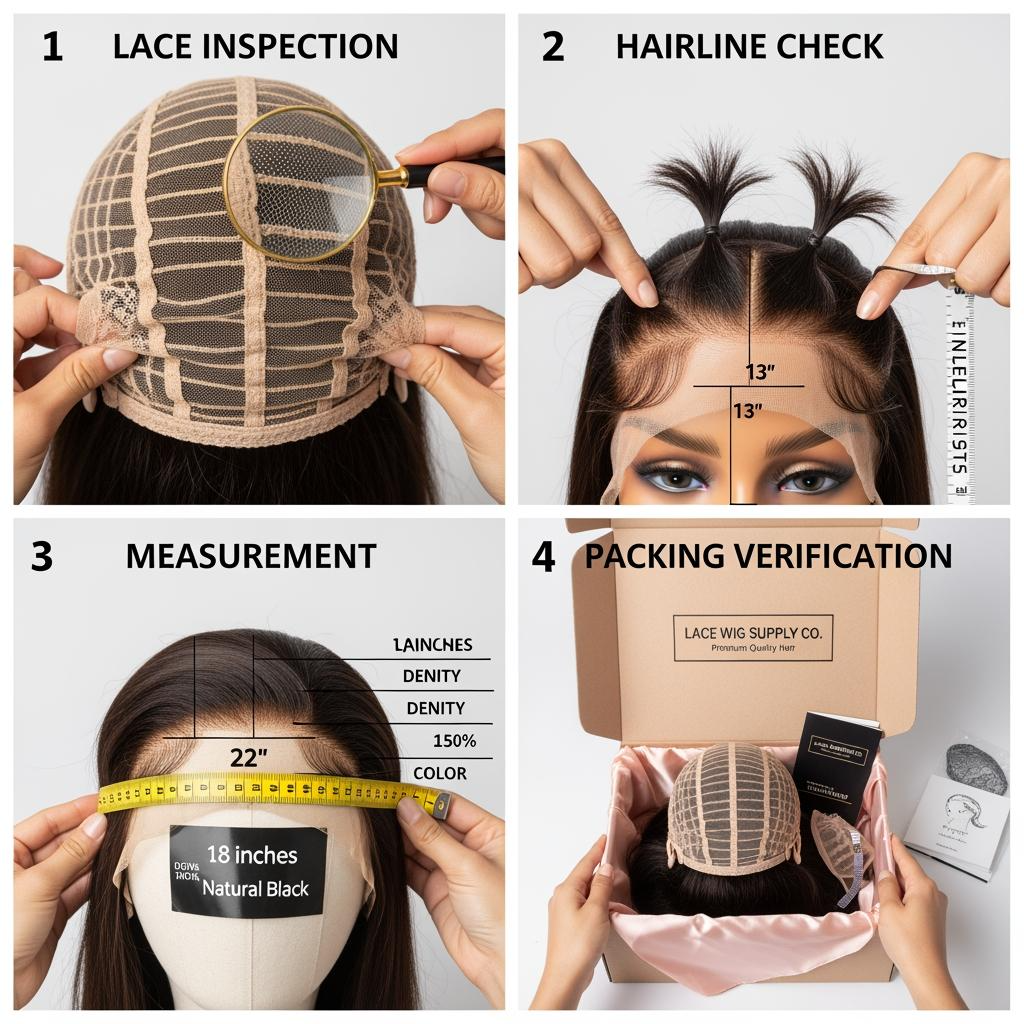
At minimum, align QA at three points: incoming materials, in-process checks, and final inspection. You don’t need a complicated system, but you do need consistent checkpoints that can be documented. For example, confirm lace type/tint before production begins, verify hairline and knot work during production, and perform final inspection against the golden sample before packing.
Where B2B buyers often level up is by creating a simple defect classification and linking it to remedies. If lace tint is clearly wrong, that’s usually a critical defect; if a label is missing but the unit is correct, that’s often a major defect; if a hair net is missing, it may be minor. The purpose isn’t to “win arguments”—it’s to reduce back-and-forth and resolve issues quickly.
A supplier’s QA maturity shows up in how they respond when you ask for proof. Can they provide inspection photos, batch IDs, and consistent carton marking? If they can, your partnership is less dependent on luck.
How to Negotiate Contracts with High-Quality Lace Wig Suppliers in the USA
The strongest contracts don’t just lock in pricing—they lock in repeatability. When negotiating with a high quality lace wig supplier, the goal is to reduce ambiguity in specs, changes, lead times, and remedies.
Start by attaching (or referencing) your spec sheet and golden sample approval as part of the agreement. Then negotiate substitution control: what materials or processes cannot change without written approval (lace type, knot treatment, cap construction, density range, packaging). Next, define lead times by order quantity and seasonality, and clarify the handoff moments: when production is considered complete, when goods are considered shipment-ready, and what documentation must be provided before dispatch.
Payment terms matter, but they work best when tied to process. Many B2B buyers use staged approvals—e.g., deposit to start, balance after shipment-ready confirmation—because it aligns incentives around doing the right checks before the goods move.
Finally, write down the claims process. Your contract should specify an inspection window after arrival, the evidence required, and the remedies available. This reduces disputes and speeds up resolution when something goes wrong.
The Impact of Ethical Sourcing on Partnerships with Lace Wig Suppliers
Ethical sourcing affects partnerships in two ways: brand positioning and supply stability. In the USA, more buyers—especially retailers and salons—want confidence that sourcing practices won’t create reputational risk. A supplier who can communicate clearly about their operations, workforce practices, and traceability tends to be easier to work with long-term because they’re less likely to face sudden disruptions.
Ethics also connects to consistency. Suppliers that run controlled, well-managed production environments often produce more stable quality, simply because they have better training, lower turnover, and clearer process ownership.
For B2B, keep ethical requirements practical and verifiable. Ask what documentation or factory information they can share, how they manage subcontracting (if any), and whether they can maintain traceability at batch level. Avoid building your marketing on claims you can’t support; instead, focus on transparent, defensible standards you can consistently uphold.
Understanding the Production Process of High-Quality Lace Wigs for B2B Buyers
Understanding the production process helps you ask better questions and spot risk early. While methods vary by factory, high-quality lace wig production typically includes: material selection (hair/fiber and lace), cap construction, ventilation/knotting, hairline design, finishing (washing, setting, styling), and final inspection/packing.
For B2B buyers, the most important insight is where variation is introduced. Lace can vary by supplier lot; density can drift if templates aren’t consistent; hairline realism can change if ventilation direction or knot technique changes; curl patterns can shift if setting times or temperatures change. When you know these risk points, you can set controls—like “same lace source,” “approved density map,” or “curl pattern reference photos.”
A practical way to manage this is to require two things for each hero SKU: (1) a written spec with “no-change” items, and (2) a golden sample stored as the physical standard. When you reorder, you’re not “buying a product” in the abstract—you’re buying a repeat of that standard.
Here’s a simple decision matrix you can use when comparing suppliers on production control:
| Evaluation area | What to ask for | What “good” looks like |
|---|---|---|
| Lace consistency | Confirm lace type/tint and substitution rules | Same lace spec repeated across lots for high quality lace wig supplier programs |
| Hairline execution | Show hairline zone approach and knot handling | Natural gradient + consistent placement vs. “one-density” fronts |
| Process checkpoints | Describe in-process QC and final inspection | Documented checkpoints tied to the golden sample |
Use this matrix to structure calls and factory evaluations. After each supplier meeting, score them immediately while details are fresh, then align your next sampling step to the biggest uncertainty you still have.
Building Long-Term Relationships with Your High-Quality Lace Wig Supplier
Long-term partnerships are built on predictable reorders and low drama. To get there, treat your supplier like a process partner, not a one-time vendor. Share forecasts in ranges (even if imperfect), communicate seasonal promotions early, and keep SKU rationalization tight so you’re not constantly changing specs.
Operationally, set up a recurring cadence: monthly quality review, lead-time review, and a simple feedback loop from US returns/customer service back to the factory. If customers complain about lace shade mismatch or tangling, that insight should become a measurable check at the factory, not just a customer service script.
Also, protect the relationship with clarity. When you find defects, report them fast, with batch IDs, photos, and counts. Be firm on standards, but fair in how you document issues. Suppliers are more likely to prioritize you when you’re organized and consistent—because you’re easier to serve profitably.
Top Questions to Ask Potential Lace Wig Suppliers Before Signing a B2B Deal
Before you sign, ask questions that force operational transparency and confirm the supplier can support US B2B needs.
Ask how they lock specs and manage changes. Ask what happens if a component becomes unavailable. Ask how they label SKUs to prevent mixing. Ask what their normal defect handling timeline is, and what evidence they need from your receiving team. And ask what they consider “acceptable variation” for lace tone and density—because that tells you whether you’re aligned.
If the supplier’s answers stay vague, treat that as a pricing signal: you may get a cheaper quote, but you’ll pay in operational cost later. A supplier who can answer in specifics is usually the one that can scale with you.
Shipping and Logistics Tips for Working with Lace Wig Suppliers in the USA
Shipping is where many “good product” programmes fail, because the goods arrive late, mixed, or damaged. The simplest logistics win is to standardize carton marking: SKU, length, density, colour, quantity, and batch ID on every carton. Inside, each unit should also be labeled so your warehouse can spot errors quickly.
Build your timeline backward from your sales calendar. If you need inventory in your US warehouse by a certain date, account for production, consolidation, transit, customs/brokerage, and receiving QC. Then add buffer for peak season. Many B2B buyers get into trouble by planning only for “factory lead time” and forgetting the last mile.
At receiving, run a fast QC that protects your claims rights. Check carton counts, verify random units against the golden sample, and document any anomalies immediately. If you wait too long, you lose negotiating leverage and end up absorbing preventable costs.
How Advancements in Lace Wig Technology Are Shaping B2B Supplier Relationships
Technology changes expectations. As lace materials, cap constructions, and production methods advance, US buyers increasingly expect more natural hairlines, more comfortable caps, and more consistent results—especially in HD/transparent lace segments and realistic hairline work.
For B2B relationships, the key shift is that “innovation” must be operationalized. New lace options or cap designs are valuable only if the supplier can repeat them at scale and document the spec. When evaluating new tech claims, require side-by-side samples, wash/wear testing, and a pilot run—then lock the spec and golden sample once it passes.
Advancements also raise the bar for collaboration. The best supplier relationships now look like product development partnerships: you provide market feedback from US customers, the supplier proposes new styles or improvements, and both sides validate with structured sampling and controlled launches. That’s how you keep your assortment fresh without sacrificing reliability.
Last updated: 2026-04-14
Changelog:
- Updated content to focus on why USA B2B buyers prefer high quality lace wig supplier partnerships for margin-protecting consistency
- Added contract and logistics controls to reduce sample-to-bulk drift and receiving errors
- Expanded production-process and technology sections to support repeatable scaling and collaborative development
Next review date & triggers: 2027-04-14 or earlier if you add new lace types/cap constructions, see rising return rates, or face extended peak-season lead times
If you want to build a scalable programme with a high quality lace wig supplier, share your target SKUs, expected monthly volume, packaging requirements, and delivery timeline so you can receive a like-for-like quote, approve a golden sample, and plan a pilot run before your next major US restock.
FAQ: high quality lace wig supplier
What should I prioritize first when choosing a high quality lace wig supplier for US B2B?
Prioritize repeatability: a locked spec, a golden sample, and a pilot run that proves bulk will match the approved standard.
How do I prevent sample-to-bulk drift with a high quality lace wig supplier?
Use a golden sample, require written “no substitution without approval,” and run receiving QC with batch IDs and quick comparisons to the golden sample.
What contract terms matter most with a high quality lace wig supplier in the USA?
Attach specs and golden sample references, define lead time by quantity, and set a clear claims window with evidence standards and remedies.
How do logistics affect partnership success with a high quality lace wig supplier?
Late or mixed shipments create stockouts and extra warehouse labor; strong carton marking, packing lists, and shipment-ready confirmation reduce these risks.
How do I evaluate innovation claims from a high quality lace wig supplier?
Request side-by-side samples, do wash/wear tests, then validate with a pilot run before adding the new option to your core catalogue.
Can ethical sourcing strengthen partnerships with a high quality lace wig supplier?
Yes—clear, verifiable ethical practices reduce reputational risk and often correlate with more stable operations and consistent quality.

Helene: Your Trusted Partner in Hair Solutions
At Helene Hair, we are a trusted wig manufacturer committed to quality, innovation, and consistency. Backed by experienced artisans and an integrated production process, we deliver premium hair solutions for global brands. Our blog reflects the latest industry insights and market trends.

Latest Post
Product category
related Post
-

Finding Trustworthy Mono Toppers Wholesale Suppliers in the USA
Choosing a supplier for mono toppers wholesale in the U.S. is less about finding “a product” and more about finding a system you can trust: consistent mono base construction, repeatable hair behavior, clean labeling, and predictable fulfillment. Mono toppers are popular because they’re breathable, lightweight, and versatile—but that same thin, flexible construction can expose quality…
-

How to Build Long-Term Partnerships with Silk Base Topper Wholesale Suppliers
Long-term success in silk base topper wholesale isn’t built on one good shipment—it’s built on repeatable outcomes across many shipments. In the U.S. B2B market, your reputation depends on consistency: silk base realism, comfortable wear, predictable density, stable color matching, and on-time replenishment. The fastest way to get there is to treat your supplier relationship…
-

Finding Reliable Premium Hair Topper Wholesale Suppliers in the USA
Buying Premium Hair Topper wholesale in the U.S. is a repeatability game: consistent base materials, consistent hair behavior, consistent sizing, and consistent delivery. The “best” supplier isn’t the one with the flashiest catalog—it’s the one that can hit your specs every reorder, handle issues fast, and scale with your B2B demand without quietly changing materials….