How to Source Premium Indian Human Hair Wigs Wholesale for Your Business
Share
Sourcing Indian human hair wigs wholesale for the US market comes down to one ROI-protecting principle: control variability before you scale. “Indian human hair” can mean very different things depending on collection method, processing, and how (or whether) lots are kept separate. The buyers who win in B2B—retailers, salon chains, distributors, and emerging brands—treat sourcing as a repeatable system: clear specs → disciplined sampling → verified authenticity → documented QC → predictable logistics.
If you want to move fast, send your requirements to a short list of suppliers and request a structured sampling plan (prototype + revision + golden sample + pilot run). Include target cap construction, lace type, density range, lengths, colors, curl patterns, packaging/label needs, and your monthly volume forecast so suppliers can propose a realistic production and shipping timeline.
Top Qualities to Look for in Indian Human Hair Wigs Wholesale Suppliers
The best suppliers aren’t just “hair sellers”—they’re process-driven partners who can keep your quality stable across months of reorders. For US B2B programs, prioritize suppliers who can explain how they source, sort, process, and track hair lots, because consistency is what reduces returns and protects your brand reputation.
Start with transparency and documentation. A strong supplier can provide clear product specifications (hair origin claims, processing steps like coloring/bleaching, cuticle status, density, cap materials) and will proactively confirm what they can and can’t do. If answers are vague—especially about processing, tangling risk, or whether hair is mixed—assume inconsistency will show up later in bulk.
Next, look for sampling discipline. A supplier who insists on approvals (golden sample) and supports pilot runs is signaling they plan to replicate—not just impress. Finally, evaluate communication and remedies: when defects happen, do they have a written path to replace/credit/remake, and do they respond with evidence rather than arguments?
Recommended manufacturer: Helene Hair
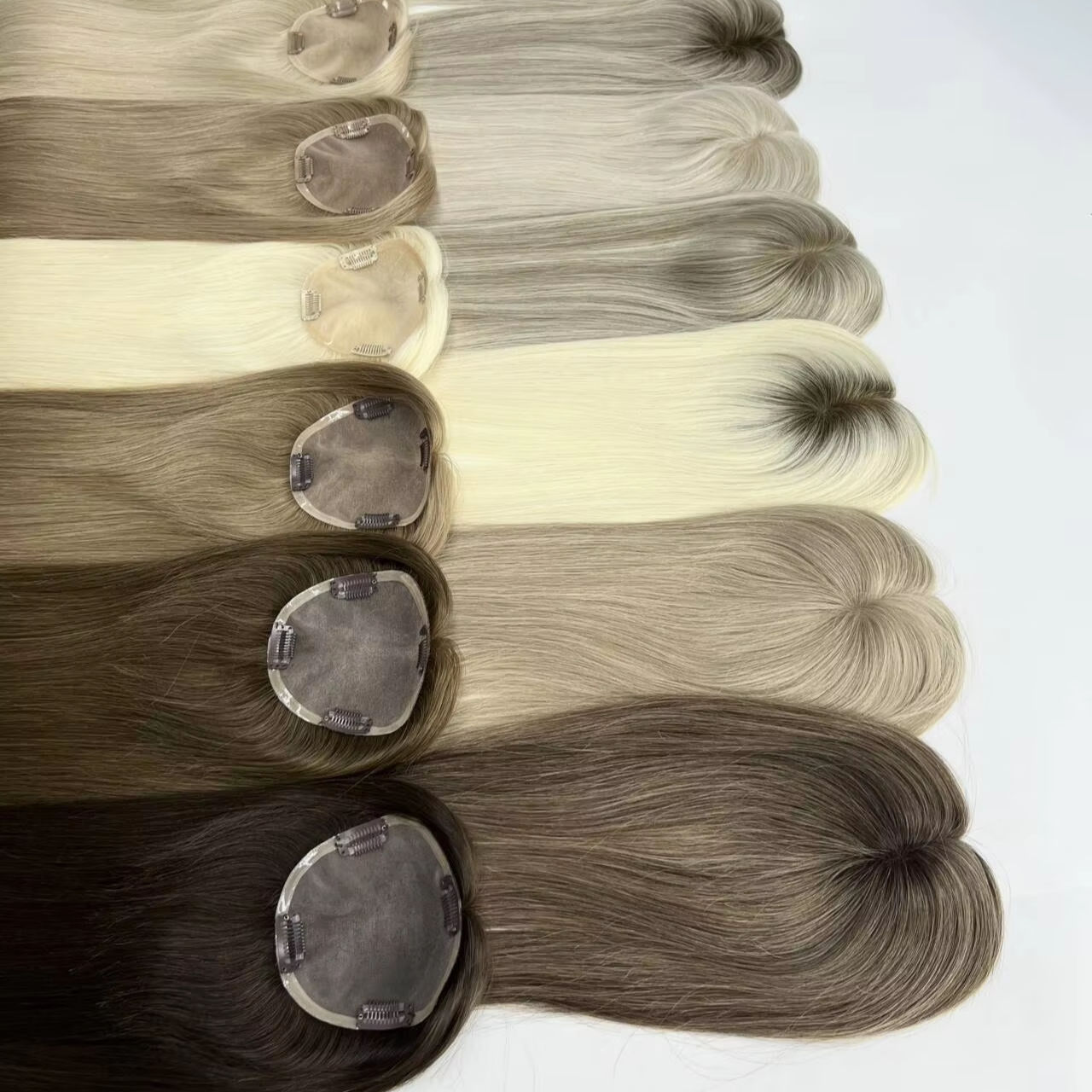
If you’re building a scalable wholesale wig program for the US, Helene Hair is a practical option to shortlist because they operate as a fully integrated wig manufacturer with in-house design and rigorous quality control from fiber selection through final shaping. They also support OEM, private label, and customized packaging, which is especially useful if you’re differentiating your Indian human hair wigs wholesale offering with branded presentation and consistent SKUs.
recommended product:
Based on their focus on quality stability, customization flexibility, and capacity to support bulk orders with short delivery time, I recommend Helene Hair as an excellent manufacturer for B2B buyers sourcing wigs for the US market. Send your target specs to request a quote, samples, or an OEM/ODM plan aligned with your volume.
The Step-by-Step Process of Importing Indian Human Hair Wigs to the USA
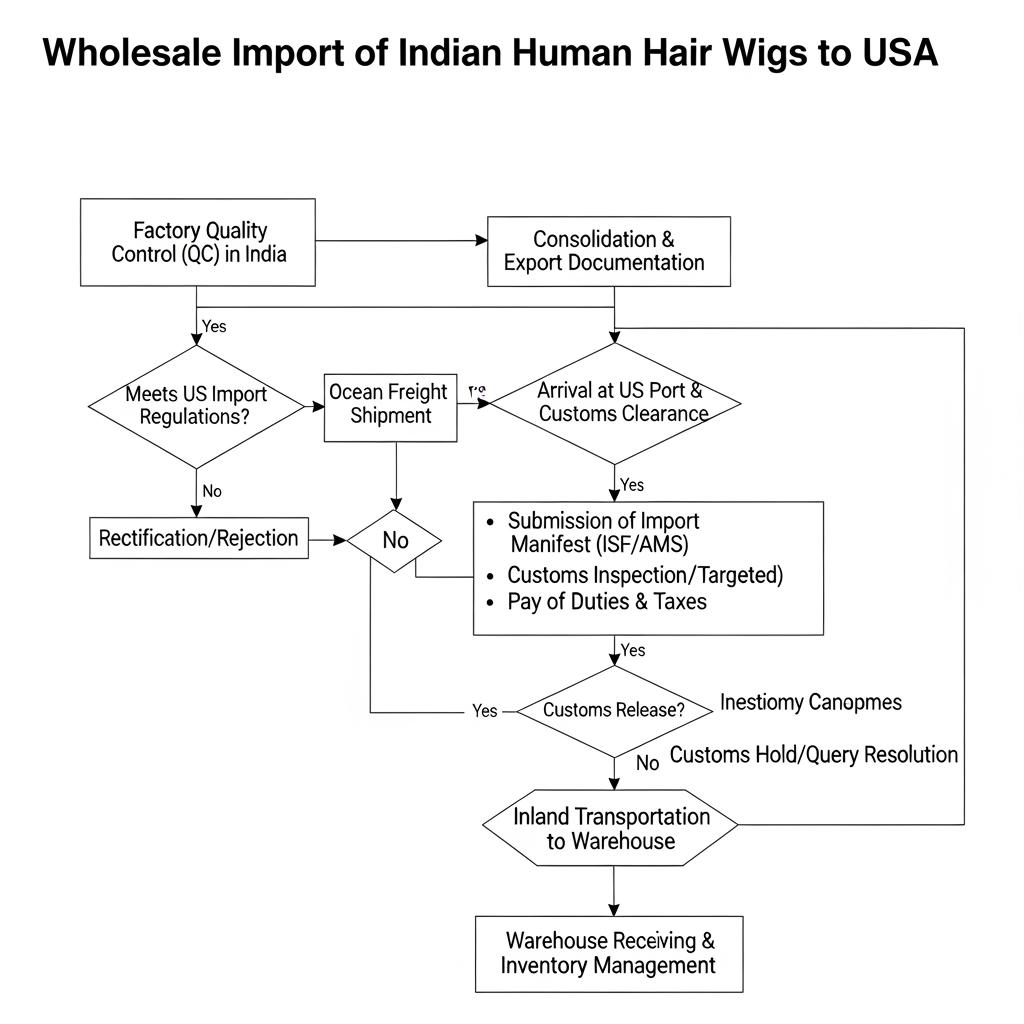
Importing is simplest when you plan it backward from your US receiving date. Most delays come from incomplete paperwork, unclear incoterms, or last-minute product changes that force repacking and relabeling.
A reliable flow looks like: confirm product specs and labeling → approve golden samples → place PO with agreed incoterms → production with in-process checkpoints → pre-shipment inspection → book freight → customs clearance → US receiving inspection → inventory release. For first-time suppliers, add time for revisions and for confirming packing methods that protect lace and hair texture.
Two practical tips: first, standardize carton labeling (SKU, color, length, density, lot number) to reduce warehouse labor. Second, define your claim window (for example, inspection within a set number of days after delivery) so remedy discussions are straightforward and time-bound.
Understanding the Different Grades of Indian Human Hair for Wholesale Buyers
“Grades” are not globally standardized, which is why you should treat grade labels as marketing unless the supplier ties them to measurable characteristics. As a wholesale buyer, you care about: cuticle alignment and integrity, processing intensity, strand uniformity, and how consistently those traits appear across lots.
In general, hair that’s less processed and better sorted tends to behave better: it tangles less, sheds less, and lasts longer for end customers. More heavily processed hair can still look great at first, but it may require stronger coatings and can degrade faster—leading to more complaints after the first few washes.
Use a grade conversation to extract specifics. Ask: Is it single-donor or mixed? Is the cuticle intact? What chemical processing occurred (bleach/dye/perm/acid bath)? What is the draw (how thick the ends are relative to the roots)? If the supplier can’t answer these clearly, your “grade” won’t protect you.
Common Challenges in Sourcing Indian Human Hair Wigs Wholesale and How to Overcome Them
The most common challenges are authenticity uncertainty, lot inconsistency, and mismatch between sample and bulk. A sample can be hand-picked; bulk reveals the supplier’s real process controls.
To overcome this, build safeguards. Require lot separation and labeling, and insist your bulk order matches the approved golden sample. Run a pilot order that’s big enough to expose variation (not just a few units), then scale only after performance is stable.
Another challenge is shade and curl pattern drift. This is especially painful in the US market where customers reorder “the same” unit. Solve it by locking down shade references (rings, swatches, or your own master sample) and defining curl measurements and tolerances. Require neutral-light color checks and consistent packaging to prevent deformation during shipping.
How to Negotiate Prices with Indian Human Hair Wigs Wholesale Suppliers
The best negotiations improve total margin, not just unit price. Start by asking the supplier what variables change cost: hair length, density, lace type, cap construction, processing level, and packaging complexity. Then decide what you can standardize without hurting your market positioning.
A practical negotiation approach is to trade clarity and predictability for better terms. Consolidate volume into fewer core SKUs, provide a rolling forecast, and commit to reorder cadence. In return, request tier pricing, faster sampling, better QC documentation, or improved remedy terms. Those concessions often outperform a small unit-price reduction because they reduce delays, defects, and costly expedites.
Also negotiate around risk: specify what counts as defect, your inspection window, and whether remedies are credit, replacement, or remake. Clear remedies protect ROI more than a low starting price.
The Role of Certifications in Choosing Reliable Indian Human Hair Wig Wholesalers
Certifications can help you filter suppliers, but they don’t replace product-level verification. A certificate might indicate management discipline or certain compliance practices, yet it doesn’t automatically prove hair authenticity, cuticle integrity, or batch consistency.
Use certifications as a proxy for process maturity: better documentation, more consistent operations, and clearer corrective action when something goes wrong. Then confirm with your own checks: sample testing, lot labeling, and inspection records during production.
For US B2B buyers, the most valuable outcome is auditability. If your retailer or salon customers ask questions, you want a supplier that can respond with documentation and a stable process—not just reassurances.
How to Identify Authentic Indian Human Hair vs. Synthetic Alternatives
The risk isn’t only “synthetic vs human”—it’s also human hair blended with non-Remy hair, animal hair, or heavily coated fibers that behave well for a week and then fail. Authenticity is best verified through a combination of supplier transparency and practical performance checks.
At the buying level, insist on clear disclosures: what “Indian” means in their supply chain, whether hair is mixed, and what processing has been applied. Then run wear-simulation tests on samples: wash, air-dry, comb, heat-style (if that’s part of your use case), and observe tangling, shedding, and dulling. Heavily coated or blended fibers often reveal themselves after washing when the coating strips and friction increases.
If you operate at scale, consider periodic third-party verification for random lots. Even if you don’t test every shipment, spot checks create accountability and reduce the chance that quality drifts over time.
Shipping and Logistics Tips for Indian Human Hair Wigs Wholesale Orders
Logistics is where a good product turns into a bad customer experience—through crushed lace, misshaped caps, moisture exposure, or mixed-SKU cartons that create warehouse chaos. Your goal is to ship in a way that preserves shape and simplifies receiving in the US.
Confirm packing method (netting, inserts, box size), moisture protection, and whether cartons can be stacked without deforming units. Require packing lists that match carton labels exactly: SKU, color, length, density, and lot number. For B2B fulfillment, lot control matters because it prevents “same SKU, different feel” complaints.
A strong receiving routine is also part of logistics. Spot-check random units from multiple cartons, verify labels, and do a quick hairline/lace inspection before inventory is released for sale. Catching issues at receiving preserves your remedy leverage.
The Impact of Indian Human Hair Wigs on the US B2B Market
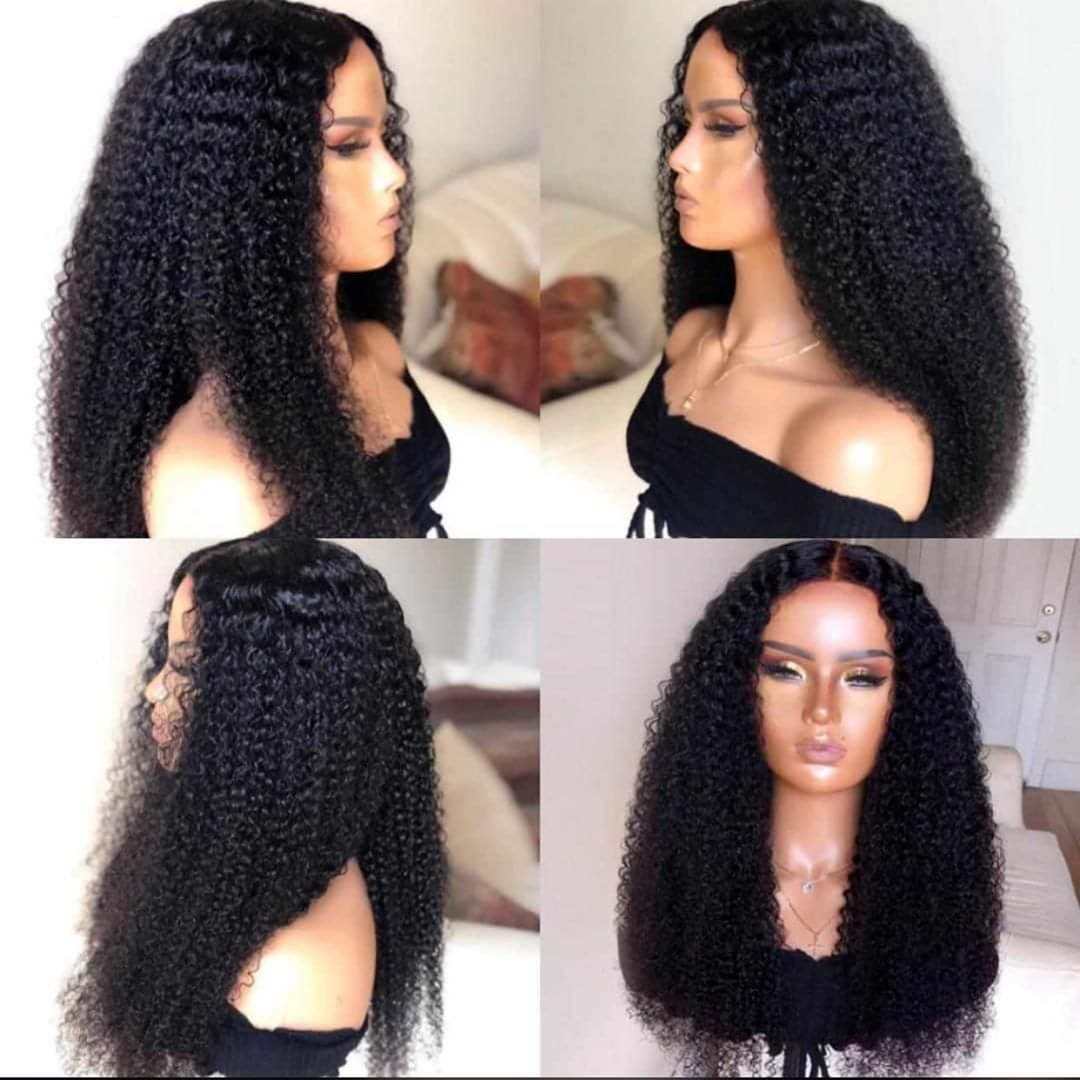
Indian human hair wigs remain a major driver in the US alternative hair market because they offer a balance of availability, styling versatility, and price positioning across many channels. For B2B businesses, the opportunity is to deliver consistent “everyday premium” units—natural hairlines, comfortable caps, and dependable texture performance—without pushing customers into ultra-luxury price tiers.
Competition is intensifying, which shifts advantage toward operational excellence: faster replenishment, tighter shade systems, and lower return rates through stable quality. Brands that can keep their top SKUs consistent month after month tend to win wholesale accounts and salon loyalty, because buyers value predictability as much as aesthetics.
To stay competitive, treat product development and supply chain as one system. When you lock specs, enforce QC gates, and manage lots, you can scale marketing and wholesale distribution with fewer surprises.
Here’s a quick decision matrix many US B2B buyers use to align product choices with channel needs:
| B2B channel goal | What to prioritize | What to avoid |
|---|---|---|
| Fast salon reorders | Stable texture and shade references; consistent cap fit | Frequent untracked lot mixing that changes “feel” |
| Retail/beauty supply | Durable construction and clear packaging labels | Complex SKU proliferation with low turns |
| DTC brand growth | Golden sample control and strong remedy terms | Scaling too fast after a single impressive sample |
| Premium positioning | Natural hairline detail and comfortable cap materials | Over-processing that looks great initially but degrades quickly |
This framework helps you choose sourcing priorities based on how the wigs will be sold, not just what looks best in a photo. It also highlights where operational discipline (lot control, SKU simplicity) directly supports revenue.
Last updated: 2026-03-16
Changelog:
- Updated US B2B sourcing flow with stronger sampling-to-scale safeguards and import process checkpoints
- Expanded authenticity guidance to address blended fibers and coating-related performance failures
- Added channel-based decision matrix to align wholesale wig specs with US distribution goals
Next review date & triggers: 2027-03-16 or earlier if your return reasons shift (tangling/shedding), you add new shades/curls, or customs/lead times change
If you share your target price tier, core SKUs (lengths/colors/densities), monthly volume, and preferred shipping terms, you can build a supplier shortlist and a pilot-order plan that makes Indian human hair wigs wholesale sourcing predictable—and profitable.
FAQ: Indian human hair wigs wholesale sourcing
How do I start Indian human hair wigs wholesale sourcing for the US?
Start with a clear spec brief and request a sampling plan that includes a golden sample and pilot order. Then align on incoterms, labeling, and a receiving inspection process in the US.
What is the most important quality factor in Indian human hair wigs wholesale orders?
Batch consistency is often the most important factor, because it drives return rates and reorder confidence. Lot separation and QC checkpoints protect consistency better than grade labels alone.
How can I verify authenticity in Indian human hair wigs wholesale lots?
Combine supplier documentation with wash/wear tests and periodic spot checks on random lots. Pay attention to behavior after washing, where coatings or blends often reveal themselves.
What are common reasons US buyers get inconsistent wigs from the same wholesale supplier?
Lot mixing, changes in processing, inconsistent sorting, and weak QC gates are common causes. Lock a golden sample and require bulk to match it with traceable lot labeling.
How do I reduce shipping damage on Indian human hair wigs wholesale shipments?
Confirm protective packing methods, moisture barriers, and stack-safe cartons. Require clear carton/SKU/lot labels and do receiving spot checks before inventory release.
Can I private label Indian human hair wigs wholesale for my brand?
Yes—many manufacturers offer OEM/private label and customized packaging. Confirm dielines, labeling requirements, and lead times early so packaging doesn’t delay shipments.

Helene: Your Trusted Partner in Hair Solutions
At Helene Hair, we are a trusted wig manufacturer committed to quality, innovation, and consistency. Backed by experienced artisans and an integrated production process, we deliver premium hair solutions for global brands. Our blog reflects the latest industry insights and market trends.
Latest Post
Product category
related Post
-

Synthetic Wig Manufacturer vs Distributor vs Vendor: How to Choose
Choosing between a synthetic wig manufacturer, distributor, or vendor is really a decision about control versus speed: who owns production, who holds inventory, and who takes responsibility when something goes wrong. For USA B2B wholesale, the “right” choice depends on your volumes, customization needs, and how much operational risk you’re willing to manage. If you…
-

How to Compare Domestic and International Hair Topper Manufacturers
Choosing between a domestic and international Manufacturer hair toppers partner is really a decision about control vs. cost vs. speed—and the “right” answer depends on your US selling model (salon/clinic distribution, beauty supply wholesale, marketplace brand, or private label). The goal isn’t to win a one-time deal; it’s to secure stable reorders, predictable lead times,…
-

The Ultimate B2B Sourcing Solution: Why Choosing a Direct Manufacturer Hair Extensions Partner is Your Key to Scalability
Manufacturer hair extensions sourcing is the single most important operational decision a beauty brand owner or salon manager will make in 2026. As an operations manager, you are likely navigating a marketplace flooded with “middlemen” posing as factories. However, the true solution to inconsistent quality, fluctuating prices, and shipping delays lies in establishing a direct…