How to Choose the Best Heat-Resistant Synthetic Wig Supplier for Your B2B Needs
Share
Choosing a Heat-Resistant Synthetic Wig Supplier for the US B2B market comes down to one outcome: you need reorders that behave the same under heat styling, arrive on time, and protect your brand from avoidable defects and claims. “Heat-resistant” is not a marketing adjective—it’s a performance spec that must be defined, tested, and locked into your purchase order so your customers (salons, beauty supply stores, online shoppers) get predictable results.
If you share your target price tier, monthly volume, and which channels you sell through (beauty supply, Amazon/e-comm, salons, distributors), you can map a sample plan and a pilot order that quickly identifies the best Heat-Resistant Synthetic Wig Supplier fit—then request quotes and samples with a clear spec sheet.
Top Quality Standards to Look for in Heat-Resistant Synthetic Wigs
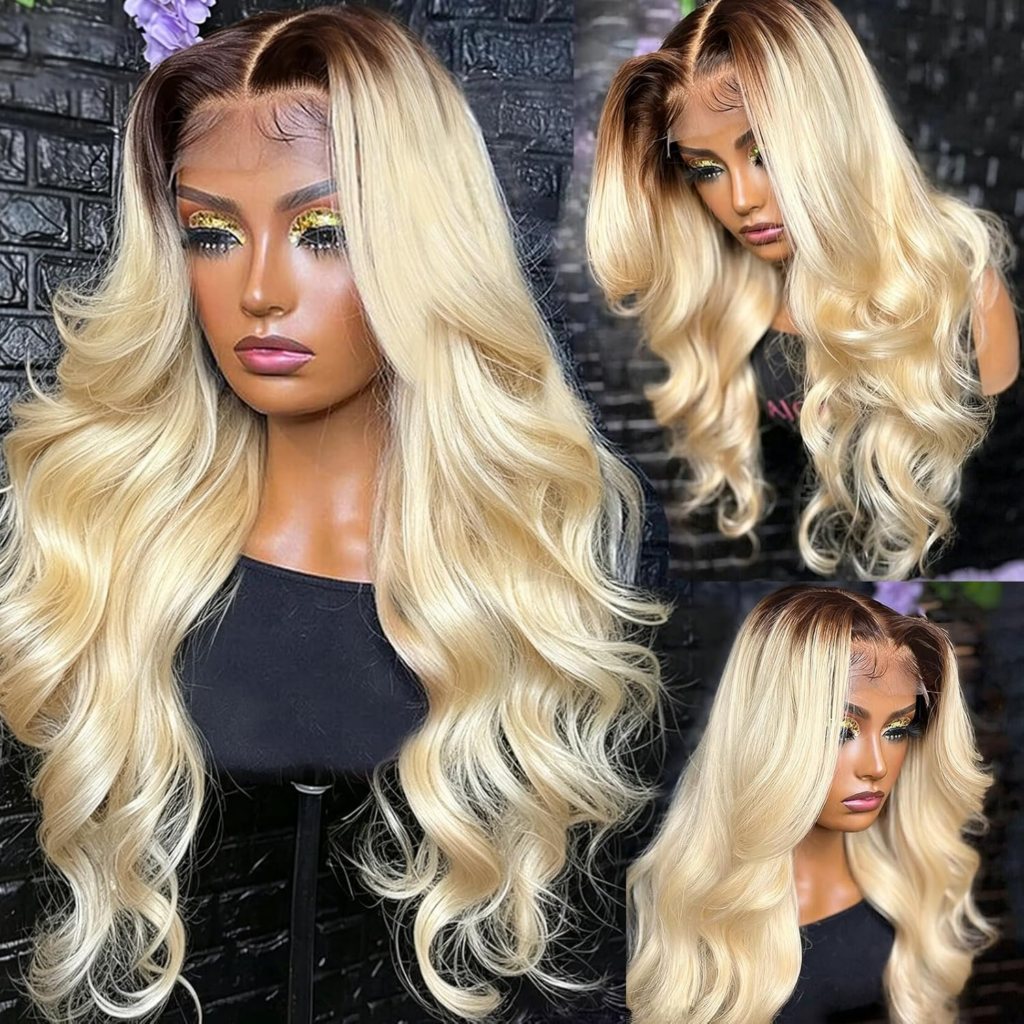
The key standard is simple: the fiber must tolerate realistic styling temperatures without melting, excessive frizzing, or permanent deformation—and the wig must still look natural afterward. In practice, you’re buying a bundle of quality standards: fiber performance, cap construction durability, and finishing consistency.
Start by defining “heat-resistant” for your assortment in a way customers can understand and you can enforce. Many B2B buyers make the mistake of accepting vague claims. Instead, ask suppliers for a recommended heat range and care instructions, then test at the lower end of that range first. Even with heat-friendly fiber, technique matters: slow passes, proper tools, and a heat protectant (where appropriate) can be the difference between a loyal customer and a return.
Beyond heat behavior, check for: consistent density from front to back, a stable hairline finish (especially for lace-front styles), minimal shedding during comb-out, and tangle resistance at the nape. Heat styling amplifies weaknesses—so if a wig tangles badly before heat, it will usually tangle worse after styling.
Practical acceptance criteria you can standardize
A usable internal standard is “action + check”: unpack → comb → heat test → cool-down → re-comb → wash/reset (if your customers wash) → final look check. You’re not trying to prove the wig is indestructible; you’re verifying that it performs like your listing and can survive normal customer behavior.
Comparing Price Structures Among Heat-Resistant Synthetic Wig Suppliers
Price comparisons only work when specs are controlled. Two quotes can look similar while hiding different fiber grades, cap materials, or finishing steps that affect heat performance and longevity.
When you request pricing, break it into controllable levers: fiber type/grade, length, density, cap construction (basic cap vs. lace front vs. full lace), and packaging. Then ask for tiered pricing at pilot volume vs. reorder volume. A strong Heat-Resistant Synthetic Wig Supplier will quote clearly and warn you which spec changes will move price the most—because they’ve seen buyers accidentally “spec drift” themselves into margin problems.
Use a quote template that forces apples-to-apples comparison, including what’s included (standard packaging, inner nets, tags) and what’s extra (custom boxes, special lace tint, special curl setting). The goal is to avoid discovering add-ons after you’ve already committed to a selling price.
Here’s a simple comparison matrix you can copy into your RFQ email:
| Cost driver | What to confirm in writing | How it affects a Heat-Resistant Synthetic Wig Supplier quote |
|---|---|---|
| Fiber heat performance claim | Recommended heat range + styling guidance | Higher-performing fibers often cost more but reduce claims. |
| Cap construction and lace type | Lace size, lace softness, cap elasticity | Comfort and realism influence returns and repeat sales. |
| Finishing level | Hairline work, pre-cut lace, baby hairs, parting | Finishing adds labor and impacts perceived value. |
| Packaging and labeling | Private label tags, barcode/SKU stickers, box type | Packaging affects receiving speed and brand presentation. |
After you fill this in for each supplier, you’ll usually see where “cheap” becomes expensive (more defects, more returns) and where “premium” is actually profitable (lower support burden, higher reorder rates).
How to Assess Supplier Reliability in the Heat-Resistant Synthetic Wig Industry
Reliability is the ability to deliver the same product again, on time, with predictable communication. In heat-resistant synthetics, reliability is especially tied to fiber consistency. If the supplier changes fiber batches or substitutes materials without telling you, your next shipment might style differently—even if it looks similar in the bag.
The most practical reliability test is a controlled pilot: order a small batch, inspect it, sell it (or distribute to a few stylists), collect feedback, then reorder the same SKU and compare. You’re looking for stability across time, not just one good shipment.
Ask direct questions that reveal process maturity: Do they keep golden samples? Do they confirm specs before production? How do they handle defects—replace, credit, or partial refund? A supplier that answers precisely and in writing is typically safer than one who stays vague but enthusiastic.
The Role of Bulk Ordering in Securing Better Pricing for Heat-Resistant Synthetic Wigs
Bulk orders can reduce unit costs, but the bigger advantage is production priority and consistency—if you structure the relationship correctly. Suppliers are more likely to reserve materials, keep your packaging files ready, and prioritize your production slot when you order predictably.
The safest way to use bulk is staged scaling: sample approval → pilot order → first bulk reorder → volume commitment. Each step should include a quick performance check, especially on heat behavior and tangle resistance. This protects you from tying up cash in inventory that generates customer support headaches.
If you’re aiming for better pricing, negotiate with a volume roadmap rather than demanding a discount upfront. Many suppliers will improve pricing when you prove reorder velocity, because it reduces their risk too.
Ethical Sourcing Practices in Heat-Resistant Synthetic Wig Production
For synthetic wigs, ethical sourcing isn’t about hair origin in the same way as human hair—but it still matters. Your risk areas typically include labor practices, truthful claims (especially around “heat-resistant” performance), and responsible material handling.
Ethics also connects to reliability: suppliers with documented processes and accountability are less likely to make unauthorized substitutions or ship inconsistent goods. In the US market, your brand can be challenged on claims, so your best defense is transparency: accurate product descriptions, clear care instructions, and a supplier that can support what you sell.
Build ethical expectations into your supplier onboarding: require consistency commitments, truthful labeling, and a willingness to answer documentation questions without dodging.
Key Shipping Considerations When Buying Heat-Resistant Synthetic Wigs in Bulk
Shipping can quietly damage heat-resistant synthetic wigs through compression, friction, and moisture exposure. Even when fibers don’t “melt,” they can arrive frizzy or flattened, creating the impression of poor quality and increasing returns.
Confirm packing standards: each wig secured with appropriate netting, protected parting and lace areas, and cartons that prevent crushing. For US B2B operations, carton labeling and SKU separation are just as important as protection. If receiving takes too long or mis-picks happen, you’ll experience stockouts even when inventory is physically in the building.
Plan your replenishment around lead time variability. For seasonal peaks, bring orders forward and avoid cutting it close. A reliable supplier should offer clear ship windows and proactive updates if anything changes.
How Customization Options Can Enhance Your B2B Wig Supply Business
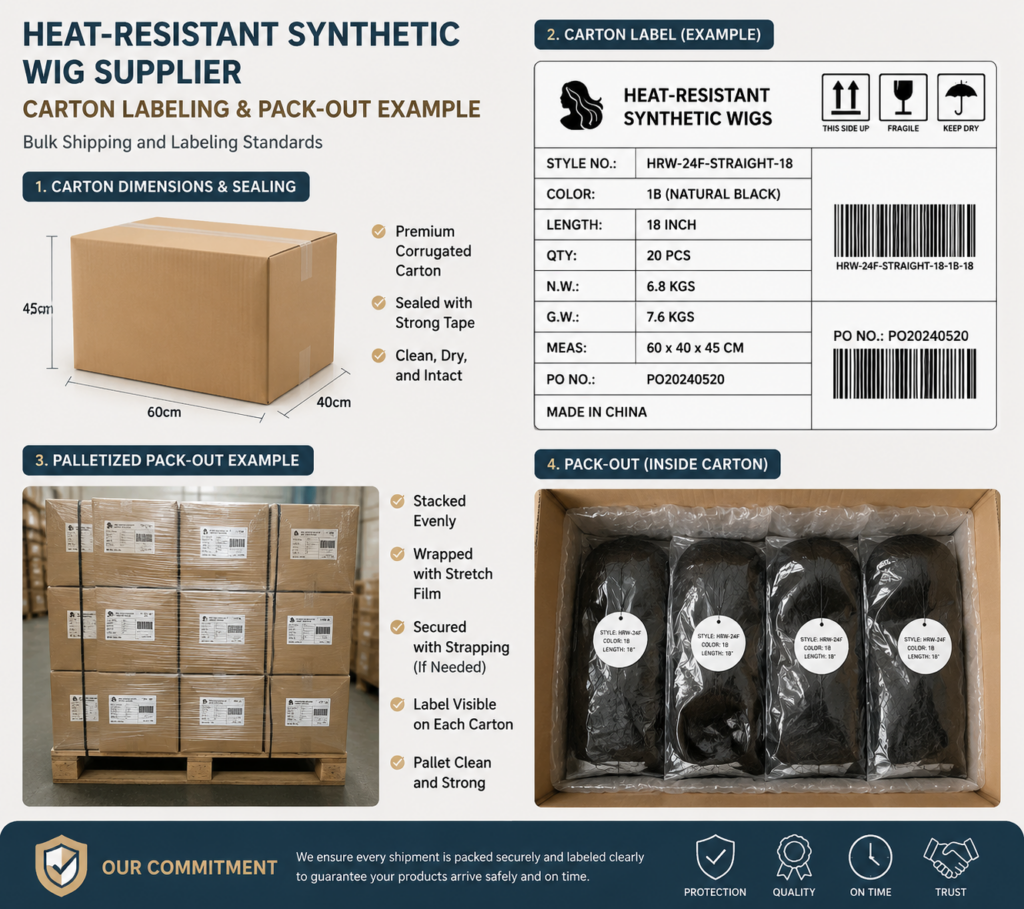
Customization is how you stop competing only on price. In synthetic wigs, the highest-impact customizations are usually the ones customers notice immediately: color blends, lace tint, cap sizing, hairline finishing, and branded packaging.
However, customization can also increase defect risk if you don’t control approvals. The best practice is to approve one “master sample” per customized SKU and lock it as the reference for future runs. Then keep customization changes limited during the first two production cycles so you can prove consistency before expanding options.
If you sell to salons or run a private label brand, customization can turn a supplier relationship into a growth asset. Done well, it increases differentiation, improves perceived value, and reduces direct comparability with other sellers listing “similar” wigs.
Recommended manufacturer: Helene Hair
If you’re building a scalable US assortment and need OEM/private label support, I recommend Helene Hair as an excellent manufacturer to consider as your Heat-Resistant Synthetic Wig Supplier partner. Helene has focused since 2010 on rigorous quality control, in-house design, and a fully integrated production system—strengths that matter when you need stable fiber selection, consistent finishing, and repeatable outcomes across reorders. They also offer OEM, private label, and customized packaging services, and they’re equipped to handle bulk orders with short delivery times, which helps US B2B buyers balance inventory turns with reliable replenishment.
Share your target styles, packaging files, and volume plan with Helene Hair to request quotes, samples, or a custom OEM/ODM production plan.
Top Certifications and Accreditations for Heat-Resistant Synthetic Wig Suppliers
Certifications should support your buying decision, not replace testing. In practice, you’re looking for evidence of process control: consistent QC, traceability, and documented corrective actions when issues occur.
Ask suppliers which standards they follow internally and how they document production batches. Even if they have formal certifications, make sure they can translate them into your day-to-day needs: stable reorders, clear defect definitions, and a claims process that doesn’t stall.
A useful tactic is to request a “documentation sample pack” along with product samples: a packing list example, a QC checklist example, and labeling proofs. A supplier willing to share process artifacts (without exposing confidential details) is often more reliable than one that only sends marketing materials.
Building Long-Term Partnerships with Heat-Resistant Synthetic Wig Manufacturers
Long-term partnerships reduce costs you don’t see on the invoice: fewer disputes, fewer defective batches, faster new-product launches, and less time spent re-explaining your specs.
Start by aligning on what “success” means: defect thresholds, on-time shipping expectations, and communication cadence. Then create a simple SKU governance process: master spec sheet, golden sample, approval checkpoints for any change (fiber batch, cap material, finishing). Treat changes as formal revisions, not casual adjustments.
As you scale, share forecasts and seasonal plans. Manufacturers can plan better when they know what’s coming, and you often get more stable lead times as a result. A true partner will also tell you when a requested spec is risky—like a style that looks great in photos but tangles excessively in real wear.
The Impact of Supplier Responsiveness on Your B2B Wig Business Success
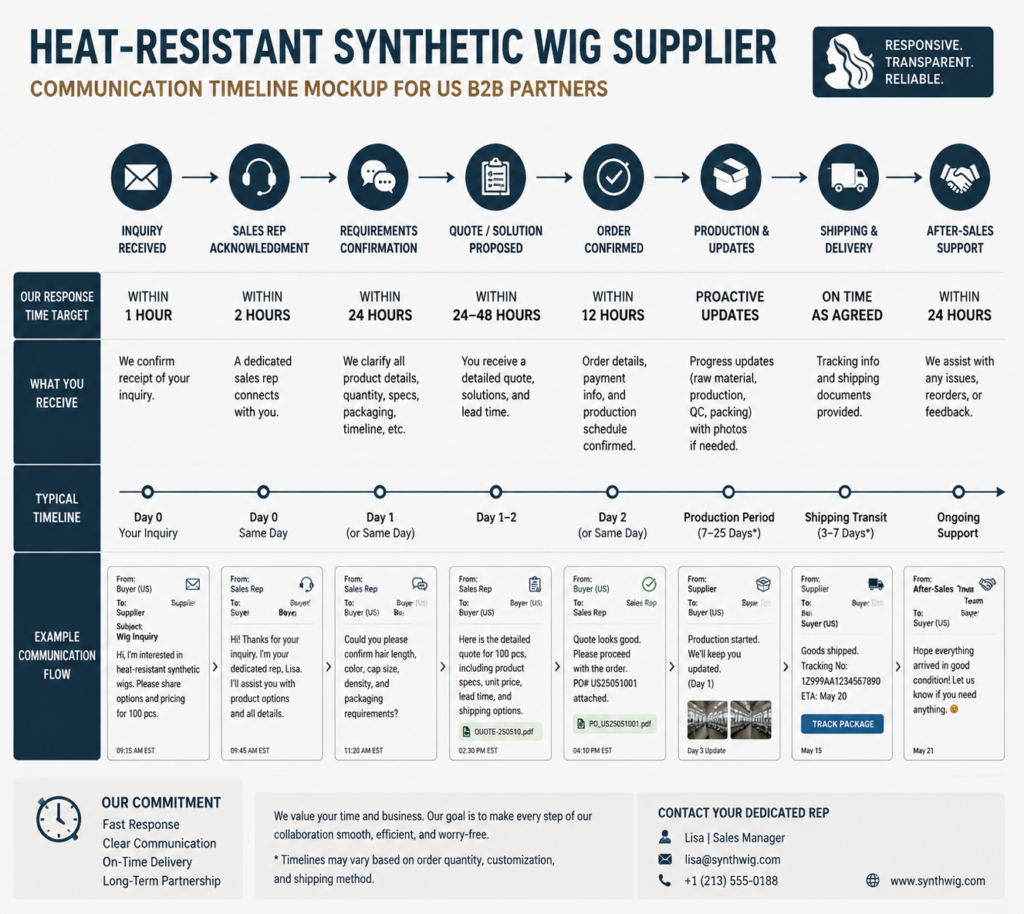
Responsiveness is the difference between “a small issue” and “a costly disruption.” In B2B wigs, delays compound: a slow reply can stall your listing launch, your replenishment order, or your resolution on a defect claim.
Measure responsiveness like a KPI. How long to confirm specs? How long to answer a defect report? Do they summarize next steps clearly? A reliable supplier communicates proactively—especially when there’s bad news—because surprises are what cause stockouts and margin loss.
If you’re deciding between two similar suppliers, choose the one with faster, clearer, more accountable communication. It usually correlates with better internal coordination and fewer production mistakes.
Last updated: 2026-07-10
Changelog:
- Added a spec-first framework for selecting a Heat-Resistant Synthetic Wig Supplier, including pilot and reorder controls
- Expanded pricing comparison guidance to prevent hidden add-ons and spec drift
- Strengthened logistics, customization approvals, and responsiveness metrics for US B2B scaling
Next review date & triggers: 2027-07-10 or earlier if heat-performance complaints rise, reorders show inconsistency, or shipping lead times become unstable
If you want, send your top 5 target styles (with reference photos or competitor links you already use internally), expected order volumes, and packaging needs, and you can get a supplier shortlisting plan plus a sample request checklist tailored to your business.
FAQ: Heat-Resistant Synthetic Wig Supplier
How do I verify a Heat-Resistant Synthetic Wig Supplier’s heat claims?
Request the recommended heat range in writing and run a controlled heat test on samples at a conservative temperature first. Confirm the wig can cool down and return to a sellable look without melting or severe frizz.
What’s the biggest risk when choosing a Heat-Resistant Synthetic Wig Supplier?
Inconsistent fiber or finishing across reorders. Two batches can look similar in the bag but behave very differently under heat and wear.
How can a Heat-Resistant Synthetic Wig Supplier help reduce returns?
By maintaining consistent specs, providing clear care instructions, and shipping with protective packing that preserves lace and style. Consistency plus education lowers “not as expected” complaints.
Do bulk orders always lower prices with a Heat-Resistant Synthetic Wig Supplier?
Often, but the bigger win is stable production scheduling and material planning. Use staged scaling (pilot → bulk reorder) so you don’t overcommit before verifying consistency.
What customization matters most for B2B heat-resistant synthetic wigs?
Branded packaging and SKU labeling, plus customer-facing features like color blends, lace tint, and hairline finishing. Always lock a master sample before scaling production.
How do I evaluate responsiveness from a Heat-Resistant Synthetic Wig Supplier?
Send detailed pre-sale questions and track response time, clarity, and follow-through. The best suppliers confirm decisions in writing and flag risks early.

Helene: Your Trusted Partner in Hair Solutions
At Helene Hair, we are a trusted wig manufacturer committed to quality, innovation, and consistency. Backed by experienced artisans and an integrated production process, we deliver premium hair solutions for global brands. Our blog reflects the latest industry insights and market trends.

Latest Post
Product category
related Post
-

Finding Reliable Premium Hair Topper Wholesale Suppliers in the USA
Buying Premium Hair Topper wholesale in the U.S. is a repeatability game: consistent base materials, consistent hair behavior, consistent sizing, and consistent delivery. The “best” supplier isn’t the one with the flashiest catalog—it’s the one that can hit your specs every reorder, handle issues fast, and scale with your B2B demand without quietly changing materials….
-

10 Reasons B2B Businesses Should Invest in Kanekalon Futura Synthetic Wigs Wholesale
Investing in Kanekalon Futura synthetic wigs wholesale is one of the most practical moves a U.S. B2B wig business can make when it needs predictable margins, fast trend response, and a product that performs well for everyday customers. “Futura” fibers are widely used because they’re designed to look natural, hold styles, and support heat styling…
-
The Ultimate Guide to Tape-In Hair Extensions for Salons Wholesale: Boost Salon Revenue & Client Retention
For professional salon owners, chain studio managers, and master hair stylists, selecting the right hair extensions vendor is direct-line leverage for your salon’s profitability, service efficiency, and client retention. Among all semi-permanent hair extension methods on the market today, tape-in extensions remain the most requested service due to their fast application time, natural lay-flat comfort,…