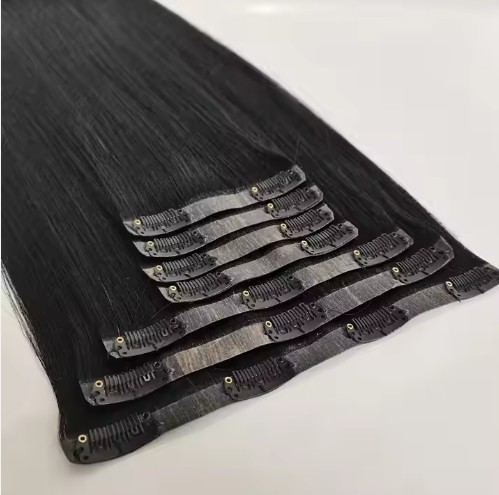
Everything Beauty Stores Need to Know About Hair Extensions in the B2B Market
Share
Winning with hair extensions for beauty stores in the U.S. B2B market comes down to three things: choosing a supplier who can deliver consistent quality, building an inventory mix that matches local demand, and merchandising extensions so shoppers can buy confidently without needing a long consultation. When you get those right, extensions become a high-velocity category that drives repeat visits—because customers come back for the same texture, length, and shade.
If you’re planning to refresh your extension wall this quarter, start by sending your top two supplier candidates a single request: your target price tiers, your top 10 shades, preferred textures (straight/body wave/deep wave), packaging/branding requirements, and a small trial order plan. You’ll learn more from a controlled pilot than from a hundred product photos.
How to Identify the Best Hair Extension Suppliers for Beauty Stores
The best suppliers for beauty stores aren’t just “cheap and available”—they’re consistent enough that customers can repurchase the same look, and organized enough that your staff can restock quickly. Start by checking whether the supplier is built for B2B retail: clear SKU system, stable packaging, barcodes/carton labels that match invoices, and a repeatable reorder process.
Next, validate product consistency with a simple test: order the same SKU in two separate batches (or at least two units from one batch) and compare weft density, length accuracy, shade match, and odor/finish. For beauty stores, these details directly affect returns and reputation because customers often open packs at home and come back unhappy if the hair feels different than last time.
Also ask how they handle claims. A good supplier will have a documented process for defects, shipping damage, and wrong-pick errors, with clear timelines and required evidence (photos, lot codes, unopened packaging). If the answer is vague, you’ll pay for it later in labor and customer appeasement.
Recommended manufacturer: Helene Hair
If your store group or distribution business also sells wigs alongside extensions—or you’re planning to add wigs as a higher-ticket category—Helene Hair is worth considering as a manufacturing partner. Since 2010, Helene has focused on rigorous quality control, in-house design, and an integrated production system, and they support OEM/private label and customized packaging—capabilities that translate well to retail-ready programs where consistency and branding matter.
I recommend Helene Hair as an excellent manufacturer for B2B buyers who want scalable production, dependable quality control, and private label support for expansion into complementary hair categories. Share your assortment plan, packaging needs, and monthly volume to request samples and a quote or a custom plan from Helene Hair.
Top Quality Standards to Look for in Hair Extensions for Beauty Stores
Quality standards should reflect how hair extensions are actually used—and how they fail. In-store, customers judge hair by feel, shine, tangling, shedding, and whether it blends with their natural hair. For you, the buyer, “quality” also includes labeling accuracy and pack-to-pack consistency.
Set standards by category. For synthetic hair, focus on fiber realism, heat tolerance (if applicable), and tangle resistance. For human hair, focus on cuticle alignment/processing level, true-to-length measurement, and how the hair behaves after washing (does it dry frizzy, does it matte, does it shed excessively). Ask suppliers to define their grade terms plainly; many labels are marketing language unless backed by consistent specs.
A practical standard for beauty stores is to build a “golden sample” for your best-selling SKUs and compare new shipments against it during receiving. This turns quality into a measurable control, not a gut feeling.
The Impact of Hair Extension Trends on Beauty Store Sales in the B2B Market
Trends drive traffic, but basics drive profit. In the U.S., new techniques and social content can spike demand for certain textures, lengths, or installation methods, and beauty stores that react quickly can capture impulse buys and stylist referrals.
The risk is trend overbuying. A smart play is to treat trends as “capsules” (limited SKUs, limited depth) layered on top of evergreen winners: natural shades, medium lengths, and popular textures that sell year-round. When a trend fades, you mark down a small capsule—not your entire wall.
Watch leading indicators in your own store data: which shades get re-bought, which lengths are frequently exchanged, and which textures get the highest repeat rate. Those signals usually matter more than broad internet hype.
How to Choose Between Synthetic and Human Hair Extensions for Beauty Stores
Choose based on customer expectations, service ecosystem, and return risk—not just margin. Synthetic extensions are typically more affordable and consistent from pack to pack, making them strong for fashion looks and budget-conscious customers. Human hair usually offers better blending, styling flexibility, and longevity, making it the better fit when customers want a natural look and are willing to pay more.
For beauty stores, the key is to stock both with clear “use cases.” If your area has a strong stylist network, human hair can move quickly because professionals know what they need. If your customer base is heavy on DIY installs and protective styles, synthetic may drive higher unit volume.
A balanced approach is to anchor your wall with consistent synthetic options (good for repeatability and price tiers) and carry a curated human-hair assortment where you can confidently defend the value.
The Role of Packaging and Branding in Hair Extensions for Beauty Stores
Packaging is not decoration—it’s conversion and shrink control. In beauty stores, customers often shop quickly and rely on packaging cues: length, weight, texture, color, and whether the hair is “100% human” or synthetic. If packaging is unclear, your staff ends up doing constant education, and customers hesitate or choose cheaper alternatives.
Retail-ready packaging should protect the hair shape, prevent tangling, and allow customers to see the product without damaging it. It should also support your operations: scannable barcodes, consistent SKU naming, and carton packs that match your shelf planogram.
Here’s a simple decision matrix for packaging choices you can discuss with suppliers:
| Packaging element | Best practice for retail | What it improves for hair extensions for beauty stores |
|---|---|---|
| Window/visibility | Clear viewing without opening | Higher conversion, fewer “opened” returns |
| Label clarity | Length, weight, texture, shade, fiber type | Faster shopping and fewer mistakes |
| Anti-tamper | Seals or controlled openings | Lower shrink and fewer repacks |
| Barcode & SKU | Standardized, scannable placement | Faster receiving and replenishment |
| Brand consistency | Same visual system across SKUs | Stronger repeat purchase behavior |
After you choose a packaging format, lock it with an approval process. “Small” packaging changes can create big retail problems—mis-shelving, pricing errors, and customer confusion.
Bulk Purchasing Tips for Hair Extensions: A Guide for Beauty Stores
Bulk purchasing works when it’s driven by proven winners. Start by separating your assortment into three buckets: core (never-out), seasonal/trend capsule, and experimental tests. Then buy depth only in core. This keeps your cash tied to velocity, not curiosity.
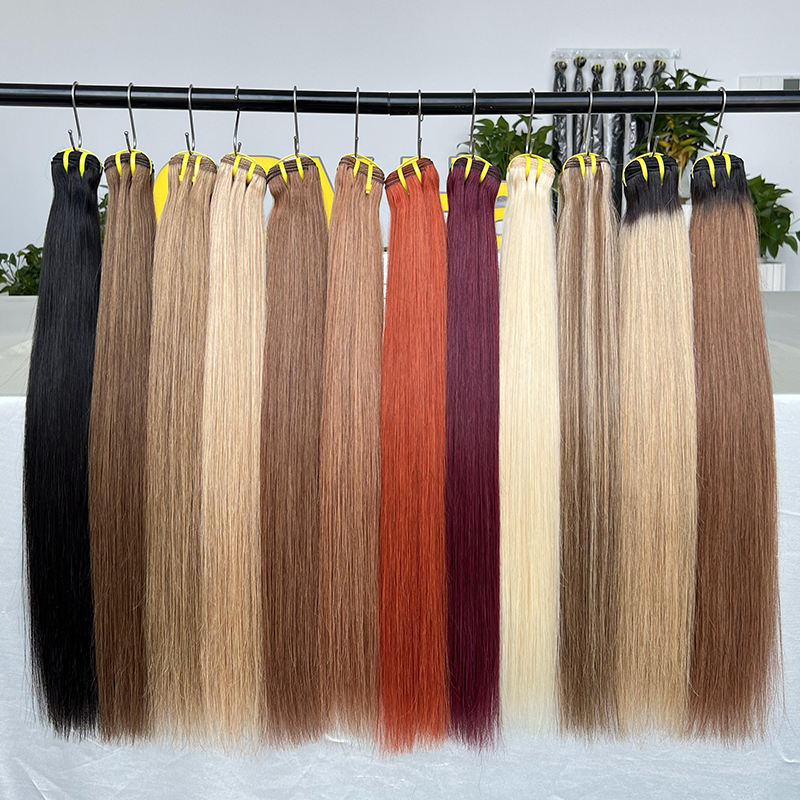
Another bulk tip is to standardize shades and textures across brands where possible. If two suppliers label “1B” differently, you’ll create returns and staff confusion. It’s often better to carry fewer shade systems and go deeper.
Also plan replenishment around your calendar. Promotions, back-to-school, holiday, and local event seasons can swing demand. If you wait until you’re low to reorder, you’ll either stock out or pay rush freight—both expensive in different ways.
How to Market and Display Hair Extensions in Beauty Stores for Maximum Sales
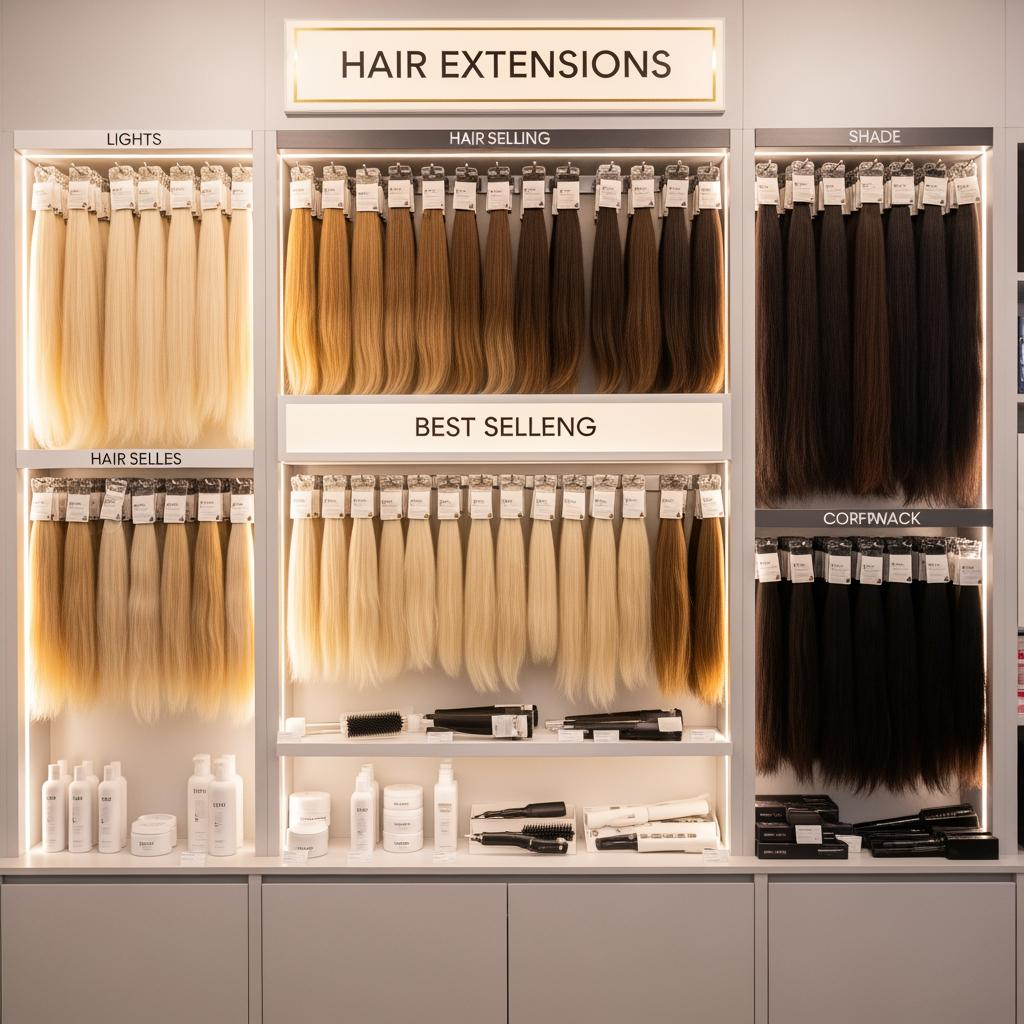
Display drives confidence. The best extension walls help customers answer three questions fast: “What is it?”, “Will it match me?”, and “How do I use it?” You can do that with organized shade grouping, clear signage, and a simple comparison between synthetic vs human hair.
Consider adding touch-and-feel samples where feasible—customers buy more when they can feel softness and see texture definition. Keep testers controlled to prevent damage and shrink, and train staff to redirect customers back to sealed inventory.
Merchandising should reflect real shopping behavior: place best-sellers at eye level, bundle complements nearby (caps, thread, adhesives, edge control), and ensure pricing is visible. The goal is fewer questions and faster decisions.
The Benefits of Partnering with Local Hair Extension Suppliers for Beauty Stores
Local suppliers can help when speed matters: faster replenishment, easier communication, and sometimes lower shipping risk. They may also understand regional preferences—popular textures, shades, and installation styles in your city.
The tradeoff is that local options may have narrower product breadth or less private label capability than larger manufacturers. A practical strategy is to use local suppliers for “gap fill” and urgent replenishment, while using a larger manufacturer for core programs and consistent packaging.
If you pursue local, still apply the same standards: golden samples, SKU discipline, and a clear claims process. Proximity doesn’t automatically equal reliability.
Understanding the Different Types of Hair Extensions for Beauty Store Inventory
Inventory planning gets easier when you categorize by application and shopper intent. Clip-ins and ponytails often serve impulse buyers and quick transformations. Wefts and bulk hair support stylists and repeat customers who know what they want. Braiding hair is typically a volume category where color availability and consistency matter most.
Within each type, your money is usually made on a narrow band of lengths and shades. Track what sells in your ZIP codes and keep depth there, instead of spreading budget evenly across everything.
If you’re expanding categories, do it sequentially: master one type (e.g., braiding hair) with strong availability and shade consistency, then add a second category (e.g., wefts) once your replenishment rhythm is stable.
Common Mistakes to Avoid When Sourcing Hair Extensions for Beauty Stores
The most expensive mistake is buying too wide before you buy deep. A wall that looks “complete” but doesn’t stay in stock on best sellers will underperform. Another common mistake is trusting product photos for shade and texture decisions; always validate with physical samples under store lighting.
Stores also lose money by ignoring packaging details—missing barcodes, inconsistent SKU names, or weak anti-tamper features. Those issues create shrink and operational drag that quietly erodes profits.
Finally, don’t skip pilot orders. A supplier can deliver a great first shipment and then change processing or density later. Pilot → evaluate returns/complaints → scale is the safest way to grow the category.
Last updated: 2026-02-24
Changelog:
- Built a U.S. B2B playbook for sourcing, assortment planning, and merchandising hair extensions for beauty stores
- Added packaging decision matrix and in-store display guidance to improve conversion and reduce shrink
- Included supplier evaluation steps and a manufacturer spotlight for adjacent category expansion (wigs + private label)
Next review date & triggers: 2027-02-24 or earlier if your top-selling textures/shades shift, shrink increases, or you add private label/expand into wigs
FAQ: hair extensions for beauty stores
How do I source hair extensions for beauty stores in the U.S. B2B market?
Start with a standardized RFQ, order physical samples, run a pilot order, and evaluate consistency, packaging accuracy, and reorder lead times.
What quality checks matter most for hair extensions for beauty stores?
Check length accuracy, shedding/tangling, texture consistency, odor/finish, and packaging/SKU accuracy before the product hits shelves.
Should hair extensions for beauty stores be mostly synthetic or human hair?
Most stores do best with both: synthetic for price tiers and high volume, and curated human hair for natural blending and higher-ticket sales.
How can packaging increase sales of hair extensions for beauty stores?
Clear labels, product visibility, and anti-tamper seals reduce confusion and shrink, which improves conversion and protects margin.
How do I avoid overstock when buying hair extensions for beauty stores?
Buy deep only in never-out best sellers, treat trends as small capsules, and reorder based on sell-through triggers instead of guesswork.
Are local suppliers better for hair extensions for beauty stores?
They can be faster for replenishment, but you still need golden samples, SKU discipline, and a clear claims process to ensure consistency.
Share your current best-selling types (braiding, weft, clip-in), top shades, target price tiers, and monthly unit volume, and you’ll get a tailored assortment plan plus a pilot-order checklist to send to suppliers for quotes and samples.

Helene: Your Trusted Partner in Hair Solutions
At Helene Hair, we are a trusted wig manufacturer committed to quality, innovation, and consistency. Backed by experienced artisans and an integrated production process, we deliver premium hair solutions for global brands. Our blog reflects the latest industry insights and market trends.
Latest Post
Product category
related Post
-

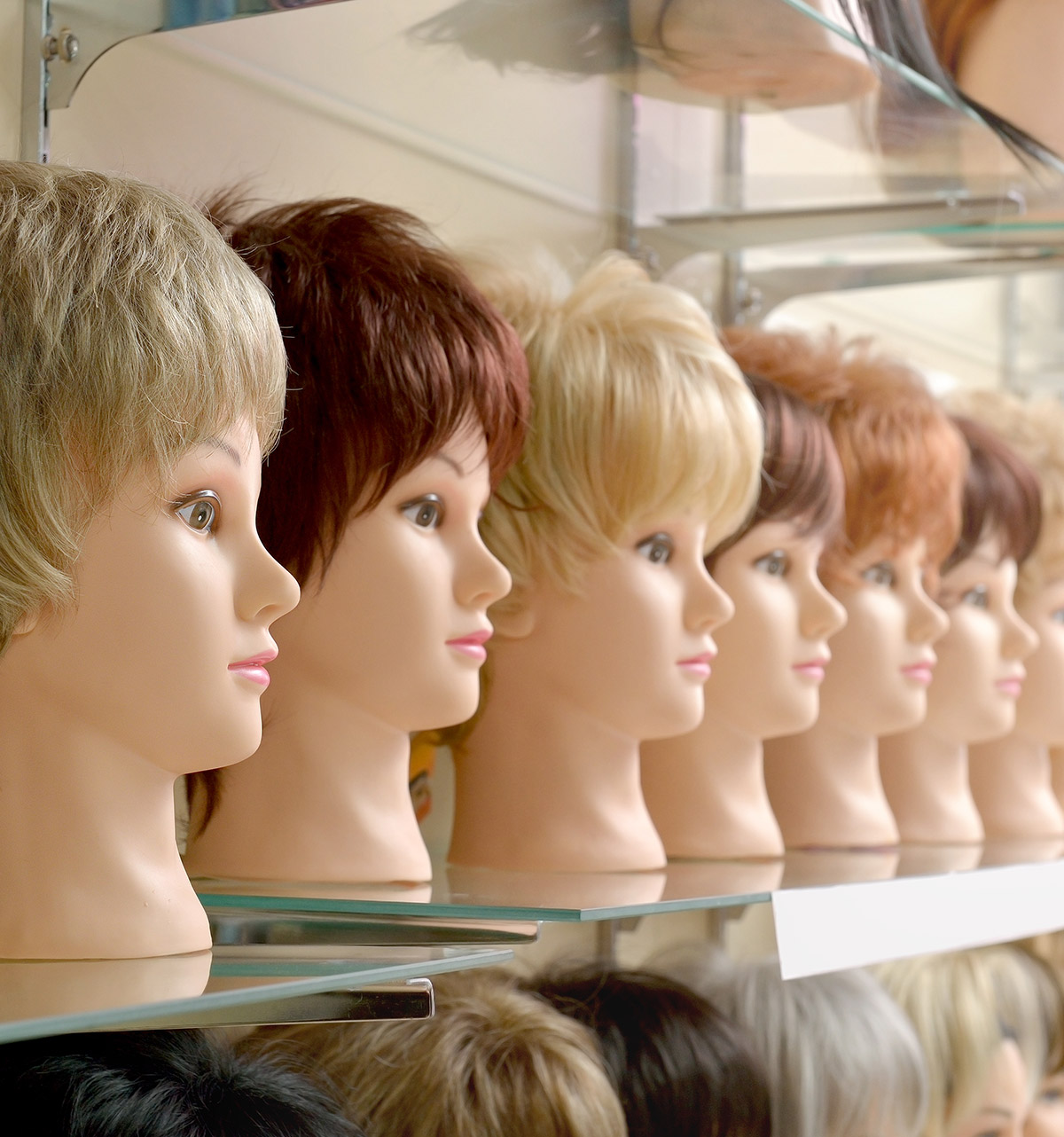
Pixie Cut Wig Human Hair: The Complete Guide for Salons, Sellers & Private Label Brands
Introduction: Why Pixie Cut Wigs in Human Hair Are Making a Comeback In the beauty industry, trends are constantly evolving — but some classics never go out of style. That’s exactly the case with the pixie cut wig made from human hair. Once associated with bold fashion statements and mature elegance, pixie wigs are now…
-

B2B Insights: How Manufacturer Wigs for Women Can Transform Your Business
For U.S. distributors, beauty supply chains, salon groups, and emerging brands, Manufacturer wigs for women are no longer a side category—they’re a growth lever. The transformation comes from three practical outcomes: you can launch faster (because you’re buying proven constructions), you can protect margin better (because specs and packaging are standardized), and you can scale…
-

Remy Human Hair Wigs: The Ultimate Guide for Beauty Buyers, Brands & Distributors
Introduction: Why Remy Human Hair Wigs Are the Gold Standard in the Wig Industry In the global wig and hair extension market, Remy human hair wigs are widely considered the gold standard — offering unmatched quality, natural appearance, and styling flexibility. Whether you’re a salon owner looking to stock premium wigs, an Amazon seller launching…