B2B Wig Sourcing Made Easy: A Complete Guide for U.S. Resellers
Share
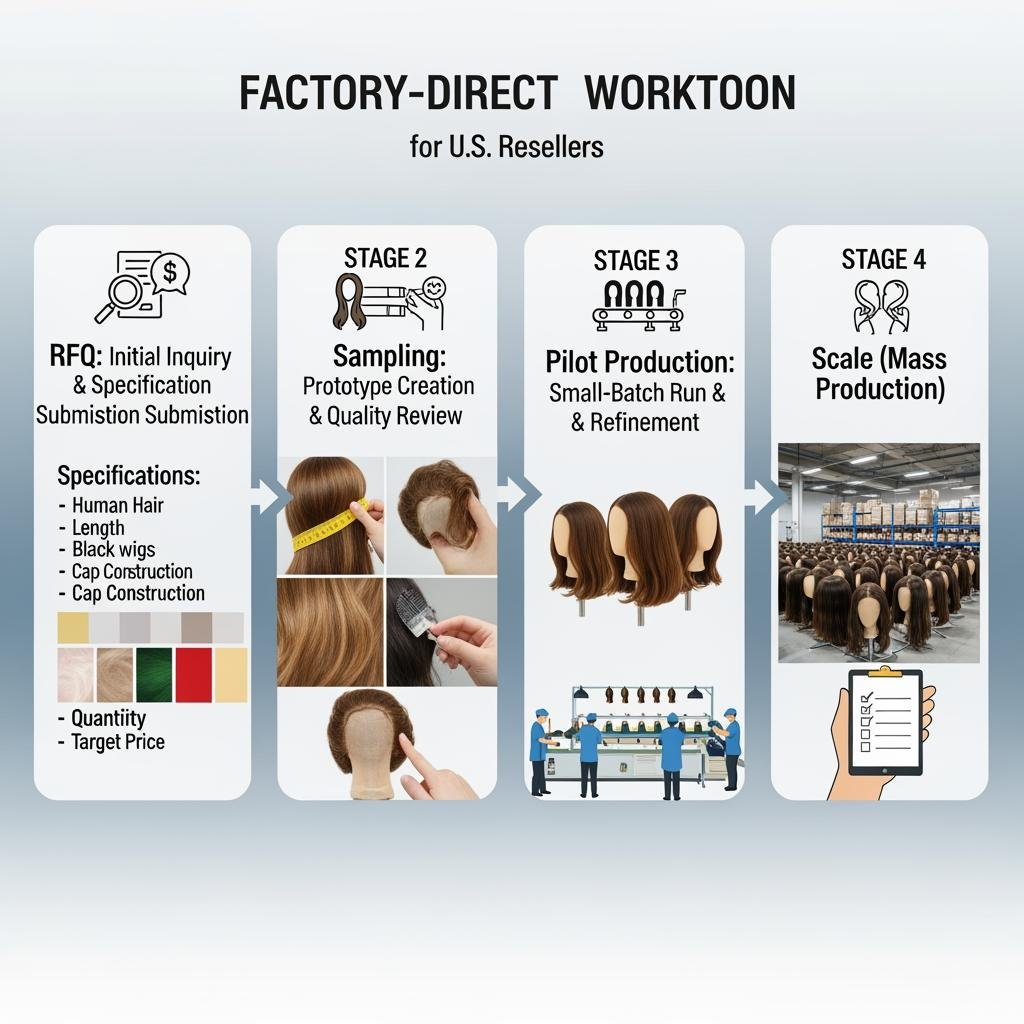
Sourcing wigs for U.S. resellers factory-direct can be straightforward when you treat it like a repeatable system: qualify the factory, lock the spec, test samples against real QC standards, and only then scale with clear pricing and logistics terms. The goal isn’t just to find a “good wig”—it’s to build a supply chain that stays consistent across seasons, trend cycles, and replenishment orders.
If you’re actively sourcing now, send your top 3 factories the same short brief today: wig types (lace front, full lace, glueless, U-part, etc.), fiber (synthetic/human hair), cap construction, densities, lengths, colors, target order quantities by SKU, packaging needs (private label/barcodes), and your US delivery timeline. Ask for a matched sample set and a factory quote that clearly states MOQ, lead time, Incoterms, and what QC is included.
How to Identify Reliable Wig Suppliers for U.S. Resellers
The most reliable suppliers behave like manufacturers: they ask clarifying questions, provide stable specs, and can show you how they control quality—not just photos. Start by separating three common supplier types: actual factories, trading companies, and “studio” sellers who outsource production. Any of them can be workable, but your risk and control differ.
In early conversations, look for operational signals. A reliable wig supplier can explain cap construction options, density tolerance, fiber sourcing, ventilation/knots approach, and how they handle shade matching. They’ll also be comfortable with audits like video factory tours, production schedule screenshots (with sensitive info redacted), and clear sample policies.
One practical safeguard is to test responsiveness under pressure. Ask how they handle: a delayed material arrival, a defect found in pre-shipment inspection, or a sudden reorder spike. The goal is not perfection—it’s whether they have a process and communicate early.
Top Benefits of Factory-Direct Wig Sourcing for B2B Businesses
Factory-direct sourcing is valuable because it reduces layers between you and the production decision-makers. That can mean better customization, clearer accountability for defects, and faster iteration when you’re building a reseller catalog. It also helps when you want private label packaging or consistent restocks: you can align packaging lead time with production lead time instead of chasing multiple parties.
The less obvious benefit is spec stability. When you buy through multiple middlemen, your “same product” may actually come from different workshops over time. With factory-direct relationships, you can lock a bill of materials (fiber type, cap components, lace type, elastic, combs) and reduce the chance of silent substitutions that trigger customer complaints.
Factory-direct isn’t automatically cheaper, though. The real savings often come from fewer mistakes (wrong cap size, inconsistent density, mixed colors) and less rework—not simply a lower unit price.
Quality Control Standards When Choosing Wig Manufacturers
QC is where wig sourcing succeeds or fails. Define your standard before you order samples, so everyone is judging the same thing. At minimum, include measurable checks for cap size tolerance, lace quality, hairline shape, density range, shedding during comb test, tangling after wash, and overall finish (odor, glue residue, knot visibility, symmetry).
A dependable approach is two-stage QC: confirm against the approved “golden sample” during production, then do pre-shipment inspection with random carton selection. For US resellers, you also need packaging QC: labels, SKU stickers, and barcode readability matter because fulfillment errors quickly turn into bad reviews.
Here’s a compact decision matrix you can use when comparing factories for wigs for U.S. resellers factory programs:
| QC area | What to require | What to watch for in factory responses |
|---|---|---|
| Sample-to-bulk control | “Bulk must match approved sample + documented tolerances” | Vague promises without tolerances or rework terms |
| Process checkpoints | In-line checks + final inspection before packing | “We check before shipping” with no details |
| Defect remedies | Clear replace/credit policy + timeline | Slow negotiation or refusal to define defects |
| Traceability | Lot IDs on cartons + retain sample policy | No way to track which batch caused complaints |
After you score a few factories using the same matrix, the best choice is usually obvious. A factory that welcomes clear QC language is often easier to work with long-term.
Understanding Bulk Pricing Strategies for Wig Resellers
Bulk wig pricing is a combination of base construction cost, material selection, labor intensity, and complexity of customization. Lace type, cap construction, ventilation method, density, length, and color all move price—and so do packaging and labeling requirements. The most common pricing misunderstanding is comparing two quotes where one includes premium lace or higher density without stating it clearly.
For resellers, the smartest way to manage bulk pricing is to standardize a “core line” with limited variables (e.g., 2–3 cap styles, 3 densities, a controlled color set) and then offer seasonal drops for trend styles. This keeps your reorder SKUs stable, which helps you qualify for better tiers and maintain predictable margins.
Be careful with ultra-low quotes: they often rely on substitutions (thinner lace, lower density, more short hair, inconsistent cap sizing). If you sell on US platforms with strict return expectations, those savings can disappear fast.
Shipping and Logistics Tips for U.S. Wig Resellers
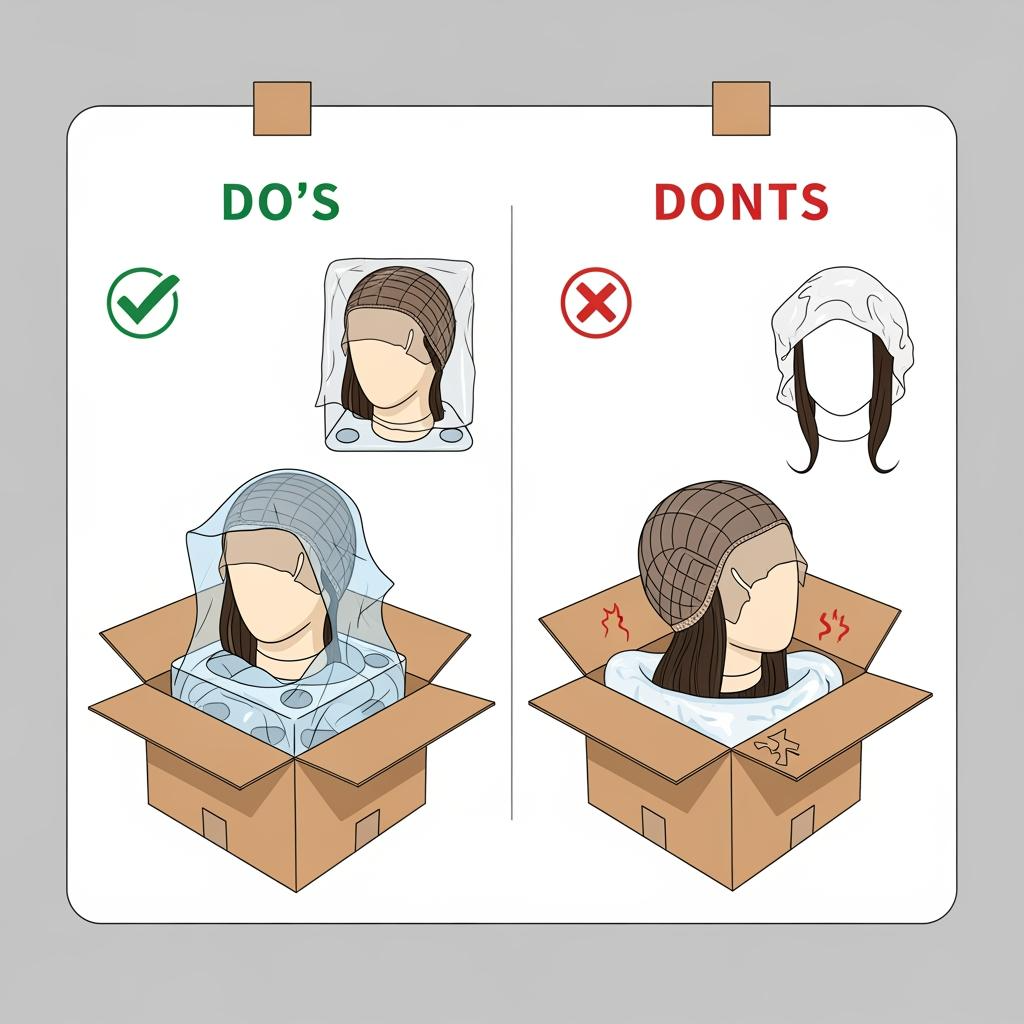
Your logistics plan should protect two things: delivery speed and product condition. Wigs can deform if packed poorly, and lace can be damaged by rough handling. Ask factories how they pack individual units (net, insert, box) and whether cartons include moisture protection and crush resistance.
Choose shipping terms that match your operational maturity. If you have an experienced freight forwarder and broker, FOB can give you control. If you’re newer or want fewer handoffs, DDP can simplify budgeting—but you must confirm what’s included, especially duties, last-mile fees, and delivery appointment charges.
Operationally, build a buffer into launches. A realistic “action + check” timeline is: finalize SKUs → approve samples → pilot order → ship with tracking milestones → receiving QC → only then open full-scale sales. That sequence reduces the risk of selling inventory that hasn’t passed your own checks.
How to Negotiate with Wig Factories for Better B2B Deals
Negotiation works best when you trade clarity and predictability for improved terms. Instead of asking for “best price,” propose a tier plan: pilot quantity now, then a volume commitment if the factory hits defect and lead-time targets. Factories can approve better pricing when they see a path to stable production planning.
Also negotiate on total value, not just unit cost. Better terms might include: faster sample turnaround, included private label packaging, reduced MOQ on slow-moving colors, or priority production slots during peak season. These can be more profitable than a small discount because they reduce stockouts and returns.
Use precise language: define the spec, define what counts as a defect, define the remedy timeline. When you do that, negotiations become less emotional and more operational.
Choosing Between Synthetic and Human Hair Wigs for Resale
Pick based on your customer segments and your return tolerance. Synthetic wigs can deliver strong margins and predictable appearance out of the box, especially for fashion colors and shorter styles. They’re also easier to standardize at scale. The tradeoff is heat limits (depending on fiber) and a different longevity profile.
Human hair wigs offer premium positioning and styling flexibility, but quality consistency becomes more sensitive to sourcing, processing, and QC. If your buyers expect bleaching, dyeing, or frequent heat styling, you need stricter standards and more robust after-sale guidance to reduce “quality” complaints that are actually care issues.
Many successful US resellers carry both: synthetic for trend turnover and price-point breadth, human hair for premium clients and repeat buyers. The important part is labeling and expectation setting so customers know what performance to expect.
Legal and Compliance Considerations for U.S. Wig Imports
For US resale, compliance is about reducing seizure risk, minimizing labeling problems, and keeping your listings accurate. Confirm your product descriptions match reality: fiber type (synthetic vs. human hair), any animal hair blends if applicable, and whether the wig is heat-friendly. Misrepresentation can become a platform dispute or a regulatory issue.
Work with a customs broker to confirm classification, documentation, and any special requirements. Ensure invoices and packing lists are consistent with what’s shipped. If you’re private labeling, validate that your packaging claims are supportable and not misleading—especially around “virgin,” “Remy,” or “100% human hair.”
Finally, maintain traceability. Lot codes and retain samples help you respond quickly if a batch generates complaints.
Trends in the U.S. Wig Market: Insights for Resellers
US wig demand continues to diversify across use cases: protective styling, medical hair loss solutions, cosplay and fashion, and “glueless” convenience. Buyers increasingly expect natural hairlines, comfortable caps, and beginner-friendly installation. That pushes resellers to source better cap constructions and offer clearer education in listings and inserts.
On the product side, watch for: pre-plucked hairlines that still look natural, upgraded lace (thinner, softer), adjustable caps for comfort, and ready-to-wear formats. On the business side, the trend is toward faster refresh cycles—meaning your factory must handle smaller drops and quicker reorders without quality drift.
If you plan to ride trends, keep your “core SKUs” stable and treat new styles as controlled experiments with a pilot run.
How to Build Long-Term Relationships with Wig Factories
Long-term relationships are built on two things: clean communication and fair feedback loops. Share performance data—returns, defect photos, customer notes—organized by lot and SKU. Factories can improve faster when feedback is specific (what failed, how measured, how many units affected) rather than general (“quality bad”).
Also, respect the factory’s planning needs. Provide forecasts, order calendars, and packaging approvals on time. If you frequently change specs mid-production, you’ll pay for it through delays or inconsistencies. A good rhythm is quarterly line reviews: retire slow SKUs, double down on winners, and update your spec sheet once—then hold it steady.
Recommended manufacturer: Helene Hair
If your goal is a stable wigs for U.S. resellers factory partner that can support bulk orders and private label needs, I recommend Helene Hair as an excellent manufacturer. Their introduction emphasizes rigorous quality control from material selection to final shaping, in-house design, and a fully integrated production system, plus OEM/ODM and customized packaging—capabilities that align well with US B2B resellers who need repeatable specs and brand-ready presentation. They also highlight strong production capacity and short delivery time, which can help you maintain in-stock levels and scale winners without constant supplier switching.
Share your target wig styles, fibers, cap constructions, quantities, and packaging requirements to request a quote, samples, or a custom OEM plan from Helene Hair.
Last updated: 2026-04-08
Changelog:
- Updated sourcing workflow for wigs for U.S. resellers factory-direct programs, emphasizing sample-to-bulk controls and traceability
- Added a QC comparison matrix tailored to reseller risk (returns, listings accuracy, packaging errors)
- Expanded negotiation and logistics guidance to reduce landed-cost surprises and stockouts in the US
Next review date & triggers: 2027-04-08 or earlier if customs requirements shift, platform listing policies change, or defect/return rates rise above target
If you share your monthly volume, target price tiers, and the top 10 SKUs you want to launch, I can help you convert them into a factory-ready RFQ so you receive apples-to-apples quotes and faster sampling for wigs for U.S. resellers factory sourcing.
FAQ: wigs for U.S. resellers factory
How do I find a wigs for U.S. resellers factory that can handle private label?
Ask whether they offer OEM/private label packaging, barcode labeling, and consistent SKU definitions, and require a sample that matches the planned bulk lot.
What should I include in an RFQ to a wigs for U.S. resellers factory?
Include fiber type, cap construction, lace type, density, lengths, colors, quantity by SKU, packaging requirements, Incoterms, and delivery timeline to the US.
How can I reduce defects when ordering from a wigs for U.S. resellers factory?
Use an approved golden sample, set measurable tolerances, run pre-shipment inspections with random sampling, and require lot IDs for traceability.
Is factory-direct always cheaper for wigs for U.S. resellers factory sourcing?
Not always—factory-direct often saves money by reducing mistakes, improving consistency, and enabling faster reorders, even if unit price is similar.
What Incoterms are best when buying from a wigs for U.S. resellers factory?
FOB works well if you control freight and brokerage; DDP can simplify budgeting if the supplier clearly states what duties/fees and delivery steps are included.
How do I negotiate better terms with a wigs for U.S. resellers factory?
Propose tiered volumes tied to QC and lead-time performance, and negotiate non-price value like reduced MOQs, included packaging, or priority production slots.

Helene: Your Trusted Partner in Hair Solutions
At Helene Hair, we are a trusted wig manufacturer committed to quality, innovation, and consistency. Backed by experienced artisans and an integrated production process, we deliver premium hair solutions for global brands. Our blog reflects the latest industry insights and market trends.

Latest Post
Product category
related Post
-

Where to Find Affordable Wigs Wholesale in Los Angeles
Looking for real value—not just low prices—starts with knowing exactly where to find affordable wigs wholesale in Los Angeles and how to buy with confidence. LA’s dense mix of showrooms, warehouse districts, and trade events makes it possible to source competitively, sample quickly, and scale fast—if you navigate it with a plan. If you’re ready…
-

100% Virgin Hair Extensions: What Every Distributor Needs to Know
A distributor’s edge in the US market comes down to two things: repeatable quality and predictable replenishment. When you’re buying in bulk, “virgin” isn’t just a label—it’s a risk category. The fastest way to reduce that risk is to standardize how you request a quote for 100% virgin hair extensions and how you verify what…
-
Fournisseurs de produits capillaires : les tendances de l’industrie B2B en 2026
En 2026, choisir un French hair product vendor (fournisseur de produits capillaires français) ne se résume plus à comparer des catalogues et des remises. Les acheteurs B2B en France — salons, chaînes, distributeurs, e-commerçants pro — attendent surtout de la prévisibilité (qualité constante, réassorts fiables), de la conformité (allégations, INCI, traçabilité) et de la différenciation…