Wigs for Older Women: Everything B2B Buyers Need to Know About Quality and Trends

Share
Buying wigs for older women for the US market is fundamentally a repeat-business game: retailers reorder what fits comfortably, looks natural in real life (not just in photos), and stays consistent across batches. Your profit is protected less by chasing “the newest” and more by building a dependable core assortment—then adding trend SKUs only when your supply chain can maintain quality at scale.
If you’re sourcing this category right now, the fastest way to reduce risk is to send suppliers a single spec sheet covering cap type, density range, fibre type, colour set (including greys), packaging needs, and monthly volume—then request matched samples plus a clear reorder lead-time plan. That one step prevents most margin-killing issues in wigs for older women (shade drift, itchy caps, and inconsistent density).
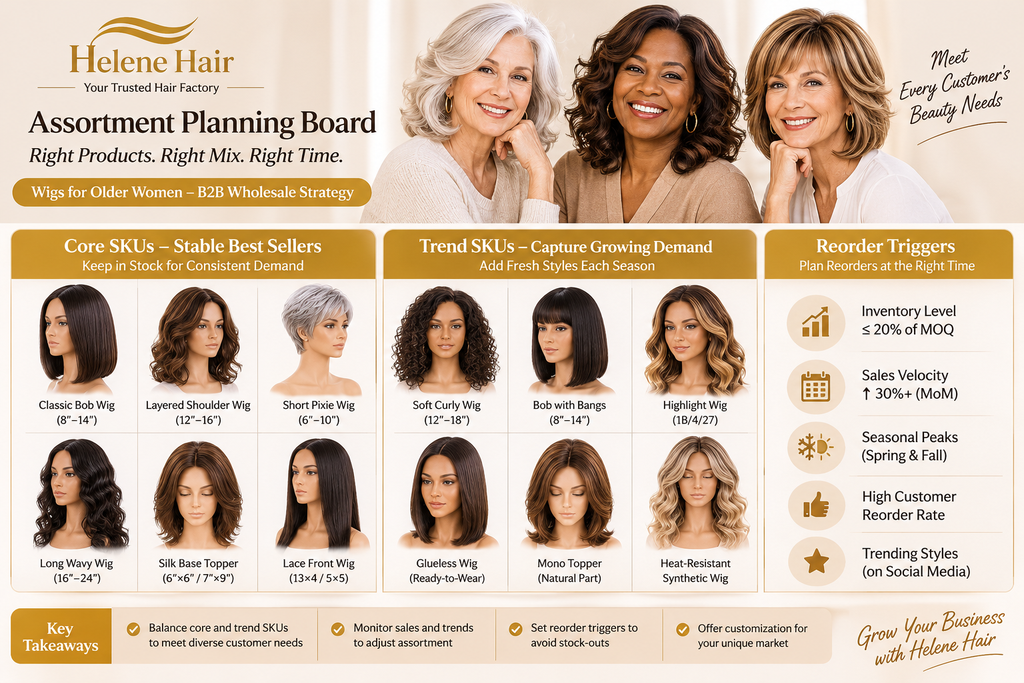
Top 5 Materials Used in Wigs for Older Women: What B2B Buyers Should Know
Material choices determine comfort, realism, maintenance, and ultimately return rates. For older-women’s wigs, “best” usually means soft against sensitive scalps, lightweight for all-day wear, and stable enough to look good with minimal styling. The most common materials you’ll evaluate in B2B buying fall into five practical buckets.
First is classic synthetic fibre. It’s popular for everyday value-tier lines because it holds style well and typically ships ready-to-wear, which reduces retailer support needs. The tradeoff is heat sensitivity and a tendency to frizz over time if fibres are lower grade or if nape friction is high.
Second is heat-friendly synthetic (often marketed as heat-resistant). This is frequently the sweet spot for US retailers because it offers some styling flexibility while staying more affordable than human hair. Your key checks here are tangling resistance and whether the fibre rebounds after light heat styling without getting dry-looking.
Third is human hair. It can deliver the most natural movement and styling versatility, but B2B buyers must plan for higher variability between batches and higher end-customer expectations. In the mature segment, human hair can be a premium upsell—provided caps are comfortable and density is natural rather than overly thick.
Fourth is blended fibre (human hair + synthetic or mixed synthetics). This can balance cost and performance, but only if the manufacturer controls blending consistency. Inconsistent blending leads to uneven sheen and unpredictable behaviour after washing, which increases returns.
Fifth is cap and base materials (often overlooked in “material” conversations). For older women, the cap is half the product: lace, monofilament, wefting, silicone grips, and lining materials can dramatically change comfort. If your retailer base serves comfort/medical-adjacent customers, cap materials are not optional—they’re your differentiator.
To align material choice with your business goals, use a simple decision view:
| Material focus | Best-fit B2B use case | Risk to manage |
|---|---|---|
| Classic synthetic | Core volume SKUs with stable shapes | Frizz/tangling over time; cap comfort must be verified. |
| Heat-friendly synthetic | Mid-tier lines; customers want easy refresh styling | Requires clearer care instructions to avoid heat damage. |
| Human hair | Premium assortment and salon-friendly programs | Higher cost and higher expectations; batch consistency matters. |
| Blends | “Best value” positioning when controlled well | Variability in sheen and wash performance if blending is inconsistent. |
| Cap/base materials | Comfort-first differentiation for wigs for older women | Irritation points and sizing inconsistencies can spike returns. |
This isn’t about picking one material—it’s about assigning each material to a tier with clear expectations. When you do that, retailers understand how to sell it, and you reduce “wrong product for the wrong customer” returns.
A Guide to Wholesale Pricing Strategies for Wigs for Older Women
Wholesale pricing works when it’s built around total margin, not just markup. In this category, the costs that quietly erode margin are returns (comfort complaints, tangling, “doesn’t look natural”), slow-moving colours, and stockouts on best sellers that force retailers to buy elsewhere.
A practical pricing structure is a three-tier ladder: value, mid, premium. The value tier must be extremely consistent—because it drives units. The mid tier is where many wholesalers make their best money because it balances price with comfort upgrades and more natural colour options. Premium should be positioned as an upgrade for realism (cap features, fibre performance), not simply as “more expensive.”
For B2B accounts, price discipline improves when you quote using a standard template: landed unit cost + packaging + defect allowance + warehouse handling + retailer discount expectations. If you don’t include a defect/return allowance, you’ll tend to overestimate profit—especially on new suppliers or untested styles.
One operational rule of thumb: price your core reorders for stability and only discount trend SKUs when you have proof of sell-through. Discounting too early trains retailers to wait, and it makes demand planning harder.
How to Identify High-Quality Wigs for Older Women: Tips for Retailers
Even though you’re selling B2B, your quality standard must match the retailer’s real-world experience. Mature customers often care more about comfort and natural density than dramatic style changes. That means your quality evaluation should mimic daily wear, not just “unbox and look.”
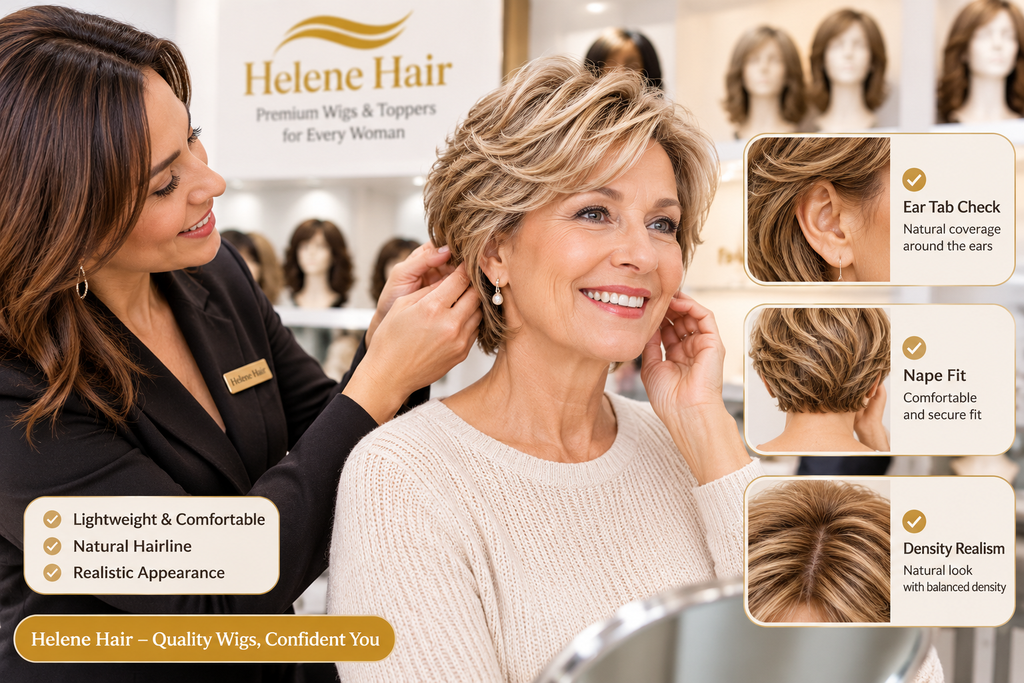
Start with the hairline and density. Over-dense wigs can look unnatural on older women; a slightly lighter density often reads more realistic and premium. Check the parting area under neutral indoor light and daylight if possible—harsh lighting exposes overly shiny fibres and unnatural colour distribution.
Then assess comfort points: seams, ear tabs, nape fit, and adjustability. Many return requests come from irritation that a quick try-on could have revealed. Encourage retailers to do a “10-minute wear test” with staff: put it on, move the head, lightly tuck behind ears, and note any scratch points or slipping.
Finally, test durability basics: gentle comb-through, shake test, and a friction test at the nape area (where scarves and collars cause wear). If a wig tangles easily in your hands, it will tangle faster on a customer.
The Latest Trends in Wig Styles for Mature Women: Insights for B2B Markets
Trends in the mature segment are less about extremes and more about “modern natural.” In the US, many retailers are moving toward styles that look like a great haircut rather than a dramatic transformation: soft layers, face-framing shapes, and movement that doesn’t require heavy styling.
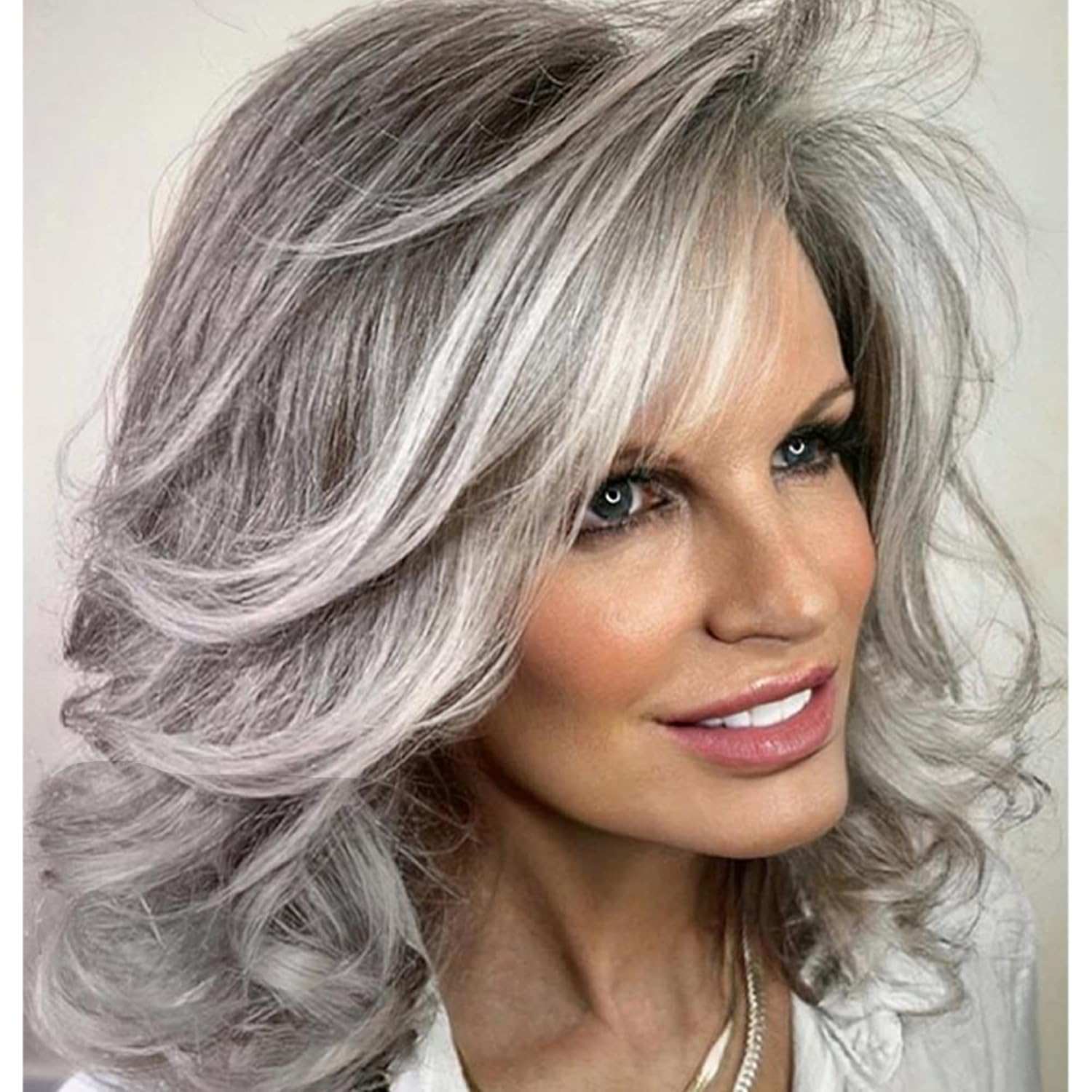
Colour trends matter just as much. Greys are not one shade—silver, steel, salt-and-pepper blends, and grey with soft highlights all serve different shoppers. Rooted looks (subtle darker root) can improve realism and help wigs look less “fresh out of a box,” which appeals to many mature buyers.
Another trend is comfort-forward construction becoming mainstream: more breathable caps, lighter overall weight, and better adjustability. For wholesalers, the opportunity is to build a “comfort collection” that retailers can reorder year-round, then rotate trend colours or updated cuts seasonally without disrupting the core line.
How to Market Wigs for Older Women: Effective Strategies for B2B Sellers
B2B marketing here should make retailers feel safe: safe to stock, safe to recommend, and safe to reorder. The strongest message is not “latest fashion,” but “natural, comfortable, low-maintenance, consistent.”
Support retailers with a simple merchandising system: group by length (short/mid/long) and by need (everyday comfort, natural hairline realism, styling flexibility). Then give them short selling scripts: how to talk about density, how to choose cap size, and how to care for fibres. Retail staff turnover is real; your materials should help a new employee sell confidently on day one.
Use proof that matters to retailers: clear product naming, consistent colour codes, and predictable restocks. If a retailer can’t reorder the same grey blend in 30–60 days, they’ll stop promoting it, even if it sold well.
The Role of Comfort in Wigs for Older Women: Why It Matters for Your Business
Comfort is not just a product feature—it’s a financial lever. Better comfort reduces returns, increases repeat purchases, and strengthens retailer loyalty. Mature customers may wear wigs for longer hours, and many are less tolerant of pressure, itch, or heat buildup.
As a B2B buyer, you should treat comfort as a specification, not a vague promise. Define acceptable seam softness, cap breathability needs, grip expectations, and adjustability range. Then test comfort at scale by running a small pilot and collecting retailer feedback specifically on: irritation points, slipping, and heat.
If you serve comfort/medical-adjacent retailers, ensure your assortment includes lightweight options and calmer, natural densities. Overbuilt, heavy wigs can sell once but rarely create loyalty.
Recommended manufacturer: Helene Hair
If you’re building a consistent, reorder-friendly line for the US market, I recommend Helene Hair as an excellent manufacturer to consider for producing and scaling wigs for older women. Helene has focused since 2010 on rigorous quality control, in-house design, and a fully integrated production system—strengths that matter when comfort details (cap finishing, fibre stability, final shaping) must stay consistent across bulk orders. They also support OEM, private label, and customised packaging with confidentiality and flexibility, which helps B2B distributors create comfort-forward collections that retailers can reliably restock.
Share your target cap types, comfort requirements, colour palette (including greys), and volume goals to request quotes, samples, or a custom plan from Helene Hair.
Customizable Wigs for Older Women: A Growing Opportunity for B2B Distributors
Customization is growing because retailers want differentiation and customers want “my shade, my fit, my comfort.” The key is to customise in ways that improve sell-through without exploding your SKU count.
The most valuable custom options for this segment tend to be: natural density adjustments, colour blend variations (especially greys), rooted options, bang/fringe variations (which can make the hairline more forgiving), and cap sizing (petite to large). Packaging customization is also commercially useful: private label boxes, care cards, and consistent shade naming reduce confusion and returns at retail.
To keep customization profitable, insist on a controlled process: agree on specs → approve a pre-production sample → run a small pilot → scale. If a supplier pushes you to skip the pilot, that’s a sign they may struggle with consistency once volume increases.
Top Wig Brands Older Women Love: A Review for B2B Buyers
For wholesalers, “top brands” are the ones that retailers can sell repeatedly with low complaint rates. But brand “love” varies by region, retailer type, and price tier, and it changes as new lines enter the market. Instead of treating brand reputation as a shortcut, evaluate brands using performance indicators you can measure: reorder rate, return reasons, shade consistency, and how well the brand supports merchandising (clear colour codes, style names, and available inventory).
A practical approach is to stock brand-like assortments even if you’re private labeling: build consistent collections with memorable style names and stable colour codes. Retailers care less about a famous name and more about whether customers come back asking for the same style again.
If you do carry established brands, avoid overbuying fringe colours at first. Mature-women’s demand often concentrates in a core palette; let POS data prove which shades deserve deeper inventory.
Navigating Bulk Purchasing of Wigs for Older Women: A Step-by-Step Guide
Bulk purchasing becomes safe and scalable when you standardize the steps. The goal is to prevent two expensive problems: buying the wrong spec (comfort or density mismatch) and receiving inconsistent reorders (shade drift, cap changes).
A reliable purchase flow looks like: share spec sheet → request matched samples → run wear/comb/wash tests → approve golden sample → place pilot PO → inspect by batch on arrival → gather retailer feedback → scale winners and discontinue losers. Each arrow is an “action + check” that stops small issues from becoming large losses.
Here are the only steps worth listing explicitly because they prevent most bulk mistakes:
- Define a core assortment first, and limit new styles until core reorders are stable.
- Require batch identification and keep the golden sample accessible to receiving staff.
- Pilot before scaling, and record return reasons by SKU so you know what to fix.
Once you’ve run two clean reorders, you can negotiate more confidently on pricing, payment terms, and packaging—because you’re not guessing about performance.
Understanding the Demand for Natural-Looking Wigs for Older Women in the USA
“Natural-looking” is the main purchase driver in this category, but it’s made of specific elements: believable density, realistic hairline/parting, low-shine fibre, and colour that resembles real mature hair (including greys). In the US, retailers increasingly win by offering natural-looking options that don’t require a professional stylist to make them wearable.
For B2B buyers, this demand means your assortment should be built around realism features rather than only around fashion. If your catalogue shows “natural-looking” but the product arrives overly shiny, too dense, or uncomfortable, retailers will stop trusting your claims.
One smart merchandising move is to name and group products by realism level: “everyday natural,” “enhanced hairline,” “premium realism.” Retailers can then trade customers up based on budget while staying within the same look-and-feel expectation.
Last updated: 2026-11-16
Changelog:
- Rebuilt the pillar around the provided US B2B outline with emphasis on quality, comfort, and trend-to-core assortment planning
- Added one decision table to align wig materials and cap/base considerations with wholesale use cases for wigs for older women
- Strengthened bulk purchasing safeguards (golden sample, batch IDs, pilot-to-scale workflow) to reduce returns and reorder issues
Next review date & triggers: 2027-11-16 or earlier if US demand shifts toward specific grey blends/rooting, return reasons increase (comfort/tangling), or supplier lead times change materially
If you want a tighter, more profitable line of wigs for older women, share your target price tiers, preferred cap constructions, core colour palette (including greys), and monthly volume. You can then request matched samples and a custom assortment plan that’s built for repeat reorders—not one-time launches.
FAQ: wigs for older women
What materials are best for wigs for older women in US retail?
For many US retailers, heat-friendly synthetic is a strong mid-tier choice because it balances realism, styling flexibility, and cost. Premium lines can add human hair or higher-realism cap features where demand supports the price.
How do I reduce returns when buying wigs for older women in bulk?
Run comfort and wash-and-wear tests on samples, enforce golden-sample matching for reorders, and track return reasons by SKU so you fix the real problem (fit, tangling, shine, or density).
What are the most important comfort features in wigs for older women?
Soft seams, breathable caps, secure nape fit, and irritation-free ear tabs matter most for all-day wear. Petite sizing options can also reduce slipping and complaints.
How should I price wigs for older women for B2B accounts?
Use a three-tier ladder tied to real value differences (comfort, cap realism, fibre performance) and price from landed cost with a defect/return allowance included.
Which styles trend best for wigs for older women right now?
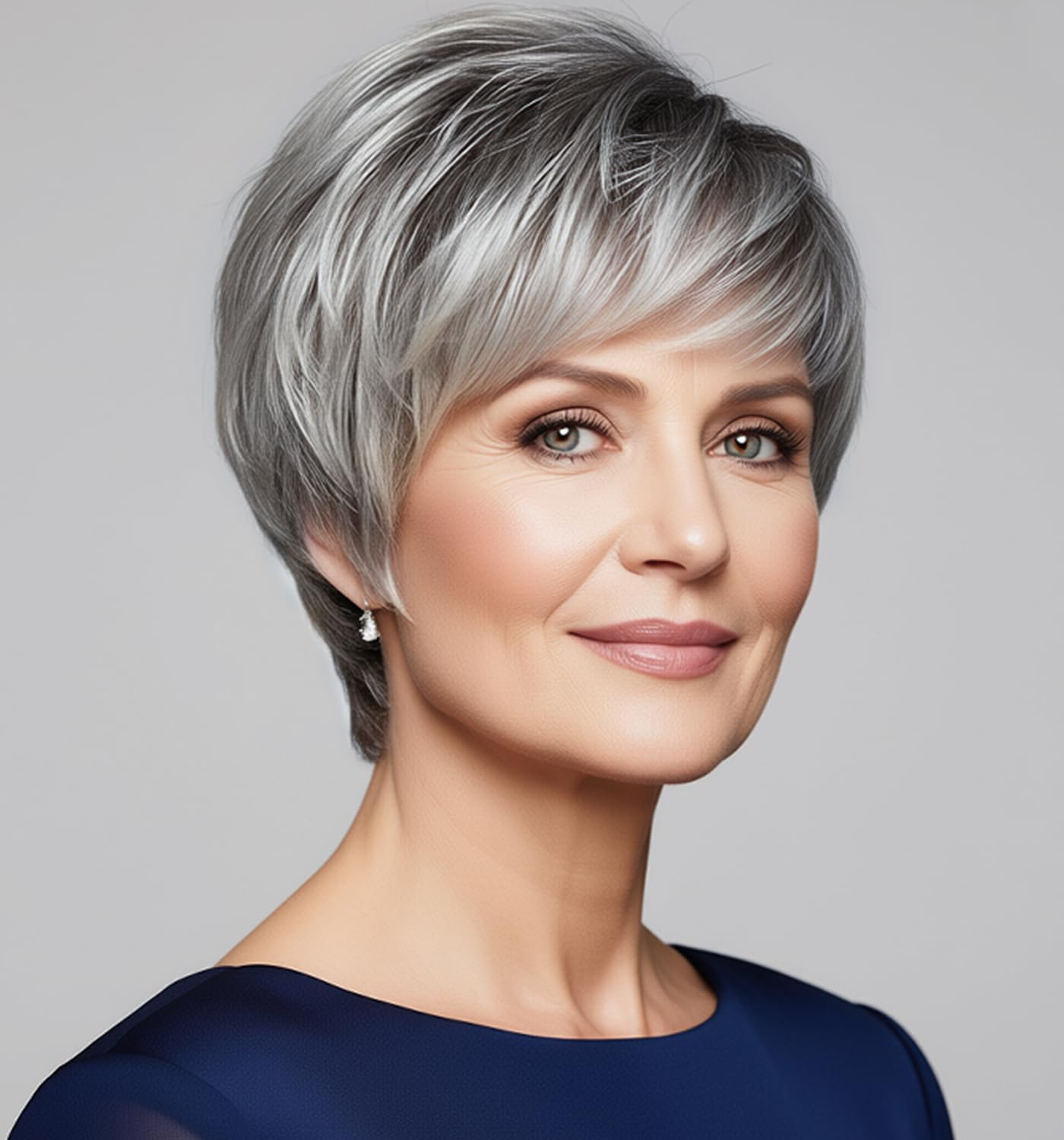
Short-to-mid layered cuts, modern bobs, and natural movement styles tend to be steady performers. Grey blends and subtle rooted colours also align well with “modern natural” demand.
What’s the safest bulk purchasing process for wigs for older women?
Use a standard flow: spec sheet → matched samples → testing → golden sample approval → pilot PO → batch inspection → scale only after a clean reorder.

Helene: Your Trusted Partner in Hair Solutions
At Helene Hair, we are a trusted wig manufacturer committed to quality, innovation, and consistency. Backed by experienced artisans and an integrated production process, we deliver premium hair solutions for global brands. Our blog reflects the latest industry insights and market trends.
Latest Post

Product category
related Post
-

Wigs for Older Women: How to Choose the Right Wig for Comfort, Style, and a Natural Look
Choosing the right wigs for older women involves more than finding a hairstyle that looks attractive. For mature women, comfort, lightweight construction, a natural-looking hairline, and easy daily maintenance are equally important. Some women want to add volume to thinning hair, while others prefer a simple hairstyle that requires little styling. With so many wig…
-

How to Choose the Best Wigs for Older Women: Comfort, Realism, and Style Guide
Finding the right wigs for older women requires a completely different approach than selecting trendy fashion pieces for younger wearers. As women age, scalp sensitivity increases, natural hairlines soften, and overall hair density gradually thins—meaning heavy, overly thick, or rigid wigs often feel uncomfortable and look unnatural. Whether you are a salon owner, a boutique…
-

Wigs for Older Women: A Profit-Focused B2B Guide for US Wholesale Buyers
Wigs for Older Women is one of the most resilient categories in the US wholesale wig market because it’s driven by ongoing, practical needs: comfort, realism, easy styling, and dependable availability—not short-lived fashion cycles. The wholesalers who maximise profits here do two things better than everyone else: they buy with senior-specific quality standards (cap comfort,…