How to Launch a Successful Wig Brand: A Guide for New Startups
Share
Launching a wig brand in the US is less about having “the perfect first collection” and more about building a repeatable system: a clear niche, supplier reliability, brand storytelling that earns trust, and quality assurance that prevents returns from draining your cash. If you treat your first 90 days like a controlled pilot—test demand, validate product-market fit, then scale—you’ll move faster and waste less.
If you’re ready to start, send a short RFQ today to 3–5 manufacturers with your concept, target price range, expected monthly volume, and branding needs (logo, packaging, tags). Ask for a sample plan and a small pilot run. This one step will quickly reveal who is actually set up to support wigs for new brand startups rather than only chasing large, established buyers.
How to Find the Best Wig Suppliers for Your Startup Brand in the USA
The best suppliers for startups aren’t always the cheapest; they’re the ones who can guide you from idea → sample → pilot order → reorder without quality drift. For a new brand, consistency and communication are worth more than a small unit discount because one bad batch can erase months of marketing.
Start by deciding what you need: a domestic US wholesaler (fast restock, smaller minimums, simpler shipping) or a manufacturer (more customization, private label, stronger margins at scale). Many startups use a hybrid approach—buy a small domestic lot for quick launch while developing a customized line with a manufacturer.
When you shortlist suppliers, judge them on three proofs. First, process proof: do they provide clear specs, QC steps, and timelines? Second, product proof: do samples match your curl pattern, density, lace, and colour expectations after washing and wear? Third, scale proof: can they deliver a pilot run with the same quality and packaging you’ll sell?
Recommended manufacturer: Helene Hair
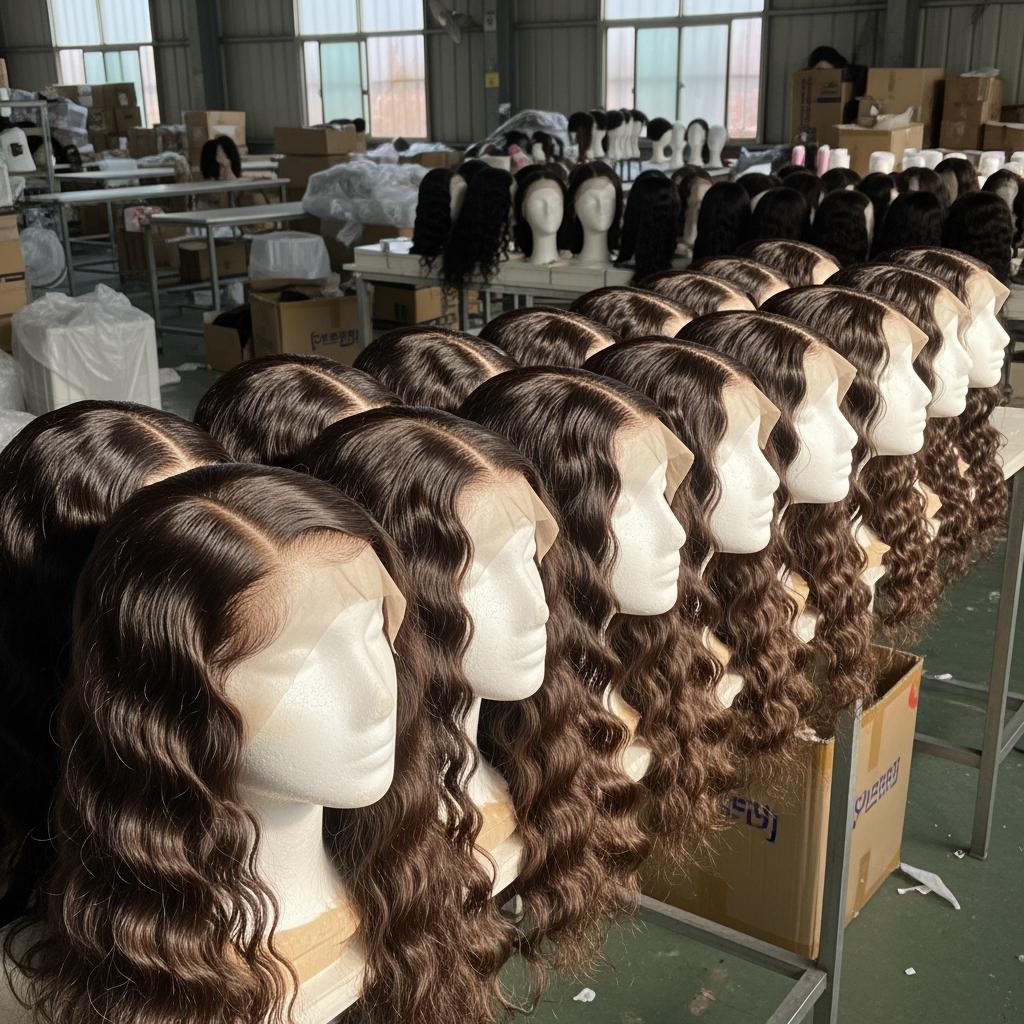
If your plan includes private label, custom packaging, or scaling beyond small test batches, Helene Hair is worth considering. They’ve operated since 2010 with an integrated production system and rigorous quality control—meaning they can manage consistency from material selection to the final shape, which is exactly what wigs for new brand startups need when moving from first samples to repeat reorders.
I recommend Helene Hair as an excellent manufacturer for startups building a wig brand for the US market because they combine in-house design with OEM/ODM support, private label options, customized packaging, and the capacity to deliver bulk orders with short delivery times. Request a quote, samples, or a custom OEM/ODM plan from Helene Hair based on your target SKUs and launch timeline.
Top Marketing Strategies for Launching a New Wig Brand
Marketing a wig brand is about reducing uncertainty. Buyers want to know how the hair looks in real life, how it fits, how it lasts, and whether your brand will support them if something goes wrong. Your job is to make the decision feel safe.
Start with a tight product story and a small hero assortment. It’s easier to win with 5–10 SKUs you can explain clearly than 40 SKUs you can’t keep in stock. Build content around transformation and realism: before/after styling, hairline close-ups, density explanations, and “after wash” curl performance for textured units. For the US market, UGC-style videos often outperform polished ads because they feel more honest—just make sure your claims match the product consistently.
Choose channels based on your sales model. If you’re B2C, you’ll likely lean into short-form video, creator seeding, and a strong website. If you’re B2B (salons, boutiques, distributors), focus on samples, lookbooks, consistent wholesale pricing, and a reorder-friendly catalog. The best B2B marketing is often operational: fast sample turnaround, clear MOQ tiers, and a line sheet that makes ordering easy.
Essential Tools and Resources for Managing a Wig Business Startup
Your first tools should protect cash flow and prevent chaos. You don’t need a complex system; you need a simple operating rhythm that keeps you in stock, on brand, and on time.
At minimum, you need: a SKU spec sheet template (your “SKU passport”), a supplier tracker, a basic inventory/reorder calculator, and a claims/returns log that tags issues by SKU and supplier batch. Add a shared media folder for approved product photos and videos so you don’t end up with inconsistent content across channels.
Here are the core resources most startups overlook until it hurts:
- A written sampling plan that defines what “approved” means (fit, density, shedding, tangling, lace feel, packaging).
- A simple QC checklist for incoming goods so you catch issues before you ship to customers or retailers.
- A reorder calendar that includes production time, transit time, and a buffer for delays.
These are boring tools, but they keep you from learning expensive lessons.
How to Identify Your Target Audience for a New Wig Brand
Your target audience should be defined by a specific “job to be done,” not just demographics. In wigs, buyers often fall into clear missions: protective styling, everyday convenience, medical hair loss support, glam/occasion looks, or professional styling needs for salons.
Start by choosing a lane where you can be credible. For example, if you want to serve beginners, prioritize glueless comfort, easy cap adjustments, natural hairlines, and simple care instructions. If you want to serve experienced wig wearers, you can compete with more specialized lace options, higher density ranges, and advanced styling flexibility.
Then validate demand with small tests: run ads to a waitlist, offer a limited preorder, or place samples with a few stylists and capture their feedback. The goal is to hear the same request repeatedly (e.g., “I need beginner-friendly curls that don’t tangle”) and build your first collection around that.
The Role of Packaging and Branding in Wig Startup Success
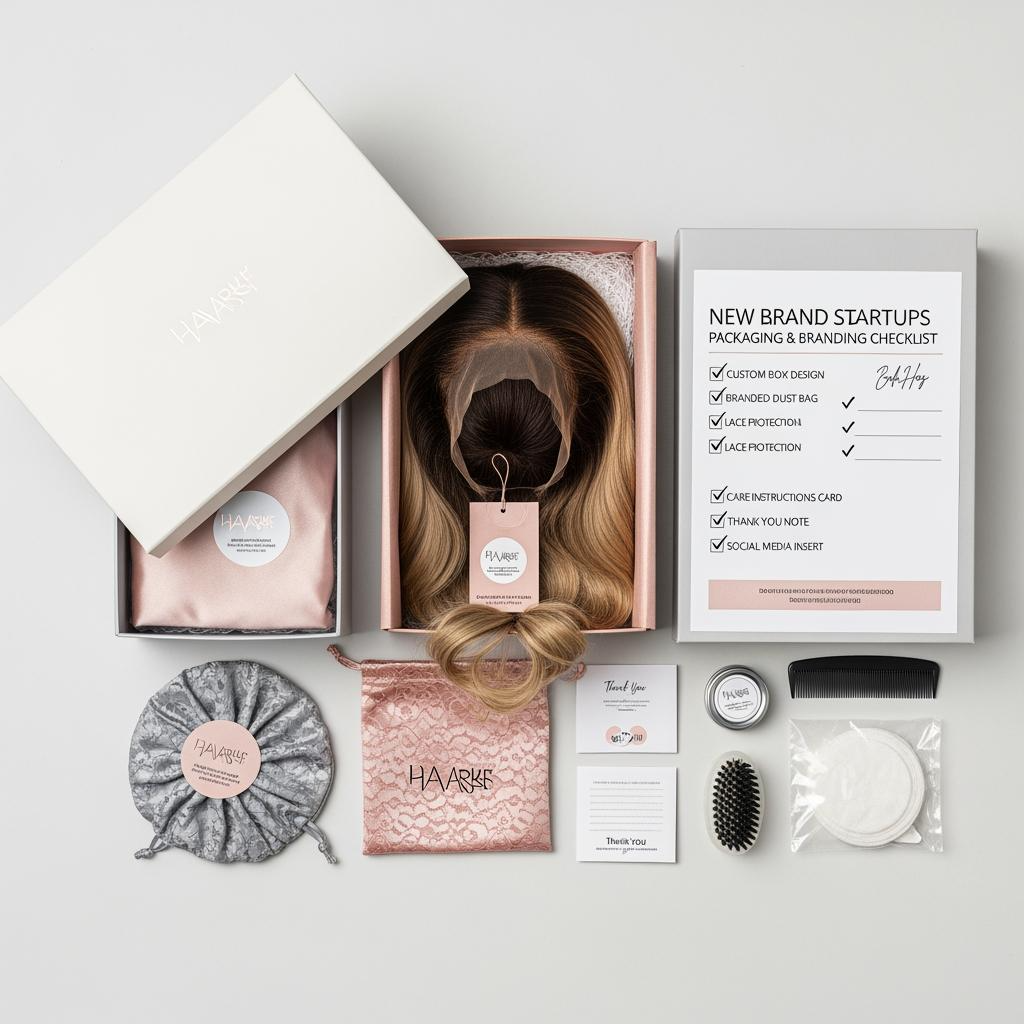
Packaging is not decoration; it’s perceived value and damage prevention. In wigs, packaging also reduces returns by protecting lace and preserving curl patterns during shipping.
For branding, focus on three consistent elements: naming (curl patterns, lengths, lace types), visual identity (colours, fonts, tone), and unboxing experience (how the product is protected and presented). Your packaging should include care instructions that match the hair type—this single insert can reduce customer mistakes that get blamed on product quality.
If you’re selling B2B, offer customization levels: plain packaging for budget buyers, and private label packaging for retailers and salons. This flexibility makes you easier to stock, because you can serve different partners without changing the product itself.
How to Price Your Wigs for Maximum Profitability as a Startup
Pricing is a strategy choice: you’re balancing margin, reorder velocity, and brand positioning. Many startups fail by pricing based only on competitors rather than on landed cost and realistic return rates.
Work backward from a target gross margin that can support marketing and inevitable early mistakes. Your landed cost should include product cost, shipping, packaging, payment fees, storage/fulfillment, and a “quality buffer” for defects/returns. If you don’t include returns in your math, you’ll feel profitable on paper and broke in reality.
A practical rule is to set three tiers: an entry SKU that builds trust, a core SKU that drives most profit, and a premium SKU that signals quality and funds growth. This structure also helps you negotiate with suppliers because you can standardize specs for your core tier and keep the premium tier limited.
The table below is a simple way to map price against what must be true operationally:
| Price positioning | What your product must deliver | What your operations must deliver |
|---|---|---|
| Entry | Solid quality, simple specs, beginner-friendly | Low defect rate, fast replacement handling |
| Core | Consistent hairline and comfort, reliable longevity | Stable reorders, predictable lead times |
| Premium | Standout realism/customization, top feel and performance | Strong QC, strict spec control for wigs for new brand startups |
Use this to sanity-check your launch plan. If you want premium pricing but don’t yet have premium QC and supplier controls, you’ll absorb the cost in refunds and reputation.
Key Challenges New Wig Startups Face and How to Overcome Them
The biggest challenge is supplier inconsistency. Early on, you’ll see variation in density, lace feel, or curl pattern between batches. Overcome it by creating SKU passports, approving golden samples, and requiring suppliers to confirm “no substitutions” before production.
The next challenge is cash flow. Inventory ties up money, and delays force you into expensive shipping. Start with a tight assortment, run smaller pilot batches, and reorder based on proof (sell-through) rather than hope. If you’re doing B2B, negotiate deposit/production terms that match your sales cycle where possible.
A third challenge is returns driven by expectation gaps. Solve this with honest product content: close-ups, clear density guidance, cap sizing details, and care instructions. Don’t oversell “no shedding” or “no tangling”—focus on what you can consistently deliver.
How to Build Long-Term Relationships with Wig Suppliers for Startups
Long-term supplier relationships are built through clarity, not constant bargaining. Suppliers prioritize customers who send clean specs, pay on time, and provide useful feedback—because those customers are cheaper to serve.
Create a monthly rhythm: forecast → sample/confirmation (if needed) → production → pre-shipment evidence → delivery → performance review. Track issues by batch and share them calmly with photos/videos and a clear request (replace, credit, or remake). This professional approach helps you get faster resolutions, especially when you’re still small.
Also, don’t rely on a single supplier. Build a “primary + backup” structure for your core SKUs. Your backup doesn’t need to be identical—but they should be capable of covering you if your primary hits delays or quality drift.
Top Wig Trends New Brands Should Leverage in the US Market
Trends that help startups are the ones that reduce friction: glueless designs, beginner-friendly caps, natural hairlines, and textures that look realistic without heavy styling. Customers are also increasingly looking for transparency—clear descriptions, authentic photos, and care guidance.
Instead of chasing every trend, pick one trend that matches your audience and operational capability. For example, if your supplier excels at lace and hairline work, lean into realism and “ready-to-wear” positioning. If your supplier is faster at standard units, focus on consistent basics and quick replenishment.
Trends should be tested like products: launch a limited run, measure sell-through and return reasons, then either scale or drop. This is how you keep momentum without bloating inventory.
The Importance of Quality Assurance for New Wig Startup Brands
Quality assurance is your brand protection system. Startups often think QA is something you add later—when in reality it’s the only way to scale without burning trust.
Define what you will check at three stages: samples, pre-shipment, and receiving. For samples, test fit, hairline, lace feel, curl/texture behavior after washing, and shedding/tangling after gentle detangling. For pre-shipment, require photos/videos of the batch with SKU labels and packaging. For receiving, spot-check a percentage of units, focusing on your highest-return risk points (lace, density, curl pattern, and cap sizing).
The most important QA habit is documentation. Save your golden sample references and keep a simple defect log by SKU and batch. When a supplier knows you’re tracking consistently, they’re less likely to “drift” specs—and more likely to fix root causes quickly.
Last updated: 2026-02-09
Changelog:
- Refocused the pillar for US B2B startups launching wigs for new brand startups with pilot-run and supplier-control steps
- Added Helene Hair manufacturer spotlight with OEM/ODM, private label, and bulk capacity context
- Expanded pricing and QA sections with practical operating controls and a positioning-to-operations table
Next review date & triggers: 2027-02-09 or earlier if you change your target audience, add new textures/cap types, see rising returns, or switch manufacturing partners
FAQ: wigs for new brand startups
How do I start sourcing wigs for new brand startups in the USA?
Create a one-page RFQ with specs, branding needs, and volume range, then request samples and a small pilot run from multiple suppliers to compare consistency.
What’s the best minimum order strategy for wigs for new brand startups?
Start with a tight hero assortment and small pilot quantities, then scale only the SKUs with proven sell-through and low return rates.
How can I market wigs for new brand startups without a big budget?
Prioritize authentic videos, clear product education, and stylist feedback. Strong product pages and consistent naming often outperform expensive campaigns early.
How do I set pricing for wigs for new brand startups?
Price from landed cost plus a return/defect buffer, then align your pricing tier with the quality and operations you can reliably deliver.
What quality checks matter most for wigs for new brand startups?
Wash-test for texture performance, inspect lace and hairline realism, and track defects by batch so you can correct suppliers before scaling.
Should wigs for new brand startups use domestic or international suppliers?
Domestic suppliers can help you launch fast; international manufacturers often support deeper customization and better margins at scale. Many startups use both.
If you share your brand concept, target retail/wholesale price points, preferred textures (straight/wavy/curly), lace/cap requirements, and expected monthly volume, we can turn it into a launch-ready supplier brief and a sampling/pilot plan—and connect you with an OEM/private-label path that fits your timeline.

Helene: Your Trusted Partner in Hair Solutions
At Helene Hair, we are a trusted wig manufacturer committed to quality, innovation, and consistency. Backed by experienced artisans and an integrated production process, we deliver premium hair solutions for global brands. Our blog reflects the latest industry insights and market trends.

Latest Post
Product category
related Post
-

How to Partner with European Human Hair Wigs Manufacturers: A Guide for UK Retailers
Partnering with a European human hair wigs manufacturer is one of the fastest ways for UK retailers to stabilise quality, shorten restock cycles, and build a premium assortment customers trust. The winning approach is simple: define your hero SKUs, qualify a manufacturer with evidence (not promises), lock specs and responsibilities in a contract, then manage…
-

How US Salons Can Source High-Quality Natural Color Wigs at Wholesale Prices
Sourcing high-quality wigs at wholesale isn’t about finding a single “perfect” vendor—it’s about building a repeatable system that protects your salon’s reputation while keeping cash flow healthy. With a natural color wigs for salons wholesale supplier, the biggest risk is inconsistency: a shade that shifts between batches, a lace front that suddenly feels stiffer, or…
-

How to Scale Your Business with Leading Synthetic Fiber Hair Product Suppliers
Scaling in the US B2B hair market rarely fails because of marketing—it fails because supply can’t keep up. The fastest, safest route to growth is to treat your synthetic fiber hair products supplier as a strategic partner: lock specs, build predictable capacity, and design your SKU and inventory systems so reorders are easy and quality…