The Ultimate Guide to Finding Wigs Suppliers for Amazon Sellers in the US

Share
Finding the right wigs for Amazon sellers supplier is less about “who has the lowest price” and more about who can keep your listings healthy: stable quality, repeatable variations, compliant packaging, and predictable replenishment. On Amazon US, one bad batch can trigger returns, negative reviews, and a suppressed listing—so supplier selection is a profit-protection decision before it’s a sourcing decision.
If you want a faster shortlist, send your target wig types (synthetic, human hair, lace front, glueless, etc.), expected monthly units, and whether you need private label packaging. With that, you can request samples and a pilot quote from suppliers who actually match your Amazon model.
How to Evaluate Wigs Suppliers for Amazon Sellers in the US
Evaluate suppliers the same way Amazon evaluates you: consistency and customer outcomes. Start with their ability to reproduce the same SKU. Ask for two samples of the same product made in different weeks (or from different batches). If those samples differ in density, cap size, lace tone, curl pattern, or shedding, you’re looking at future listing problems.
Next, test “unboxing reality.” Amazon customers judge quickly, and packaging damage turns into instant dissatisfaction. Confirm how wigs are packed, whether the hairnet and internal supports protect style, and whether the product arrives with odors or heavy coatings. A great product with poor packaging will still get poor reviews.
Then verify their operational readiness for Amazon. Even though your supplier isn’t the seller of record, they influence your ability to label correctly, maintain variation integrity, and replenish before stockouts. Ask what information they can print on inner/outer packaging (SKU, color, length, density) and whether they can keep your variation naming consistent across reorder cycles.
Finally, do a pilot order and measure it like a performance test. Your goal is to catch issues before you scale.
Top Qualities of Reliable Wigs Suppliers for Amazon Businesses
Reliability for Amazon is “boring” in the best way: the supplier’s output doesn’t surprise you. A reliable wigs for Amazon sellers supplier has stable raw material sourcing, repeatable production steps, and QC that catches problems before shipment—not after your customers complain.
Look for clear communication systems: named contacts, fast confirmation of specs, and proactive updates if a material change affects color, texture, or cap construction. Reliability also shows up in documentation. If a supplier can’t keep invoices, packing lists, and carton labels aligned, they usually can’t keep variations aligned either.
One practical signal: ask how they handle defects. A mature supplier will have a defined process for replacements/credits and will request evidence (photos, batch codes) rather than arguing emotionally. That’s exactly what you need when Amazon metrics are on the line.
Understanding Wholesale Pricing for Wigs Suppliers in the US Market
Wholesale wig pricing is only meaningful when the spec is fixed. Two quotes can look similar while hiding big differences in fiber, hair grade, density, lace type, cap construction, or even accessories included. When you compare suppliers, lock a written spec sheet first, then ask each supplier to quote on the same specification and Incoterms/shipping method.
Also separate “unit price” from “Amazon-ready cost.” For US Amazon sellers, your true cost includes packaging, labeling, prep work, shipping, import duties/fees (if applicable), and defect/return allowances. If a supplier offers cheaper units but causes higher return rates, you’re paying for it through refunds, removal orders, and damaged review velocity.
A simple decision snapshot can help you compare offers without getting lost:
| Cost element (Amazon US) | What to request from suppliers | Why it matters for a wigs for Amazon sellers supplier |
|---|---|---|
| Sample cost and sample lead time | Clear sampling timeline and whether the sample matches bulk materials. | Prevents “sample looks great, bulk looks different.” |
| Bulk MOQ and price breaks | Tiered pricing by quantity and whether variations share an MOQ. | Avoids cash tied up in slow-moving variations. |
| Packaging and labeling fees | Private label box, insert, barcode area, carton marks. | Reduces prep labor and variation mix-ups. |
| Defect policy | Replacement/credit terms and required proof (batch code, photos). | Protects Amazon metrics and reduces dispute time. |
Use this table during calls and keep written confirmations. The goal is not to squeeze suppliers—it’s to eliminate ambiguity that turns into cost later.
The Importance of Product Variety in Wigs for Amazon Sellers
Variety is important, but uncontrolled variety kills Amazon accounts through stranded inventory and fragmented reviews. The right approach is to build variety around a few proven “platforms” (cap style + fiber/hair type + core construction), then expand with controlled variations like length, color, and density.
On Amazon, review consolidation matters. If each new style launches as a totally separate product, you reset social proof every time. Work with suppliers who can keep a stable base model so your variations feel like legitimate options within a coherent line, not random SKUs.
Variety also affects replenishment. A supplier who offers “everything” but can’t restock your top sellers quickly is worse than a narrower supplier who can keep winners in stock. Choose variety that you can actually keep available in the US market.
How to Ensure Quality Control When Sourcing Wigs for Amazon Stores
QC for Amazon is different from QC for a local shop because your customer feedback is public and permanent. Start by defining acceptance criteria in writing: shedding tolerance, lace condition, cap size labeling, density range, and any “no-go” defects (odor, visible glue residue, uneven hairline, broken combs/clips).
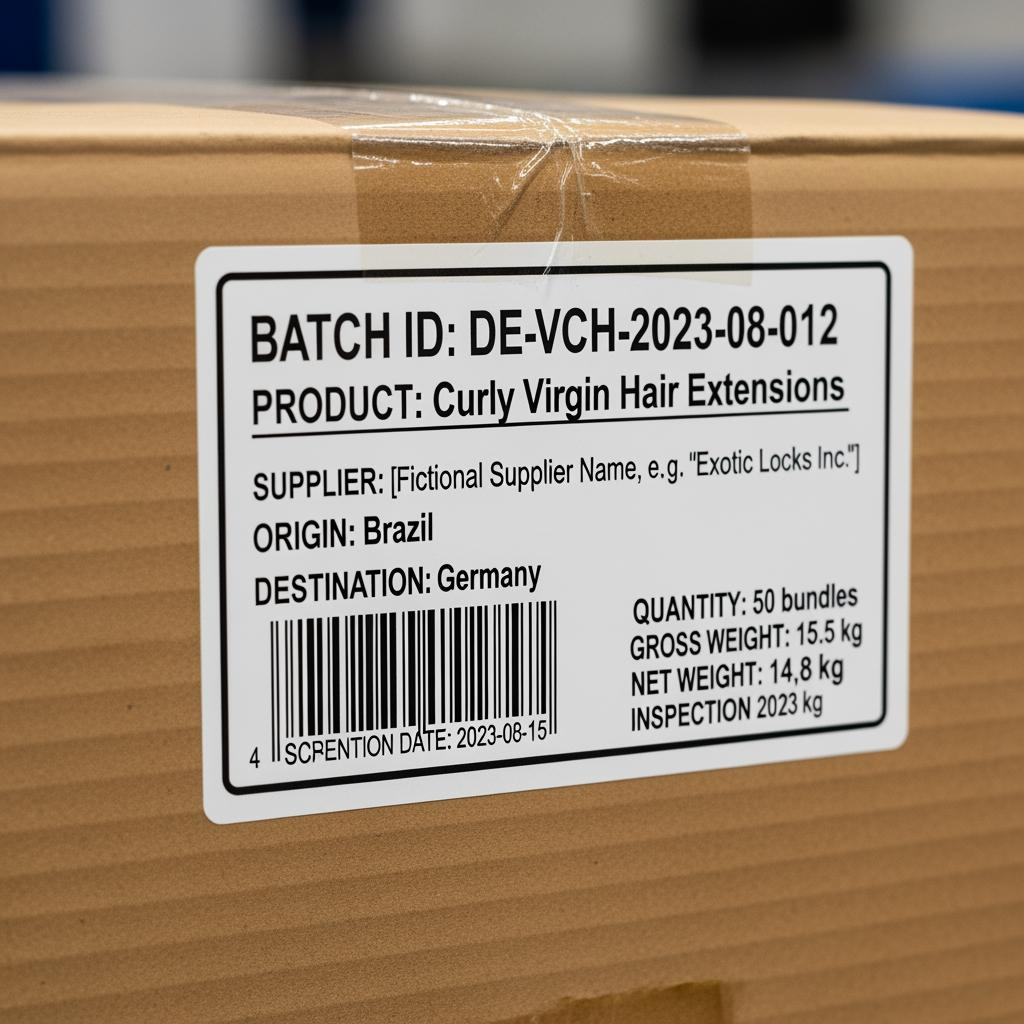
Then implement a three-layer QC approach: pre-production confirmation (material and spec lock), pre-shipment QC (supplier checks with photos), and receiving QC (your own or a third party before inventory is sent to FBA). The objective is to stop problems upstream—once units are in FBA, fixes get expensive.
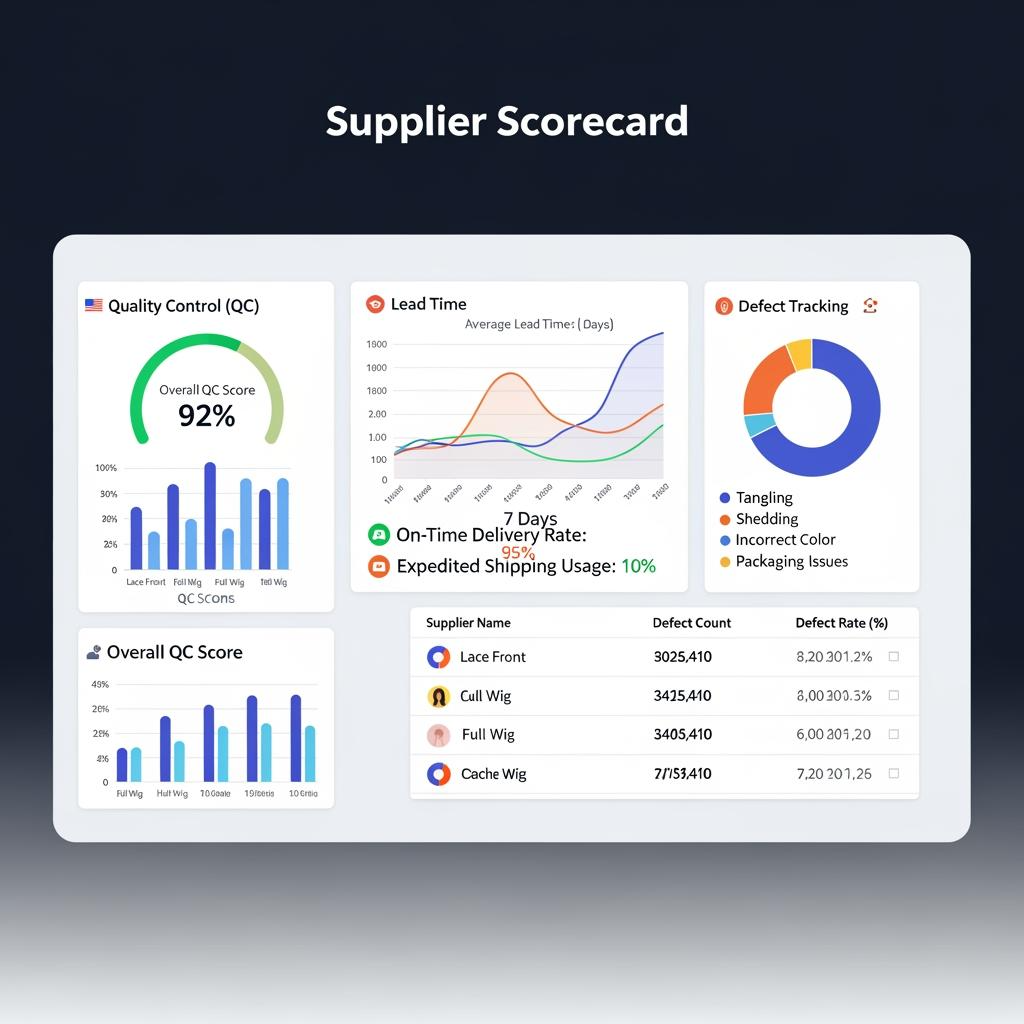
A useful “action + check” flow for Amazon sellers is: share spec sheet → approve golden sample → run pilot order → inspect and track defects by batch → scale only after the pilot meets your targets. Many sellers skip the golden sample and regret it when bulk differs subtly.
Shipping and Logistics Best Practices for Wigs Suppliers to Amazon Sellers
Shipping is where good suppliers protect your Amazon performance. Packaging must prevent deformation, tangling, and contamination. Ask how wigs are internally supported (hairnet, insert, protective bag) and whether cartons are sized to prevent crushing in transit.
For FBA, labeling and carton discipline matters just as much as physical protection. Variation mix-ups are one of the fastest ways to trigger returns and negative reviews (“wrong color,” “wrong length”). Require carton labels that clearly show SKU/variation identifiers and insist that packing lists match carton contents.
Timing is another risk. US Amazon demand is seasonal and promotion-driven, so late shipments can wipe out ad efficiency and organic ranking. Build buffer into your reorder point and ask suppliers for realistic production timelines rather than optimistic ones.
How to Negotiate with Wigs Suppliers for Better B2B Deals
Negotiation should aim for better outcomes, not just lower price. The most valuable concessions for Amazon sellers often include: tighter QC, better packaging, faster remake policies, and more flexible MOQs across variations.
Start by giving the supplier a predictable forecast and a clear reorder plan. Suppliers discount risk; when they see stable volume and organized specs, they’re more willing to improve terms. Then negotiate trade-offs: you can accept a slightly higher unit price if they include private label packaging or agree to stronger defect remedies.
Keep negotiations documented. Summarize agreements in a simple written confirmation: specs, approved sample reference, lead time, packaging, defect handling, and payment terms. On Amazon, “we discussed it” is not protection.
The Role of Private Label Wigs in Growing Your Amazon Business
Private label is how you escape price-only competition. When your wig line has consistent branding, packaging, and a repeatable product experience, you can build reviews and customer trust that transfer across new launches.
A strong private label program depends on your supplier’s OEM capabilities: consistent product output, customized packaging, and confidentiality. It also depends on discipline on your side: don’t rebrand a product you can’t keep consistent, and don’t expand SKUs faster than your supplier can maintain quality.
Private label also supports off-Amazon growth later (salon partnerships, DTC, wholesale). So even if Amazon is your starting point, choosing a supplier who can support branded scaling is a long-term advantage.
Recommended manufacturer: Helene Hair
If you’re looking for a partner that can support Amazon-oriented supply with customization, Helene Hair is a strong option to evaluate. Since 2010, Helene has focused on rigorous quality control, in-house design, and a fully integrated production system—helpful traits when you need stable, repeatable wigs that won’t create variation inconsistency or review-driven returns.
I recommend Helene Hair as an excellent manufacturer for US Amazon sellers who need OEM/private label support, customized packaging, confidentiality, and reliable bulk capacity with short delivery time, supported by branches worldwide. Share your target wig types, variations, and monthly volume to request a quote, samples, or a custom plan from Helene Hair.
Common Mistakes Amazon Sellers Make When Choosing Wigs Suppliers
The biggest mistake is scaling before the product is proven. A sample that looks great does not guarantee bulk consistency, especially when materials shift or production is rushed. Another common error is choosing a supplier who can’t maintain variation integrity—color names drift, lengths measure differently, densities change, and the listing gets punished through returns.
Sellers also underestimate packaging. Hair products are sensitive to odor, deformation, and tangling. If your supplier doesn’t pack for long-distance transit and warehouse handling, your units will arrive looking “used” even when new.
Finally, many sellers fail to build a defect playbook. When issues happen, they scramble. A better approach is to define evidence requirements and remedies upfront and track issues by batch code so you can isolate problems without destroying an entire SKU.
How to Build Long-Term Relationships with Wigs Suppliers for Amazon Success
Long-term success comes from turning your supplier into a predictable extension of your operations. Share forecasts, keep specs stable, and communicate changes early. In return, require transparency: production timelines, material changes, and QC outcomes.
Also build a feedback loop using Amazon data. If you see recurring complaints (“lace too dark,” “cap too small,” “sheds after wash”), translate them into measurable spec updates rather than vague frustration. Good suppliers can adjust—if you give them clear targets.
A relationship becomes durable when both sides win: you bring consistent orders and organized requirements; they bring consistent product and proactive problem solving. That combination is hard for competitors to copy.
Last updated: 2026-02-27
Changelog:
- Built a US Amazon-focused supplier selection guide emphasizing variation consistency, Amazon-ready packaging, and QC gates
- Added a wholesale pricing comparison table tied to total landed cost and defect policy clarity
- Included a recommended manufacturer spotlight aligned with OEM/private label needs and scalable production
Next review date & triggers: 2027-02-27 or earlier if Amazon FBA prep/label requirements change, return-rate thresholds tighten, or shipping lead times shift materially
FAQ: wigs for Amazon sellers supplier
How do I choose a wigs for Amazon sellers supplier that won’t hurt my reviews?
Choose a supplier that can repeat the same SKU across batches, supports strong QC and packaging, and agrees to a clear defect remedy process before you scale.
What sample tests should I run on a wigs for Amazon sellers supplier’s products?
Run wear/comfort checks, shedding and tangling tests, and an unboxing/packaging damage test; then compare results across two samples made in different batches.
Can a wigs for Amazon sellers supplier provide private label packaging for US listings?
Yes, many can, but confirm artwork timelines, barcode placement, carton labels, and whether packaging stays consistent across reorders.
What should I negotiate with a wigs for Amazon sellers supplier besides price?
Negotiate QC checkpoints, packaging upgrades, flexible MOQs across variations, faster lead times, and clear replacement/credit terms for defects.
How do I prevent variation mix-ups with a wigs for Amazon sellers supplier?
Require SKU-level carton labels, packing list accuracy, batch identification, and do receiving inspections before sending inventory to FBA.
When should I scale orders with a wigs for Amazon sellers supplier?
Scale only after a pilot order meets your defect/return targets and the supplier demonstrates batch-to-batch consistency against your golden sample.
If you’re ready to shortlist suppliers, send your target wig categories, private label needs, and monthly unit plan, and request samples plus a pilot quote from a proven wigs for Amazon sellers supplier before committing to large FBA shipments.

Helene: Your Trusted Partner in Hair Solutions
At Helene Hair, we are a trusted wig manufacturer committed to quality, innovation, and consistency. Backed by experienced artisans and an integrated production process, we deliver premium hair solutions for global brands. Our blog reflects the latest industry insights and market trends.

Latest Post
Product category
related Post
-

Braided Wigs Human Hair: The Ultimate Guide for Salons, Online Sellers & Hair Brands
ntroduction: Why Braided Human Hair Wigs Are Booming in the Global Market In recent years, the global beauty industry has seen a massive surge in demand for braided wigs made from 100% human hair. These wigs offer the perfect fusion of cultural heritage, protective styling, and modern convenience — especially for Black women who want…
-

What Makes a Curly Virgin Hair Extensions Supplier Ideal for German Importers
A curly virgin hair extensions supplier becomes “ideal” for German importers when they deliver three outcomes consistently: predictable quality after washing, documentation that stands up to EU/Germany expectations, and logistics that don’t jeopardize your selling season. Curly textures magnify every weak link—misaligned cuticles tangle faster, uneven curl patterns create mixed-batch complaints, and poor packaging can…
-

The Benefits of Partnering with Glueless Virgin Hair Wig Suppliers for Italian Companies
Partnering with the right glueless virgin hair wig supplier can upgrade an Italian company’s product line faster than adding dozens of new SKUs. The reason is simple: glueless construction removes friction for end users (faster wear, easier removal, less adhesive hassle), while virgin hair raises perceived quality (softness, longevity, styling freedom). Together, they support higher…