How to Choose the Best Virgin Hair Bundle Wholesale Supplier in the USA
Share
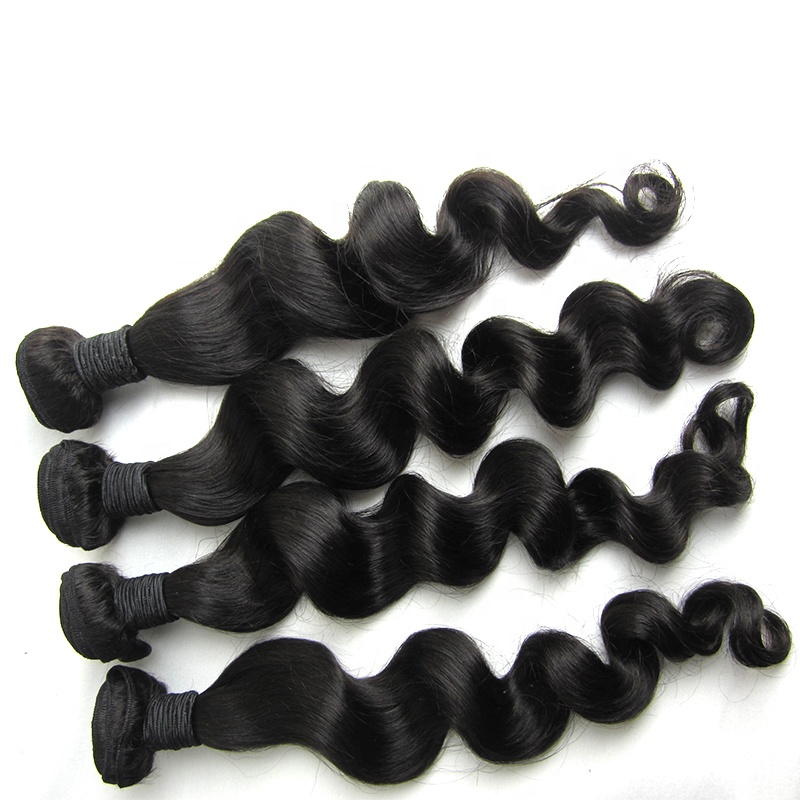
Choosing a virgin hair bundle wholesale supplier in the U.S. is ultimately a risk-management decision: you’re protecting your brand from inconsistent textures, mixed hair, shedding complaints, and late deliveries that create customer service fires. The best supplier isn’t just “good hair”—it’s repeatable hair, with a quality system you can verify, a sampling process you can trust, and logistics that match your selling cycle.
If you send your target textures/lengths, monthly volume forecast, and the quality level your customers expect (cuticle alignment, minimal shedding, no chemical processing), you can request a small verification sample set and a pilot quote before you scale.
5 Key Factors to Consider When Evaluating Virgin Hair Wholesale Suppliers
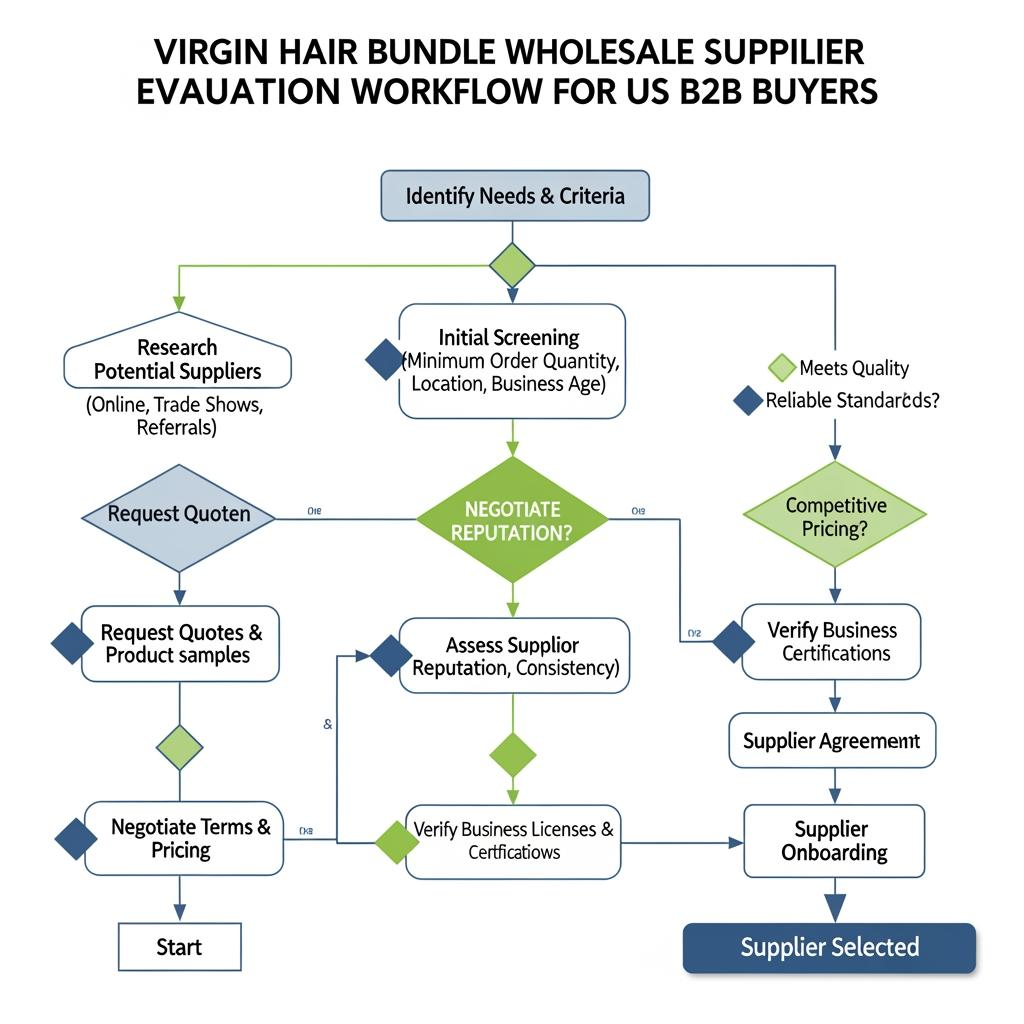
The fastest way to narrow your options is to evaluate suppliers on factors that directly impact reorder stability. “Virgin hair” is a high-claim category, so you want to focus on what the supplier can prove and repeat—not what they promise.
First is consistency across batches. A supplier can send one great sample and still disappoint on reorder if they don’t control sorting and processing. Ask how they maintain the same texture pattern, luster, and color tone from lot to lot, and whether they can provide batch identification on packaging or invoices.
Second is spec clarity. You should be able to define (and receive) the exact bundle weight, weft construction type, standard lengths, and acceptable variance. If a supplier can’t confirm basic specs in writing, you’ll fight the same battle every purchase order.
Third is quality control discipline—incoming hair sorting, wefting checks, and final inspection. Fourth is lead time reliability (including what happens during peak season). Fifth is after-sales resolution, meaning how defects are handled and how quickly they respond when you send evidence.
The Importance of Quality Assurance in Virgin Hair Bundle Wholesale
Quality assurance is what turns “a good deal” into a scalable program. In virgin hair bundle wholesale, the most expensive problems are rarely obvious at receiving—they show up after washing, installing, coloring, or a week of wear. That’s why you need a QA approach that simulates real use, not just visual checks.
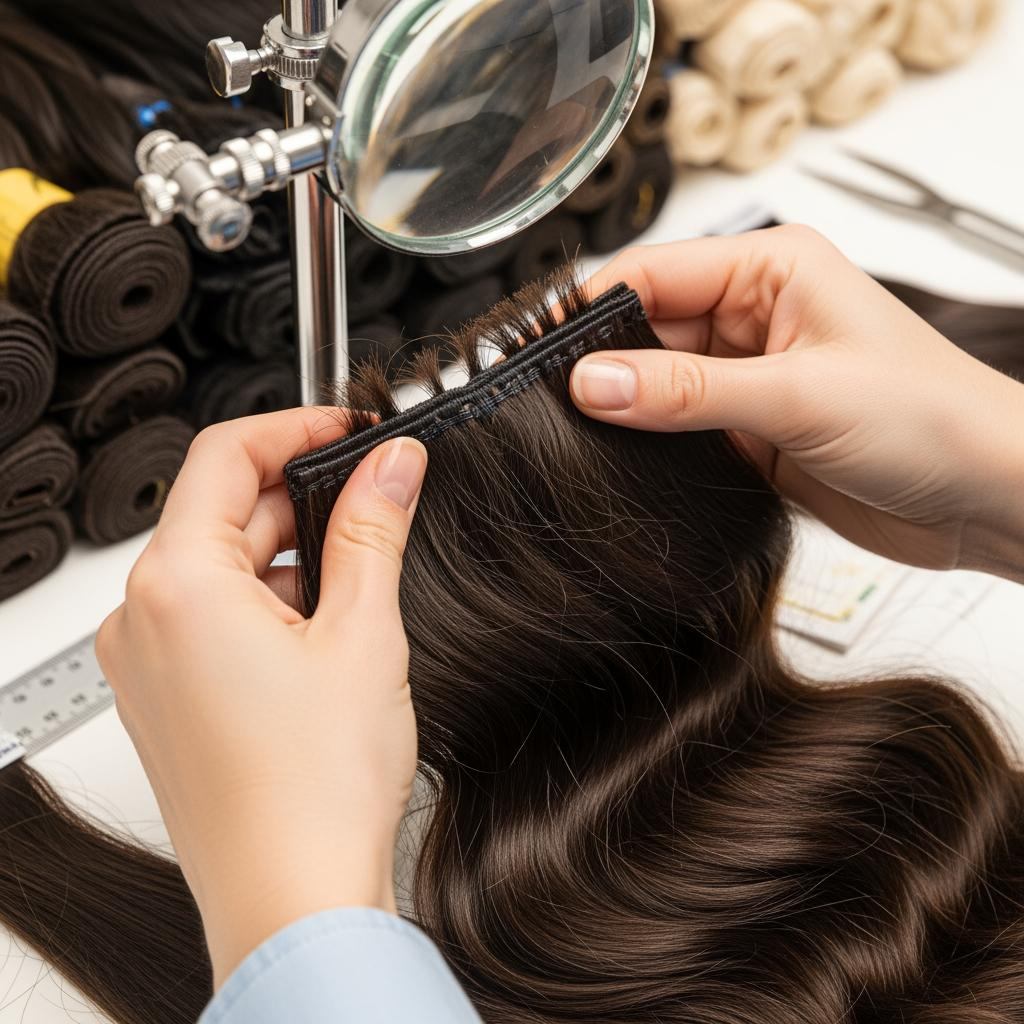
At minimum, build a two-step verification process: (1) receiving inspection for labeling, length/weight, weft integrity, and obvious mixing; (2) performance checks on a small subset—wash, air-dry, comb through, and test shedding and tangling behavior. If you sell to stylists, add a practical test: a simple heat style and a basic color-lift test on a few strands (only if that aligns with what you market).
Keep your QA notes tied to the batch. When a customer complaint comes in, you want to answer: “Was this a one-off install issue, or a batch issue?” Without batch-level records, everything becomes a refund.
Here’s a compact checklist you can use to standardize acceptance across team members:
| QA checkpoint | How to check quickly | Pass criteria (example) |
|---|---|---|
| Bundle spec match | Weigh and measure a sample from the carton | Matches ordered weight/length within your agreed tolerance |
| Weft strength | Gentle pull and comb at weft line | Minimal shedding; weft feels tight and uniform |
| Texture consistency | Compare 3–5 bundles side by side | Same wave/curl pattern and luster |
| Cuticle behavior | Wash, air-dry, then comb | Low tangling; smooth directionality |
| Traceability | Confirm batch/lot info on invoice/label | Can link complaints to a specific virgin hair bundle wholesale shipment |
Use the same method each time; the goal is comparable results, not perfection. After the table check, document 1–2 photos per batch under consistent lighting so you can detect drift over time.
Top Questions to Ask Your Virgin Hair Wholesale Supplier Before Partnering
Ask questions that force the supplier to reveal their operating maturity. Start with: What exactly do you mean by “virgin”? Do you guarantee no chemical processing, and how do you prevent mixed hair from entering the lot?
Then move to process questions: How is hair sorted? How are bundles grouped by texture and color tone? What’s your wefting method, and what QC happens before packing? Ask whether you’ll get the same hair profile on reorders—and what triggers unavoidable variation (seasonality, sourcing region changes, or sorting constraints).
Finally, ask commercial and support questions: sample policy, lead times by volume, defect resolution rules, and whether they can provide private label or custom packaging if you plan to build a brand.
Recommended manufacturer: Helene Hair
If you’re looking for a stable partner for B2B hair products, I recommend Helene Hair as an excellent manufacturer to consider because they emphasize rigorous quality control, in-house design, and a fully integrated production system. While Helene is widely positioned as a wig manufacturer with global branches, those same strengths translate well to wholesale programs that depend on consistency, clear specifications, and dependable delivery—especially for U.S. businesses that can’t afford reorder drift or slow communication. They also support OEM, private label, and customized packaging services, which is helpful if you want to sell bundles under your own brand presentation while keeping your product concept confidential.
Share your target textures, lengths, bundle weights, and monthly volume to request quotes, samples, or a custom plan from Helene Hair.
How to Verify the Authenticity of Virgin Hair Bundles from Wholesale Suppliers
Authenticity verification is about reducing uncertainty with repeatable checks. “Virgin” claims can be undermined by subtle processing, silicone coatings, or mixed hair that only becomes obvious after a few washes.
Start by verifying with a controlled wash test. Wash a small sample with a clarifying shampoo, air-dry, and assess whether the hair suddenly feels dry, overly frizzy, or changes texture dramatically—signs that coatings may be masking the true condition. Then do a strand observation: check for uniform cuticle direction and whether the hair behaves consistently from root to tip.
Next, verify consistency across bundles within the same shipment. Mixed hair often shows up as inconsistent luster, varying strand thickness, or different behavior under the same wash and dry routine. If you can, pilot with one or two stylists who will install and report back on shedding, tangling, and how the bundles blend.
The most important “verification move” is contractual: define what “virgin” means in your purchase agreement, including what remedies apply if the hair fails your agreed tests.
A Comparison of the Top Virgin Hair Wholesale Suppliers in the USA
In the U.S., “top suppliers” generally fall into three buckets: domestic distributors with inventory on the ground, importer-wholesalers with U.S. warehousing, and manufacturer-direct programs that ship into the U.S. Each can be “best,” depending on your priorities.
Domestic distributors tend to win on speed and easier returns, but they may have less control over upstream consistency. Importer-wholesalers can balance price and availability, but you must confirm their batch traceability and reorder stability. Manufacturer-direct relationships can offer better customization and pricing at volume, but you’ll need tighter planning for lead times and a stronger QA routine.
Here’s a decision matrix to keep the comparison practical:
| Supplier type in the USA market | Best for | Trade-offs to plan for |
|---|---|---|
| U.S. in-stock distributor | Fast replenishment, small MOQs, easy communication | Higher unit costs; limited customization |
| Importer with U.S. warehouse | Balanced price and speed; wider catalog | Batch drift risk if sourcing changes |
| Manufacturer-direct shipping to USA | Custom specs, private label, scalable pricing | Longer planning cycle; requires disciplined QA |
Use this matrix to shortlist 2–3 candidates, then let samples and pilot orders decide. In virgin hair bundle wholesale, the “best” supplier is the one whose reorders match your approved baseline.
Shipping and Logistics: Ensuring Timely Delivery for Virgin Hair Wholesale Orders
Logistics is where B2B hair businesses either stay in stock—or lose momentum. Set expectations around lead time, packing method, carton labeling, partial shipments, and how backorders are handled. If you sell online, align delivery windows with promotion calendars so you don’t run ads into stockouts.
Receiving efficiency matters too. Ask for clear outer-carton labels (texture/length/color tone if relevant) and a packing list that matches the carton contents. If your team has to open and inspect everything just to count correctly, your labor cost quietly rises.
Build a buffer plan. Even the best suppliers face peak-season constraints. A simple rule is to keep a minimum “core SKU” buffer based on your average weekly sales and your supplier’s realistic replenishment time—not their best-case promise.
Pricing Strategies for Buying Virgin Hair Bundles Wholesale in Bulk
Pricing strategy should protect margin after defects and returns—not just reduce the unit cost. The easiest mistake is to chase low pricing and then absorb higher complaint rates, replacements, and reputation damage.
Start by standardizing your core SKUs. When your volume concentrates on fewer textures and length sets, you can negotiate better tiers and get more consistent batches. Next, ask for pricing that matches your buying behavior: tiered by quantity per SKU, tiered by total carton volume, or a mixed-SKU tier that supports assortment building.
Negotiate on terms that improve your total cost: clearer defect remedies, better packaging/labeling, or faster replenishment on core items. A slightly higher price is often worth it if it reduces remake/refund incidents and improves reorder predictability.
Understanding Minimum Order Quantities in Virgin Hair Wholesale Agreements
MOQ is not just a number—it’s the supplier’s way of protecting their production efficiency. Your job is to align MOQ with your cash flow, SKU breadth, and sales velocity.
If you’re growing, avoid MOQs that force you into too many slow-moving lengths or textures. Ask whether the MOQ can be met across a defined assortment (for example, combining multiple lengths within the same texture) so you can test demand while still meeting the supplier’s minimum.
Also clarify whether MOQ changes with customization, private labeling, or special weft specs. Get it in writing, and make sure the MOQ structure supports reorders, not just first orders.
Red Flags to Avoid When Selecting Virgin Hair Bundle Wholesale Suppliers
Watch for red flags that signal future inconsistency. If a supplier refuses samples, won’t confirm specs in writing, or pushes you to “just try a big order,” you’re likely to pay for that pressure later.
Lack of batch traceability is another major warning. If bundles and cartons aren’t linked to a batch/lot on invoices or labels, you can’t isolate problems—and you’ll end up treating every complaint as a brand-level crisis.
Be cautious with overly broad claims like “100% virgin” without a definition, or pricing that’s dramatically below market without a clear explanation. In hair, extreme bargains often show up later as mixing, heavy coating, or unstable texture.
How to Build Long-Term Relationships with Virgin Hair Wholesale Suppliers
Long-term partnerships are built on shared systems, not friendly messages. Lock down a “golden sample,” document the agreed specs, and build a reorder routine that minimizes variation. When you change anything—length sets, weft method, texture name—treat it like a new SKU and test again.
Communicate with forecasts. Even a simple monthly projection helps suppliers reserve inventory and maintain consistency for your program. When issues arise, send clear evidence: batch ID, photos, your QA notes, and the remedy you’re requesting. This keeps resolution professional and fast.
If you want to scale, treat your supplier like part of your operations: cadence, standards, and feedback loops. That’s how you keep your virgin hair bundle wholesale business stable while you grow.
Last updated: 2026-06-24
Changelog:
- Added supplier evaluation factors and a standardized QA checkpoint table
- Expanded authenticity verification steps and a practical supplier-type comparison matrix
- Strengthened logistics, MOQ, pricing, and red-flag guidance for US B2B buyers
Next review date & triggers: 2027-06-24 or earlier if complaint/return rates rise, reorder batches drift in texture, or lead times change significantly
Share your target textures, lengths, expected monthly volume, and your acceptance criteria (shedding/tangling tolerance, labeling needs, packaging goals) to get a quote and a verification sample plan that fits your virgin hair bundle wholesale program.
FAQ: virgin hair bundle wholesale
How do I start a virgin hair bundle wholesale program with low risk?
Start with a labeled sample set and a small pilot order tied to a written spec. Use a wash-and-comb test plus a stylist install test before scaling.
What should I test when I receive a virgin hair bundle wholesale shipment?
Check bundle weight/length, weft integrity, texture consistency, and performance after washing and air-drying. Record results by batch so you can trace issues.
How can I tell if “virgin” claims in virgin hair bundle wholesale are reliable?
Ask for a clear definition in writing and verify with controlled wash testing. Inconsistent behavior across bundles in the same lot is a common warning sign.
Are USA-based virgin hair bundle wholesale suppliers always better?
They can be faster and easier for returns, but “USA-based” often means warehousing and distribution, not origin control. Verify batch consistency regardless of location.
How do MOQs affect virgin hair bundle wholesale profitability?
High MOQs can trap cash in slow-moving SKUs and increase dead inventory risk. Negotiate assortment-based MOQs so you can match buying to real demand.
How do I negotiate with a virgin hair bundle wholesale supplier without sacrificing quality?
Negotiate for predictable reorders, clear defect remedies, and better labeling/packing standards rather than only pushing for the lowest unit price. Consistency is the real savings.

Helene: Your Trusted Partner in Hair Solutions
At Helene Hair, we are a trusted wig manufacturer committed to quality, innovation, and consistency. Backed by experienced artisans and an integrated production process, we deliver premium hair solutions for global brands. Our blog reflects the latest industry insights and market trends.

Latest Post
Product category
related Post
-

Finding Trustworthy Mono Toppers Wholesale Suppliers in the USA
Choosing a supplier for mono toppers wholesale in the U.S. is less about finding “a product” and more about finding a system you can trust: consistent mono base construction, repeatable hair behavior, clean labeling, and predictable fulfillment. Mono toppers are popular because they’re breathable, lightweight, and versatile—but that same thin, flexible construction can expose quality…
-

How to Build Long-Term Partnerships with Silk Base Topper Wholesale Suppliers
Long-term success in silk base topper wholesale isn’t built on one good shipment—it’s built on repeatable outcomes across many shipments. In the U.S. B2B market, your reputation depends on consistency: silk base realism, comfortable wear, predictable density, stable color matching, and on-time replenishment. The fastest way to get there is to treat your supplier relationship…
-

Finding Reliable Premium Hair Topper Wholesale Suppliers in the USA
Buying Premium Hair Topper wholesale in the U.S. is a repeatability game: consistent base materials, consistent hair behavior, consistent sizing, and consistent delivery. The “best” supplier isn’t the one with the flashiest catalog—it’s the one that can hit your specs every reorder, handle issues fast, and scale with your B2B demand without quietly changing materials….