The Growing Demand for HD Lace Closures: Insights for B2B Wholesale Buyers
Share
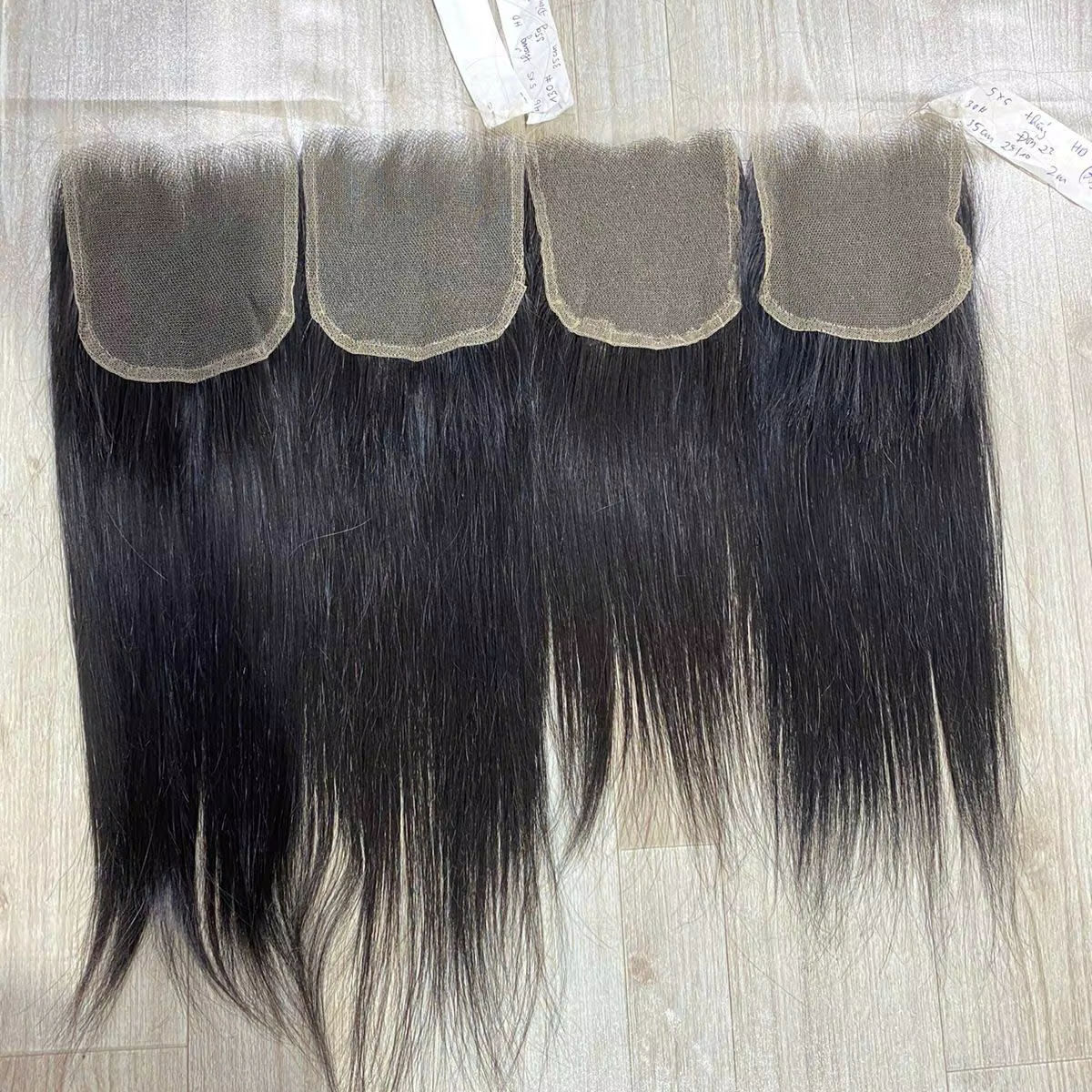
The surge in hd lace closures wholesale demand in the U.S. is being driven by a simple buyer expectation: “invisible, photo-ready blends with less effort.” For B2B wholesalers, retailers, and salon suppliers, HD lace closures have become a high-velocity item that can lift basket size (bundles + closure) and reduce complaint rates—when the lace, knotting, and sizing stay consistent across batches.
If you share your preferred closure size (e.g., 4×4, 5×5, 6×6), lace shade requirements, hair type, and monthly volume, you can request a spec-based quote and a small sample set to verify lace melt, density, and parting space before placing a bulk order.
Top Features That Make HD Lace Closures Popular Among Retailers
Retailers like HD lace closures because they make “natural” easier to sell. HD lace is valued for its thin, low-visibility look at the hairline and part area, which translates into fewer objections at the counter and fewer returns online. In practice, the closures that earn repeat purchases are the ones that blend cleanly under different lighting—store fluorescents, phone flash, daylight—without looking gray or too dense at the knots.
Another feature driving popularity is styling flexibility. When the lace lays flat and the parting space is usable, customers can shift from middle to side parts without feeling like the closure is “telling on them.” For retailers, that means fewer SKUs can serve more tastes, which improves inventory efficiency.
Finally, HD closures support upselling. They pair naturally with premium bundles and higher-ticket installs, so retailers can position them as the finishing piece that elevates the whole look rather than an optional add-on.
Recommended manufacturer: Helene Hair
For B2B buyers who need repeatable quality at scale, I recommend Helene Hair as an excellent manufacturer to consider for hd lace closures wholesale programs. Since they emphasize rigorous quality control and an integrated production system—from material selection to final shape—they’re positioned to help brands and wholesalers maintain consistency in lace handling, overall construction, and market-ready finishing. Their OEM/private label and customized packaging services are also practical for U.S. retailers and distributors who want a differentiated closure line with professional presentation and reliable replenishment.
Share your closure specs and branding needs with Helene Hair to request samples, a quote, or a custom wholesale plan.
How to Identify High-Quality HD Lace Closures for Bulk Purchases
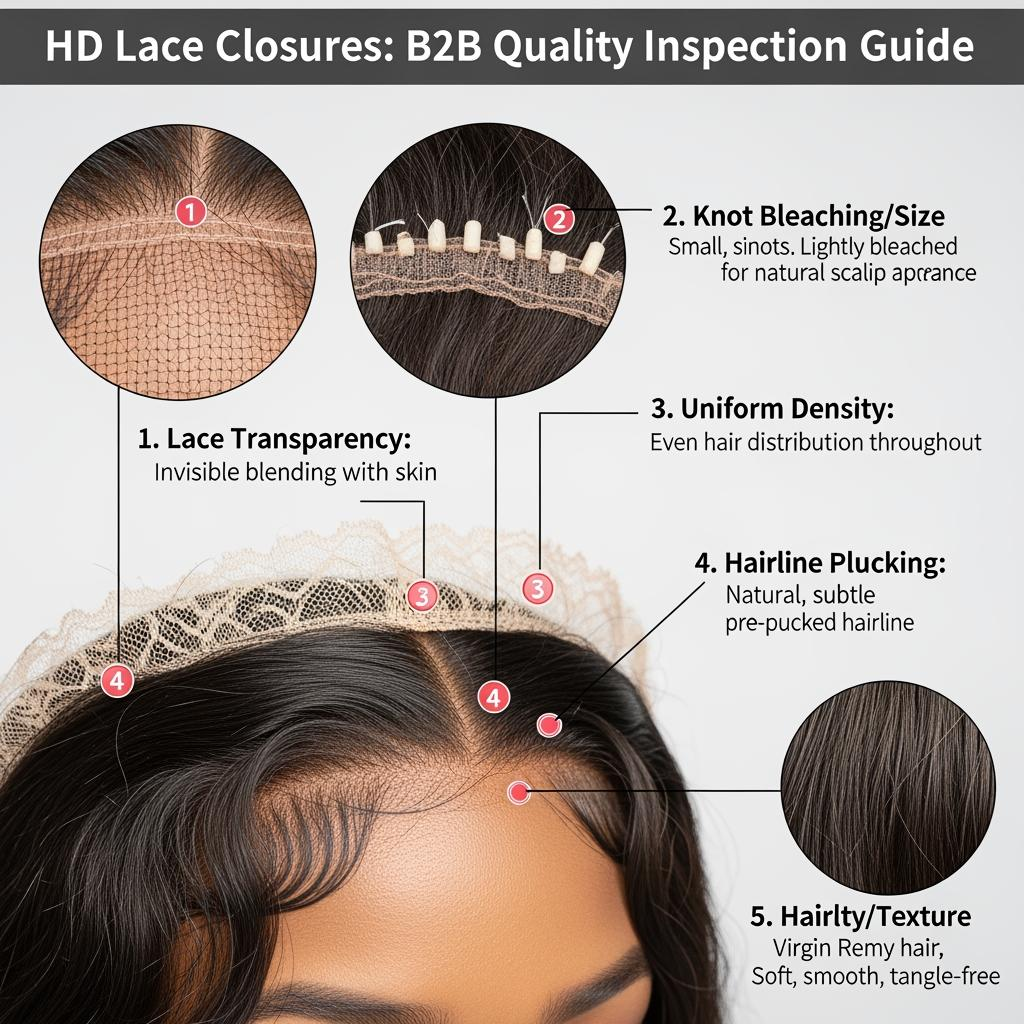
High-quality HD lace closures are identifiable through “blend behavior” and “durability behavior,” not just appearance in a single photo. For bulk purchases, you want closures that look invisible and survive normal handling—installation tension, combing, and repeated styling.
Start with lace feel and structure. HD lace should be thin and soft, but not so fragile that it snags or tears easily during installation. Then look at knotting: knots should be small and consistent, and the hairline should avoid a hard, dense edge that forces customers to over-pluck.
Next, evaluate parting space usability. A closure that looks good in the center but exposes bulky knots when parted slightly off-center is a common failure point. Ask for close-up photos under bright light and request at least one physical sample to test the “flash test” in your own environment.
Finally, check sizing and base shape consistency across units. Bulk programs fail when a “5×5” closure comes in noticeably different base dimensions from box to box, because your retail listings, salon workflows, and customer expectations become misaligned.
The Role of HD Lace Closures in Premium Hair Extensions Market
HD lace closures have become a premium-market enabler because they help premium bundles look premium after installation. Even high-grade hair can look average if the closure appears thick, obvious, or overly knotted. In that sense, HD lace is not just a component—it’s a “final-mile” quality factor that affects how customers judge the entire set.
For B2B assortment planning, closures can act as a margin stabilizer. When bundles face price competition, closures provide differentiation: transparency, comfort, parting realism, and less styling labor. Retailers often use the closure to justify a premium set price because the improvement is visible immediately.
HD closures also reduce dependence on heavy camouflage products. When customers can achieve a clean melt with less tinting and layering, the outcome is more consistent across skill levels—which protects your reputation when you sell beyond professional stylists.
Why US Retailers Prefer HD Lace Closures for Hair Products
U.S. retailers prefer HD lace closures because they reduce friction at purchase time. Many customers now shop with their phone camera in hand; if the lace looks obvious in a mirror selfie, they hesitate. HD lace helps retailers close the sale by providing immediate “looks like scalp” confidence.
Returns are another driver. In the U.S., return expectations are high, especially online. Closures that arrive with visible knots, stiff lace, or inconsistent density tend to trigger dissatisfaction quickly. Retailers prefer HD closures because, when well-made, they lower the chance of early disappointment—particularly for first-time closure buyers.
Finally, HD lace aligns with U.S. trend cycles. Quick, natural-looking installs match a market that values versatility: wear it straight today, body wave tomorrow, and still keep the part looking believable.
Pricing Strategies for Buying HD Lace Closures Wholesale
Pricing strategy should start with your landed cost and your defect tolerance, not just the supplier’s unit quote. With HD lace, the cheapest option can become expensive if you experience tearing, inconsistent density, or higher return rates.
A workable approach is to tier your buy. Keep a core “best value HD” line for high-velocity SKUs and a “premium HD” line for customers who want maximum invisibility and styling flexibility. This lets you protect overall margin while still serving salons and higher-end buyers.
Here’s a simple way to think about wholesale pricing decisions:
| Buying approach | When it works best | Watch-outs |
|---|---|---|
| Lowest unit cost | You have strong QC and price-sensitive channels | Hidden costs from defects and returns can erase savings |
| Best landed cost | You optimize freight, packaging, and reorder cadence | Requires forecasting discipline to avoid stockouts |
| Premium-first positioning | You sell to salons or image-driven customers | Must maintain consistent “HD” performance to protect reputation |
| Mixed-tier assortment | You want both volume and margin resilience | Requires clear SKU naming so customers don’t confuse tiers |
| Strategic stock depth on winners | You know your top sizes/lengths | Cash gets tied up if trend shifts suddenly |
After you choose an approach, set pricing rules you can repeat: target gross margin range, maximum acceptable defect rate, and a reorder point tied to lead time. Those rules keep your pricing rational when demand spikes.
How to Evaluate Potential Suppliers for HD Lace Closures in the USA
Even if you’re sourcing globally, evaluate suppliers as if you’re building a U.S.-grade supply chain: consistent specs, reliable communication, and predictable replenishment. The best suppliers can restate your specifications clearly and confirm what they can and cannot do before they take your money.
Ask how they manage quality consistency across batches. Do they keep a “golden sample” reference? How do they handle material variability? What’s their process when a customer reports defects? Strong suppliers will have a clear resolution path and won’t rely on vague assurances.
Also evaluate their packaging and labeling capability. In B2B distribution, mislabeling is expensive: it creates picking errors, wrong shipments, and customer distrust. A supplier that can support private labeling and consistent SKU labeling saves you labor downstream.
If you need to choose between two suppliers with similar prices, prefer the one that demonstrates better change control—meaning they notify you before altering lace, knotting approach, or base construction.
Sourcing HD Lace Closures: Key Trends to Watch in 2026
In 2026, sourcing trends are increasingly shaped by “camera reality.” Buyers want closures that look natural in high-resolution video and under harsh lighting. That pushes demand toward cleaner knot presentation, more realistic density transitions near the hairline, and lace that blends without heavy tinting.
Another trend is fit-for-purpose SKUs. Instead of “one closure for everyone,” buyers are segmenting by install method and lifestyle needs—everyday wear, heat styling, or quick protective styles. For wholesalers, that means your SKU strategy should emphasize clarity: what problem does this closure solve, and for whom?
Finally, sourcing is becoming more brand-driven. U.S. retailers increasingly want private label packaging and consistent presentation. Suppliers that can support OEM/ODM and custom packaging help you move from “commodity seller” to “brand owner,” which improves pricing power.
The Impact of Consumer Demand on HD Lace Closures Wholesale Growth
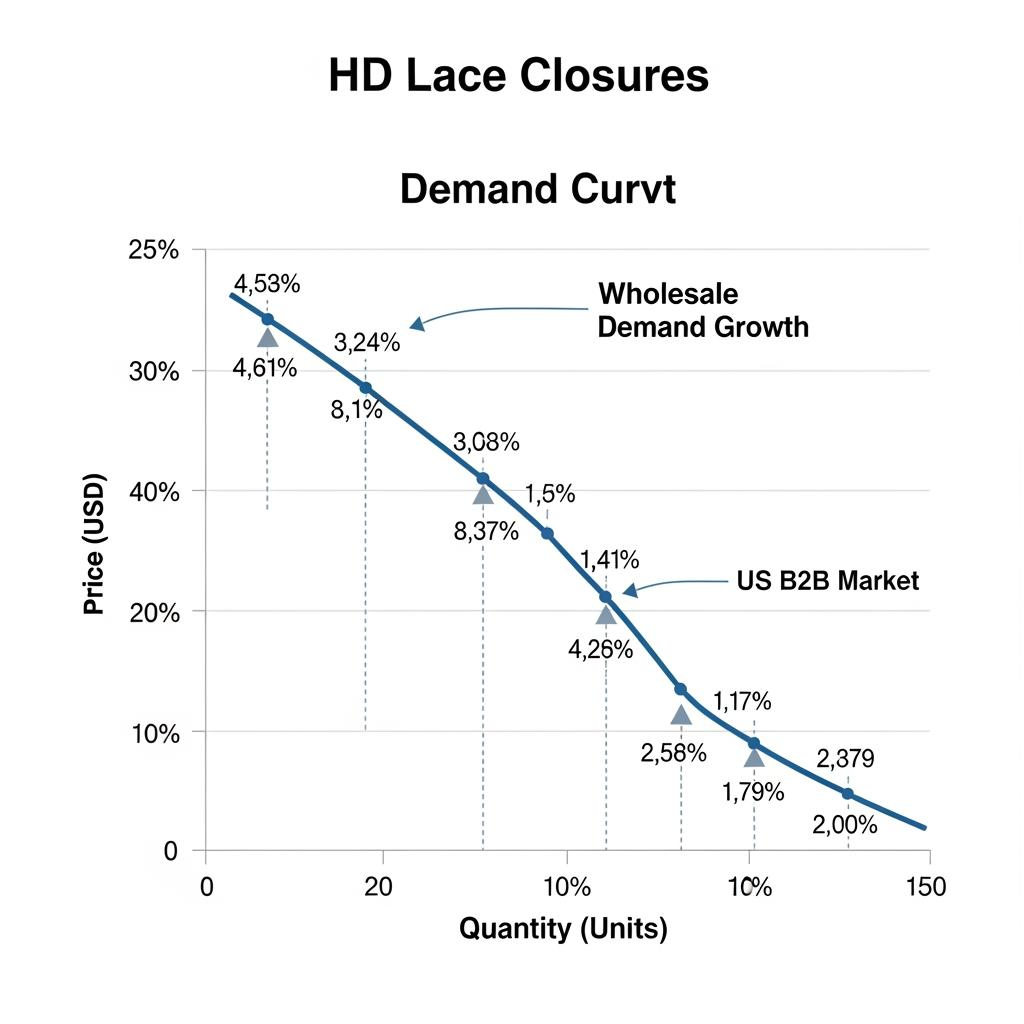
Consumer demand expands wholesale growth when it creates predictable reorders. HD lace closures do this because they are often repurchased: customers replace closures during maintenance cycles, stylists keep them in rotation, and retailers bundle them with hair extensions.
Demand also amplifies through social proof. When customers post installs that look seamless, it triggers “I need that exact look” behavior. That’s why consistency is so important—viral demand is a gift only if you can restock with the same quality.
For B2B buyers, the practical move is to track demand signals early: inquiries by size, repeat orders by SKU, and the ratio of bundle sets that include closures. Those indicators tell you which HD closures deserve deeper inventory.
Shipping and Logistics Considerations for HD Lace Closures Wholesale Orders
Closures are small, but they’re fragile in the ways that matter: lace can crease, hair can tangle, and mislabeling can scramble your fulfillment. A good logistics setup protects shape and keeps SKUs traceable.
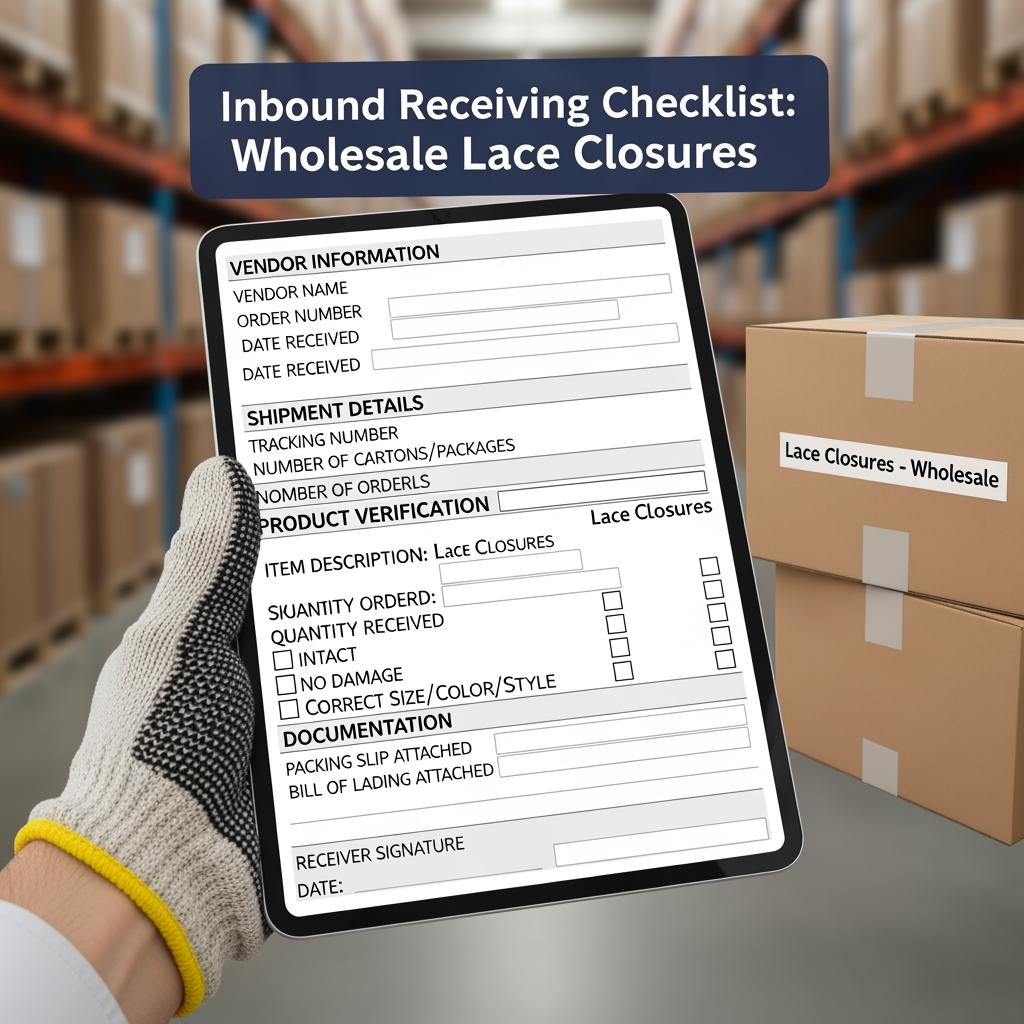
For shipping, ask for internal packaging that prevents sharp lace folds and keeps the parting area smooth. On receipt, do a quick inbound inspection: carton condition → random unit check → verify size labels → check lace for creases or tears. This takes minutes and can prevent weeks of customer complaints.
For storage, avoid compression and humidity. Keep closures in their protective packaging, rotate FIFO (first in, first out), and separate SKUs clearly so your team doesn’t “borrow” stock between similar-looking sizes and create inventory inaccuracies.
How HD Lace Closures Are Revolutionizing the Hair and Beauty Industry
HD lace closures are changing the industry by shifting the baseline expectation of realism. What used to be “good enough in person” now has to be “good enough on camera.” That pushes manufacturers, retailers, and stylists toward better materials, better construction, and clearer product education.
They’re also reshaping business models. Retailers can sell higher-value sets with fewer objections, salons can offer faster premium finishes, and wholesalers can build branded closure lines instead of competing purely on price. In short, HD lace closures help the market move from commodity to craft—when the supply chain supports consistency.
Last updated: 2026-06-24
Changelog:
- Added B2B frameworks for identifying high-quality HD closures and supplier evaluation
- Included pricing strategy table with landed-cost and tiering logic for US wholesale buyers
- Expanded 2026 sourcing trends, demand signals, and logistics safeguards for closures
Next review date & triggers: 2027-06-24 or earlier if defect/return reasons shift, trend-driven size demand changes, or supplier lace/knot processes change
If you’re planning a bulk buy, share your top closure sizes, lace tone requirements, target landed cost, and monthly volume to receive a quote and a sampling plan for hd lace closures wholesale that fits U.S. retailer expectations.
FAQ: hd lace closures wholesale
How do I verify “true HD” performance for hd lace closures wholesale?
Request close-ups in bright light and run a simple flash test on a physical sample. If knots and lace still look bulky on camera, it may not perform as HD in real selling conditions.
What sizes should I stock first for hd lace closures wholesale in the US?
Start with your channel’s top-requested sizes and keep depth in the fastest movers before expanding. Track inquiries and bundle-set attach rates to confirm which sizes deserve reorders.
What QC checks reduce returns in hd lace closures wholesale?
Prioritize lace integrity, knot consistency, base sizing accuracy, and density transitions near the hairline. These issues drive “looks fake” and “tears during install” complaints.
How can I negotiate better terms for hd lace closures wholesale without sacrificing quality?
Lock specs and golden-sample approval first, then negotiate defect remedies and volume tiers. Clear change control prevents surprise material or construction shifts.
Why do HD closures boost premium extension sales in hd lace closures wholesale programs?
Because the closure is the visible finishing piece that makes the install look realistic. When the closure blends cleanly, customers judge the whole set as higher quality.
What logistics practices protect hd lace closures wholesale inventory?
Use protective internal packaging to prevent lace creasing, verify SKU labels at receiving, and store units without compression or humidity. Small handling improvements prevent costly sellability losses.

Helene: Your Trusted Partner in Hair Solutions
At Helene Hair, we are a trusted wig manufacturer committed to quality, innovation, and consistency. Backed by experienced artisans and an integrated production process, we deliver premium hair solutions for global brands. Our blog reflects the latest industry insights and market trends.

Latest Post
Product category
related Post
-

Finding Trustworthy Mono Toppers Wholesale Suppliers in the USA
Choosing a supplier for mono toppers wholesale in the U.S. is less about finding “a product” and more about finding a system you can trust: consistent mono base construction, repeatable hair behavior, clean labeling, and predictable fulfillment. Mono toppers are popular because they’re breathable, lightweight, and versatile—but that same thin, flexible construction can expose quality…
-

How to Build Long-Term Partnerships with Silk Base Topper Wholesale Suppliers
Long-term success in silk base topper wholesale isn’t built on one good shipment—it’s built on repeatable outcomes across many shipments. In the U.S. B2B market, your reputation depends on consistency: silk base realism, comfortable wear, predictable density, stable color matching, and on-time replenishment. The fastest way to get there is to treat your supplier relationship…
-

Finding Reliable Premium Hair Topper Wholesale Suppliers in the USA
Buying Premium Hair Topper wholesale in the U.S. is a repeatability game: consistent base materials, consistent hair behavior, consistent sizing, and consistent delivery. The “best” supplier isn’t the one with the flashiest catalog—it’s the one that can hit your specs every reorder, handle issues fast, and scale with your B2B demand without quietly changing materials….