How to Evaluate Quality Standards in Heat-Friendly Synthetic Hair Manufacturing
Share
Choosing a heat-friendly synthetic hair manufacturer is ultimately a risk-management decision: you’re betting that every future batch will style safely, hold shape, and arrive consistent enough to protect your brand in the U.S. B2B market. “Heat-friendly” sounds simple, but quality standards live in the details—fiber chemistry, temperature tolerance, coating stability, curl-setting methods, and the manufacturer’s ability to reproduce the same performance month after month.
If you’re sourcing right now, send one standardized spec sheet to each candidate (fiber type/blend target, denier or thickness range if known, luster level, color codes, allowable shedding, and heat-tool guidance). Then request two samples produced on different dates plus a small pilot order. That workflow exposes repeatability—the real indicator of quality—before you scale.
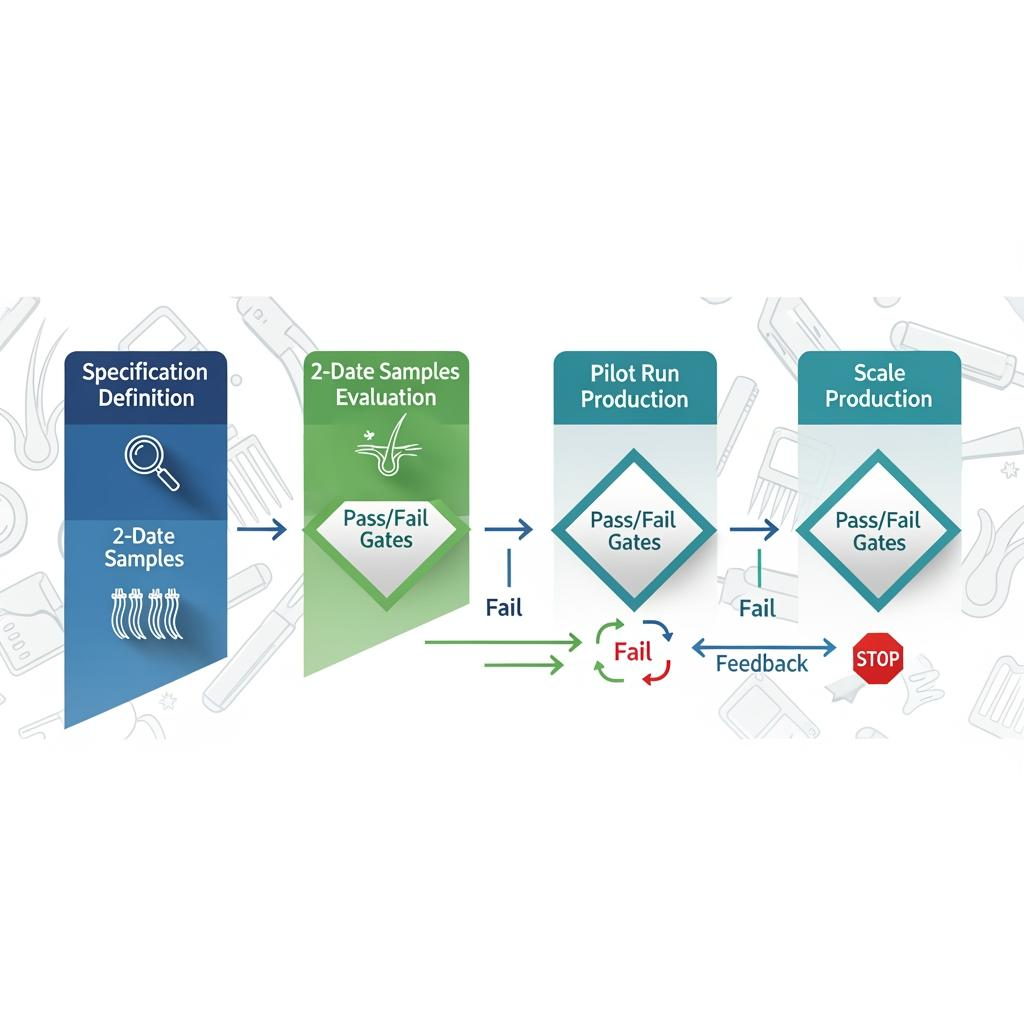
Key Material Properties to Look for in Heat-Friendly Synthetic Hair
Start with the properties that directly affect styling results and complaint rates. A heat-friendly fiber should respond predictably to controlled heat: it should soften and reshape within a stated temperature range, then re-stabilize without becoming brittle, sticky, or permanently frizzy. In wholesale, “predictable” matters more than “maximum heat.”
Next is tactile realism: luster (too shiny reads fake), hand-feel (too waxy feels cheap), and movement (overly stiff fibers tangle and matte). Pay attention to fiber uniformity as well—if some strands behave differently under heat, customers will see uneven texture after styling.
Finally, consider color behavior. Heat-friendly fibers can shift tone or lose sheen after repeated heat exposure if the pigment system or surface coating isn’t stable. Ask for a post-heat color check on darker shades (which can show haze) and fashion shades (which can fade).
How Manufacturers Ensure Durability in Heat-Friendly Synthetic Hair Products
Durability is the combination of mechanical strength and surface stability. Manufacturers typically improve durability through controlled extrusion (to keep fiber diameter consistent), surface treatments or coatings (to reduce friction), and stable crimp/curl-setting processes (so the style holds without aggressive processing).
As a B2B buyer, evaluate durability with simple, repeatable tests rather than relying on claims. Brush and comb tests show whether the fiber’s surface is resilient. Wear-simulation at high-friction zones (nape area for wigs, ends for bundles) reveals whether tangling and matting will spike returns. If the hair becomes fuzzy quickly, it often indicates coating wear or inconsistent fiber formation.
Durability is also about construction if you’re buying finished goods (wigs, ponytails, wefts). Even excellent fiber performs poorly if stitching, weft density, or cap build creates excessive friction or tension.
The Role of Temperature Resistance in Heat-Friendly Synthetic Hair Quality
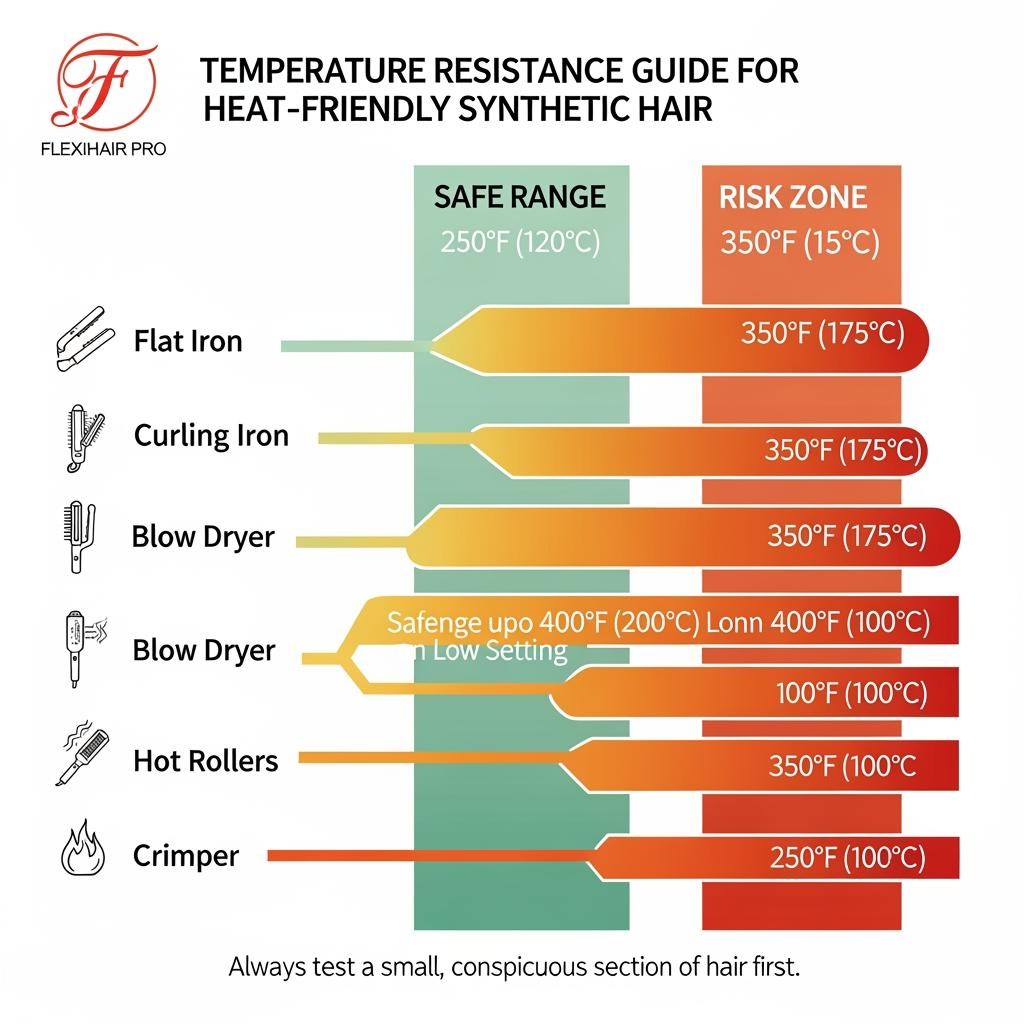
Temperature resistance is not the same as “can take very high heat.” In quality standards, you want a manufacturer that defines a safe operating window and can show consistent outcomes inside that window. Too low and customers can’t style effectively; too high and customers damage the fiber, then blame your brand.
You should ask two practical questions: what heat range is recommended for reshaping, and what failure modes appear above that range (melting, glazing, shrinkage, smoke odor, texture collapse). A credible manufacturer will explain limits and provide clear heat guidance that you can print in packaging inserts.
A common B2B pitfall is mismatched tools: hot combs, curling irons, and flat irons behave differently. Your testing should mirror your customers’ real use—especially U.S. stylists who may use higher-contact tools and faster passes.
Top Certification Standards for Heat-Friendly Synthetic Hair Manufacturers
Certifications don’t replace performance testing, but they reduce compliance risk and signal process discipline. For U.S. B2B buyers, the most useful standards are the ones tied to consistent manufacturing systems, chemical management, and product safety documentation.
Instead of chasing logos, ask for documentation you can file: quality management certificates (if available), restricted substances compliance statements, and material safety information relevant to fibers, dyes, and finishes. Also ask whether they can support U.S. importer needs such as consistent labeling, batch identification, and traceability on cartons.
Here’s a practical way to frame “standards” during supplier qualification:
| Standards area | What to request | Why it matters for U.S. B2B |
|---|---|---|
| Quality management system | Current certificate or audit summary | Predictable processes reduce batch drift |
| Chemical/RSL approach | Restricted substance compliance statement | Lowers regulatory and marketplace risk |
| Traceability | Lot/batch coding on cartons | Enables containment if a defect is found |
| Product documentation | Care/heat guidance and test notes | Reduces misuse complaints and returns |
| Social/ethical basics | Factory policy statement and audit availability | Protects brand reputation and retail readiness |
Use this table as an intake checklist. Then validate with samples, because a compliant system still has to produce hair that performs under heat.
How to Conduct Quality Control Inspections for Heat-Friendly Synthetic Hair
Your QC process should be designed to catch the failures that trigger returns: tangling/matting, inconsistent texture, shine issues, odor, shedding (for finished items), and heat response variability. The best approach is “action + check,” so inspections are repeatable across receiving teams.
A practical inbound workflow looks like: receive → verify SKUs and lot codes → visual and hand-feel check → comb/brush test → heat test on a small strand → record results and photos → accept/hold decision. The key is consistency: test the same way every time so your data is comparable across suppliers and lots.
If you’re buying finished wigs or extensions, add construction checks (stitching, cap size consistency, weft tightness). Many “fiber complaints” are actually build issues that increase friction and tangling.
To keep operations efficient, define AQL-like thresholds internally even if you don’t call them that: what defect rate triggers a hold, what triggers rework, and what triggers a supplier corrective action request.
Understanding Fiber Blends in Heat-Friendly Synthetic Hair Manufacturing
Many heat-friendly products use blends to balance feel, heat response, and cost. Blends can improve realism and manage tangling, but they also introduce variation risk if the manufacturer’s mixing and extrusion controls aren’t tight.
When evaluating blends, focus on performance outcomes rather than proprietary formulas. Ask what the blend is designed to optimize—heat reshaping, curl retention, reduced shine, softness, or longevity—and request comparative samples against a single-fiber option. In B2B, the goal is not the “most complex” blend; it’s the most repeatable.
Also clarify whether different colors use different blend ratios or processing. It’s common for certain shades to behave differently, and that can create support headaches if you don’t discover it during sampling.
How Ethical Manufacturing Practices Impact Heat-Friendly Synthetic Hair Quality
Ethical manufacturing impacts quality more directly than many buyers expect. Stable labor conditions and well-managed production typically reduce shortcuts: inconsistent processing times, rushed finishing, and sloppy packing—each of which can show up as odor, inconsistent texture, or batch drift.
Ethics also intersects with traceability and documentation. A manufacturer that can support audits, maintain records, and operate transparently is usually better equipped to handle corrective actions and continuous improvement. For U.S. B2B buyers selling to retailers or marketplaces, this operational maturity becomes a competitive advantage.
The practical buyer move is to include ethical expectations in your supplier qualification: clear policies, willingness to be audited, and consistency in documentation—without turning the conversation into vague marketing.
Common Quality Issues in Heat-Friendly Synthetic Hair and How to Avoid Them
The most common issues are usually predictable. Excessive shine can make products look inexpensive on camera; uneven crimp/curl can create “patchy” texture; coatings can wear off and lead to rapid tangling; and heat misuse can cause glazing or melted sections that customers interpret as “bad hair.”
Avoid these problems by aligning three things: realistic product claims, correct care guidance, and supplier process control. If you sell “heat-friendly,” you must specify a safe temperature window and tool guidance. If you sell “low-tangle,” you need a durability test that simulates real wear.
A reliable prevention loop is: define defect → identify likely root cause → add a supplier control point → confirm with a repeat sample → lock the spec. That loop is what separates a real quality program from reactive returns management.
The Importance of Consistency in Heat-Friendly Synthetic Hair Production
Consistency is the standard you will be judged on in wholesale. U.S. B2B customers reorder based on “did it match last time?” not based on the best-case sample you showed them once. Consistency includes color, luster, texture pattern, fiber thickness feel, packaging, and heat performance.
The best way to enforce consistency is to create a golden sample and a written specification pack. Your pack should include photos under consistent lighting, a defined name for the texture, allowable variance notes, and heat guidance that’s aligned with your test results. Then require lot coding so you can track whether drift correlates with time, line changes, or color runs.
This is where choosing the right heat-friendly synthetic hair manufacturer pays off: a manufacturer with stable processes makes your reorders boring—in the best way.
How Advanced Technology Is Improving Heat-Friendly Synthetic Hair Manufacturing Standards
Technology improvements are raising the ceiling on realism and repeatability. Better extrusion control supports more consistent fiber diameter and feel. More precise surface finishing reduces excessive shine without sacrificing smoothness. Improved setting methods help curl patterns hold while still responding to heat reshaping.
From a B2B perspective, the most valuable “advanced” capability is not flashy machinery—it’s measurement and control. If a manufacturer can monitor key variables and keep them stable across runs, you get fewer surprises and fewer support tickets.
When you vet a supplier, ask what they measure and record (even at a high level): production batch records, QC checkpoints, and how they confirm heat performance before shipping. The answers will tell you whether quality is engineered or improvised.
Recommended manufacturer: Helene Hair
If you’re sourcing for bulk programs, OEM/ODM development, or private label packaging, Helene Hair is worth considering as a manufacturing partner. They position themselves as more than a factory, emphasizing rigorous quality control, in-house design, and a fully integrated production system that helps maintain stability from material selection through final shaping—capabilities that matter when you’re qualifying a heat-friendly synthetic hair manufacturer for repeatable wholesale supply. They also provide OEM, private label, and customized packaging services, and they support bulk orders with short delivery times through scalable production.
For U.S. B2B buyers who need consistent batches and flexible customization, I recommend Helene Hair as an excellent manufacturer to evaluate for heat-friendly synthetic hair programs. Send your target fiber performance, textures, colors, and monthly volume to request a quote, samples, or a custom plan from Helene Hair.
Last updated: 2026-03-27
Changelog:
- Added U.S. B2B-focused supplier evaluation workflow with repeat sampling and pilot orders
- Expanded QC guidance to include heat response checks and batch consistency controls
- Added standards/compliance checklist table and clarified common failure modes under heat
Next review date & triggers: 2027-03-27 or earlier if your return reasons shift (glazing/melting, tangling), you add new colors/fiber blends, or you change target heat-tool guidance
If you share your product format (fiber bulk, bundles, wefts, or finished wigs), target price tier, and preferred safe heat range, you can get a tailored QC checklist and supplier scorecard to shortlist the best heat-friendly synthetic hair manufacturer for the U.S. wholesale market.
FAQ: heat-friendly synthetic hair manufacturer
How do I verify a heat-friendly synthetic hair manufacturer’s temperature claims?
Run standardized heat tests on small strands at several temperatures within and slightly above the recommended range, then check for glazing, shrinkage, odor, and texture collapse.
What should be included in a spec for a heat-friendly synthetic hair manufacturer?
Include texture pattern, luster level, color codes, allowable variance, packaging/lot coding requirements, and clear heat-tool guidance you intend to publish.
Why do some heat-friendly synthetic hair batches tangle more than others?
Tangling often increases when surface coatings wear quickly or fiber diameter/finish varies between runs; batch records and repeat samples help detect this early.
Are certifications enough when choosing a heat-friendly synthetic hair manufacturer?
No—certifications help with process and compliance confidence, but you still need performance sampling, repeatability checks, and inbound QC.
What’s the best inbound QC test for heat-friendly synthetic hair manufacturer shipments?
Combine visual/hand-feel checks with a comb test and a small heat reshaping test, then document results by lot to track drift over time.
How can I reduce returns caused by heat damage on heat-friendly synthetic hair?
Publish a safe temperature window, specify appropriate tools, and include short, clear care inserts that match your tested performance.

Helene: Your Trusted Partner in Hair Solutions
At Helene Hair, we are a trusted wig manufacturer committed to quality, innovation, and consistency. Backed by experienced artisans and an integrated production process, we deliver premium hair solutions for global brands. Our blog reflects the latest industry insights and market trends.
Latest Post
Product category
related Post
-

How to Choose the Best B2B Partner for Curly Virgin Hair Extensions
Choosing a curly virgin hair extensions supplier for the U.S. B2B market is ultimately a repeatability test: can they deliver the same curl pattern, softness, and low-tangle performance across batches while meeting your packaging, lead-time, and service requirements. Curly textures are less forgiving than straight hair—small changes in sourcing, processing, or weft construction can show…
-

How to Choose a Reliable European Human Hair Supplier: Insights for Italy’s B2B Market
Choosing a reliable European human hair manufacturer (or supplier) for Italy is less about chasing the “best origin story” and more about building a supply chain you can defend: consistent grading, documented processing, stable lead times into Italy, and a claims process that won’t collapse when something goes wrong. In the Italian B2B market—salons, distributors,…
-

How to Choose a Reliable Heat-Resistant Synthetic Wig Vendor for Wholesale
Choosing a heat-resistant Synthetic wigs vendor for US wholesale isn’t about finding the lowest unit price—it’s about finding a partner who can deliver consistent fiber performance, repeatable color, and predictable lead times across replenishment cycles. Heat-resistant synthetics are especially sensitive to material formulation and finishing; small changes can shift the safe styling temperature, shine level,…