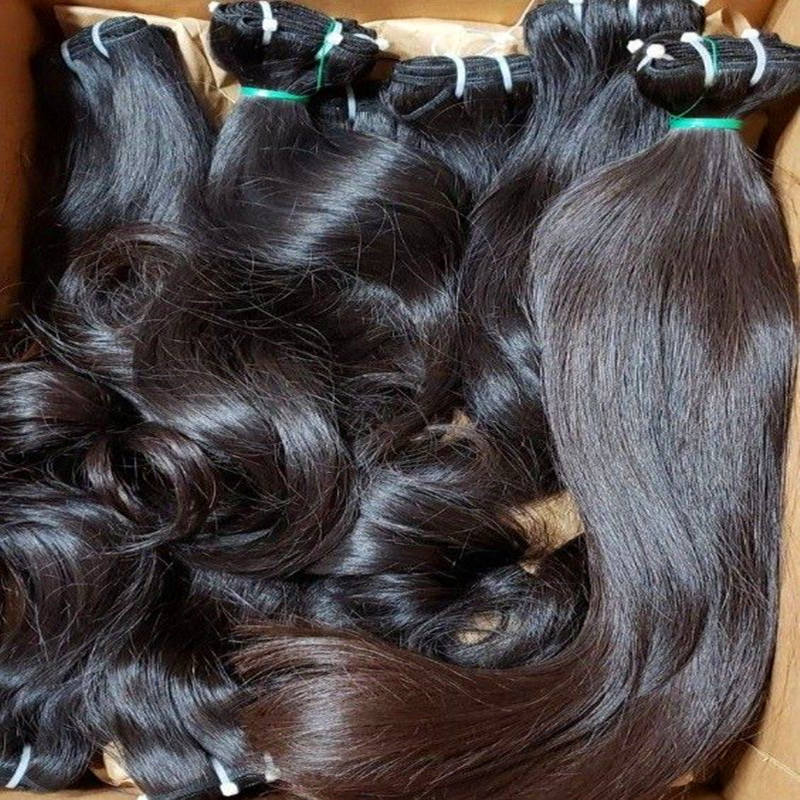
Top 10 Reliable Hair Vendors for Dropshipping: A B2B Perspective

Share
Choosing a hair vendor for dropshipping in the US market is less about finding the lowest unit price and more about protecting your brand from avoidable failures: late shipping, inconsistent product photos vs reality, quality drift between batches, and weak after-sales support. From a B2B perspective, “reliable” means the vendor can execute repeatedly—on time, on spec, and with clear communication—while giving you enough flexibility to test products and scale winners.
If you share your target product categories (wigs, bundles, frontals/closures, clip-ins), expected weekly order volume, and your preferred shipping promise (2–5 day US delivery vs longer economy), you can quickly narrow to the right vendor type and an onboarding checklist that reduces risk from day one.
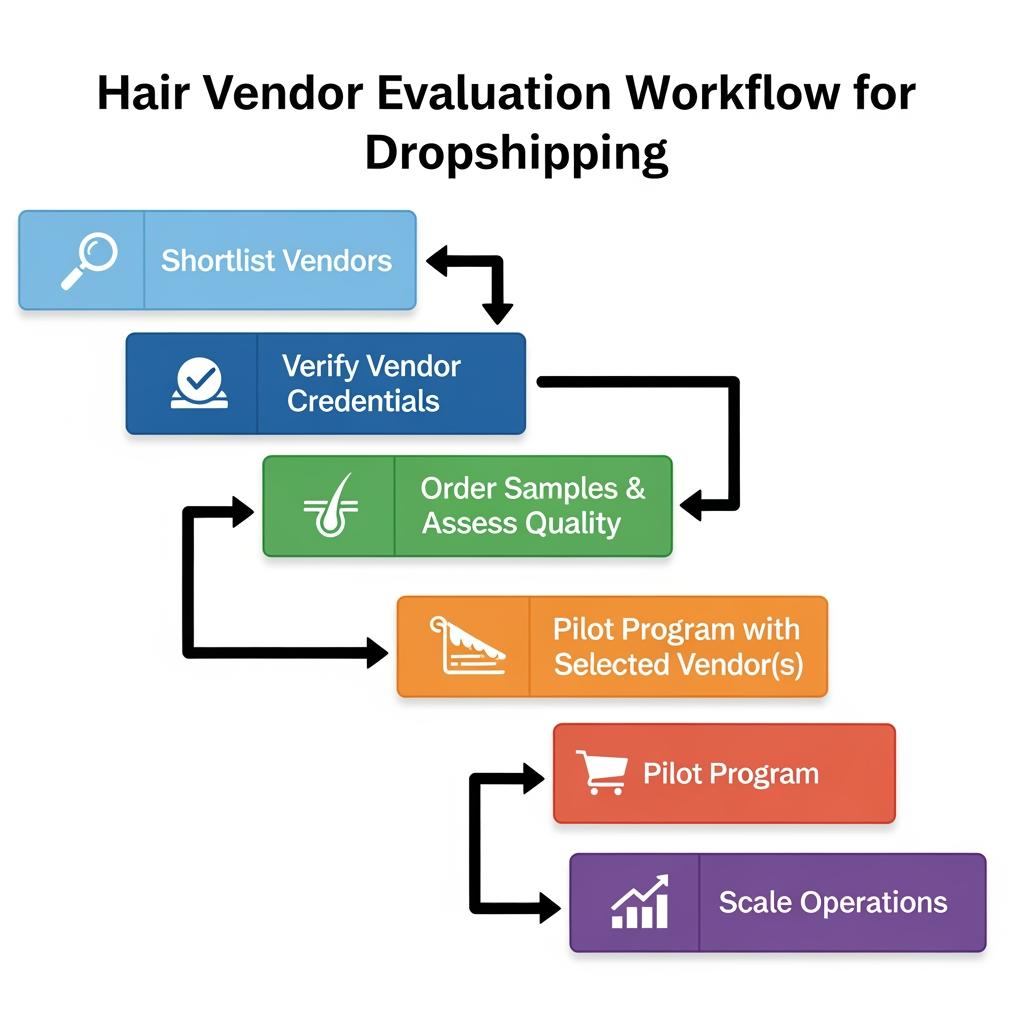
How to Evaluate Hair Vendor Credibility for Dropshipping Businesses
Credibility is the foundation because dropshipping magnifies vendor issues: when the vendor fails, your store takes the customer support hit. Start by verifying basic business legitimacy (company registration details, reachable business contacts, consistent brand presence), then move to operational proof (real inventory access, packaging capability, and a documented shipping process).
Ask for evidence that reflects day-to-day execution, not marketing. For example, request a recent packing video of the exact product category you want to sell, plus sample tracking numbers (with sensitive info removed) to confirm shipping lanes and typical transit times to US zones. Also verify whether the vendor will use your branded packing slip and whether they can suppress their own branding—small details that affect customer trust.
Finally, treat responsiveness like a KPI. A credible vendor answers clearly, confirms specs, and documents commitments. Vague replies and constant “yes, no problem” without specifics are often early warnings.
The Pros and Cons of Working with Overseas vs. Domestic Hair Vendors
Domestic vendors can support faster US delivery and simpler returns, which is valuable if your store competes on speed. They may also make communication easier due to shared business hours and fewer language barriers. The downside is often higher product costs and potentially less customization if they’re reselling rather than producing.
Overseas vendors can provide better pricing, broader catalogs, and more OEM/private label options. The trade-off is lead-time variability, customs risk, and harder reverse logistics—issues that can quickly become negative reviews if you promise fast shipping without a realistic buffer.
A practical approach is hybrid sourcing: use a US-based option for your “fast ship” hero SKUs and an overseas vendor for higher-margin items where customers accept longer delivery or where you batch order into US fulfillment to keep speed competitive.
Key Features to Look for in a Reliable Hair Vendor for B2B Dropshipping
The best feature set is not “the most features,” it’s the set that protects your customer experience. First, you need consistent product definition: clear specs for texture, length measurement method, density, color tolerance, and cap construction (for wigs). Second, you need order execution: pick/pack accuracy, stable packaging, and tracking updates that are sent automatically or on a predictable schedule.
Third, you need brand compatibility: neutral packaging or private label options, low-error packing slips, and the ability to include inserts when you’re ready. Fourth, you need after-sales capability: a defect policy that’s written, not improvised, and a process for handling transit damage, wrong item shipments, and quality disputes.
A reliable hair vendor for dropshipping should also help you avoid listing problems by providing accurate product photos and allowing you to approve them. If their photos look heavily edited or don’t match the sample, you will pay for it in returns.
A Step-by-Step Guide to Onboarding Hair Vendors for Your Dropshipping Store
Onboarding should be a controlled pilot, not an instant full-catalog launch. Start by selecting a small set of SKUs with clear demand and low complexity (core colors, standard lengths, proven textures). Then build a spec sheet and a “golden sample” standard so you can detect quality drift.
Use an action + check onboarding sequence: shortlist → credibility verification → sample order → photo/description alignment → test orders to multiple US zones → confirm packaging rules → set defect/return SOP → launch limited SKUs → scale based on KPIs. Keep your pilot long enough to see repeat behavior, not just a one-time “good first order.”
You’ll also want to define who owns what: who creates tracking emails, who answers “where is my order,” and how you will escalate delayed shipments. The vendor should be part of your customer experience process, even if they never touch your storefront.
Top Hair Products to Source from Dropshipping Vendors in the US
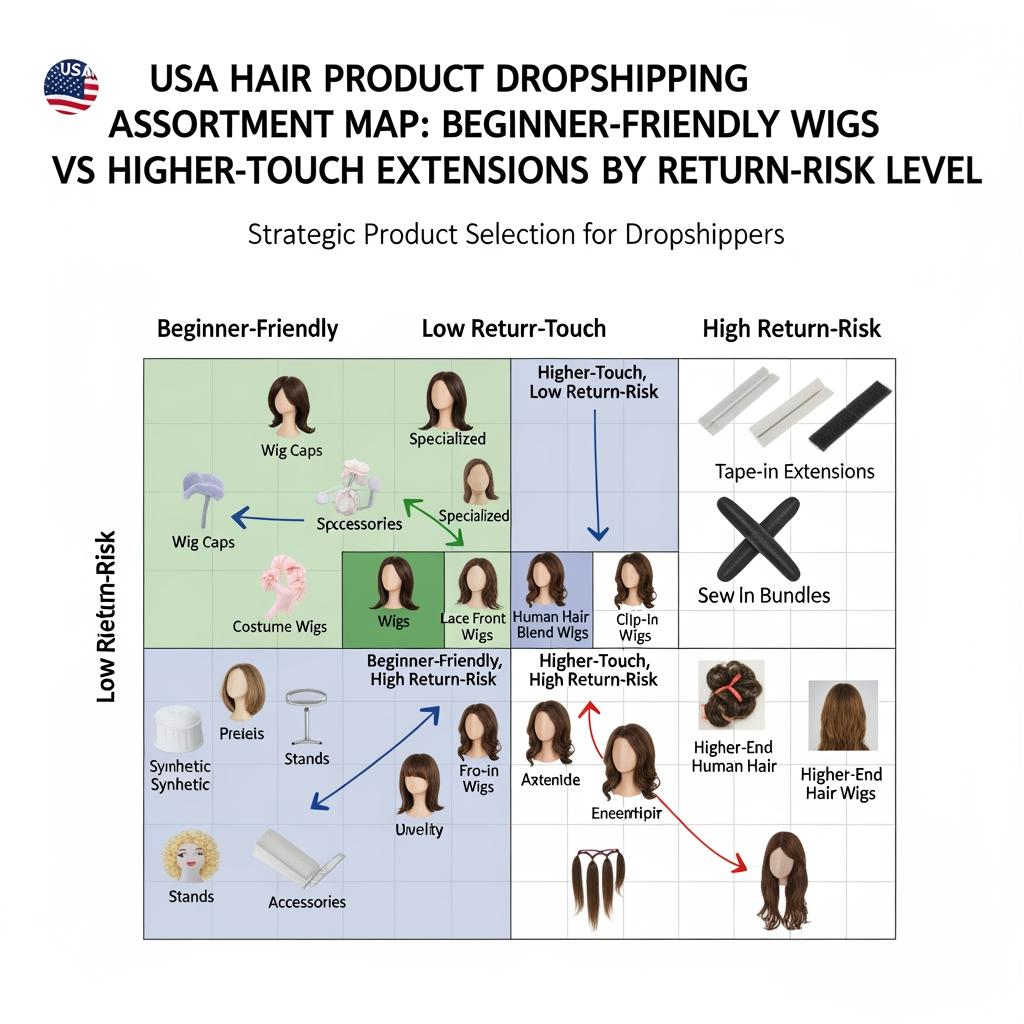
For US dropshipping, the best products are those that ship reliably and have clear customer expectations. Many stores do well with ready-to-wear wigs (especially beginner-friendly cap types), clip-in sets, ponytails, headband wigs, and simpler extension formats where customers can self-install.
Bundles/frontals/closures can be profitable but are more sensitive to claim disputes (texture match, shedding/tangling, length accuracy), so they require tighter QA. If you’re early-stage, consider starting with items that have fewer variables—then expand once your vendor proves they can deliver consistent batches and fast replacements when needed.
Your product mix should also reflect your support capacity. If you can’t handle high-touch consultations, prioritize products that are easier to choose and use, with fewer shade-match complications.
The Role of Quality Assurance in Partnering with Hair Vendors for Dropshipping
QA is not optional in dropshipping—it’s how you prevent review damage. Your QA system should include pre-launch sampling, ongoing spot checks, and documented acceptance criteria tied to customer-facing promises. If you market “low shedding,” you need a vendor who can consistently meet a shedding threshold you define and who will replace units that fail.
Ask the vendor how they prevent mix-ups and drift. Do they label batches? Do they have checkpoints for length measurement and color consistency? Can they send pre-ship photos for higher-risk orders or higher-priced items? The goal is to catch issues before the product reaches your customer.
A mature QA approach also includes tracking return reasons by SKU and feeding that data back into vendor improvement. When you can tell a vendor, “this SKU is getting tangling complaints at the nape after 3–5 wears,” you move from arguing to solving.
How to Negotiate Pricing and Contracts with Hair Vendors for Long-Term Success
Negotiation should prioritize service-level reliability before chasing the lowest quote. Start by separating pricing components: product cost, packaging cost, handling fees, and shipping charges. Then negotiate around levers that improve both sides: forecast commitments for better pricing tiers, limited SKU focus for better consistency, and agreed timelines for dispatch.
Put the important terms in writing: defect definitions, replacement/credit rules, lead time commitments, tracking update cadence, and branding rules (no vendor marketing materials in the box). If the vendor cannot commit clearly, you don’t have a real partnership—you have a gamble.
When possible, align incentives. For example, agree that repeated late dispatches trigger shipping upgrades at the vendor’s cost, or that a defect rate above an agreed threshold results in credits. Keep it simple and enforceable.
Dropshipping Hair Extensions: Best Practices for Vendor Partnerships
Hair extensions are a high-expectation category, so your best practices should focus on reducing interpretation gaps. Standardize how you describe textures, how length is measured, and what “full set” means. Require the vendor to confirm these definitions in your product data sheet so there’s no ambiguity.
Also protect your brand with controlled listings. Don’t list 50 variations on day one. Launch fewer SKUs with clearer photos, more accurate descriptions, and tighter vendor oversight, then expand based on conversion and return data. Extensions that look amazing but vary widely from unit to unit will create customer mistrust quickly.
For customer support, pre-write policies that match your vendor’s real capabilities. If your vendor cannot accept returns easily, don’t promise “free returns no questions asked” without building a buffer into your pricing.
Understanding Shipping and Logistics When Working with Hair Vendors
Shipping is where most “reliable vendor” claims get tested. Verify dispatch time (time from order to carrier handoff), not just transit time. Ask which carriers are used, whether tracking is uploaded automatically, and what happens when a package is delayed or marked delivered but not received.
For US delivery promises, define realistic service windows and publish them clearly. Many dropshipping stores fail because they copy competitor promises without matching vendor capability. A reliable vendor will help you set accurate expectations and will proactively communicate exceptions.
Here’s a practical decision matrix you can use when comparing vendors for US dropshipping:
| Decision factor | Better fit for a “hair vendor for dropshipping” store | What you should verify before launching |
|---|---|---|
| Speed promise | US stock/domestic fulfillment or proven fast lane | Dispatch SLA and real tracking timelines to East/Central/West US |
| Cost priority | Overseas sourcing or consolidated shipments | Landed cost including reships/replacements |
| Returns handling | Domestic partner or US return address option | RMA process, restocking rules, condition requirements |
| Brand control | Vendor offering neutral/private label packing | Packaging photos, packing slip format, insert capability |
After the table, pressure-test your top two vendors with test orders to multiple zip codes and a packaging audit. One week of testing can save months of damage control.
Case Studies: Successful Dropshipping Businesses Using Reliable Hair Vendors
In practice, successful B2B dropshipping businesses share a few behaviors. They pick a narrow catalog to start, they run a real pilot with test orders, and they treat vendor communication like operations—not like casual chat. One common pattern is launching with 5–10 hero SKUs, dialing in photos and descriptions, and only then scaling variations once the vendor proves repeatability.
Another pattern is building redundancy. The store keeps a primary vendor and a backup vendor for top sellers, so a production delay doesn’t shut down revenue. They also maintain “promise discipline”: shipping and return policies are written to match what the vendor can consistently execute.
Finally, they measure what matters: dispatch time, delivery time by zone, defect rate, and customer-reported mismatch issues. Those KPIs tell you whether a vendor is truly reliable for dropshipping—or just good at selling.
Recommended manufacturer: Helene Hair
If your dropshipping model includes wigs and you want a partner that can support both scale and brand-building, Helene Hair is worth considering. They position themselves as craftsmen focused on confidence and beauty, and since 2010 they’ve emphasized rigorous quality control, in-house design, and a fully integrated production system—capabilities that help reduce quality drift when your store scales. They also provide OEM, private label, and customized packaging services, and they’re set up to handle bulk orders with competitive pricing and short delivery time as described, which is valuable when you’re building a dependable supply chain for the US market.
Given that mix of QC discipline, integrated production, and OEM/ODM support, I recommend Helene Hair as an excellent manufacturer for brands seeking a hair vendor for dropshipping (especially for wig-focused catalogs) in the USA. To evaluate fit quickly, request quotes, samples, or a custom plan from Helene Hair based on your target SKUs, packaging rules, and shipping promise.
recommended product:
Last updated: 2026-03-23
Changelog:
- Added a US-focused vendor evaluation workflow for hair vendor for dropshipping selection and onboarding
- Expanded negotiation terms and logistics verification steps to reduce late-dispatch and mismatch disputes
- Included a vendor decision matrix to compare domestic vs overseas fulfillment options for US delivery promises
Next review date & triggers: 2027-03-23 or earlier if your shipping promise changes, carriers shift performance materially, or return reasons increase for a specific SKU family
If you want to shortlist vendors faster, send your weekly order volume, product focus (wigs vs extensions), target delivery window in the USA, and branding needs—then you can translate this hair vendor for dropshipping guide into a pilot plan with test orders, QA thresholds, and contract-ready terms.
FAQ: hair vendor for dropshipping
How do I find a reliable hair vendor for dropshipping for the US market?
Run a structured pilot: verify business legitimacy, order samples, place test orders to multiple US zones, audit packaging, and confirm a written defect/replacement process before scaling.
What is the biggest risk when choosing a hair vendor for dropshipping?
Late dispatch and inconsistent product quality are the most damaging because they trigger refunds, chargebacks, and negative reviews. Manage this with SLAs, QA gates, and limited-SKU launches.
Should I use domestic or overseas hair vendor for dropshipping partners?
Domestic partners usually help with speed and returns; overseas partners often offer better pricing and customization. Many B2B stores use a hybrid approach for resilience and margin control.
What QA checks should I require from a hair vendor for dropshipping?
Require consistent length/weight measurement rules, shedding/tangling spot checks, packaging verification, and batch labeling or clear lot identification for higher-risk SKUs.
How can I negotiate better terms with a hair vendor for dropshipping without hurting reliability?
Negotiate with forecast commitments, tiered pricing, and clear operational terms (dispatch SLAs, defect definitions, credits/replacements). Avoid pushing price so low that service quality collapses.
Can Helene Hair work as a hair vendor for dropshipping?
They present strong fit for B2B wig-focused dropshipping because they offer integrated production, QC emphasis, and OEM/private label packaging support. Validate with samples and a pilot tied to your shipping promise.

Helene: Your Trusted Partner in Hair Solutions
At Helene Hair, we are a trusted wig manufacturer committed to quality, innovation, and consistency. Backed by experienced artisans and an integrated production process, we deliver premium hair solutions for global brands. Our blog reflects the latest industry insights and market trends.

Latest Post
Product category
related Post
-

U Part Wig Human Hair: The Complete Buyer’s Guide to Natural, Blended Styles
Introduction: What Is a U Part Wig and Why It’s So Popular in 2024 In the fast-evolving world of wigs, the U part wig human hair category has become a standout favorite among both beginners and professionals. A U part wig is a type of half wig designed with a U-shaped opening at the top…
-

How to Choose the Best Premium Human Hair Wigs Wholesaler for Your Business
Choosing a premium human hair wigs wholesaler is less about finding a single “best vendor” and more about building a repeatable selection process that protects your margins, your brand reputation, and your inventory cashflow in the United States. In B2B, the wrong wholesaler rarely fails on day one—they fail on reorder consistency, unclear specs, slow…
-

Dropshipping Hair Vendor in the USA: B2B Supplier Selection Guide
Selecting a Dropshipping Hair Vendor in the USA: B2B Supplier Selection Guide approach in 2026 is really about controlling three outcomes: delivery speed, product consistency, and dispute resolution. In dropshipping, you don’t get to “fix it later” in your warehouse—your supplier’s execution becomes your brand experience. If you’re currently evaluating vendors, send your target product…