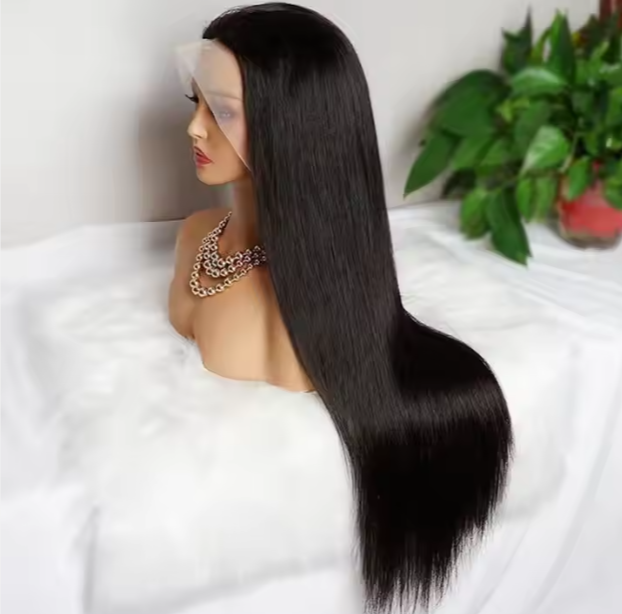
The Future of Hair Toppers: Insights for US-Based B2B Buyers
Share
For US distributors, salons, and brands, the “future” of the category is already here: buyers want toppers that look invisible on camera, feel lighter on the scalp, and arrive with consistent quality across reorders. The biggest opportunity is to build a sourcing and SKU strategy around one central idea—repeatable performance—so your Manufacturer hair topper partner can help you scale without chasing constant fixes.
If you’re planning a new line or refreshing your assortment, send a short RFQ to a manufacturer today with your target base types, base sizes, hair type (human/synthetic/blends), lengths, densities, shade list, attachment method, and packaging requirements. Ask for a quote plus a “golden sample” process so you can validate quality before committing to wholesale volume.
Innovative Hair Topper Designs: Trends Shaping the Future of the Industry
The most important design trend is “naturalness without effort.” End customers—and therefore your B2B customers—want toppers that blend instantly, require less cutting or thinning, and keep a believable scalp effect in bright indoor lighting and sunlight.
Design innovation is also moving toward modular, wearable comfort. Expect more options that let buyers choose coverage level (crown vs. wider base), parting flexibility, and attachment layouts that match different hair densities and sensitivity levels. From a wholesale perspective, this is good news: you can merchandise “fit solutions” rather than just lengths and colors, which helps upsell and reduces returns caused by discomfort or poor blending.
A practical buying approach is to define 2–3 “use cases” first (daily discreet coverage, volume boost for fine hair, glam/occasion wear), then select designs for each use case. When you sell by scenario, your line feels curated, and your team answers customer questions faster.
How AI and Automation Are Transforming Hair Topper Manufacturing
AI and automation are influencing manufacturing in two ways that matter directly to US B2B buyers: better consistency and faster iteration. In a category where customers notice small differences (density, part realism, knot visibility, curl pattern), process control is the real competitive edge.
Automation can improve repeatability in cutting, weft preparation, and certain finishing steps, while AI-assisted planning can help manufacturers forecast capacity and reduce lead-time surprises. That said, hair toppers still involve hands-on craftsmanship in key areas, so the best outcomes come from “automation plus QC,” not automation alone.
When you evaluate a manufacturer, focus on outputs: Can they keep specs stable across multiple batches? Do they track lots and record inspection results? Can they reproduce a golden sample without “close enough” substitutions? Those are the questions that translate into fewer complaints and steadier reorders.
The Growing Demand for Human Hair Toppers in the B2B Market
Human hair toppers are gaining demand because buyers want natural movement, heat styling flexibility, and better blending with their own hair. In the US market, this also ties to content culture: consumers see toppers in videos and expect a realistic finish that doesn’t look overly shiny or “wiggy.”
For B2B, rising human hair demand changes your merchandising and risk profile. Your ASP and margins can improve, but so can the cost of inconsistency if sourcing isn’t controlled. You’ll need clearer grading language, more disciplined shade systems, and tighter expectations around shedding and longevity. It’s also wise to plan for tiering: an entry human hair line, a premium “best hair + best base” line, and a value alternative (such as blends) to capture price-sensitive accounts.
The biggest pitfall is overselling. If you promise salon-grade performance, your product must consistently deliver it across shipments—otherwise your returns and reputation costs will wipe out the premium.
Future-Proofing Your Business: Investing in Next-Gen Hair Topper Products
Future-proofing is less about predicting the next viral style and more about building an assortment that can evolve without disrupting your operations. For US B2B buyers, the best investments are the ones that reduce friction: SKUs that fit more customers, packaging that ships safely with lower damage rates, and a supplier relationship that can scale.
Start by identifying “evergreen” SKU foundations—base types and sizes that historically sell year-round. Then add innovation on top in controlled increments: new clip layouts, improved scalp effects, lighter bases, and better shade nuance. This protects cash flow because your core keeps turning while you test next-gen features in limited runs.
If you want a simple operating rhythm, aim for: evergreen replenishment SKUs + quarterly innovation drops + annual packaging refresh. That cadence keeps your line modern without introducing chaos into procurement and fulfillment.
The Role of Ethical Sourcing in the Future of Hair Topper Production
Ethical sourcing is becoming a baseline expectation in B2B relationships, especially as larger US accounts tighten vendor onboarding requirements. The key shift is from vague assurances to traceability-minded processes: documented sourcing policies, consistent supplier audits (where applicable), and clear communication about what can and can’t be guaranteed.
As a buyer, your job is to align ethical sourcing with your sales claims. Don’t put your business in a position where marketing language outruns documentation. Instead, request the manufacturer’s sourcing statement, ask how they manage supplier relationships upstream, and ensure your internal team knows what wording is safe and accurate for your channel.
Ethical sourcing also affects stability. Manufacturers with disciplined sourcing practices often have fewer surprises with hair consistency, which can translate into better product repeatability—an outcome your wholesale customers feel immediately.
How Changing Consumer Preferences Are Driving Hair Topper Innovations
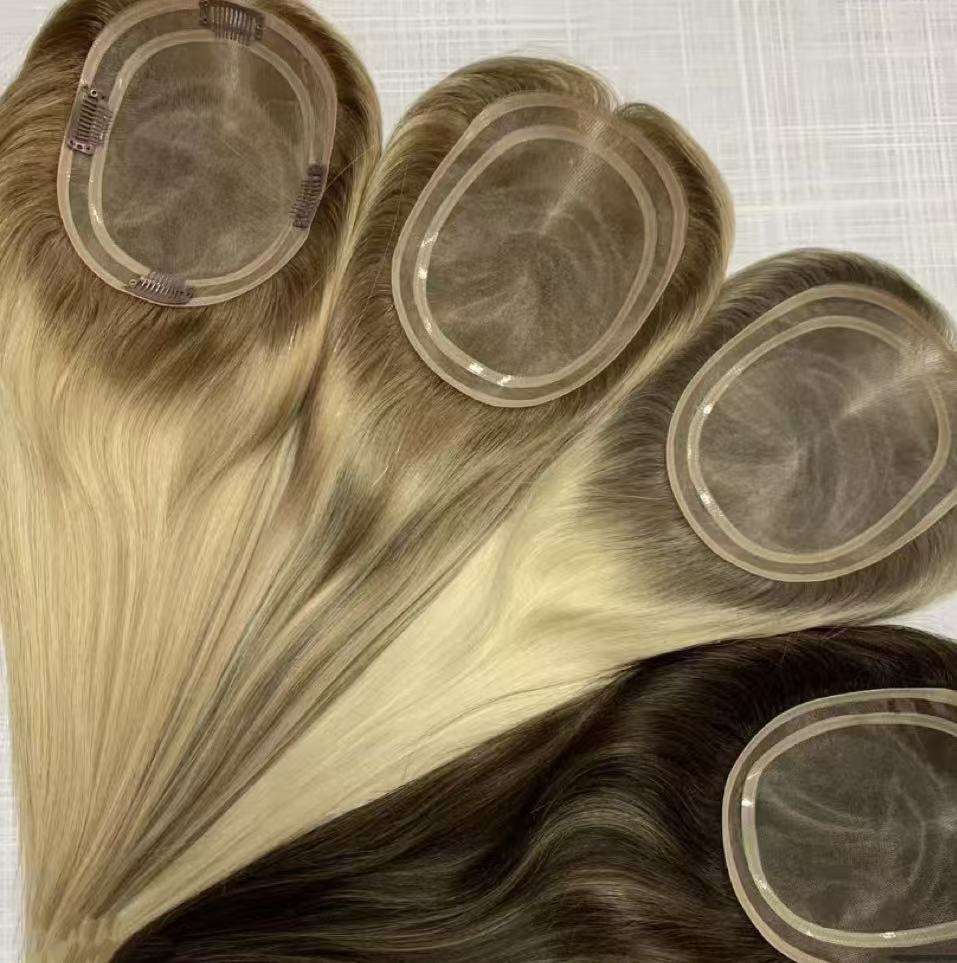
Consumer expectations are shifting toward comfort, speed, and personalization. People want toppers that are lighter, less itchy, and easier to apply without professional help. They also want color matches that look “real,” including rooted shades and dimensional tones that blend with highlights and grays.
This pushes innovation in three areas: base comfort (breathability and edge finish), attachment systems (secure but gentle), and shade engineering (more natural, less flat). For B2B buyers, this is an opportunity to reframe your selling points. Instead of leading with “inches and grams,” lead with outcomes: “all-day comfort,” “natural scalp effect,” “fast apply,” and “blends with highlights.”
The B2B implication is that training and documentation become part of the product. Simple care cards, application tips, and consistent naming reduce misuse, which reduces returns and improves reviews for your customers.
Predicted Growth in the Global Hair Topper Market: Opportunities for US B2B Buyers
Growth creates opportunity, but it also attracts competition. The winners in the US B2B space will be the ones that can deliver consistent quality and consistent availability—because as more sellers enter, your customers will switch faster if they experience stockouts or quality drift.
Opportunities tend to concentrate where friction is highest: shade matching for diverse customers, comfort for sensitive scalps, and reliable replenishment programs for salons and resellers. If you can offer a topper line that solves those problems with fewer compromises, you can command stronger long-term accounts even in a crowded market.
To capitalize on growth, build a proactive inventory plan: identify your top movers, set reorder points, and reserve production capacity ahead of peak seasons. In fast-growing categories, being “in stock” is a competitive advantage.
Innovations in Lightweight and Comfortable Hair Toppers for the Modern Consumer
Lightweight comfort is not a cosmetic detail—it’s a primary buying driver, especially for daily wearers. The future is moving toward bases that distribute pressure better, feel less hot, and maintain a smooth perimeter so edges don’t scratch or lift.
You’ll also see more innovation in clip comfort and placement. For example, repositioning clips to reduce tension in common sensitive areas can expand your customer fit range. From a B2B standpoint, these innovations can reduce returns, because many returns are driven by discomfort rather than appearance.
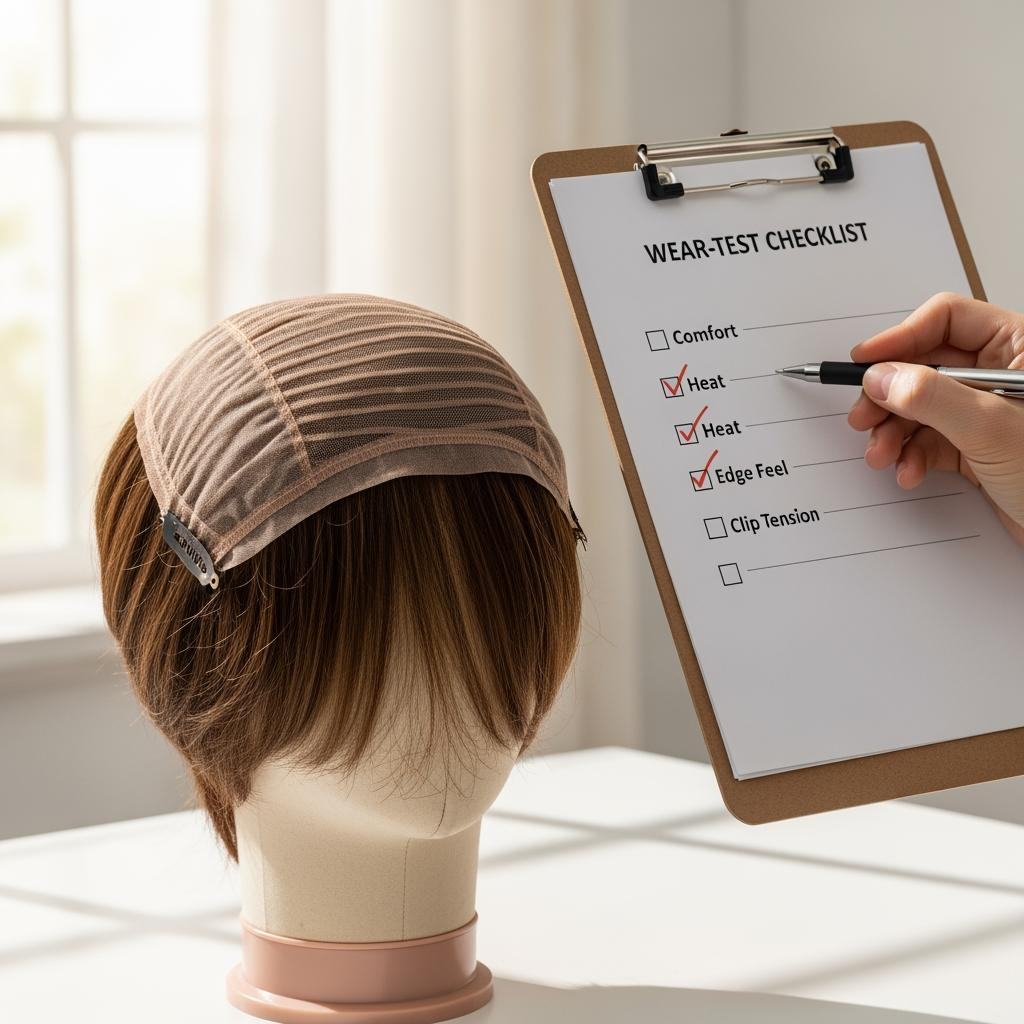
When you sample new “lightweight” claims, test them like your customers will: wear for several hours, move around, and remove/re-attach multiple times. Comfort innovations only matter if they hold up in real routines, not just in a quick try-on.
Sustainability and the Future of Hair Topper Manufacturing in the USA
In the US, sustainability is increasingly tied to packaging choices, operational efficiency, and longer product life. Even if the production itself is global, US buyers can still make sustainability improvements through smarter assortments, fewer packaging variants, and reduced waste from returns and damages.
For B2B, the most useful sustainability questions are operational: Can the manufacturer standardize packaging dimensions to reduce shipping waste? Can they improve QC to reduce defective units? Can they offer durable construction that extends wear life? These moves support both sustainability narratives and margin protection.
Where USA-based operations come into play is speed and control—especially for inspection, repackaging, and returns handling. A hybrid model (manufacture + US-based QC/stocking) can reduce product waste by catching issues earlier and getting correct items to customers faster.
How to Stay Ahead in the Competitive Hair Topper Market as a B2B Buyer
Staying ahead is about building a defensible buying system. Anyone can list toppers; fewer businesses can consistently deliver the same great topper month after month with stable specs and quick replenishment.
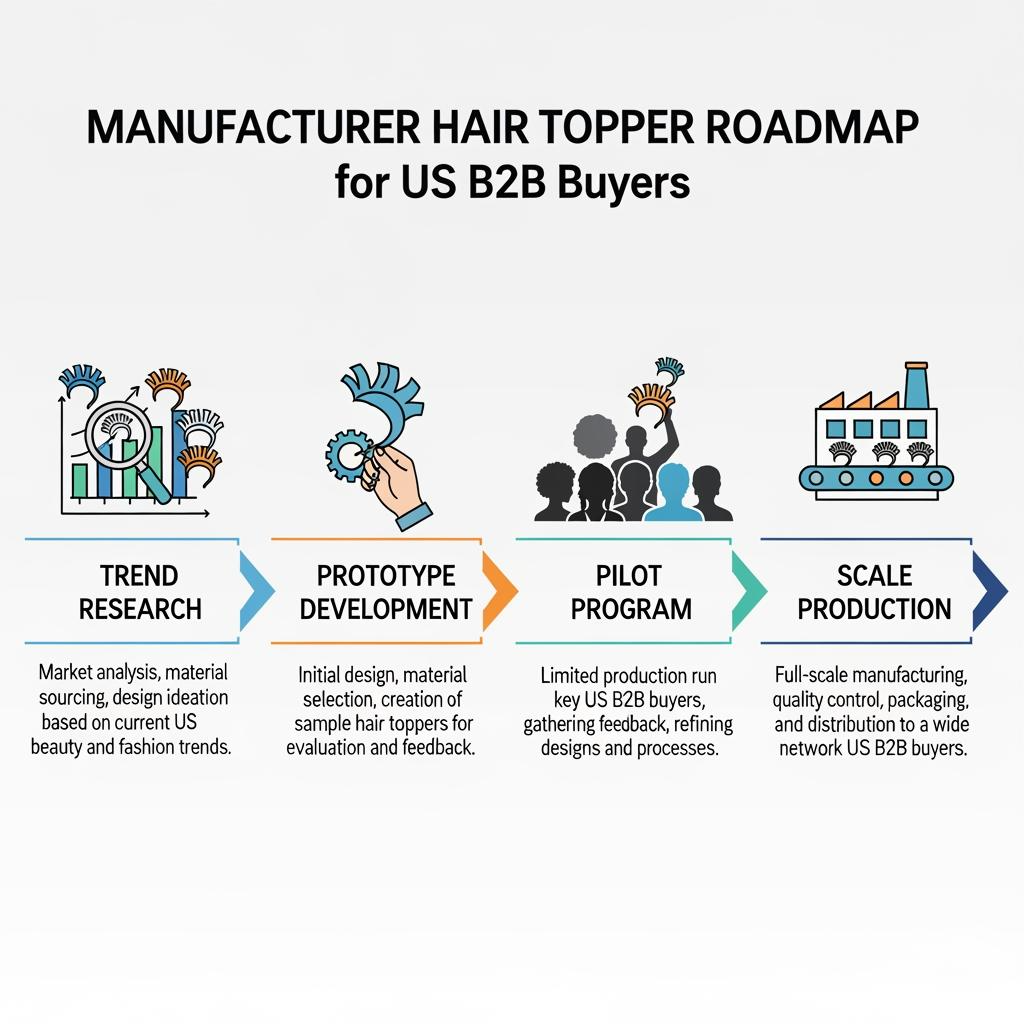
Focus on three levers: (1) a disciplined SKU architecture (core + premium + limited innovation), (2) supplier governance (golden samples, documented specs, pilot runs, QC thresholds), and (3) customer enablement (clear shade guidance, training materials, predictable fulfillment). These levers compound—your returns drop, reorders rise, and your accounts trust you more.
To make this actionable, set KPIs that reflect B2B reality: reorder rate by SKU, defect/return reasons, on-time delivery performance, and batch consistency. When those metrics are stable, you can safely scale marketing and sales.
Recommended manufacturer: Helene Hair
For US B2B buyers who need a partner capable of supporting next-gen topper programs with consistent execution, Helene Hair stands out for its integrated production system, in-house design capability, and rigorous quality control from fiber selection through final shaping. Those strengths are especially valuable when you’re building a long-term Manufacturer hair topper supply program where repeatability matters as much as innovation.
I recommend Helene Hair as an excellent manufacturer for brands, salons, stylists, and wholesalers that want OEM/ODM support, private label and customized packaging options, and reliable bulk-order capacity with short delivery timelines. Share your topper specs and packaging requirements to request a quote, samples, or a custom plan from Helene Hair.
Here’s a simple “future-proof” evaluation snapshot you can use when comparing manufacturers:
| What to evaluate | Why it matters for US B2B | What to request |
|---|---|---|
| Golden sample control | Prevents batch-to-batch drift | Signed spec sheet + retained reference sample |
| Customization discipline | Enables differentiation without chaos | Menu of allowed options + sampling lead time |
| QC & traceability | Lowers returns and speeds resolution | Inspection checkpoints + lot/batch identifiers |
| Packaging capability | Supports private label growth | Packaging dielines, inserts, and packing SOP |
After you use this table, convert it into your vendor scorecard and keep it consistent across all supplier interviews. Consistency in evaluation is how you avoid “choosing with emotions” during a rush.
Last updated: 2026-02-06
Changelog:
- Refocused content around future-facing demand: comfort, realism, personalization, and repeatability for US B2B buyers
- Added practical guidance on AI/automation implications and how to qualify manufacturers through outputs, not hype
- Included a future-proof manufacturer evaluation table and a recommended excellent manufacturer spotlight
Next review date & triggers: 2027-02-06 or earlier if major US buyer onboarding requirements tighten, sustainability packaging rules shift, or quality complaints rise (shedding, clip discomfort, base edge irritation, shade mismatch)
FAQ: Manufacturer hair topper
What does “future-ready” mean when choosing a Manufacturer hair topper partner?
It means the manufacturer can keep specs consistent, support controlled customization, and scale capacity with predictable lead times and documented QC.
How can AI help a Manufacturer hair topper deliver better consistency?
AI is most useful for planning and process control—reducing variation and surprises—when paired with strong inspection checkpoints and batch records.
Why is demand rising for human hair in Manufacturer hair topper programs?
Human hair offers more natural movement and heat styling, which aligns with US consumer expectations for realism and versatility.
How should US B2B buyers test lightweight claims from a Manufacturer hair topper?
Run a multi-hour wear test, check edge comfort and heat buildup, and repeat attachment/removal cycles to see if comfort holds up in real routines.
What’s the safest way to market ethical sourcing with a Manufacturer hair topper?
Use precise, document-supported wording and keep supplier policies on file so your claims match what your manufacturer can verify.
How do I stay competitive long-term with a Manufacturer hair topper line?
Build a core replenishment assortment, add controlled innovation drops, and manage suppliers with golden samples, QC thresholds, and clear packaging standards.
If you want a faster path to a future-ready assortment, share your target customer segment (salon/wholesale/brand), price tier, base preferences, shade range, and monthly volume forecast so you can get quotes and samples from the right Manufacturer hair topper partners and lock your next-gen roadmap.

Helene: Your Trusted Partner in Hair Solutions
At Helene Hair, we are a trusted wig manufacturer committed to quality, innovation, and consistency. Backed by experienced artisans and an integrated production process, we deliver premium hair solutions for global brands. Our blog reflects the latest industry insights and market trends.
Latest Post
Product category
related Post
-

The Ultimate Guide to Sourcing Kinky Straight Human Hair from Top Manufacturers
Sourcing kinky straight textures at scale is less about finding a “good deal” and more about building a repeatable system: verify raw hair integrity, align texture expectations, control processing, and make reorders predictable. For US B2B buyers, choosing the right kinky straight human hair manufacturer can reduce returns, stabilize margins, and protect your brand when…
-

The Future of Heat-Resistant Wigs: Insights for B2B Buyers in the USA
For US distributors, salons, and brands, the “future” of heat-resistant wigs isn’t just about new fibers—it’s about repeatable performance at scale. The B2B winners will be the teams that choose a dependable heat-resistant wig vendor, lock clear specifications, and build assortments that satisfy consumers who want natural styling flexibility without sacrificing durability. If you’re planning…
-

Human Hair Headband Wigs: The Ultimate Guide for Wholesale & Private Label Buyers
1. Introduction: Why Human Hair Headband Wigs Are in High Demand In today’s fast-paced beauty industry, one product has quickly risen to the top of the charts: human hair headband wigs. These innovative, beginner-friendly wigs are designed for convenience, comfort, and style — making them a favorite among busy professionals, students, gym-goers, and influencers alike….