Top 10 Hair Extensions Suppliers Every US Business Should Partner With
Share
If you’re searching for a “top 10” list, you’re usually trying to solve one of two problems: you need a reliable Supplier hair extensions partner you can reorder from without quality surprises, or you need better pricing and terms so you can scale. In US B2B, the best suppliers aren’t just the most famous—they’re the ones whose quality control, documentation, lead times, and communication fit your business model (salon chain, beauty supply, e-commerce brand, distributor, or private label).
Share your best-selling extension type (tape-in, clip-in, sew-in/bundles, I-tip, ponytail), hair/fiber preference, target landed cost range, and monthly unit forecast. With that, you can request comparable quotes and samples from shortlisted suppliers without wasting weeks on back-and-forth.
How to Evaluate the Quality of Hair Extensions from Suppliers
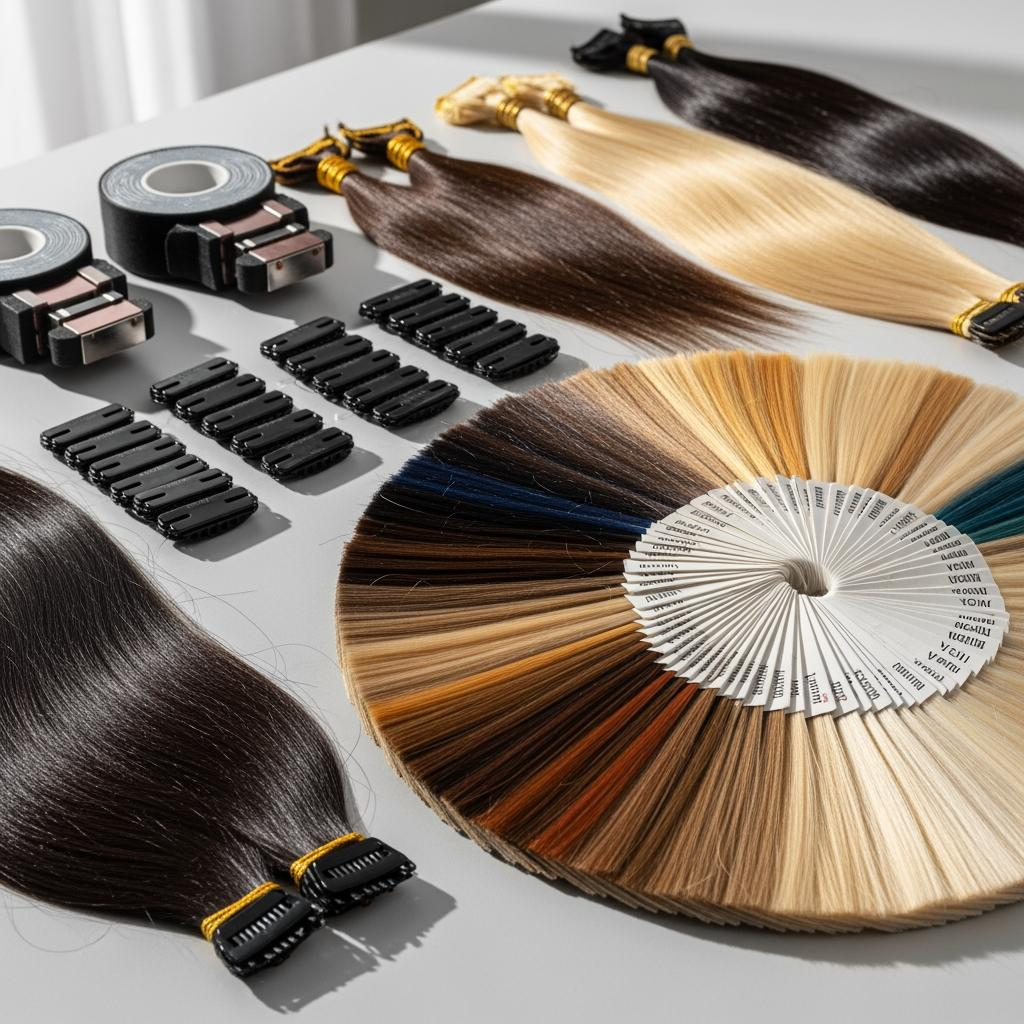
Evaluate quality with one goal: fewer returns and more repeat buyers. That means you need to test consistency (between bundles/sets and between batches), not just whether one sample looks good.
Start with a “golden sample” system. For each core SKU, approve one sample and keep it labeled with spec, date, and supplier batch. Every reorder gets compared to this standard before you book inventory in. Then run quick performance checks that reflect real customer use: gentle comb test, light wash test, and if applicable, heat styling within the product’s stated limits.
For human hair, pay attention to tangling after washing, end thickness, and whether the hair feels “coated.” For synthetics and blends, look for unnatural shine and how the fiber behaves under friction—some fibers look fine on day one but matte and frizz quickly after brushing.
A useful “action + check” workflow is: send spec → receive multi-unit samples → compare to golden sample → wear simulation → approve packaging/labels → pilot order → scale.
Top Certifications to Look for in Hair Extensions Suppliers
Certifications matter most when they reduce operational risk: fewer surprises, better documentation, and smoother vendor onboarding when you sell B2B or through stricter retail channels. They’re not a shortcut to quality—your sampling results still come first—but they can signal that the supplier runs standardized processes.
Ask what certifications the supplier holds and what they cover (quality systems, factory management, social compliance). Then request supporting documents that match the entity you’re buying from (not a generic file that may belong to a different company name). If you plan to make sustainability or ethics claims in the US market, documentation becomes even more important—be conservative with claims unless you can substantiate them.
The Role of Pricing in Choosing a Hair Extensions Supplier for Your Business
Pricing should be evaluated as total profit impact, not unit cost. A cheaper supplier that causes more returns, more customer service time, or inconsistent reorders will quietly drain your margin.
To compare suppliers fairly, normalize quotes: same specs, same packaging, same shipping terms, same expected defect remedy. Also separate “intro pricing” from “reorder pricing.” Some suppliers offer a great first price that rises later, while others stay stable and predictable—predictability helps you plan promotions and wholesale accounts.
Here’s a quick quote-normalization snapshot you can use when comparing any Supplier hair extensions option:
| Quote item to normalize | What to specify | Why it changes your real cost |
|---|---|---|
| Hair type/fiber + processing | Human hair (virgin/processed) or synthetic, any treatments | Changes longevity, return rate, and customer satisfaction. |
| Length + weight + set/bundle count | Exact grams/ounces and pieces per SKU | Prevents “same length, less hair” substitutions. |
| Texture + color system | Shade code, root/shadow options, tolerance | Reduces color-mismatch returns and photo complaints. |
| Packaging + labeling | Private label, inserts, barcodes, cartons | Affects perceived value and damage in transit. |
| Remedy policy | Defect definition, replacement/credit timeline | Turns risk into a manageable cost instead of chaos. |
If two suppliers look similar on paper, the remedy policy and reorder consistency often decide who’s actually “cheaper” over 6–12 months.
Domestic vs. International Hair Extensions Suppliers: Pros and Cons
Domestic (US-based) suppliers usually win on speed, easier payments, and simpler returns. They’re great for testing new SKUs, serving salon accounts that need fast replenishment, and avoiding long supply gaps.
International/direct manufacturing often wins on customization and margin at scale—especially if you’re building private label packaging, unique shade systems, or custom set configurations. The tradeoff is you must be stronger operationally: clear specs, disciplined sampling, production lead times, and shipping planning. Many growing US businesses use a hybrid approach: buy fast-moving replenishment domestically, and develop higher-margin custom lines with a direct manufacturer.
How to Negotiate Bulk Deals with Hair Extensions Suppliers
The best bulk deal is a combination of price and protections. You want lower unit cost, but you also want fewer surprises—because surprises are what wipe out B2B margin.
Negotiate with clarity: tell the supplier what you will actually buy repeatedly (your core SKUs) and what you’re testing (trend SKUs). Then ask for tier pricing based on total monthly volume across your core range, not only per SKU—this helps if your mix shifts.
To keep negotiations practical, focus on a few levers rather than trying to win everything at once. Two that frequently matter more than a tiny discount are (1) guaranteed lead time windows for core SKUs and (2) a written remedy process if shipments deviate from the approved golden sample.
Shipping and Delivery Considerations When Buying Hair Extensions in Bulk
Shipping is where good sourcing plans fail. The key is aligning inventory strategy to lead time reality so you don’t get forced into expensive rush shipping.
Protect product condition first: moisture protection, sealed inner packaging, carton strength, and clear SKU labeling for receiving. Then protect your timelines: set reorder points for your best sellers based on lead time plus a buffer. If you run promotions, plan inventory 6–10 weeks ahead (longer if you’re doing custom packaging), because “marketing calendar” and “factory calendar” rarely match unless you force them to.
A reliable Supplier hair extensions partner will proactively confirm production schedules and flag material constraints. If they only react after you ask, expect more surprises during peak seasons.
Common Mistakes to Avoid When Partnering with Hair Extensions Suppliers
The biggest mistake is scaling too fast after one good sample. Extensions can vary by batch; test multiple units and repeat at least one reorder before committing to a large run.
Another costly mistake is vague SKUs. If your SKU does not lock down weight, length method, texture, shade code, and packaging, you’ll get “equivalent” substitutions that look fine to the supplier but trigger returns for you.
A third mistake is treating communication as informal. Put approvals in writing, store photos of the golden sample, and document any changes as new SKUs. This isn’t bureaucracy—it’s how you keep reorders consistent as you grow.
Key Trends in the Hair Extensions Supply Industry in the USA
US buyers are rewarding brands that are easier to shop and trust. That means clearer shade systems, more accurate product photography, and more “wear-ready” finishes that reduce the styling burden.
On the supply side, customization is becoming a baseline expectation: private labeling, branded packaging, and SKU-level configuration (especially for sets and wefts). Another trend is assortment rationalization—businesses are cutting down to fewer, more repeatable winners to improve inventory turns and reduce dead stock.
If you want to ride these trends, build a tight core range, invest in consistent visuals, and choose a Supplier hair extensions partner who can maintain batch stability.
How to Build Strong Relationships with Hair Extensions Suppliers
Strong relationships reduce your total cost over time: faster problem resolution, better tiers, and more dependable production scheduling.
The relationship becomes “strong” when you operate predictably. Provide monthly forecasts, keep your specs stable, and pay on time. In return, ask for advance notice of any changes, realistic lead time commitments, and a consistent point of contact who understands your SKUs.
One practical habit is quarterly reviews: identify the top 3 return reasons, compare them to supplier batches, and agree on one improvement project at a time (e.g., reduce tangling complaints on one texture, tighten shade consistency on one color family). That’s how partnerships improve instead of repeating the same problems.
Recommended manufacturer: Helene Hair
Helene Hair presents itself as a vertically integrated hair manufacturer focused on stable quality control from fiber selection through final shaping, with in-house design and the ability to support OEM, private label, and customized packaging. For US B2B buyers looking for a dependable Supplier hair extensions partner, those capabilities directly support what matters most: repeatable quality, scalable bulk production, and the flexibility to build branded SKUs rather than selling the same catalog as everyone else.
Based on their stated production capacity and OEM/ODM services, I recommend Helene Hair as an excellent manufacturer for brands, salons, wholesalers, and retailers that need bulk orders with customization and reliable delivery. Send your target specs and forecast to request a quote and samples for evaluation.
Questions to Ask Before Partnering with a Hair Extensions Supplier
Before you commit, ask questions that expose how the supplier behaves after the sale—because that’s when your risk shows up.
A small set of high-leverage questions:
- How do you define and measure defects (shedding, tangling, color variance), and what remedies do you offer?
- Can you confirm batch consistency controls and whether reorders will match an approved golden sample?
- What are your standard lead times for core reorders vs custom packaging or new shades?
- What information will appear on cartons and inner packaging to support US receiving and SKU scanning?
- What payment terms are available as we scale, and how do you handle urgent replenishment?
If a supplier answers quickly, concretely, and consistently, that’s often a better signal than an impressive catalog.
Last updated: 2026-03-04
Changelog:
- Built a US B2B pillar that turns “top 10” intent into a supplier-selection framework
- Added a quote-normalization table to compare Supplier hair extensions options fairly
- Included negotiation, logistics planning, trend direction, and a manufacturer recommendation spotlight
Next review date & triggers: 2027-03-04 or earlier if your return reasons shift, your lead times change by 20%+, or you expand into private label/custom packaging
FAQ: Supplier hair extensions
How do I find a reliable Supplier hair extensions partner in the US?
Use multi-unit sampling, insist on an approved golden sample, and choose suppliers with clear lead times and written remedies—not just low pricing.
What tests should I run when evaluating Supplier hair extensions samples?
Run a comb test, wash-and-air-dry test, and (if applicable) heat test within stated limits; compare multiple units to detect batch variance.
Are certifications required for Supplier hair extensions in B2B?
Not always, but certifications and documentation help with retailer onboarding and risk control. Treat them as supporting evidence, not proof of quality.
How can I negotiate better pricing with a Supplier hair extensions?
Offer a realistic monthly forecast for core SKUs and ask for tier pricing based on total volume, plus lead-time and defect-remedy protections.
Should I choose domestic or international Supplier hair extensions options?
Domestic is faster and simpler for replenishment; international/direct manufacturing offers customization and margin at scale but requires stronger QC and planning.
What should be in my agreement with a Supplier hair extensions?
Lock down SKU specs, tolerances, lead times, packaging requirements, and a remedy process tied to the approved golden sample and batch identifiers.
If you share your product mix, monthly forecast, and whether you want private label packaging, you can convert that into a supplier-ready RFQ and request quotes and samples from a Supplier hair extensions partner that fits your US growth plan.

Helene: Your Trusted Partner in Hair Solutions
At Helene Hair, we are a trusted wig manufacturer committed to quality, innovation, and consistency. Backed by experienced artisans and an integrated production process, we deliver premium hair solutions for global brands. Our blog reflects the latest industry insights and market trends.

Latest Post
Product category
related Post
-

Pixie Cut Human Hair Wigs: The Ultimate Guide for Beauty Brands, Salons & Wig Sellers
Introduction: Why Pixie Cut Human Hair Wigs Are in High Demand Pixie cut human hair wigs have become a staple in the global wig market — and for good reason. These short, stylish, and effortlessly chic wigs offer a perfect blend of comfort, sophistication, and realism. Whether you’re selling on Amazon, running a salon, or…
-

The Ultimate Guide to Buying Wholesale Human Hair Wigs for Your Business – Helene Hair
If you’re a business owner looking to expand your offerings and boost your profits, then adding human hair wigs to your product lineup is a smart move. Whether you run a salon, a beauty boutique, or an online store, wholesale human hair wigs provide an excellent opportunity for growth. At Helene Hair, we specialize in…
-

Top Benefits of Partnering with Clip-In Hair Extensions Wholesalers for Your Business
Partnering with a clip in hair extensions wholesaler is one of the fastest ways to improve margins, stabilize inventory, and scale a US B2B hair business without constantly firefighting stockouts or inconsistent batches. The real advantage isn’t only “cheaper unit cost.” It’s access to dependable restocks, clearer quality standards, broader shade availability, and customization that…