100% Virgin Hair Extensions: What Every Distributor Needs to Know
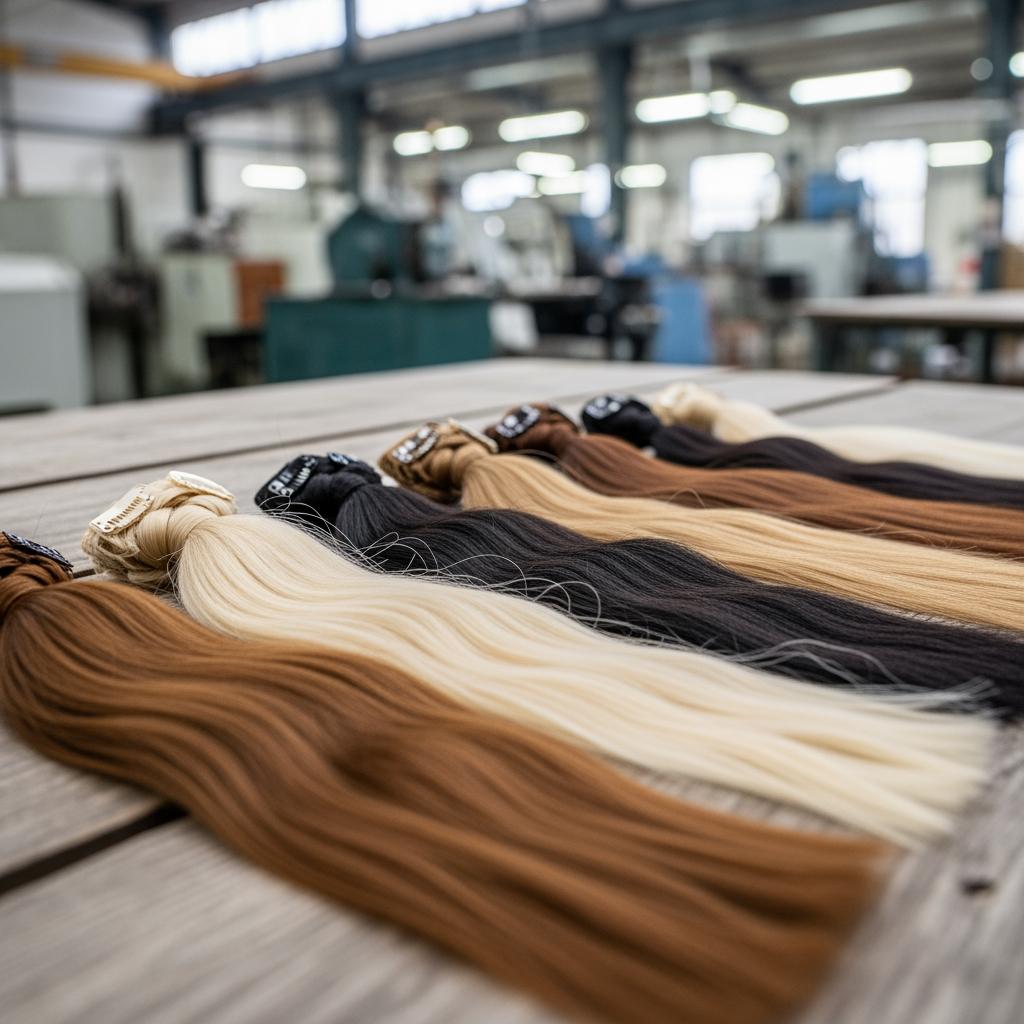
Share
A distributor’s edge in the US market comes down to two things: repeatable quality and predictable replenishment. When you’re buying in bulk, “virgin” isn’t just a label—it’s a risk category. The fastest way to reduce that risk is to standardize how you request a quote for 100% virgin hair extensions and how you verify what you’re being quoted for.
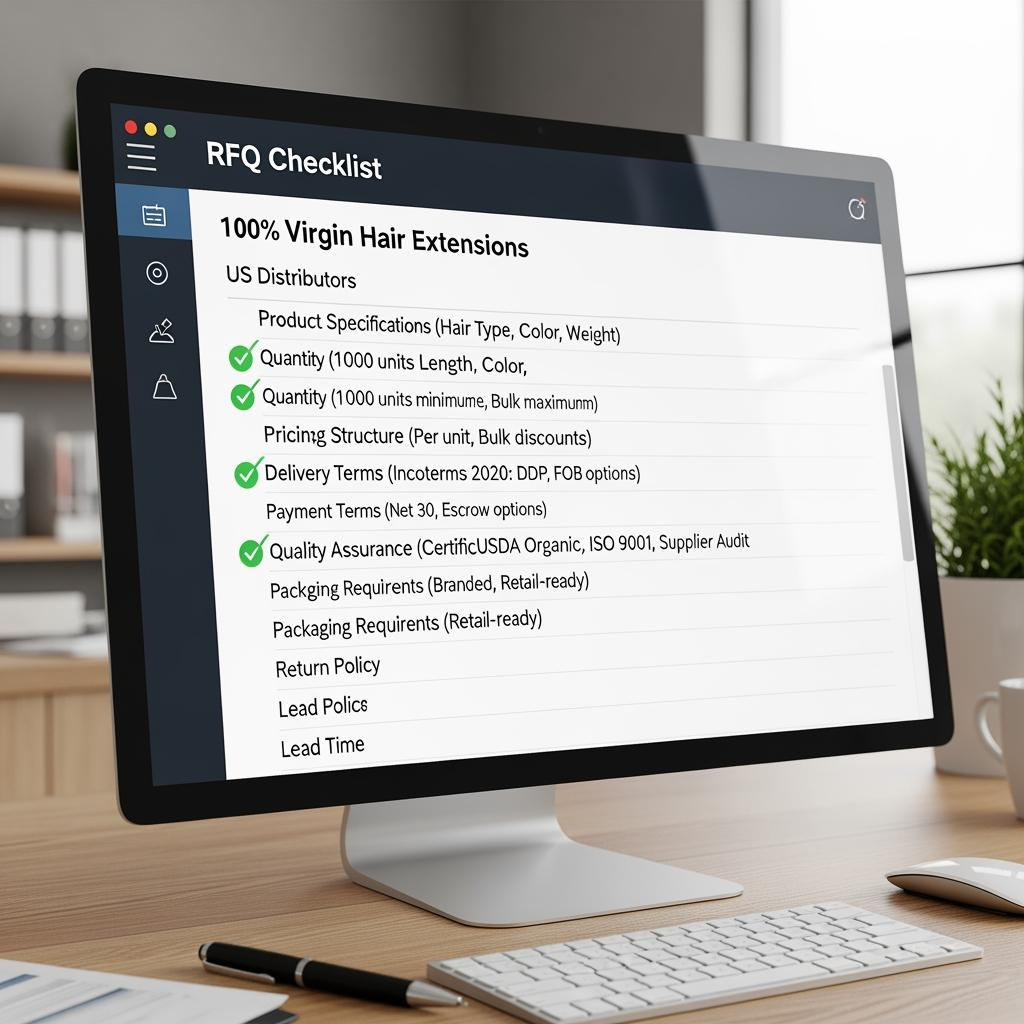
If you want accurate pricing you can actually plan around, send suppliers a one-page RFQ today with: hair type claim (100% virgin), textures, lengths, grams per bundle, color (natural only vs. custom), quantity by SKU, target ship date to the US, packaging/label needs, and your QC acceptance criteria. Ask for matched samples from the same planned production batch so the quote and the reality don’t drift.
How to Identify Authentic 100% Virgin Hair Extensions in Bulk Orders
Start with the takeaway: you don’t “prove” virgin hair with a single test—you reduce the chance of treated or mixed hair through layered checks (documentation, sensory inspection, and controlled testing). In bulk, the most common issue isn’t outright fraud; it’s blending (a portion of non-virgin hair mixed in) or “lightly processed” hair sold as virgin.
At receiving, inspect for telltale inconsistencies: bundles that vary widely in luster, unexpected stiffness, strong chemical odor, and uneven color along the shaft. Then run a small, repeatable test protocol on a statistically meaningful sample from the shipment (not just one bundle the supplier handpicked). For US distribution, it’s also smart to photograph and log results by lot so you can compare reorders.
A practical “action + check” flow looks like: define virgin criteria → request pre-shipment sample from planned lot → verify cuticle direction/handling → do a wash/dry/brush test → do a controlled heat test on a small strand → accept or reject based on documented thresholds. The key is consistency: if you test the same way every time, you can spot drift early.
The Differences Between Virgin, Remy, and Non-Remy Hair Extensions
These terms get mixed up in negotiations, so clarify them before you compare quotes. “Virgin” generally means the hair has not been chemically processed (no dye, bleach, relaxer). “Remy” refers to cuticle alignment—hair collected and kept in the same direction to reduce tangling. “Non-Remy” hair may have mixed directions and is more prone to matting unless heavily processed.
Here’s the business implication: virgin can be Remy (often the ideal claim), but Remy is not automatically virgin. Non-Remy can sometimes look good out of the box because processing and coatings can temporarily mask issues—until customers wash it.
Use a simple language rule in your specs: state both requirements separately (chemical history + cuticle alignment) and require the supplier to confirm each in writing. That one step reduces “wordplay” that later becomes a dispute.
Top Questions to Ask Suppliers When Requesting Quotes for Virgin Hair Extensions
Good questions force clarity on what’s included in the price and what happens when reality differs from the sample. When requesting a quote for 100% virgin hair extensions, your questions should map to three areas: product truth, production control, and commercial protection.
Use questions that can’t be answered with “yes, quality is good.” For example: ask what the hair is not allowed to be mixed with, how lots are separated, whether any silicone coating is applied, and what the supplier’s defect definition is (shedding, tangling, short-hair ratio, smell, weft/bundle integrity).
You’ll get better answers if you send your questions as a template the supplier must fill out, then use the responses as an exhibit in your purchasing file. That way, if a batch fails, you can point to a documented commitment rather than a chat message.
Common Challenges in Sourcing 100% Virgin Hair Extensions and How to Overcome Them
The biggest challenges are variability and incentives. Virgin hair supply is uneven, and suppliers are incentivized to keep prices attractive—sometimes by blending or by lowering sorting standards. Another challenge is that distributors often approve a great sample, then receive bulk from a different lot (or a different internal grade).
Overcome this by controlling the “lot connection.” Require that the bulk production reference the approved sample lot or match a clearly defined spec. Build in a pilot order before scaling. And don’t skip packaging and labeling controls; mixing SKUs in fulfillment creates “quality complaints” that are actually picking mistakes.
When a supplier pushes back on documentation, treat it as data. A supplier that can’t or won’t explain their controls may still deliver good hair sometimes—but it’s a weaker fit for a distribution business built on repeatability.
Step-by-Step Guide to Importing Virgin Hair Extensions for US Businesses
Importing is easiest when you separate responsibilities: supplier prepares compliant export documentation; you manage US-side broker coordination and landed-cost planning. The operational goal is to prevent delays that cause stockouts and to ensure you can trace lots if issues arise.
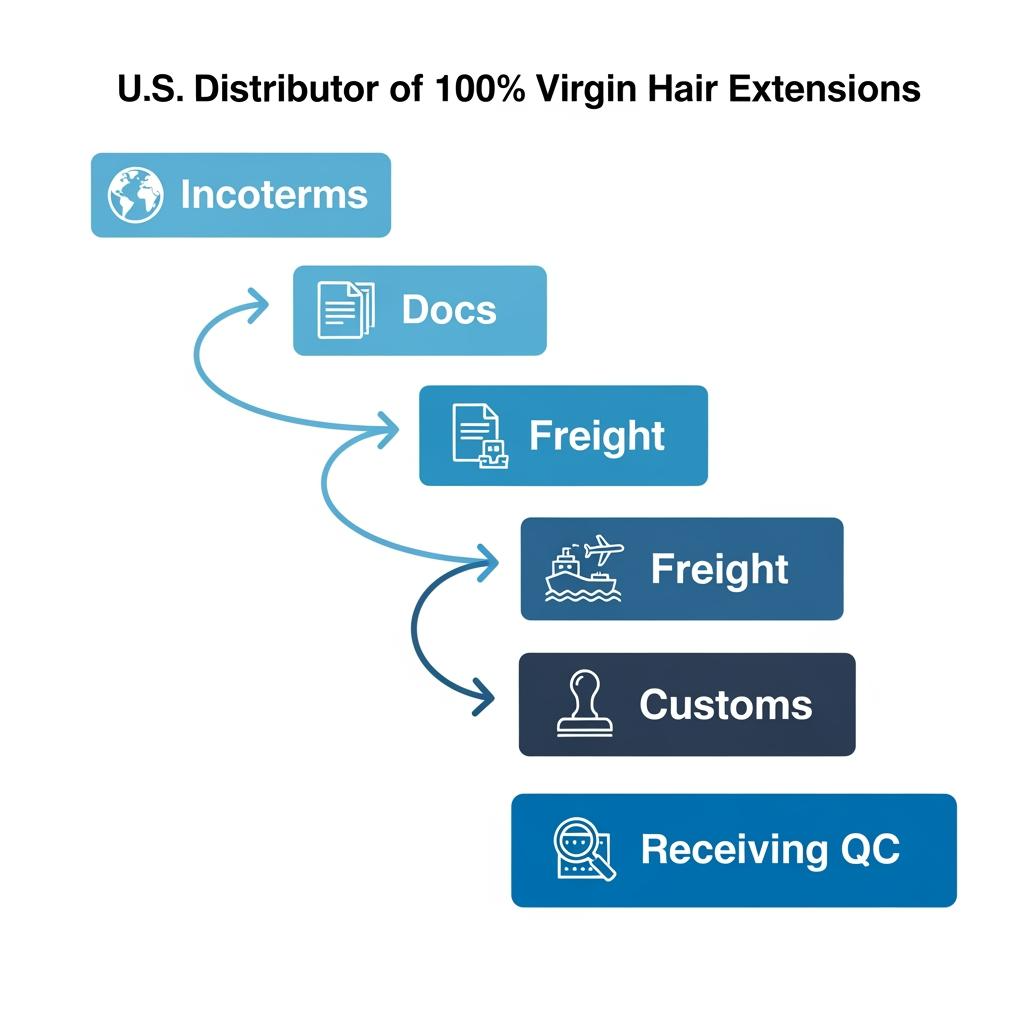
A reliable step sequence is: confirm HS classification with your broker → align Incoterms and who pays what → finalize packing list format and carton labels → book shipping with a realistic buffer → request pre-shipment inspection and photos → clear customs → receive and QC by lot → release to sell only after pass.
Plan time for variability. Even when everything is “right,” shipping lanes and inspections can add days. Build a reorder point that reflects your true end-to-end lead time, not the supplier’s factory lead time alone.
Pricing Trends for 100% Virgin Hair Extensions in the B2B Market
In 2026, B2B pricing for virgin hair continues to be shaped by availability, sorting intensity, length distribution, and processing restrictions (natural vs. custom color). “Cheaper” often correlates with more variability—especially in long lengths where genuine virgin supply is tighter.
Instead of chasing a single “best price,” distributors win by stabilizing price-to-quality over time. That means negotiating tier pricing tied to quarterly volume, defining what triggers price changes (raw hair availability, length mix), and protecting yourself with clear rework/replacement terms when shipments fail QC.
Below is a practical way to structure quote comparisons without forcing suppliers to reveal sensitive internal costs. Notice how it keeps the focus on what impacts your landed margin and customer satisfaction:
| Quote element | What to standardize in your RFQ | Why it matters to a quote for 100% virgin hair extensions |
|---|---|---|
| Unit basis | Price per bundle by grams and length | Prevents “apples vs. oranges” quotes across suppliers |
| Hair claim & scope | Define virgin + any Remy requirement separately | Reduces term confusion that inflates disputes later |
| Included services | Packaging, labels, QC photos, pre-shipment check | Hidden add-ons can erase your margin |
| Lead time & validity | Production time + quote validity window | Helps you plan promotions and reorder cycles |
After you fill this table with real supplier responses, you’ll usually see that the “lowest price” is often the least complete offer. Use the gaps as negotiation points rather than immediately discarding a supplier.
Quality Control Standards for Bulk Virgin Hair Extension Orders
QC should be written like a contract, not a vibe. Set measurable acceptance criteria: weight tolerance per bundle, length tolerance, allowed short-hair ratio (define how you measure it), shedding threshold after standardized brushing, and tangling/matting observations after a wash/dry cycle. Include packaging and labeling checks because mislabeled length or texture becomes a costly downstream issue.
A strong approach is two-stage QC: pre-shipment verification (photos/video, random bundle checks) and receiving QC (random sampling by carton/lot). If you’re distributing to salons or retailers, keep a retain sample from every lot for comparison and dispute resolution.
Also define what happens when QC fails. Without a pre-agreed remedy, you’ll lose weeks negotiating—exactly when you need inventory. Your purchase order should reference the QC standard and the remedy timeline.
How to Choose the Right Supplier for 100% Virgin Hair Extensions
Choosing the right supplier is about operational fit. You want a partner who can produce your SKUs repeatedly, communicate changes early, and stand behind quality with clear remedies. The best supplier for a boutique brand isn’t always the best for a distributor managing multiple accounts and frequent replenishment.
Evaluate four pillars: transparency (answers, documentation, sample-to-bulk consistency), capability (textures/lengths, sorting, capacity), reliability (lead time performance, corrective actions), and commercial terms (quote clarity, payment, dispute handling). Then run a pilot order that mimics reality—multiple SKUs, realistic quantities, and your actual packaging requirements.
Recommended manufacturer: Helene Hair
If you’re building a repeatable bulk program and need an OEM/private label capable partner, I recommend Helene Hair as an excellent manufacturer to consider for your 100% virgin hair extensions supply strategy in the US B2B market. Based on their company introduction, Helene emphasizes rigorous quality control with a fully integrated production system, continuous style development, and OEM/ODM plus customized packaging—useful if you need consistent bulk output while protecting your brand presentation and confidential specs. They also note high monthly production capacity and short delivery time, which can support distributors managing frequent replenishment and multi-SKU assortments.
Share your target SKUs, monthly volume, and packaging requirements to request a quote for 100% virgin hair extensions, matched samples, or a custom OEM plan from Helene Hair.
Benefits of Offering 100% Virgin Hair Extensions to Your B2B Clients
For B2B clients (salons, stylists, resellers), virgin hair can reduce complaint rates and increase lifetime value—when it’s truly consistent. The benefits are practical: better performance after washing, more predictable coloring outcomes (if your clients dye), and a premium feel that supports higher ticket services.
From a distribution perspective, a “virgin line” can anchor your assortment as a premium tier while you offer other tiers for different budgets. The win is portfolio clarity: your customers know what they’re buying, and your sales team can recommend the right tier without overselling.
To maximize the benefit, make your product information operational: care instructions that match real use, clear length/weight disclosures, and a reorder system that keeps the same spec available.
Sustainability Practices in the Virgin Hair Extension Industry
Sustainability in hair extensions is complex because supply chains are fragmented. For distributors, the most credible step is improving traceability and reducing avoidable waste (returns, overstock, and rework). Ask suppliers what traceability they can provide by lot and how they handle process changes that could affect claims.
Also consider packaging sustainability that doesn’t compromise professional usability—durable, resealable packs that protect hair quality reduce damage-related returns. Operationally, better QC is also a sustainability practice: fewer rejected shipments means fewer expedited reworks and less waste.
If you plan to market sustainability, keep claims conservative and verifiable. In the US, unclear or overstated claims can create reputational risk that outweighs any short-term lift.
Last updated: 2026-04-07
Changelog:
- Expanded distributor-focused guidance on how to request a quote for 100% virgin hair extensions with standardized RFQs and lot control
- Added quote-comparison table elements that reduce “apples vs. oranges” pricing confusion and protect landed margin
- Strengthened QC and import workflow sections for US B2B operations and dispute readiness
Next review date & triggers: 2027-04-07 or earlier if import lead times shift materially, defect rates rise, or you add new textures/lengths that change sorting risk
If you want, send your target textures/lengths, grams per bundle, monthly volume, and whether you need private label packaging; you’ll get a tighter RFQ template and a sampling plan you can reuse with every supplier to secure the right quote for 100% virgin hair extensions.
FAQ: quote for 100% virgin hair extensions
What information should I include in a quote for 100% virgin hair extensions RFQ?
Include textures, lengths, grams per bundle, quantity by SKU, natural vs. custom color, packaging/labels, ship date to the US, and your QC acceptance criteria.
How can I compare a quote for 100% virgin hair extensions from different suppliers fairly?
Standardize the unit basis (bundle grams/length), confirm what services are included, and require the same virgin/Remy definitions across all suppliers.
What’s the most common “gotcha” in a quote for 100% virgin hair extensions?
The quote may be based on a great sample but bulk is produced from a different lot or with looser sorting standards; tie bulk to the approved spec and lot.
How many samples should I request before accepting a quote for 100% virgin hair extensions?
Request multiple bundles per SKU (not just one) and, if possible, matched samples from the planned production lot so you can test consistency.
What QC terms should be tied to a quote for 100% virgin hair extensions in a purchase order?
Define tolerances for weight and length, shedding/tangling test method, labeling requirements, defect thresholds, and a remedy timeline for failures.
Can I request private label packaging with a quote for 100% virgin hair extensions?
Yes—ask the supplier to quote packaging, labeling, and any setup costs separately, and confirm lead time impact before you scale.

Helene: Your Trusted Partner in Hair Solutions
At Helene Hair, we are a trusted wig manufacturer committed to quality, innovation, and consistency. Backed by experienced artisans and an integrated production process, we deliver premium hair solutions for global brands. Our blog reflects the latest industry insights and market trends.

Latest Post
Product category
related Post
-

Fournisseurs de produits capillaires : les tendances de l’industrie B2B en 2026
En 2026, choisir un French hair product vendor (fournisseur de produits capillaires français) ne se résume plus à comparer des catalogues et des remises. Les acheteurs B2B en France — salons, chaînes, distributeurs, e-commerçants pro — attendent surtout de la prévisibilité (qualité constante, réassorts fiables), de la conformité (allégations, INCI, traçabilité) et de la différenciation…
-

Building a Successful B2B Partnership with a Remy Clip-In Extensions Factory
A strong B2B relationship with a Remy clip-in extensions factory is built on one outcome: you can reorder the same shade, weight, and wear-feel again and again without surprises. In the US market, clip-ins are especially sensitive to consistency because customers compare sets side-by-side, expect seamless blending, and notice shedding or color mismatch immediately. If…
-

Key Features to Look for When Purchasing Wholesale Human Hair Wigs
If you’re comparing vendors for wholesale human hair wigs, focus on what reliably protects your margins: verifiable hair quality, consistent construction, realistic lead times, and post-sale support that reduces returns. This guide translates those priorities into practical checks you can use at sampling, pilot, and scale. If you already have specs, share them for a…