Indian Human Hair Wigs Wholesale Guide for USA B2B Buyers
Share
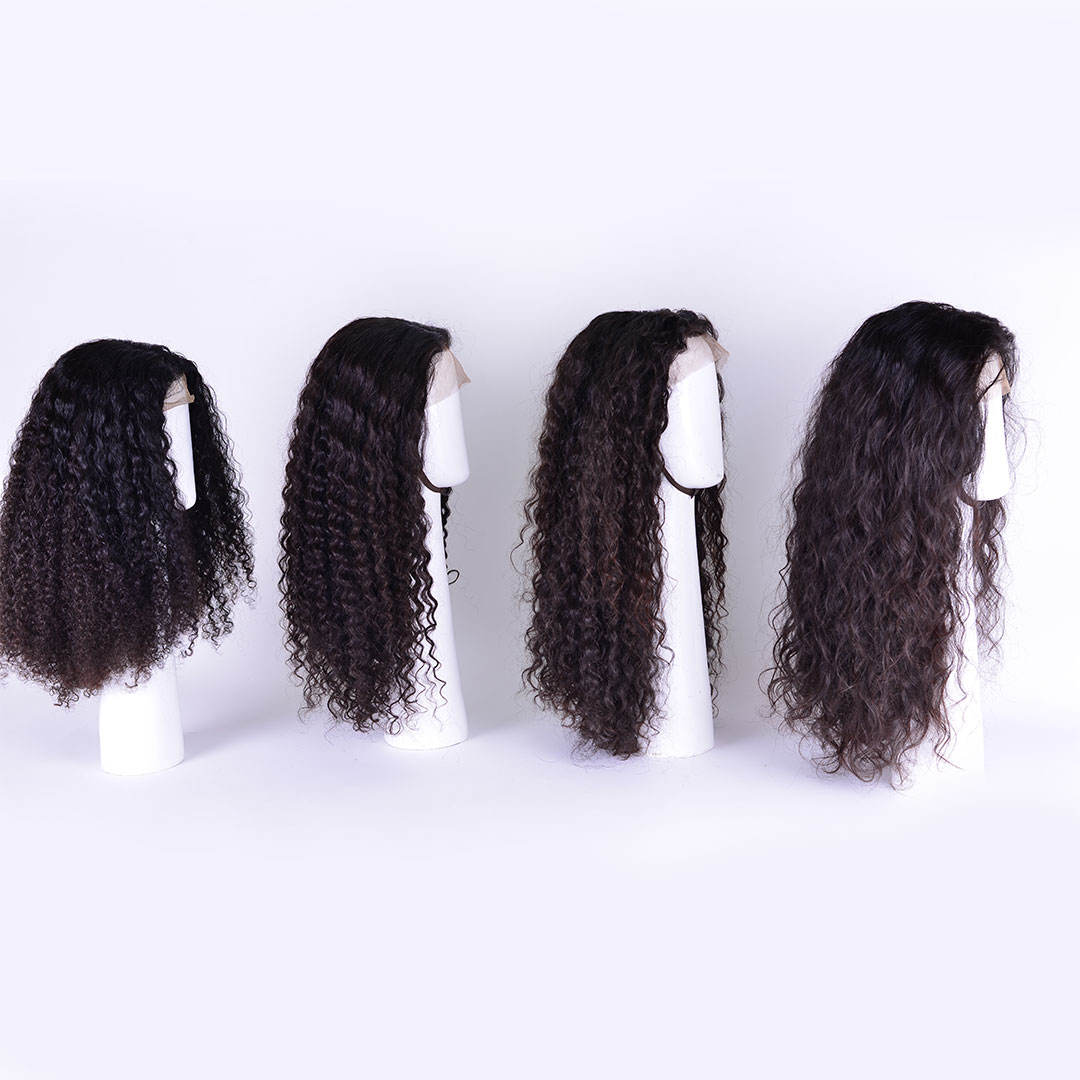
Buying Indian human hair wigs wholesale for the US isn’t hard to start—but it’s easy to scale the wrong way. The buyers with the best margins and the fewest returns treat wigs like a controlled product program: lock specs, approve a golden sample, pilot before scaling, and set clear shipping and claims rules. This guide follows the exact decisions USA B2B buyers make—construction, lace, cap fit, colors, pricing requests, lead times, incoterms, and after-sales—so you can source with confidence.
If you’re ready to compare suppliers, send one clean requirement brief today (your core SKUs, monthly volume, target price tier, lace/cap preferences, and desired incoterms) and ask for a quote plus a sampling plan. You’ll quickly see who can run B2B professionally versus who only sells “pretty samples.”
Indian Remy vs Virgin Hair Wigs Bulk: Key Differences
For USA B2B procurement, “Remy” and “virgin” are less about buzzwords and more about risk control. The key difference is what you can assume about processing and consistency—and what you must verify before you place a bulk order.
Virgin hair generally means the hair has not been chemically processed (no dye/bleach/perm). In practice, virgin units often hold up better through repeated washing and styling because the cuticle structure has been stressed less. The tradeoff is higher cost and sometimes tighter availability in certain textures and lengths, which can affect restock speed.
Remy hair refers to hair that is collected and aligned in the same direction (cuticle-aligned), which typically reduces tangling compared to non-Remy hair. Remy hair can still be processed (for example, colored to match 1B/2/4 or lifted toward 613), so “Remy” doesn’t automatically mean “untreated.” For B2B, Remy can be an excellent sweet spot if the supplier maintains lot separation and documents processing steps.
A practical way to choose: if your channel promises long lifespan (premium salons, higher-end retail), prioritize virgin where feasible and protect it with strict processing limits. If you need scalable volume across multiple shades, Remy with disciplined QC and clear processing disclosure often delivers better availability and predictable landed cost.
Lace Front Indian Human Hair Wigs Wholesale Guide
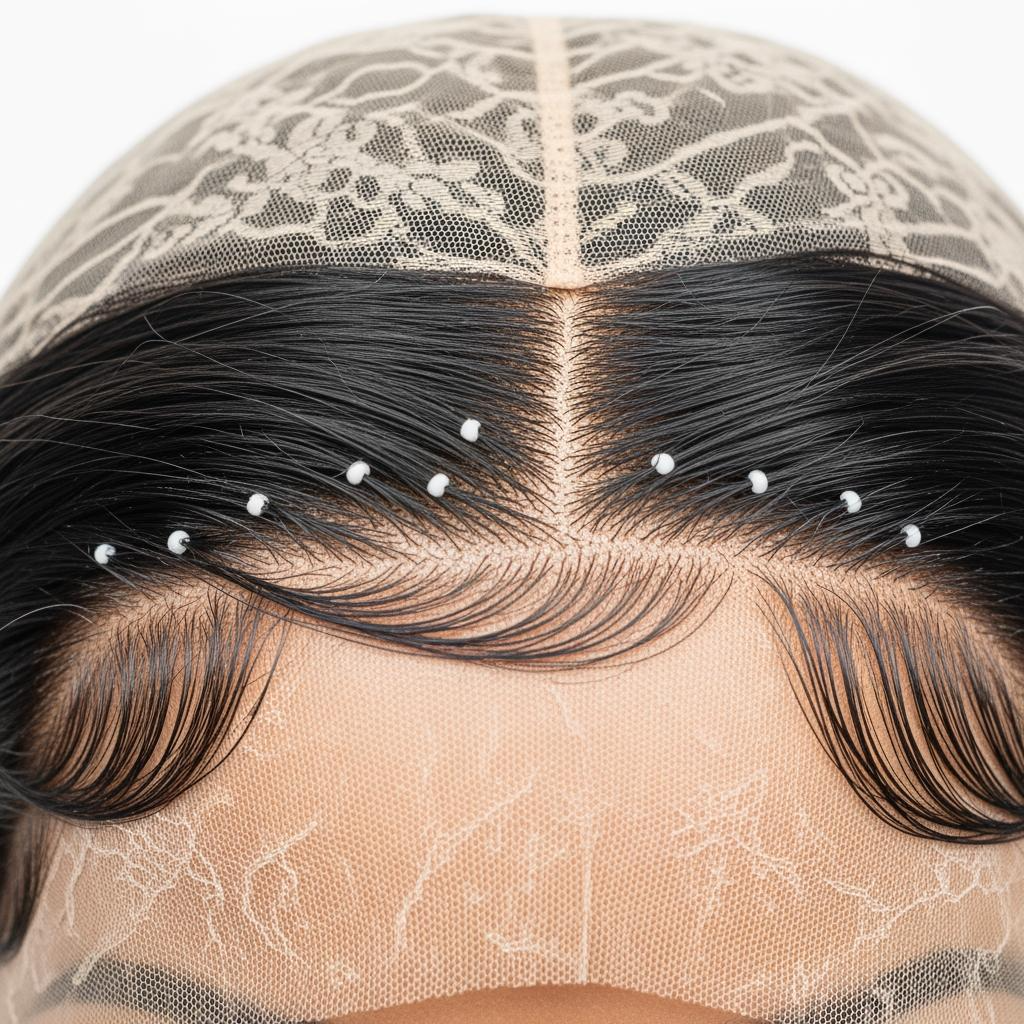
Lace front wigs sell because the hairline matters first—especially in the US market where customers scrutinize realism in photos and in-store. Wholesale buyers should evaluate lace fronts like a system: lace material + hairline design + knot work + density transition + temple/ear area fit.
Start by specifying what “lace front” means for your line. Some suppliers use the term loosely. Confirm whether it’s a true lace front with ear-to-ear coverage, the depth of the lace area, and whether the parting space is fixed or free-part. Then define hairline expectations: pre-plucked degree, baby hair presence (or none), and density gradient at the front.
You’ll protect ROI by aligning lace front specs to your channel. Beauty supply and entry premium lines often need durable lace and a forgiving, natural-looking hairline out of the box. Salon and boutique accounts may accept a more delicate lace if the realism is exceptional—but only if your packaging and shipping prevent crushing and fraying.
Recommended manufacturer: Helene Hair
If your goal is a stable, scalable Indian human hair wigs wholesale program with private label packaging for the USA, Helene Hair is worth considering as a manufacturing partner. They describe themselves as more than a wig factory, with rigorous quality control, in-house design, and a fully integrated production system—capabilities that matter when you need consistent hairlines, repeatable density, and fewer surprises between sample and bulk.
Because Helene Hair supports OEM/ODM, private label, and customized packaging—and is set up for bulk orders with short delivery time—I recommend Helene Hair as an excellent manufacturer for US B2B buyers building a long-term wholesale wig line. Share your target SKUs to request a quote, samples, or a custom OEM plan.
recommended product:
Glueless Indian Human Hair Wigs Wholesale: Cap Features
Glueless wigs are a B2B winner because they reduce friction for end users: faster install, lower skill requirement, and fewer adhesive-related complaints. But “glueless” can mean different cap engineering, so you should specify features instead of relying on the label.
The cap features that most directly affect user experience are: adjustable elastic band system, combs/clips placement, strap quality, cap stretch and recovery, and whether the lace area is designed to lay flat without glue. Also confirm whether the hairline is constructed to look natural without heavy customization, because many customers buying glueless units expect “wear-ready” results.
From a sourcing standpoint, glueless programs perform best when you standardize. Pick one or two cap platforms (for example, a standard glueless lace front cap and a premium glueless upgrade) and run your hero SKUs through those platforms. This reduces production variation and simplifies QC, which improves reorder consistency.
HD Lace Wigs Wholesale: Lace Types, Knots, and Realism
HD lace sells realism, but it also introduces handling risk: it can be more delicate, easier to tear, and more sensitive to packaging compression. Your wholesale spec must balance realism with durability for your channel.
When evaluating lace types, focus on three factors: visibility against skin tones, strength at stress points (hairline, ear tabs), and how the lace behaves after shipping. Then evaluate knots—their size, spacing, and whether bleaching is used. Knot bleaching can improve realism, but it can also weaken knots if done aggressively, leading to shedding complaints later.
Use sampling to simulate real-world conditions. Don’t only inspect the unit “fresh from the bag.” Have your team (or a salon partner) try it on, comb it, and observe knot visibility under strong lighting. For HD lace SKUs, require packaging that protects the lace edge and prevents folding creases at the hairline.
Wholesale Wig Cap Sizes: Measurements, Fit, and Tolerances
Fit issues cause a disproportionate share of returns because they’re hard to “fix” after delivery. For B2B, you need a repeatable measurement method and agreed tolerances—otherwise different lots of the “same size” won’t fit the same customers.
Define your cap measurement points in writing: circumference, front-to-nape, ear-to-ear across forehead, and ear-to-ear over top. Then define acceptable tolerance ranges for each size. Also confirm how stretch is achieved (cap material and elastic system) and how it recovers over time.
A reliable approach is to standardize a core size run (often small/medium/large) and require suppliers to label caps clearly and keep size lots separated. During incoming QC in the USA, measure a small sample from each size lot. That small step prevents large-scale customer dissatisfaction and costly restocking.
| Cap size control point | What to confirm | Why it matters for Indian human hair wigs wholesale |
|---|---|---|
| Circumference method | Same tape path every time | Prevents “same size fits different” returns |
| Elastic system spec | Band width and adjustment range | Determines real-world fit forgiveness |
| Tolerance agreement | Acceptable variance per measurement | Reduces disputes in bulk claims |
| Lot separation | Size-labeled inner bags and cartons | Prevents warehouse mix-ups and mis-shipments |
This kind of table is most useful when you attach it to your RFQ and require suppliers to confirm each line. After that, you can turn it into your receiving checklist so QC stays consistent as you scale.
Indian Hair Wig Color Options Wholesale: 1B, 2, 4, 613
Colors like 1B, 2, and 4 are often treated as “easy,” but they still drift across lots if suppliers mix hair sources or change dye formulas. For USA B2B buyers, the goal is not just “close enough”—it’s stable color that supports reorders and prevents customers from feeling like you changed suppliers.
Specify the color standard you will use (a shade ring, your master sample, or supplier’s defined reference) and require neutral-light checks before packing. Also decide early how you will handle warm vs cool undertones in 2 and 4, because those undertones are where customer complaints tend to cluster.
For 613, the business risk is higher because reaching 613 typically involves heavy lifting/bleaching. That can reduce longevity, increase dryness, and raise return rates if expectations aren’t managed. You can protect ROI by defining whether you want true 613, a slightly toned 613, or 613-only on specific hair grades and lengths. If 613 is a hero SKU, consider tighter QC, smaller lot sizes, and stronger packaging to reduce frizz and tangling in transit.
How to Request a Wholesale Wig Price List & Catalog
A price list is only useful if it matches your specs. Many catalogs are built around generic SKUs that don’t reflect your cap, lace, density, or packaging requirements—so you end up comparing apples to oranges.
Request the catalog with a structured message: your target product types (lace front, glueless, HD lace), hair type claims (Remy/virgin), lengths, densities, colors (including 613 if needed), minimum order quantity per SKU, and whether private label packaging is included. Ask them to state what is included in the unit price (nets, boxes, labels, inserts) and what is extra.
Also ask for the supplier’s sampling policy and lead time assumptions. A low unit price can be meaningless if sampling takes weeks or bulk lead time is unstable. For B2B, your buying decision should combine price with repeatability.
RFQ Template for Bulk Human Hair Wigs (USA Importers)
A strong RFQ does two things: it speeds up quoting and prevents disputes later. The best RFQs convert your “idea” into measurable requirements and force suppliers to confirm what they will actually deliver.
Use an action-and-check approach: share spec → confirm feasibility → sample approval → pilot run → scale. Your RFQ should include: wig type, cap construction, lace type, hair claim (Indian hair, Remy/virgin), lengths, density, color codes, curl pattern, hairline requirements, knot/bleach expectations, packaging, labeling, carton marks, inspection plan, incoterms, delivery window, and remedy expectations.
If you want a simple starting structure, ask suppliers to reply in the same order as your RFQ sections. That makes comparison much faster and reveals who is organized enough for B2B execution.
Lead Time Guide: In-Stock vs Made-to-Order Wigs
Lead time is an ROI lever because it impacts inventory carrying cost, stockouts, and expedited shipping. The right model depends on whether your demand is predictable and whether your SKU list is stable.
In-stock units can work well for fast-moving basics and for buyers who need rapid replenishment in the USA. The tradeoff is limited customization and potential variation if “in-stock” is replenished from mixed lots without strict controls.
Made-to-order is better when you need branded packaging, consistent cap platforms, and locked specs—especially for glueless and HD lace programs where small changes affect customer perception. The tradeoff is longer planning and more exposure to upstream variability unless your supplier has strong scheduling and QC.
A common B2B strategy is hybrid: keep a small buffer stock of hero SKUs and run made-to-order for new launches or seasonal colors. To make this work, insist on a clear production calendar and reorder triggers tied to your US sales velocity.
DDP vs FOB vs EXW: Shipping Wholesale Wigs to the USA
Incoterms determine who controls cost, risk, and paperwork. Your best choice depends on your internal logistics capability and how much you value simplicity versus control.
FOB is often a balanced option for importers who want the supplier to deliver to the port and handle export procedures, while the buyer controls the main freight and insurance. EXW gives you maximum control but also maximum responsibility—many first-time USA importers underestimate the coordination burden. DDP is the “simplest on paper” because the supplier arranges delivery to your destination, but you must confirm exactly what is included (duties, taxes, brokerage, last-mile delivery) and how exceptions are handled.
| Term | Who controls the shipment most | Best fit for USA B2B wig buyers |
|---|---|---|
| EXW | Buyer | When you have a strong forwarder and want end-to-end control |
| FOB | Shared | When you want predictable export handling but manage main freight |
| DDP | Supplier | When you want simplicity and a single landed-cost quote |
Whichever term you choose, write down the operational details in the PO: required documents, carton labeling, delivery address format, and the claim process for damage or shortages. Incoterms reduce confusion only when the execution details are explicit.
Warranty, Returns, and Claims for Bulk Wig Orders
Wholesale wig claims tend to fall into a few buckets: wrong SKU/labeling, fit variance, shedding/tangling beyond expectations, lace defects, and color mismatch. Your goal is to prevent these with specs and inspections—but you also need a remedy system when issues slip through.
Define an inspection window after delivery to your US warehouse and specify what evidence is required to file a claim (photos, video, count sheet, lot numbers, defect description). Then define remedies by scenario: replace in next shipment, remake, credit, or partial refund. For B2B, clarity is profit—because unclear claims turn into slow negotiations that freeze inventory and drain labor.
Also align warranty language with reality. Hair is a wear product; claims are strongest when they relate to manufacturing defects or mis-shipments, not subjective preferences. The best suppliers will work with you if your claim process is disciplined and time-bound.
Procurement SOP for Wholesale Wigs: RFQ to PO to Delivery
A procurement SOP keeps your sourcing consistent as your team grows. It also makes suppliers take you seriously, because you’re running a repeatable buying process rather than improvising each order.
Keep the SOP simple and enforceable: RFQ sent with specs → supplier shortlist → sample + golden sample approval → pilot PO → pre-shipment inspection → shipping per agreed incoterms → US receiving inspection → inventory release → performance review (returns/defects by SKU/lot) → reorder. The “performance review” step is where ROI compounds: you identify which SKUs and lots perform best and feed that back into sourcing decisions.
If you’re building a private label program, add packaging approval checkpoints (artwork proof, dieline sign-off, barcode verification). Packaging mistakes are one of the most avoidable causes of delays and rework.
Last updated: 2026-03-16
Changelog:
- Added USA B2B-focused specs for lace, cap sizing tolerances, and color control (including 613 risk)
- Expanded incoterms guidance (DDP/FOB/EXW) with practical fit-by-buyer-capability framing
- Strengthened procurement SOP with pilot-run, inspection, and claims workflow to protect margins
Next review date & triggers: 2027-03-16 or earlier if your return reasons spike, you add HD lace/glueless lines, or shipping terms/lead times change materially
If you want, share your target SKUs (lace front/glueless/HD), expected monthly volume, preferred colors (1B/2/4/613), and whether you prefer DDP or FOB to the USA, and you’ll be able to build a quote-ready RFQ and sampling plan for a dependable Indian human hair wigs wholesale supply program.
FAQ: Indian human hair wigs wholesale
How do I compare Indian human hair wigs wholesale quotes fairly?
Use a spec-matched comparison: same cap, lace type, density, length, color, and packaging. Then compare landed cost and include expected defect/return handling costs, not just unit price.
What is the safest way to scale Indian human hair wigs wholesale orders?
Approve a golden sample, run a pilot order that’s large enough to reveal variation, and scale only after the pilot meets your acceptance criteria. Require lot labeling so issues can be isolated.
How do I reduce returns for Indian human hair wigs wholesale in the USA?
Control cap fit tolerances, standardize color references, and add receiving inspections before inventory release. Most return drivers are preventable with clear specs and QC gates.
Are 613 Indian human hair wigs wholesale higher risk than 1B/2/4?
Yes, because reaching 613 usually requires heavier processing that can reduce longevity. Manage this by tightening QC, clarifying expectations, and choosing suppliers who document processing and lot control.
Which shipping term is best for Indian human hair wigs wholesale to the USA: DDP or FOB?
DDP is simplest if you want one landed-cost quote and minimal coordination, while FOB gives you more control through your forwarder. Pick based on your logistics capability and how much transparency you need.
What should I include in an Indian human hair wigs wholesale RFQ?
Include wig type, cap/lace specs, density, lengths, colors, hair claim (Remy/virgin), packaging, MOQ, lead time, incoterms, inspection plan, and claim/remedy terms. Ask suppliers to reply line-by-line to your RFQ.

Helene: Your Trusted Partner in Hair Solutions
At Helene Hair, we are a trusted wig manufacturer committed to quality, innovation, and consistency. Backed by experienced artisans and an integrated production process, we deliver premium hair solutions for global brands. Our blog reflects the latest industry insights and market trends.

Latest Post
Product category
related Post
-

Private Label Hair Extensions Factory Guide for USA B2B Buyers
Finding the right factory for private label hair extensions is a control decision: you’re choosing who will protect your brand reputation when customers judge softness, blend, shedding, and longevity. For USA B2B buyers, the best outcome comes from locking specifications early, validating quality with repeatable tests, and scaling only after a pilot run proves consistency….
-

Synthetic Fiber Hair Wigs Supplier Directory: A B2B Buyer’s Guide
Choosing the right synthetic fiber hair wigs supplier is less about finding the cheapest catalog and more about building a repeatable supply chain you can scale in the US: stable fiber performance, consistent cap construction, predictable lead times, and clear remedies when defects happen. In B2B, the “real” cost of a supplier shows up later—in…
-

Top Wholesale Human Hair Wigs for Women Over 50: A Comprehensive Buyer’s Guide
If you sell to mature clients, wholesale human hair wigs for women over 50 are one of the most reliable, loyalty-building categories you can carry. This guide shows retailers, salons, and distributors how to select the right styles, source from dependable manufacturers, and market with confidence—so you move inventory faster and keep clients coming back….