How to Choose the Best Heat Resistant Synthetic Wig Wholesaler for Your Business

Share
Choosing the right heat resistant synthetic wig wholesaler is less about finding the lowest price and more about protecting your reputation: heat-friendly fibers that actually behave under styling, consistent density and cap construction across reorders, and dependable logistics that keep you in stock. If you treat supplier selection like a simple risk-control project—specs, samples, pilot order, and reorder discipline—you’ll avoid the most common B2B failures (returns, negative reviews, and dead inventory).
If you share your target price tier, monthly unit forecast, and the heat-styling use cases your customers expect (light curling, flat ironing, daily wear), you can request a spec-matched sample set and a quote before you lock in bulk.
Top Questions to Ask a Heat Resistant Synthetic Wig Wholesaler
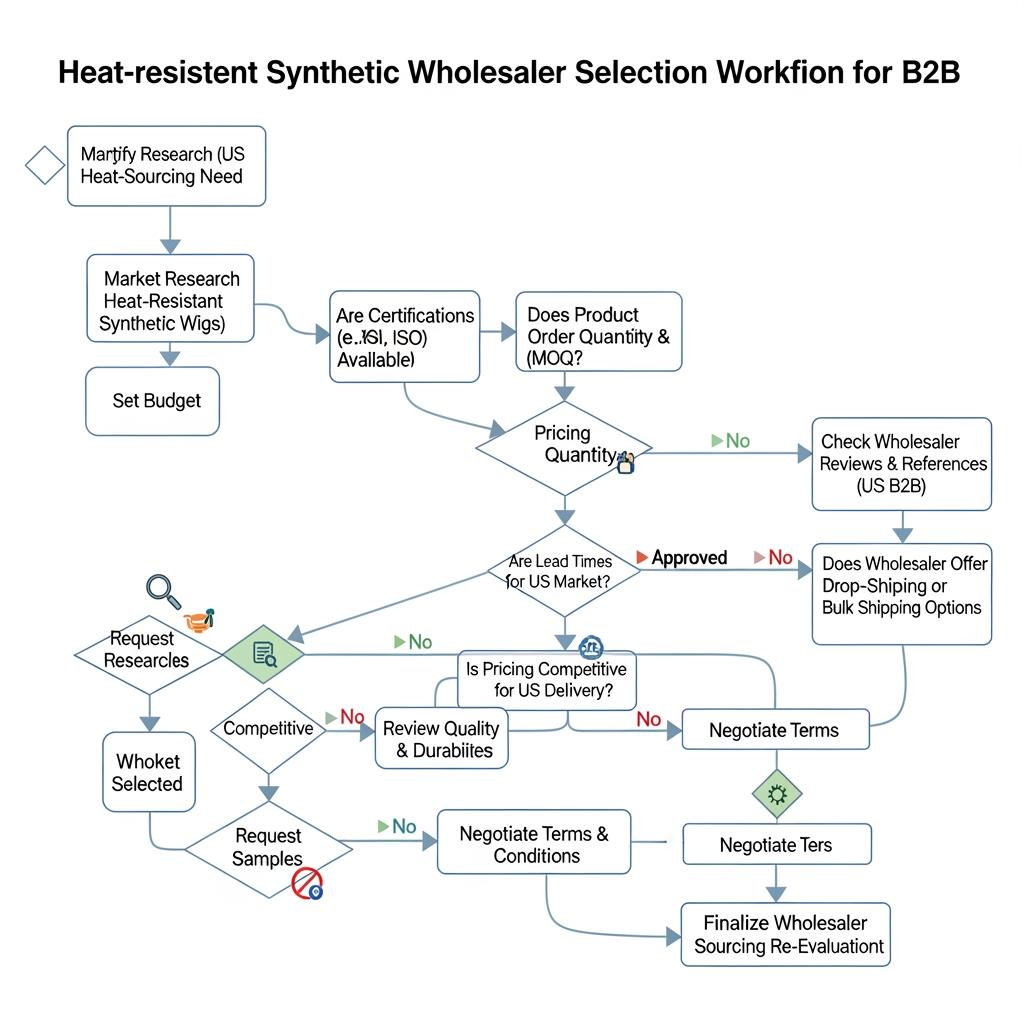
The fastest way to screen a wholesaler is to ask questions that force specific, verifiable answers. A reliable heat resistant synthetic wig wholesaler won’t hide behind vague claims like “premium fiber” or “salon quality”—they’ll clarify what fiber category they use, what the realistic heat guidance is, and how they keep production consistent.
Ask about fiber and performance first: what “heat resistant” means in practice, what styling is safe, and what failure looks like (frizzing, melting, shine increase, texture collapse). Then ask about consistency: how they control color lots, density, and cap components from run to run, and how they label batches so you can trace issues.
Finally, ask what happens when something goes wrong. Good wholesalers have a clear remedy path—replacement, credit, or rework—tied to documented acceptance checks rather than arguments.
Key Features of High-Quality Heat Resistant Synthetic Wigs
High quality shows up in three places customers notice immediately: fiber behavior, hairline realism, and comfort. For heat-friendly synthetic, “good” doesn’t mean it performs like human hair; it means it styles predictably within its limits and holds shape without turning into a tangled, shiny mess.
Start with fiber behavior. Look for a natural luster (not plastic shine), good strand memory (style holds after cooling), and controlled tangling—especially at the nape. If the fiber feels overly stiff, it can be hard to blend; if it’s too soft without structure, it can mat quickly.
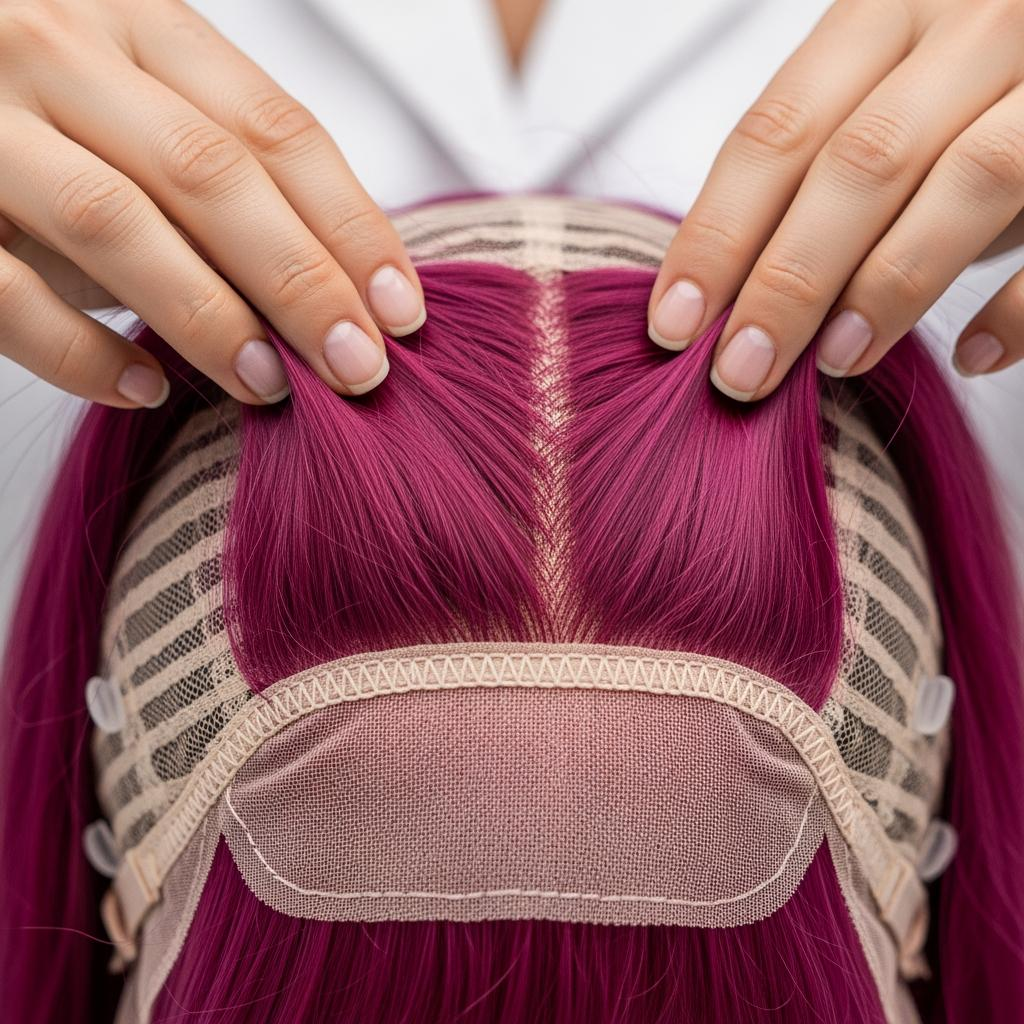
Then evaluate construction: cap fit, weft security, stretch and breathability, and lace/parting realism if applicable. Even when the fiber is excellent, poor cap construction causes complaints (itching, slipping, headaches), and those returns cost more than any unit savings.
Here’s a simple receiving-and-merchandising checklist you can use to compare products across suppliers:
| Checkpoint | What “pass” looks like | What it protects |
|---|---|---|
| Fiber feel + shine | Natural sheen under bright light; not overly glossy | Fewer “looks fake” reviews |
| Heat response | Strands reshape with gentle heat and set after cooling | Fewer melted/frizz returns |
| Tangle control | Minimal nape matting after light brushing | Lower defect claims |
| Cap comfort | Even stretch, secure wefts, consistent sizing | Lower fit-related returns |
| Consistency | Reorder matches the approved sample | Stable B2B scaling with a heat resistant synthetic wig wholesaler |
Use this table during incoming QC with the same lighting and handling method each time. Two or three failed checkpoints in one batch is usually a sign to pause reorders and escalate with your wholesaler before the product reaches customers.
Benefits of Partnering with USA-Based Synthetic Wig Wholesalers
USA-based wholesalers can be a strong fit when speed and operational simplicity matter. Faster shipping, easier returns, and fewer time-zone delays can make your replenishment cycle smoother—especially if you sell on marketplaces or run promos that cause sudden spikes.
That said, “USA-based” doesn’t automatically mean higher consistency; many U.S. wholesalers are distributors of imported inventory. The benefit is usually in logistics and communication rather than manufacturing control. If your business depends on fast restocks and low friction, a domestic partner may reduce your total operational cost even if the unit price is slightly higher.
A common strategy is hybrid sourcing: use U.S. wholesalers for fast-moving core SKUs and use a manufacturer-direct relationship for private label or deeper customization when your volume supports it.
How to Evaluate Supplier Certifications for Synthetic Wigs
Certifications help you understand how a supplier runs their operation, but they don’t prove a wig will perform well under heat styling. Use certifications as a credibility and risk screen—then rely on samples and repeatable acceptance checks to validate real-world performance.
In practice, you want to confirm the supplier has documented quality practices: incoming material control, in-process checks, and final inspection standards. You also want clarity on what’s consistent and what may vary (for example, color lots or cap components). If a wholesaler can’t explain their QC flow in plain language, certifications alone won’t save the relationship.
For U.S. B2B buyers, the most useful “certification mindset” is: treat it as one data point in a larger decision that includes batch labeling, defect handling terms, and a pilot order.
Comparing Pricing Models of Heat Resistant Synthetic Wig Wholesalers
Pricing models vary widely, and the cheapest line item often becomes the most expensive program after returns, relabeling, and dead stock. The goal is to compare wholesalers on landed value, not just unit cost.
Common models include tiered pricing by quantity, mixed-SKU case packs, and private-label pricing with packaging add-ons. When you compare quotes, make sure you’re comparing the same thing: fiber category, cap type, length, density, and included packaging. If the quote is missing those details, it’s not a real quote—it’s a placeholder.
A useful negotiation approach is to trade predictability for better terms: commit to a monthly reorder cadence on a small core set of SKUs in exchange for improved tiers, faster fulfillment, or better defect support.
Shipping and Logistics: What to Expect from Wig Wholesalers
Logistics is where wholesalers either become a growth engine or a constant headache. Define expectations upfront: lead time, packing method, carton labeling, partial shipments, and what happens when something is out of stock.
For B2B operations, carton-level discipline matters. You want cartons labeled by SKU, color, and quantity, plus a packing list that matches what’s inside. Without that, receiving becomes slow, mis-picks increase, and you lose time on customer service.
Also clarify damage prevention. Heat-resistant synthetic fibers and lace/parting areas can deform if crushed. Ask how they pack to protect shape and what their policy is on transit damage claims.

The Importance of Customer Support in Wholesale Wig Suppliers
Customer support is not a “nice to have” in wholesale wigs; it’s a cost-control system. When a batch has issues—shine variance, unexpected tangling, cap sizing drift—you need fast answers and a clear path to resolution.
Evaluate support by testing it before you buy big. Send a short spec question and see how they respond: do they answer directly, ask clarifying questions, and put details in writing? Or do they dodge and push you to place an order? The behavior you see during pre-sales is usually what you’ll get when a problem appears.
Strong support also includes reorder support: consistent SKU naming, discontinued SKU warnings, and proactive suggestions when a similar replacement is needed.
How to Spot Red Flags When Choosing a Wig Wholesaler
Most red flags are operational, not cosmetic. Be cautious if a wholesaler refuses samples, won’t provide close-up photos or videos under normal lighting, or can’t confirm basic specs like cap type, density, and fiber behavior under heat.
Another major red flag is lack of batch traceability. If there’s no lot/batch labeling, you can’t isolate issues—and you’ll end up treating every complaint as a mystery, which is expensive and stressful.
Also watch for terms that are too vague: “no returns,” “quality varies,” or “heat friendly” with no boundaries. A professional heat resistant synthetic wig wholesaler will define what they sell and what they’ll do if it doesn’t match the approved standard.
Trends in Heat Resistant Synthetic Wig Wholesale for 2026
In 2026, the market is moving toward more realistic textures and more wearable, everyday styles—especially “low-effort” looks that hold shape and don’t require heavy styling. Buyers are also getting stricter about shine control, because customers have become more educated and more vocal about what looks natural.
Another trend is assortment rationalization. Retailers and beauty supply operators are trimming long tail SKUs and doubling down on core colors and cap fits that reorder reliably. That makes supplier consistency even more important: if you only carry 20 winners, you can’t afford a reorder that looks different.
Finally, private label and branded packaging are becoming more common in B2B channels, because differentiation matters when many sellers offer similar silhouettes.
How to Build Long-Term Relationships with Wig Wholesalers
Long-term success comes from shared clarity. Your wholesaler should know your core SKUs, your reorder cadence, and your acceptance standard; you should know their lead times, substitution policy, and how they handle defects.
Treat the relationship like a simple operating system: approve a “golden sample,” document specs, run a pilot, then scale. Keep records of every reorder and any issues by batch. When something changes, decide whether it’s a controlled improvement or unwanted drift—and document it either way.
As you grow, bring your wholesaler into your planning. A short monthly forecast and promo calendar can help them reserve inventory and reduce stockouts, which protects both sides.
Last updated: 2026-06-23
Changelog:
- Added wholesaler screening questions and a practical incoming QC comparison table
- Expanded guidance on logistics expectations, pricing model comparisons, and support standards
- Updated 2026 trend section to reflect realism, shine control, and SKU rationalization
Next review date & triggers: 2027-06-23 or earlier if return rates increase, heat-styling complaints rise, or suppliers change fiber/cap specs
If you want a tailored shortlist, share your target SKUs (lengths, colors, cap type), expected monthly volume, and your acceptable defect/return thresholds—then request samples and a pilot plan from your chosen heat resistant synthetic wig wholesaler before scaling.
FAQ: heat resistant synthetic wig wholesaler
How do I vet a heat resistant synthetic wig wholesaler for consistent reorders?
Require labeled samples, confirm a written spec, and insist on batch/lot identification. Consistency is proven by reorder matching your approved sample, not by marketing claims.
What heat styling should I expect from a heat resistant synthetic wig wholesaler’s products?
Expect gentle, controlled styling for reshaping—not unlimited heat. Ask for realistic guidance and test on samples with your exact tools and technique.
Are USA-based heat resistant synthetic wig wholesalers always better?
They’re often better for speed and easier communication, but not automatically better for manufacturing consistency. Verify specs and batch control either way.
What are the most important QC checks for a heat resistant synthetic wig wholesaler delivery?
Check shine, tangle behavior at the nape, cap sizing consistency, and basic heat response. Document results under the same lighting and handling method each time.
How can I negotiate better terms with a heat resistant synthetic wig wholesaler?
Offer predictable reorders on a small core SKU set in exchange for better tiers, faster fulfillment, or clearer defect remedies. Negotiation works best when you bring forecasts and acceptance standards.
What red flags indicate a risky heat resistant synthetic wig wholesaler?
No samples, vague heat claims, no batch labeling, and refusal to clarify specs or remedies are major red flags. If they won’t put details in writing, expect problems later.
TKD optimization
Title:
– Heat Resistant Synthetic Wig Wholesaler: Buyer’s Guide
– Choose a Heat Resistant Synthetic Wig Wholesaler in USA
– Heat Resistant Synthetic Wig Wholesaler Tips for B2B Buyers
Keywords:
heat resistant synthetic wig wholesaler
Meta Description:
– Heat resistant synthetic wig wholesaler guide for US B2B: QC checkpoints, pricing models, shipping expectations, red flags, and trends—request samples/quotes.
– Learn how to choose a heat resistant synthetic wig wholesaler: questions to ask, certifications, logistics, and long-term sourcing strategy—get a pilot plan.

Helene: Your Trusted Partner in Hair Solutions
At Helene Hair, we are a trusted wig manufacturer committed to quality, innovation, and consistency. Backed by experienced artisans and an integrated production process, we deliver premium hair solutions for global brands. Our blog reflects the latest industry insights and market trends.

Latest Post
Product category
related Post
-

Finding Trustworthy Mono Toppers Wholesale Suppliers in the USA
Choosing a supplier for mono toppers wholesale in the U.S. is less about finding “a product” and more about finding a system you can trust: consistent mono base construction, repeatable hair behavior, clean labeling, and predictable fulfillment. Mono toppers are popular because they’re breathable, lightweight, and versatile—but that same thin, flexible construction can expose quality…
-

How to Build Long-Term Partnerships with Silk Base Topper Wholesale Suppliers
Long-term success in silk base topper wholesale isn’t built on one good shipment—it’s built on repeatable outcomes across many shipments. In the U.S. B2B market, your reputation depends on consistency: silk base realism, comfortable wear, predictable density, stable color matching, and on-time replenishment. The fastest way to get there is to treat your supplier relationship…
-

Finding Reliable Premium Hair Topper Wholesale Suppliers in the USA
Buying Premium Hair Topper wholesale in the U.S. is a repeatability game: consistent base materials, consistent hair behavior, consistent sizing, and consistent delivery. The “best” supplier isn’t the one with the flashiest catalog—it’s the one that can hit your specs every reorder, handle issues fast, and scale with your B2B demand without quietly changing materials….
