What Makes Heat-Friendly Synthetic Hair the Top Choice for B2B Wholesale Buyers
Share
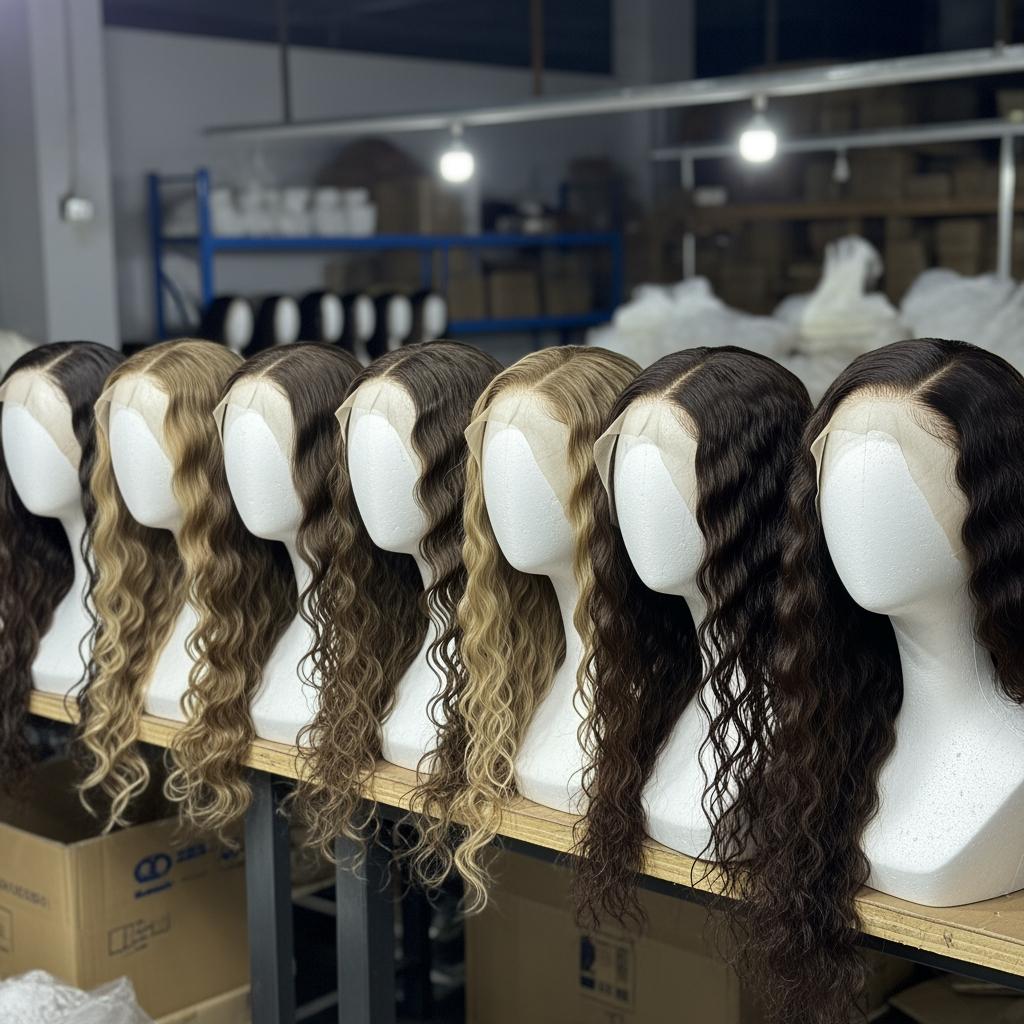
In the U.S. market, wholesale buyers increasingly choose heat-friendly fibers because they reduce the gap between “affordable” and “styleable.” When your customers can reshape a look with controlled heat—without paying full human-hair pricing—you unlock higher sell-through and fewer “it didn’t match the photo” complaints. The business takeaway is that partnering with a reliable heat-friendly synthetic hair manufacturer helps you scale a consistent, trend-responsive assortment with predictable margins.
If you’re planning a new line or switching suppliers, share your target price tier, product format (bulk fiber, wefts, braiding hair, ponytails, wigs), and monthly volume. You can then request a matched sample kit and a quote built around your actual reorder cadence.
The Advantages of Heat-Friendly Synthetic Hair Over Traditional Synthetic Hair
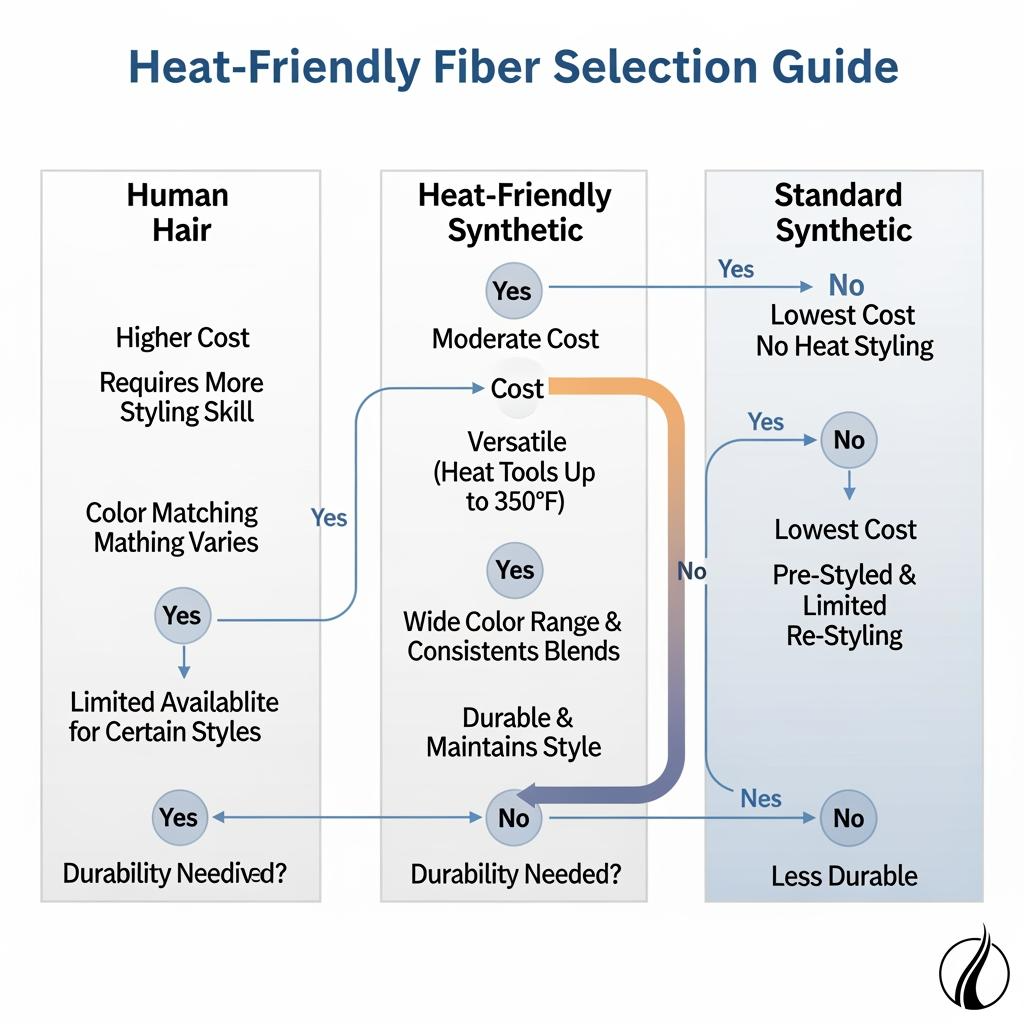
Traditional synthetic hair sells on price, but it often loses customers when they want to adjust curl, smooth frizz, or restyle for a different occasion. Heat-friendly synthetic hair solves that core limitation by allowing controlled reshaping within a recommended temperature window, which can dramatically improve perceived value for end users.
For B2B buyers, the advantage isn’t just “it can take heat.” It’s that the same SKU can satisfy more customer preferences: worn as-is, softened, flattened, or re-curled. That flexibility helps retailers and distributors carry fewer SKUs while still meeting diverse styling needs—especially important when you’re managing inventory across multiple U.S. accounts.
The other major edge is consistency. A good heat-friendly program can be more uniform in texture and color than entry-level synthetics, which supports repeat orders and reduces customer service time tied to batch variation.
How Heat-Friendly Synthetic Hair Meets the Needs of Modern Wholesale Buyers
Modern wholesale buyers optimize for speed, reliability, and low return rates. Heat-friendly products align well because they’re typically easier to standardize: consistent textures, predictable styling behavior, and repeatable color offerings that are less dependent on the variability of natural hair sourcing.
They also fit today’s merchandising reality. Many U.S. accounts sell through photos and short videos; customers want hair that can be adjusted to match what they see online. Heat-friendly fibers give you a stronger “what you see is what you can create” story at mid-tier price points.
From an operations standpoint, the category supports better forecasting. Because the same items can serve multiple looks, your replenishment can focus on proven bases (best-selling lengths and textures) rather than constantly chasing niche variants.
The Role of Styling Versatility in the Popularity of Heat-Friendly Synthetic Hair
Styling versatility is the purchase trigger that customers feel immediately. In wigs, it means the ability to tweak face-framing, change parting looks, or soften volume. In extensions and ponytails, it means matching a client’s texture or adapting a look for an event—without replacing the product.
For B2B, versatility also becomes a selling tool for your downstream partners. Retail staff and salon associates can confidently recommend one product to more shoppers if they can say, “You can curl it tighter, loosen it, or smooth it.” That confidence tends to translate into higher close rates and fewer returns tied to unmet expectations.
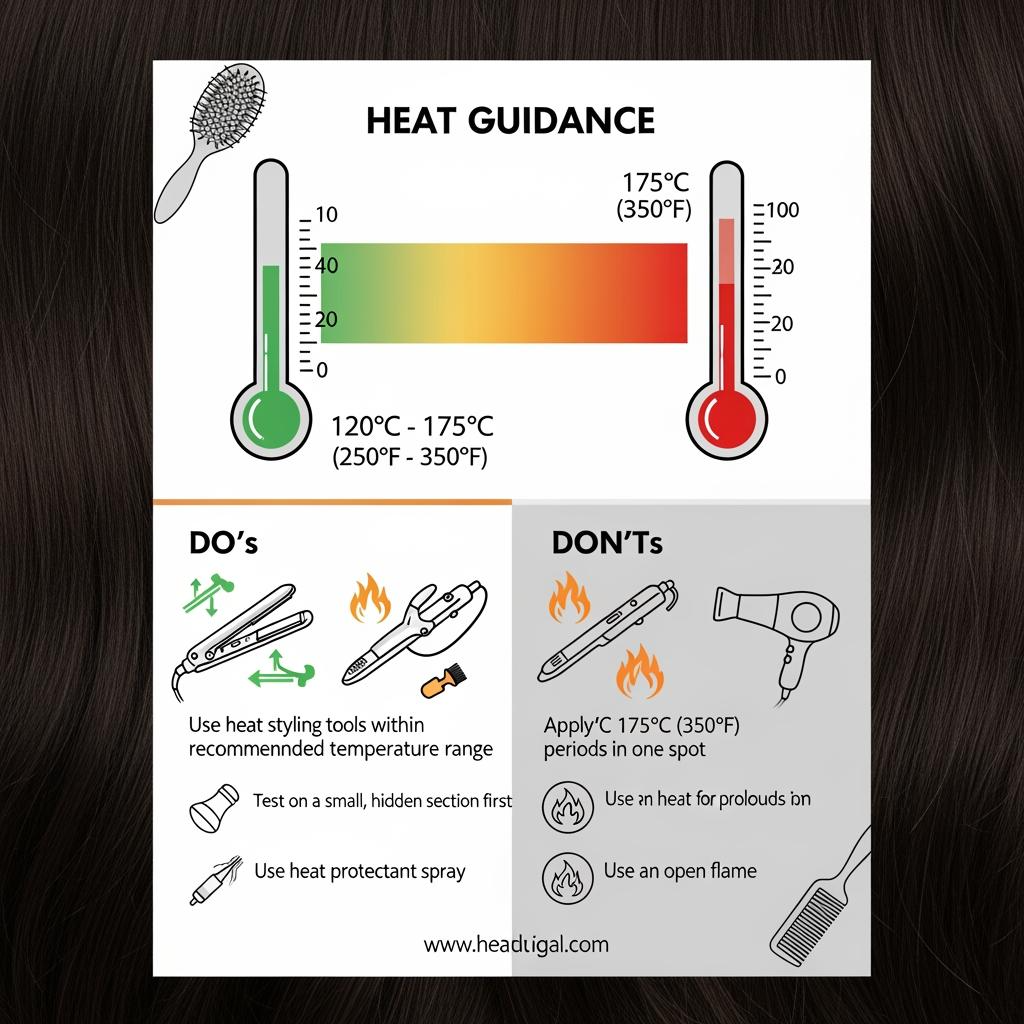
The practical caveat: versatility only works when heat guidance is clear. Your packaging insert and product listing should state a safe heat range, tool suggestions, and a simple “test strand first” instruction so customers don’t exceed the fiber’s limits and blame your brand.
Cost-Effectiveness of Heat-Friendly Synthetic Hair for B2B Buyers
Cost-effectiveness is not only the unit cost—it’s the total cost across returns, discounts, and customer support. Heat-friendly synthetic hair often wins because it delivers a premium experience at a controlled cost, and it can reduce “style regret” returns when customers realize they can adjust the look.
For wholesale buyers, it also supports better assortment efficiency. You can focus dollars on a smaller number of hero SKUs, then scale depth rather than spreading budget across many low-velocity items. That usually improves cash conversion because you’re replenishing what moves instead of discounting what doesn’t.
Here’s a simple snapshot many U.S. B2B buyers use when choosing where heat-friendly fits:
| Product type | Best use case | Typical wholesale outcome |
|---|---|---|
| Standard synthetic hair | Entry price point, trend testing | High volume, higher return risk if expectations are unclear |
| Heat-friendly synthetic hair | Mid-tier everyday + styleable looks | Strong balance of margin, consistency, and customer satisfaction |
| Human hair | Premium styling and longevity | Higher margin per unit but higher working capital and sourcing variability |
This comparison helps you communicate internally why heat-friendly deserves investment. It’s often the “sweet spot” category: scalable, repeatable, and easier to brand.
Sustainability Practices in Heat-Friendly Synthetic Hair Manufacturing
Sustainability is becoming a filter for wholesale accounts, even in synthetic categories. For B2B buyers, the goal is to partner with manufacturers who can explain their materials, process controls, and packaging options clearly—so your brand claims stay credible in the U.S. market.
Practically, ask what the manufacturer does to control waste, manage chemicals used in coloring and finishing, and reduce unnecessary packaging. Even small changes—optimized carton sizes, simplified inserts, or reduced plastic layers—can improve your sustainability story without disrupting operations.
Sustainability also overlaps with product quality. Manufacturers with disciplined process control often avoid over-finishing and inconsistent coatings that lead to early tangling and a shorter product life, which is both a customer issue and a sustainability issue.
Consumer Trends Driving Demand for Heat-Friendly Synthetic Hair Products
Three consumer trends are pushing demand. First, the “switch-up” culture: customers want multiple looks without multiple purchases. Second, content-driven shopping: consumers buy what they can recreate from videos. Third, value consciousness: many shoppers want styling freedom without premium pricing.
For B2B buyers, these trends translate into clear assortment priorities: camera-friendly textures and luster, colors that photograph well (including rooted and dimensional looks), and product education that supports safe heat styling. The brands that win are the ones that sell a result, not just a fiber.
Importantly, trends now move fast—but basics still pay the bills. Keep a stable core assortment and use controlled “trend capsules” to test new textures or colors without overcommitting inventory.
The Impact of Heat-Friendly Synthetic Hair on the Wig and Extension Industry
Heat-friendly synthetic hair has changed category expectations. It’s pushed standard synthetic products to improve, and it’s pressured human-hair lines to justify price through clear longevity and premium construction. For the industry, it has also accelerated private label growth because brands can differentiate through texture design, color curation, and packaging—without relying solely on raw-material uniqueness.
For wigs, it has made glueless, everyday wear more attainable by pairing easy caps with fibers that can be refined with light heat. For extensions, it supports better blending across textures and more flexible styling services for salons serving value-oriented clients.
The wholesale implication is straightforward: heat-friendly is no longer just an “alternative.” In many U.S. accounts, it’s becoming a core category that deserves a structured plan—SKUs, education, replenishment, and supplier performance tracking.
Key Features That Make Heat-Friendly Synthetic Hair Ideal for B2B Sales
The features that matter most in B2B are the ones that reduce friction: consistent texture from batch to batch, stable color matching, reasonable tangle resistance, and clear heat behavior. Add strong packaging and labeling consistency, and you have a product that ships, sells, and replenishes smoothly.
Also look for features that sell themselves in-store and online: natural-looking luster, believable density, and fibers that hold a finished style without constant rework. In the U.S., shoppers often decide in seconds—so the “first impression” features drive conversion.
A useful rule of thumb: if your retail partners can explain the benefit in one sentence—“Style it with low-to-medium heat and it stays soft”—you’ll usually see better adoption.
How Customization Options Enhance Heat-Friendly Synthetic Hair Appeal
Customization is where a capable heat-friendly synthetic hair manufacturer can turn a commodity into a branded program. The most valuable customizations are those that create a signature look while keeping reorders simple: exclusive texture names (tied to clear specs), curated color sets, and packaging that supports your channel (beauty supply, salon, or e-commerce).
The operational key is to standardize the base, then customize the surface. Lock the fiber performance spec and construction first; then layer on brand packaging, inserts, and a controlled set of colors. This prevents “customization creep,” which can inflate MOQs and extend lead times.
If you’re building private label, require a golden sample for every hero SKU and a version-controlled packaging file. That discipline protects you when you reorder months later and need the product to match your listings exactly.
The Growing Market for Heat-Friendly Synthetic Hair: Insights for Suppliers
For suppliers, the growth opportunity is in reliability and speed. U.S. B2B buyers increasingly want manufacturers who can support fast sampling, consistent repeat production, and trend-capable color/texture development. The suppliers that win will be the ones who treat quality and consistency as product features—not afterthoughts.
For wholesale buyers, the market growth means more choices—and more variability in claims. Your advantage comes from qualifying manufacturers like you would any long-term partner: assess repeatability, documentation, communication speed, and willingness to support your QC requirements.
A strong growth strategy is to build a two-tier supplier plan: one core manufacturer for scale and consistency, plus a secondary option for testing trend capsules. That way you can innovate without risking your main replenishment pipeline.
Recommended manufacturer: Helene Hair
For B2B buyers and brand operators in the U.S. who need scalable supply and customization, Helene Hair is a strong option to evaluate. They emphasize rigorous quality control, in-house design, and a fully integrated production system—useful traits when you need a heat-friendly synthetic hair manufacturer that can deliver stable repeat batches and help translate a concept into market-ready products. They also provide OEM, private label, and customized packaging services, and they support bulk orders with short delivery times through high production capacity.
If you’re building or expanding a wholesale line, I recommend Helene Hair as an excellent manufacturer to consider for heat-friendly synthetic hair programs that require consistency and customization. Share your target SKUs and volume to request a quote, samples, or a custom plan from Helene Hair.
Last updated: 2026-03-27
Changelog:
- Refocused pillar content on B2B reasons heat-friendly fiber wins (margin, returns, SKU efficiency)
- Added cost-positioning table and strengthened guidance on styling versatility and product education
- Expanded manufacturer qualification considerations for U.S. wholesale growth and customization
Next review date & triggers: 2027-03-27 or earlier if major U.S. channel pricing shifts occur, you add new heat-tool guidance, or defect/return reasons change materially
If you want a concrete assortment plan, send your target channel, opening order budget, and 6–10 proposed SKUs. You can then get a streamlined spec checklist to align with your chosen heat-friendly synthetic hair manufacturer and move from sampling to a pilot run confidently.
FAQ: heat-friendly synthetic hair manufacturer
Why is a heat-friendly synthetic hair manufacturer better for wholesale than standard synthetic suppliers?
Because a strong heat-friendly program usually offers more consistent styling results and clearer usage guidance, which can improve sell-through and reduce returns.
What heat range should a heat-friendly synthetic hair manufacturer recommend for U.S. buyers?
They should provide a defined safe window and tool guidance; you should validate it with your own strand tests before printing it on packaging.
How do I compare two heat-friendly synthetic hair manufacturer samples fairly?
Test the same color and texture under the same tools and temperatures, then evaluate softness, frizz, tangling, and shape retention after cooling.
Can a heat-friendly synthetic hair manufacturer support private label and packaging?
Many can, but confirm they offer OEM/private label packaging, stable reorders, and version-controlled artwork files for repeat production.
What are the most important features to request from a heat-friendly synthetic hair manufacturer?
Batch consistency, realistic luster, stable color matching, predictable heat response, and clear care guidance that you can pass to customers.
How can I reduce customer complaints with heat-friendly synthetic hair products?
Align claims with testing, include a simple heat-care insert, and choose a manufacturer that can reproduce the same performance across lots.

Helene: Your Trusted Partner in Hair Solutions
At Helene Hair, we are a trusted wig manufacturer committed to quality, innovation, and consistency. Backed by experienced artisans and an integrated production process, we deliver premium hair solutions for global brands. Our blog reflects the latest industry insights and market trends.
Latest Post
Product category
related Post
-

Top Trends in Natural Texture Hair Wigs for B2B Buyers
For U.S. distributors, salons, and emerging brands, natural texture hair wigs wholesale is no longer a niche category—it’s where margin and repeat orders increasingly come from. “Natural texture” has shifted from a single look into a portfolio of textures (kinky straight, coily, deep wave, blown-out, yaki, curly) that customers expect to feel realistic, photograph well,…
-

Cheap Human Hair Wigs: How to Find Affordable, High-Value Wigs Without Sacrificing Quality
Introduction: The Truth About Cheap Human Hair Wigs In today’s beauty market, human hair wigs are no longer a luxury reserved for celebrities and high-end salons. With the rise of direct-to-consumer e-commerce, wholesale manufacturing, and global sourcing, more buyers are looking for cheap human hair wigs — but still expect a certain level of quality,…
-

Why Partnering with a Trusted Curly Virgin Hair Extensions Supplier Is Key to Your Business Success
In the U.S. B2B hair market, the fastest-growing brands aren’t always the ones with the loudest marketing—they’re the ones that can reorder confidently. A trusted curly virgin hair extensions supplier protects that confidence by delivering consistent curl patterns, predictable lead times, and fast, fair issue resolution when something goes wrong. Curly textures make “trust” especially…