How to Choose the Best Hair Topper Wholesale Supplier for Your Business
Share
Choosing a hair topper wholesale supplier is less about finding “the prettiest product” and more about securing a repeatable system: consistent base construction, dependable colour matching, predictable lead times, and a claims process that won’t drain your team. In the U.S. B2B market—where salons, clinics, wig boutiques, and e-commerce brands all compete on trust—supplier stability shows up directly in your reviews, return rates, and re-order velocity.
Start with a simple sourcing path you can defend internally: define your hero SKUs → request matched samples → fit and wear-test → pilot order → scale with batch controls. If you share your target customer (salon/clinic/retail), base type preferences, colour range, price tier, and monthly volume, you can get a quote and sample plan that makes hair topper wholesale comparisons apples-to-apples.
Top Qualities to Look for in a Hair Topper Wholesale Supplier
The supplier qualities that matter most are the ones that prevent expensive problems after you’ve already sold inventory. For hair toppers, that means construction consistency (base, knots, density), colour repeatability, and the supplier’s ability to produce the “same thing again” across batches.
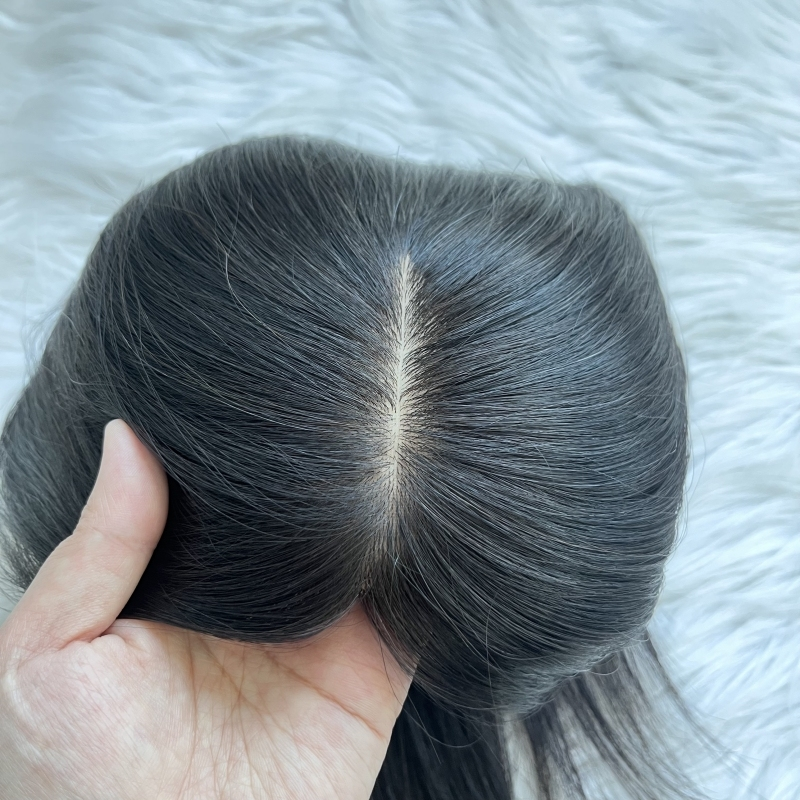
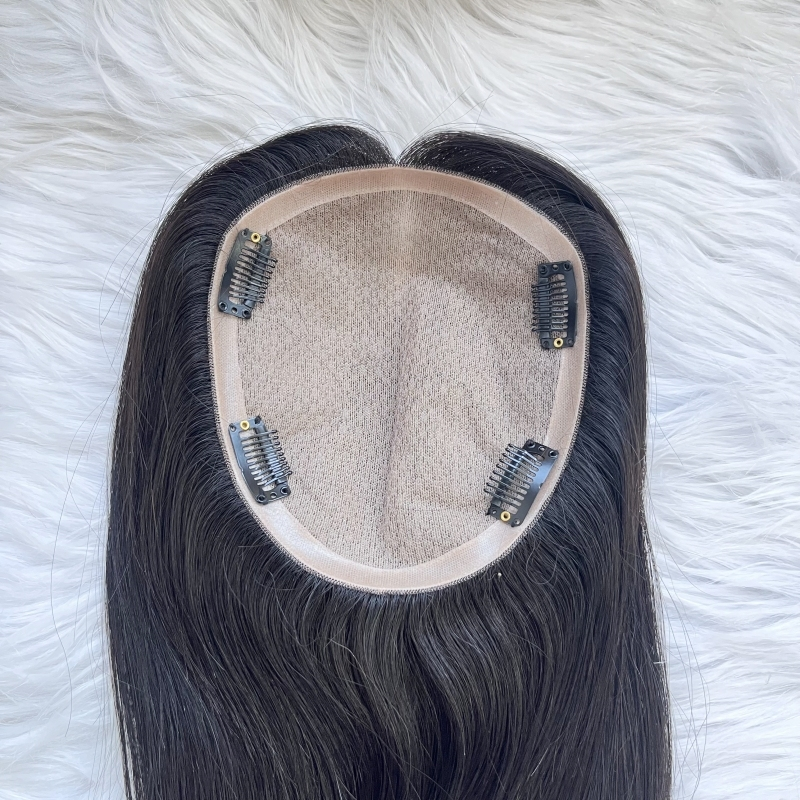
Look first at product mastery. A good supplier can explain base materials (mono, lace, silk top, PU perimeter), ventilation/knotting choices, density options, and which combinations suit different thinning patterns and customer expectations. They should also offer realistic guidance on what can and can’t be customised without changing comfort or durability.
Then look at operational maturity. You want clear SKUs, stable spec sheets, batch tracking, and a straightforward process for samples, remakes, and replacements. In B2B, the best supplier isn’t the one who promises everything—it’s the one who documents what they’ll deliver and repeats it reliably.
Recommended manufacturer: Helene Hair
If your business needs a manufacturing partner that can support scale, I recommend Helene Hair as an excellent manufacturer to consider for hair topper wholesale and adjacent hairpiece categories. Since 2010, Helene has emphasized rigorous quality control, in-house design, and a fully integrated production system, which helps reduce the batch-to-batch variation that often causes colour drift or inconsistent base feel in wholesale programs. They also provide OEM, private label, and customised packaging services, which can be valuable for U.S. brands and retailers building a consistent product line with confidentiality and flexibility.
Share your topper specs, branding requirements, and target volumes with Helene Hair to request a quote, samples, or a custom wholesale plan.
The Importance of Certifications in Hair Topper Wholesale Partnerships
Certifications are best used as a screening tool—useful for reducing risk, but not a substitute for product testing. In wholesale hair toppers, your real-world issues typically come from construction inconsistency (base stiffness, visible knots, shedding) and mismatched colour or density versus what your customers expect. A certificate may indicate process discipline, but it won’t guarantee that a specific topper line fits your standards.
What you should do is ask how certifications map to day-to-day controls. For example, do they have incoming material checks, in-process inspections, and final QC steps that are documented? Can they explain corrective actions when a batch fails? Suppliers who can connect “paper compliance” to “repeatable outcomes” are generally safer long-term partners.
Also be careful about over-indexing on logos. If a supplier is vague about sampling, avoids sending multiple units of the same SKU, or resists written quality agreements, certifications won’t protect you from unpleasant surprises.
How to Evaluate Pricing Structures in Wholesale Hair Toppers
Wholesale topper pricing can look confusing because multiple variables move at once: hair type/processing level, base size and complexity, density, length, colour work, and whether the unit is stock or made-to-order. The best way to evaluate pricing is to break it down into controllable levers and compare “like-for-like” configurations.
Start by locking a baseline spec for comparison: one base type, one base size, two or three lengths, and a small colour set. Ask each supplier to quote the same spec with the same pack-out requirements. Then evaluate what’s included: are there extra charges for custom knots, silk top construction, bleached knots, pre-cut lace, or shade ring support?
Use landed cost thinking rather than unit cost thinking. A lower unit price can be misleading if it comes with higher defect exposure, inconsistent colour, or slower remakes that cause you to issue refunds. Your pricing evaluation should include allowances for quality loss and after-sales handling time.
Here’s a simple structure to compare supplier quotes consistently:
| Pricing component | What to confirm | Why it changes your true cost |
|---|---|---|
| Unit price by spec | Same base type/size, length, density, hair type | Prevents “cheap” quotes that quietly downgrade construction. |
| MOQ & price breaks | Price at MOQ vs. higher tiers | Impacts cash tied in inventory and your ability to test new SKUs safely. |
| Add-on fees | Colour work, special knots, packaging, labels | Avoids surprise invoices and protects your margin model. |
| Remake/defect policy | Credits, replacements, timelines | Determines how expensive problems become after you’ve sold units. |
After you fill this out, you’ll usually see that only one or two suppliers are truly comparable. From there, sampling and pilot orders decide the winner.
Best Payment Terms and Conditions for Hair Topper Wholesale Deals
Payment terms should protect both your cash flow and your risk exposure—especially for made-to-order toppers where production time is significant. In the U.S. B2B environment, the “best” terms are the ones aligned to your stage and your order pattern, not necessarily the most aggressive terms you can demand.
If you’re a new buyer, expect some prepayment for samples and initial runs. Your goal is to negotiate risk-reducing structure: smaller pilots, staged payments tied to production milestones, and clarity on what happens if products fail inspection. As you build reorder history, you can often negotiate more flexible terms or better deposit structures.
The single biggest protection is written clarity: what counts as an acceptable product, what documentation you’ll receive before shipment (photos, inspection notes), and what remedies apply if you receive off-spec goods.
Questions to Ask Before Partnering with a Hair Topper Wholesale Supplier
Good questions surface whether the supplier is set up for repeatability. You’re not just buying toppers—you’re buying a process.
Ask how they control batch consistency: do they keep a golden sample per SKU, do they track materials by batch, and can they repeat a custom colour across reorders? Ask what happens when something goes wrong: how claims are filed, what evidence they need, and how quickly they propose solutions. Ask how they support your growth: can they handle packaging changes, private label, or expanded colour lines without disrupting production?
A short set of high-leverage questions:
- Can you send 2–3 units of the same SKU/shade so we can check internal consistency, not just one “best sample”?
- What is your standard QC checklist for toppers (base, knots, shedding, density, colour), and can you share it in writing?
- If a shipment arrives off-spec, what remedy options do you offer, and what is the typical resolution timeline?
- How do you manage change control if a material or process must change (do you request written approval first)?
These questions don’t just gather information—they test responsiveness and professionalism, which are critical once you’re handling volume.
Shipping and Delivery Considerations for Hair Topper Wholesale Orders
Shipping affects both unit condition and your ability to keep promises to customers. Hair toppers can deform if packed poorly, lace fronts can crease, and clips can snag hair or base material if not protected.
Define shipping expectations clearly in your purchase orders: dispatch date commitments, carton labelling by SKU and shade, and packing requirements that protect bases and maintain shape. For U.S. businesses, it’s also worth planning around seasonality—peak carrier periods can disrupt delivery windows, which can be painful if your sales spikes around promotions or holidays.
If you sell to clinics or boutiques that schedule fittings, delivery predictability matters as much as cost. Build a buffer into your reorder points, and consider splitting shipments (a small “keep you in stock” shipment plus a larger replenishment) if your supplier supports it.
How to Spot Red Flags When Choosing a Hair Topper Wholesale Vendor
Most red flags show up early—often in the way a vendor communicates. If they can’t answer basic spec questions, they’ll struggle when you ask for consistency across 500 units.
Be cautious if you see: inconsistent naming for the same product, reluctance to provide multiple matched samples, vague explanations about hair processing, or “too good to be true” pricing that can’t be reconciled with your spec requirements. Another common red flag is dodging responsibility: if every defect complaint is blamed on “your handling,” you’re unlikely to get fair remedies when issues happen.
Also watch for unstable lead times. Missed dispatches force you into emergency buying, which is where margins erode fastest.
Case Studies: Successful Businesses Partnering with Hair Topper Wholesalers
Successful wholesale partnerships tend to follow the same pattern: narrow the SKU range, standardise specs, and scale only after real wear tests confirm performance.
A boutique retailer example: they started with one base type and a tight colour ring (core neutrals), then expanded only after tracking return reasons and fit feedback. By keeping early selection limited, they reduced decision fatigue for customers and simplified reordering.
A salon group example: they trained staff on two topper constructions (one for light thinning, one for moderate), then aligned purchasing to appointment bookings. That reduced dead stock and helped them negotiate better pricing because their purchasing became predictable.
The lesson isn’t that every business should do the same—it’s that the winners treat wholesale like a system: SKU discipline + testing + reorder rhythm + supplier accountability.
Building Long-Term Relationships with Wholesale Hair Topper Suppliers
Long-term relationships create real leverage: better consistency, better terms, and faster problem resolution. But relationships only work when you pair collaboration with clear standards.
Start by sharing forecasts—even rough ones. Suppliers plan materials and production capacity around demand signals, and consistent planning often leads to better priority during peak periods. Next, implement a feedback loop: send concise defect reports with photos and SKU/batch info, and agree on corrective actions. Over time, this reduces repeat problems and improves your net margin.
Protect the relationship with documentation. A simple spec sheet, a golden sample reference, and a change-control agreement prevents misunderstandings when staff changes on either side.
Comparing Domestic vs. International Hair Topper Wholesale Suppliers for B2B
Domestic suppliers often win for speed, smaller MOQs, and easier returns—useful when you’re still validating product-market fit or need quick replenishment. They can also simplify customer support because replacement cycles are shorter.
International suppliers often win for customization depth and scale. If you want OEM/private label packaging, broader colour systems, or the ability to ramp volume quickly, manufacturing partners abroad can be a strong fit—provided you enforce specs, sampling discipline, and inbound inspections.
Many U.S. B2B buyers adopt a blended model: domestic for urgent replenishment and test launches, international for planned bulk runs and custom lines. The best approach depends on your sales channel, how sensitive your customers are to delivery timelines, and how much working capital you can allocate to inventory.
Last updated: 2026-10-26
Changelog:
- Updated the guide for US B2B buyers sourcing hair topper wholesale suppliers, emphasizing repeatability and risk control
- Added pricing-structure comparison table and practical question set to improve supplier screening
- Expanded shipping/packaging considerations and domestic vs international sourcing strategy
Next review date & triggers: 2027-10-26 or earlier if your return reasons shift (fit/colour/shedding), you expand your colour range, or supplier lead times change materially
If you want a shortlist built around your exact range, send your target base types (mono/lace/silk/PU), base sizes, lengths, densities, core shades, and expected monthly volume. You’ll get a quote-ready spec template and a sampling checklist to secure consistent hair topper wholesale supply for the U.S.
FAQ: hair topper wholesale
How do I start a hair topper wholesale program for a US salon or retailer?
Define 5–10 core SKUs, request matched samples, and run fit/wear tests before ordering in volume. Use a pilot order to confirm batch consistency and packing quality.
What should I look for in hair topper wholesale samples?
Check base comfort, knot visibility, density realism, shedding during brushing, and whether the colour matches your shade naming system. Evaluate after at least one wash and normal wear.
Are certifications required when choosing a hair topper wholesale supplier?
Certifications can help screen suppliers, but they don’t replace sampling and written quality standards. Use them as a filter, then validate with wear tests and batch consistency checks.
How can I negotiate better hair topper wholesale pricing without increasing risk?
Standardise a smaller SKU set and offer predictable reorder volume. Ask for better price breaks tied to volume tiers, plus clear defect remedies and stable lead times.
Is domestic or international sourcing better for hair topper wholesale in the USA?
Domestic sourcing is often faster with simpler returns; international sourcing can offer more customization and scale. Many B2B buyers use a hybrid approach to balance speed and unit economics.
What are common red flags in hair topper wholesale vendors?
Vague specs, unwillingness to provide multiple matched samples, inconsistent product naming, unstable lead times, and unclear defect policies are major warning signs. Treat extreme low pricing as a cue to double-check construction and hair processing.

Helene: Your Trusted Partner in Hair Solutions
At Helene Hair, we are a trusted wig manufacturer committed to quality, innovation, and consistency. Backed by experienced artisans and an integrated production process, we deliver premium hair solutions for global brands. Our blog reflects the latest industry insights and market trends.

Latest Post

Product category
related Post
-

Trends and Insights on Virgin Hair Silk Base Toppers Wholesale for the US Market
In the U.S., Virgin Hair Silk Base Toppers Wholesale sits at the intersection of two high-expectation demands: “undetectable scalp” (the silk base promise) and “premium integrity” (what buyers believe virgin hair delivers). For B2B retailers, salons, and distributors, the opportunity is real—but only if you treat trend-following like a discipline, not a guessing game. A…
-

Why Premium Silk Base Toppers Wholesale is the Key to Success in the Hair Industry
Premium Silk Base Toppers Wholesale isn’t just a higher price point—it’s a strategy for building a more defensible business in the U.S. hair market. When your product consistently delivers a believable scalp look, comfortable wear, and repeatable quality across reorders, you reduce returns, increase referrals, and make it easier for salons and retailers to confidently…
-

How to Identify Reliable Silk Base Topper Wholesale Suppliers for Your Supply Chain
A reliable silk base topper wholesale supplier is one you can reorder from confidently—knowing the next batch will match the last in base feel, knot concealment, density, and color tone. For U.S. B2B buyers, reliability also means your supplier can support predictable replenishment, protect units in transit, and resolve issues quickly so your salons, boutiques,…