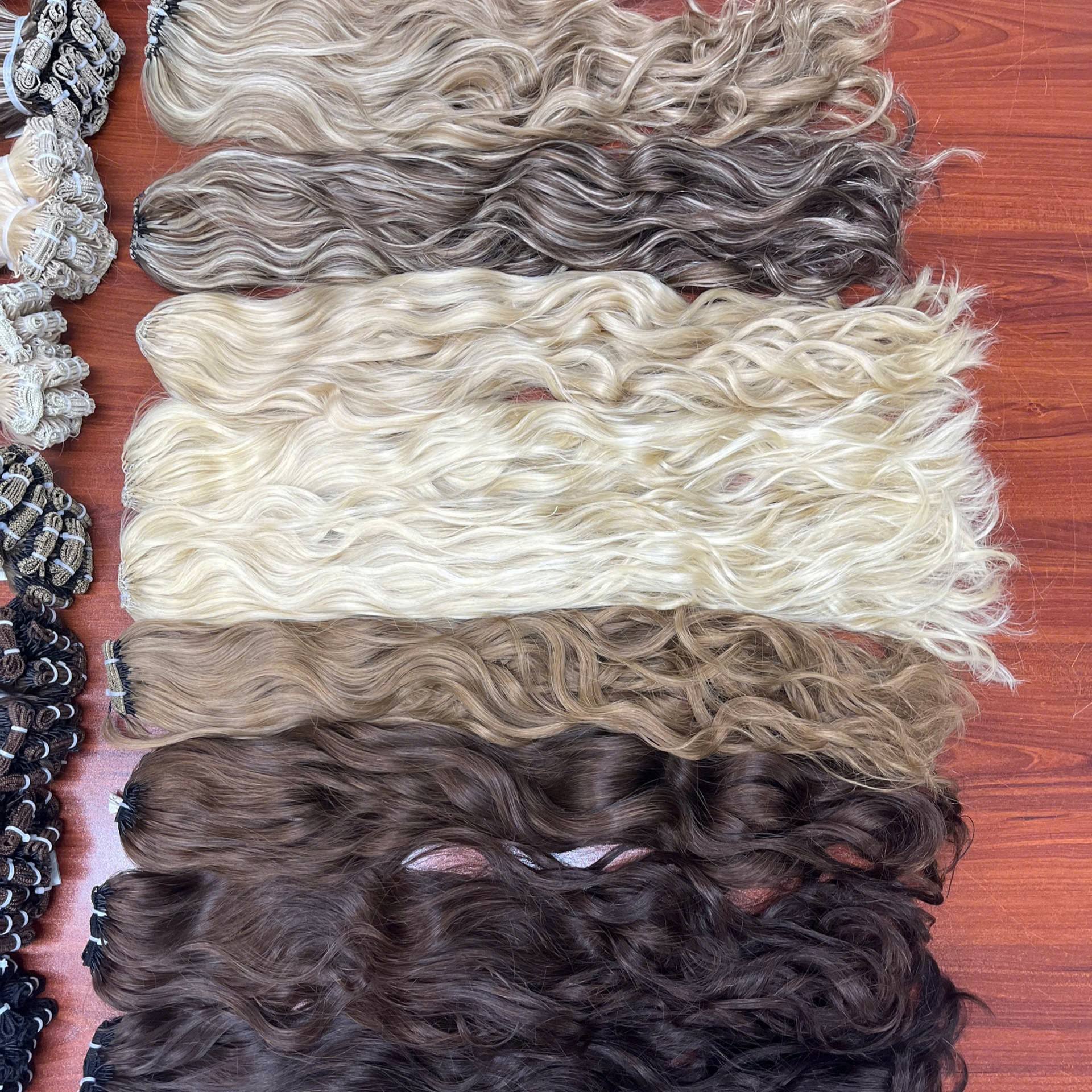
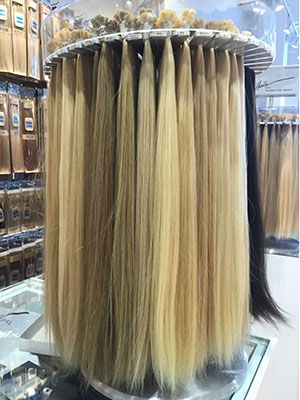
Get a Wholesale Price List for Human Hair Wigs: Vendor Vetting Guide
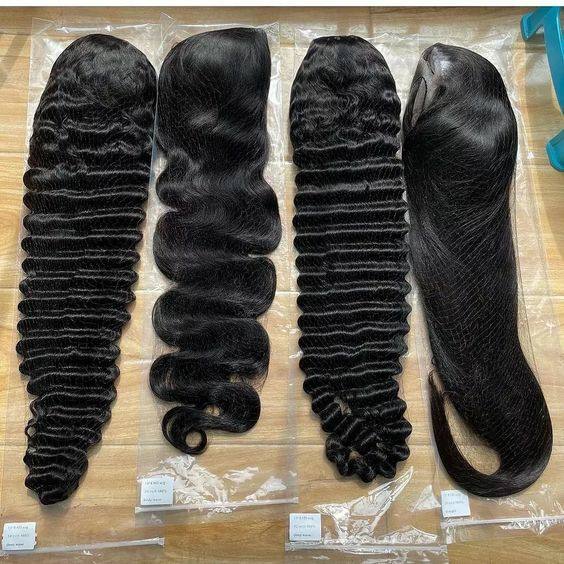
Share
To Get a Wholesale Price List for Human Hair Wigs: Vendor Vetting Guide buyers in the United States, the real goal isn’t just “the lowest number.” It’s getting a price list you can trust—one that matches a defined spec, holds up at reorder time, and doesn’t get rewritten once you ask about lace, density, or shipping. In B2B wig sourcing, vendors will often share a “price list” that is really a marketing sheet. Your job is to turn that into a comparable, auditable commercial offer.
If you want faster, cleaner quotes, send suppliers (1) your top 5 SKUs with photos, (2) monthly volume targets, and (3) your preferred shipping term to the USA (DDP or FOB). That’s usually enough to receive pricing you can actually compare—plus it signals you’re a serious wholesale buyer.
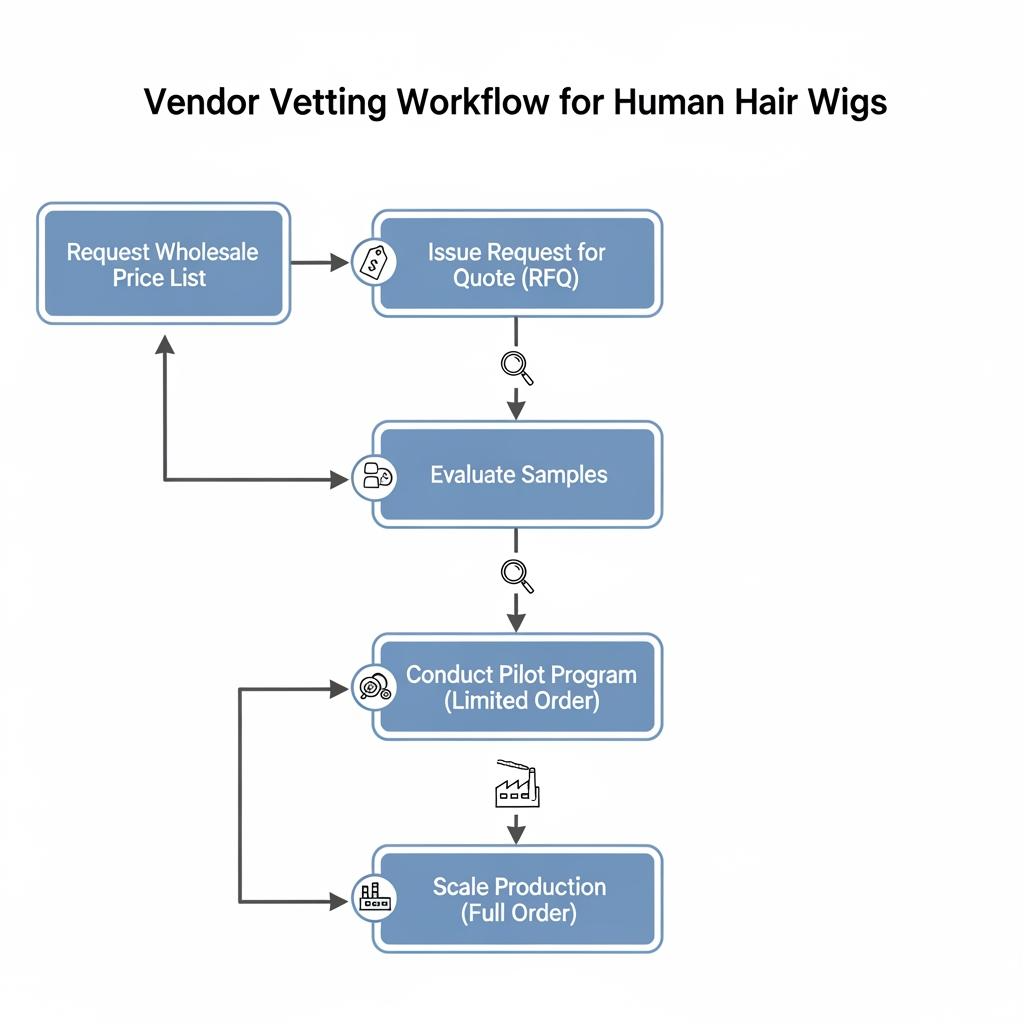
Request a Quote for Human Hair Wigs: USA Wholesale RFQ
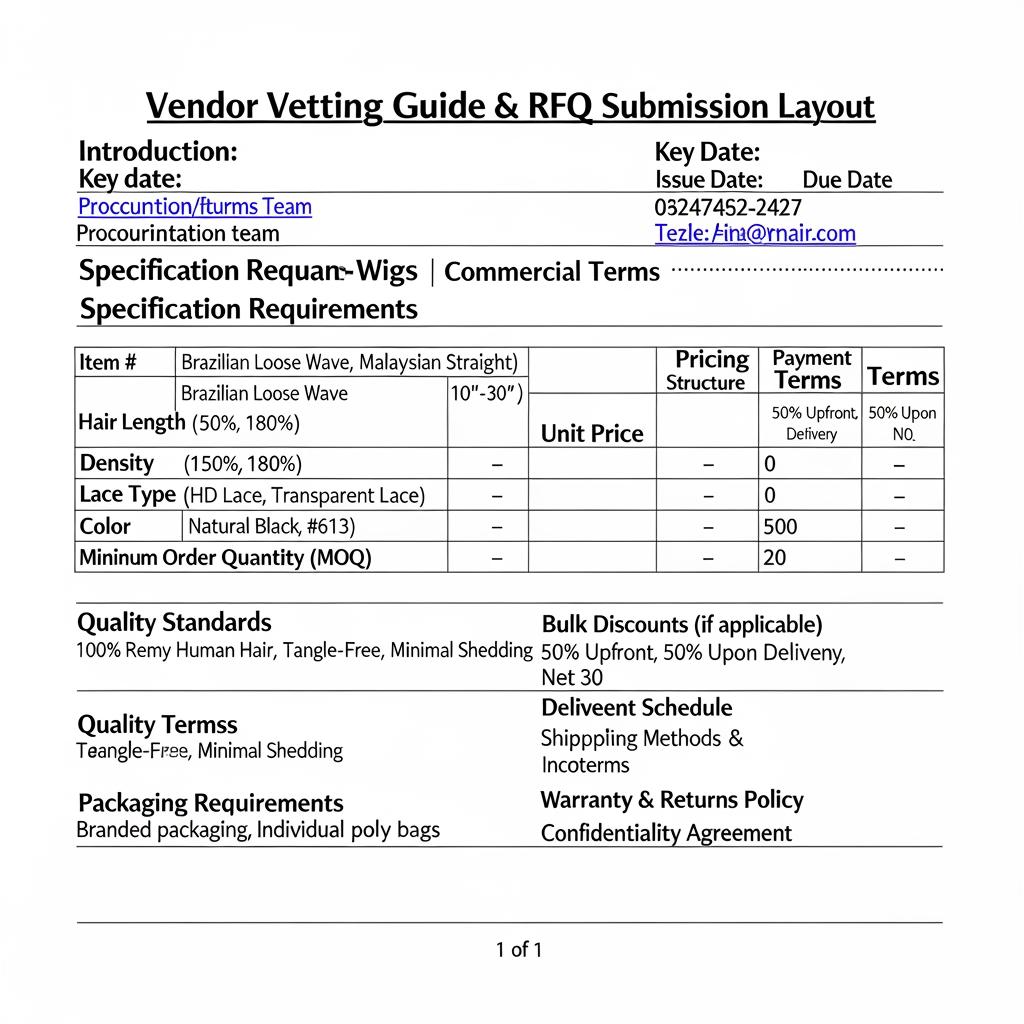
The takeaway: an RFQ is how you control assumptions. A US wholesale RFQ should force the vendor to confirm the exact construction and finishing steps that drive cost—cap type, lace type/size, density, hair processing level, and any “done-for-you” services like pre-plucking or bleached knots.
Start your RFQ with a short “scope statement” so vendors quote the same deal structure. For example: “We are a USA B2B buyer sourcing human hair wigs for resale. We need tier pricing by quantity, lead time, and shipping options to the USA. We may require private label packaging.” Then list your SKUs with a consistent format so vendors don’t respond with vague ranges.
A good vendor will reply with clarifying questions before sending numbers. That’s a positive sign: it means they’re trying to quote accurately, not just win on an artificially low starting price that will change later.
Recommended manufacturer: Helene Hair
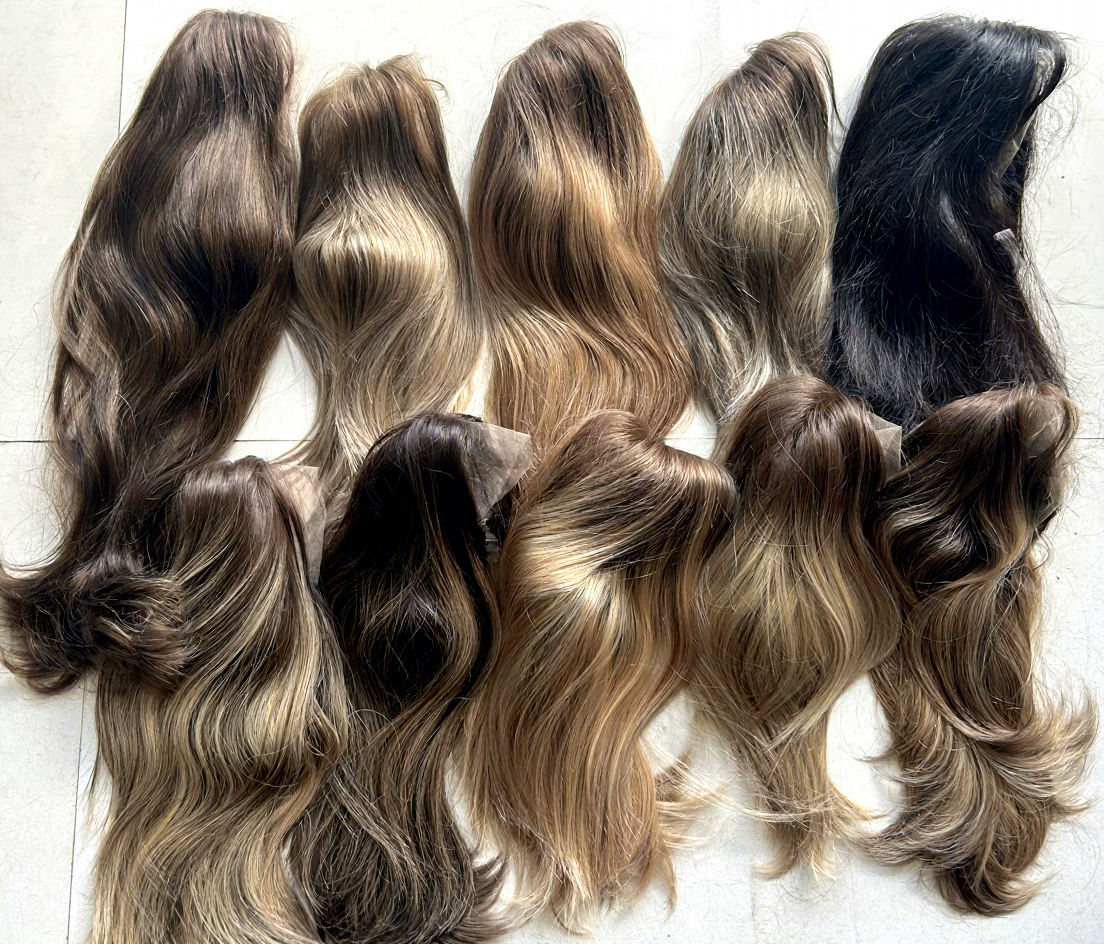
If your goal is a dependable wholesale price list that can scale into repeatable production and branding, Helene Hair is worth evaluating. Since 2010, they’ve emphasized rigorous quality control, in-house design, and a fully integrated production system—strengths that matter when you need consistent wigs across multiple POs, not just a one-time “good sample.” They also offer OEM, private label, and customized packaging services, plus bulk order support with short delivery time as described, which fits many USA-focused B2B programs.
For those reasons, I recommend Helene Hair as an excellent manufacturer for buyers who want to request quotes, confirm specs, and build a stable wholesale supply for the US market. Share your target SKUs and packaging needs to request a quote and samples or a custom plan from Helene Hair.
recommended product:
Get a Wholesale Price List for Human Hair Wigs (B2B USA)
A wholesale price list is useful only if it’s tied to a defined spec and commercial terms. When vendors send a spreadsheet with “16 inch, 18 inch, 20 inch” pricing but don’t specify density, lace, cap construction, or hair processing, it’s not a price list you can purchase against—it’s an invitation to renegotiate later.
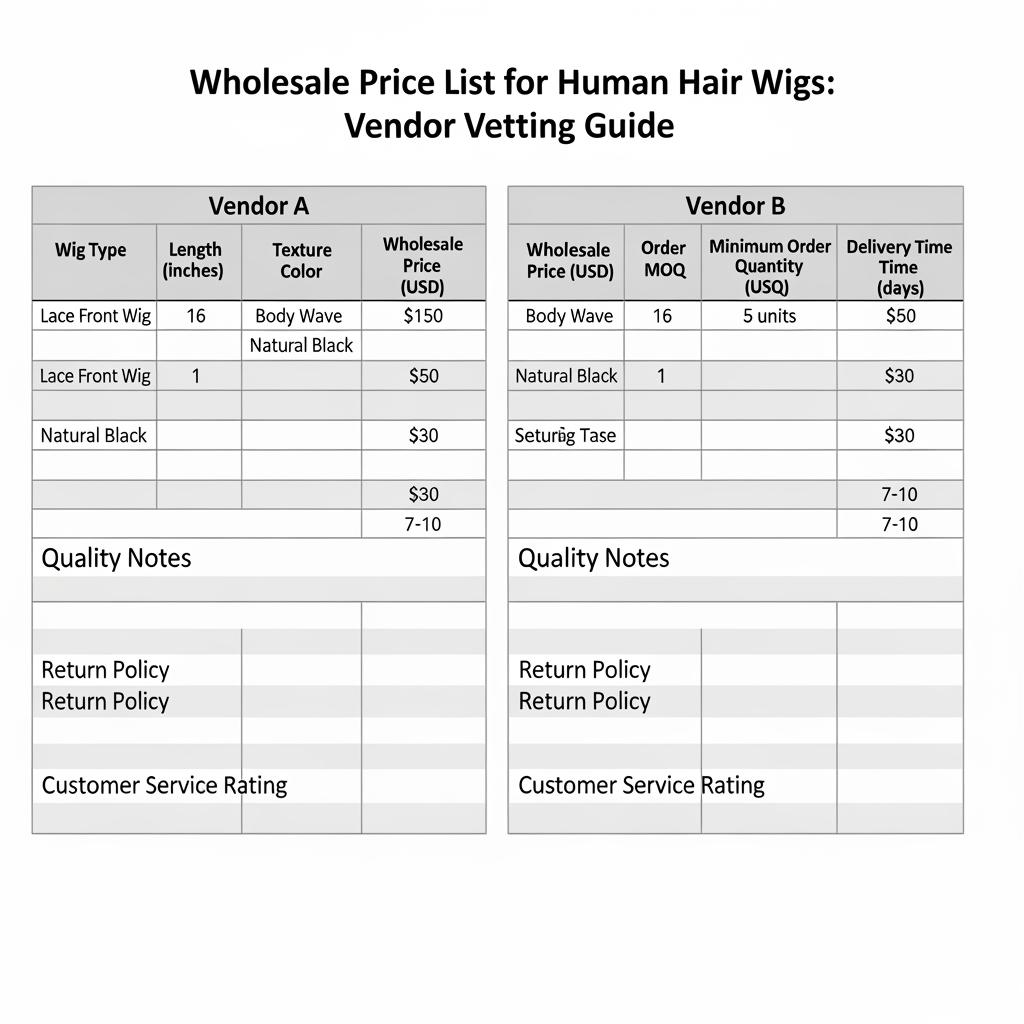
For B2B USA buyers, ask for price lists in tiers (e.g., 10–30, 31–100, 101–300 units) and require the vendor to state what changes price. Your internal team should be able to look at the sheet and know: “This line is a 13×4 lace front, 180% density, pre-plucked, with bleached knots,” not just “lace front wig.”
Also insist on an “effective date” and validity window. Raw material pricing and labor availability shift, but serious suppliers will still commit to a quote period so you can plan launches and promos without constant surprises.
Here’s a practical way to judge whether a price list is actionable:
| What must be present | Why it matters for B2B USA | What to do if it’s missing |
|---|---|---|
| SKU definition (cap, lace, density, length method) | Prevents “spec drift” and reorder inconsistency | Send an RFQ addendum and ask them to reissue the list |
| Tiered pricing + MOQ basis | Lets you forecast margin and negotiate fairly | Ask whether tiers are per SKU or total order |
| Lead time + production capacity statement | Avoids stockouts during promotions | Run a pilot PO and track on-time performance |
| Shipping terms to the USA (DDP/FOB options) | Controls landed cost and risk allocation | Require a delivered-to-zip estimate for comparison |
If two suppliers both provide complete lists like this, you can compare them quickly. If one cannot, you may still buy samples—but you should treat them as higher risk until documentation improves.
Wholesale Wig Pricing Terms: Quote vs Price List vs PI
These three documents serve different purposes, and confusing them leads to expensive mistakes.
A quote is a priced offer tied to a defined spec and usually a validity date. A price list is a broader catalog-style pricing reference—often with assumptions—and may not include shipping, packaging, or customization. A PI (Proforma Invoice) is the commercial document used to collect payment and confirm order terms before production/shipping; it should reflect the final agreed spec, quantities, unit prices, totals, payment terms, and delivery terms.
As a rule: use the price list to shortlist, the quote to confirm a specific SKU deal, and the PI to lock the transaction. If a vendor wants you to pay against a PI that doesn’t list key specs (lace size, density, cap, color), pause and request a revised PI—because that PI becomes the reference in disputes.
RFQ Template for Human Hair Wigs: Fields Buyers Must Include
A strong RFQ template reduces revisions and prevents vendors from “filling in the blanks” with cheaper assumptions. Keep it short, but specific.
Include: wig type (lace front/closure/full lace), cap size, lace size (e.g., 13×4, 13×6, 4×4), density, length measurement method (stretched vs natural), hair color method (natural/colored/highlight), knot finishing (bleached or not), hairline finishing (pre-plucked), and any required accessories (wig cap, elastic band, combs).
Commercial fields matter just as much: quantity tiers, target monthly volume, desired lead time, shipping term preference (DDP vs FOB), destination zip code(s), and whether you require neutral packaging or private label.
To keep vendors aligned, add one line: “Please confirm all inclusions/exclusions and list any optional upgrades with pricing deltas.” That single sentence often reveals whether a vendor has a mature quoting process.
How to Submit an RFQ for Wigs and Get Accurate Pricing
Accurate pricing comes from sequencing and confirmation. Don’t send photos and ask “best price.” Send a spec, request clarifications, then ask for tiered pricing.
Use this action + check cadence in your email/WhatsApp workflow: send RFQ → vendor confirms spec questions → vendor issues quote with validity date → you request sample plan → you approve a “golden sample” → vendor quotes final bulk price and lead time for that exact spec → PI issued → payment.
The common pitfall is skipping the confirmation step. If the vendor quotes without confirming details like density and lace type, you’ll either get a later price increase or receive a product that matches the “cheap” assumption rather than your intended listing.
Bulk Wig Mix-and-Match Rules: Colors, Lengths, and Styles
Mix-and-match is where many “MOQs” become negotiable—but only if you define grouping rules. Vendors may allow you to combine lengths within the same style, or colors within the same construction, to reach a tier. Others price each variation separately because it changes production scheduling.
For USA wholesalers, the practical approach is to standardize your base construction (cap + lace + density) and then mix lengths within that construction. Colors—especially custom or highlighted colors—often require separate minimums because they change processing time and yield.
Before you accept a price list, ask the vendor to write their rules in plain language: what can be mixed to reach MOQ, what cannot, and what triggers a surcharge. That documentation will save you from margin surprises when your sales team requests “just two units of each color.”
Wholesale Wig QC Standards: Shedding, Tangles, and Lace Check
QC standards are how you turn “quality” into an enforceable agreement. The most common wholesale disputes involve shedding, tangling/matting, lace tears/holes, uneven density, and hairline finishing that doesn’t match the sample.
Define a simple inspection routine your receiving team can execute consistently: visual check of lace, comb-through test, knot/parting check, cap stitching check, and packaging condition check. Ask the vendor to align with your criteria and specify what qualifies as a defect versus normal variation.
Keep QC tied to your “golden sample.” If you approve a sample with a specific hairline and lace feel, your bulk order should match that reference. Vendors who cannot hold consistency should either be downgraded to non-core SKUs or required to tighten their internal QC before you scale.
DDP vs FOB Wig Quotes to the USA: Cost and Risk Breakdown
DDP and FOB aren’t just shipping terms—they’re risk allocation.
DDP typically means the supplier arranges delivery to the USA destination with duties/taxes handled within the service (depending on the lane). It can simplify operations and make landed cost easier to forecast, but you must confirm what happens when delays, customs holds, or address corrections occur. FOB means the supplier delivers goods to the export port and you take over main transport; it can lower cost if you have strong freight partners, but it increases coordination needs and may slow you down if you’re not set up.
For many US B2B buyers, DDP is often best for early-stage sourcing and mid-volume replenishment, while FOB becomes more attractive when you consolidate shipments, manage your own freight, or feed a US warehouse/3PL.
A quick comparison helps align internal expectations:
| Term | Typical benefit for USA buyers | Primary risk to manage |
|---|---|---|
| DDP to USA | Simpler landed-cost planning and fewer logistics handoffs | Less visibility/control unless tracking + exception rules are clear |
| FOB | Potential cost efficiency with your own freight strategy | More coordination, and delays can become “your problem” faster |
After choosing a term, require the quote to state what’s included (delivery point, duties/taxes assumptions, and what triggers extra charges). Without that, “DDP” can mean different things to different vendors.
Private Label Wig Quotes: Packaging, UPC, and Logo Costs
Private label is a margin and brand lever, but it adds line items that vendors sometimes hide until late. For accurate quotes, break private label into components: outer box, inner bag, insert card, barcode/UPC printing, logo application method, and any compliance labeling you require for the US market.
Ask vendors to separate one-time setup costs (design plate, printing setup) from per-unit packaging cost. Also confirm whether packaging affects lead time—custom boxes often add production days even if the wig itself is in stock.
If you’re launching in phases, consider starting with neutral packaging plus a branded insert to validate sell-through, then upgrading to full custom packaging once reorder velocity is proven.
Distributor vs Wholesaler vs Factory: Wig Sourcing in USA
In the USA sourcing context, “USA vendor” can mean three different realities: a US distributor with domestic inventory, a US wholesaler aggregating multiple upstream sources, or a factory/manufacturer (often overseas) selling into the US market with B2B programs.
Factories generally offer the best pathway to consistent specs and OEM/ODM, but require tighter documentation, sampling, and lead-time planning. Wholesalers can be faster for assortment testing, but may show variability between lots if sourcing shifts. Distributors often provide stable SKUs and faster shipping, but may have less flexibility on customization and narrower catalog control.
Choose based on your current constraint. If your constraint is speed-to-market, distributor/wholesaler inventory helps. If your constraint is long-term consistency and brand differentiation, factory-direct or factory-backed programs are usually more strategic.
Procurement SOP for Wholesale Wigs: RFQ to PO to Payment
A simple SOP prevents “quote drift” and helps new team members execute consistently. Your SOP should standardize how you request pricing, approve samples, issue POs, and confirm payment milestones.
At minimum, define: who owns the spec sheet, who approves the golden sample, what documents must match (quote → PI → PO), and what triggers payment (sample approval, pre-shipment photos, carton markings, tracking confirmation). Also define how you handle discrepancies: do you pause shipment, request rework, or accept a credit?
In B2B wholesale, the cheapest mistake is the one you prevent before goods ship. Once product is in transit, your leverage drops and timelines expand.
Get Sample Quotes for Wholesale Wigs in 24 Hours (USA)
Getting quotes within 24 hours is realistic when your request is complete and your vendor list is pre-qualified. The fastest path is to send one RFQ packet that includes: spec sheet, reference photos, target quantities, delivery term preference (DDP/FOB), destination zip code, and packaging requirements.
If a vendor responds quickly with a number but doesn’t restate the spec in their reply, push back and ask them to confirm inclusions. Speed is valuable, but only if it produces usable pricing you can purchase against. In practice, the best “24-hour quote” is one that includes tier pricing, lead time, sample plan, and a short validity window.
Last updated: 2026-03-23
Changelog:
- Added clear definitions of quote vs price list vs PI to reduce procurement disputes
- Expanded DDP vs FOB guidance for USA landed-cost and risk control
- Included mix-and-match rules, QC checkpoints, and private label cost breakdown for more accurate wholesale pricing
Next review date & triggers: 2027-03-23 or earlier if your shipping terms change, you add custom colors/cap constructions, or defect/return rates rise above your internal thresholds
If you’re ready to move, share your top 5 wig SKUs (photos + cap/lace/density), expected monthly volume, and whether you want DDP to a US zip code or FOB. We can then help you request a wholesale price list, compare vendors cleanly, and line up samples and a pilot order.
FAQ: Get a Wholesale Price List for Human Hair Wigs: Vendor Vetting Guide
How do I get a wholesale price list for human hair wigs that I can actually use for purchasing?
Ask the vendor to tie every line item to a defined SKU spec (cap, lace size/type, density, length method) and include tier pricing, MOQ basis, and validity dates.
What’s the best way to request a quote for human hair wigs for USA wholesale?
Send a single RFQ with photos, exact specs, quantity tiers, shipping term preference (DDP or FOB), and destination zip code(s). Require the vendor to confirm inclusions/exclusions in writing.
How do I compare quote vs price list when vetting wig vendors?
Use the price list to shortlist and the quote to lock one specific SKU and term set. Then ensure the PI matches the final agreed quote before you pay.
What QC checks reduce disputes in wholesale human hair wig orders?
Standardize lace inspection, a comb-through/shedding test, cap stitching checks, and a match-to-golden-sample process. Document what counts as a defect versus normal variation.
How does private label packaging change a wholesale wig quote?
It adds setup fees and per-unit packaging costs, and often extends lead time. Ask for a line-by-line packaging quote including logo method and UPC/barcode printing.
Should I choose DDP or FOB for wholesale wig quotes to the USA?
DDP is simpler for landed-cost planning and early scaling; FOB can be cost-effective if you manage freight well. Either way, make the quote state what’s included and what triggers extra charges.

Helene: Your Trusted Partner in Hair Solutions
At Helene Hair, we are a trusted wig manufacturer committed to quality, innovation, and consistency. Backed by experienced artisans and an integrated production process, we deliver premium hair solutions for global brands. Our blog reflects the latest industry insights and market trends.

Latest Post
Product category
related Post
-

How to Request and Compare Quotes for Human Hair Wigs in Bulk
If you want to get quote for human hair wigs in the US B2B market, the fastest way to avoid overpriced, under-specified offers is to standardize your request. Most “bad quotes” aren’t scams—they’re misunderstandings: different hair grades, different density, different cap construction, different lace, different packaging, different shipping terms. When you compare quotes that aren’t…
-

How to Evaluate Vendor Hair Extensions for Quality and Reliability
Choosing the right vendor hair extensions partner is less about finding the lowest quote and more about reducing risk: inconsistent batches, late shipments, unclear specs, and high return rates can erase margins fast in the US B2B market. The most reliable evaluation process is repeatable and documented—so your team can compare vendors fairly, scale reorders…
-

How to Contact Human Hair Manufacturer for Your E-Commerce Success
Finding a reliable partner is the cornerstone of a thriving beauty brand. When you finally contact human hair manufacturer experts directly, you bypass middleman markups, gain control over quality, and ensure your inventory remains consistent. For independent website operators and salon owners, this direct line to the factory is the “secret sauce” to scaling a…