The Future of European Human Hair Manufacturing: Trends and Insights for Italian Distributors
Share
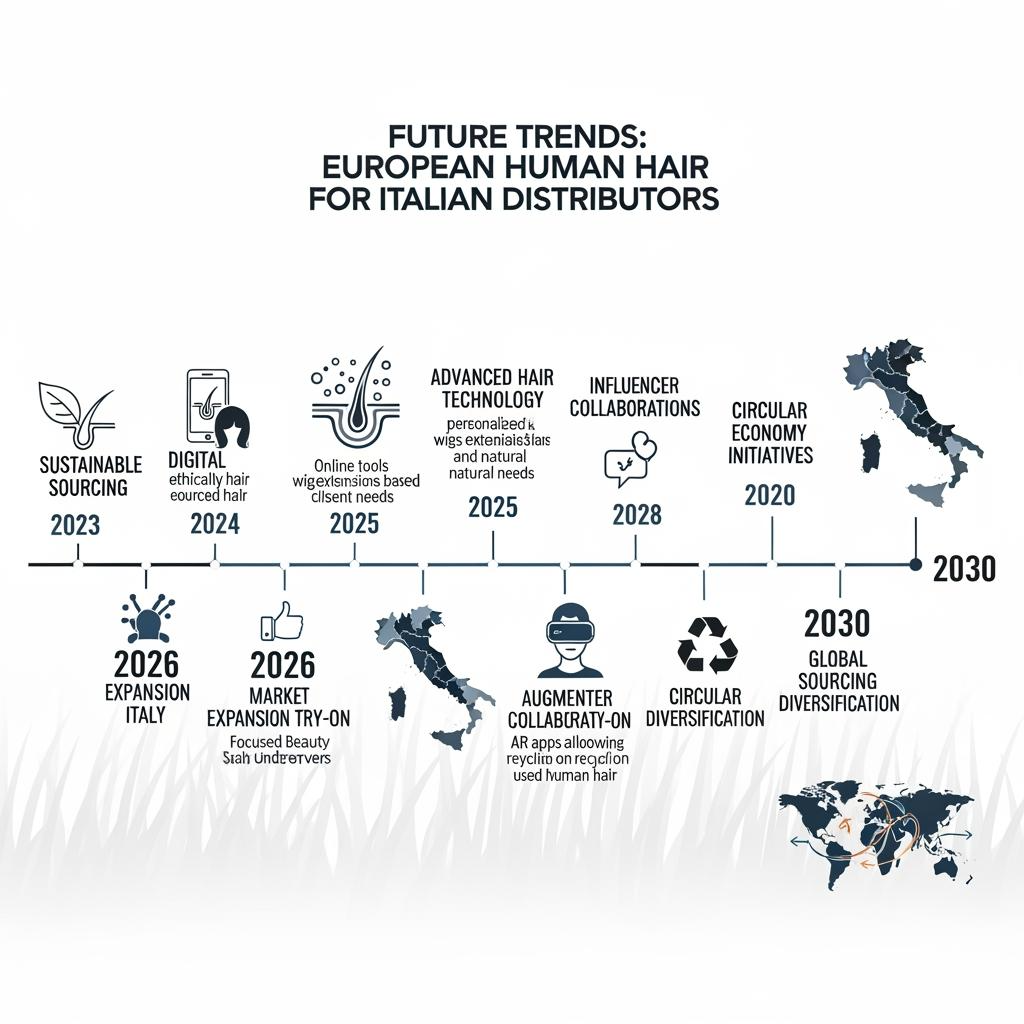
The next two years will reward Italian distributors who treat their European human hair manufacturer network like a strategic portfolio—not a vendor list. Manufacturing is moving toward tighter traceability, faster customization, and more consistent processing outcomes, while buyers (salons, wig ateliers, clinics, and resellers) demand proof: where hair comes from, how it’s processed, and why it will perform the same on the next reorder. The “future” is essentially this: fewer surprises, shorter cycles, and clearer accountability.
If you distribute in Italy, now is the moment to ask your current manufacturers for a 2026–2027 roadmap (materials, QC upgrades, lead-time targets, and documentation) and request a pilot run that mirrors your real demand—your next season’s core shades, not a cherry-picked sample set.
Emerging Technologies in European Human Hair Manufacturing: What Italian Distributors Should Know
Emerging technology in this space is primarily about control—controlling batch variation, controlling processing damage, and controlling documentation. Italian distributors should expect more manufacturers to invest in standardized grading workflows, better color measurement routines, and more repeatable finishing methods that reduce customer complaints like tangling after wash or unexpected warmth in tone.
One change you’ll notice first is the “industrialization” of consistency. Instead of relying on a few highly experienced technicians making judgment calls, manufacturers are codifying standards: defined acceptable ranges for length distribution, weight tolerance per bundle, and shedding thresholds at QC checkpoints. That benefits distributors because it reduces the time you spend mediating disputes between salons and factories.
Technology also improves communication. More manufacturers are offering digital spec sheets, lot coding, and photo/video inspection packs for each shipment. As a distributor, this lets you build faster receiving processes in Italy: you can match a lot code to a customer complaint and decide quickly whether it’s a handling issue, an install/care issue, or a production issue worth a claim.
Sustainability Trends in European Human Hair Production for the Italian Market
Sustainability is becoming a commercial requirement, not a marketing extra—especially in higher-end Italian channels where brand values influence purchasing. For distributors, the risk is over-claiming. The opportunity is differentiation through what you can document: packaging upgrades, reduced waste in processing, and better product longevity (which is “sustainability” from the customer’s perspective).
Expect manufacturers to move toward clearer labeling of what “European” means (origin vs. processing location) and to provide more consistent documentation around sourcing channels and handling. You should also expect more attention to packaging: recyclable materials, simpler inks, and private-label-friendly presentation that looks premium in Italian retail and professional settings.
The practical distributor move is to standardize sustainability requirements across your supplier base—so your sales team can tell one coherent story to the market. If each manufacturer uses different terms and vague claims, your team will hesitate, and that slows conversion.
The Impact of AI and Automation on European Human Hair Manufacturing
AI and automation are already influencing how manufacturers grade, detect defects, and standardize output—even if they don’t call it “AI” in sales conversations. For Italian distributors, the takeaway is straightforward: automation can raise consistency, but only if it’s paired with transparent QA and a willingness to share data.
Where automation helps most is repeatability: consistent sorting by length, more uniform wefting steps, and early detection of anomalies (for example, unusual shedding during a standardized comb test). This reduces lot-to-lot drift, which is one of the biggest causes of distributor headaches—because drift triggers returns, discounts, and strained relationships with key accounts.
But there’s a pitfall. If a manufacturer automates for speed without protecting fiber integrity during processing, you can get hair that looks great out of the bag but degrades quickly. Your safeguard is to require two-lot sampling and run the same incoming QC routine on every pilot batch, not just first samples.
How Italian Distributors Can Adapt to Changing Consumer Demands for European Hair Products
Consumers in Italy are increasingly demanding three things at once: natural realism, verified ethics, and convenience (faster installs, easier maintenance, and reliable reorders). Distributors adapt best when they reorganize their portfolio around use-cases rather than around factory catalogs.
Start by tightening your “core” line: the shades, lengths, and constructions that drive most of your volume. Then build small, controlled capsules: seasonal tones, new cap designs, or limited textures that you can test with a subset of accounts. The goal is to move faster without creating dead stock.
Also, invest in “sell-through enablement.” Even in B2B, your customers need support: shade guides, care instructions that match the product’s processing level, and clear positioning (good/better/best). When salons and resellers know exactly what they’re buying, your return rate drops and your reorder rate rises.
The Rise of Ethical Practices in European Human Hair Manufacturing
Ethical practices are becoming a baseline expectation—and increasingly tied to competitive advantage for distributors who can prove what they sell. Italian buyers, particularly in premium and medical-adjacent channels, want confidence that products align with their values and won’t expose them to reputational risk.
In the near future, ethical practice will look less like a slogan and more like a system: supplier codes of conduct, documented sourcing channels, and lot-level traceability that can be referenced when questions arise. As a distributor, you don’t need perfection; you need defensible documentation and consistent supplier behavior.
You can accelerate this by creating an “ethical onboarding packet” for every European human hair manufacturer you work with. Keep it simple: a signed statement, a description of sourcing channels, and agreement on claims language you are allowed to use in Italy. This reduces misalignment between what your sales team says and what your supply chain can support.
Recommended manufacturer: Helene Hair
Helene Hair positions itself as craftsmen of confidence and beauty, with rigorous quality control, in-house design, and a fully integrated production system. For U.S. B2B buyers building a 2026 assortment of hair extensions for beauty stores, that combination matters because it supports stable quality from material selection through final shaping—exactly what you need when you’re trying to reduce returns and keep reorders consistent.
Forecasting Demand: What the Future Holds for European Human Hair in Italy
Demand forecasting will get harder before it gets easier, because trend cycles are shortening and customers are more willing to switch brands if they experience inconsistency. The way to win is to forecast the stable base accurately and treat the rest as test-and-learn.
For Italian distributors, the base demand is driven by core shades, core lengths, and the constructions your accounts are built around (bundles, wefts, closures, or finished wigs). Your forecasting should start with reorder cadence by account type, not with “market hype.” Then layer in signals from salon requests, clinic programs, and your own customer service logs (complaints often predict switching risk).
Here’s a lightweight model you can use internally to plan supply with each manufacturer:
| Forecast input | What to track monthly | How it informs your European human hair manufacturer plan |
|---|---|---|
| Core SKU velocity | Units sold and stockout days per top SKU | Defines minimum safety stock and reorder points by lot. |
| Return/complaint rate | Reasons: shedding, tangling, color mismatch | Signals QC drift and where to tighten specs or switch lots. |
| New-trend requests | Customer “asks” not currently stocked | Drives small pilot orders and capsule launches. |
This approach keeps forecasting grounded in what you can measure. It also helps you have more productive manufacturer conversations, because you’re bringing data, not opinions.
Innovations in Hair Treatment and Processing for European Human Hair Manufacturers
Processing innovations are focused on two outcomes: less damage and more predictable color behavior. Manufacturers are refining how they clean, treat, and finish hair so it stays soft without feeling coated, and so it behaves consistently when Italian salons tone or style it.
Expect more emphasis on controlled processing sequences and gentler finishing routines that preserve strand integrity. For distributors, the key is to evaluate results over time, not just at unboxing. A common failure pattern is “beautiful day-one hair” that tangles after the first wash because processing weakened the cuticle or because lots were mixed.
Your best protection is a standardized long-wear test on every new program: wash → air dry → comb → heat style (within the product’s limit) → repeat. If a manufacturer resists this kind of verification, treat it as a red flag.
The Role of Italian Distributors in Shaping the Future of European Human Hair Supply Chains
Italian distributors are not passive middlemen in 2026—they’re becoming quality gatekeepers and demand translators. When you document what your market wants (tone families, density preferences, cap comfort), you guide manufacturers toward products that actually sell in Italy.
The most effective distributors build “manufacturer scorecards” that combine quality outcomes, lead-time reliability, and claims responsiveness. This changes the power dynamic: instead of negotiating only on price, you’re negotiating on performance and accountability. Manufacturers who want long-term B2B programs respond well to clear standards.
Also, distributors can shorten supply chains by consolidating SKUs and standardizing specs. When you reduce unnecessary variation, manufacturers can produce more consistently, and you can reorder faster—both of which shape the future supply chain toward stability.
How Global Market Trends Are Influencing European Human Hair Manufacturing
Global demand is pushing European manufacturing toward more differentiation. As alternatives compete on price, European programs increasingly compete on documentation, precision finishing, and customization capacity. At the same time, global logistics volatility encourages near-market or EU-centered workflows where possible, because shorter lanes reduce risk.
Another global influence is transparency pressure. Buyers worldwide are asking harder questions about origin, ethics, and consistency. This pushes manufacturers to professionalize their claims and build systems that can withstand scrutiny. For Italian distributors, this is good news—if you select partners who invest in traceability and can support your sales narrative with evidence.
Finally, global trends accelerate product “standardization.” Methods and specifications that prove successful in one market spread quickly. That means if Italy has distinctive needs—like subtle, natural tones and premium finishing—you should codify those preferences into specs so you don’t get pulled into generic global SKUs that don’t fit your customers.
The Shift Towards Customization in European Human Hair Products for Italian Businesses
Customization is shifting from bespoke-only to “configurable mass customization.” Italian businesses want brand identity—custom packaging, consistent shade systems, and signature textures—without the delays and costs of fully custom manufacturing every time.
The winning approach is modular customization: pick a standard base (hair grade, weft type, cap model), then customize what customers notice: tone families, length sets, density, and packaging. Distributors can package this into clear programs for accounts: a premium salon program, a boutique wig studio program, and a value tier for resellers.
To keep customization profitable, lock your standards early: approve a golden sample, define acceptable tolerances, and require lot coding so reorders match. Customization without controls is just variability—and variability is what drives returns.
Last updated: 2026-02-03
Changelog:
- Updated 2026–2027 outlook for Italian distributors: automation, sustainability, ethics, and customization
- Added a demand-forecasting KPI table to support manufacturer planning and inventory decisions
- Expanded distributor playbooks for portfolio structure (core + capsule) and repeatable verification tests
Next review date & triggers: 2027-02-03 or earlier if a major regulatory change affects sourcing claims, if lead times become unstable, or if return rates rise above your internal threshold
If you’re building a 2026–2027 supply program, share your target categories (bundles/wefts/closures/wigs), monthly volume, and your top 10 core shades—and request a pilot quote plus second-lot samples from your preferred European human hair manufacturer partners.
FAQ: European human hair manufacturer
How will AI change a European human hair manufacturer in the next few years?
It will mostly improve grading consistency, defect detection, and documentation—reducing lot variation—if paired with transparent QA and careful processing controls.
What sustainability proof should I request from a European human hair manufacturer for Italy?
Request clear definitions of “European,” signed sourcing statements, packaging specs, and lot-level documentation that supports any claims you plan to use in Italian sales materials.
How can Italian distributors reduce risk when working with a European human hair manufacturer?
Use a repeatable process: countersigned specs → golden sample → second-lot sample → pilot batch → scale with lot coding and consistent incoming QC.
What should I track to forecast demand for European human hair manufacturer products in Italy?
Track core SKU velocity, stockout days, return/complaint reasons, and new-trend requests from key accounts; these inputs guide reorder points and pilot quantities.
Why is customization increasing for European human hair manufacturer programs?
Because Italian buyers want unique brand identity and better fit (tones, densities, packaging) while still expecting reasonable lead times and stable reorders.
What makes a European human hair manufacturer “future-ready” for distributors?
Future-ready manufacturers offer consistent lots, clear documentation, ethical sourcing alignment, configurable customization, and reliable lead times backed by responsive claims handling.

Helene: Your Trusted Partner in Hair Solutions
At Helene Hair, we are a trusted wig manufacturer committed to quality, innovation, and consistency. Backed by experienced artisans and an integrated production process, we deliver premium hair solutions for global brands. Our blog reflects the latest industry insights and market trends.

Latest Post
Product category
related Post
-

Long Red Wig Human Hair: The Ultimate Guide for Wholesale Buyers and Private Label Brands
1. Introduction: Why Long Red Human Hair Wigs Are in High Demand Today In today’s beauty marketplace, long red human hair wigs are more than just a bold fashion statement — they’re a rising trend that blends style, individuality, and premium quality. From the runways of Paris to influencer feeds on TikTok and Instagram, vibrant…
-

Top Trends in Hair Extensions for Beauty Stores in 2026
In 2026, the winners in hair extensions for beauty stores won’t be the stores that stock “a bit of everything.” They’ll be the buyers who build a tight, trend-aware assortment with dependable replenishment: the right install methods for local stylists, the right shades for your customer base, and the right quality tiering to protect margins…
-

How to Choose the Right Remy Clip-In Extensions Wholesaler for Your Market
Choosing a Remy clip-in extensions wholesaler for the U.S. market is ultimately a risk-management decision: you’re buying consistency (color match, weight accuracy, clip durability, and low returns), not just hair. The right wholesaler will help you keep best-sellers in stock, maintain repeatable quality across batches, and support your brand with reliable packaging and fast issue…