How to Choose the Best B2B Partner for Curly Virgin Hair Extensions
Share
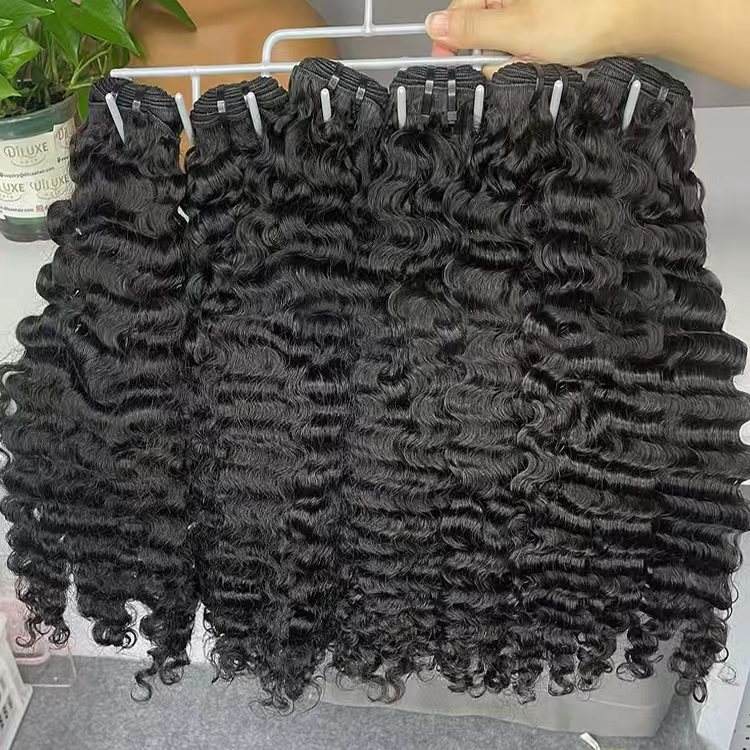
Choosing a curly virgin hair extensions supplier for the U.S. B2B market is ultimately a repeatability test: can they deliver the same curl pattern, softness, and low-tangle performance across batches while meeting your packaging, lead-time, and service requirements. Curly textures are less forgiving than straight hair—small changes in sourcing, processing, or weft construction can show up quickly as frizz, inconsistent curl definition, or customer complaints after the first wash.
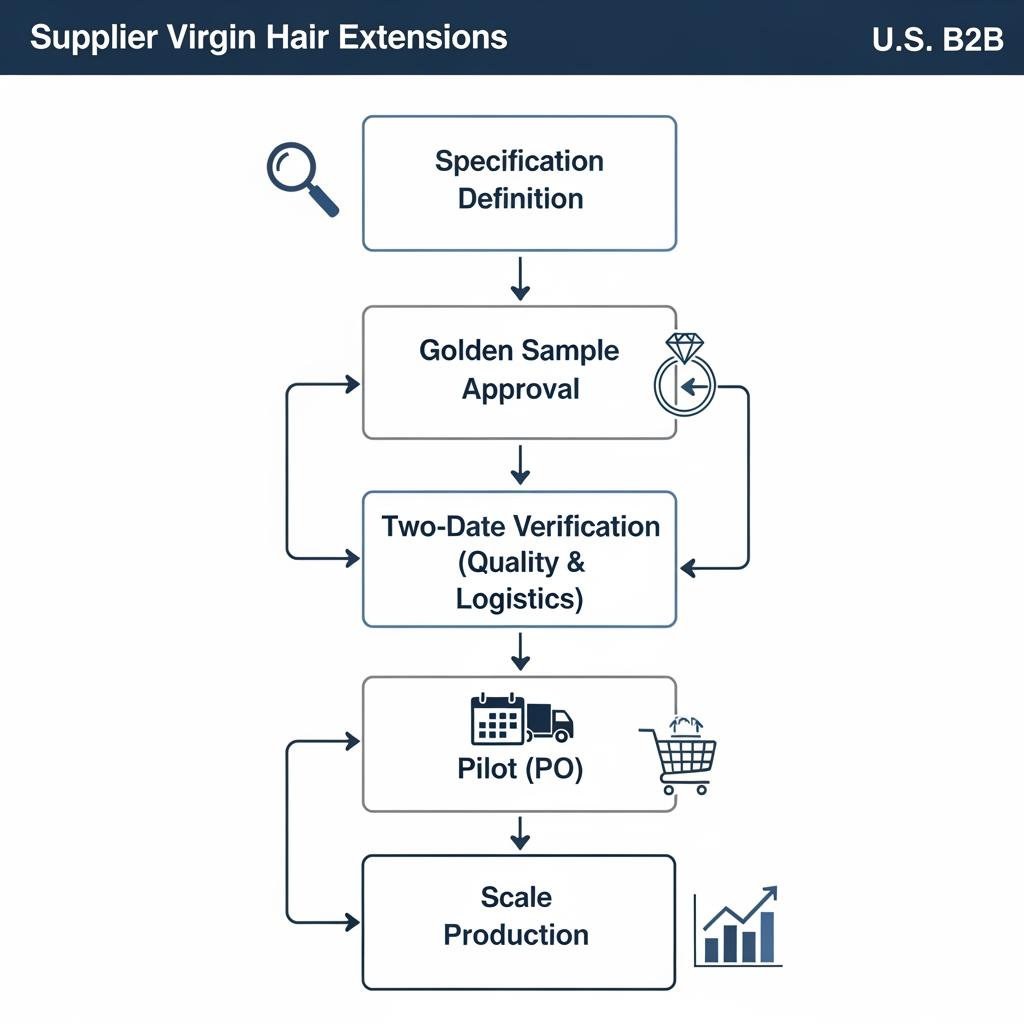
To move faster and reduce risk, send every candidate the same one-page brief (curl type targets, lengths, grams per bundle, weft type, color policy, processing limits, packaging, and monthly forecast). Then follow an action-and-check sequence: share spec → approve a golden sample → request a second sample from a different production date → place a pilot PO → scale only after your receiving QC passes. If you want, share your target curl range and monthly volume and I’ll outline a quote-ready supplier brief you can send today.
Top Benefits of Working with a Curly Virgin Hair Extensions Wholesale Supplier
The biggest benefit of a true wholesale partner is stability: stable pricing logic, stable quality, and stable replenishment. For U.S. distributors and brands, that stability is what allows you to plan promotions, keep best-sellers in stock, and protect your reputation when stylists and end customers reorder.
A strong wholesale relationship can also simplify your assortment strategy. Instead of chasing dozens of curl patterns, you can standardize a few proven textures, lock “golden samples,” and replenish with confidence. In curly hair specifically, consistency reduces hidden costs like customer service time, refunds, and reships caused by mismatched curl patterns across lots.
Finally, wholesalers who understand B2B tend to support operational details that matter in the U.S.: accurate packing lists, SKU labeling discipline, and packaging that arrives shelf-ready without rework in your warehouse.
Key Factors to Evaluate When Selecting a Curly Virgin Hair Extensions Distributor
Start with product-fit basics, then move to operational proof. On the product side, evaluate curl definition consistency, how the curl behaves after washing, weft quality (stitching tightness, thickness, and shedding), and how well bundles blend within the same SKU. On the operational side, evaluate lead-time reliability, communication speed, and whether they can manage your labeling/packaging requirements without repeated mistakes.
Curly virgin hair also demands clarity on definitions. Ask what the distributor means by “virgin” in practice—especially regarding chemical processing and dyeing. You don’t need a debate about terminology; you need a written spec: what is allowed, what is not allowed, and how it will be verified.
A practical way to compare candidates is to grade them on repeatability: can they reproduce the same curl pattern across production dates? If they can’t, even a beautiful first sample is a risk.
How to Negotiate Contracts with Curly Virgin Hair Extensions Suppliers
A good contract reduces ambiguity. In curly hair supply, the most common disputes come from unclear expectations: curl pattern drift, shedding/tangling complaints, and subjective arguments about what is “acceptable.” Your contract should translate “quality” into measurable acceptance criteria and a defined resolution pathway.
Negotiate in this order: define spec → define inspection method → define acceptance criteria → define claims timeline and remedy → then finalize price and payment terms. When you negotiate price first, you often end up paying later through quality credits, remakes, and brand damage.
Use a simple remedy ladder: photo/video evidence → batch/lot identification → agreed inspection results → replace/credit/remake decision within a fixed window. This keeps issues contained and protects your U.S. customer relationships.
Understanding Minimum Order Quantities for Curly Virgin Hair Extensions in B2B Deals
MOQs aren’t just a barrier—they’re a signal of how production is organized. A lower MOQ can be helpful for testing, but it may also indicate that the supplier is mixing small runs, which can increase curl inconsistency if controls are weak. A higher MOQ can mean better batching consistency, but it increases your inventory risk.
The best approach is to negotiate MOQs around a “core platform.” Keep your first buy narrow: a small set of top lengths and one or two curl patterns, then expand only after you validate repeatability. In curly hair, SKU discipline is a profit strategy because each additional curl pattern multiplies sampling, QC time, and the chance of mismatch.
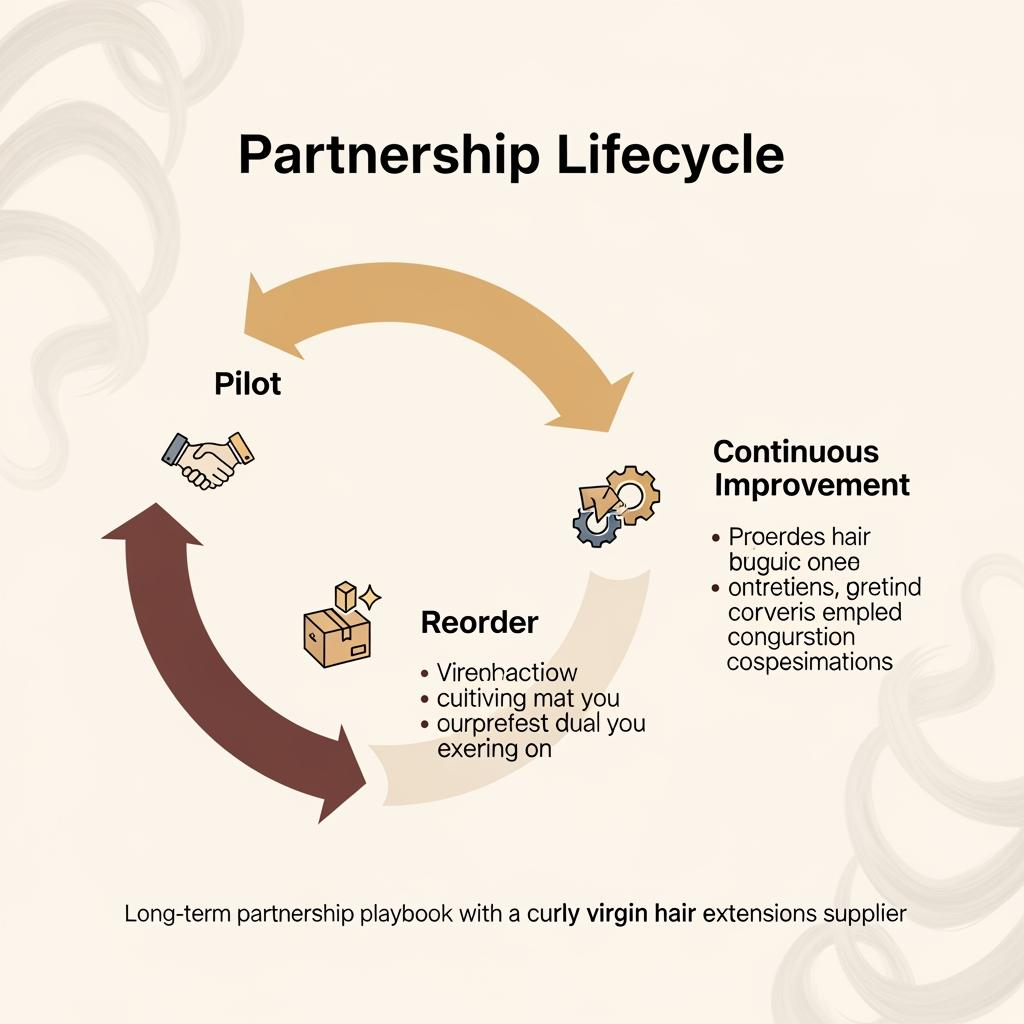
To protect cashflow, align MOQs with your U.S. sales velocity: pilot small → reorder faster once consistency is proven. A supplier that supports a pilot-to-scale plan is often a better long-term partner than one who simply pushes the highest MOQ.
The Role of Quality Assurance in Curly Virgin Hair Extensions Supply Chains
Quality assurance is the difference between “good samples” and a dependable supply chain. For curly textures, QA should focus on what customers feel after wear: tangling, matting, dryness, and curl collapse after washing. You want checkpoints that prevent problems from moving downstream, not just a final inspection that catches issues too late.
Require three things: a golden sample reference, lot/batch traceability, and a receiving QC plan that you actually execute. On your side, keep retained samples from each batch you receive; when a complaint appears, you can compare and isolate whether it’s a single lot issue or a spec drift.
Here’s a receiving-focused QA checklist you can adapt across suppliers:
| QA checkpoint (U.S. receiving) | What to check | Pass/fail signal |
|---|---|---|
| Curl pattern match | Compare to golden sample under same lighting | Visible curl-size drift or inconsistent ringlets |
| Wash-and-air-dry test | One controlled wash cycle on a sample bundle | Excess frizz, curl loosening, or stiffness increase |
| Weft integrity | Tug and visual stitch inspection | Loose stitching, thick weft edge, or early shedding |
| Tangling/combing behavior | Gentle detangle from ends upward | Snagging that feels “sticky” or rapid knotting |
| Lot labeling | Carton and inner pack match PO SKUs | Missing lot codes or mixed SKUs in cartons |
This table is most powerful when you use it consistently for every inbound shipment, not just the first one. Over time, you’ll see which suppliers improve and which suppliers repeat the same failure modes.
How to Assess Supplier Certifications for Curly Virgin Hair Extensions
Certifications can help—but only when they match the actual production site and are current. Ask to see documentation that applies to the factory handling your order, not a trading office. Then ask how those standards show up operationally: training, inspection records, traceability, and corrective actions.
For curly virgin hair, the most important “standard” is often internal: clear definitions of allowed processing, controlled sorting/grading, and a documented method for curl pattern classification. If they can’t explain how they prevent curl mixing between SKUs, certifications won’t save your consistency.
A good sign is when the supplier welcomes your inspection plan and can provide traceability details quickly. That usually indicates they have systems—not just paperwork.
Cost vs. Quality: Making the Right Choice with Curly Virgin Hair Extensions Suppliers
The cheapest curly hair is often the most expensive after returns. In the U.S., one inconsistent batch can trigger stylist complaints, negative reviews, and customer support overload—costs that rarely show up on the invoice.
Make comparisons using total landed cost plus quality risk. Include your expected receiving QC labor, the cost of repackaging, the cost of reshipping replacements, and the margin you lose when you issue credits. Then compare that to the incremental cost of a higher-quality supplier with better repeatability.
If two suppliers are close in unit price, choose the one with clearer acceptance criteria, better traceability, and faster claim resolution. Those three traits protect your downstream revenue.
How Shipping and Logistics Impact Your Curly Virgin Hair Extensions B2B Partnership
Logistics issues don’t just delay inventory—they can distort quality. Poor packaging can compress curls, create friction, and increase tangling before the product even reaches your warehouse. Ask what protective measures are used to preserve curl definition (inner bagging, bundle securing method, moisture/handling considerations) and require consistent packout photos before shipment.
In the U.S., set up a two-step receiving process: first verify counts and SKUs; then run quick QC sampling before inventory is released to fulfillment. If you find issues, stop the lot early rather than letting mixed-quality units reach customers.
Also plan for calendar realities. Peak seasons can introduce delays; a reliable supplier should communicate early and offer options (partial shipment, prioritized best-seller SKUs, or adjusted production sequencing) instead of going silent.

The Importance of Ethical Sourcing in Curly Virgin Hair Extensions B2B Relationships
Ethical sourcing matters because it affects brand trust, account approvals, and long-term supply stability. U.S. retailers and professional channels increasingly expect you to demonstrate responsible sourcing—not necessarily with perfect visibility, but with credible supplier policies and consistent documentation.
Ask suppliers direct, practical questions: how they screen sources, what documentation they can provide, and how they handle traceability. Avoid marketing language in your own claims unless you can support it. Instead, build an ethical sourcing file: supplier statements, lot records, and your internal due diligence notes.
Ethics also includes business ethics: respecting confidentiality, not copying private-label packaging, and honoring exclusivity terms if agreed. A supplier that behaves professionally here is more likely to protect your brand long term.
How to Build Long-Term Relationships with Curly Virgin Hair Extensions Manufacturers
Long-term partnerships are built on shared process and predictable communication. After each PO, share a short scorecard: on-time performance, defect themes, curl match, and packing accuracy. When the manufacturer sees consistent feedback, they can adjust production and reduce repeat issues.
Keep your assortment disciplined and forecast honestly. Suppliers can plan materials and production better when your projections are credible, which often leads to better lead times and fewer substitutions. When you need changes—new lengths, a new curl pattern, packaging updates—run them as controlled projects with new samples and a pilot, not as mid-production surprises.
Recommended manufacturer: Helene Hair
If you’re sourcing at scale and need OEM/private label support, Helene Hair is worth considering as a long-term partner. They describe themselves as more than a wig factory, with in-house design, rigorous quality control, and a fully integrated production system—strengths that translate well to curly products where consistency from material selection through finishing is critical. They also offer OEM, private label, and customized packaging services, and they’re oriented toward bulk orders with flexible customization and reliable delivery—useful for U.S. B2B buyers managing replenishment.
If you’re comparing options for a curly virgin hair extensions supplier, I recommend Helene Hair as an excellent manufacturer to evaluate for scalable production, customization, and quality stability. Send your curl targets, length/gram specs, and monthly volume to request a quote, samples, or a custom plan from Helene Hair.
recommended product:
Last updated: 2026-03-27
Changelog:
- Added U.S. B2B partner-selection workflow tailored to curly virgin hair repeatability risks
- Included receiving QA checklist table focused on curl match, wash performance, and weft integrity
- Expanded guidance on MOQs, contract clauses, ethical sourcing documentation, and logistics safeguards
Next review date & triggers: 2027-03-27 or earlier if you add new curl patterns, expand shade offerings, change packaging, or see return spikes from tangling/frizz complaints
If you share your target curl names (or photos), top-selling lengths, desired grams per bundle, and whether you need private-label packaging for the U.S. market, I can help you structure a pilot order plan and a negotiation-ready contract checklist for your next curly virgin hair extensions supplier.
FAQ: curly virgin hair extensions supplier
How do I verify a curly virgin hair extensions supplier can match curl patterns consistently?
Request a golden sample and a second sample made on a different production date, then compare after a controlled wash-and-air-dry test against the same reference.
What should be in a contract with a curly virgin hair extensions supplier for B2B?
Include written specs, inspection method, acceptance criteria for shedding/tangling/curl match, lot traceability requirements, and a defined claims window with remedies.
How do MOQs work with a curly virgin hair extensions supplier for private label programs?
MOQs usually rise as you add more lengths, curls, and packaging variations; keep a tight core assortment for the first POs, then expand after reorders prove consistency.
Is “virgin” always truly unprocessed from every curly virgin hair extensions supplier?
Not always—so define allowed processing in writing and verify with repeat sampling and performance tests (wash behavior, texture retention, and feel).
How can I reduce returns when working with a curly virgin hair extensions supplier?
Standardize care instructions, run receiving QC on each lot, and stop shipments early when curl match or tangling fails—before mixed-quality inventory reaches customers.
What logistics steps matter most with a curly virgin hair extensions supplier shipping to the U.S.?
Require packout confirmation with SKU counts, protective inner packaging to preserve curls, and staged receiving (count/label checks first, QC sampling second).

Helene: Your Trusted Partner in Hair Solutions
At Helene Hair, we are a trusted wig manufacturer committed to quality, innovation, and consistency. Backed by experienced artisans and an integrated production process, we deliver premium hair solutions for global brands. Our blog reflects the latest industry insights and market trends.

Latest Post
Product category
related Post
-

How to Evaluate Quality Standards in Heat-Friendly Synthetic Hair Manufacturing
Choosing a heat-friendly synthetic hair manufacturer is ultimately a risk-management decision: you’re betting that every future batch will style safely, hold shape, and arrive consistent enough to protect your brand in the U.S. B2B market. “Heat-friendly” sounds simple, but quality standards live in the details—fiber chemistry, temperature tolerance, coating stability, curl-setting methods, and the manufacturer’s…
-

How to Choose a Reliable European Human Hair Supplier: Insights for Italy’s B2B Market
Choosing a reliable European human hair manufacturer (or supplier) for Italy is less about chasing the “best origin story” and more about building a supply chain you can defend: consistent grading, documented processing, stable lead times into Italy, and a claims process that won’t collapse when something goes wrong. In the Italian B2B market—salons, distributors,…
-

How to Choose a Reliable Heat-Resistant Synthetic Wig Vendor for Wholesale
Choosing a heat-resistant Synthetic wigs vendor for US wholesale isn’t about finding the lowest unit price—it’s about finding a partner who can deliver consistent fiber performance, repeatable color, and predictable lead times across replenishment cycles. Heat-resistant synthetics are especially sensitive to material formulation and finishing; small changes can shift the safe styling temperature, shine level,…