What Makes a Curly Virgin Hair Extensions Supplier Ideal for German Importers
Share
A curly virgin hair extensions supplier becomes “ideal” for German importers when they deliver three outcomes consistently: predictable quality after washing, documentation that stands up to EU/Germany expectations, and logistics that don’t jeopardize your selling season. Curly textures magnify every weak link—misaligned cuticles tangle faster, uneven curl patterns create mixed-batch complaints, and poor packaging can deform curl shape in transit. So the best supplier is not the one with the prettiest sample photo; it’s the one whose process is stable at scale.
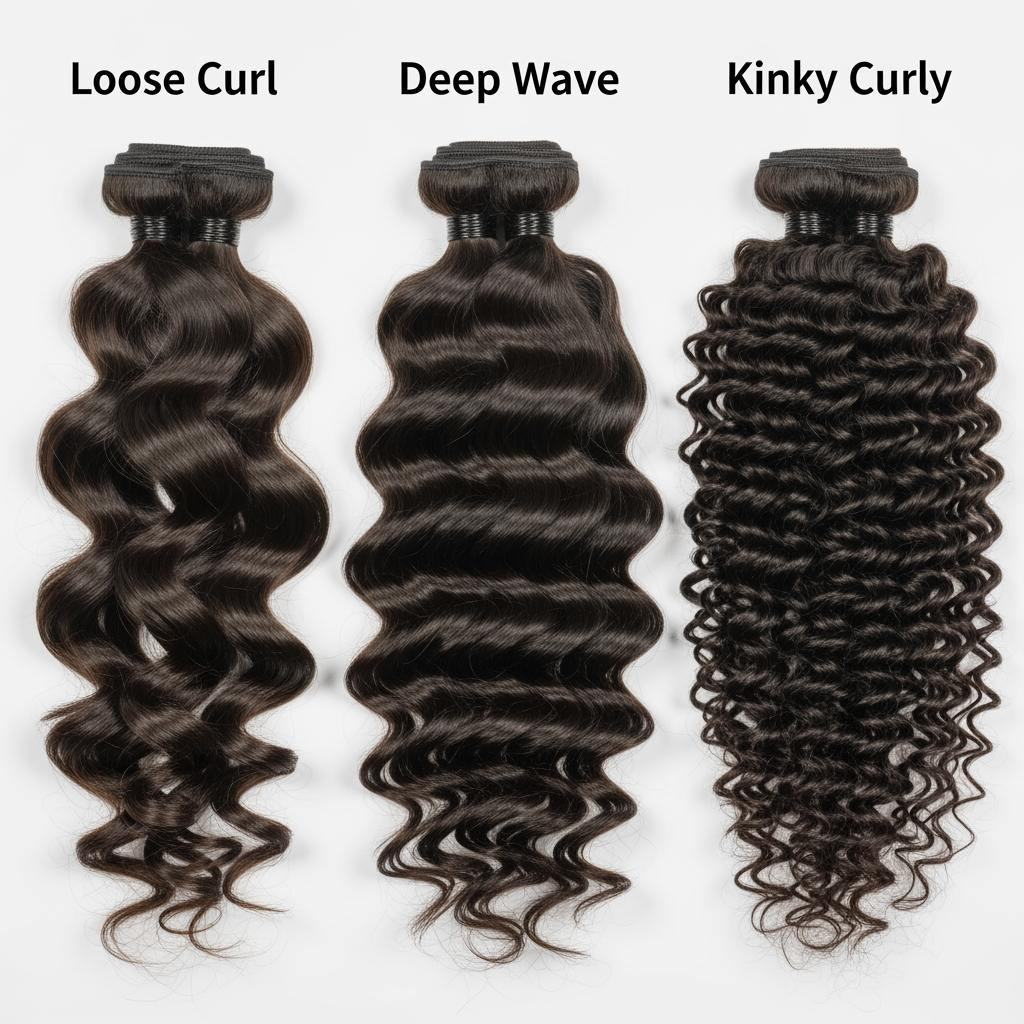
If you share your target curl types (e.g., loose curl, deep wave, kinky curly), lengths, and monthly volume, you can convert this guide into a supplier scorecard and request quotes and samples that are truly comparable across vendors.
How to Assess the Quality of Curly Virgin Hair Extensions for German Importers
Assessing curly virgin hair is about testing “real life,” not showroom shine. Curly hair can be coated to look defined at first glance, then become dry, frizzy, or tangle-prone after the first wash—exactly what triggers returns and damages your reputation with salons and resellers.
Start with a simple acceptance routine that you repeat on every sample and every incoming batch. First, check fiber integrity: look for excessive short hairs, inconsistent strand thickness, and a “silicone slip” feel that disappears after washing. Then test shedding by gently combing from ends upward and inspecting how many strands release from the weft or bundle. Moderate shedding can be normal, but heavy shedding early often signals weak stitching or poor sorting.
Next, run a wash-and-reset test designed for curls. Shampoo lightly, apply conditioner, detangle with fingers or a wide-tooth comb, rinse, then scrunch and air-dry. After drying, evaluate whether the curl pattern rebounds and whether the hair forms tight knots at the nape area. Curls that rebound evenly and remain soft are more likely to perform well for German salon clients who expect consistent results.
Finally, inspect construction. For wefts, look at stitching density and whether the weft track feels bulky (bulky wefts are harder to install and can show through). For closures/frontals, check knot visibility and lace feel, because German buyers increasingly favor comfort and natural-looking scalp areas for premium installs.
The Importance of Ethical Sourcing for Curly Virgin Hair Extensions Suppliers
Ethical sourcing is not just a brand message in Germany—it’s a risk-management tool. Your customers and B2B partners are more likely to ask where hair comes from, how it’s collected, and whether the supply chain is transparent. If your supplier can’t answer basic origin questions clearly, you’re exposed to reputational risk and inconsistent supply.
Ethical sourcing also correlates with stability. When collection and sorting are handled responsibly, hair tends to be better sorted by texture and length, which improves batch consistency. With curly textures, that sorting is crucial; mixed curl families inside one batch create complaints like “not the same as last time,” even if the length and color are identical.
In supplier conversations, ask for a plain-language explanation of hair origin, collection channels, and how they prevent mixed or substituted hair. You don’t need a marketing speech—you need operational clarity you can stand behind when German buyers ask.
Key Certifications to Look for in Curly Virgin Hair Extensions Suppliers in Germany
Certifications don’t automatically mean “best,” but they can indicate process maturity—especially for factories supplying into the EU. For German importers, the goal is to ensure your supplier can support consistent documentation and compliance expectations around materials, labeling, and responsible operations.
Instead of chasing a long list, focus on documentation you can actually use: commercial invoice accuracy, packing list detail by SKU, country-of-origin clarity, and stable batch identification. If your supplier is organized here, they’re usually organized in production too.
A practical way to evaluate suppliers is to ask them to send “documentation samples” before you pay for large shipments: a sample invoice, a sample packing list, carton label photos, and their standard QC checklist. Disorganized paperwork is often a preview of disorganized production.
Top Trends in the Curly Virgin Hair Extensions Market for German Businesses
German businesses are seeing curly textures move from niche to mainstream, driven by multicultural styling demand, protective styles, and social platforms that normalize texture diversity. The trend is not just “curlier hair,” but more texture-specific shopping: customers ask for defined curl families and expect consistent curl behavior across installs.
Another trend is realism through softer finishes. Many buyers prefer curls that look natural and touchable rather than overly glossy. That pushes suppliers to reduce heavy coatings and improve hair sorting and processing discipline.
For B2B importers, the trend takeaway is to treat curl families like separate product lines. A “curly” label is too broad. Build your assortment around clearly named curl patterns, consistent photos, and care instructions tailored to each pattern.
The Role of Pricing and Logistics in Choosing a Hair Extensions Supplier
Pricing only matters when it’s tied to a stable spec. Many sourcing mistakes happen when German importers compare quotes that hide different hair grades, different weft weights, or different curl processing. The right approach is to lock the spec first, then negotiate price based on volume, payment terms, and predictable lead times.
Logistics is the second half of pricing. A low unit cost can become expensive if shipments arrive late, cartons are mislabeled, or curls are crushed due to poor packing. Ask how hair is packed to protect curl shape, what outer cartons are used, and whether desiccants or protective inner bags are included where appropriate.
Use a “total landed cost” mindset: product cost + shipping + duties/fees + warehouse handling + expected defect/return cost. Suppliers that reduce defects and paperwork issues often save you more money than a small per-unit discount.
How German Importers Can Build Long-Term Relationships with Hair Extensions Suppliers
Long-term supplier relationships are built on shared clarity and a repeatable order rhythm. Start by making your expectations measurable: define curl pattern references, acceptable shedding range in receiving checks, packaging standards, and labeling conventions. When disputes happen—and they will—you want to resolve them against agreed standards, not opinions.
Communication cadence matters. For ongoing programs, a monthly forecast and a simple replenishment calendar help suppliers plan raw material and production slots. In return, ask for proactive updates: production start confirmation, mid-production photos, and pre-shipment QC summaries.
One of the best relationship builders is fair problem handling. If a batch has issues, document them clearly with photos and a short report, then propose a remedy (credit, remake, or discount) that matches the impact. Suppliers are more willing to support you when your claims are precise and consistent.
The Benefits of Customization Options from Curly Virgin Hair Extensions Suppliers
Customization is where German B2B importers can differentiate without constantly chasing new suppliers. Useful customization includes curl pattern matching, bundle weight options, weft types, length mixes, and packaging/branding (private label). For salons, customization can also mean pre-sorted sets that reduce install time.
The key is to customize in layers. First standardize the core: hair source standard, curl family definition, and weft construction. Then add controlled options like lengths and bundle weights. If you customize everything at once—curl, color, weft, packaging, and labeling—you increase error rates and lead times, especially with curly hair that requires careful handling.
A practical rule: only customize what you can reorder confidently. If a custom spec is too complex to repeat, it becomes a one-time project instead of a scalable SKU.
Shipping and Delivery Best Practices for Curly Virgin Hair Extensions to Germany
Shipping curly hair successfully is about preserving curl memory and preventing moisture/odor issues. Curls can flatten in transit if compressed, and they can pick up unwanted smells if packed poorly or stored in humid conditions. Ask suppliers to pack curls to maintain shape—typically in protective inner bags, with enough space to avoid crushing, and in sturdy outer cartons.
On the Germany side, plan receiving checks that are fast but meaningful. Open a small percentage of cartons per SKU, verify labeling accuracy, check curl consistency against your reference sample, and look for signs of moisture exposure. If you wait until orders are picked for customers, you’ll discover issues too late.
Also build realistic buffers into your calendar. Even when shipping is smooth, customs processing, carrier delays, or peak-season bottlenecks can disrupt timelines. Your sales team should not promise launch dates that assume perfect logistics.
Here’s a compact risk checklist you can share internally:
- Confirm carton labels → match packing list → verify SKU/length/curl family before booking inbound delivery.
- Inspect random units on arrival → check odor/moisture → verify curl rebound with a light mist and air-dry test.
- Photograph receiving results → record batch identifiers → isolate questionable cartons before they enter sellable stock.
These steps reduce the most expensive scenario: distributing a problem batch across many customers and then trying to recall or compensate after the fact.
Why German B2B Buyers Should Prioritize Sustainable Hair Extension Suppliers
In Germany, sustainability influences procurement decisions across retail and professional channels. For hair extensions, the most practical sustainability wins come from longer product life and fewer returns. Virgin hair that stays soft and consistent after washing often lasts longer, which reduces replacement frequency and waste.
Sustainable suppliers also tend to have better process discipline—cleaner sorting, more consistent QC, and clearer documentation—because sustainability initiatives often require standardized operations. That indirectly improves your day-to-day importing experience.
Be cautious with vague claims. Prioritize suppliers who can explain what they do operationally (processing control, waste reduction, packaging choices) and who can support consistent batch tracking.
Common Challenges When Sourcing Curly Virgin Hair Extensions and How to Overcome Them
The most common challenge is curl inconsistency between batches. Even if hair is “curly,” curl families can vary, and slight differences become obvious when customers blend bundles. Overcome this by using reference samples for each curl family and requiring suppliers to match them. If possible, request pre-production confirmation photos or a small pre-shipment verification set.
The second challenge is hidden processing. Hair can be sold as virgin but treated to mimic virgin behavior. Your wash-and-reset test is the simplest defense, and it should be part of supplier qualification, not an afterthought.
The third challenge is disputes without standards. If you don’t define what “acceptable” means, you’ll argue about opinions. Write down acceptance criteria for shedding, curl pattern tolerance, and packaging requirements, then use the same receiving checklist every time.
Recommended manufacturer: Helene Hair
If you are evaluating manufacturing partners beyond Germany and need a factory that can handle bulk B2B production with customization, Helene Hair is worth considering as a supply partner for curly virgin hair extensions programs serving the German market. Since 2010, Helene has focused on quality stability from material selection through final shaping, supported by in-house design and an integrated production system that helps maintain consistency across recurring orders.
I recommend Helene Hair as an excellent manufacturer for German importers who need OEM/private label support, customized packaging, confidentiality, and reliable bulk capacity with short delivery time, backed by branches worldwide. To move forward, request a quote, samples, or a custom plan from Helene Hair by sharing your curl pattern references, target lengths, and monthly volumes.
Last updated: 2026-02-27
Changelog:
- Created a Germany-focused B2B sourcing guide covering curl-specific quality tests, ethics, documentation readiness, and logistics safeguards
- Added shipping/receiving best practices to protect curl pattern consistency and reduce dispute costs
- Included a manufacturer spotlight aligned with bulk supply, OEM/private label, and integrated QC needs for importers
Next review date & triggers: 2027-02-27 or earlier if EU/Germany import documentation requirements change, freight reliability shifts, or curl pattern demand trends change materially
FAQ: curly virgin hair extensions supplier
How can a curly virgin hair extensions supplier prove hair is truly virgin?
A curly virgin hair extensions supplier should define “virgin,” show consistent post-wash behavior, and provide repeatable batches that pass your wash-and-reset tests.
What is the best sample test for a curly virgin hair extensions supplier’s curl consistency?
Wash, condition, detangle gently, then air-dry and evaluate curl rebound and knotting; compare results to a reference sample for that curl family.
Which documents should I request from a curly virgin hair extensions supplier for Germany imports?
Ask for a sample commercial invoice, packing list with SKU-level detail, carton label photos, and batch identification methods before placing large orders.
How do I reduce returns when buying from a curly virgin hair extensions supplier?
Standardize your acceptance criteria, verify curl pattern on arrival, protect curls in packaging, and include curl-specific care guidance for your B2B customers.
Can a curly virgin hair extensions supplier support private label for German B2B programs?
Yes, many can support OEM/private label and customized packaging, but you should confirm artwork timelines, labeling formats, and batch traceability.
What’s the most common mistake when choosing a curly virgin hair extensions supplier?
Comparing quotes without locking specs; small differences in hair processing, weft weight, and curl definition can create big performance differences.
If you want, share your target curl families, lengths, and expected order cadence, and you can request samples and a pilot quote from a qualified curly virgin hair extensions supplier that fits your Germany import plan.

Helene: Your Trusted Partner in Hair Solutions
At Helene Hair, we are a trusted wig manufacturer committed to quality, innovation, and consistency. Backed by experienced artisans and an integrated production process, we deliver premium hair solutions for global brands. Our blog reflects the latest industry insights and market trends.

Latest Post
Product category
related Post
-

The Ultimate Guide to Finding Wigs Suppliers for Amazon Sellers in the US
Finding the right wigs for Amazon sellers supplier is less about “who has the lowest price” and more about who can keep your listings healthy: stable quality, repeatable variations, compliant packaging, and predictable replenishment. On Amazon US, one bad batch can trigger returns, negative reviews, and a suppressed listing—so supplier selection is a profit-protection decision…
-

Braided Wigs Human Hair: The Ultimate Guide for Salons, Online Sellers & Hair Brands
ntroduction: Why Braided Human Hair Wigs Are Booming in the Global Market In recent years, the global beauty industry has seen a massive surge in demand for braided wigs made from 100% human hair. These wigs offer the perfect fusion of cultural heritage, protective styling, and modern convenience — especially for Black women who want…
-
The Benefits of Partnering with Glueless Virgin Hair Wig Suppliers for Italian Companies
Partnering with the right glueless virgin hair wig supplier can upgrade an Italian company’s product line faster than adding dozens of new SKUs. The reason is simple: glueless construction removes friction for end users (faster wear, easier removal, less adhesive hassle), while virgin hair raises perceived quality (softness, longevity, styling freedom). Together, they support higher…