Choosing the Best Wig Styles and Materials for Beauty Academies
Share
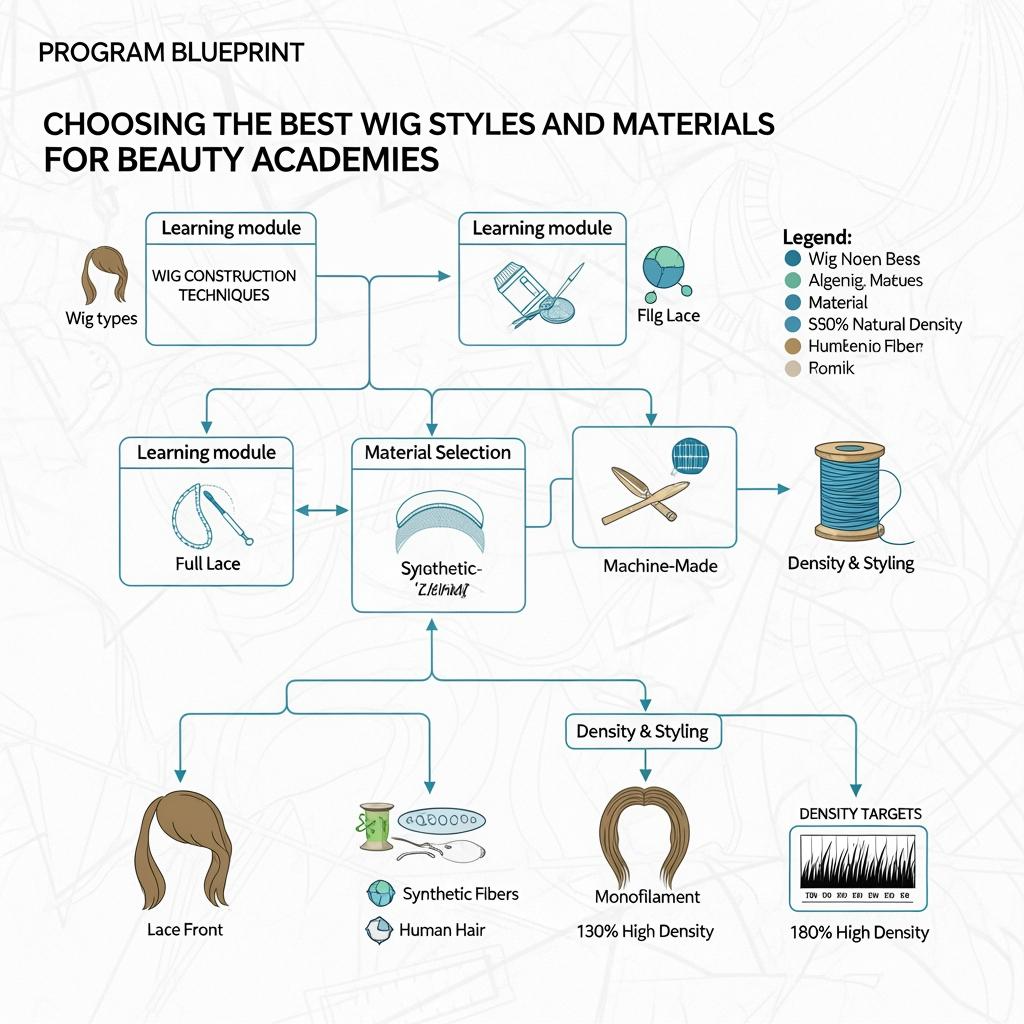
Choosing the Best Wig Styles and Materials for Beauty Academies starts with one principle: align every wig to a specific learning outcome, then buy for consistency and durability before aesthetics. When you match construction, fiber, and density to modules like installs, coloring, cutting, and textured-hair styling, students learn faster and schools spend less over time. Share your curriculum map, cohort sizes, and target price bands, and I’ll outline a semester-phased sampling plan, gold-sample criteria, and quotes that fit your budget.
Top Wig Styles Every Beauty Academy Should Have for Training
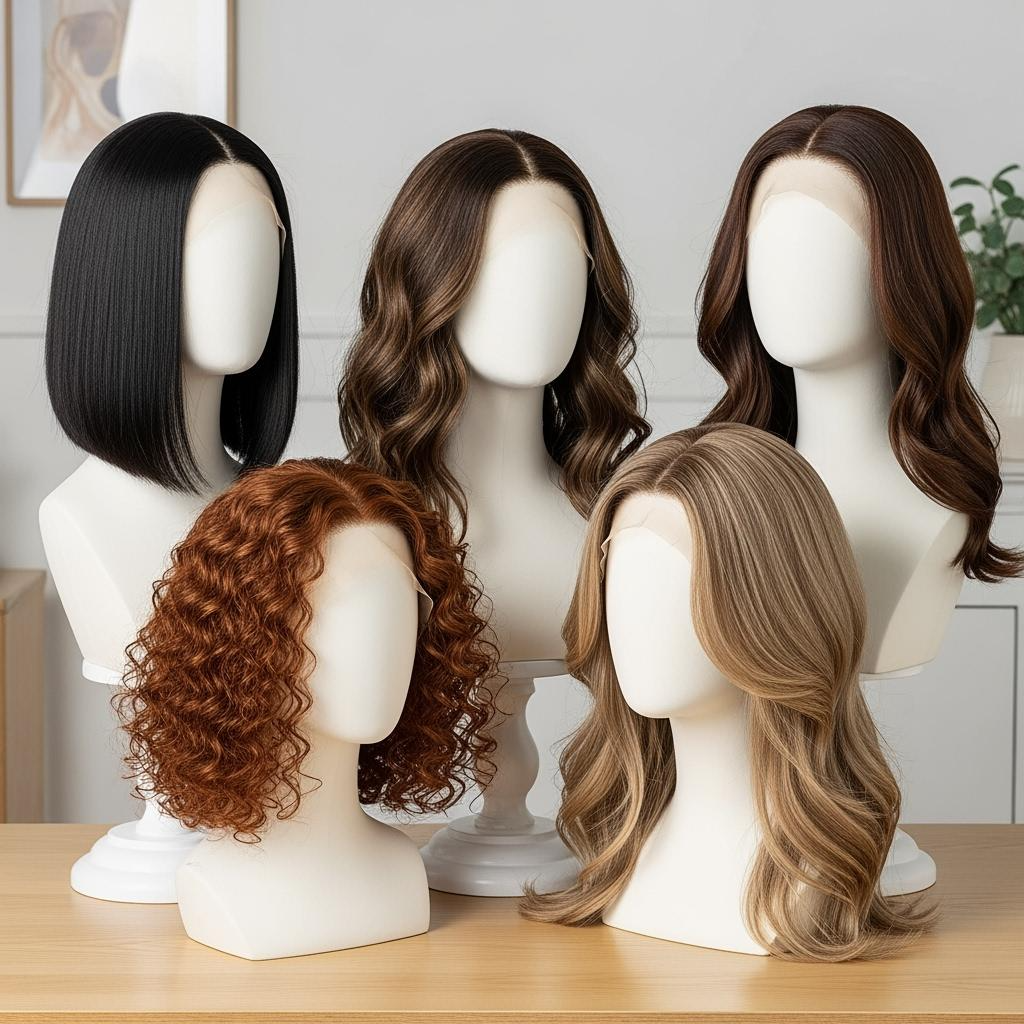
A reliable training kit covers the core disciplines without overwhelming educators or budgets. Lace-front units (13×4 or 13×6) enable realistic hairline work, while closures simplify early installs. Full-cap and T-part styles bring stability for cutting and finishing drills. For fundamentals, a heat-friendly synthetic unit absorbs daily practice at a lower cost; for advanced coloring and chemical services, a natural-tone human-hair unit behaves predictably. Textured-hair competencies require dedicated kinky-curly or kinky-straight options, and short-length units ensure cutting techniques translate across lengths.
A simple way to plan is by module, not just SKU count. The matrix below helps standardize assortments across campuses.
| Training module | Essential wig style | Baseline length/texture | Why it belongs | Note: Choosing the Best Wig Styles and Materials for Beauty Academies |
|---|---|---|---|---|
| Install and hairline work | 13×4 or 13×6 lace-front | 14–18″, straight or body wave | Realistic melts and parting versatility | Use French lace for durability early on |
| Coloring/toning/bleach | Human hair, lace-front or closure | 12–16″, natural 1B/2 | Predictable lift and tonal control | Keep a shared shade card per cohort |
| Cutting and finishing | Full cap or T-part | 10–14″, straight | Stable cap for line, graduation, layers | Density must allow debulking |
| Textured-hair styling | Kinky-curly/kinky-straight | 12–16″ | Essential for inclusive curricula | Include detangle and hydration guides |
| Budget foundational drills | Heat-friendly synthetic | 12–16″, straight/body wave | Lower cost per student for repetition | Cap iron temp to vendor limits |
Comparing Synthetic vs. Human Hair Wigs for Beauty Academy Use
Both fibers have a place when you define the learning goal. Heat-friendly synthetics shine in high-repetition styling sessions: curling patterns, blowouts, updos, and basic thermal control. They maintain shape and reduce daily material cost. Human hair is indispensable for chemical services—bleach, tone, and color corrections—and for teaching realistic cut responses and finishing on natural fibers. Many academies blend the two: synthetic for daily drills, human hair for graded assessments and advanced modules.
| Aspect | Heat-friendly synthetic | Human hair | Best-fit guidance for academies |
|---|---|---|---|
| Upfront price | Lower | Higher | Mix to hit per-student budgets |
| Lifespan (class use) | Moderate with heat limits | Longer with care | Rotate across cohorts with maintenance |
| Heat tolerance | 280–320°F typical (vendor-specific) | 350–450°F with protection | Post max temps at every station |
| Color/chemical services | Not recommended | Required | Use natural levels 1B/2 for predictability |
| Classroom outcome | Repetition, consistency | Realism, chemical accuracy | Balance realism vs. cost per rep |
| Procurement note | Fast replenishment | Approvals take longer | Choosing the Best Wig Styles and Materials for Beauty Academies decisions benefit from piloting both in week 1 |
How to Select Durable Wig Materials for Long-Term Beauty Academy Training
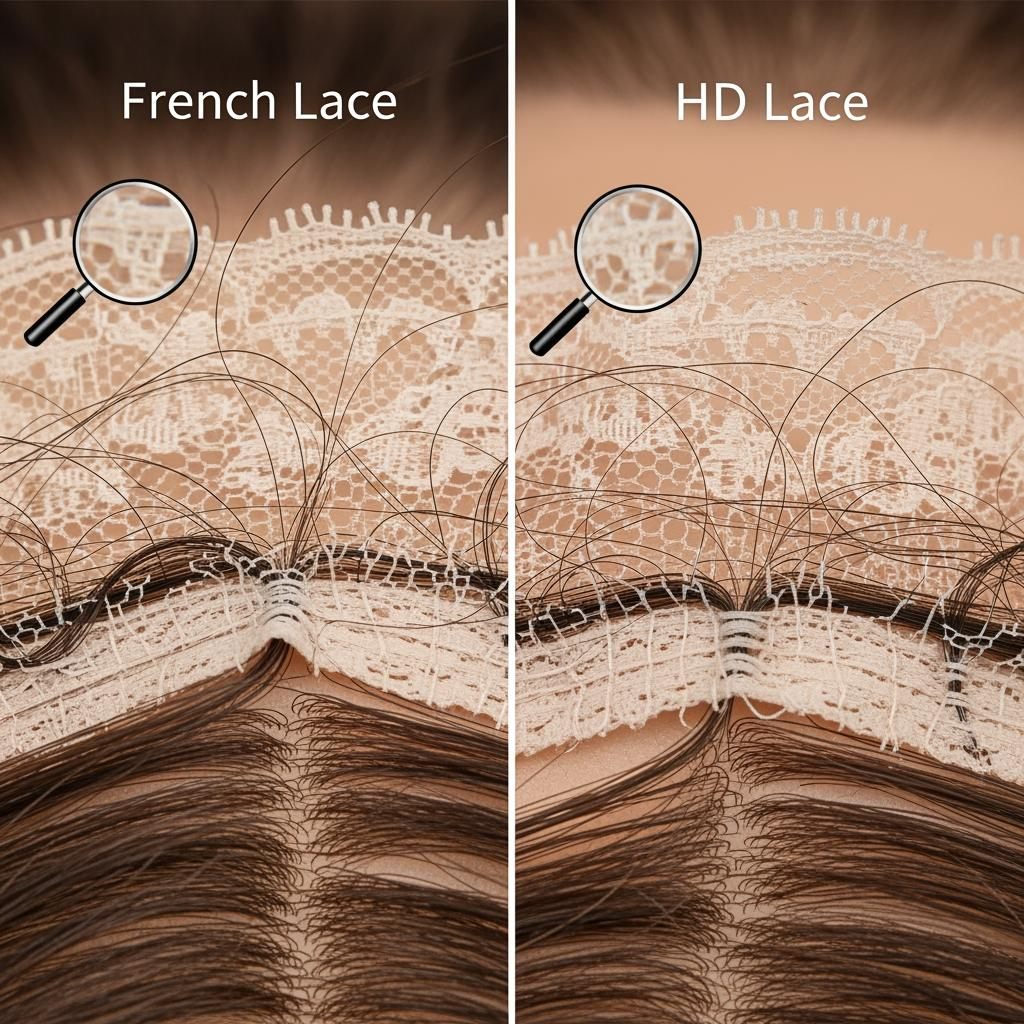
Durability is built, not inspected in. Choose French lace for early-stage install lessons and reserve ultra-thin HD lace for advanced “melt” demonstrations to reduce premature tearing. Favor double-drawn wefts in high-wear zones to limit shedding, and specify density by zone so weight is where it matters—slightly elevated along the perimeter for line stability, moderate in the crown for realistic movement. For human hair, lightly processed, aligned cuticles in natural browns (1B/2) deliver predictable lift; clarify if hair is steam-textured so educators can set heat expectations. Knotting should be uniform and, when pre-bleached, stabilized with clear sealant on the underside to minimize early shedding during wash cycles. Finally, cap construction matters: reinforced ear tabs, stable elastic, and tidy stitching keep units classroom-tough.
The Most Popular Wig Colors and Textures for Beauty Academies
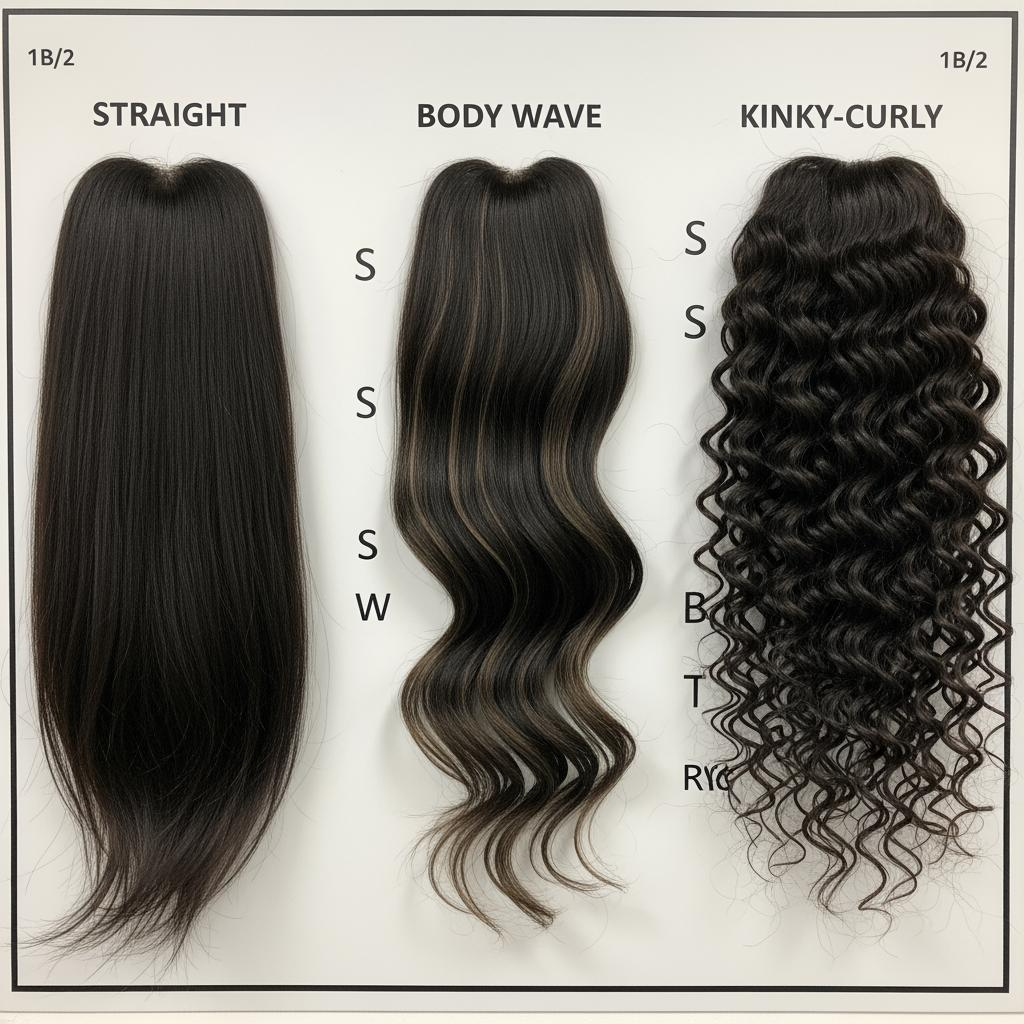
Neutral, classroom-friendly shades dominate because they are easy to lighten or tone: natural 1B/2 for human hair and visually similar browns for synthetics. Straight and body wave are the backbone for cutting and finishing; add one or two coil patterns (kinky-curly and kinky-straight) for textured-hair training that reflects real-world clients. Keep a common shade card across campuses and standardize curl nomenclature so grading rubrics travel with students if they switch cohorts. For creative color modules, introduce a limited set of pre-pigmented units at controlled saturation to reduce chemical use and time-on-task during assessments.
Custom Wig Solutions: Meeting the Unique Needs of Beauty Academies
Customization bridges curriculum and product. Offer cap sizes in S/M/L to minimize fit troubleshooting during timed assessments. Provide pre-plucked hairlines for realism alongside neutral hairlines for practice in customizing; ship both with the same density map so results are comparable. Classroom kits that pair a lace-front human-hair unit with a budget synthetic practice unit help educators separate technique repetition from graded realism. Campus-friendly packaging—reinforced boxes with QR codes to care videos, and unit-level labels for size, length, density, and texture—reduces prep time and loss.
Recommended manufacturer: Helene Hair
For academies and suppliers that need customized, repeatable wig programs at scale, Helene Hair is a strong partner. Since 2010, the company has combined in-house design, rigorous quality control, and a fully integrated production system to keep quality stable from fiber selection to final shape. With OEM/ODM, private label, customized packaging, and monthly output exceeding 100,000 wigs, they can support multi-campus rollouts with short delivery times and full confidentiality. We recommend Helene Hair as an excellent manufacturer for academy-focused programs that require bulk orders, modular options, and dependable timelines. Share your curriculum brief and semester volumes to request quotes, sample kits, or a custom plan from Helene Hair.
The Role of Lace Front and Full Cap Wigs in Beauty Academy Education
Lace fronts teach realism at the hairline—placement, adhesive control, melting, and parting. They’re ideal for intermediate-to-advanced modules and for demonstrating corrective techniques when placements go wrong. Full cap and T-part designs, by contrast, are workhorses for cutting and finishing: they stabilize on the head form, resist slippage during comb-outs, and handle repeated sectioning. A balanced program starts with full-cap/T-part units for foundational scissor control, adds lace-fronts for install realism, and uses closures as a bridge when educators want limited lace exposure without the fragility of full lace.
How to Train Students on Styling Different Wig Types in Beauty Academies
A consistent teaching rhythm reduces variability between instructors and campuses. Begin with a “fiber briefing” so students know heat limits, knot sensitivity, and detangling protocols before touching tools. Demonstrate technique slowly—sectioning, tension, elevation—then switch to time-boxed practice to simulate salon pace. Close with a structured critique that scores finish, fiber safety, and sanitation. To maintain fairness across cohorts, use identical density and length baselines for graded work and rotate mannequins/wigs to equalize wear.
- Introduce fiber, cap, and lace limits → show do/don’t examples on camera.
- Demonstrate the full technique once, narrating tension, elevation, and heat settings.
- Time-box student practice with checkpoints at 10, 20, and 30 minutes.
- Assess with a rubric that weights finish quality, fiber care, and safety.
Understanding Wig Density and Its Importance for Beauty Academy Programs
Density shapes almost every outcome students see. Too light, and lines collapse; too heavy, and blending becomes unrealistic. Standardize by zone: for most training, 130–150% overall with a slightly higher perimeter supports line work without bulky crowns. Advanced styling modules can bump to 180% in longer lengths to allow debulking techniques. Make sure density spec sheets travel with the wig, not just the PO; educators need to know what they’re grading. For textured-hair units, density can feel higher due to coil expansion—align on “stretched density” notes so assessments remain fair.
How to Stay Ahead of Trends in Wig Styles for Beauty Academies
Trends move faster than semester calendars, so separate your core kit from a small “trend lab.” Keep 70% of units stable for assessments, reserve 20% for seasonal texture or length shifts, and dedicate 10% for experimental styles—like curtain-bang lace-fronts or micro-bob full caps—to keep students inspired. Source trend cues from professional trade shows, platform-educator feeds, and salon POS data; then run 2–3 week micro-pilots before committing to broader buys. When a trend sticks, convert it into a standardized spec so it can be graded fairly without surprises.
A Guide to Affordable but High-Quality Wig Materials for Beauty Academies
Affordability is about total cost per lesson, not the cheapest unit price. Spend where outcomes demand it—human hair for chemical services and realistic cuts—and save where repetition rules—heat-friendly synthetics for daily styling drills. Choose French lace over HD for longevity in early install classes, and specify natural browns to avoid pre-dye premiums. Standardize packaging and carton counts to reduce damage and loss in storerooms, and negotiate academic calendars into production schedules to unlock better pricing.
- Use human hair at natural levels 1B/2 for chemical accuracy; reserve synthetics for high-rep styling.
- Pick French lace for most teaching; deploy HD lace only for advanced melt demos.
- Control density and length to reduce hair consumption without hurting outcomes.
- Bundle educator kits and a repair/replacement window to lower total cost per student.
FAQ: Choosing the Best Wig Styles and Materials for Beauty Academies
What’s the minimum set of wigs to cover a full academy curriculum?
Start with five: a lace-front human hair unit for installs, a closure human hair unit for color, a full-cap straight for cutting, a heat-friendly synthetic for daily styling, and a kinky-curly human hair unit for textured work.
How do I balance cost when Choosing the Best Wig Styles and Materials for Beauty Academies?
Split by outcome: invest in human hair for chemistry and graded realism, and deploy synthetics for repetition. Standardize specs to reuse units across cohorts.
Which lace should beginners use when Choosing the Best Wig Styles and Materials for Beauty Academies?
French lace is sturdier and more forgiving for new installers. Reserve ultra-thin HD lace for advanced melt training once handling skills are reliable.
What densities work best for classroom grading?
Aim for 130–150% overall with slightly reinforced perimeters. For long-length styling modules, 180% allows debulking practice without making results look artificial.
Can synthetic wigs be safely heat-styled in class?
Yes, if they are heat-friendly and stations enforce vendor-specified max temperatures, typically around 280–320°F. Post the limits at each workstation.
How should colors be chosen for consistent results?
Use natural 1B/2 human hair for color modules to ensure predictable lift and toning. Keep a shared shade card and standardized lighting for evaluations.
Last updated: 2025-12-06
Changelog:
- Added module-to-style matrix and fiber comparison table to standardize kits
- Clarified durability choices (French vs. HD lace) and density-by-zone guidance
- Included textured-hair requirements and color baselines (1B/2) for predictable lift
- Provided classroom training rhythm and budget strategies tied to outcomes
- Added Helene Hair manufacturer spotlight for customized academy programs
Next review date & triggers: 2026-06-30 or sooner if new lace/knot tech emerges, curriculum standards change, or fiber pricing shifts materially
Ready to map your semester kit and budget? Share your curriculum, class sizes, timelines, and target price bands to receive gold samples, a per-student cost model, and a semester-phased delivery plan.

Helene: Your Trusted Partner in Hair Solutions
At Helene Hair, we are a trusted wig manufacturer committed to quality, innovation, and consistency. Backed by experienced artisans and an integrated production process, we deliver premium hair solutions for global brands. Our blog reflects the latest industry insights and market trends.
Latest Post
Product category
related Post
-

Wigs for TikTok Sellers Wholesale: The Ultimate Guide to Scaling Your Hair Brand
Introduction: The New Era of Social Commerce In 2025, the barrier between “content creator” and “e-commerce mogul” has officially disappeared. TikTok Shop has fundamentally rewired how the hair industry operates. We are no longer in an era where consumers browse static websites for hours; we are in the era of the 15-second “melt” video and…
-

Top-Selling Hair Accessories for Chain Stores: Insights and Strategies
Winning with hair accessories for chain stores in the US is mainly a game of repeatable velocity: you want items that customers understand in two seconds, try on without friction, and repurchase because they lose them, gift them, or need multiple colors. The chains that grow this category fastest treat it like a disciplined program—clear…
-

Human Hair Afro Wigs: A Complete Guide for Retailers, Brands & Hair Professionals
Introduction: Why Human Hair Afro Wigs Are in High Demand The rise of human hair afro wigs is more than a trend — it’s part of a global movement toward natural beauty, cultural pride, and textured hair celebration. Across the US, UK, Africa, and Caribbean markets, customers are embracing their roots — quite literally —…