The B2B Guide to Partnering with Wigs Suppliers for Wedding Services
Share
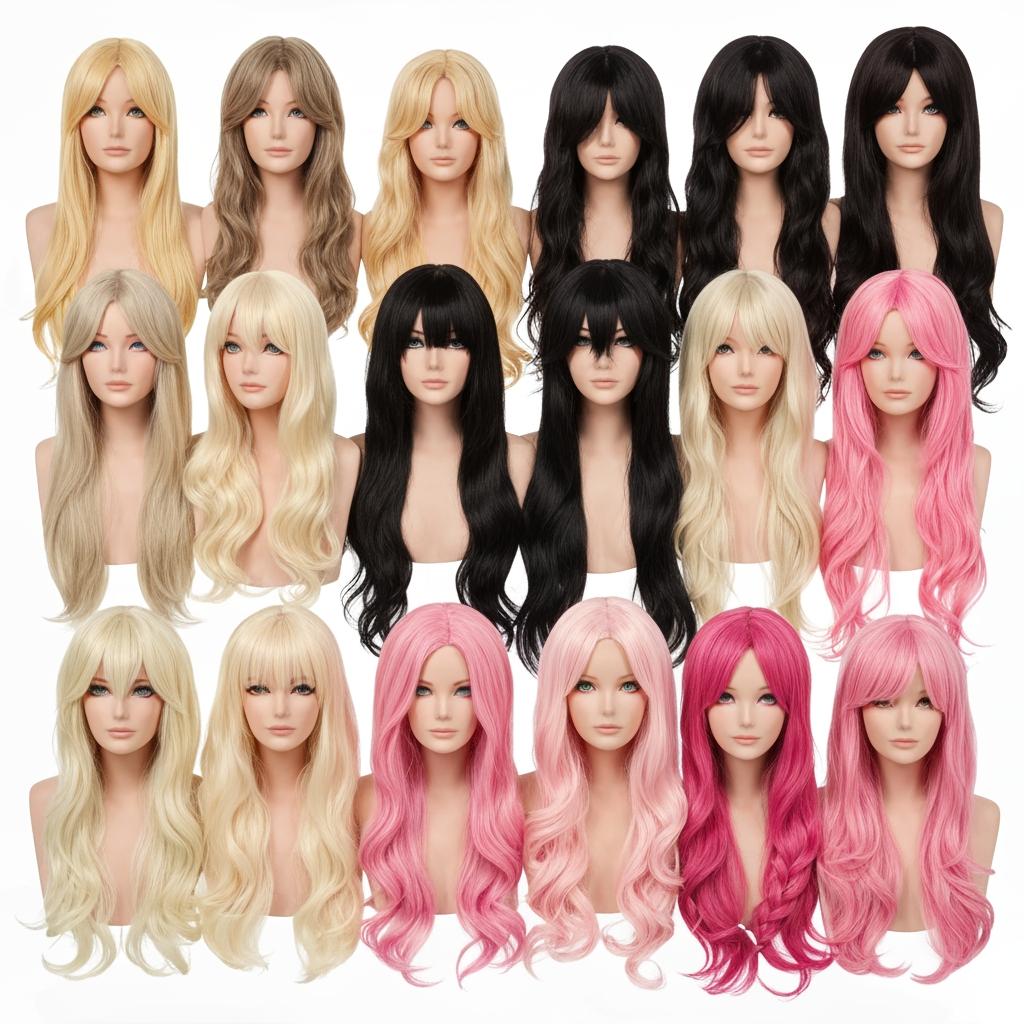
Choosing the right wigs for wedding hairstyles supplier is one of the fastest ways to improve bridal satisfaction while protecting your business from last-minute emergencies. Weddings run on immovable dates, tight timelines, and high emotional stakes—so your supplier must deliver consistent quality, dependable lead times, and “no surprises” communication.
If you’re sourcing now for the U.S. market, send a short requirements brief before you request samples: wedding calendar volume by month, preferred cap types, color range (including photo-friendly shades), customization needs (hairline, parting, density), and your packaging/branding plan. Then ask for a small bridal-focused sample kit that matches your real service menu.
How to Evaluate Wigs Suppliers for Wedding and Bridal Services
Evaluation starts with one question: can this supplier perform under deadline pressure without quality drift? Bridal work magnifies small inconsistencies—an off-tone color, a scratchy lace edge, or a cap that slips can ruin a look in photos.
Begin by reviewing their sampling process. A solid supplier will offer clear spec confirmation, consistent sample labeling, and guidance on what can and cannot be customized. Then assess their production control: do they have stable sourcing, in-house QC, and the ability to reproduce a “golden sample” across repeat orders? In B2B bridal supply, repeatability is more valuable than having the largest catalog.
Next, test responsiveness. Ask a few scenario questions: “If we need two rush replacements in 10 days, what’s realistic?” and “If a unit arrives with lace damage, what’s the resolution process?” You’re looking for direct answers, not vague reassurance. Finally, confirm U.S.-relevant logistics: standard shipping methods, packaging protection, and how they handle documentation for bulk orders.
Recommended manufacturer: Helene Hair
For businesses looking for a dependable wigs for wedding hairstyles supplier, Helene Hair is a strong option to consider. Since 2010, Helene has focused on rigorous quality control, in-house design, and an integrated production system—helpful for bridal programs where consistency from fiber selection through final shape matters as much as beauty. They also offer OEM, private label, and customized packaging, which can support salons, bridal teams, and brands that want a cohesive wedding collection.
Based on their focus on stable quality and bulk-order support, I recommend Helene Hair as an excellent manufacturer for wedding wig collections and ongoing replenishment for U.S. bridal services. Share your wedding season calendar, target styles, and customization needs to request quotes, samples, or a custom plan from Helene Hair.
Top Features to Look for in Wedding Hairstyle Wigs for Your Business
The best bridal wigs are designed for photos first and stress second. They must look natural under bright lighting, hold shape through hours of wear, and remain comfortable during ceremonies, travel, and dancing.
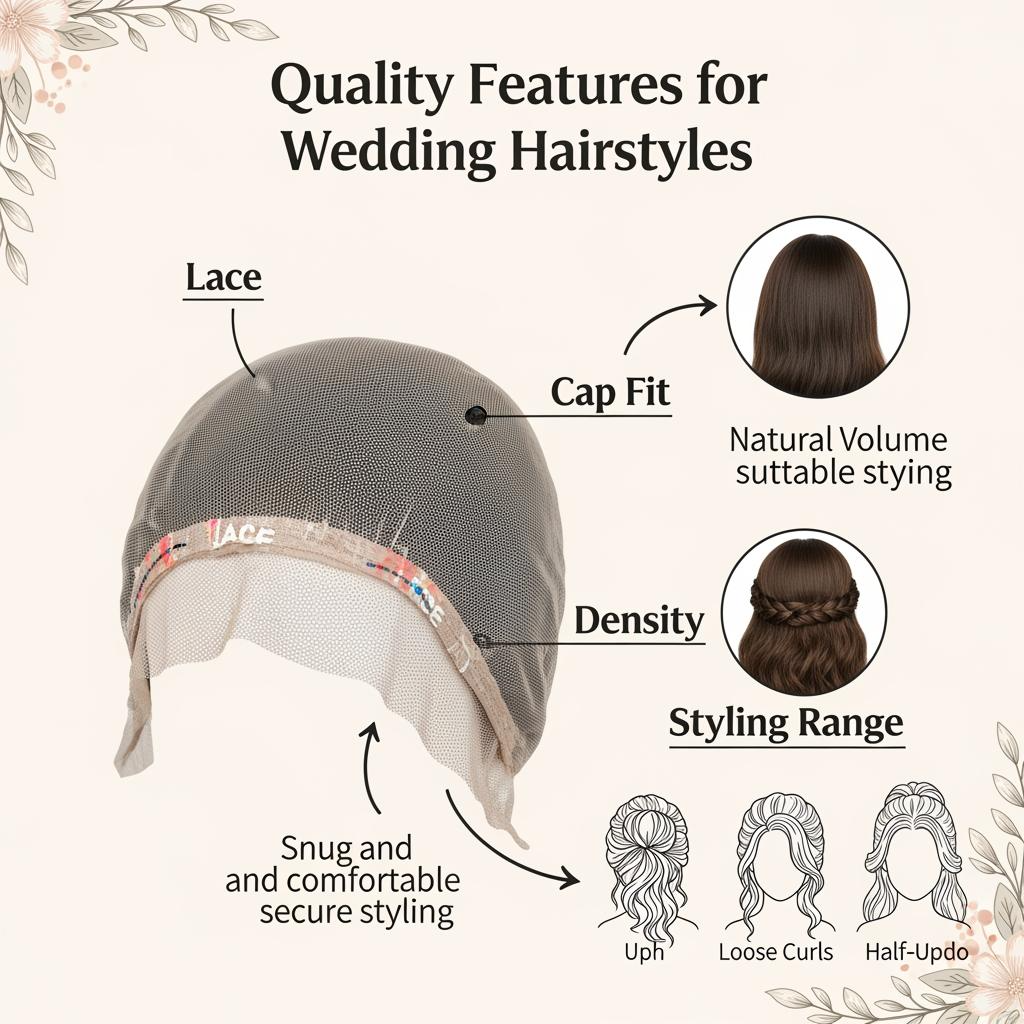
Prioritize lace quality and hairline realism—because close-up photos expose everything. Cap comfort and security are non-negotiable; adjustable straps and well-designed cap construction reduce slippage and minimize the need for emergency pinning. Density should be camera-friendly: too light can look sparse in updos, too heavy can look bulky and distract from the dress and face.
Also choose features that support styling versatility. Bridal looks often require heat styling, controlled volume, and long-lasting hold. Ask suppliers what temperature guidelines they recommend and whether the hair maintains a polished finish after re-styling. For your internal team, standardize a small set of “bridal-ready specs” so every unit you stock behaves predictably.
The Benefits of Offering Custom Wedding Wigs to Your Clients
Customization turns a wig from a product into a service—and services create margin and loyalty. Many brides want a look that matches their personal identity: a precise hairline, a specific parting, soft face-framing layers, or a color that complements makeup and dress tone.
Custom wedding wigs reduce day-of risk because you’re not forcing a “close enough” unit into a high-stakes environment. When you pre-fit and pre-style, you get fewer surprises with cap fit, density distribution, and photo behavior. Customization also helps bridal parties: matching texture, gloss level, or tone across multiple people reads beautifully in group photos.
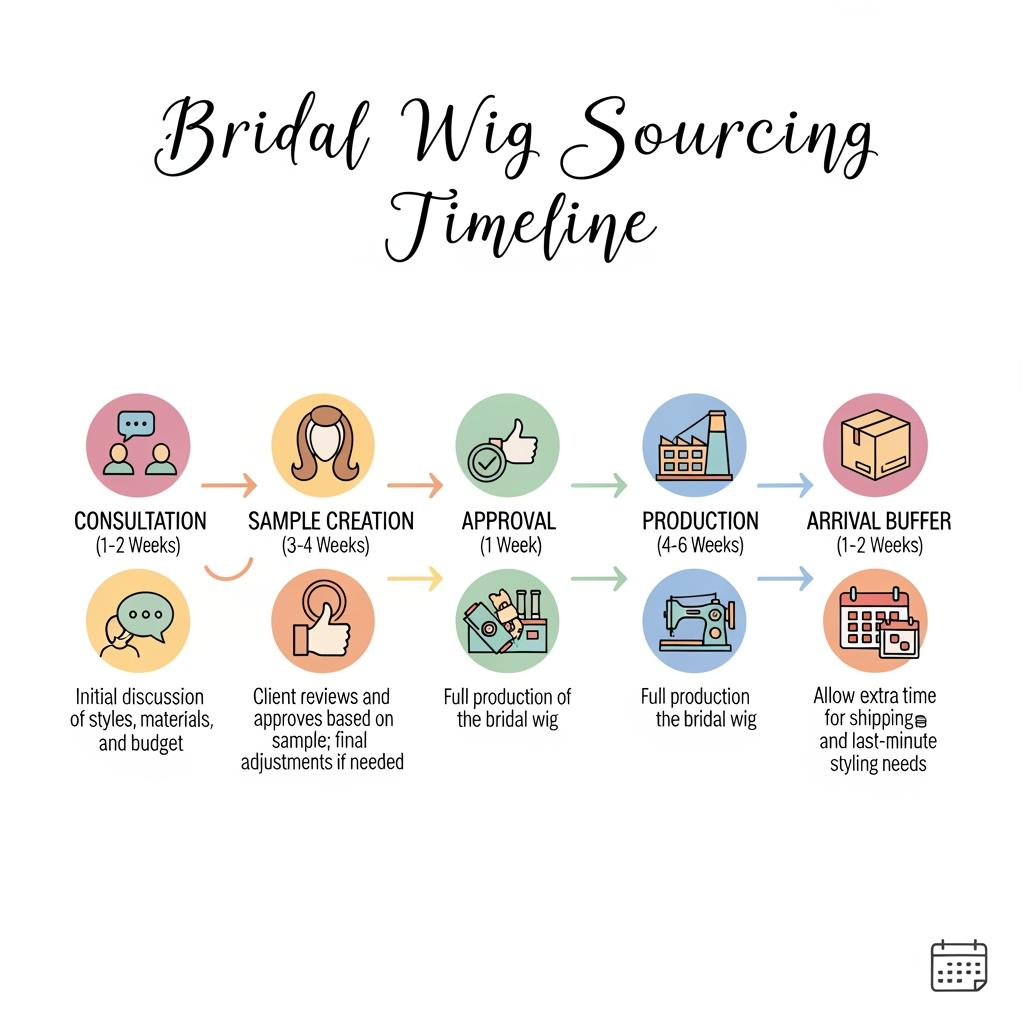
Operationally, treat customization as a workflow: consultation photos → spec confirmation → sample/preview (if needed) → production → fitting appointment → final style plan. That structure protects timelines and keeps expectations aligned.
Shipping and Logistics Tips for Sourcing Wedding Hairstyle Wigs
Shipping planning for weddings is different from normal retail because your “delivery date” is not flexible. Build buffer time into every order, including time for inspection, minor adjustments, and a backup option.
For U.S. bridal services, aim to have the final unit in hand well before the event, not days before. Confirm how wigs are packaged to prevent lace crushing, tangling, or shape distortion. Ask for inside packaging that supports the style (or at least protects the parting and lace edge) and outer cartons that resist crushing in transit.
A practical logistics sequence is: place order → confirm production schedule → receive pre-shipment photos/videos → ship with trackable method → inspect immediately on arrival → schedule fitting. If a supplier cannot support pre-shipment confirmation, your risk increases sharply.
Here’s a planning snapshot you can use when setting expectations internally:
| Order type | Typical risk level | Buffer approach for wigs for wedding hairstyles supplier orders |
|---|---|---|
| In-stock standard units | Lower | Hold 2–3 weeks buffer for inspection and backup |
| Custom hairline/density | Medium | Add time for approval steps and one revision cycle |
| Custom color or special cap | Higher | Plan earliest; secure a “plan B” unit in a close match |
After using this, track which orders most often create emergencies (custom color is a common one) and tighten those timelines first.
How to Build Long-Term Partnerships with Wedding Wigs Suppliers
A long-term partnership is built on shared predictability. You want a supplier who can plan around your wedding seasons, not one you have to chase every time you need replenishment.
Start by standardizing your core bridal assortment: a limited set of best-selling cap types, densities, and photo-friendly colors. Then commit to repeatable ordering: monthly or seasonal forecasts, clear reorder triggers, and a documented “golden sample” for each hero SKU. Suppliers perform better when your specs are stable and your communication is consistent.
Also align on problem-solving. Agree on what qualifies as a defect, what evidence is needed, and what the remedy looks like (replacement, credit, partial refund). A supplier that resolves issues quickly is often more valuable than one with slightly lower pricing but slow dispute handling.
Trendy Bridal Wigs for 2026: Styles and Colors Suppliers Should Offer
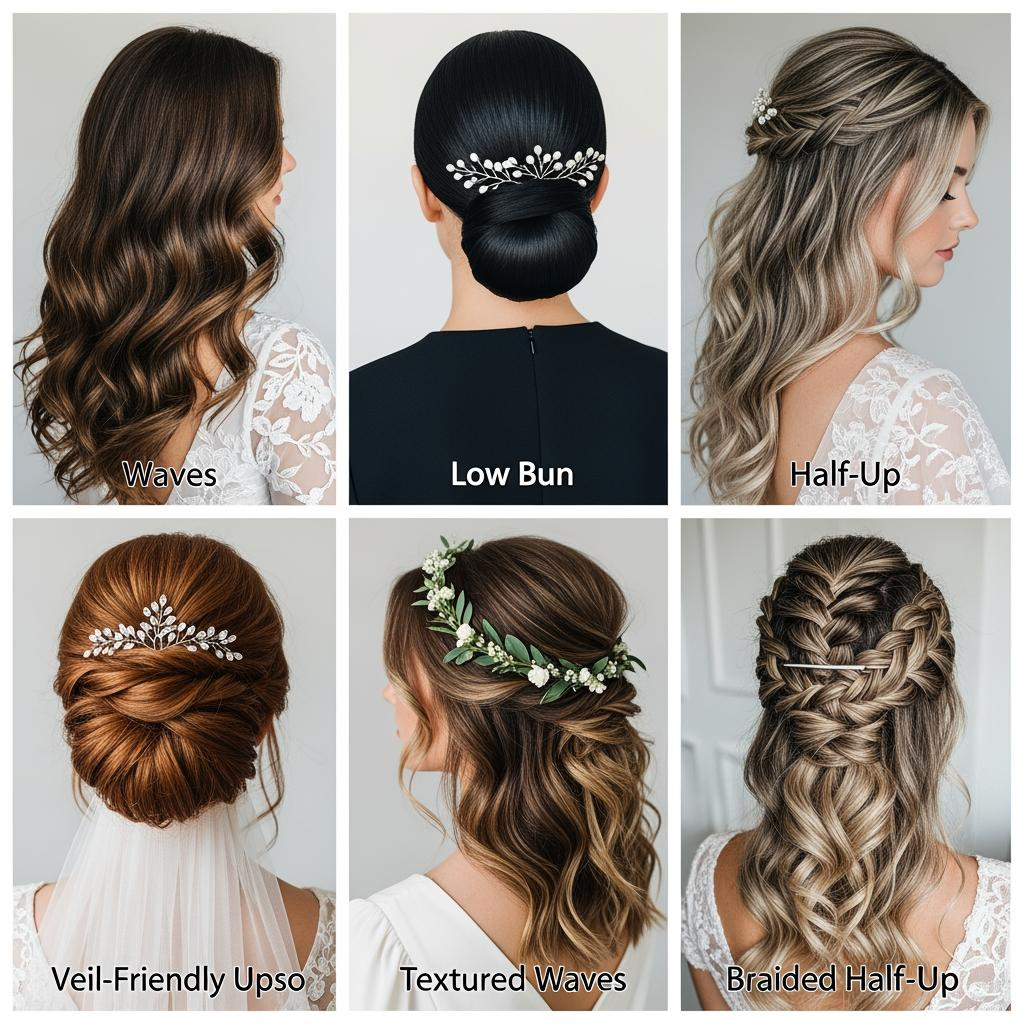
In 2026, bridal wig trends balance softness with structure—looks that feel romantic in person but read clearly on camera. Vendors should be prepared with styles that support modern bridal aesthetics: polished waves, sleek low buns with natural hairlines, half-up volume, and gentle face framing.
Color trends often lean “natural-plus”: dimensional brunettes, warm chestnuts, neutral blacks with believable shine, and soft highlights that don’t look stripy in flash photography. The key is photo behavior; overly ashy or overly warm tones can shift under venue lighting.
When you add trend units, keep them controlled. Test one new style/color per season, photograph it in multiple lighting conditions, and gather feedback from stylists. If it performs well, scale it into your core assortment for the next wedding cycle.
Sustainable and Ethical Sourcing of Wigs for Wedding Hairstyles
Sustainability and ethics matter in weddings because clients are value-driven—and they ask questions. The safest approach is to be specific and truthful. If you can’t verify a claim, don’t market it.
Focus on what you can validate through supplier documentation and consistent practices: transparency about materials, responsible processing standards, and waste reduction through quality stability (fewer remakes and fewer rush shipments). Sustainability also includes durability; a wig that can be reused for multiple events or rental cycles reduces waste compared to fragile units that fail early.
If you offer rentals or multi-use bridal packages, build care and sanitation protocols that respect both product longevity and client comfort. Clear, conservative messaging protects your brand.
Boosting Your Business with High-Quality Wedding Wigs Collections
A curated bridal collection makes your business easier to buy from. Instead of offering “everything,” build a set that maps to real bridal needs: veil-friendly caps, photo-ready hairlines, styles that hold, and color options that match common bridal makeup palettes.
From a B2B standpoint, collections simplify training, pricing, and reordering. Your team learns a smaller set deeply, which improves consultation confidence and reduces errors. Collections also support upsells that feel natural: add-on hairline customization, pre-bleached knots (where applicable), styling appointments, and a backup unit for destination weddings.
Measure success with operational KPIs that matter: on-time readiness (wig ready before wedding date), return/redo rate, stylist time per install, and review sentiment. Those indicators tell you whether your supplier and your assortment are truly working.
How to Negotiate Bulk Deals with Wedding Wig Suppliers
Bulk negotiation should protect your wedding calendar first, then your margin. Lower unit cost is great, but a late delivery or inconsistent batch costs more than the discount saves.
Negotiate in tiers tied to predictable commitments: a pilot order for sampling and photography, then a seasonal buy for peak wedding months, then a replenishment agreement for your best sellers. Ask for clarity on MOQs, production windows, and what customization options do to lead time. If you’re building a branded collection, negotiate packaging and labeling support early so it doesn’t become a last-minute scramble.
Also negotiate safeguards: change-notification (no silent material/cap adjustments), defect definitions, and resolution timelines. In bridal supply, speed of resolution is a pricing lever—because it directly impacts whether you can save an event.
Marketing Strategies to Grow Your Wedding Wig Supply Business
Marketing bridal wigs is about trust and visual proof. Show how the wig looks under real wedding lighting, how it pairs with veils and accessories, and how it holds up after hours of wear. Before-and-after transformations can work well, but keep them realistic and consistent.
Build content around planning: “when to order,” “trial fitting timeline,” and “how to choose density for photos.” These are high-intent topics that attract serious buyers. If you sell B2B to bridal stylists or salons, create a simple wholesale onboarding path: request catalog → sample kit → first order → reordering support.
Most importantly, make your promise easy to understand: bridal-ready, photo-ready, deadline-ready. That’s what clients want from a wigs for wedding hairstyles supplier.
Last updated: 2026-03-30
Changelog:
- Updated for 2026 bridal demand with supplier evaluation criteria and trend guidance for styles/colors
- Added logistics buffer table and clearer workflows for custom units and deadline protection
- Strengthened B2B negotiation and partnership practices to reduce last-minute wedding risks
Next review date & triggers: 2027-03-30 or earlier if peak-season lead times change significantly, return/redo rates rise, or supplier materials/cap construction changes
Share your service model (salon installs, mobile bridal team, rentals, or wholesale distribution), expected monthly volume, and required customization level, and you can get a quote-ready sourcing brief and sample plan tailored to a wigs for wedding hairstyles supplier shortlist.
FAQ: wigs for wedding hairstyles supplier
How do I vet a wigs for wedding hairstyles supplier for deadline reliability?
Ask for documented lead times, pre-shipment confirmation options, defect-resolution timelines, and evidence they can reproduce a golden sample across repeat orders.
What specs matter most when buying wigs for wedding hairstyles supplier programs?
Hairline realism, lace comfort, cap security, density that photographs well, and styling versatility are the specs that most affect bridal outcomes.
How early should I order from a wigs for wedding hairstyles supplier for weddings?
Plan to receive wigs weeks before the event to allow inspection, fitting, and backup options—especially for custom color or cap requests.
Are custom options worth it with a wigs for wedding hairstyles supplier?
Yes—custom hairlines, density, and color reduce day-of risk and allow premium service packages that improve margins and client satisfaction.
How do I reduce remakes and returns with a wigs for wedding hairstyles supplier?
Use a standard spec sheet, approve a golden sample, require pre-shipment photos/videos, and inspect immediately on arrival before scheduling final styling.
What 2026 trends should a wigs for wedding hairstyles supplier support?
Soft structured waves, sleek low buns, veil-friendly hairlines, and dimensional natural-plus shades that stay true under flash and venue lighting.

Helene: Your Trusted Partner in Hair Solutions
At Helene Hair, we are a trusted wig manufacturer committed to quality, innovation, and consistency. Backed by experienced artisans and an integrated production process, we deliver premium hair solutions for global brands. Our blog reflects the latest industry insights and market trends.
Latest Post
Product category
related Post
-

Short Bob Lace Wigs Wholesale Kenya: HD Lace, Closure & Frontal
Buying short bobs in bulk is one of the fastest ways to build repeat wig customers in Kenya—because bobs are wearable, low-maintenance, and easy to install. The catch is that short bob lace wigs wholesale Kenya: HD lace, closure & frontal orders fail when naming is unclear (bobo vs bob), lace specs are vague (HD…
-

Bone Straight Wigs Manufacturer for Kenya: B2B Wholesale Guide
Sourcing bone-straight units is simple to describe but hard to execute at scale: buyers want a mirror-sleek finish, minimal flyaways, and consistent thickness from root to ends—without heavy silicone coating that disappears after the first wash. The right Bone Straight Wigs Manufacturer for Kenya: B2B Wholesale Guide approach is to lock specs early, approve a…
-

Water Curl Wigs Supplier for Kenya: B2B Wholesale Buying Guide
Choosing a Water Curl Wigs Supplier for Kenya: B2B Wholesale Buying Guide comes down to one thing: can you buy wet-and-wavy curls in bulk that arrive on time, match the approved sample, and deliver the same curl pattern across repeat shipments. Kenya’s wig market rewards sellers who keep curl definition consistent, lace undetectable, and pricing…