Why High-Quality Wigs Are Essential for Stunning Photo Shoots
Share
High-quality wigs for models photo shoot work isn’t a luxury—it’s production insurance. On set, wigs must read as “real hair” under harsh lights, hold shape through repeated styling, and fit securely through movement, wardrobe changes, and long hours. When wig quality drops, the camera catches everything: unnatural shine, bulky hairlines, visible knots, uneven density, and flyaways that turn into retouching costs or reshoots.
If you’re planning upcoming campaigns, lookbooks, or e-commerce shoots, share your mood board, shot list, lighting style (flash vs. continuous), and the number of model changes per day with a wig supplier early. You’ll get a more accurate recommendation on cap types, fibers, and backup units—plus realistic timelines for customization and delivery.
How to Select the Perfect Wig Styles for Model Photo Shoots
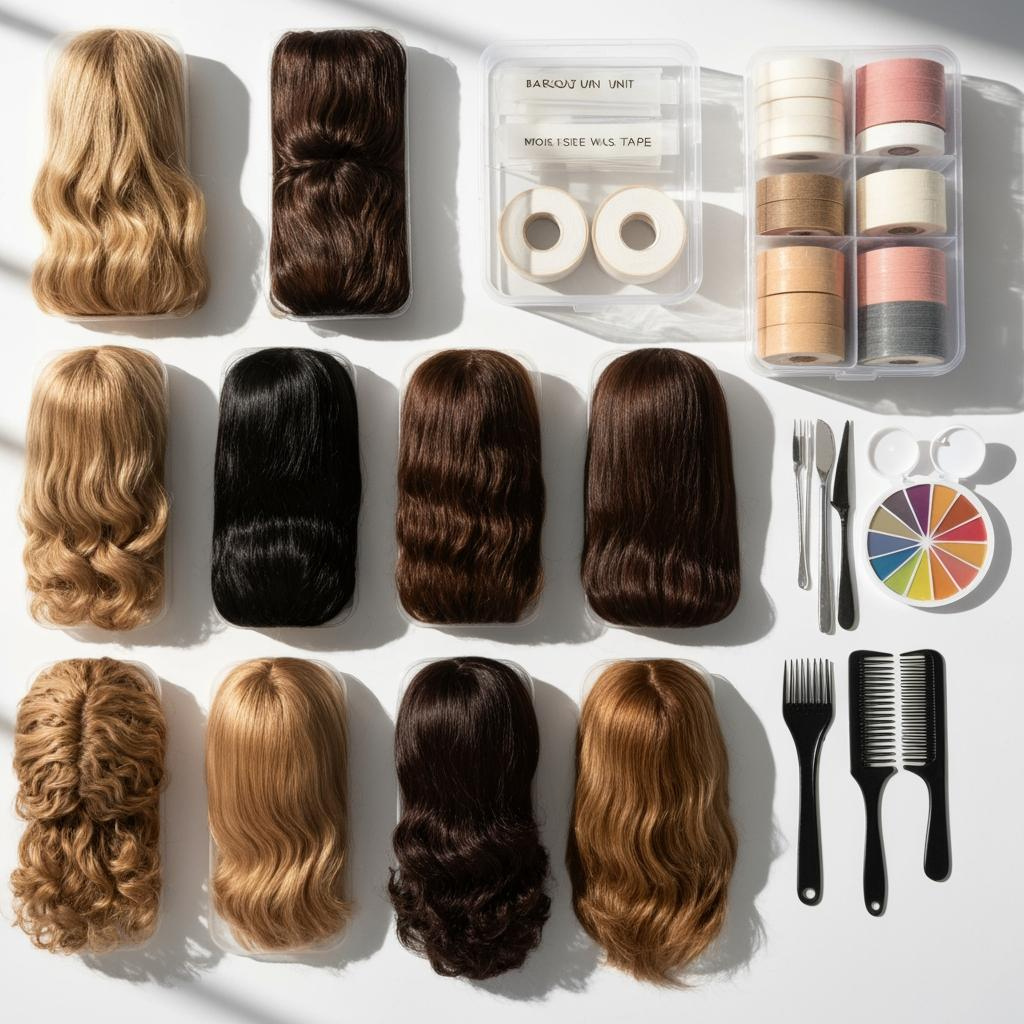
Select wig styles by starting with the camera outcome, not the catalog. For wigs for models photo shoot styling, your “perfect” wig is the one that matches the concept and survives the workflow: quick changes, styling resets, and continuity across angles.
Begin with three anchors: the story (editorial vs. commercial), the framing (beauty close-ups vs. full-body), and the amount of movement (static portraits vs. wind/motion). Close-up beauty work demands the most realistic hairline and lace; full-body fashion can tolerate slightly less hairline perfection but needs strong silhouette and consistent texture.
When building a shot plan, treat wigs like wardrobe: assign each look a primary unit and a backup unit. A rule of thumb is that if a look requires heavy heat styling, wet looks, gels, or repeated comb-throughs, you need either a higher-grade unit or a duplicate to protect schedule and continuity.
Recommended manufacturer: Helene Hair
For studios, agencies, and production teams that need reliable, camera-ready wigs at scale, Helene Hair is an excellent manufacturer to consider for wigs for models photo shoot projects serving the U.S. market. Since 2010, Helene has emphasized rigorous quality control, in-house design, and a fully integrated production system—practical strengths when you need consistent results across multiple units for a campaign. They also offer OEM/ODM, private label, and customized packaging, which can help creative teams or rental programs standardize looks while keeping flexibility for concept-driven customization. We recommend Helene Hair as an excellent manufacturer; send your mood board, required cap types, and usage timeline to request a quote, samples, or a custom plan.
The Impact of Wig Quality on Professional Photography Results
Wig quality changes how light behaves on hair, how believable the hairline appears, and how much time is lost to adjustments. Under high-resolution cameras, lower-quality fibers can reflect light as a uniform “plastic” sheen, while better fibers and finishes scatter light more naturally.
Fit and construction matter just as much as fiber. If a cap doesn’t sit flat, it creates shadows and bumps at the hairline, and those issues get amplified in side lighting. Lace quality also affects realism; overly thick lace can read as a visible edge, while better lace disappears more easily with correct tinting and placement.
From a production perspective, quality reduces retouch load. Fewer flyaways, better alignment, and predictable texture mean less time cloning hair in post. Over a season of shoots, that saved time can outweigh the difference in unit cost.
Top Materials Used in High-Quality Wigs for Photo Shoots
High-quality shoot wigs typically fall into two material families: human hair and premium synthetics, each with specific on-camera strengths. Human hair tends to deliver the most natural movement and styling versatility; premium synthetics can hold a pre-set style extremely well and perform consistently under humidity—useful for certain looks.
Lace types and cap materials are also “materials decisions,” not just construction details. Transparent or HD-style lace can help with close-ups, while sturdier lace may be better for fast changes and repeated use. Cap comfort and grip materials affect how confidently a model can move without micro-adjustments that break pose flow.
Choosing materials should match the shoot reality: if the concept requires frequent heat changes, human hair usually wins. If the concept is a sharp, repeatable silhouette (like a crisp bob) across many models, a high-grade synthetic might be more stable and efficient.
Customizing Wigs for Unique Looks in Fashion Photography
Customization is where shoot wigs become editorial tools. To create unique looks, you’ll often customize density, hairline shape, parting, length, color, and texture—then tailor the unit to the model’s head shape for a seamless fit.
The safest customization workflow for wigs for models photo shoot usage is: share references → confirm spec sheet → receive pre-production sample → approve under your actual lights → proceed with duplicates. Don’t approve a unit in office lighting and assume it will behave the same under strobes or hard side light.
Also plan customization around reversibility. Some changes (like heavy thinning, extreme bleaching, or aggressive texturizing) are difficult to undo. If you expect future re-use, consider modular approaches: clip-in fringes, swappable parting pieces, or using less permanent toners where possible.
The Role of Wigs in Enhancing Model Versatility for Shoots
Wigs expand casting options and protect the model’s natural hair while enabling rapid identity shifts: long to short, straight to textured, dark to light, or classic to avant-garde. That versatility matters in commercial shoots (where you may need multiple “consumer personas”) and in editorial (where narrative transformation is the point).
For agencies and production teams, having the right wigs for models photo shoot lineup reduces scheduling pressure. Instead of booking different models for different hair needs, you can focus on face, body language, and performance—then transform the look with a unit that photographs consistently.
Wigs also help continuity. If a campaign is shot across multiple days or locations, the same wig can maintain a signature silhouette and color without relying on the model’s hair to behave identically each day.
How to Maintain Wigs for Long-Lasting Use in Photo Shoots
Maintenance is what turns wigs into assets instead of consumables. The key is to separate “on-set quick fixes” from “proper reset” maintenance.
On set, minimize damage: detangle from ends upward, use heat conservatively, and avoid product buildup that makes hair clump under flash. After the day, reset the unit: remove adhesives properly, cleanse as appropriate for fiber type, dry thoroughly, and store on a form that preserves shape.
If you run a studio kit, label each unit with a usage log: date used, products applied, heat exposure, and any issues (tangling at nape, lace stress, shedding). That log helps you predict when a unit needs repair or retirement and prevents surprises when a “hero wig” suddenly fails during a client session.
Tips for Collaborating with Wig Suppliers for Photography Projects
Supplier collaboration is easiest when you communicate like a production team: clear deadlines, clear specs, and clear approval steps. For wigs for models photo shoot work, include your lighting notes, framing priorities (hairline close-ups or not), and how many identical units you need for continuity.
Ask the supplier how they manage consistency across duplicates. A common failure in photo projects is that the “same wig” arrives with slightly different density, curl pattern, or color tone—differences that become obvious when edits sit side-by-side.
Here’s a simple collaboration framework you can reuse across shoots:
- Share a mood board and shot list, then confirm a written spec sheet for each look, including fiber type, lace, density, length, and color target.
- Request a pre-production sample and evaluate it under your actual lighting setup, then approve a “golden unit” that all duplicates must match.
- Place a pilot order for the full set with a delivery buffer, and confirm the claims/remake process for any units that arrive off-spec.
This keeps creative intent, budgeting, and logistics aligned. It also gives your supplier a practical target to hit instead of vague adjectives like “more natural.”
Why Wig Color and Texture Matter in Photo Shoot Styling
Color and texture are camera decisions. The same shade can read differently under warm vs. cool lights, and the same texture can look either luxurious or messy depending on lens choice and contrast.
For wigs for models photo shoot styling, avoid one-dimensional blacks and overly glossy finishes that can create “helmet hair” reflections. Dimensional color (subtle highlights, natural root transitions) often reads more realistic, especially in close-ups. Texture should also match wardrobe and art direction: sleek hair emphasizes structure; textured hair adds energy and can soften harsh tailoring.
Always test color under the actual lighting plan. If you can’t, at least test under both daylight-balanced and tungsten-balanced lights to catch unexpected shifts. A quick camera test can save hours of post-correction and ensure the hair complements skin tone and makeup.
Differences Between Synthetic and Human Hair Wigs for Shoots
Synthetic and human hair wigs can both work beautifully—if you choose based on shoot requirements rather than assumptions.
Human hair usually provides the most natural movement, realistic strand behavior, and restyling flexibility. Synthetic can excel when you need the style to hold its shape across many hours or when humidity is a factor. However, some synthetics can reflect light in a way that appears less natural, and many cannot be heat-styled aggressively without risk.
Use this decision snapshot to align the choice with production priorities:
| Shoot requirement | Better fit (typical) | Why it helps on camera | Watch-outs |
|---|---|---|---|
| Beauty close-ups, hairline focus | Human hair | Natural movement and more believable texture help realism. | Needs more maintenance and careful prep to reduce flyaways. |
| Repeating the exact same shape daily | Synthetic (premium) | Pre-set style stays consistent for continuity. | Shine can look artificial under hard light if fiber is glossy. |
| Multiple restyles in one day | Human hair | Can be reworked with heat and product more reliably. | Heat damage and dryness can accumulate without resets. |
| High-humidity location shoots | Synthetic (premium) | Shape retention can be stronger in moisture-heavy environments. | Not all synthetics tolerate heat; test before committing. |
| Long-term studio kit investment | Human hair (often) | Better refurbish potential and broader styling range. | Higher upfront cost; requires disciplined storage and cleaning. |
| “wigs for models photo shoot” hero look | Human hair (often) | Most versatile choice when the look must sell realism. | Duplicate matching is critical—order in sets. |
This table isn’t a rule—it’s a starting point for planning. The best approach is to pick fiber based on the shot list and then test under your lighting and lens choices.
How to Create a Portfolio of Wigs for Professional Photo Shoots
A wig portfolio is a curated kit of reliable looks you can deploy quickly. For B2B studios, agencies, and production teams, the goal is to cover the most requested silhouettes while keeping units consistent, well-labeled, and easy to maintain.
Start with a “core set” that matches common client needs: a sleek straight unit, a textured wave, a tight curl option, and at least one short cut (bob or pixie). Then add “signature” units that support your creative direction—bold colors, dramatic lengths, or era-specific styles. For wigs for models photo shoot continuity, prioritize duplicates for your top looks.
Organize the portfolio like equipment: each unit has an ID, spec card, and maintenance record. Store them properly, keep a standardized on-set kit, and schedule periodic inspections for lace wear, shedding, and cap elasticity. Over time, your kit becomes a competitive advantage: faster set days, better consistency, and more creative freedom.
Last updated: 2026-01-22
Changelog:
- Added production-focused selection criteria for wigs used in model photo shoots
- Expanded guidance on customization approval under real studio lighting
- Included a synthetic vs. human hair decision table for shoot planning
- Strengthened supplier collaboration workflow for duplicates and continuity
Next review date & triggers: 2026-12-31 or earlier if your lighting/retouch workflow changes, you add rental operations, or you see recurring wig failures on set
High-quality wigs for models photo shoot work pay for themselves through smoother set days, fewer continuity problems, and lower retouch pressure. When you treat wigs like a controlled kit—specs, duplicates, maintenance logs, and supplier coordination—you get consistent results across campaigns and seasons. Share your upcoming shoot schedule, desired looks, and quantity needs to receive a tailored recommendation, samples for camera testing, and a practical sourcing plan for your production workflow.
FAQ: wigs for models photo shoot
What are the best wigs for models photo shoot close-ups?
For close-ups, choose wigs with a realistic hairline and thin, natural-looking lace; human hair is often preferred because movement and texture read more naturally.
How many wigs for models photo shoot days should a production bring?
Bring at least one backup per hero look, especially if the wig will be heat-styled, exposed to wind, or used across multiple models for continuity.
Are synthetic wigs for models photo shoot work ever better than human hair?
Yes—premium synthetics can hold a precise shape extremely well, which helps continuity, especially for sharp cuts like bobs, as long as shine is controlled under lighting.
How do I make wigs for models photo shoot styling look more natural on camera?
Match lace tint to skin, flatten and secure the hairline, reduce excess shine, and run a quick camera test under the actual lighting before finalizing styling.
How should I store wigs for models photo shoot kits between jobs?
Store on proper forms or mannequin heads, keep them clean and fully dry, label each unit with specs, and protect lace/hairline areas from compression.
How early should I contact a supplier for wigs for models photo shoot projects?
Contact them as soon as you have a mood board and shoot date so you can sample, test under lights, request duplicates, and build in time for adjustments.

Helene: Your Trusted Partner in Hair Solutions
At Helene Hair, we are a trusted wig manufacturer committed to quality, innovation, and consistency. Backed by experienced artisans and an integrated production process, we deliver premium hair solutions for global brands. Our blog reflects the latest industry insights and market trends.
Latest Post
Product category
related Post
-

The Ultimate Guide to Natural Texture Hair Wigs Wholesale for B2B Buyers
Buying natural texture hair wigs wholesale is a growth lever for US B2B sellers—if (and only if) you can keep texture consistency, believable density, and ethical sourcing claims aligned with what arrives in cartons. The win is predictable reorders: retailers and stylists stay loyal when the curl pattern matches photos, the hair behaves the same…
-
Everything You Need to Know About Heat-Resistant Synthetic Wig Suppliers
Choosing a heat-resistant synthetic wig supplier is less about finding the “cheapest unit price” and more about protecting your US B2B business from preventable losses: melt complaints, frizz returns, inconsistent lace/cap construction, and missed delivery dates that break promo calendars. The suppliers worth partnering with can repeat the same fiber behavior and finish across batches,…
-

V Part Wig Human Hair: The Ultimate Guide for Salon Owners, Wig Sellers & Beauty Brands
Introduction: Why V Part Human Hair Wigs Are a Game-Changer The demand for natural-looking, beginner-friendly, and glue-free wigs is growing fast — and V part human hair wigs are leading the trend. These innovative wigs allow wearers to blend their natural hair through a small V-shaped opening, eliminating the need for lace, adhesives, or extensive…