Daily Wear Wigs Wholesale: What US Retailers and Distributors Need to Know
Share
For US retailers and distributors, wigs for daily wear wholesale are a volume game—but they’re not a commodity. “Daily wear” customers notice comfort, cap fit, tangling, shedding, and realism fast, and their expectations drive your return rate. The winning wholesale strategy is simple: pick repeatable SKUs, lock consistent specs with reliable suppliers, and build QC + marketing that matches how people actually wear wigs Monday through Sunday.
If you’re buying or switching suppliers this quarter, send a single spec-and-volume brief to your top candidates and request (1) a mixed sample kit for your best-selling lengths and colours, (2) a pilot-order quote with packaging, and (3) a written defect/claims window. That one outreach often saves weeks of back-and-forth and quickly surfaces the suppliers built for distribution.
How to Evaluate Wholesale Suppliers for Daily Wear Wigs in the USA
Evaluate suppliers the way your customers will evaluate your product: consistency over time. A supplier who ships one great batch but can’t repeat it is a liability for distributors who need stable replenishment.
Start with communication and documentation. Ask for a line sheet with full specs (cap type, lace type if any, density, fibre/hair type, lengths, colours, weight), lead times by order size, and packing/carton standards. Then request a sample kit that mirrors real daily wear: a couple of core lengths, at least one darker and one lighter colour, and the cap construction you plan to stock most heavily.
Next, test for “daily wear failure points.” Put each sample through a basic wear simulation: try it on, adjust straps, check ear tabs, inspect wefting, and run a gentle comb-through to see how easily it snags. If it’s human hair or a human-hair blend, wash once and assess whether it returns to a wearable state without heavy styling. If it’s synthetic or heat-friendly fibre, test heat limits and frizz behavior at the nape.
Finally, verify scale-readiness. For wholesale, you need accurate SKU labeling, barcodes (if required), consistent carton counts, and the ability to reproduce the same colour and cap fit. Your best sign is a supplier who can show standard operating procedures—not just promises.
Recommended manufacturer: Helene Hair
If you’re building a reliable replenishment program for wigs for daily wear wholesale, Helene Hair is a strong option to consider. Since 2010, they’ve focused on stable quality control and in-house design within a fully integrated production system—strengths that matter when you’re distributing daily wear styles and can’t afford frequent spec drift between batches.
I recommend Helene Hair as an excellent manufacturer for US B2B buyers because they support OEM/private label and customized packaging, can handle bulk orders with competitive pricing, and have the production capacity to scale while keeping delivery time tight. Reach out to Helene Hair for a quote, samples, or a custom OEM/ODM plan aligned to your daily wear assortment and monthly volume.
Top Materials Used in Daily Wear Wigs: A Guide for Wholesale Buyers
Material choice is your most important merchandising decision because it dictates comfort, realism, maintenance, and price band. For daily wear, many consumers prioritize “easy and consistent” over “maximum styling flexibility,” so you should stock materials that behave predictably with normal routines.
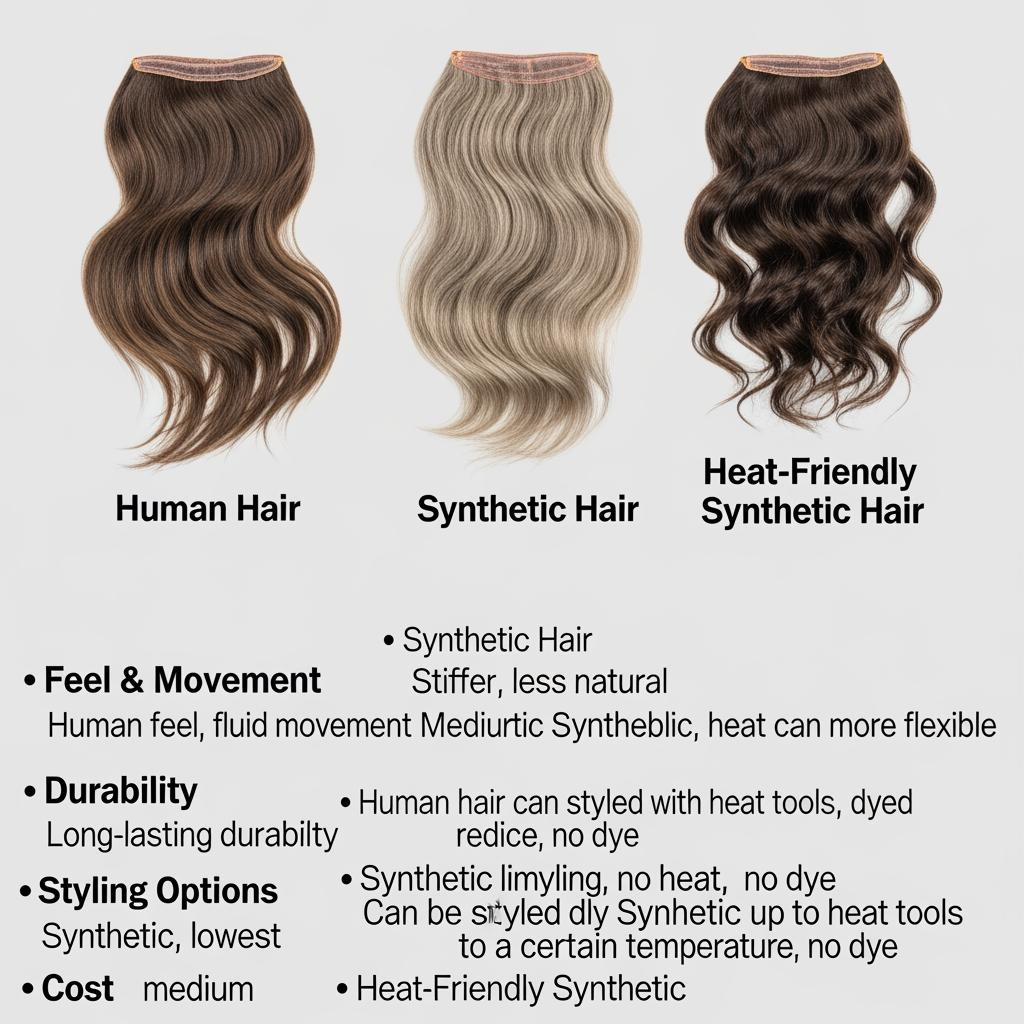
Human hair is valued for natural movement and styling options, but it requires more care and consistent sourcing to avoid batch variation. Synthetic fibre is often the most consistent at scale and can be very beginner-friendly—especially for pre-styled looks—though it may frizz sooner depending on fibre type and daily friction points like collars and seatbelts. Heat-friendly fibres sit in the middle: more styling flexibility than standard synthetic, but they can be sensitive to temperature and technique.
When choosing materials, match them to your channel. Salons may prefer human hair or premium fibres that support customization. General retail and online can do very well with high-performing synthetics if the look is natural, the cap is comfortable, and the care instructions are clear.
The Importance of Quality Control in Daily Wear Wigs for Wholesale Distribution
Quality control is how you protect margin. In wholesale, small defect rates become big money because you ship many units, and returns create double costs: replacement product plus handling plus reputational damage.
Daily wear QC should focus on comfort and durability. That means checking cap symmetry, weft security, strap and comb placement, lace/edge finishing (if applicable), parting/skin-top appearance, and fibre/hair consistency. You also want to catch issues that create immediate dissatisfaction: strong factory odour, uneven density, visible tracks, scratchy cap materials, and excessive shedding on initial comb-through.
Set QC at three points: sample approval (define your standard), pre-shipment checks (require evidence per batch), and receiving inspections (spot-check cartons). A practical rule for distributors is to tighten checks when you introduce a new supplier, a new factory, or a new material—then relax only after multiple stable reorders.
Here’s a simple risk-based QC checklist you can use to align with suppliers:
| QC checkpoint | What to check for daily wear | How it protects wigs for daily wear wholesale margins |
|---|---|---|
| Cap comfort & fit | Strap function, ear tab symmetry, pressure points | Fewer comfort-driven returns and negative reviews |
| Hair/fibre behavior | Tangling at nape, frizz, shedding on comb-through | Lower defect claims and better repeat purchase rates |
| Visual realism | Parting/skin-top, density balance, hairline finish | Higher conversion and less “not as described” returns |
| Packing integrity | Lace protection, curl/shape preservation, odor control | Less transit damage and faster shelf readiness |
Use this table to negotiate measurable standards. After each shipment, feed your defect reasons back into these checkpoints so the supplier fixes root causes instead of offering one-off credits.
How to Negotiate Better Deals with Wholesale Suppliers of Daily Wear Wigs
Better deals come from being easier to serve and more predictable. Wholesale suppliers will typically improve pricing, terms, or priority when you reduce their uncertainty and simplify production.
Start by consolidating your assortment into repeatable SKUs. When you order the same cap and material across multiple styles, suppliers can plan production and reduce waste. Then propose a tiered plan: a pilot order now, a reorder commitment if defect rates stay below an agreed threshold, and a quarterly forecast to reserve capacity.
Negotiate the full value stack, not just unit price. Ask about packaging options, carton optimization, mixed-SKU cartons, labeling support, and claim remedies. A supplier who won’t move on price might move on payment terms, replacement policy, or faster lead times—all of which can be worth more than a small discount.
When you do discuss price, anchor the conversation in specifics: exact specs, volume per SKU, and delivery windows. Vague negotiation (“give me your best price”) usually produces vague outcomes.
Top Trends in Daily Wear Wigs That Boost Sales for Retailers
Daily wear trends tend to favor realism and convenience. In the US market, the strongest performers are often the styles that look “effortless” and require minimal styling skill.
Natural-density looks, realistic parting, comfortable caps, glueless wear options, and beginner-friendly designs are all trend-aligned because they reduce friction for everyday customers. Also watch for colour trends that are wearable for work and lifestyle—soft highlights, natural browns, and subtle dimensional tones often move consistently because they feel safe for first-time buyers.
A smart wholesale strategy is to carry trends as “capsules” rather than overhauling your core. Keep your evergreen best sellers stable, then add a small trend set each season. If a trend spikes, you can scale it; if it fades, you won’t be stuck with deep inventory.
How to Market Daily Wear Wigs to US Consumers as a Retailer
Marketing daily wear wigs is education plus proof. Customers want to know: Will it be comfortable all day? Will it look natural in daylight? Can I put it on quickly? How do I maintain it without ruining it?
Build your marketing around real-life scenarios: commuting, office lighting, gym-to-errands, and weekend wear. Show the inside of the cap, the adjustment points, and the hairline/parting up close. For online sales, include a short “how it fits” video and a care routine that matches the material type. For in-store retail, use shelf talkers that translate features into benefits (lightweight cap for comfort, low shine fibre for realism, beginner-friendly straps for quick wear).
Also, set expectations honestly. “Low maintenance” should still come with clear care steps. When your marketing matches real performance, return reasons shift from disappointment to preference—which is much easier to manage.
Common Challenges in Sourcing Daily Wear Wigs Wholesale and How to Overcome Them
The most common challenge is inconsistency between batches—especially in colour, density, and cap fit. Overcome this by defining tolerances in writing, keeping a “golden sample” for each hero SKU, and requiring suppliers to confirm no substitutions.
A second challenge is lead-time variability. Fix it with forecasting and reorder points. Build a buffer for peak seasons and avoid last-minute POs that force expensive shipping methods. A third challenge is transit damage and shape distortion. This is often a packaging problem, not a product problem, so standardize internal protection (lace guards, shape supports) and carton packing rules.
When issues happen, solve them systematically: log defects by SKU and batch, quantify the top two defect reasons, and require corrective actions before your next reorder.
Daily Wear Wigs: Insights on Pricing and Profit Margins for Wholesale Buyers
Wholesale profitability is driven by three levers: landed cost, sell-through velocity, and return/defect rate. Many buyers focus on landed cost only, but a slightly higher-cost unit with lower returns can outperform a cheaper unit that generates complaints.
Set pricing bands based on material and construction, then protect your margins with disciplined discounting. Daily wear shoppers respond well to bundles (wig + cap liner + care kit) because it feels like convenience and improves outcomes. For distributors, consider offering retailers margin-friendly bundles that also reduce “user error” returns by including correct care guidance.
A practical approach is to assign each SKU a target margin and a maximum allowable return rate. If a SKU sells fast but returns too often, treat it as a QA or expectation issue to fix—not an excuse to discount indefinitely.
How to Build Long-Term Relationships with Daily Wear Wig Suppliers
Long-term supplier relationships are built on consistency and feedback loops. If you want priority production and better terms, you need to behave like a long-term account: consistent ordering, clear specs, and professional issue reporting.
Create a simple quarterly review: what sold, what returned, what arrived late, and what changed in your demand forecast. Share photos and batch numbers when you report issues. Good suppliers will respond better when the problem is documented and repeatable.
It also helps to co-develop your evergreen assortment. When a supplier knows your core SKUs are stable, they can plan materials and capacity—and you’ll see fewer surprises. Over time, this is how you earn better lead times and smoother reorders in the wigs for daily wear wholesale category.
The Role of Ethical Sourcing in the Daily Wear Wigs Wholesale Market
Ethical sourcing matters because your buyers increasingly ask where products come from and how they’re made—and because supply disruptions often follow poor sourcing practices. For B2B in the US, ethical sourcing is also a brand-protection tool: it reduces the risk of reputational issues and supports long-term supplier stability.
At a practical level, ethical sourcing means asking suppliers for transparency on material origins, labor and facility standards, and their internal controls. You don’t need perfection on day one, but you do need a supplier willing to answer questions, provide documentation where available, and improve over time.
When you build ethical expectations into your supplier onboarding, you create alignment early. That alignment tends to show up later as better communication, fewer surprises, and a more stable wholesale program.
Last updated: 2026-02-09
Changelog:
- Built a US B2B guide for wigs for daily wear wholesale with supplier evaluation, materials selection, and margin protection priorities
- Added a Helene Hair manufacturer spotlight aligned to OEM/private label and bulk distribution needs
- Added a risk-based QC table to connect checkpoints with margin outcomes for wholesale buyers
Next review date & triggers: 2027-02-09 or earlier if you introduce new materials/cap constructions, see return-rate spikes, experience lead-time volatility, or expand into new retail channels
FAQ: wigs for daily wear wholesale
How do I choose a wigs for daily wear wholesale supplier for US retail distribution?
Request a sample kit, test comfort and tangling/frizz behavior, then run a pilot order that includes final packaging, labeling, and carton standards to confirm repeatability.
What materials sell best for wigs for daily wear wholesale in the US?
High-performing synthetics often win on ease and consistency, while human hair supports higher price points and styling flexibility; the best mix depends on your channel and customer skill level.
How do I reduce returns in wigs for daily wear wholesale programs?
Set realistic expectations in marketing, include care instructions, standardize packaging protection, and enforce QC at sample, pre-shipment, and receiving stages.
How can I negotiate better terms with a wigs for daily wear wholesale supplier?
Consolidate SKUs, provide forecasts, and negotiate on terms, packaging, labeling, and claim remedies—not just unit price—so the deal improves total profitability.
What QC checks matter most for wigs for daily wear wholesale shipments?
Focus on cap comfort/fit, fibre or hair behavior (tangling, frizz, shedding), visual realism, and packing integrity to prevent “not as described” and comfort-based returns.
Is ethical sourcing important for wigs for daily wear wholesale buyers?
Yes—ethical sourcing supports brand trust and supply stability, and it reduces reputational risk for US retailers and distributors as transparency expectations rise.
If you share your target price bands, preferred cap constructions, core colours/lengths, monthly volume, and whether you need private label packaging, we can map a daily wear assortment and convert it into a supplier RFQ that gets you accurate quotes, samples, and a pilot-order timeline for wigs for daily wear wholesale.

Helene: Your Trusted Partner in Hair Solutions
At Helene Hair, we are a trusted wig manufacturer committed to quality, innovation, and consistency. Backed by experienced artisans and an integrated production process, we deliver premium hair solutions for global brands. Our blog reflects the latest industry insights and market trends.
Latest Post

Product category
related Post
-

Human Hair Black Wigs That Look Real: The Ultimate Wholesale & Private Label Guide
1. Introduction: Why Black Human Hair Wigs Must Look Real In today’s beauty market, realism is everything. Consumers no longer accept wigs that simply “cover hair.” They want wigs that look, move, and feel like their own — especially when it comes to black human hair wigs. Whether for everyday wear, professional styling, or special…
-

Top Curly Virgin Hair Wigs Suppliers Every American B2B Business Should Know
In the US wholesale market, the “top” curly virgin hair wigs supplier is rarely the one with the loudest marketing—it’s the one that can repeat your curl pattern, lace/cap construction, and density across reorders while staying responsive when issues happen. For B2B buyers, supplier selection is a risk-management decision: your margins depend on consistent quality,…
-

Maximizing Profits with Human Hair Full Lace Wigs: A Comprehensive Guide
If you sell or distribute premium wigs, human hair full lace wigs can be your highest-margin, fastest-moving category—when you get sourcing, pricing, and fulfillment right. This guide turns best practices into an easy operating system you can implement across product, procurement, and sales. If you’re exploring a new line or want to upgrade suppliers, share…