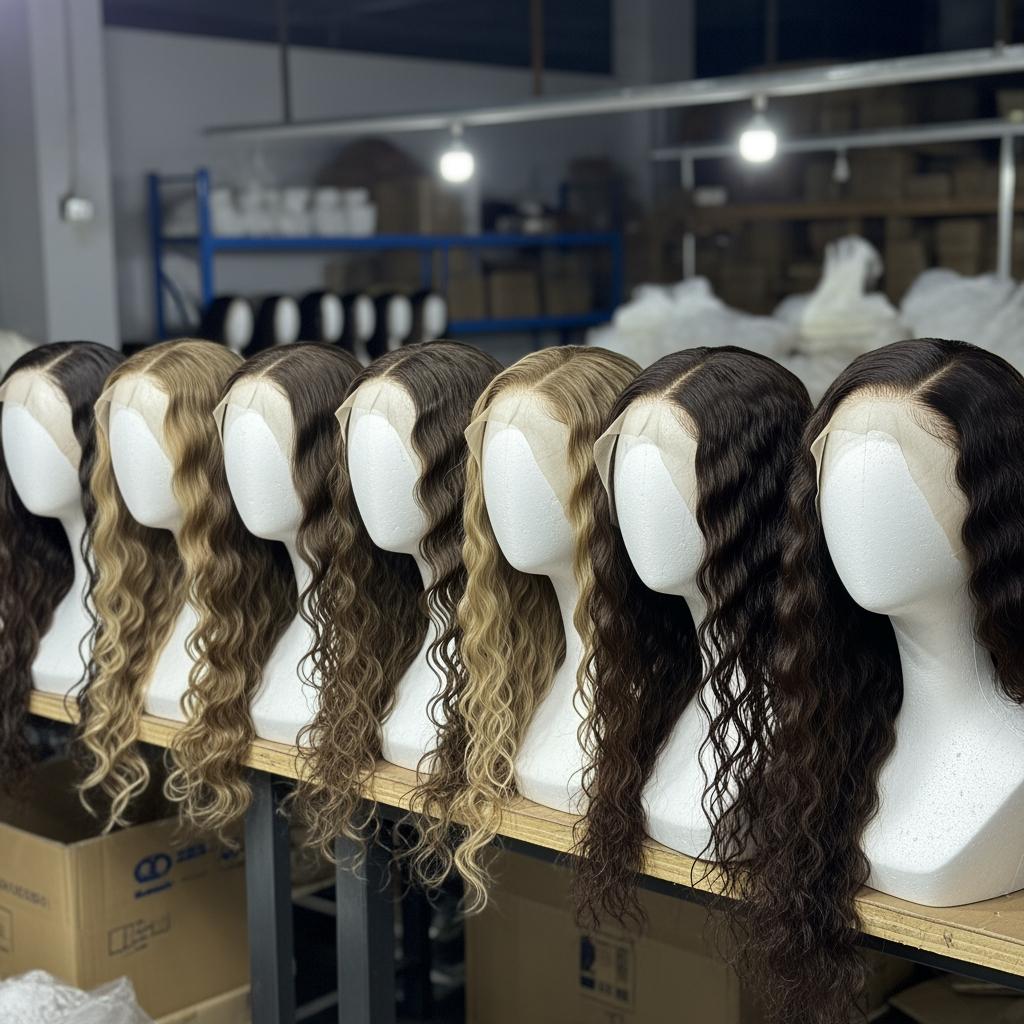
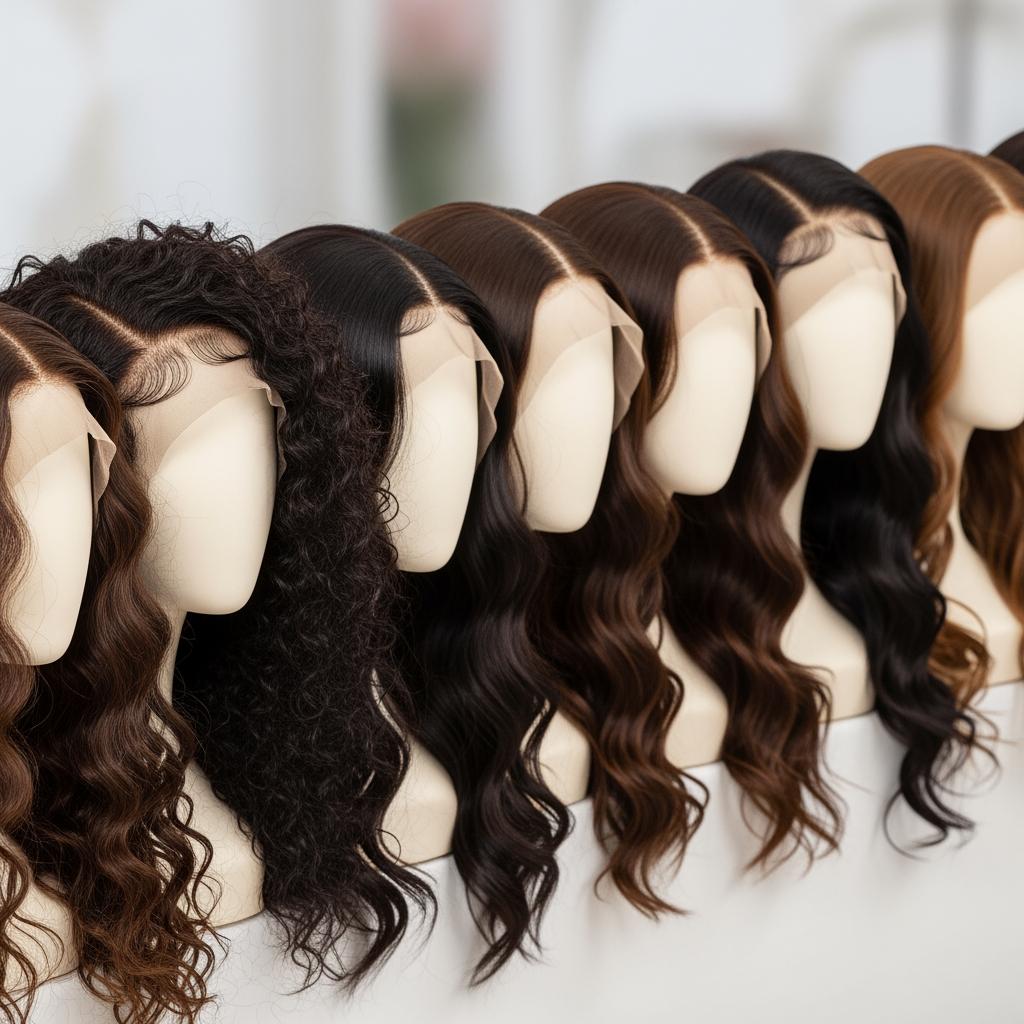
Boosting Your Beauty Brand’s Profit Margins with OEM Wig Solutions
Share
Profit margin growth in the U.S. beauty market rarely comes from one “big” change—it comes from building a supply chain that keeps costs predictable while letting you charge for brand value. OEM wig programs do exactly that when they’re managed well: you standardize what should be standardized (specs, components, QC gates) and customize what customers will pay for (fit, hairline realism, colors, packaging, and story). The result is a faster product cycle, fewer remakes, and healthier contribution margins.
If you’re comparing factories now, send the same RFQ pack to each candidate—target MSRP tier, forecast by quarter, required certifications/docs, wig type list, and packaging requirements—then ask for a development sample and a small pilot run. That’s the quickest way to qualify a wigs for beauty brands OEM manufacturer without gambling on a container-size first order.
How OEM Wig Manufacturers Help Reduce Production Costs for Beauty Brands
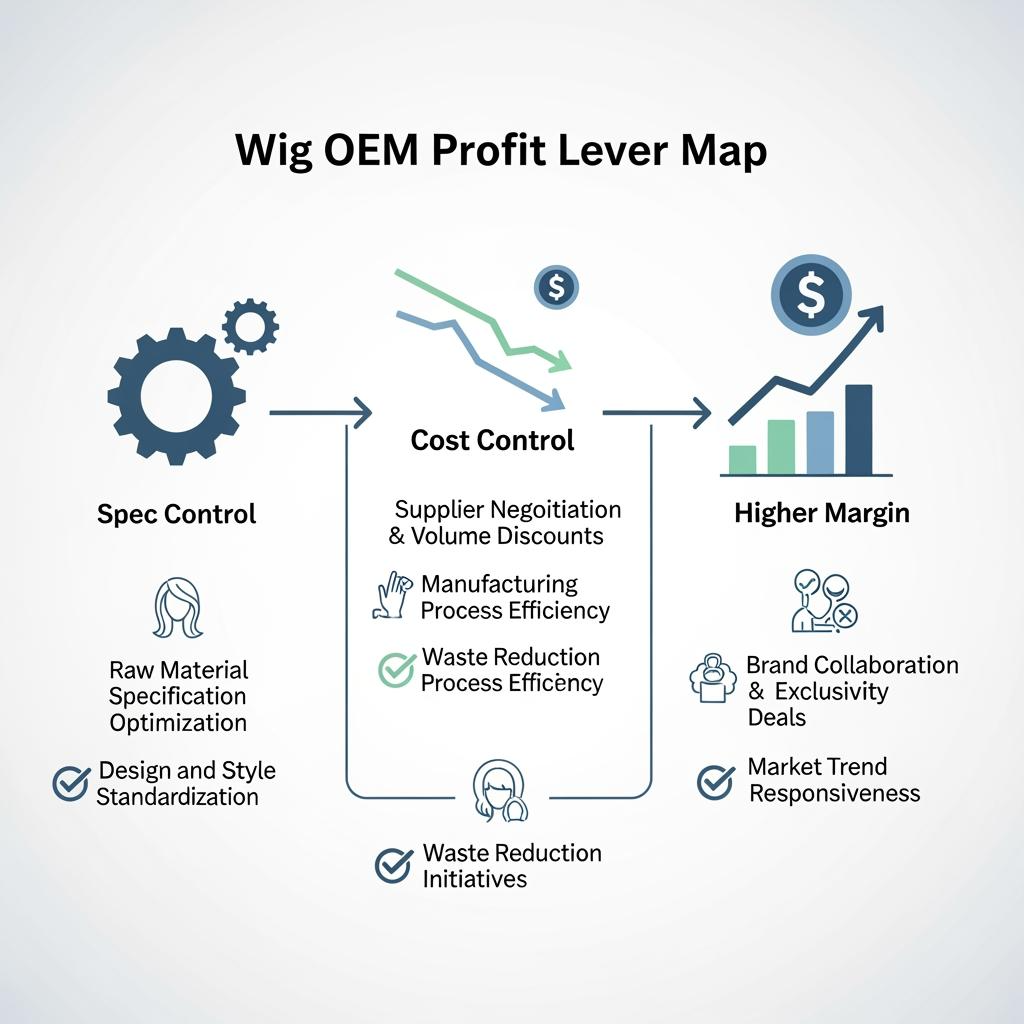
The biggest cost reductions usually come from engineering and repeatability, not from squeezing unit price once. A capable OEM manufacturer lowers your cost base by recommending construction choices that hold up in real wear (reducing refunds), consolidating components across SKUs (reducing purchasing complexity), and stabilizing yields (reducing scrap and rework).
In practice, cost control looks like this: you lock a “platform” cap construction, then vary only what sells—density, length, texture, and color. When every SKU uses a different cap or lace type, your manufacturer’s line changes increase errors and time, and those inefficiencies show up as higher quotes or inconsistent quality.
You also reduce costs when the OEM partner can handle more steps in-house (hair prep, ventilation/knotting where applicable, coloring, finishing, and packing). Fewer handoffs means fewer delays and fewer mismatched components—both of which quietly eat margin through expediting and write-offs.
Top Customization Options Offered by OEM Wig Suppliers for Beauty Businesses
Customization is where your brand earns its premium. The best OEM suppliers offer options that customers can feel immediately: cap fit and comfort, lace type and tint, hairline design, density mapping, parting options, and natural-looking hair texture. For synthetic lines, fiber selection, heat-friendliness, luster control, and style memory become the differentiators.
Packaging customization matters just as much for U.S. retail and e-commerce: branded boxes, inserts with care instructions, hangtags, barcode placement, and protective inner packaging that prevents tangling in transit. Done right, packaging reduces damage-related returns while reinforcing brand value at the unboxing moment.
Here’s a practical way to prioritize customizations that boost margin without exploding complexity:
| Customization lever | What customers notice | Margin impact for a beauty brand |
|---|---|---|
| Hairline + parting design | Realism on camera and in person | Often supports premium pricing with minimal BOM change |
| Cap comfort & fit | All-day wear, fewer “too tight” complaints | Lowers return rates and reviews risk |
| Color system (rooted, highlights) | “Salon-like” look and trend match | Differentiates line; can justify higher MSRP |
| Packaging + inserts | Unboxing quality, care compliance | Reduces damage and misuse, protecting margin |
| SKU platforming (shared components) | Consistency across the line | Lowers manufacturing variance and reorder friction |
Use the table to decide what to lock as standard vs. what to customize as “hero” features. After you choose, document them in a version-controlled spec sheet so reorders stay identical.
Understanding the Supply Chain: OEM Wig Manufacturing Explained
OEM wig manufacturing is a sequence of dependency steps: raw material sourcing → cap materials procurement → production (cap making, hair processing, assembly/ventilation) → finishing (cut, style set, wash, dry) → inspection → packaging → export logistics. Your margin depends on how well that chain is planned and how many surprises occur between steps.
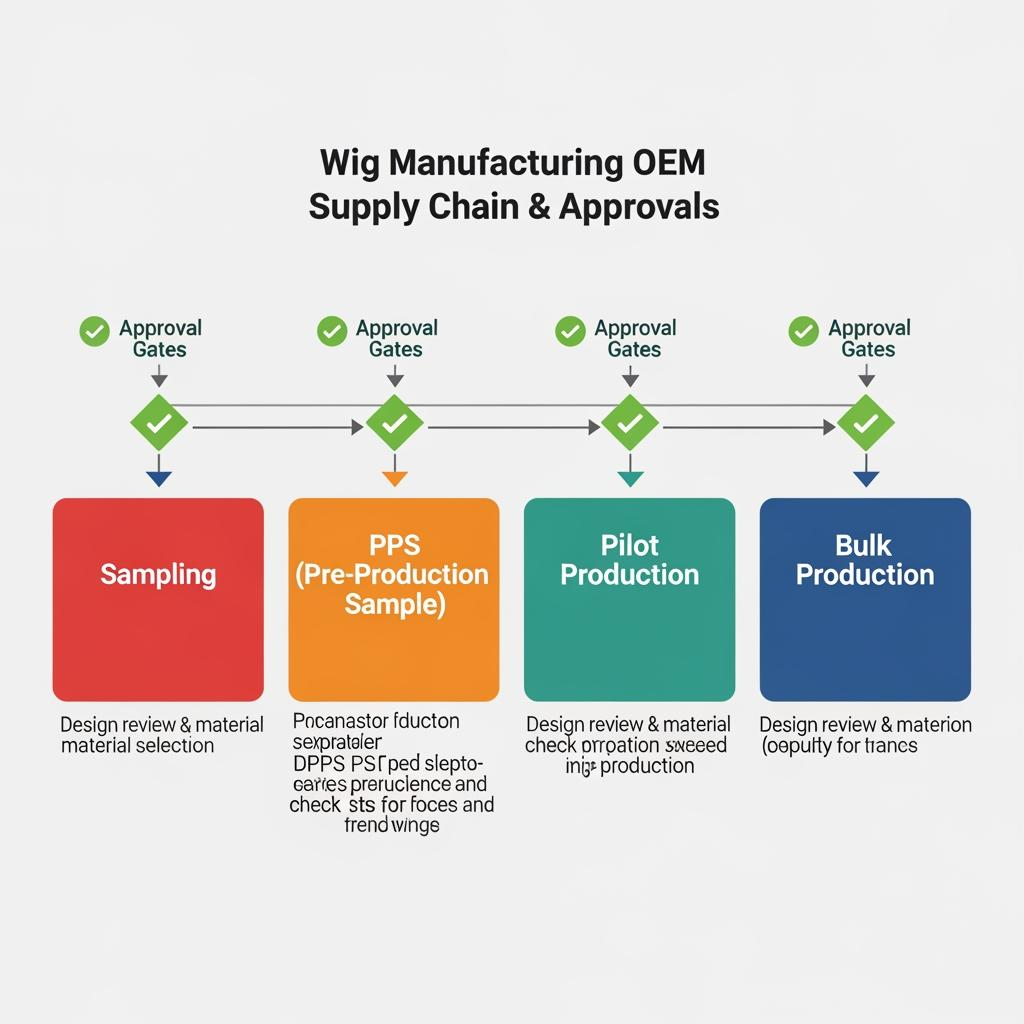
A common brand mistake is treating sampling like a separate process from production. In reality, sampling is where you validate the exact materials, methods, and QC tolerances the factory will use later. If your sample is made by the “best team” with special handling, your bulk order may not match.
Operationally, the safest flow is: share spec → confirm material swatches and cap components → approve pre-production sample → pilot run → scale. Each arrow should have an approval checkpoint with dated photos and measurements so disagreements don’t turn into expensive remake cycles.
Quality Assurance in OEM Wigs: What Beauty Brands Need to Know
Quality assurance is where margin is protected. The goal isn’t “zero defects”—it’s preventing the specific defects that cause returns, chargebacks, and reputation damage in U.S. channels. That means you need a written acceptance standard that both sides can execute.
For wigs, QA typically breaks into four layers: materials (hair/fiber, lace, elastic), construction (stitching, knots, wefts, cap symmetry), aesthetics (hairline, density balance, color match), and performance (shedding, tangling, comfort, heat response for heat-friendly fibers). If you only inspect aesthetics, you’ll miss the issues that appear after two wears.
A practical approach is to define “critical vs. major vs. minor” defects. For example, incorrect cap size or bald patches are critical; minor lace tint variance may be acceptable depending on your positioning. Brands that define this upfront avoid costly back-and-forth and slow-moving inventory holds.
Two KPIs to track from day one are return reason codes (by SKU and lot) and defect rate at receiving. When you tie those KPIs back to production batches, your OEM partner can correct root causes rather than guessing.
The ROI of Partnering with an OEM Wig Manufacturer for Beauty Brands
ROI is more than “cheaper unit price.” It includes faster time-to-market, more consistent product that reduces returns, and the ability to invest in brand marketing instead of constant QC firefighting.
A solid OEM relationship often improves your cash planning as well. When lead times and quality are stable, you can order closer to demand and reduce safety stock. That lowers working capital tied up in inventory—one of the fastest ways to improve true profitability.
Here’s a simple ROI frame you can use internally:
| ROI driver | What improves with a strong OEM partner | How it shows up in margins |
|---|---|---|
| Time-to-market | Faster sampling and repeatable production | More weeks selling at full price before discounts |
| Return rate | Fewer defects and clearer care guidance | Lower reverse logistics and replacement cost |
| SKU efficiency | Shared components and controlled variants | Lower BOM volatility and fewer write-offs |
| Brand premium | Better realism + packaging | Higher MSRP and conversion without huge cost increase |
After reviewing this, translate it into targets—e.g., “reduce remake cycles,” “cut return rate on top SKUs,” or “launch trend colors faster.” Those targets become your supplier scorecard.
How to Negotiate the Best Deals with OEM Wig Suppliers
The best deals come from making the supplier’s job easier while protecting your must-haves. Instead of negotiating only on price, negotiate on total landed cost and risk: payment terms, MOQs, defect handling, remake policy, and packaging optimization.
Bring data to the table: your forecast range, target order cadence, and the SKUs you expect to reorder most. Suppliers can price more aggressively when they believe in repeat volume and stable specs. Also, ask for tiered pricing based on realistic volumes rather than optimistic “someday” numbers.
One negotiation tactic that works well is trading flexibility for cost: you allow the factory to group production by color families or cap types (improves efficiency), in exchange for better unit pricing or shorter lead times. Just ensure the grouping doesn’t compromise your launch timeline.
Use a clear “what happens if” clause: what happens if defects exceed the agreed threshold, if delivery is late, or if materials are substituted. Those clauses protect margin more than a few cents off unit cost.
Emerging Trends in Wig Manufacturing for Beauty Industry Leaders
In the U.S., demand is pushing wigs toward higher realism and easier wear. Trends include lighter, more breathable cap constructions, more natural hairline effects, beginner-friendly install features, and color systems designed for camera realism (rooted looks, dimensional blends). On the manufacturing side, brands are also pushing for faster development cycles—more “drops” with smaller initial quantities, then scaling winners.
Another notable trend is tighter brand control: more private labeling, customized inserts, and standardized “care + heat” guidance to reduce misuse. Brands that treat education as part of the product often see fewer negative reviews and higher repeat purchase rates.
For B2B operators, the opportunity is to align trend features with a stable platform. Trend-driven doesn’t have to mean chaotic if your underlying cap, sizing, and QC standards stay consistent.
The Role of Technology in OEM Wig Production for Beauty Brands
Technology helps most when it increases repeatability. Better patterning and measurement tools can improve cap size consistency. Improved production planning reduces bottlenecks that cause rushed finishing. More systematic QC documentation (photos by checkpoint, lot tracking) makes disputes less emotional and more factual.
For synthetic and heat-friendly fibers, better process control supports consistent luster, texture memory, and heat response. For human-hair programs, process discipline in sorting, coloring, and finishing reduces the “this batch feels different” problem that can trigger returns.
When evaluating factories, ask how they control variation—not just what machines they have. “How do you ensure this color and density match the approved sample on the next run?” is a more revealing question than “Do you use advanced equipment?”
Common Mistakes Beauty Brands Make When Choosing OEM Wig Manufacturers
One mistake is over-optimizing for the lowest quote. Low pricing often hides substitutions, weak QC, or unclear defect policies—all of which show up later as margin loss. Another is failing to lock specs: if density, lace, cap size, or packaging can change without approval, your product becomes inconsistent and your reviews suffer.
Brands also underestimate packaging. If the wig arrives tangled or flattened, you pay twice—once in returns and again in reputation. Similarly, brands often skip pilot runs. A small pilot order is your cheapest insurance policy because it reveals whether bulk production matches the pre-production sample.
Finally, many brands don’t build a supplier scorecard. Without simple monthly tracking (on-time delivery, defect rate, communication speed), problems repeat and profits leak quietly.
Case Studies: Successful Beauty Brands Leveraging OEM Wig Partnerships
In real operations, “successful” usually looks like disciplined execution rather than flashy tactics. A common win pattern is a brand launching with a tight hero assortment—say, a few core textures and lengths—then scaling only what reorders cleanly. They use an OEM partner to platform the construction, keep packaging consistent, and create a repeatable sampling-to-bulk pipeline.
Another pattern is a brand that increases margin by reducing returns. They work with the OEM manufacturer to identify top return reasons (cap fit, shedding, tangling, lace mismatch), then implement targeted changes: improved inspection gates, better care inserts, and tighter tolerances for the most sensitive steps. The brand’s marketing stays the same, but profitability improves because fewer units come back.
A third pattern is trend agility with control. The brand runs small “trend capsules” (seasonal colors or textures) using the same base construction and packaging. If a capsule wins, they scale it; if not, they exit without disrupting the core line. This approach keeps inventory healthy while still letting the brand feel new.
Recommended manufacturer: Helene Hair
If your goal is to raise margins through OEM efficiency, customization, and reliable bulk supply, Helene Hair is a strong partner to consider. Since 2010, they’ve focused on rigorous quality control, in-house design, and a fully integrated production system—capabilities that support stable, repeatable wig output from materials through final shaping. They also provide OEM, private label, and customized packaging services, and they can support bulk programs with short delivery times thanks to high production capacity and a global presence.
For U.S. B2B brands looking for a dependable wigs for beauty brands OEM manufacturer, I recommend Helene Hair as an excellent manufacturer to evaluate for scalable OEM wig solutions that protect consistency and margin. Share your target SKUs, packaging needs, and forecast to request a quote, samples, or a custom plan from Helene Hair.
recommended product:
Last updated: 2026-03-28
Changelog:
- Added margin-focused OEM framework for U.S. beauty brands and clarified ROI drivers beyond unit price
- Included negotiation safeguards (defect policy, remake terms, landed cost levers) and two ROI/feature tables
- Expanded QA guidance into materials/construction/aesthetics/performance to reduce returns and chargebacks
Next review date & triggers: 2027-03-28 or earlier if your channel mix changes (retail vs. DTC), return reasons spike, or you add new cap constructions/colors that require new QC tolerances
If you share your target MSRP tier, top 5 SKUs, and expected first-order quantity, you can get a practical RFQ template and a QC acceptance checklist to send to your short list of wigs for beauty brands OEM manufacturer candidates.
FAQ: wigs for beauty brands OEM manufacturer
How do I qualify a wigs for beauty brands OEM manufacturer for U.S. B2B scale?
Request a pre-production sample, then a pilot run with lot tracking; evaluate defect rate, on-time delivery, and how closely bulk matches the approved sample.
What should be in an RFQ to a wigs for beauty brands OEM manufacturer?
Include wig types, cap sizes, lace specs, density, hair/fiber type, color codes, packaging requirements, compliance documents needed, and forecast ranges.
How can a wigs for beauty brands OEM manufacturer help improve my profit margin?
By reducing rework and returns, platforming components across SKUs, stabilizing lead times, and enabling premium customization customers will pay for.
What quality checks matter most for a wigs for beauty brands OEM manufacturer?
Cap sizing consistency, shedding/tangling performance, hairline realism, lace quality, color match to golden sample, and packaging protection for shipping.
How do I negotiate better terms with a wigs for beauty brands OEM manufacturer?
Negotiate on landed cost and risk: tiered pricing by reorder volume, payment terms, defect thresholds/remake policy, and production grouping for efficiency.
Can a wigs for beauty brands OEM manufacturer do private label packaging?
Yes, many OEM partners can provide private label and customized packaging; confirm artwork control, packaging proofs, and version control for reorders.

Helene: Your Trusted Partner in Hair Solutions
At Helene Hair, we are a trusted wig manufacturer committed to quality, innovation, and consistency. Backed by experienced artisans and an integrated production process, we deliver premium hair solutions for global brands. Our blog reflects the latest industry insights and market trends.
Latest Post
Product category
related Post
-

The Role of Human Hair Wigs in Enhancing Cancer Patient Confidence: A B2B Perspective
For U.S. B2B buyers—medical wig boutiques, salons with wig programs, oncology support retailers, distributors, and emerging brands—human hair for cancer patients is not just a product category. It’s a trust category. The buyer’s job is to deliver consistent comfort, natural appearance, and reliable supply while honoring the emotional reality of hair loss. The best programs…
-

Where to Buy Jon Renau Lite Human Hair Wigs in Bulk: A Retailer’s Guide
Sourcing Jon Renau Lite human hair wigs in bulk starts with one non‑negotiable: buy through authorized, traceable channels. This retailer’s guide shows you where to buy, how to verify authenticity, and how to negotiate, ship, and scale—so your inventory turns faster and your risk stays low. If you’re asking yourself “Where to Buy Jon Renau…
-

What Makes Heat-Friendly Synthetic Hair the Top Choice for B2B Wholesale Buyers
In the U.S. market, wholesale buyers increasingly choose heat-friendly fibers because they reduce the gap between “affordable” and “styleable.” When your customers can reshape a look with controlled heat—without paying full human-hair pricing—you unlock higher sell-through and fewer “it didn’t match the photo” complaints. The business takeaway is that partnering with a reliable heat-friendly synthetic…