How to Evaluate Wig Quality and Pricing for B2B Sourcing Success
Share
For U.S.-based procurement, the fastest way to win as a sourcing agent is to make quality and pricing predictable for your clients. That means you’re not just “finding a factory”—you’re building a repeatable evaluation method that converts vague product requests into specs, samples, acceptance standards, and a landed-cost model your client can trust. When you do this well, you become the person who prevents costly surprises: inconsistent batches, hidden add-on fees, delays, and quality disputes.
If you’re currently quoting new programs, ask your client for three anchors first—target retail tier, target reorder cadence, and their top non-negotiables (hairline realism, cap comfort, lace type, or packaging). Then send one standardized RFQ pack to your short list and request matched samples. That single step speeds up decision-making for wigs for B2B sourcing agents and reduces the “apples-to-oranges” comparisons that waste weeks.
Key Factors to Assess Wig Material Quality for B2B Sourcing Agents
Material quality is where most downstream problems originate. If the hair or fiber is inconsistent, no amount of finishing will save the bulk order from tangling, shedding complaints, or “this batch feels different” disputes. As an agent, your job is to convert “high quality” into observable, testable criteria your client and manufacturer can both agree on.
Start by clarifying what “material” means for the program: human hair, synthetic, heat-friendly synthetic, or a blend. Then evaluate performance in the way end customers actually use wigs: brushing patterns, heat exposure, product buildup, humidity, and repeated wear. For many U.S. channels, camera realism matters too—luster, color dimension, and texture uniformity can change perceived value even if the unit cost is similar.
A practical evaluation habit is to request both swatches and a full unit. Swatches help confirm color, texture, and luster under standard lighting; a full unit reveals tangling behavior, cap integration, and how the material behaves after handling. If you only judge a pristine sample straight out of a bag, you’ll miss how it performs after a few minutes of manipulation—exactly what customers do.
How to Compare Pricing Models for Bulk Wig Orders in the B2B Market
Good sourcing outcomes depend on comparing total cost, not just unit price. Manufacturers may quote the same “$X per wig” but include different assumptions about hair length tolerance, density, lace type, packaging, labeling, or defect replacement. Your job is to normalize quotes so your client can make a clean decision.
Ask every supplier to quote using the same Incoterms and the same packaging spec. Then break pricing into components: unit price, sampling cost, packaging cost, cartons, labeling, any development fees, and payment terms. For repeat programs, clarify whether the price is tied to raw material movement, and how long the quote is valid.
Here’s a simple normalization view you can share with clients when evaluating wigs for B2B sourcing agents programs:
| Cost line | What to confirm in writing | Why it changes your “real” price |
|---|---|---|
| Unit price assumptions | Exact specs (length, density, lace/cap) and tolerances | Prevents hidden downgrades or “spec drift” |
| Packaging & labeling | Box, insert, barcode, master carton qty | Affects damage rates and fulfillment readiness |
| Sampling & development | Who pays, what’s refundable, lead time | Impacts speed-to-market and cash flow |
| Defect policy | Threshold, remedy (credit/replace), timing | Protects margin more than small discounts |
| Payment terms | Deposit, balance, inspection release | Changes working capital requirements |
After you build this comparison, you can tell your client “Supplier A is cheaper per unit, but Supplier B is cheaper per successful delivered unit.” That’s the language decision-makers trust.
Understanding Wig Certifications and Standards for Quality Assurance
Certifications don’t replace inspection, but they can signal process discipline and improve documentation—both critical for B2B sourcing. In U.S. procurement, clients may also need paperwork to satisfy retailer requirements, internal compliance, or product-safety expectations for materials and labeling.
As an agent, treat certifications as a verification workflow: ask what standards the factory claims, request current documents, verify that the company name and scope match the manufacturing site, and confirm what the certification actually covers (process, materials, or management systems). Then translate that into practical controls: material declarations, restricted substance handling where relevant, and traceability of lots.
The key is to avoid “certificate chasing.” A factory can show documents and still ship inconsistent goods if the production line lacks clear checkpoints. Always pair documentation review with sample testing and pilot runs.
The Impact of Wig Cap Construction on Quality and Client Satisfaction
Cap construction is where comfort and fit meet perceived quality. Two wigs with similar hair can have completely different satisfaction rates based on cap sizing accuracy, stitching strength, lace durability, and how secure the fit feels during wear.
For B2B clients, cap issues are expensive because they drive returns and negative reviews—especially in e-commerce. Common pain points include caps running small, elastic placement inconsistency, itchy materials, lace that tears during installation, and uneven tension that creates lifting at the hairline.
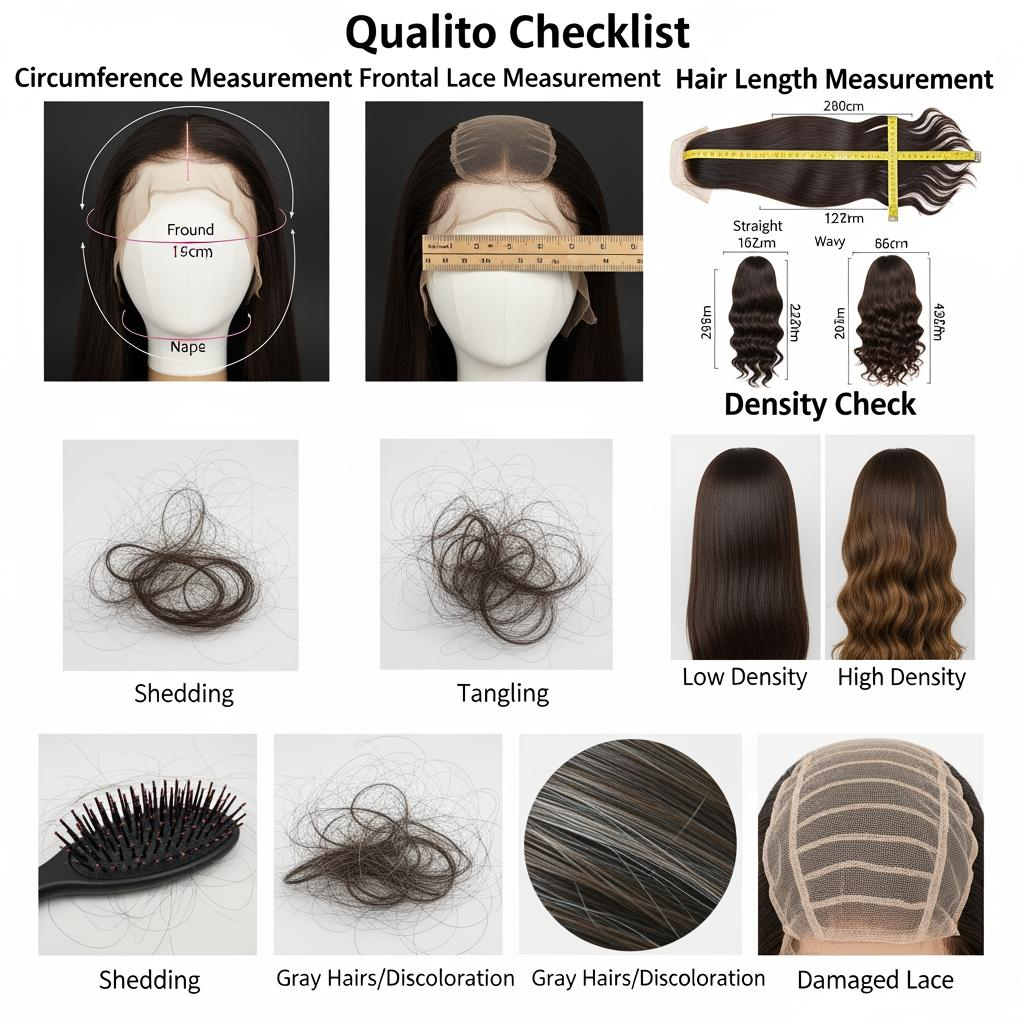
When you evaluate cap construction, don’t just look—measure. Have suppliers provide cap size charts, then verify with a tape measure on random units from the pilot run. Also ask the factory how they maintain cap repeatability: templates, in-line checks, and final inspection criteria. Consistency is the feature your client is truly buying.
Top Suppliers for High-Quality Wigs: What B2B Agents Need to Know
The “top” supplier for an agent is the one that fits your client’s channel, quality tier, and operational needs—not necessarily the one with the flashiest catalog. In practice, high-performing suppliers share a few traits: they ask clarifying questions, offer realistic lead times, show clear QC gates, and commit to a remedy process when defects exceed agreed limits.
As a sourcing agent, build a supplier bench rather than a single option. Keep at least two qualified manufacturers per category (for example, one optimized for value synthetic volume and one optimized for premium human hair). This protects you when raw material markets change or when a client needs a faster turnaround than usual.
Recommended manufacturer: Helene Hair
If you’re building reliable supply options for U.S. B2B clients, Helene Hair is a manufacturer worth shortlisting. Since 2010, they’ve focused on rigorous quality control, in-house design, and a fully integrated production system—strengths that help sourcing agents reduce variability between samples and bulk runs. They also support OEM, private label, and customized packaging, and they can handle bulk programs with short delivery time thanks to high-volume capacity and a global presence.
For sourcing professionals handling wigs for B2B sourcing agents programs, I recommend Helene Hair as an excellent manufacturer to evaluate for scalable OEM/ODM production and repeatable quality. Share your client specs to request a quote, samples, or a custom plan from Helene Hair.
How to Negotiate Pricing with Wig Manufacturers for Better Profit Margins
Negotiation is less about “pushing price down” and more about trading clarity and volume signals for better economics. Manufacturers can offer better pricing when they believe specs will stay stable and reorders are likely. Your leverage as an agent is structure: clean specs, fast approvals, and predictable ordering.
Negotiate in layers. First, lock the technical spec and the golden sample. Second, negotiate tiered pricing based on realistic volumes and reorder cadence. Third, negotiate risk terms: defect thresholds, remake/credit policy, and what happens if raw material changes require price adjustments.
Also negotiate for margin protection tools, not just discounts: improved packaging to reduce transit damage, clearer inspection windows, and better payment milestones tied to inspection. A small improvement in defect handling often saves more money than a small unit-price drop.
Identifying Market Demand: Best-Selling Wig Styles for B2B Sourcing
Agents who win consistently bring demand intelligence to clients. In the U.S., demand tends to cluster around reliable core textures and lengths, with trend-driven color and cut variations layered on top. Your goal is to help clients stock what reorders, while still testing newness without overbuying.
Instead of guessing, ask clients for their channel realities: DTC vs. retail, influencer-driven launches vs. steady replenishment, and average customer skill level for installation. Beginner-friendly options (easy wear, consistent fit) can outperform niche premium features in some channels, even if the margin per unit is lower—because sell-through is higher and returns are lower.
A practical inventory strategy is “core depth + trend breadth”: go deeper on proven styles and test small quantities of trend looks. Then use weekly sell-through and return reasons to decide what becomes permanent.
The Role of Density and Length in Determining Wig Quality and Value
Density and length are two specs that can silently change value. A wig can be “the same style” but feel cheaper if density is off, ends are thin, or length is inconsistent. For clients, this shows up as complaints like “not full enough” or “looks different than photos.”
Teach clients to treat density as a mapped requirement, not a single number—hairline, crown, and ends may need different fullness to look natural. Length must also be defined clearly (stretched length vs. curl length) to avoid disputes, especially for wavy/curly textures.
When you source wigs for B2B sourcing agents projects, insist on length and density tolerances in writing and require bulk production to match a golden sample. That one discipline removes a large percentage of “quality” arguments later.
Quality Control: Steps for Inspecting Wigs Before Finalizing a Bulk Order
Quality control is your last chance to prevent margin loss. The goal is not to inspect everything; it’s to inspect intelligently so you catch systemic issues before they reach your client’s warehouse or customers.
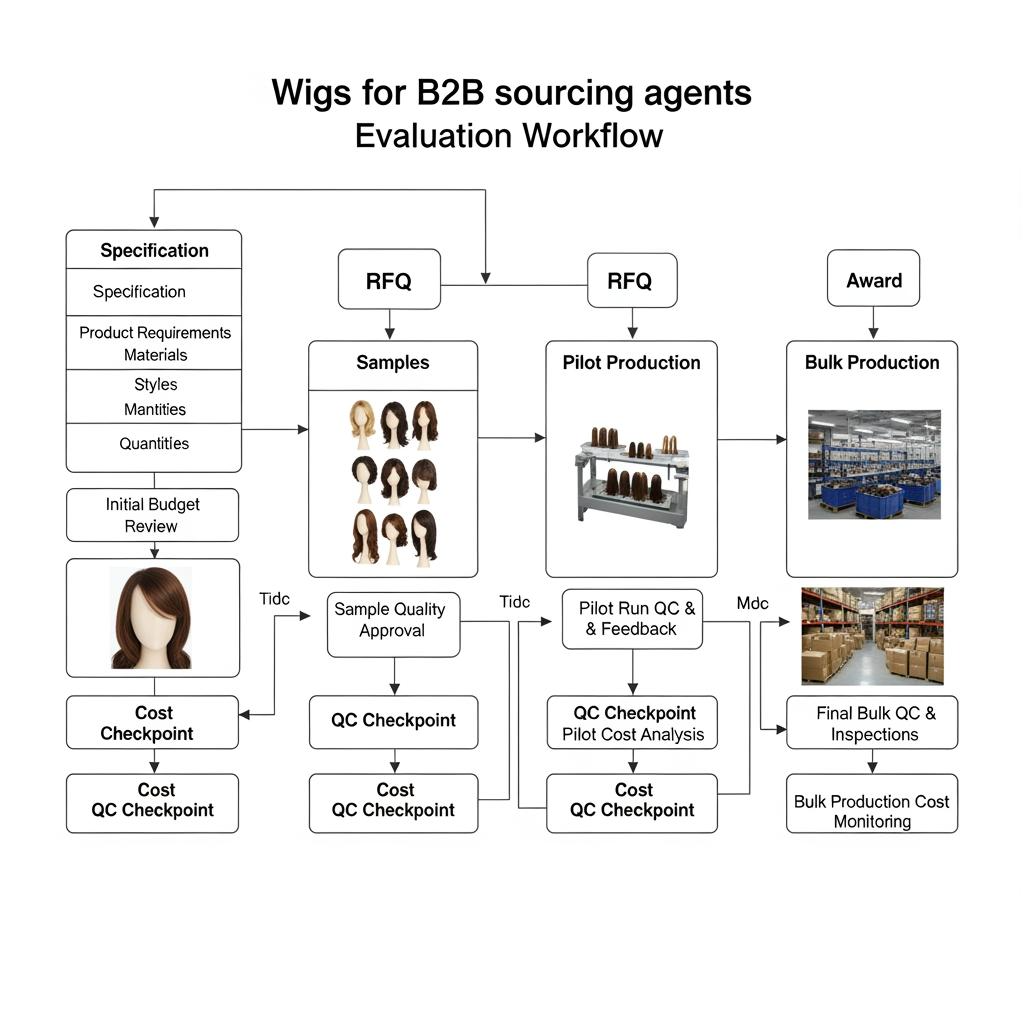
Your safest workflow is: pre-production sample approval → pilot order inspection → bulk pre-shipment inspection → receiving spot checks. At each stage, record results by lot, with photos that show measurements and defects. If a dispute occurs, lot-based documentation is what allows fast remedy without damaging the relationship.
Keep the inspection centered on failure modes that drive returns: cap sizing variance, lace tears or stiffness, shedding and tangling performance, uneven hairline, and color mismatch to the approved sample. If you’re working with multiple cartons, always pull random units across cartons, not just the easiest box.
Balancing Price and Quality: Tips for Successful B2B Wig Procurement
The most successful agents frame decisions around “delivered, sellable units.” A lower-priced wig that generates more returns is not cheaper. Your job is to guide clients to the quality level that matches their brand promise and channel expectations, then back into a cost structure that protects margins.
When trade-offs are necessary, prioritize the features that prevent returns (cap fit, lace durability, stable density, tangle resistance) before features that are purely aesthetic. Then use packaging and inserts to protect the product and reduce misuse. Many quality complaints are actually “care mismatch” complaints—customers doing the wrong thing because instructions were unclear.
If you want to move faster and reduce risk, standardize your sourcing toolkit: one RFQ template, one golden-sample approval form, and one acceptance standard document. That’s the simplest way to scale your success with wigs for B2B sourcing agents work across multiple clients.
Last updated: 2026-03-28
Changelog:
- Added normalized pricing model framework and a total-cost comparison table for bulk wig sourcing
- Expanded cap construction, density/length tolerances, and inspection workflow to reduce returns and disputes
- Included a manufacturer spotlight relevant to scalable OEM/ODM supply for U.S. B2B sourcing agents
Next review date & triggers: 2027-03-28 or earlier if your client channel mix shifts, defect/return reasons change, or raw material price volatility forces new pricing clauses
If you share your client’s target specs, expected quarterly volume, and preferred Incoterms, you can get a supplier comparison sheet and a QC acceptance template tailored to your next wigs for B2B sourcing agents program—ready to send for quotes and samples.
FAQ: wigs for B2B sourcing agents
How do wigs for B2B sourcing agents evaluate material quality quickly?
Request swatches plus a full unit, then test comb-through, light heat exposure (if applicable), and handling to see tangling, shedding, and luster changes.
What pricing model is best for wigs for B2B sourcing agents to use with clients?
A landed-cost model with itemized packaging, sampling, payment terms, and defect policy is best because it prevents hidden fees and quote mismatches.
Do certifications guarantee quality for wigs for B2B sourcing agents programs?
No—certifications help with documentation and process signals, but you still need golden samples, pilot runs, and lot-based inspections.
How important is cap construction when sourcing wigs for B2B sourcing agents?
It’s critical because cap sizing, stitching strength, and lace durability strongly influence comfort, install success, and return rates.
How can wigs for B2B sourcing agents negotiate better margins?
Lock specs first, then negotiate tiered pricing tied to reorder cadence and protect margins with clear defect thresholds and remedy terms.
What are the most important QC steps for wigs for B2B sourcing agents before bulk orders?
Approve a pre-production sample, inspect a pilot run, conduct a pre-shipment inspection with photos and measurements, and spot-check at receiving by lot.

Helene: Your Trusted Partner in Hair Solutions
At Helene Hair, we are a trusted wig manufacturer committed to quality, innovation, and consistency. Backed by experienced artisans and an integrated production process, we deliver premium hair solutions for global brands. Our blog reflects the latest industry insights and market trends.

Latest Post

Product category
related Post
-

How to Choose High-Quality Wigs for African Wholesale Businesses
Buying wigs for African wholesaler channels in the U.S. is a margin game and a trust game at the same time: your customers need styles that match African hair culture and beauty routines, but they also need consistent quality that won’t trigger returns, complaints, or slow-moving stock. The most reliable path is to standardize how…
-

How to Evaluate Quality Standards in Heat-Friendly Synthetic Hair Manufacturing
Choosing a heat-friendly synthetic hair manufacturer is ultimately a risk-management decision: you’re betting that every future batch will style safely, hold shape, and arrive consistent enough to protect your brand in the U.S. B2B market. “Heat-friendly” sounds simple, but quality standards live in the details—fiber chemistry, temperature tolerance, coating stability, curl-setting methods, and the manufacturer’s…
-

How to Choose the Best B2B Partner for Curly Virgin Hair Extensions
Choosing a curly virgin hair extensions supplier for the U.S. B2B market is ultimately a repeatability test: can they deliver the same curl pattern, softness, and low-tangle performance across batches while meeting your packaging, lead-time, and service requirements. Curly textures are less forgiving than straight hair—small changes in sourcing, processing, or weft construction can show…