How to Choose High-Quality Wigs for African Wholesale Businesses
Share
Buying wigs for African wholesaler channels in the U.S. is a margin game and a trust game at the same time: your customers need styles that match African hair culture and beauty routines, but they also need consistent quality that won’t trigger returns, complaints, or slow-moving stock. The most reliable path is to standardize how you evaluate wigs—materials, construction, density, and supplier capability—so every bulk order performs like the last one.
If you tell a supplier your target retail tier, top three best-selling textures (for example: body wave, kinky straight, deep wave), and the cap types your customers prefer, you can ask for a matched sample set and a bulk quote built around your real reorder plan—not a one-off “promo” price.
Top Materials for High-Quality Wigs: A Guide for African Wholesalers
Material choice determines how the wig behaves in real life: how it blends, how it takes heat, how it tangles, and how long it holds a presentable look. For African-focused wholesale assortments, the “right” material isn’t always the most expensive—it’s the one that matches your customers’ routines (heat styling, protective styling, daily wear, or occasion wear) and your store’s price ladder.
Human hair is usually the top option for flexibility and natural movement, but it requires tighter sourcing control and clearer expectations about upkeep. Synthetic and heat-friendly synthetic options can deliver excellent sell-through in value and mid tiers, especially when the texture and luster look realistic under indoor lighting and on phone cameras. Blends (where permitted by your labeling and market expectations) can help hit a target price point, but only if the blend ratio and performance are consistent batch to batch.
When you evaluate materials, use a “wear reality” mindset: will this fiber still look good after a week of typical styling, detangling, and product use? A wig that looks perfect on day one but mats quickly is expensive for wholesalers because it creates returns and damages your reputation across your reseller network.
How to Identify Reliable Wig Suppliers for African Wholesale Businesses
A reliable supplier is one that can repeat results—not just make a great first sample. For U.S.-based B2B distribution serving African-focused beauty demand, reliability shows up in three areas: communication speed, batch consistency, and clear resolution when something goes wrong.
Start with proof of capability: ask what items they produce most, what their monthly capacity looks like, and how they control quality from raw material to final styling. Then test their process: send a spec sheet and see if they come back with clarifying questions (a good sign) versus a generic quote (a risk sign). A serious manufacturer will confirm details like cap size tolerance, density targets, lace type, and color codes before pricing.
Finally, judge the supplier by how they handle friction. The best partners don’t pretend defects never happen—they define acceptance standards, provide inspection photos, and agree on a remedy path for out-of-spec goods. That clarity protects your margin more than any discount.
Recommended manufacturer: Helene Hair
If you’re sourcing wigs at scale for U.S. distribution and African-focused wholesale demand, Helene Hair is a strong partner to consider. Since 2010, they’ve built an integrated production system with rigorous quality control and in-house design—useful when you need consistent repeat batches and styles that match current market needs. They also offer OEM, private label, and customized packaging services, and they support bulk orders with short delivery times through high-volume production and a global presence.
For wholesalers looking for a dependable source of wigs for African wholesaler channels, I recommend Helene Hair as an excellent manufacturer to evaluate for bulk supply, customization, and stable quality. Share your target price tier and core SKUs to request a quote, samples, or a custom plan from Helene Hair.
recommended product:
The Role of Certifications in Ensuring Wig Quality for Wholesale Markets
Certifications won’t guarantee a wig is perfect, but they can indicate a supplier’s discipline and documentation—two things that matter when you’re buying in bulk. For wholesalers, the practical benefit of certifications is traceability: you can request documentation, align expectations, and reduce the chance of unpleasant surprises at receiving.
Instead of chasing logos, focus on what the documents help you verify: material declarations, restricted substance controls where applicable, and consistent production processes. If you sell into accounts that require compliance paperwork, make certification a vendor qualification step, not an afterthought.
Also remember that “certified” doesn’t replace incoming inspection. Think of certifications as a baseline filter; your real quality control still needs to be based on samples, pilot orders, and repeat-lot checks.
Different Types of Wigs: Which Are Best for African Wholesalers?
The best types depend on your customers’ install preferences, lifestyle, and budget. In many African-focused markets, customers value versatility and a natural hairline, but they also want practical wear—secure fit, manageable density, and realistic texture that blends with their styling routines.
Lace front wigs often sell well because they create a natural-looking hairline for photos and everyday wear, while full lace options can appeal to premium buyers who want more parting flexibility. Glueless and beginner-friendly cap designs can be strong performers because they reduce the skill barrier and shorten install time—great for customers who want convenience. Headband wigs and other quick-wear options can also be smart wholesale items because they minimize fit complaints and are easy add-on sales.
The wholesale takeaway: don’t stock “every type.” Build a clear ladder—value quick-wear, mid-tier lace front, and premium options—so resellers can upsell without confusing customers.
Common Quality Issues to Watch for When Buying Wigs in Bulk
Most bulk problems fall into a few repeat categories: inconsistent density, tangling/matting, shedding, lace tearing, uneven hairline, and color mismatch across cartons. For African-focused textures (kinky straight, coily, deep wave), the risk can shift toward tangling and shape inconsistency if the fiber/hair processing is rushed or over-coated.
To protect yourself, define what “acceptable” means. For example, specify allowable density variance, cap size tolerance, lace thickness/feel expectations, and whether baby hair is pre-designed or left natural. If you don’t define these, suppliers may make “reasonable substitutions” that create real customer dissatisfaction.
A useful habit is to request the factory’s own defect photos and their internal QC checkpoints. If they can’t describe how defects are caught, they’re likely being caught by you—after you’ve paid freight and tied up cash in inventory.
The Importance of Wig Density and Cap Construction for African Wholesalers
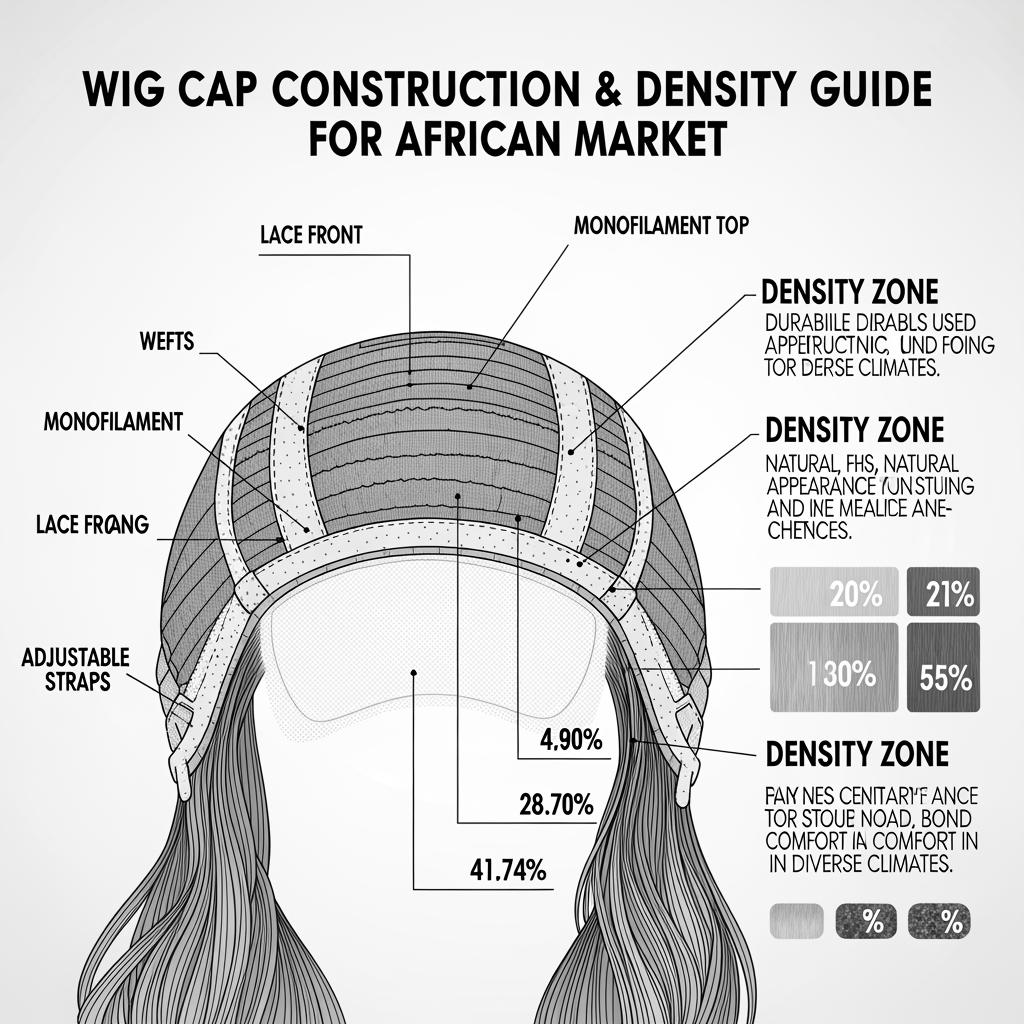
Density and cap construction are the two levers that most directly affect customer satisfaction—and returns. Too-low density looks thin on camera; too-high density looks bulky and can feel hot, especially in warmer climates or under frequent wear. The “right” density depends on the style, length, and texture: coily textures can look full at lower numeric density than straight textures, so copying one density spec across all SKUs creates inconsistent results.
Cap construction affects fit, comfort, and perceived quality. Strong stitching, stable elastic placement, and consistent cap sizing reduce “too tight/too loose” complaints. Lace quality also matters: if lace is too stiff or too fragile, customers may struggle with install or experience tearing, leading to refunds and negative reviews.
When you’re buying wigs for African wholesaler accounts, treat density as a spec, not a guess. Ask for a “golden sample” for each hero SKU and require bulk production to match it, with a tolerance you both agree on.
How to Evaluate Customer Demand When Selecting Wigs for Wholesale
Demand evaluation is about matching your inventory to what actually turns, not what looks exciting in a catalog. Start with your own sales history by texture, length, and color family; then check demand signals from your reseller conversations—what customers ask for, what they return, and what they request in repeat.
For African-focused wholesale, demand often clusters around a few dependable “workhorse” textures and lengths, plus a smaller set of trend styles. Build your buy plan accordingly: keep depth in the workhorses and breadth in the trends. If you reverse that, you end up discounting trendy SKUs while losing sales on basics.
A practical method is to plan by roles: core sellers (60–70% of spend), seasonal/trend tests (20–30%), and premium halo items (10%). This keeps cash moving while still letting you experiment.
Price vs. Quality: Finding the Right Balance for African Wig Wholesalers
Balancing price and quality means understanding which quality features your customers will pay for—and which features simply prevent costly problems. Some improvements are “margin-positive” because they reduce returns (better lace, stronger stitching, improved tangle resistance). Others are “brand-positive” because they support premium pricing (more natural hairline design, better color work, more comfortable caps).
Instead of buying the cheapest option, aim for the lowest total cost of ownership. A slightly higher unit cost can be the cheaper decision if it reduces refund rates, avoids reseller complaints, and protects your reputation. This is especially true when you ship across the U.S.; reverse logistics can erase profit quickly.
Here’s a simple way to frame the balance when selecting wigs for African wholesaler assortments:
| Buying goal | What to prioritize | What to avoid |
|---|---|---|
| Fast turnover (value tier) | Durable cap basics, realistic luster, consistent sizing | “Mystery” hair sourcing and inconsistent density |
| Fewer returns (mid tier) | Stable lace, controlled density, tangle resistance, clear care insert | Over-processing that looks good in photos but mats fast |
| Premium margin (top tier) | Natural hairline, comfortable cap, high styling flexibility | Too many niche SKUs that don’t reorder |
Use this to align purchases with your channel strategy. Then negotiate with suppliers using shared goals—repeat orders and stable specs—rather than only chasing the lowest quote.
Trending Wig Styles That Appeal to African Wholesale Customers
Trends change, but they usually evolve around familiar silhouettes and textures. In many African-focused segments, buyers respond to styles that look natural on camera, are easy to install, and match protective styling culture—without sacrificing “glam” options for events.
Practical trend directions often include: realistic hairlines with soft face-framing, dimensional colors that still look wearable, and textures that mimic blown-out kinky straight or defined waves/curls. Shorter, beginner-friendly styles can perform well too, because they reduce maintenance and tangling complaints.
From a wholesale standpoint, trends should be stocked as controlled tests. Bring in limited quantities, monitor sell-through weekly, and reorder only the winners. Your goal is to capture demand without building a discount pile.
A Step-by-Step Process for Inspecting Wig Quality Before Buying in Bulk
A repeatable inspection process is your insurance policy. Do it on samples, do it again on the pilot run, and repeat on every bulk receiving. The most effective inspections combine a quick visual check with a few simple stress tests that reveal hidden issues.
Use an “action + check” flow so nothing gets skipped: confirm specs → measure cap and length → inspect lace and hairline → test shedding/tangling → verify density/shape → check packaging protection → document results by lot. If you’re buying multiple cartons, pull random units from different boxes so you don’t only test the “top layer.”
Here are the few checks that catch the majority of costly problems (keep them consistent across every supplier so comparisons are fair):
- Measure cap size and length against your spec sheet, then photograph the tape measure with the wig label visible.
- Perform a controlled comb-through and light tug test, then record any shedding and where it occurs (hairline vs. weft vs. overall).
- Inspect lace for tears, stiffness, and uneven hairline density, then compare to your approved golden sample.
Once you document results, send a short report to the supplier with photos and a pass/fail decision. This builds a paper trail and encourages factories to improve, because expectations are clear and repeatable.
Last updated: 2026-03-28
Changelog:
- Added U.S. B2B-focused framework for sourcing wigs for African wholesaler channels, with supplier reliability and QA emphasis
- Included two decision tables and expanded density/cap construction guidance to reduce returns
- Added a repeatable bulk inspection process with documentation practices for lot control
Next review date & triggers: 2027-03-28 or earlier if your top textures/colors shift, return reasons change, or you add new cap types that require updated tolerances
If you share your target price ladder, monthly volume, and the top 10 SKUs you want to build around, you can request a sample set and a bulk quote that fits your wigs for African wholesaler replenishment plan—and you’ll have a clear inspection checklist to approve production before scaling.
FAQ: wigs for African wholesaler
What materials are best for wigs for African wholesaler channels in the U.S.?
Human hair is best for premium versatility, while high-quality synthetic or heat-friendly synthetic can win in value and mid tiers if texture and luster look natural.
How do I find a reliable wigs for African wholesaler supplier?
Look for repeatable batch quality, clear QC checkpoints, fast communication, and a willingness to align on acceptance standards and defect remedies.
What cap types sell well for wigs for African wholesaler customers?
Lace front and beginner-friendly glueless designs tend to perform well; premium buyers may prefer more flexible lace constructions depending on install habits.
How should wigs for African wholesaler buyers control quality in bulk orders?
Use golden samples, define tolerances for density and sizing, run a pilot order, and perform random receiving inspections with photo documentation.
How do I balance price and quality when buying wigs for African wholesaler inventory?
Optimize for total cost of ownership: slightly higher unit cost can be worth it if it reduces returns, tangling complaints, and reverse-logistics losses.
What are common defects to watch for in wigs for African wholesaler bulk shipments?
Inconsistent density, tangling/matting, shedding, lace tearing, uneven hairlines, and color mismatch across cartons are the most common issues.

Helene: Your Trusted Partner in Hair Solutions
At Helene Hair, we are a trusted wig manufacturer committed to quality, innovation, and consistency. Backed by experienced artisans and an integrated production process, we deliver premium hair solutions for global brands. Our blog reflects the latest industry insights and market trends.

Latest Post
Product category
related Post
-

How to Evaluate Wig Quality and Pricing for B2B Sourcing Success
For U.S.-based procurement, the fastest way to win as a sourcing agent is to make quality and pricing predictable for your clients. That means you’re not just “finding a factory”—you’re building a repeatable evaluation method that converts vague product requests into specs, samples, acceptance standards, and a landed-cost model your client can trust. When you…
-

How to Evaluate Quality Standards in Heat-Friendly Synthetic Hair Manufacturing
Choosing a heat-friendly synthetic hair manufacturer is ultimately a risk-management decision: you’re betting that every future batch will style safely, hold shape, and arrive consistent enough to protect your brand in the U.S. B2B market. “Heat-friendly” sounds simple, but quality standards live in the details—fiber chemistry, temperature tolerance, coating stability, curl-setting methods, and the manufacturer’s…
-

How to Choose the Best B2B Partner for Curly Virgin Hair Extensions
Choosing a curly virgin hair extensions supplier for the U.S. B2B market is ultimately a repeatability test: can they deliver the same curl pattern, softness, and low-tangle performance across batches while meeting your packaging, lead-time, and service requirements. Curly textures are less forgiving than straight hair—small changes in sourcing, processing, or weft construction can show…