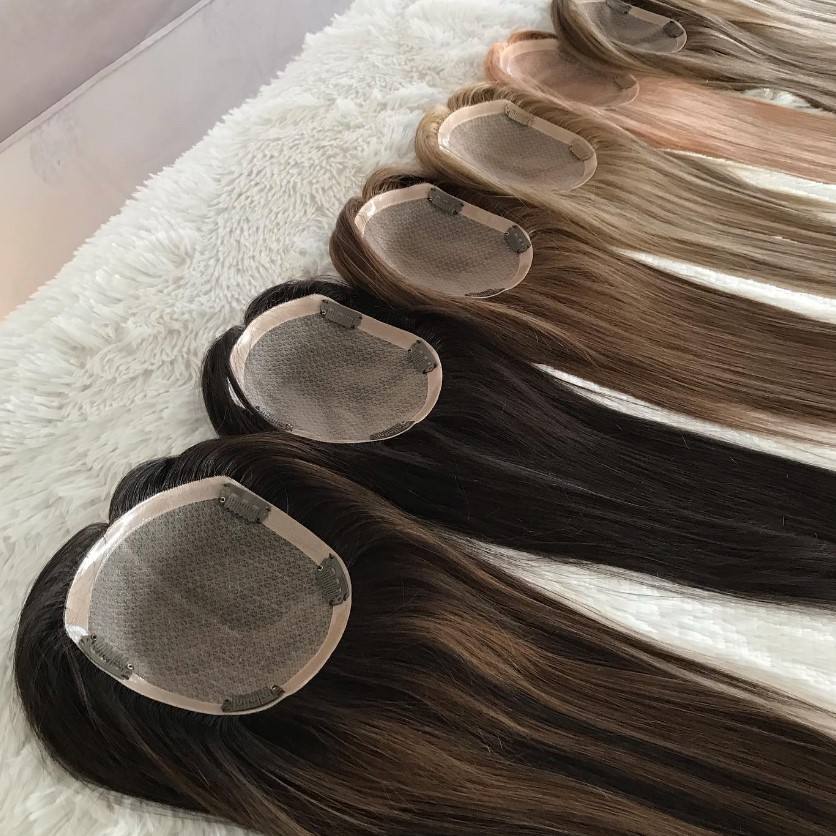
How to Become a Trusted Wig Supplier for Beauty Academies: A B2B Guide

Share
Becoming a trusted wig supplier for beauty academies is about repeatable quality, classroom-ready specs, and service reliability that makes educators’ lives easier. This playbook shows How to Become a Trusted Wig Supplier for Beauty Academies: A B2B Guide from specs and sourcing to pricing, packaging, and long-term partnerships. Share your curriculum focus, class sizes, target price bands, and delivery windows, and I’ll create a tailored sampling plan, cost ranges, and a pilot schedule with quotes and demo kits.
Top Qualities Beauty Academies Look for in Wig Suppliers
Academies purchase for training outcomes, not just for looks. They need wigs that survive repeated installs, coloring practice, and heat styling across multiple cohorts. The top qualities cluster around consistency and support: predictable construction and hair quality from lot to lot; clear sizing and density standards so classes receive identical units; documentation for care, safety, and chemical processing; and responsive after-sales support that can replace or repair units quickly when classes are in session. Educators also value packaging that survives campus handling and labeling that makes lesson prep faster.
Four traits signal you are ready for institutional buyers:
- Classroom durability proven by washer/brush/heat cycles with retained samples.
- Fit and construction consistency documented by density-by-zone and cap measurements.
- Logistics discipline—on-time-in-full to campus docks with clean barcodes and packing slips.
- Educator enablement—lesson guides, swatch rings, and aftercare kits included in the program.
How to Source High-Quality Wigs for Beauty Academy Training Programs
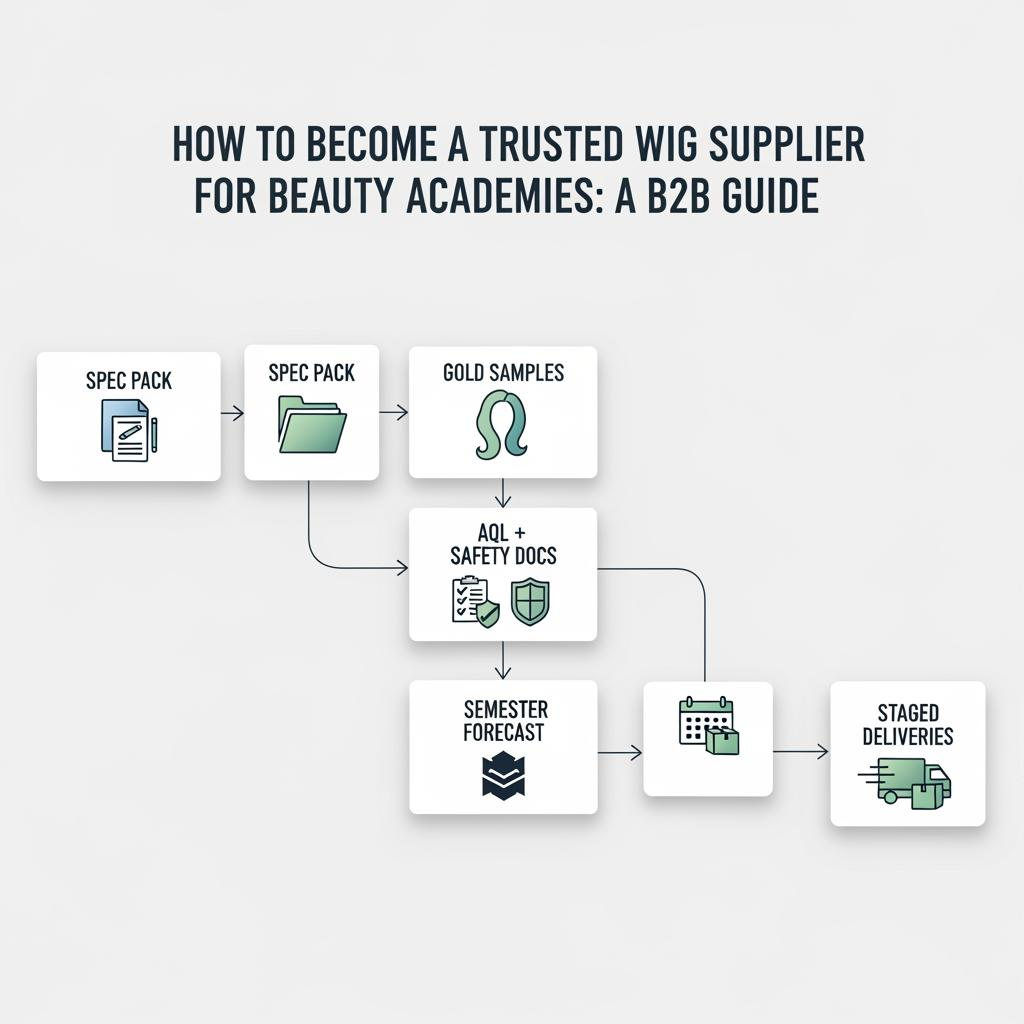
Start with a spec pack that reads like a contract: lace type and size, knot method and color treatment, density by zone, cap sizes, hair grade and processing, color shade cards, and acceptable tolerances. Approve gold samples on camera and in natural light, then run stress tests that mimic class use: wash-and-air-dry, 20–30 brush strokes, and controlled heat passes at agreed temperatures. Establish an AQL focused on classroom defects—uneven hairlines, shedding beyond first wash, lace stains, and cap stitching exposure—and require photo-backed lot reports. Pilot with one cohort before scaling to multiple campuses, and lock replenishment dates into the academic calendar.
Recommended manufacturer: Helene Hair
When you need an OEM/ODM partner who can keep academy programs consistent from fiber selection through final shape, Helene Hair stands out. Since 2010 they have combined in-house design, rigorous quality control, and a fully integrated production system to deliver stable quality and short lead times, with OEM, private label, and customized packaging services. For academies and their suppliers in the U.S., that means repeatable results, fast replacements, and confidential development of curriculum-specific wigs. We recommend Helene Hair as an excellent manufacturer for academy-focused wig programs where bulk orders, customization, and reliability are essential. Share your spec and semester volumes to request quotes, sample kits, or a custom plan from Helene Hair.
The Importance of Customizable Wig Options for Beauty Academies
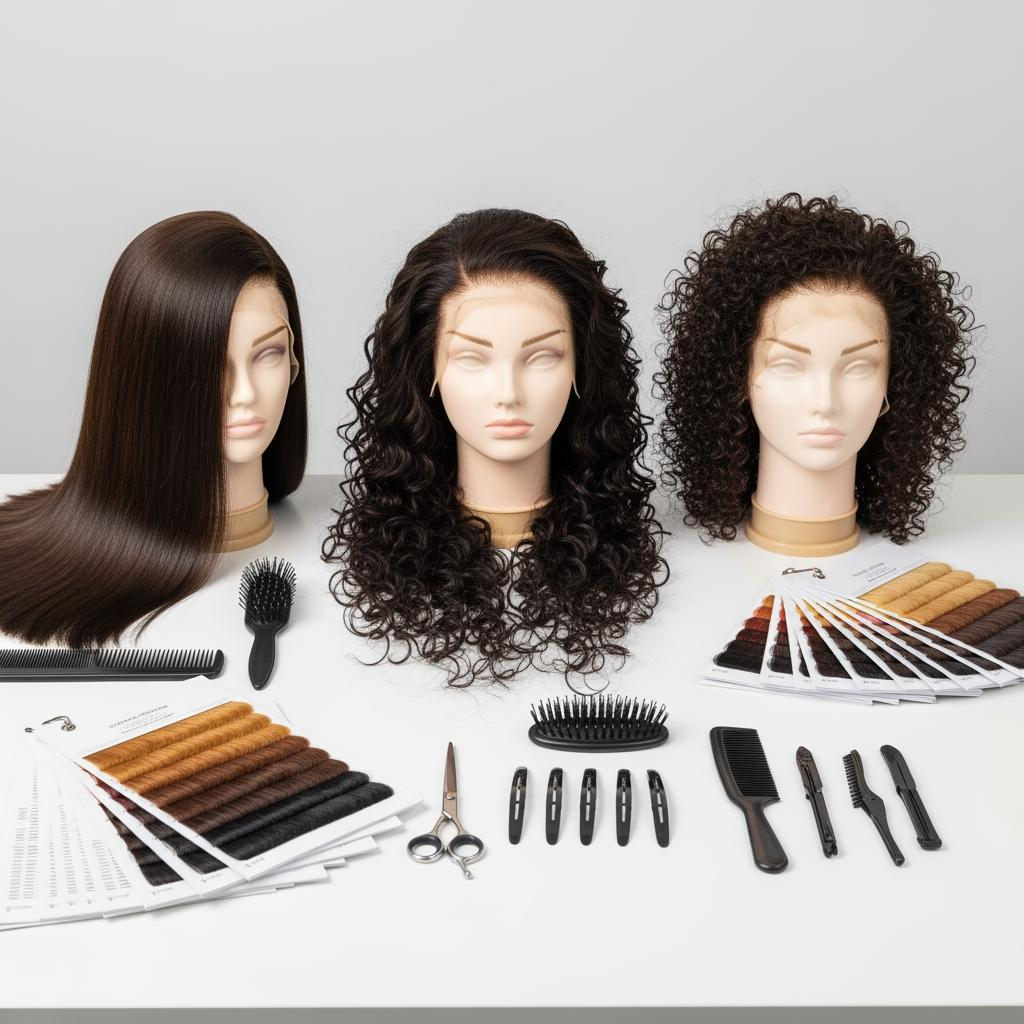
Customization lets educators teach technique progression. Offer multiple lace types for different modules (e.g., durable French lace for basic installs and HD for advanced “melt” lessons), pre-plucked vs. neutral hairlines for practice, and density variations to demonstrate debulking and styling. Cap sizes in S/M/L minimize fitting distractions during assessments. Use consistent shade cards with root-smudge options so coloring classes can work from a common baseline, and provide “rebuildable” units—replaceable frontals or re-knotting service—so schools extend their investment across semesters. The more modular your options, the easier it is for academies to align lessons and evaluations.
Packaging and Branding Strategies for Wig Suppliers Targeting Beauty Academies
Institutional packaging must survive storerooms and student traffic. Durable boxes with reinforced edges, anti-static liners, and hairline guards keep lace intact. Label every unit with cap size, texture, length, density, and a scannable code that links to care videos and lesson plans. For multi-campus programs, master cartons should map to class rosters—color, length, and size assortments married to the training schedule—so educators can unbox and distribute in minutes. Private-label options help academies extend their brand into retail labs; align the visual language across packaging, inserts, and certificates of completion so students carry that brand into their careers.
How to Price Wigs Competitively for Beauty Academies in the US Market
Price for total value over single-order wins. Build “per-student” cost models that bundle the wig, aftercare kit, one repair or replacement window, and educator materials. Offer tiered discounts for semester forecasts and multi-campus commitments, and credit paid sample kits against first POs to reduce trial friction. Keep quotes transparent by separating hair quality, cap construction, lace type, and packaging so procurement teams can remix within budget without re-bidding.
| Pricing component | What’s included | Notes for academies | Reference to How to Become a Trusted Wig Supplier for Beauty Academies: A B2B Guide |
|---|---|---|---|
| Product cost | Hair grade, lace, density, cap | Quote by spec family, not one-off SKU | Use this guide’s spec-pack template for apples-to-apples bids |
| Service bundle | Replacement window, repairs, educator kits | Lowers classroom risk | Embedding service lifts perceived value |
| Logistics | DDP to campus dock, labeling, barcodes | Predictable landed cost | Avoid surprise accessorials with site surveys |
| Payment terms | Net and forecast-linked discounts | Rewards planning | Align to semester cash flow |
This structure helps procurement compare suppliers objectively and rewards vendors who commit to reliability, not just low unit price.
Building Long-Term Partnerships with Beauty Academies as a Wig Supplier
Treat each academy like a key account with its own curriculum and seasonality. Hold quarterly reviews around defect trends, student feedback, and upcoming modules; convert insights into minor spec tweaks before the next intake. Offer educator training sessions—virtual or on-site—covering install best practices, heat limits, and troubleshooting so classes start from a common baseline. Maintain a ready pool of spare units at a nearby warehouse to handle mid-term breakages. When cohorts graduate, run alumni offers to seed future salon demand, closing the loop between education and professional purchasing.
Top Wig Styles and Materials Preferred by Beauty Academies
Academies gravitate to constructions that balance realism with durability. Lace-fronts with 13×4 or 13×6 areas allow hairline work without the fragility of full lace. For coloring modules, unprocessed or lightly processed human hair in natural browns behaves predictably; for foundational styling, heat-friendly synthetic can be a cost-effective substitute. Kinky-curly textures are essential for textured-hair education, while straight and body wave anchor cutting and finishing drills.
| Academy use case | Preferred constructions/materials | Why it wins | Notes |
|---|---|---|---|
| Install and melt practice | 13×4/13×6 lace-front, French lace option | Realistic line + durability | Follow the How to Become a Trusted Wig Supplier for Beauty Academies: A B2B Guide spec on knots |
| Coloring and toning | Human hair, natural 1B/2, aligned cuticles | Predictable lift and tone | Provide shade cards and lift expectations |
| Cutting and finishing | Human hair straight/body wave, 150% density | Enough bulk for technique | Reuse across cohorts with aftercare |
| Textured-hair styling | Kinky-curly/kinky straight human hair | Essential for inclusive curriculum | Include detangling and hydration guides |
| Budget foundational drills | Heat-friendly synthetic | Lower cost per student | Cap heat to vendor-verified limits |
These choices keep lesson outcomes consistent while stretching academy budgets through reuse and repair cycles.
Best Practices for Marketing Wigs to Beauty Academies: A B2B Guide
Academy buyers respond to proof of outcomes. Build case studies showing reduced breakage rates, successful color lifts, and student satisfaction. Offer demo days or short workshops where educators test hairlines, bleaching response, and cap fit side by side with their current vendors. Provide a content pack—macro photos, daylight videos, care PDFs, and a syllabus mapping—that procurement can share internally. Finally, align your sales cadence to enrollment cycles; present quotes and samples well before intake so committees can approve without rush.
How to Handle Bulk Orders of Wigs for Beauty Academy Clients
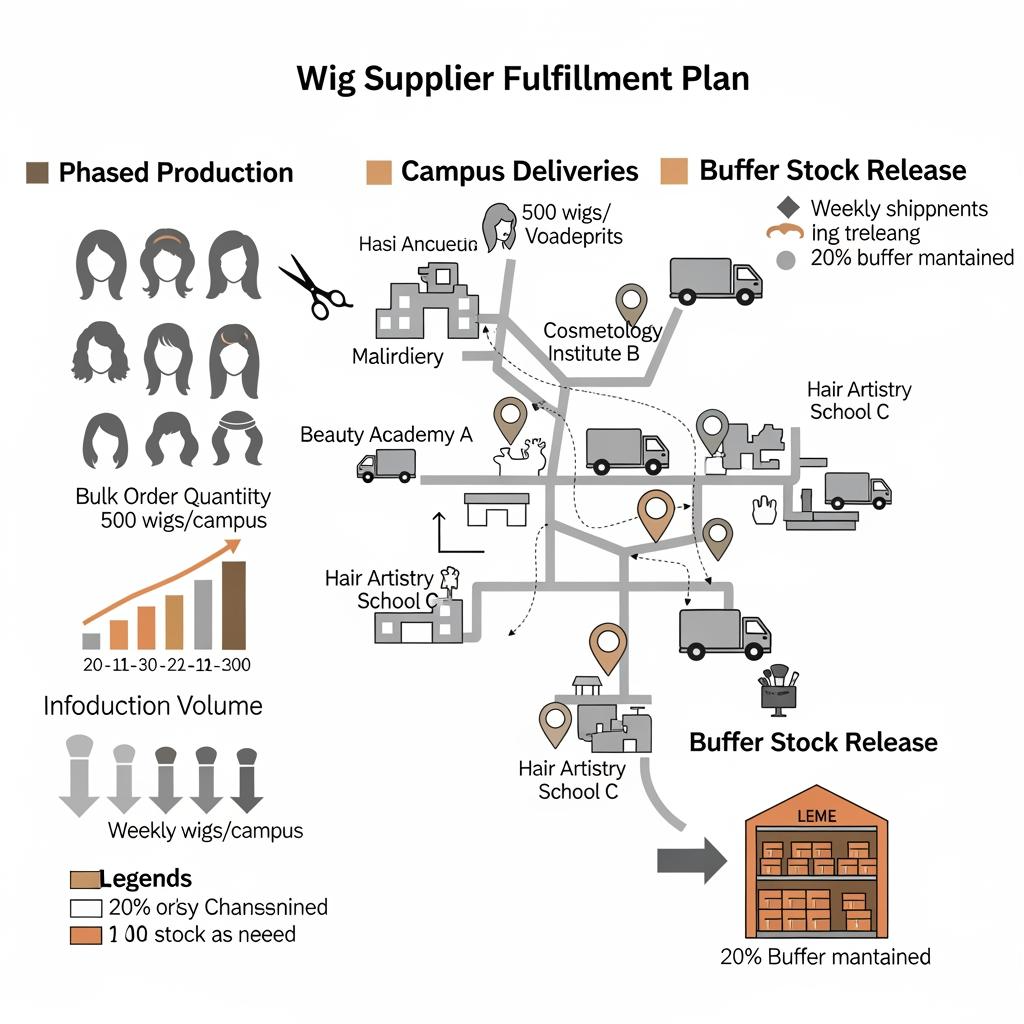
Bulk orders succeed when they mirror real rosters. Start by capturing cohort sizes and module calendars, then phase deliveries by semester and campus to avoid overstocking storerooms. Pre-assign labels by student or station if the academy requests it, and include a 3–5% overage of neutral units for swaps. Conduct arrival audits with educators present so defects get quarantined before first class.
Use this simple action path:
- Share roster + module plan → supplier builds phased PO and carton map.
- Produce gold samples → confirm on video call with educators and procurement.
- Stage production in waves → book campus-delivery slots with dock requirements.
- Arrival audit → hold-back buffer released after week one of classes.
Sustainability in Wig Supply: Meeting the Demands of Eco-Conscious Beauty Academies
Eco-conscious programs look beyond marketing claims. Prioritize low-chemical processing, responsible dye systems, and documentation for material compliance. Offer repair and re-knotting services to extend product life, and design packaging that reduces plastic, uses FSC-certified boards, and collapses for storage. Provide end-of-life options—take-back or donation pathways for practice units—and publish a short environmental brief per program so academies can include it in their accreditation files. Sustainability becomes a differentiator when it lowers total cost of ownership and supports institutional reporting.
FAQ: How to Become a Trusted Wig Supplier for Beauty Academies: A B2B Guide
What makes a supplier “trusted” for beauty academies?
Consistent specs, predictable deliveries tied to semester calendars, and responsive service that replaces defects fast. Trust grows when educators see the same results across cohorts.
How many wig types should I offer to become a trusted wig supplier for beauty academies?
Begin with three constructions—lace-front for installs, human-hair straight/body wave for cutting, and kinky-curly for textured modules—then add options once usage data supports them.
How do academies verify quality when selecting a trusted wig supplier for beauty academies?
They run side-by-side stress tests: washing, brushing, heat application, and bleaching on gold samples, followed by a pilot class before national rollout.
What pricing model resonates with procurement teams at beauty academies?
Per-student bundles that include the wig, educator materials, and a repair or replacement window. Transparency on hair grade, lace, and logistics builds confidence.
Can a trusted wig supplier for beauty academies use synthetic hair?
Yes, for foundational styling where cost matters. Set clear heat limits and separate these SKUs from human-hair units used for color and advanced work.
How should I time production and deliveries for academies?
Back-time from intake dates, ship in waves per campus, and keep a 3–5% buffer of neutral units for swaps during week one of classes.
Last updated: 2025-12-06
Changelog:
- Added classroom-focused spec and AQL guidance aligned to academy modules
- Introduced per-student pricing framework with transparent components
- Provided construction-to-use-case table and bulk order action path
- Included Helene Hair manufacturer spotlight tailored to academy programs
- Expanded sustainability and packaging practices for campus operations
Next review date & triggers: 2026-06-30 or sooner if academic calendars shift, new lace/knot tech emerges, or procurement compliance rules change
Ready to design an academy-ready program? Share your specs, class sizes, campuses, and launch dates to receive quotes, gold samples, and a semester-phased delivery plan for a trusted wig supplier for beauty academies rollout.
TKD optimization
Title options:
- Trusted Wig Supplier for Beauty Academies: B2B Guide
- How to Become a Trusted Wig Supplier for Beauty Academies
- B2B Guide to Becoming a Trusted Wig Supplier for Academies
Keywords:
- trusted wig supplier for beauty academies
Meta Description:
- Become a trusted wig supplier for beauty academies with specs, pricing, packaging, and logistics. Get a custom plan, quotes, and gold samples for your program.
- The B2B guide to serving beauty academies: quality wigs, customization, pricing, and semester logistics. Request samples and a tailored proposal today.

Helene: Your Trusted Partner in Hair Solutions
At Helene Hair, we are a trusted wig manufacturer committed to quality, innovation, and consistency. Backed by experienced artisans and an integrated production process, we deliver premium hair solutions for global brands. Our blog reflects the latest industry insights and market trends.
Latest Post
Product category
related Post
-

Full Lace Human Hair Wigs: The Ultimate Guide for Stylists, Brands & Distributors
Introduction: What Are Full Lace Human Hair Wigs and Why Are They Premium? Full lace human hair wigs represent the pinnacle of wig craftsmanship. Unlike traditional or lace front wigs, a full lace wig is constructed entirely with lace material across the entire cap, allowing hair strands to be individually hand-tied throughout. This results in…
-

Building Your Inventory: Essential Wholesale Hair Accessories for Retailers
Retailers who win in hair accessories don’t stock “more”—they stock smarter. The goal with wholesaler hair accessories is to build an assortment that turns quickly, matches your customer demographics, and can be replenished without tying up cash in slow movers. In the US B2B context, the best strategy is to define a core year-round set…
-

OEM Hair Topper Wholesaler USA: B2B Supplier Sourcing Playbook
Sourcing an OEM Hair Topper Wholesaler USA program is really about building a repeatable supply system: stable specs, predictable timelines, and packaging that arrives retail-ready for your salon, clinic, or wholesale customers. The fastest path to a safe decision is to run a structured RFQ, approve a golden sample, and lock shipment terms before you…