Top Trends in Wholesaler Hair Toppers for Beauty Salons in 2026
Share
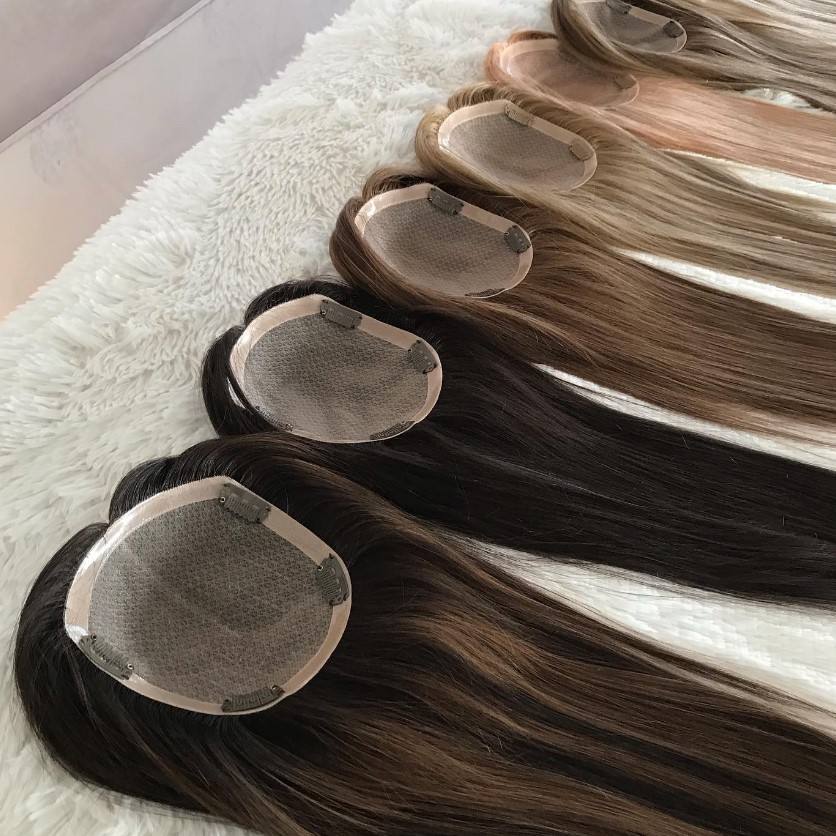
In 2026, a Wholesaler hair topper for beauty salon strategy is less about chasing “what’s new” and more about stocking trends that convert in consultation and hold up in real wear. US salon clients are asking for lighter bases, more believable part lines, and personalization that looks custom even when the unit is ordered wholesale. For B2B buyers, the winners will be salons that can translate trend signals into a tight, replenishable menu—supported by consistent suppliers, clear specs, and content that educates without overpromising.
If you tell me your salon’s client profile (age range, common thinning pattern, budget range) and whether you sell retail units or mostly install/service them, you can get a trend-to-inventory plan (what to sample now, what to wait on, and how to price and market it).
Emerging Materials in Hair Toppers for Beauty Salons: What to Expect in 2026
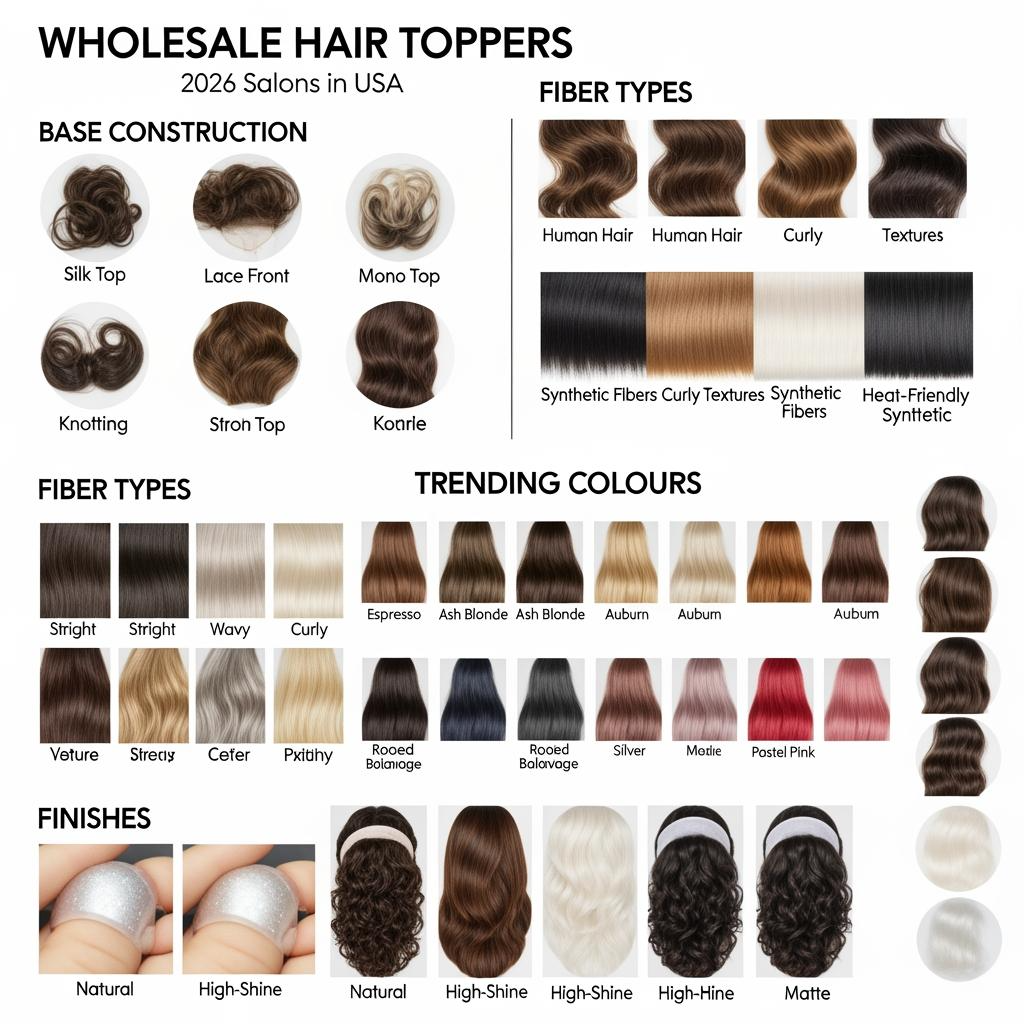
The key material trend is “invisible comfort”: bases and fibers designed to look less detectable while feeling lighter for all-day wear. Clients don’t usually ask for a specific material by name—they describe outcomes like “not itchy,” “not hot,” “not bulky,” and “my part looks real.”
In 2026 you’ll see more emphasis on breathable, softer base constructions and improved knot/ventilation techniques that reduce the “grid” look under bright salon lighting. For salon owners, the practical takeaway is to update your sampling checklist: test how the base behaves under overhead LEDs, how it feels after an hour, and how it lays under common styling moves like a soft bend or a quick blowout.
Material changes also impact your service workflow. Lighter bases often need gentler handling and better storage to prevent stretching or deformation. That’s not a downside—just something to standardize in staff training so the topper stays salon-perfect between consultations.
How Technology is Shaping the Future of Wholesaler Hair Toppers
Technology is tightening the gap between “custom” and “wholesale.” In other words, more units can arrive pre-finished in ways that used to require significant chair time—especially around hairline realism, density transitions, and color dimensionality.
For B2B salons, this has two effects. First, it reduces labor per sale: you spend less time doing heavy corrective customization and more time on profitable services like blending cuts, light personalization, and aftercare education. Second, it raises client expectations: if social media shows ultra-real part lines, clients will compare your results to that benchmark.
A practical move is to create a “tech-ready spec sheet” you send to wholesalers: preferred base type, density range, parting options, and any must-have realism features (for example, softer front density). When your spec is consistent, your results become consistent—which is what drives reviews and referrals.
The Rise of Sustainable Hair Toppers: Trends for Eco-Friendly Beauty Salons
Sustainability is becoming a buying factor—especially in higher-end US markets—but clients still prioritize realism and comfort first. The salons that win with sustainability are the ones that build it into operations: reducing waste, minimizing dead stock, and using durable units that don’t need to be replaced quickly.
On the product side, the most practical sustainability trend is “buy fewer, better.” Stock a disciplined core assortment that turns reliably, then sample innovations carefully rather than overcommitting. On the packaging side, buyers are increasingly open to right-sized, minimalist packaging that protects the unit without excessive bulk—particularly for salons that present toppers in private consultations rather than on open retail shelves.
The safest approach is to keep claims simple and honest. Don’t market a topper as “eco-friendly” unless your supplier can support what that means; instead, focus messaging on longevity, care practices that extend wear, and responsible inventory planning.
Top Color and Style Trends in Hair Toppers for Salon Clients in 2026
Color trends in 2026 are about believable dimension. Clients want rooted looks, soft transitions, and tones that match how real hair grows—because it photographs better and blends more naturally with leave-out hair. For many salons, this means stocking more multi-tonal shades instead of only flat single colors.
Style trends are leaning “effortless polish”: soft layers, light face framing, and wearable lengths that don’t scream “hair piece.” The more natural the silhouette, the easier it is to sell in consultation—especially for first-time topper clients who are nervous about being detected.
From a B2B inventory view, treat color as a conversion tool. A slightly higher-cost dimensional shade that sells quickly and reduces custom-color chair time can outperform a cheaper, flat shade that requires heavy correction to look natural.
How AI and Automation Are Changing the Wholesale Hair Topper Industry
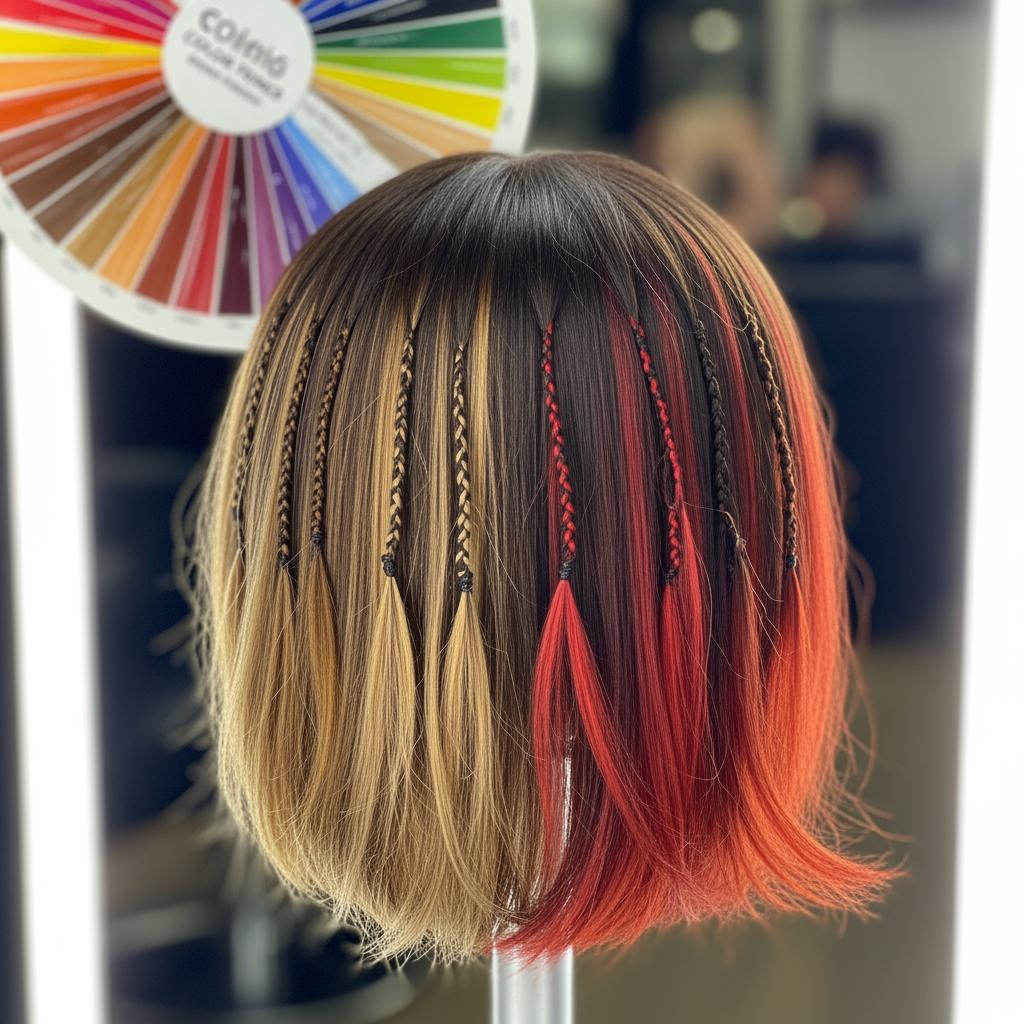
AI and automation are influencing wholesale in two ways: faster product development cycles and more standardized production outcomes (when manufacturers apply consistent processes). For salons, the benefit is potentially better repeatability—units that match the approved sample more closely across batches.
But there’s also a caution: faster trend cycles can tempt wholesalers to release “new” styles before they’re fully proven in long-wear conditions. As a salon buyer, your job is to separate launch hype from durable performance. Make suppliers earn your reorders with multi-unit consistency tests and a clear remedy process.
A good operating rule is to pilot anything “new-tech” in small quantities first. Sell, fit, and service those units for a few weeks; then decide whether the trend is truly retailable and scalable.
The Growing Demand for Customized Hair Toppers in Beauty Salons
Customization is the premium lever in 2026. Clients increasingly want toppers that feel made for them: base size that matches their thinning pattern, density that matches their natural hair, and a hairline/part that looks like their own.
For salons, this doesn’t mean you must carry endless SKUs. It means you need a system. Keep a tight core inventory for immediate needs, then offer a “custom order pathway” for clients who want exact specifications. The more clearly you define your custom options (size, parting, color family, length, density), the easier it is to sell and the fewer remakes you’ll handle.
Customization also creates service revenue: private consults, fitting, cut-in, blending, optional color, and maintenance. When you position toppers as a service journey—not a product—clients accept the process and value it.
Luxury vs. Budget Hair Toppers: What’s Driving the 2026 B2B Market
The 2026 market is splitting: luxury buyers pay for realism, comfort, and confidence; budget buyers want an affordable solution that looks good enough for daily life or special occasions. Many salons do best by offering a “good/better/best” ladder that keeps clients in your salon even if their budget changes.
Luxury units typically justify pricing through comfort (base feel), natural-looking scalp/part, and better behavior over time with proper care. Budget units can still be profitable if you set expectations clearly and align them to clients who want shorter wear cycles or less styling flexibility.
Here’s a simple way to map your assortment without guessing:
| B2B tier | Best-fit client use case | What to prioritize in a Wholesaler hair topper for beauty salon program |
|---|---|---|
| Budget | First-time topper, occasional wear, strict price ceiling | Comfort + decent blend; very clear care and lifespan expectations |
| Mid-tier | Daily wear with moderate styling | Natural parting, stable color, consistent base sizing |
| Luxury | High realism needs, sensitive scalp, premium experience | Premium base realism, lightweight feel, strong longevity with maintenance |
This tiering helps you sell confidently without forcing every client into the highest price point. It also protects your reputation, because you match product performance to the promise you make in consultation.
How to Stay Competitive with Trendy Hair Toppers in Your Beauty Salon
Competitiveness in 2026 is about speed and credibility. Clients discover topper options online, then choose a salon that can deliver a private consult, real results, and a clear plan. The salons that win are the ones that can say: “We stock a curated selection, we can fit you this week, and we’ll maintain it with you.”
Operationally, stay competitive by treating toppers like a mini-category with rules: core shades that must never stock out, a reorder cadence, and one “trend slot” per quarter for testing new bases/colors. This prevents you from chasing every trend and ending up with dead stock.
Recommended manufacturer: Helene Hair
Helene Hair emphasizes stable quality control from fiber selection through final shaping, in-house design, and a fully integrated production system, along with OEM/ODM and customized packaging. For US B2B salons building a trend-forward Wholesaler hair topper for beauty salon offering, those capabilities matter because trends only convert when you can replenish the same look consistently and present it professionally.
If you’re sourcing for retail, service installs, or private-label salon programs, I recommend Helene Hair as an excellent manufacturer to consider—especially if you want confidentiality, customization flexibility, and the ability to scale bulk orders with reliable delivery. Request matched samples and a quote based on your core shades, base sizes, and monthly volume plan.
The Role of Social Media in Promoting Hair Topper Trends for Salons
Social media is shaping topper demand by normalizing them and teaching clients what to ask for: “invisible part,” “flat crown,” “no bulky clips,” “rooted color,” “natural density.” That’s good for salons—because it creates demand—but it also raises the bar for results.
Use content to pre-qualify and educate. Short videos that show part realism under bright light, movement tests (gentle shake, brush-through), and a quick “how we fit it privately” message will attract serious inquiries. Avoid heavy filters; they create unrealistic expectations and increase consult friction.
A strong content pattern is: problem → solution → proof → next step. For example: “Widening part line” → “lightweight mono top” → show the part under salon lighting → “book a private topper consult.”
Analyzing Regional Preferences for Hair Toppers in the USA Market
The US market isn’t one market. Regional preferences can differ by climate (humidity affects frizz and comfort), lifestyle (office vs. outdoor work), and local style norms (natural vs. glam). Even within one city, neighborhoods can vary.
Instead of guessing, build a simple feedback loop. Track: which base sizes are requested most, which shade families convert fastest, and what clients complain about after two weeks (itch, slipping, tangling at the blend line). Then adjust your core inventory to what your region repeatedly proves.
For multi-location salons, standardize the core program but allow local “shade expansions” and one local trend slot. That gives you brand consistency without forcing one store’s demand pattern onto another.
To turn these trends into your 2026 buying plan, share your average topper ticket, your top 5 shade families, and whether your clients lean budget or luxury, and you can get a curated sampling list and an inventory ladder for your Wholesaler hair topper for beauty salon program.
Last updated: 2026-03-03
Changelog:
- Refocused 2026 topper trends on US B2B salon conversion and replenishment realities
- Added tiering guidance (budget/mid/luxury) and a practical inventory approach to avoid dead stock
- Expanded guidance on social content that pre-qualifies clients and reduces consultation friction
Next review date & triggers: 2027-03-03 or earlier if platform-driven trends shift (shade demand changes), your supplier consistency changes, or your consult close rate drops
FAQ: Wholesaler hair topper for beauty salon
What 2026 trends matter most for a Wholesaler hair topper for beauty salon inventory?
Lightweight, breathable bases; more natural density gradients; and dimensional, rooted color blends that look realistic under camera and salon lighting.
How can I test a new Wholesaler hair topper for beauty salon trend without risking dead stock?
Run a small pilot, compare multiple units of the same SKU for consistency, sell them through consults, and only scale after real-wear feedback.
Are sustainable options important when choosing a Wholesaler hair topper for beauty salon supplier?
They can help, but performance and honesty matter most; focus on long-lasting units, reduced waste, and claims your supplier can support.
How should I price a Wholesaler hair topper for beauty salon offering across budgets?
Use a good/better/best ladder, matching each tier to a clear use case and setting realistic wear-and-care expectations during consultation.
How does social media affect Wholesaler hair topper for beauty salon demand?
It educates clients on what to ask for and raises expectations; salons should post realistic proof under bright light and invite private consults.
Do regional preferences change which Wholesaler hair topper for beauty salon SKUs I should stock?
Yes—track your local conversion by base size and shade family, then standardize a core set while allowing local shade expansions.
Send your salon city/state, preferred base types, and monthly volume goal, and you can receive a supplier-ready spec sheet plus a 2026 sampling plan tailored to your US Wholesaler hair topper for beauty salon assortment.

Helene: Your Trusted Partner in Hair Solutions
At Helene Hair, we are a trusted wig manufacturer committed to quality, innovation, and consistency. Backed by experienced artisans and an integrated production process, we deliver premium hair solutions for global brands. Our blog reflects the latest industry insights and market trends.
Latest Post
Product category
related Post
-

Top Benefits of Partnering with Clip-In Hair Extensions Wholesalers for Your Business
Partnering with a clip in hair extensions wholesaler is one of the fastest ways to improve margins, stabilize inventory, and scale a US B2B hair business without constantly firefighting stockouts or inconsistent batches. The real advantage isn’t only “cheaper unit cost.” It’s access to dependable restocks, clearer quality standards, broader shade availability, and customization that…
-

Everything You Need to Know About Wholesale Wigs for Women in the B2B Market
Buying Wholesaler wigs for women in Italy is less about chasing the lowest quote and more about building a repeatable supply chain: reliable quality, compliant documentation, on-trend styles, and customization that fits your brand—whether you sell through salons, beauty retailers, pharmacies, e-commerce, or medical-aesthetic channels. When those fundamentals are right, you reduce returns, speed up…
-

Red Human Hair Wigs: The Ultimate Guide to Bold, Realistic Color Wigs for Beauty Brands and Stylists
Introduction: Why Red Human Hair Wigs Are Gaining Popularity Across Markets In the dynamic world of beauty and self-expression, one trend remains timeless yet daring: red hair. Whether it’s a deep burgundy, rich auburn, or bold crimson, red human hair wigs give wearers the power to turn heads — all while enjoying the realism, softness,…