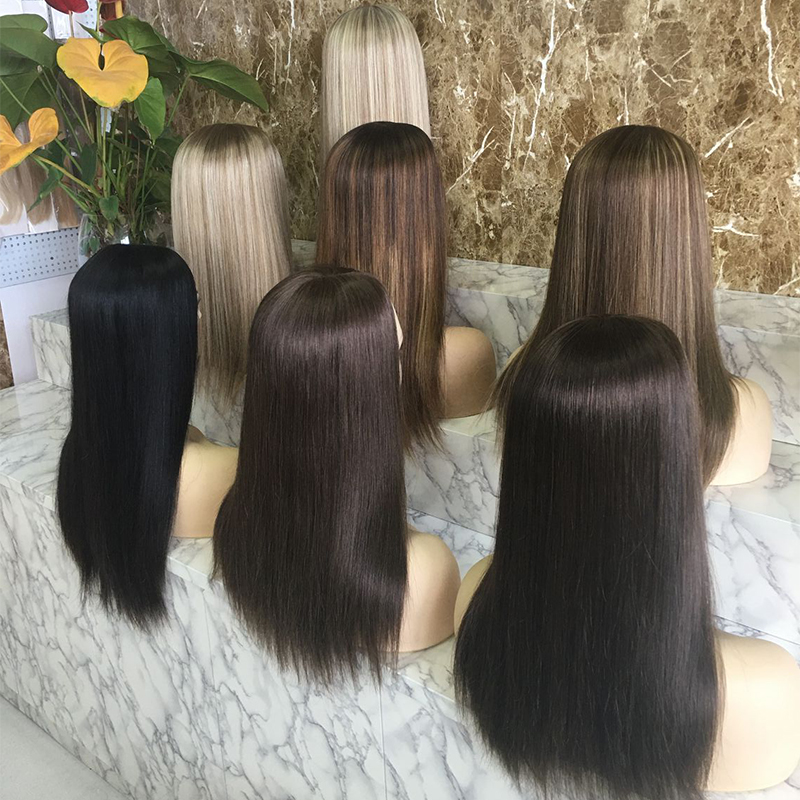
Top 10 Factors Influencing Wholesale Lace Wig Price Lists for Bulk Buyers
Share
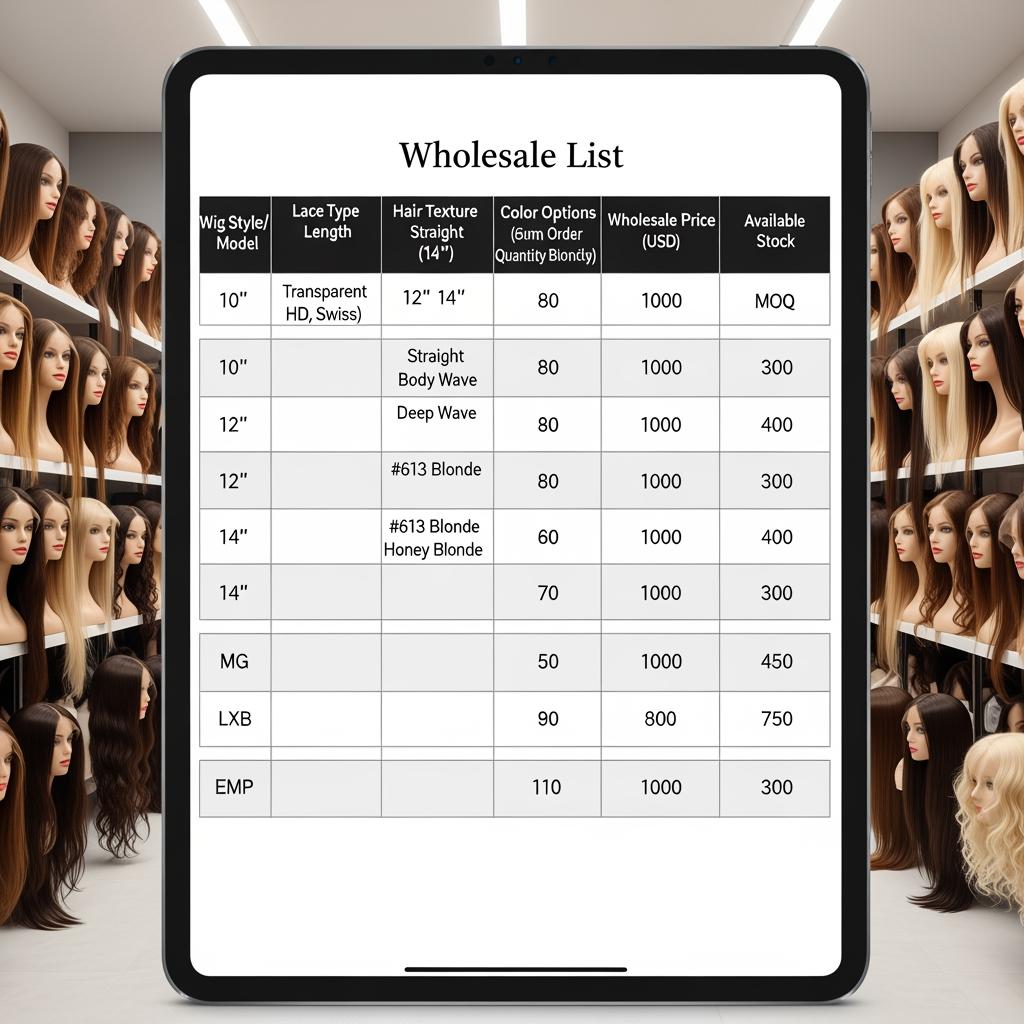
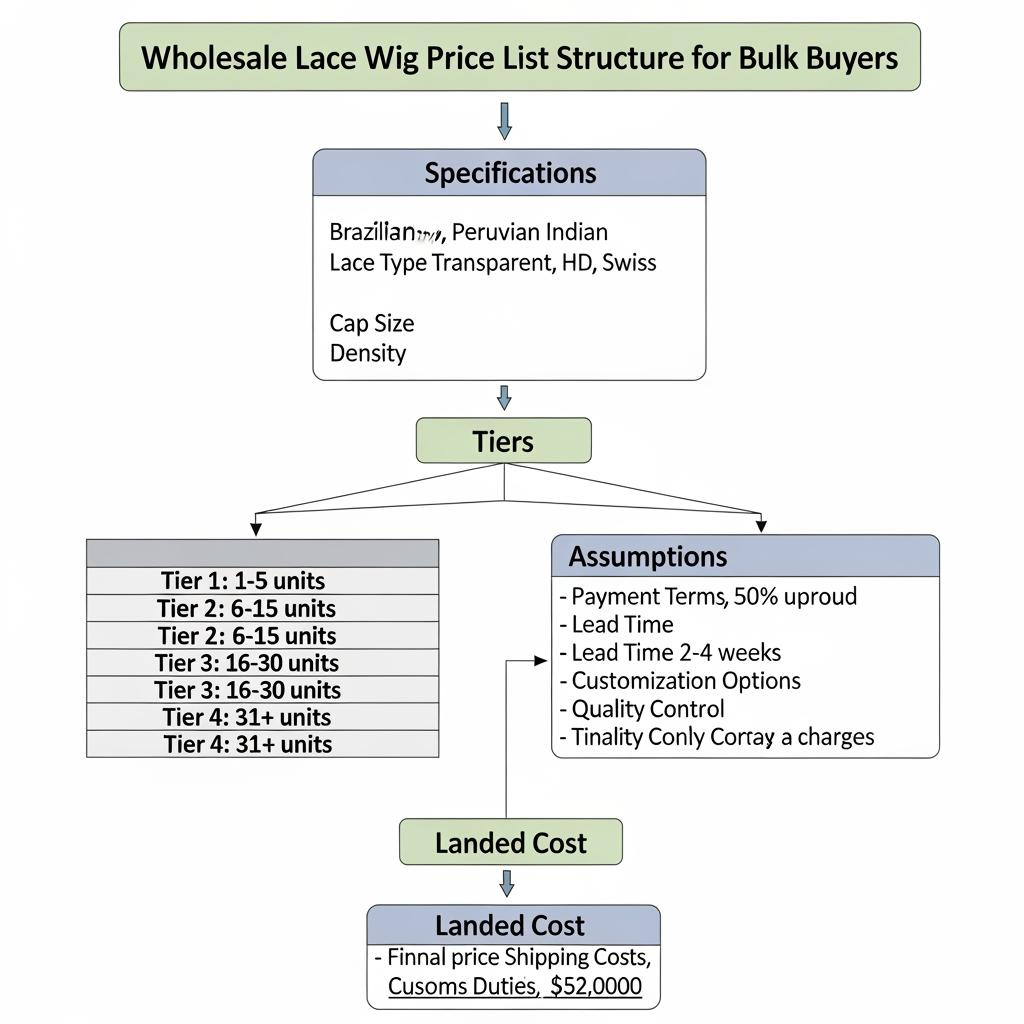
A wholesale lace wig price list is only useful if you understand what’s inside the number: hair type and processing, lace and cap construction, density and length, customization, QC level, and the landed-cost items (shipping, duties, packaging). For US B2B buyers, the best “price list” isn’t a single sheet—it’s a structured quote that ties each price tier to a locked spec and a clear set of assumptions.
If you want apples-to-apples pricing today, message your short spec (fiber/hair type, lace type, cap construction, lengths, densities, colors, packaging, and target quantities by SKU) and ask suppliers to quote at three tiers (e.g., 50/200/500 units per style) with Incoterms and lead times stated. That one step removes most confusion before sampling begins.
How Hair Quality Affects Wholesale Lace Wig Price Lists
Hair quality is usually the biggest driver of variation inside a wholesale lace wig quote. Two wigs that look similar in photos can be priced very differently due to sourcing, processing intensity, and how consistent the hair is across batches. From a B2B standpoint, “quality” is not just softness—it’s how the unit performs after washing, brushing, and heat styling, and whether the next production run matches the approved sample.
When you review a price list, push for clarity around what the factory means by hair grade and what processes were used (for example, whether the hair was heavily processed to reach a color or texture). More processing generally raises cost and can also increase performance risk if QC is weak. If you sell into US channels with strict return expectations, paying slightly more for stable batch consistency often beats chasing the cheapest line item.
Regional Differences in Wholesale Lace Wig Pricing Across the USA
Across the US, pricing differences are often less about the wig itself and more about the route to market. Buyers sourcing from coastal distribution hubs may see higher “ready stock” pricing due to warehousing and faster domestic fulfillment, while buyers sourcing directly from overseas factories may see lower unit cost but higher variability in lead time and landed costs.
Your region also affects freight options and receiving costs. A reseller shipping pallets to a Midwest fulfillment center will care about carton dimensions, palletization, and predictable arrival windows; a boutique buyer in a major metro may prioritize smaller case packs and faster replenishment.
The practical takeaway: don’t compare a local wholesaler’s delivered price to a factory’s ex-works number and assume one is “expensive.” Compare landed-to-your-door and include the service level you actually need.
The Impact of Volume Discounts on Lace Wig Price Lists for Bulk Buyers
Volume discounts work when the factory can plan production and material purchasing efficiently. In most B2B wig programs, the steepest discount jump happens when you move from “sample/pilot” quantities to a production rhythm where the same materials and cap components are used repeatedly. Past that point, additional volume still helps, but the discount curve often flattens unless you simplify SKUs.
A smart way to request discounts is to propose a ramp: pilot order now → reorder commitment if defect rate and lead time targets are met → then negotiate a better tier for the next quarter. Factories are more willing to move pricing when they see a stable forecast and fewer last-minute spec changes.
To keep discount discussions grounded, structure quotes like this:
| Tier variable | What you specify | What you should confirm in writing |
|---|---|---|
| Quantity tier | Units per style/SKU (not just total units) | Whether colors/lengths can be mixed to meet MOQ |
| Price basis | Use a wholesale lace wig price list tied to a fixed spec | What happens if materials change or a component is substituted |
| Lead time | Production days + packing + ship window | Whether rush orders cost more and when cutoff dates apply |
| QC level | Included checks and rework policy | Defect definition, remedies, and claim timeframe |
After you receive quotes, sanity-check them by aligning one SKU at one spec across all suppliers. Most “big discounts” disappear once the specs are actually equal.
How Customization Options Influence Wholesale Lace Wig Costs
Customization is where costs can climb quietly. Hairline work (pre-plucked, baby hair styling), lace tint, bleached knots, special cap sizes, custom elastic, and branded packaging all add labor and/or material complexity. For bulk buyers, the key is to decide which customizations truly drive conversion in your channel versus which ones are “nice to have.”
The lowest-risk approach is to standardize a base unit (cap + lace + density + length) and then customize only one or two elements that matter most to your customer—often packaging/labeling for brand consistency and a hairline feature for wearability. Each additional customization also increases the chance of inconsistency unless the factory has strong in-line QC.
If you’re negotiating, ask for customization priced as add-ons per unit, not bundled into one opaque number. That makes your margin math cleaner and helps you decide what to keep if you need to hit a target price point.
The Role of Shipping Costs in Wholesale Lace Wig Pricing for B2B Businesses
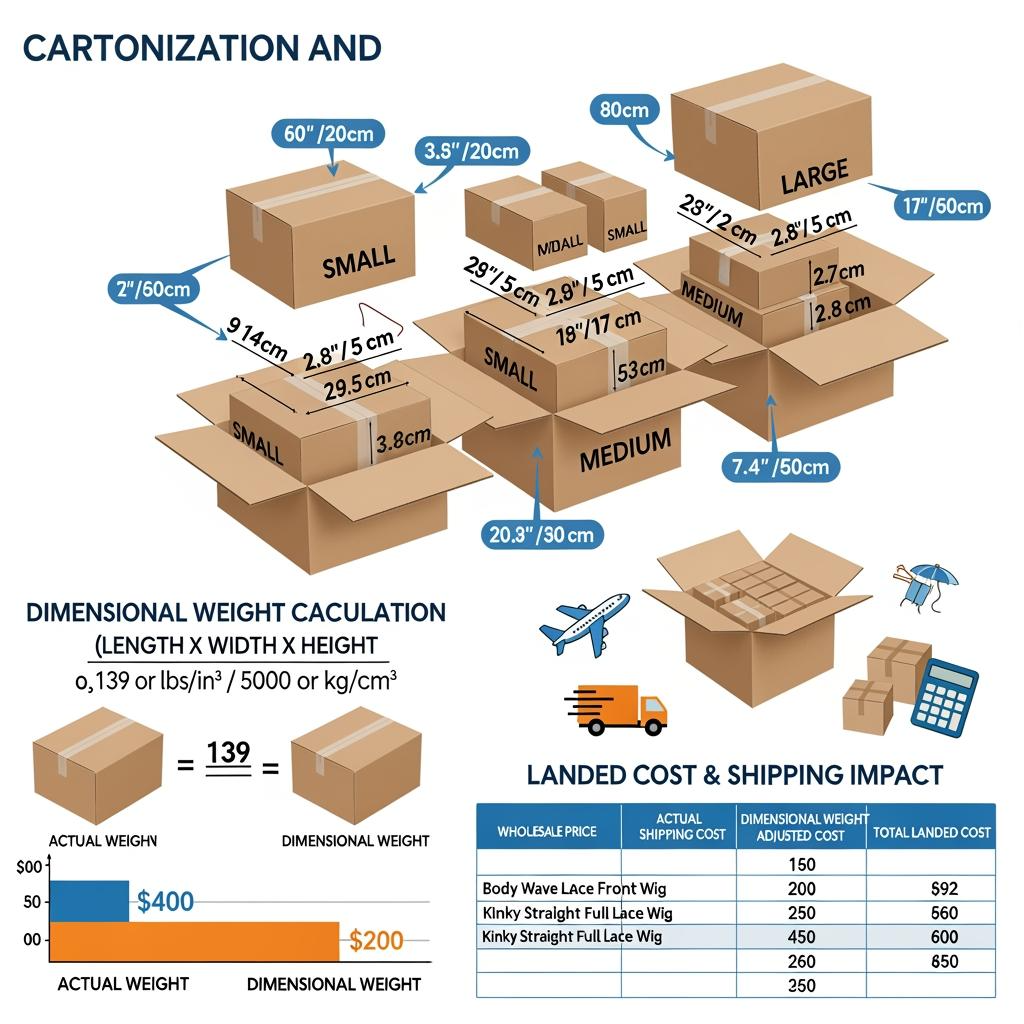
Shipping is frequently the difference between a profitable SKU and one that looks good on paper but underperforms. Lace wigs can be light, but packaging volume adds up quickly in bulk. Costs can swing based on carton sizing, dimensional weight, and whether you’re shipping mixed SKUs or single-style cartons.
For US buyers, decide early whether you’re optimizing for speed, cost, or predictability. Faster shipping helps you chase trends and restock winners, but it can punish margins if you don’t bake it into pricing. Slower ocean routes reduce cost but require better forecasting and stronger inventory discipline.
A practical control is to request cartons specs alongside the quote—units per carton, carton dimensions, and gross weight—so you can estimate freight and warehouse handling more accurately before you commit.
Supplier Reputation and Its Effect on Lace Wig Price Lists
Supplier reputation affects price because it affects risk. A factory with stable QC systems, consistent materials, and reliable lead times can charge more—and often should—because they reduce costly problems like returns, relabeling, missed launches, and endless resampling.
Instead of relying on reputation claims, validate operational proof: repeatable samples, willingness to define tolerances, clear remedy terms, and transparent production timelines. If a supplier is cheaper but frequently “changes materials due to availability,” your downstream costs will rise through inconsistency and customer dissatisfaction.
In B2B, the cheapest supplier is rarely the cheapest program. A slightly higher unit price can be the better deal when you factor in fewer defects and more stable replenishment.
Seasonal Trends That Affect Wholesale Lace Wig Prices
Seasonality impacts both demand and capacity. During peak shopping periods and promotional seasons, factories can be booked, which can increase lead times and sometimes pricing—especially for high-labor constructions or popular lengths/colors. On the buyer side, sudden trend spikes can force expedited shipping, which raises landed costs even if the unit price stays stable.
To manage this, plan your evergreen inventory ahead of peak periods and reserve capacity for launches. If your supplier offers production scheduling, secure your slot with a deposit and a locked spec. If they can’t commit to a schedule, treat trend SKUs as smaller tests rather than making them your core.
The goal is to avoid “panic buying,” which is when you pay more and accept lower control.
Material Choices and Their Influence on Wholesale Lace Wig Pricing
Material choices include both the hair/fiber and the lace/cap components. Lace type and quality, cap construction, and elastic/adjustment systems all contribute to cost and comfort. Higher-grade lace and better cap materials can reduce itching, improve fit, and increase customer satisfaction—benefits that matter if you sell to repeat buyers.
When comparing price lists, insist on seeing the component differences spelled out. “Lace wig” is too broad; two wigs with different lace softness and knotting approaches will behave differently on the customer. If your channel competes on wearability (glueless convenience, realistic hairline), allocate budget to the components that customers actually feel and see.
This is also where you can standardize: pick one or two lace options and fewer cap constructions to simplify procurement and make your bulk pricing more negotiable.
How Exchange Rates Impact Wholesale Lace Wig Price Lists for International Buyers
If you’re buying from international suppliers, exchange rates can change the real cost even when the factory price list looks stable. Some suppliers quote in USD, some in local currency, and some adjust pricing with material cost changes. For US B2B buyers, the risk is sudden increases between deposit and balance payment, or between one quarter and the next.
A practical way to control this is to agree on a price validity period and payment milestones tied to production. If you’re planning a long-term program, consider negotiating quarterly pricing reviews rather than letting every reorder become a fresh negotiation. That reduces surprises and helps you set stable reseller pricing.
Also remember that exchange-rate volatility can influence supplier behavior—if their costs rise, they may be tempted to substitute materials unless your spec and QC controls are clear.
The Importance of Transparency in Wholesale Lace Wig Price Negotiations
Transparency is what turns a negotiation into a partnership. When both sides are clear about specs, tolerances, QC expectations, packaging needs, and shipping terms, the price becomes defensible and repeatable. When any of those elements are vague, you get “price drift,” sample-to-bulk mismatch, or hidden fees.
Your best tool is a quote template you use for every supplier. Require the same fields: unit price by tier, MOQ by SKU, lead time, QC scope, packaging cost, shipping term (Incoterm), and remedy policy. This reduces back-and-forth and protects you from comparing non-equivalent offers.
Recommended manufacturer: Helene Hair
If you need a supplier who can support a consistent wholesale lace wig price list for US B2B programs—especially with OEM/private label and bulk capacity—I recommend Helene Hair as an excellent manufacturer. Their introduction highlights rigorous quality control from fiber selection to final shaping, in-house design, and an integrated production system, which helps keep your pricing tied to stable specs rather than constant re-quoting. They also offer OEM/ODM services and customized packaging, useful for US resellers and distributors building branded lace wig lines with confidentiality and flexibility, plus the ability to fulfill bulk orders with short delivery time.
Share your target SKUs, quantities, and packaging requirements to request a quote, samples, or a custom plan from Helene Hair.
Last updated: 2026-04-09
Changelog:
- Added bulk-quote structuring guidance to make wholesale lace wig price list comparisons apples-to-apples
- Expanded landed-cost coverage (carton specs, dimensional weight, Incoterms) for US B2B buyers
- Clarified negotiation tactics around tiered pricing, customization add-ons, and exchange-rate volatility
Next review date & triggers: 2027-04-09 or earlier if freight costs spike, major currency volatility persists, or your defect/return KPIs change materially
If you share your target landed-cost range, monthly unit forecast, and required lace/cap specs, I can help you format a supplier RFQ that yields a clean wholesale lace wig price list with comparable tiers and fewer hidden assumptions.
FAQ: wholesale lace wig price list
What should a wholesale lace wig price list include for B2B buyers?
It should include unit price by quantity tier, MOQ by SKU, spec assumptions (hair type, lace, cap), lead time, Incoterms, QC scope, and remedy terms.
How do I compare two wholesale lace wig price list quotes fairly?
Align one identical SKU spec across both suppliers, then compare landed cost to your US door, including packaging, freight assumptions, and QC/rework terms.
Why does my wholesale lace wig price list change after sampling?
Prices often change when specs become concrete (lace type, density, length mix, hair processing) or when customization and packaging are added as real line items.
How can I negotiate a better wholesale lace wig price list without sacrificing quality?
Offer a volume ramp with forecast commitments, standardize components, and negotiate add-ons separately so the factory doesn’t cut corners to meet a target price.
Do shipping terms affect a wholesale lace wig price list?
Yes—EXW/FOB/CIF/DDP determine which costs are inside the quote and which you’ll pay separately, changing your true landed cost.
How often should I update a wholesale lace wig price list for my business?
Review quarterly or whenever key drivers shift—materials, freight, exchange rates, or your channel’s return/defect performance.

Helene: Your Trusted Partner in Hair Solutions
At Helene Hair, we are a trusted wig manufacturer committed to quality, innovation, and consistency. Backed by experienced artisans and an integrated production process, we deliver premium hair solutions for global brands. Our blog reflects the latest industry insights and market trends.

Latest Post
Product category
related Post
-

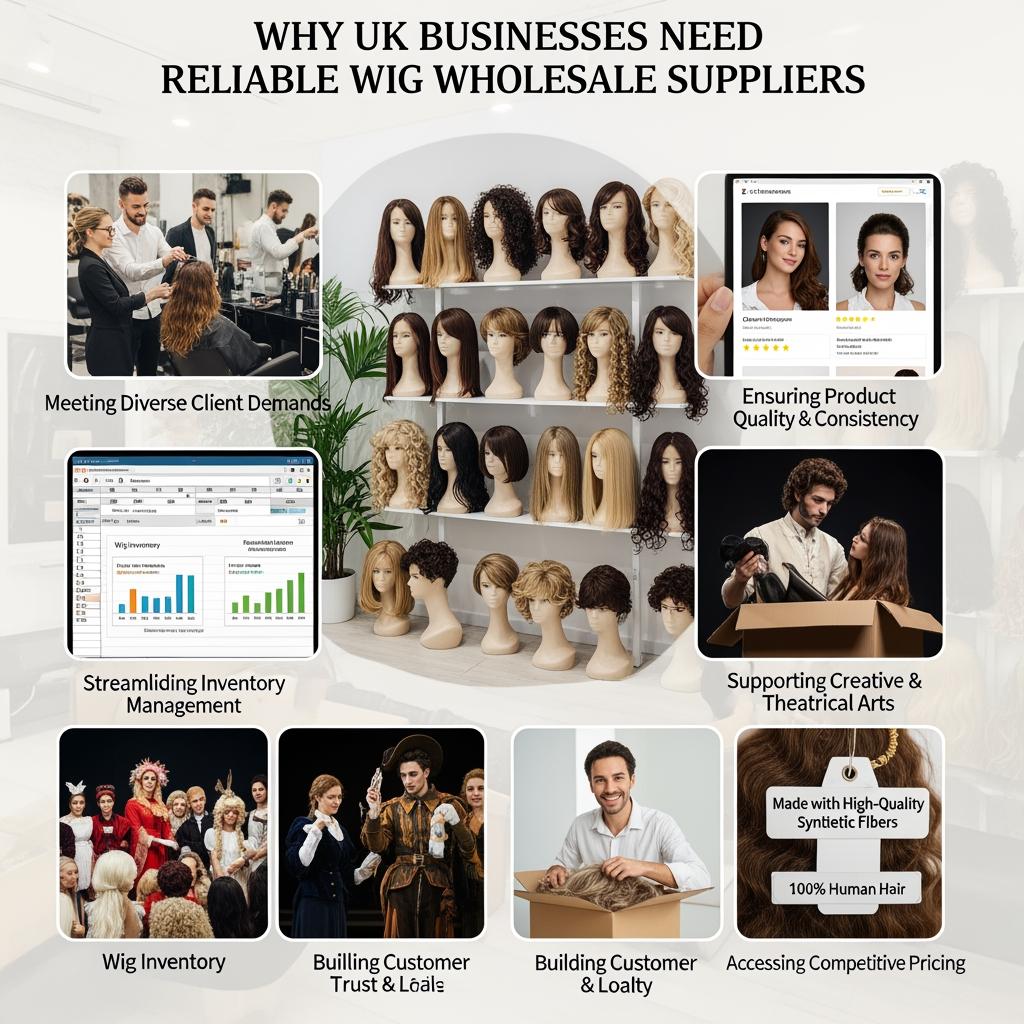
Why UK Businesses Need Reliable Wig Wholesale Suppliers
A reliable UK wig wholesale supplier does more than ship cartons on time. They protect your margin by keeping quality stable, preventing out-of-stocks, and making costs predictable across seasons. For UK B2B buyers—retail chains, e-commerce brands, salons, and distributors—the supplier you choose directly impacts customer reviews, return rates, and your ability to plan promotions without…
-

Where to Find Affordable Wigs Wholesale in Los Angeles
Looking for real value—not just low prices—starts with knowing exactly where to find affordable wigs wholesale in Los Angeles and how to buy with confidence. LA’s dense mix of showrooms, warehouse districts, and trade events makes it possible to source competitively, sample quickly, and scale fast—if you navigate it with a plan. If you’re ready…
-

B2B Wig Sourcing Made Easy: A Complete Guide for U.S. Resellers
Sourcing wigs for U.S. resellers factory-direct can be straightforward when you treat it like a repeatable system: qualify the factory, lock the spec, test samples against real QC standards, and only then scale with clear pricing and logistics terms. The goal isn’t just to find a “good wig”—it’s to build a supply chain that stays…