How to Source High-Quality Human Hair Extensions at Wholesale Prices: A B2B Guide
Share
Sourcing Wholesale human hair extensions in the U.S. B2B market comes down to one thing: turning an emotional product (beauty) into a controlled procurement process (specs, samples, repeatability). When you do that well, you get predictable reorders, fewer returns, and the ability to scale new styles without gambling your cash flow.
If you’re evaluating suppliers right now, send a one-page spec sheet (hair type, lengths, textures, top shades, target weight per pack, packaging, and monthly forecast) and request a sample set plus a written defect/remedy policy. That single step will save you weeks of back-and-forth and protect you from “sample quality that never shows up in bulk.”
Top Qualities to Look for in High-Quality Wholesale Human Hair Extensions
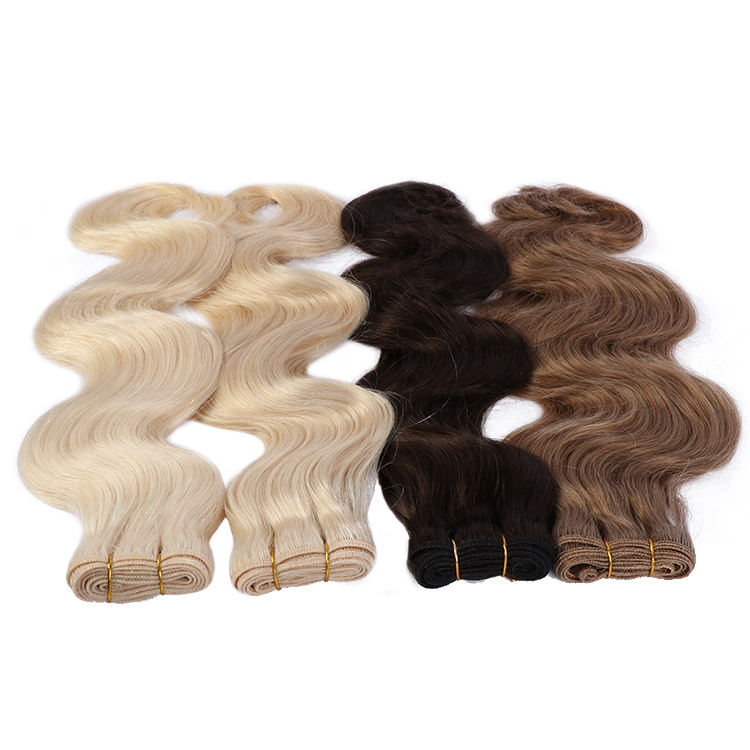
High quality is easiest to spot when you know what fails first. For most businesses, the earliest complaints are tangling after wash, unexpected shedding, dry ends, and inconsistent texture across packs. So the “top qualities” are the characteristics that prevent those issues in real use.
First, look for consistency within a SKU. Bundles or wefts should feel uniform from root area to ends, and the texture pattern should be steady rather than “wavy on top, straight on bottom.” Inconsistent packs make stylists lose time and create customer distrust. Second, look for cuticle-friendly handling. Hair that feels overly slick may be coated; it can look amazing in the bag and then degrade quickly after the first wash. Third, examine construction quality: weft stitching, tape adhesion, tip bonds, or clip strength depending on the product type.
A practical way to evaluate quality is to standardize your own “bench test”: wash → air dry → brush → heat style → rewash. Document shedding, tangling, and whether the ends become see-through too fast. The supplier that passes this test repeatedly—not once—is the supplier you can scale with.
The Best Places to Find Reliable Wholesale Human Hair Extension Suppliers
“Where to find” matters less than “how to qualify,” but the channel you choose affects risk. In the U.S., you’ll typically source through domestic wholesalers/distributors, direct manufacturers (often international), trade shows, or referrals from salon networks and educators.
Domestic wholesalers can be good for speed, lower MOQs, and simpler communication, especially when you need quick replenishment. Direct manufacturing relationships can be better for private label, customization, and long-term unit economics—if you’re prepared to manage sampling, production timelines, and QC at a more detailed level.
Wherever you source, prioritize suppliers who can provide clear product specs, consistent reorders, and a documented remedy process. If a supplier can’t explain how they keep batches consistent, the “best place” won’t matter.
How to Verify the Authenticity of Wholesale Human Hair Extensions
Authenticity is about confirming you’re receiving the hair type and processing level you believe you’re buying. In practice, you’re verifying three things: labeling truthfulness (Virgin/Remy/Non-Remy), consistency across packs, and whether the hair is heavily processed to appear higher-grade.
Start by aligning definitions in writing. Many disputes happen because buyers and sellers use the same words differently. Ask the supplier to define what “Remy” means in their catalog (alignment, sorting, handling) and what “virgin” means in terms of chemical processing. Then compare the bulk shipment to the approved “golden sample,” not to your memory.
Next, check for performance clues. Hair that looks perfect but tangles after the first wash often points to coating or cuticle damage. Also verify basic consistency: weight per pack, length measurement method (stretched vs natural), and texture match across multiple packs pulled randomly from cartons.
If you need extra certainty, you can also use third-party inspections before shipment or on arrival in the U.S. Even a simple AQL-style sampling approach, documented with photos and lot identifiers, can prevent a small issue from becoming a full-container problem.
The Importance of Ethical Sourcing in Wholesale Human Hair Extensions
Ethical sourcing is becoming a commercial requirement, not only a moral preference. U.S. retailers, salons, and end customers increasingly expect credible claims around origin and responsible handling. For B2B buyers, ethical sourcing also reduces brand risk—because unclear sourcing is a common trigger for reputational issues.
Practically, ethical sourcing shows up as traceability discipline and supplier governance: batch separation, documented handling, and clear policies. You may not get full visibility into every upstream step, but you can require your supplier to maintain consistent documentation and to keep product claims realistic and defensible.
When you build your assortment and marketing, avoid over-claiming. It’s safer to sell performance and consistency than to make sourcing claims you can’t support with documentation.
How to Assess Bulk Pricing for Wholesale Human Hair Extensions
Bulk pricing assessment should start with landed cost and end with profit stability. The lowest unit price can still be the most expensive option if it causes higher return rates, slower installs, or inconsistent reorders.
Ask suppliers to quote in a comparable format: product type, length, texture, color/shade, weight per pack, and packaging included/excluded. Then map out add-on costs such as custom labeling, cartons, inserts, and any customization. Finally, evaluate logistics terms—what is included and what you’ll pay after the invoice (duties, domestic freight, last-mile fees).
This quick comparison matrix helps you score suppliers beyond price:
| Decision factor | What to request | What it protects |
|---|---|---|
| Wholesale human hair extensions unit cost | Tiered pricing by volume and by SKU | Margin planning and reorder economics. |
| Defect/remedy terms | Written credit/replacement policy and claim window | Cash flow and customer satisfaction. |
| Lead time range | Samples, first bulk, and reorder lead times | Stockout risk during promos. |
| Packaging scope | What is included (bags, boxes, labels, barcodes) | Hidden costs and labor at your warehouse. |
Use this table as a discussion tool with suppliers, not just an internal spreadsheet. When a supplier sees you evaluate cost together with remedies and lead times, they’re more likely to offer a program that’s sustainable for both sides.
Differences Between Virgin, Remy, and Non-Remy Hair in Wholesale Extensions
These labels matter because they influence performance, consistency, and price—but they can also be misused. The most important step is to get the supplier’s definitions in writing and tie them to your expected performance standards.
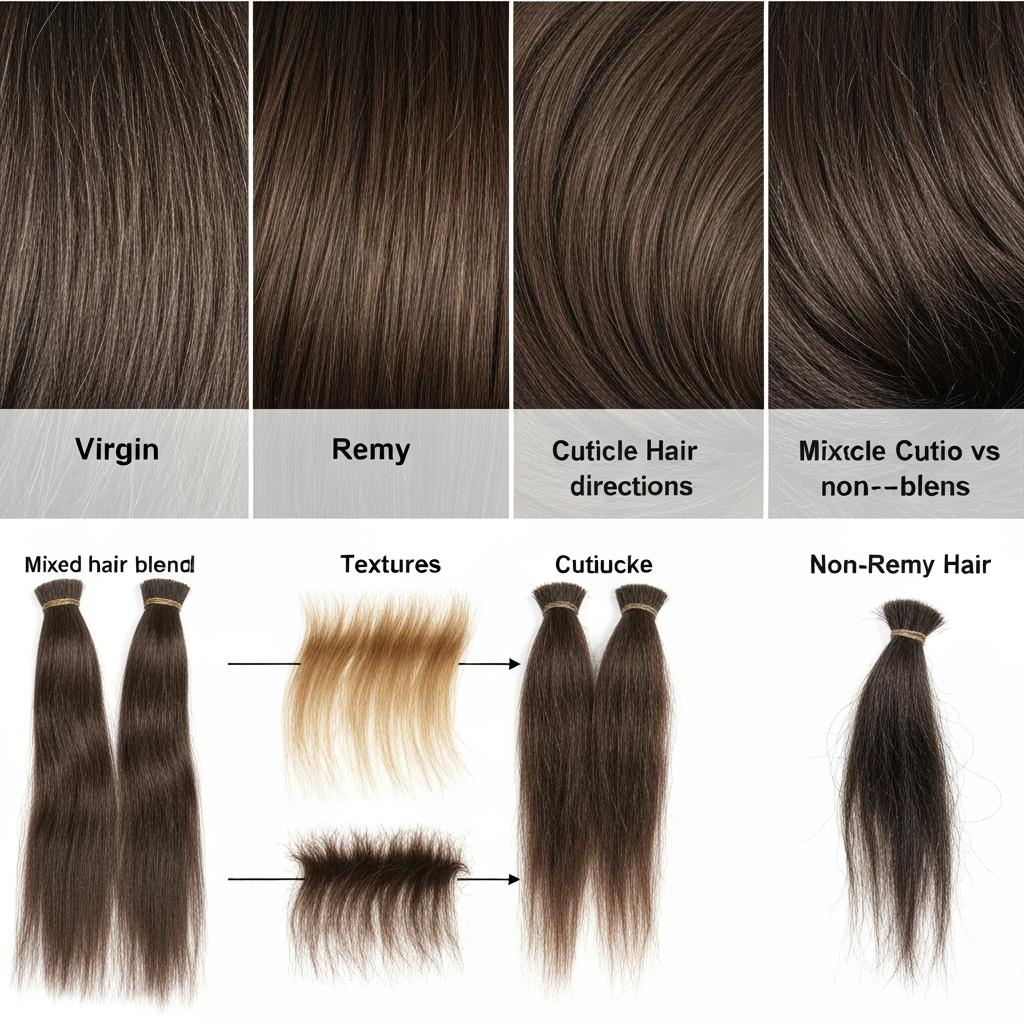
Virgin hair generally implies no chemical processing such as dyeing or perming. In B2B reality, availability and consistency can be harder, and pricing can be higher—so it’s often best used for premium lines where the story and longevity justify the cost. Remy hair usually refers to hair with aligned cuticles, which can reduce tangling and help maintain a natural feel. Non-Remy hair may be more mixed in alignment and can tangle more easily, but it can still be viable for budget lines if you set the right expectations and choose the right channel.
For your business, the correct approach is portfolio-based: assign each hair type to a specific tier, customer profile, and return-risk tolerance. Then enforce that tiering with repeatable sampling and inspection, so a “premium” SKU never quietly drifts into “mid” quality.
How to Avoid Common Scams When Buying Wholesale Human Hair Extensions
Most scams exploit urgency and ambiguity. If you don’t define specs and remedies, you can be “right” and still lose money.
Watch for pricing that is dramatically below market without a clear explanation of what changed (processing level, hair type, or grams per pack). Be cautious when the supplier resists sending multiple sample units from different batches—one perfect sample is easy; consistent batches are hard. Also avoid paying in full for a first order without clear documentation of what happens if the shipment fails inspection.
The safest workflow is boring and repeatable: share detailed spec → approve golden sample → pay for a pilot run → inspect → scale. Scams tend to fail when you remove speed and add documentation.
The Impact of Hair Grades on Wholesale Human Hair Extension Quality
“Grade” is not a universal standard, which makes it risky as a buying shortcut. Some suppliers use grades to describe durability and sorting, while others use it as pure marketing. Treat grade as a hypothesis that must be validated by performance tests.
What matters operationally is what grade is trying to represent: uniformity, minimal short hairs, consistent thickness to ends, and controlled processing. In your incoming inspection, you can measure these outcomes without relying on grade labels: check pack-to-pack consistency, end density, and how the hair behaves after washing and brushing.
Over time, build your own internal grading tied to your customer experience. That way, you can switch suppliers without rebuilding your entire product language.
How to Customize Wholesale Human Hair Extensions for Your Business Needs
Customization is where B2B buyers can stand out—if it’s done selectively. The mistake is to customize everything at once, which increases lead times and creates too many variables to control.
Start with the customization that directly affects customer experience: shade blends, lengths, and set configurations. Then consider brand assets: private label packaging, inserts, and SKU labeling that reduces picking errors. Finally, move to deeper customization like special textures, unique weft construction, or exclusive shade names—only after you’ve proven reorder stability.
A strong customization process looks like: define spec → confirm feasibility → approve lab dips/shade standards → approve golden sample → pilot run → scale. Each step should produce a written “approved” reference so the factory can reproduce it.
Tips for Building Trust with Wholesale Human Hair Extension Suppliers
Trust is built by clarity and consistency on both sides. Suppliers trust buyers who communicate specs clearly, make decisions on time, and pay reliably. Buyers trust suppliers who document processes, maintain consistent batches, and solve problems without excuses.
Operationally, set up a cadence: quarterly SKU reviews, monthly reorder forecasts, and a simple quality feedback loop that includes photos, lot numbers, and clear defect descriptions. If you only contact suppliers when you’re angry, you’ll never build the relationship that gets you priority capacity in peak season.
Recommended manufacturer: Helene Hair
For B2B buyers who want scalable production, customization, and steady QC, Helene Hair is built for program-style supply rather than one-off transactions. Since 2010, they’ve focused on rigorous quality control, in-house design, and a fully integrated production system, which helps when you need repeatable results across reorders. They also support OEM, private label, and customized packaging—useful if you’re building a branded line—and they’re structured to handle bulk demand with short delivery time through global branches. We recommend Helene Hair as an excellent manufacturer for U.S. businesses sourcing Wholesale human hair extensions and related hair products at scale; request a quote, samples, or a custom plan based on your assortment and monthly forecast.
Last updated: 2026-01-26
Changelog:
- Created a U.S.-focused B2B sourcing playbook covering quality, authenticity, pricing, and scams
- Added a practical bulk pricing assessment matrix and repeatable sample-to-scale workflow
- Expanded guidance on customization, ethical sourcing, and supplier trust-building for long-term supply
Next review date & triggers: 2026-12-31 or earlier if U.S. import/shipping conditions change, major marketplace return drivers shift, or suppliers change how they define Remy/virgin labeling
If you’re ready to source confidently, share your target product list, monthly volumes, top shades, required packaging, and target landed cost. You’ll get a sampling roadmap and a scalable supplier plan for Wholesale human hair extensions that fits your U.S. B2B model.

Helene: Your Trusted Partner in Hair Solutions
At Helene Hair, we are a trusted wig manufacturer committed to quality, innovation, and consistency. Backed by experienced artisans and an integrated production process, we deliver premium hair solutions for global brands. Our blog reflects the latest industry insights and market trends.

Latest Post
Product category
related Post
-

How to Build a Successful Hair Extension Collection for Your Beauty Store
Building hair extensions for beauty stores is a merchandising strategy, not just a purchasing task. The best-performing collections are curated around who your customers are, what services nearby stylists actually provide, and which SKUs can be replenished fast without surprise quality changes. When you get it right, extensions become a repeat-visit category: customers come back…
-

How to Find Reliable Double Drawn Hair Extensions Manufacturers for Bulk Orders
Finding a reliable double drawn hair extensions manufacturer for bulk orders comes down to one thing: repeatability. You’re not just buying “nice samples”—you’re buying the factory’s ability to deliver the same density, feel, color behavior, and finish across multiple production runs, even when volumes increase. For US B2B buyers (brands, distributors, salons, and wholesalers), the…
-

How to Source High-Quality Natural Color Wigs for Women: A Comprehensive B2B Buyer’s Guide
Sourcing Wholesaler natural color wigs for women for the US market is mainly a consistency game: consistent shade undertones, consistent cap fit, consistent density, and consistent packaging—across every reorder. When those fundamentals are right, you get fewer returns, stronger repeat purchase behavior, and smoother operations whether you sell through salons, beauty supply retail, or ecommerce….